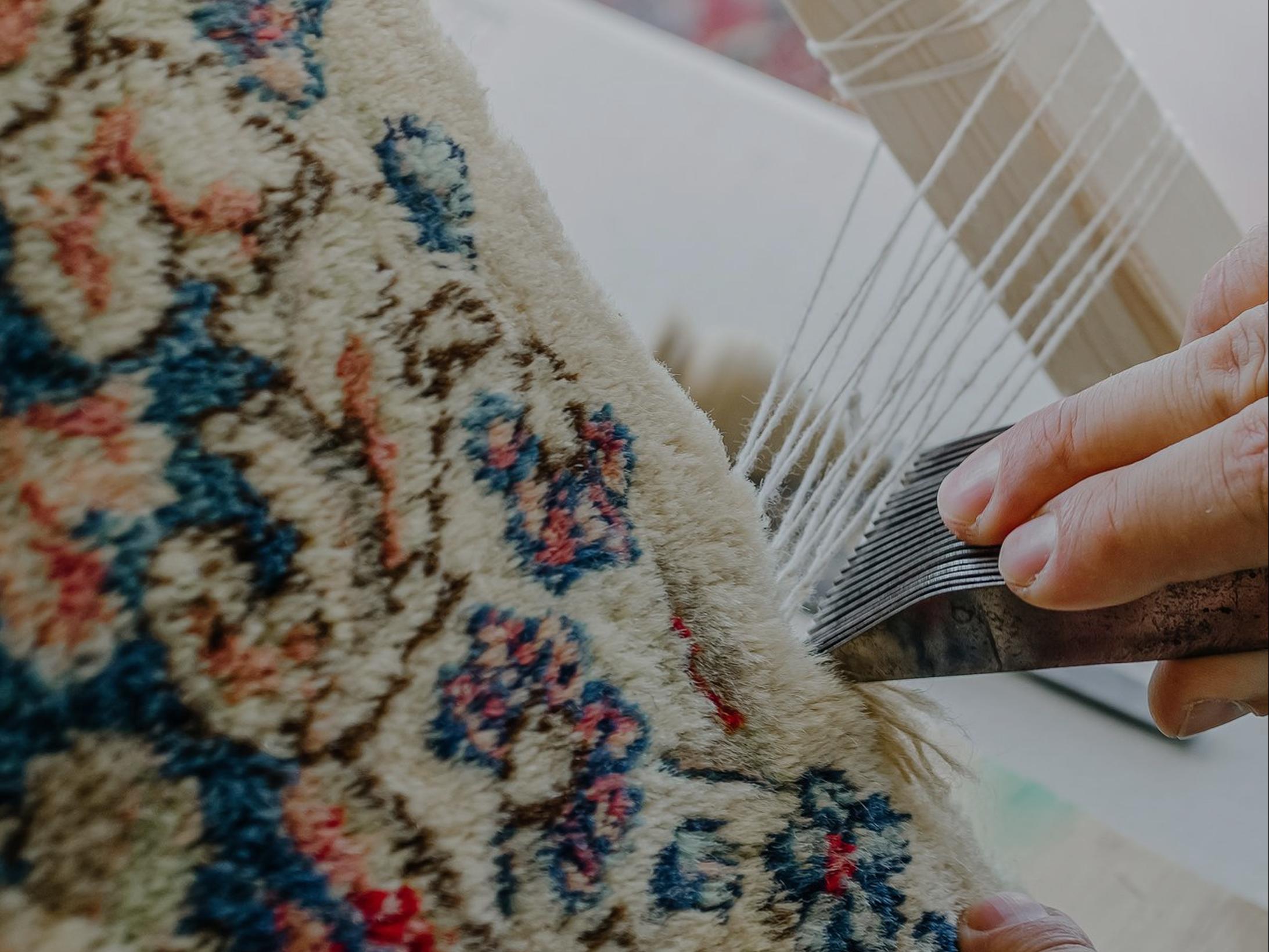
Kazak rugs originate from the mountainous regions of the Caucasus, where they were traditionally woven by nomadic tribes. Over time, the style migrated and evolved, with Afghanistan becoming a prominent centre for the production of these iconic pieces. Today, Afghan weavers continue to honour these ancient traditions, drawing upon the same cultural heritage that defined the original Caucasian masterpieces centuries ago.
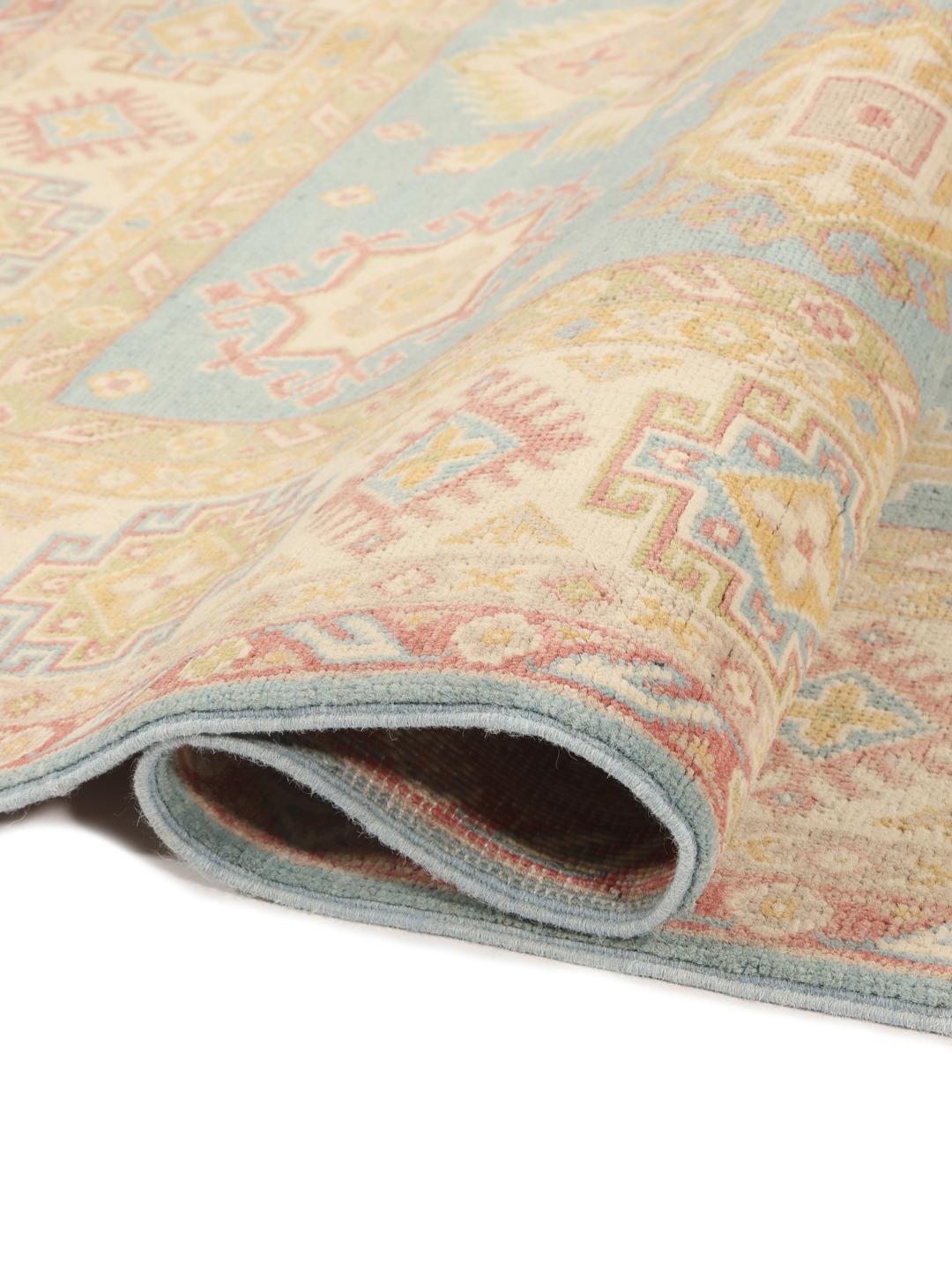
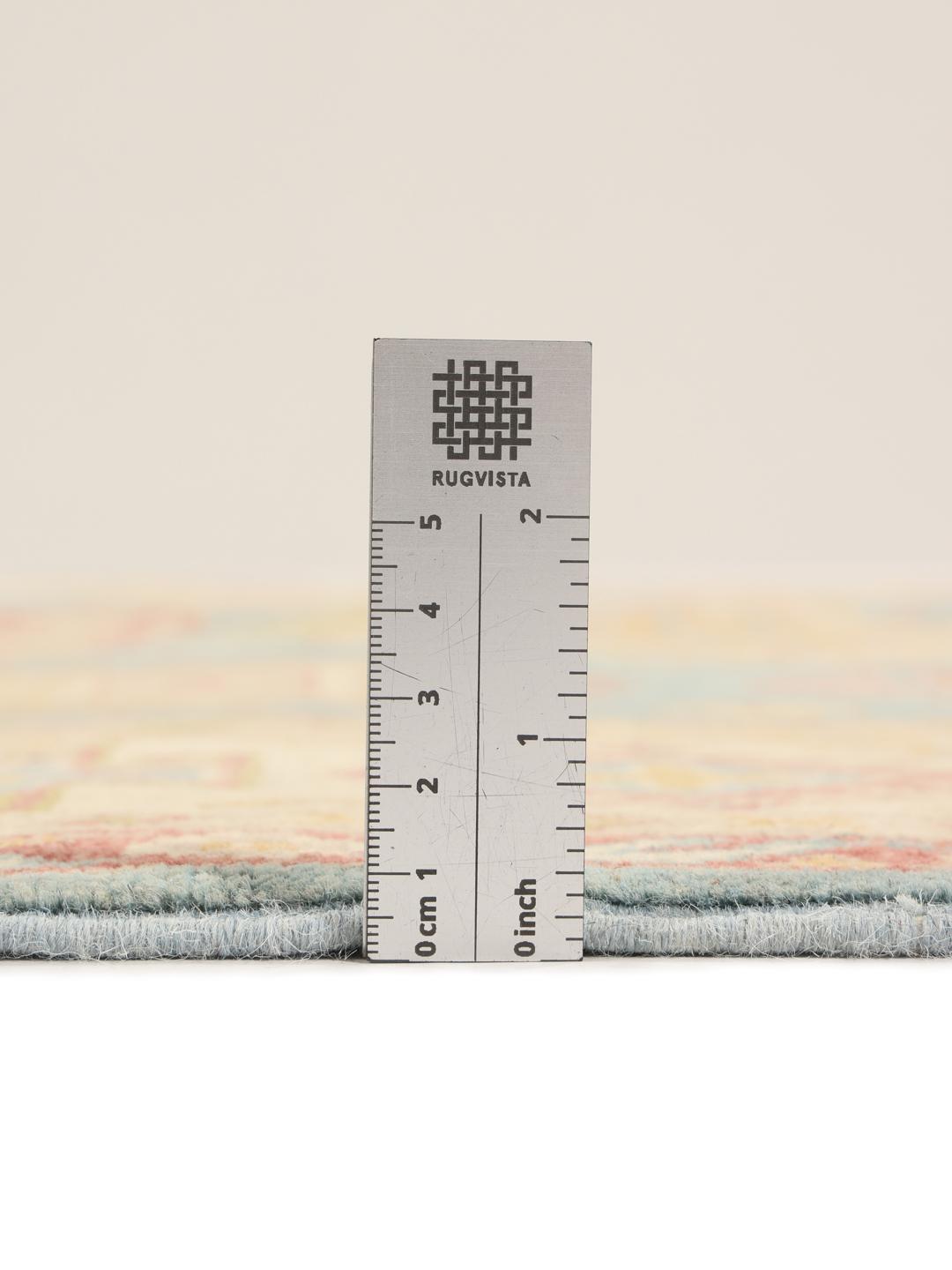
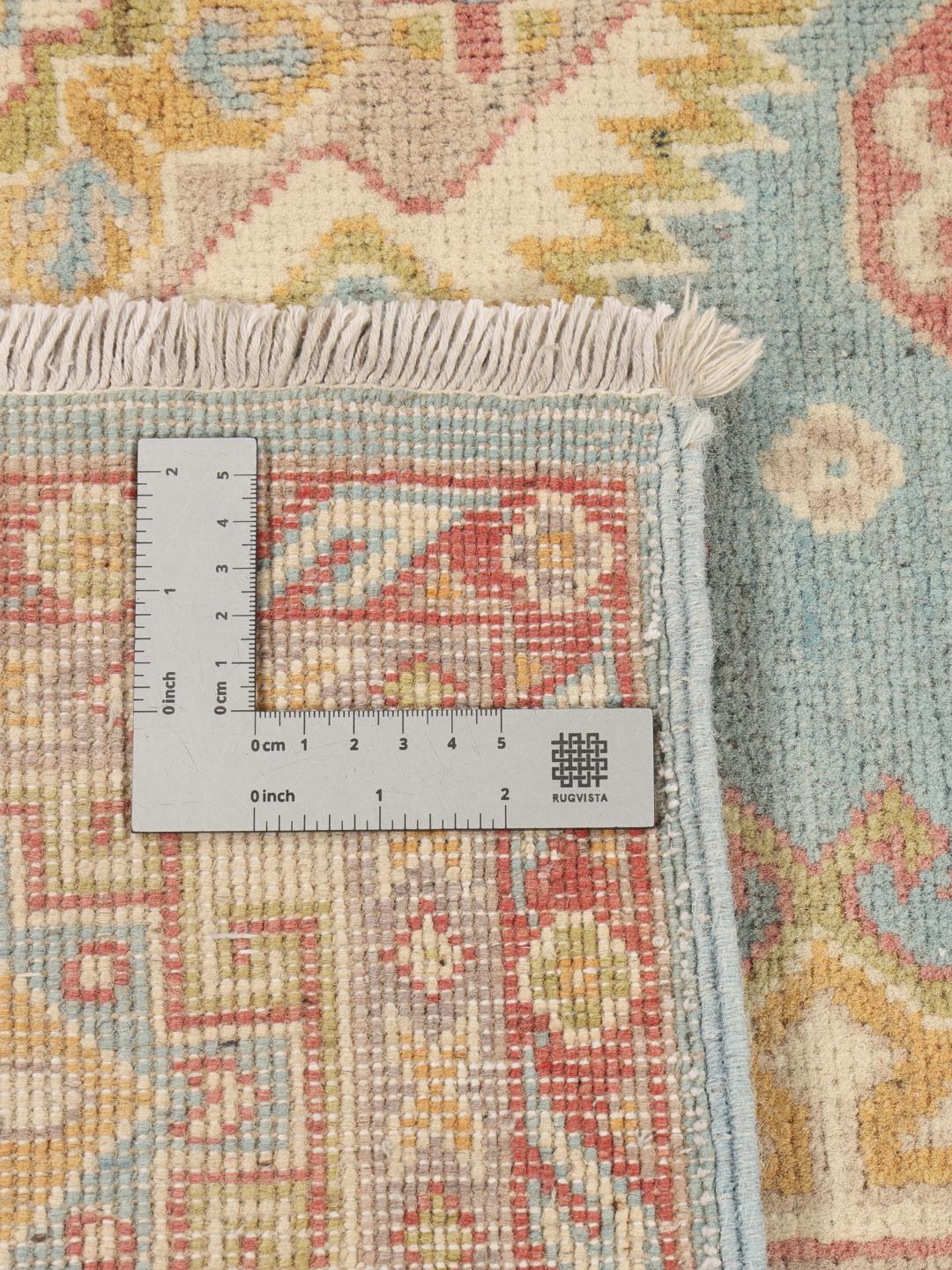
The term Kazak refers to a specific tradition of bold, geometric design rather than a single village. These rugs are highly regarded for their use of distinct, thick wool, which is often spun with a coarser hand to provide a sturdy and resilient pile. This construction choice ensures that the rugs are not only visually striking but also incredibly durable, capable of maintaining their structure through generations of use.
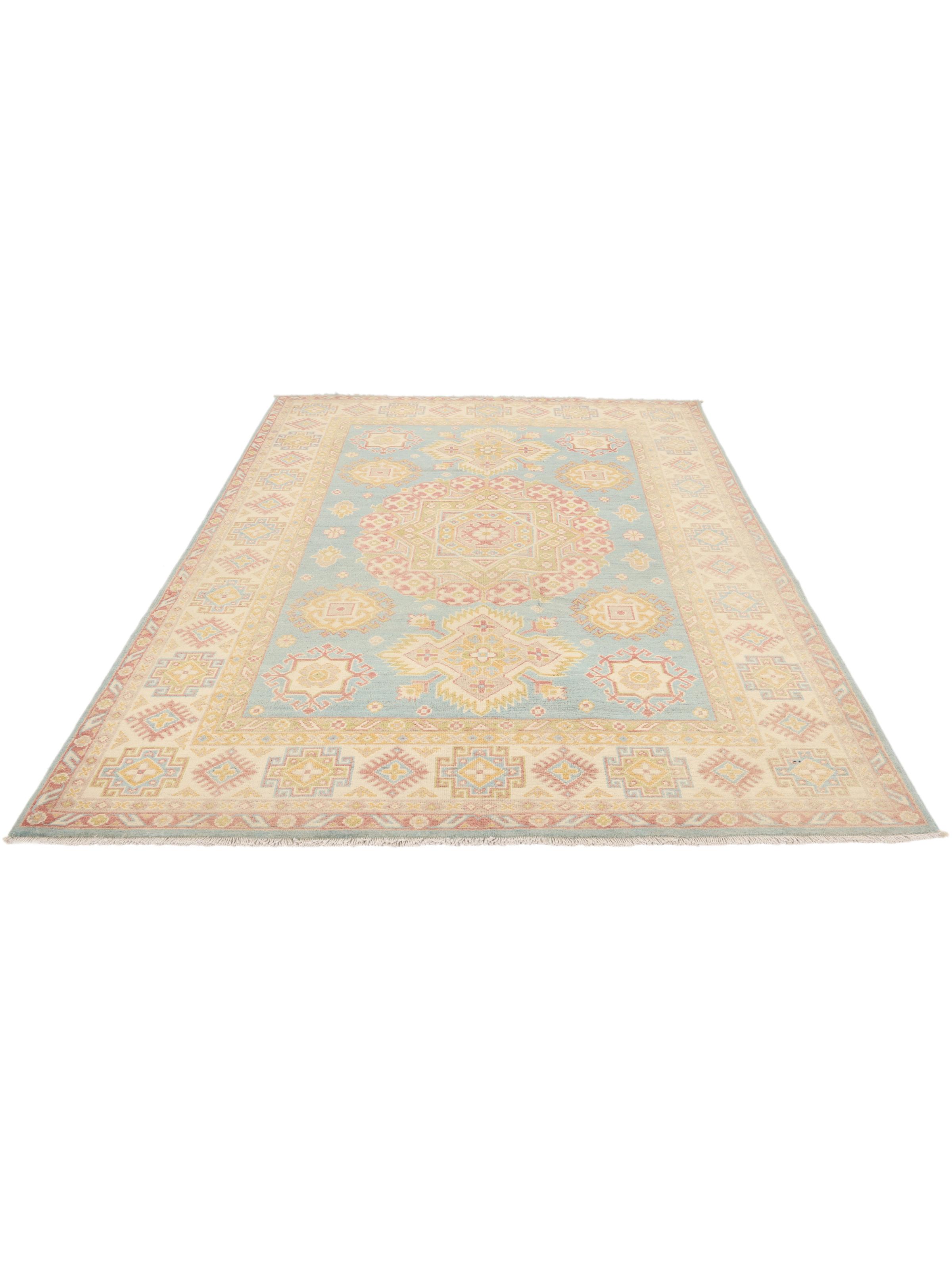
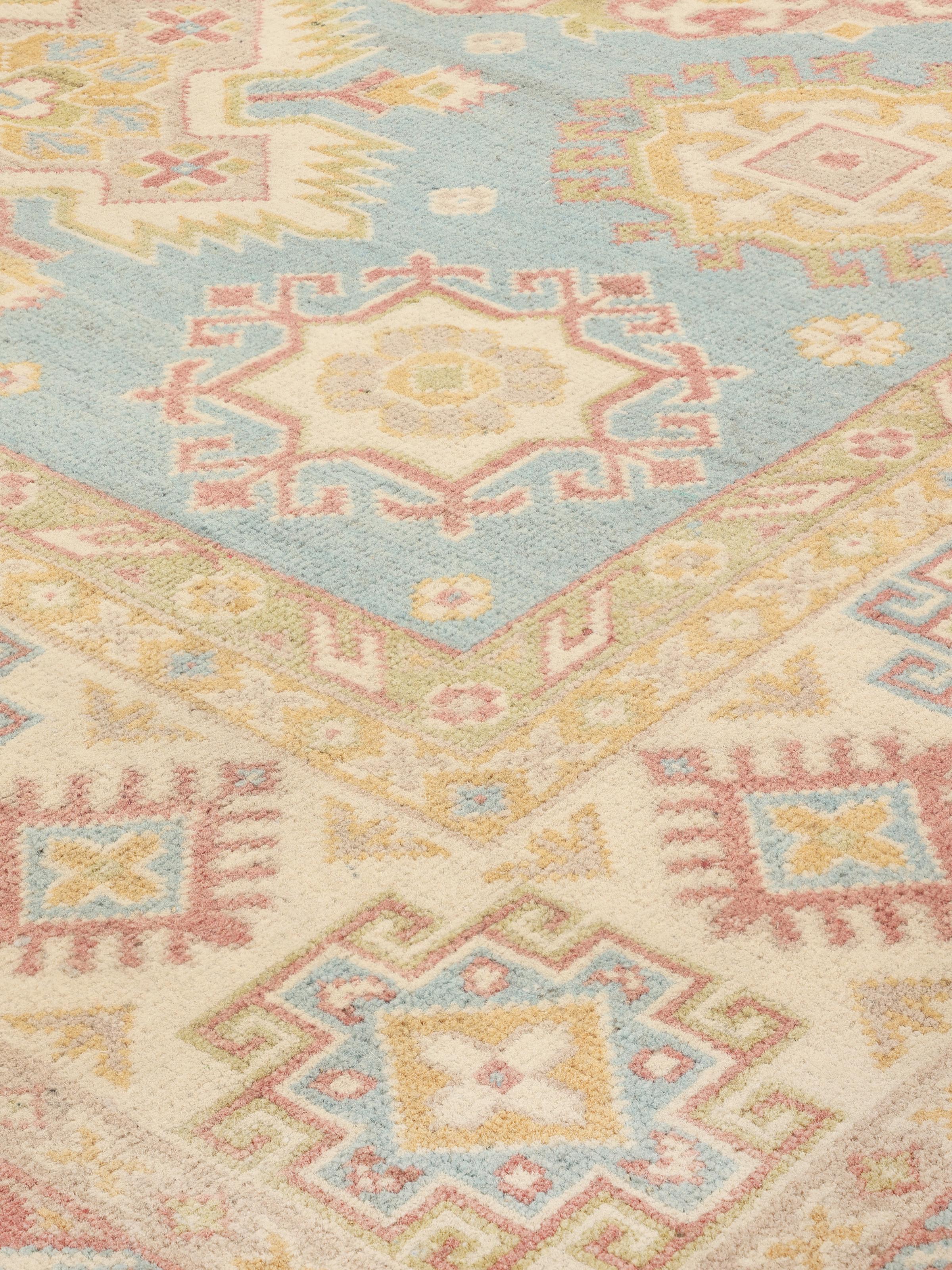
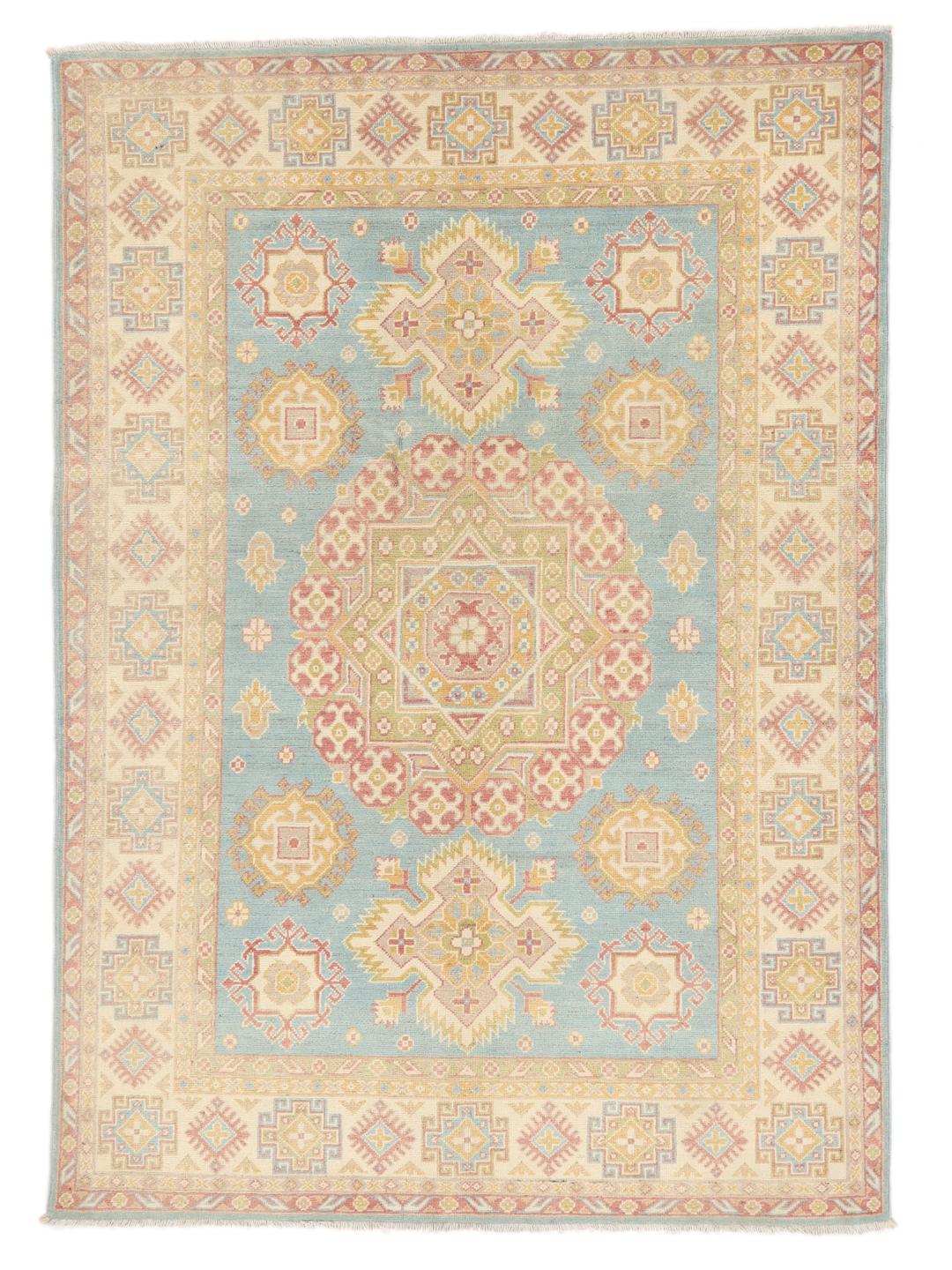
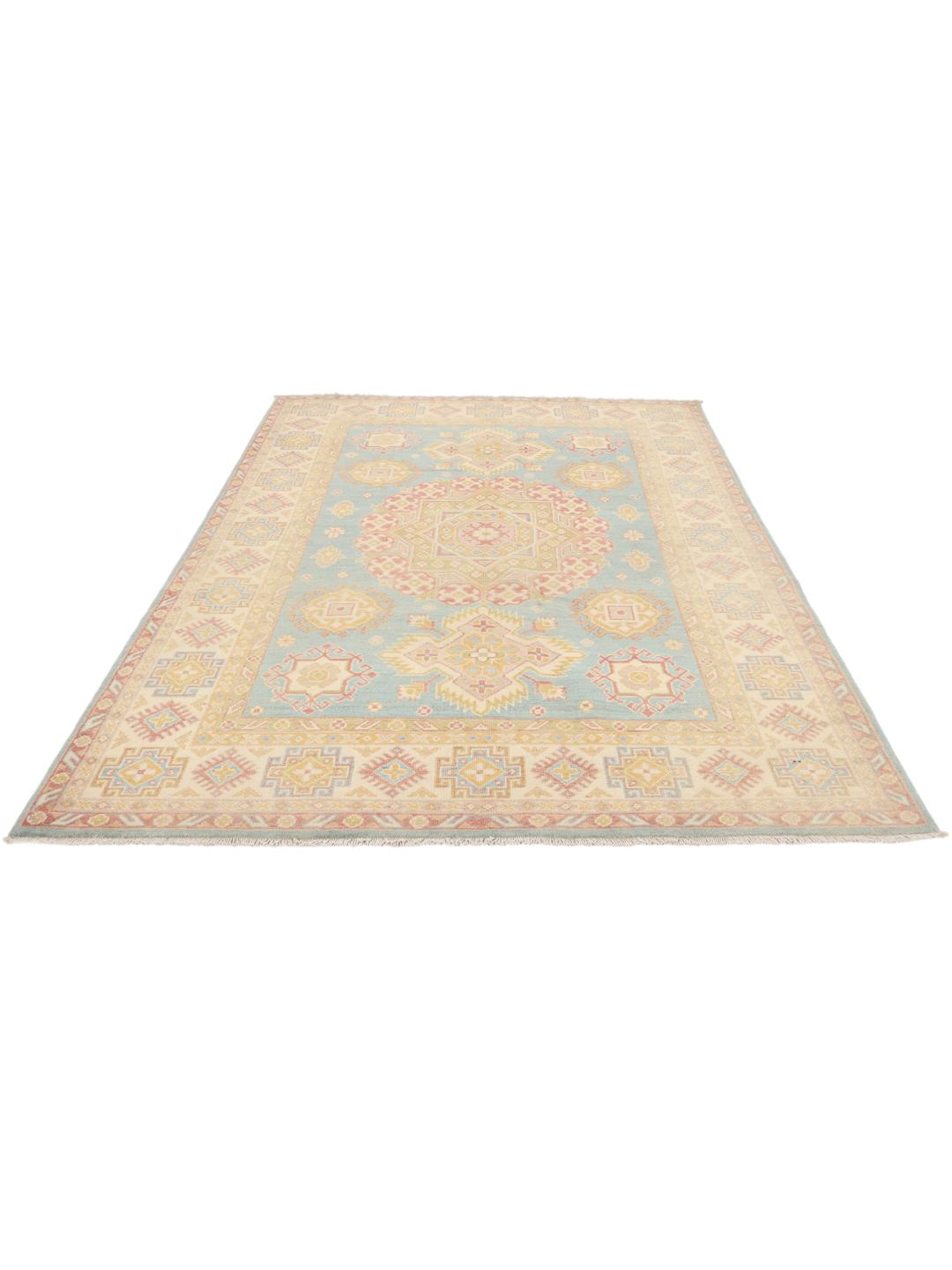
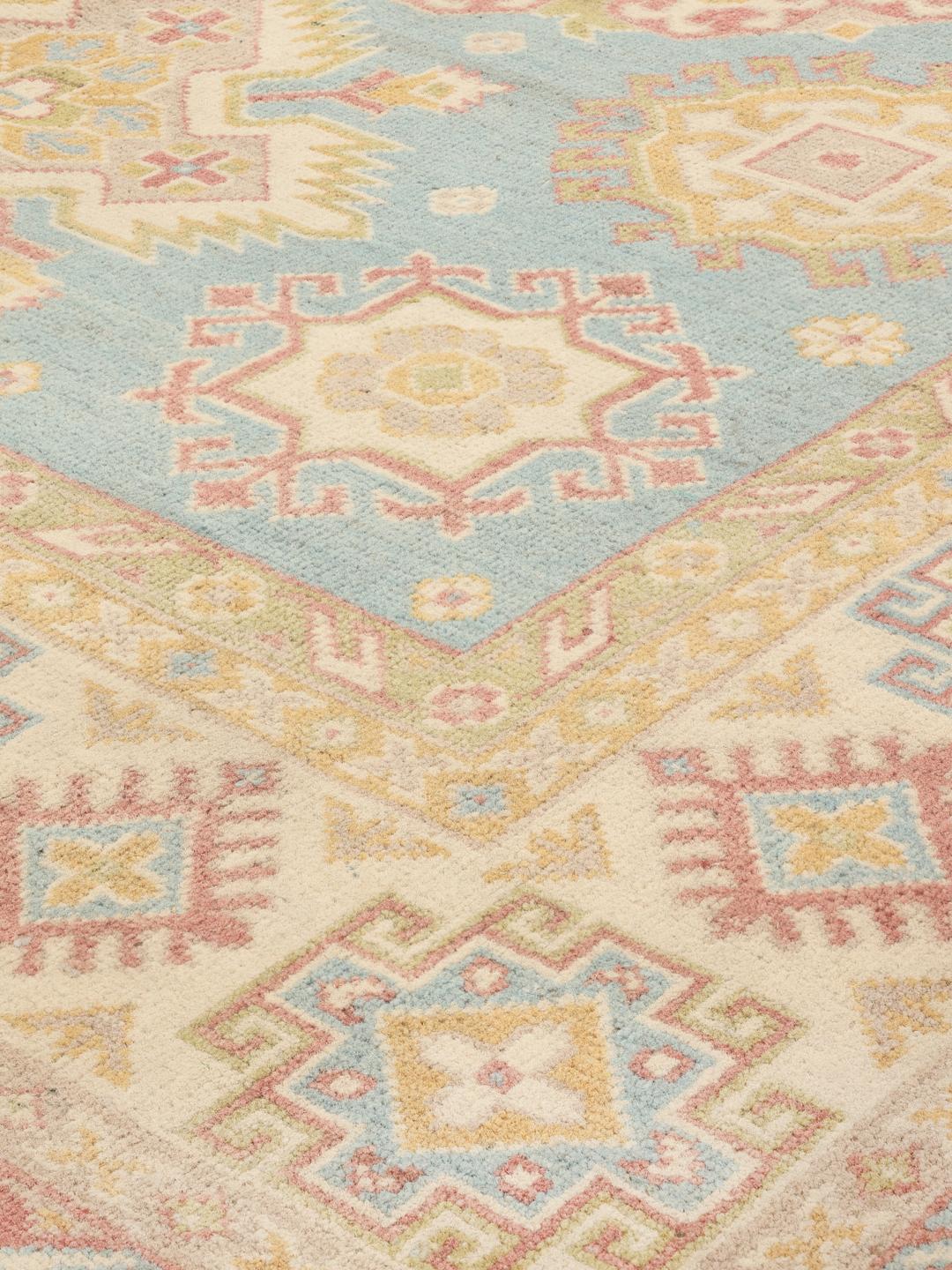
Signature elements of a Kazak rug include the use of bold, stylized geometric medallions, often referred to as guls or star motifs, set against a vibrant, open field. The borders are typically filled with intricate, repeating latch-hook patterns that frame the central design. While many traditional Kazak rugs are known for their deep reds and blues, variations in colour palette are common and reflect the individual creative expression of the weaver.
Collectors value these rugs for their raw, authentic spirit and the clear connection they provide to the history of rug-making. Owning a Kazak rug is an act of preserving a craft that has survived through centuries of social and political change. It represents a commitment to enduring quality and a deep appreciation for the human stories woven into every knot, making each piece a meaningful addition to any collection.