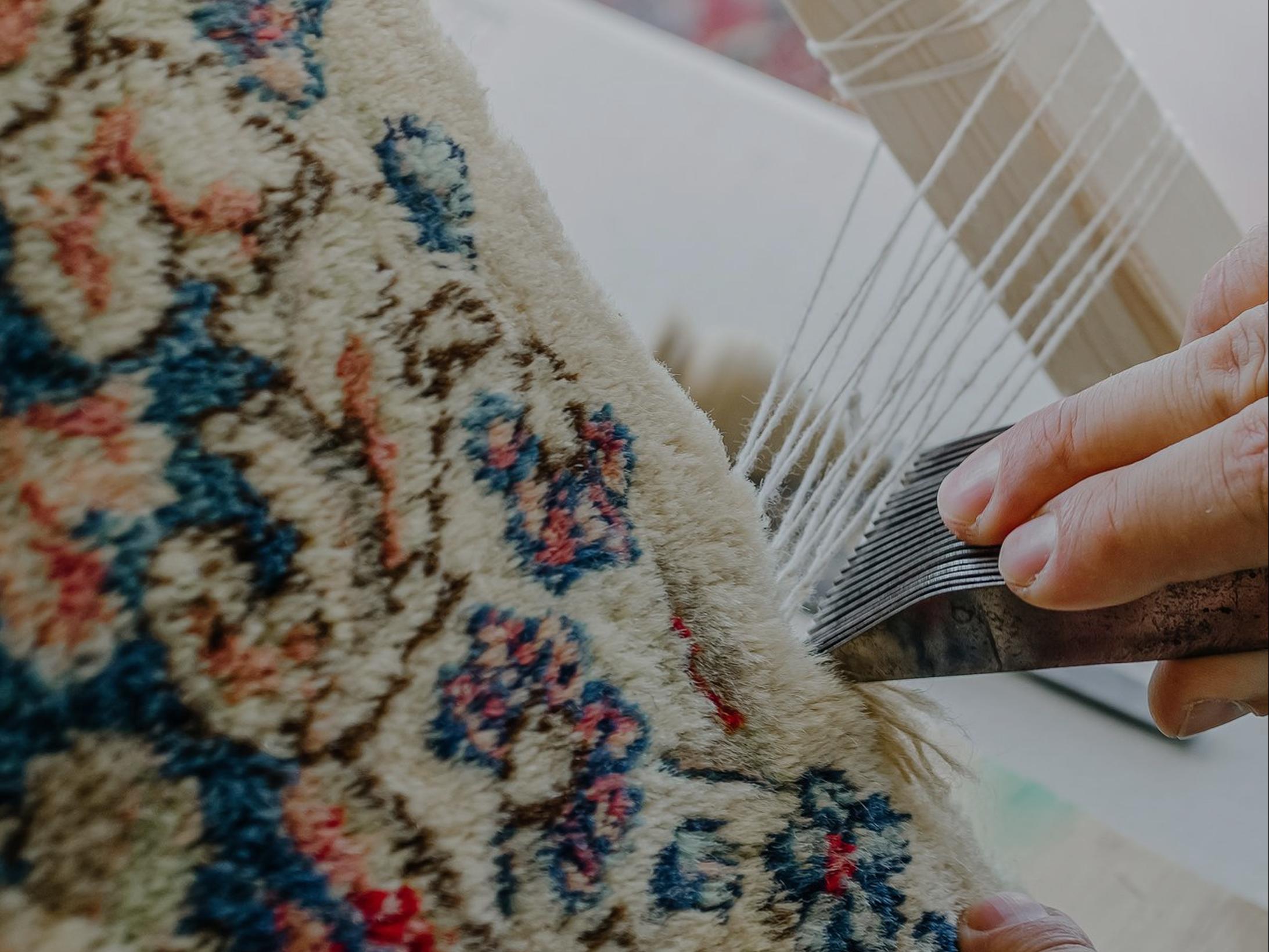
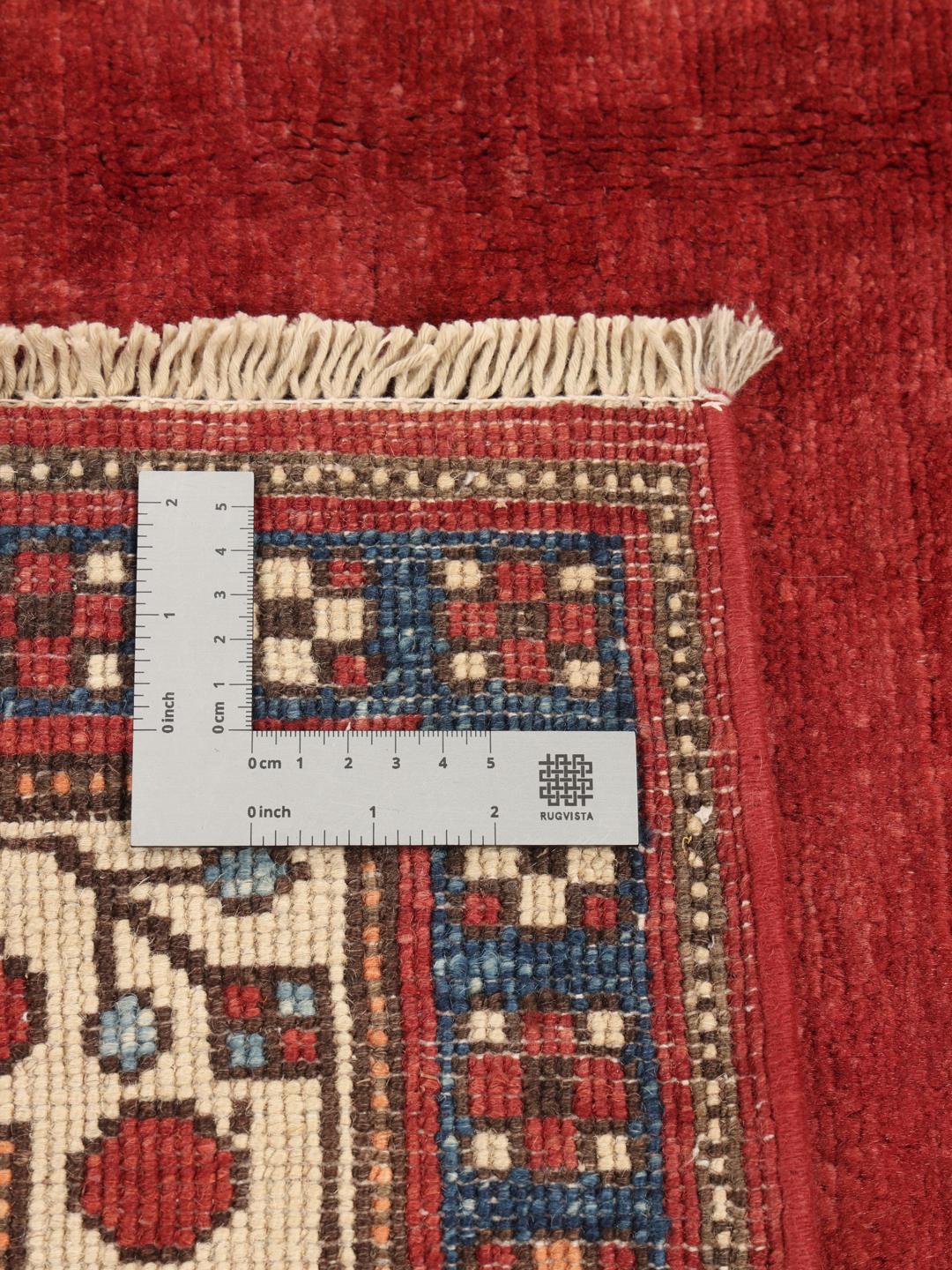
The Kazak rug tradition originates from the Caucasus Mountains, a region with a deep and storied history of weaving. While the original Kazaks were produced by nomadic tribes in the Caucasus, the tradition has evolved significantly, with some of the finest contemporary examples now being woven in Afghanistan. This migration of craft has allowed traditional motifs to be preserved and adapted, keeping the spirit of the original weavers alive.
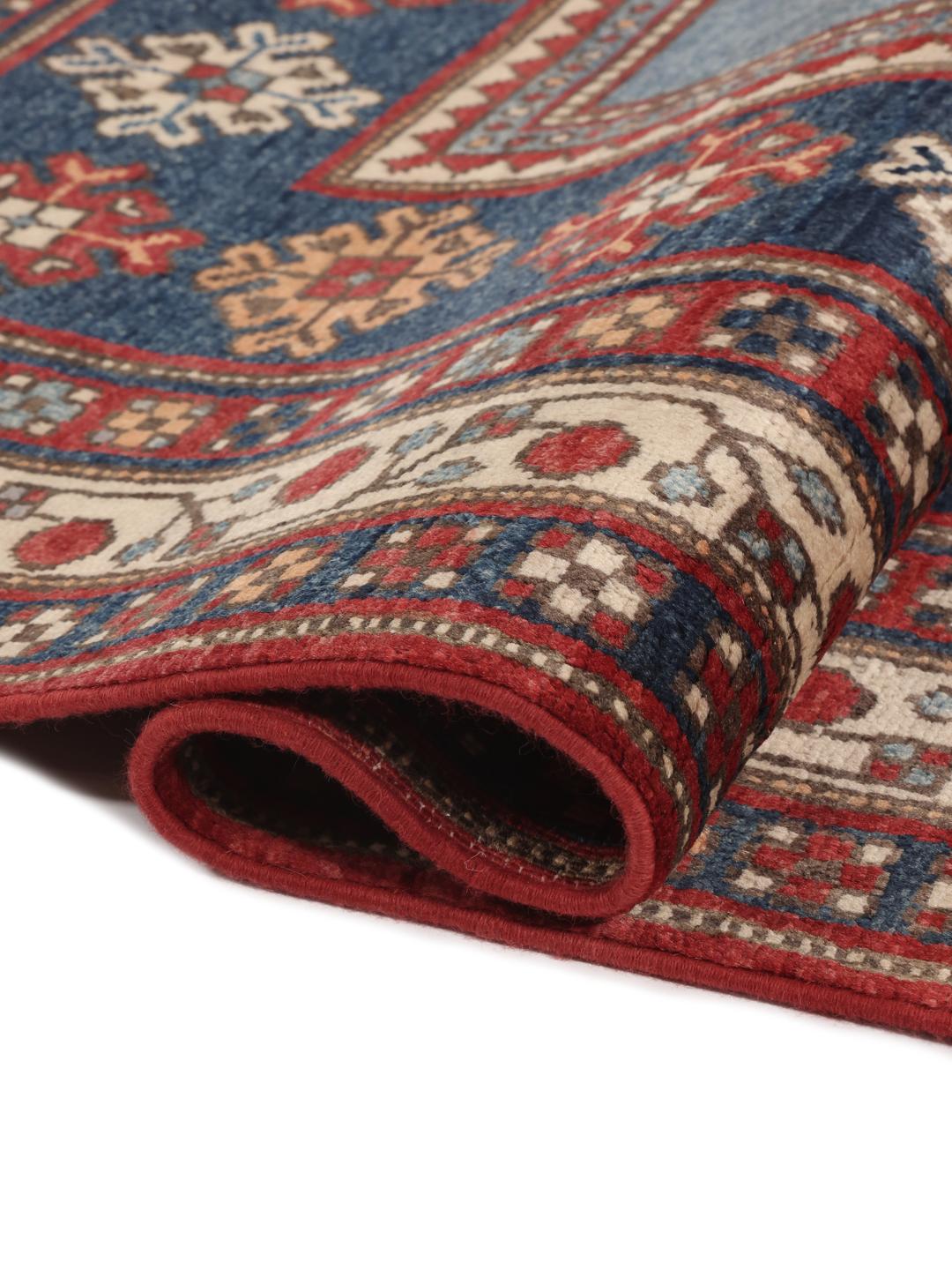
The term 'Kazak' refers to a specific style of village-woven rugs known for their bold, geometric designs and thick, lustrous wool. These rugs are typically characterised by a high-quality pile that feels substantial and durable, a hallmark of the regional weaving techniques that have been passed down through generations.
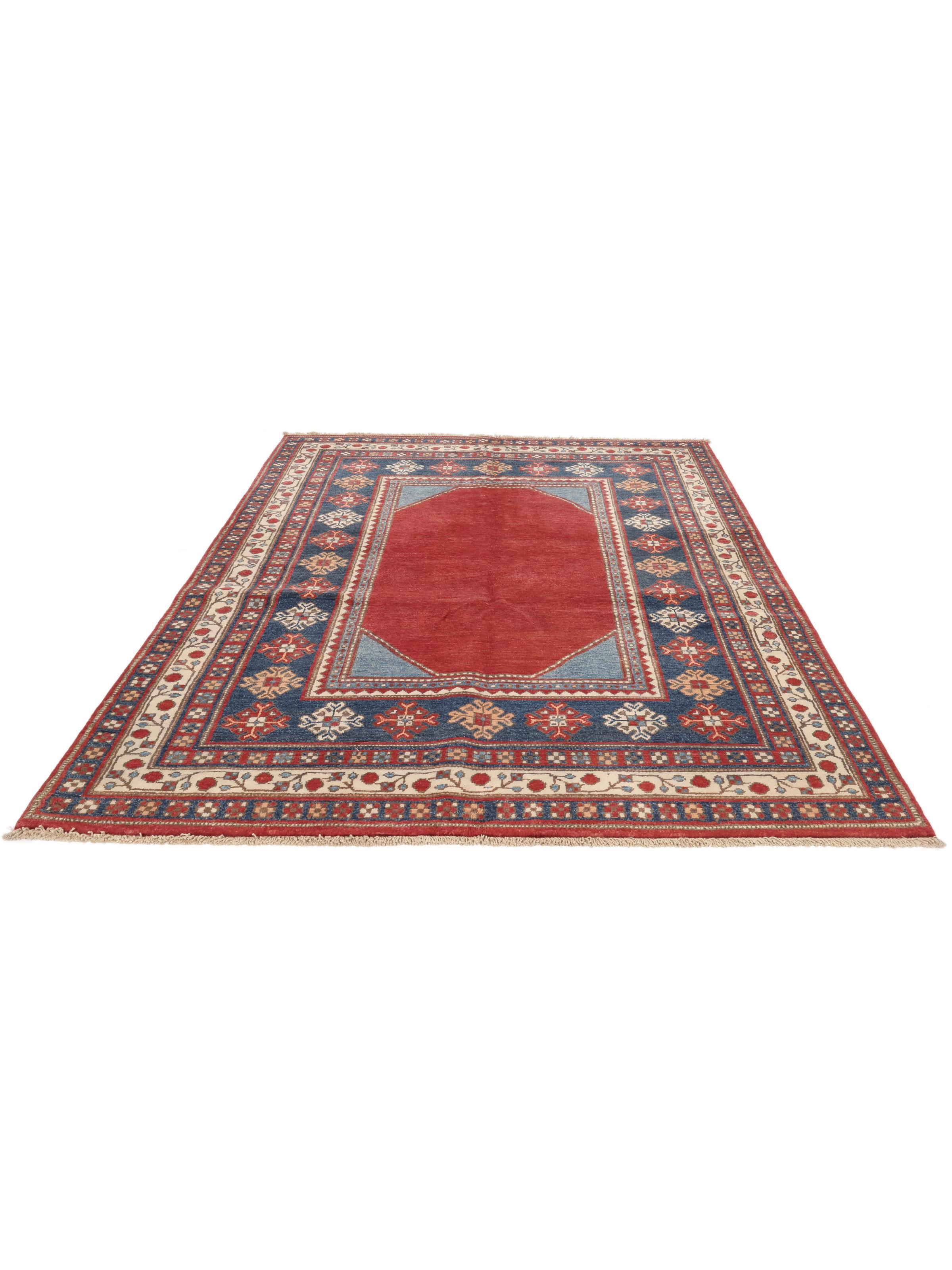
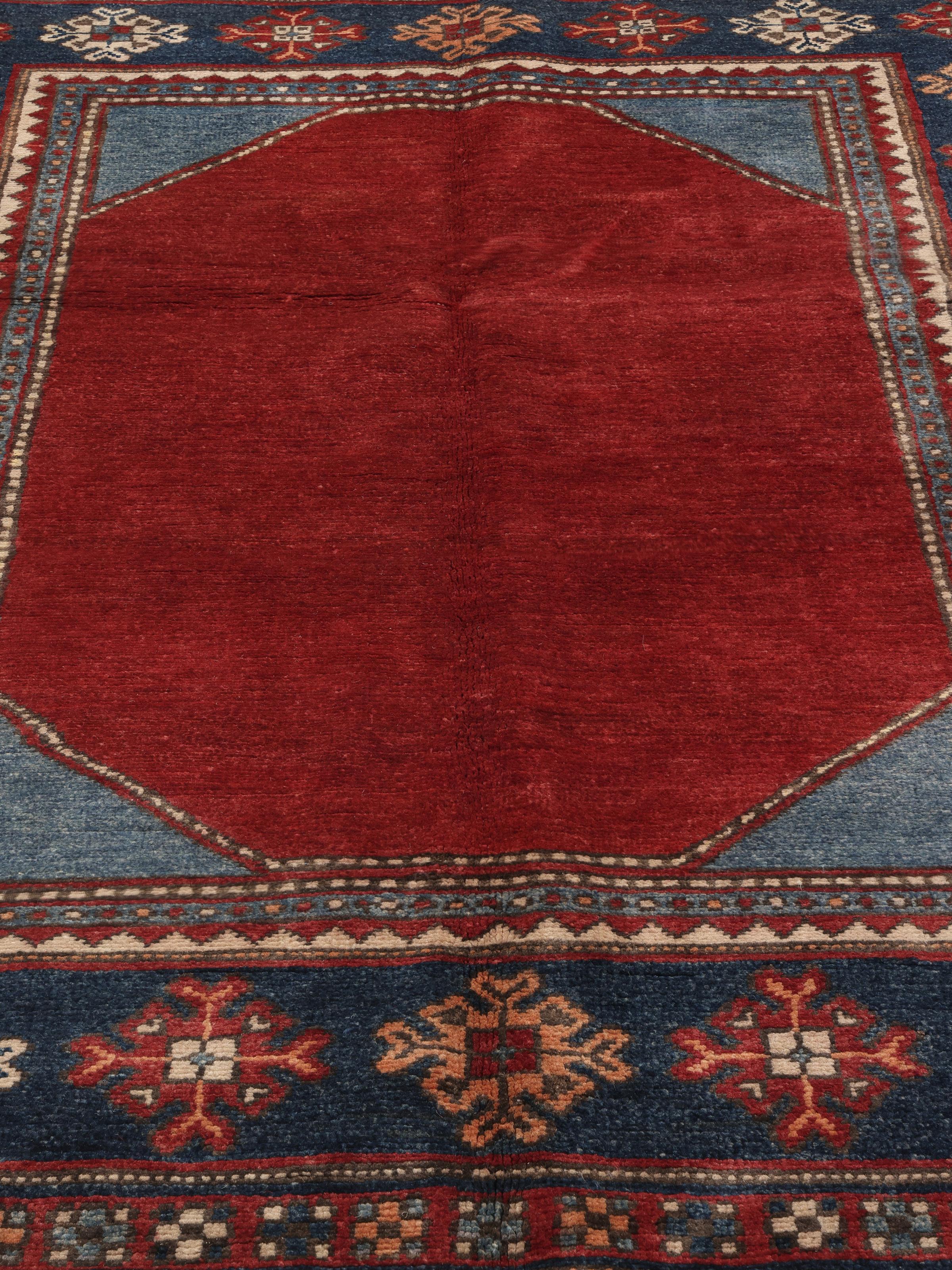
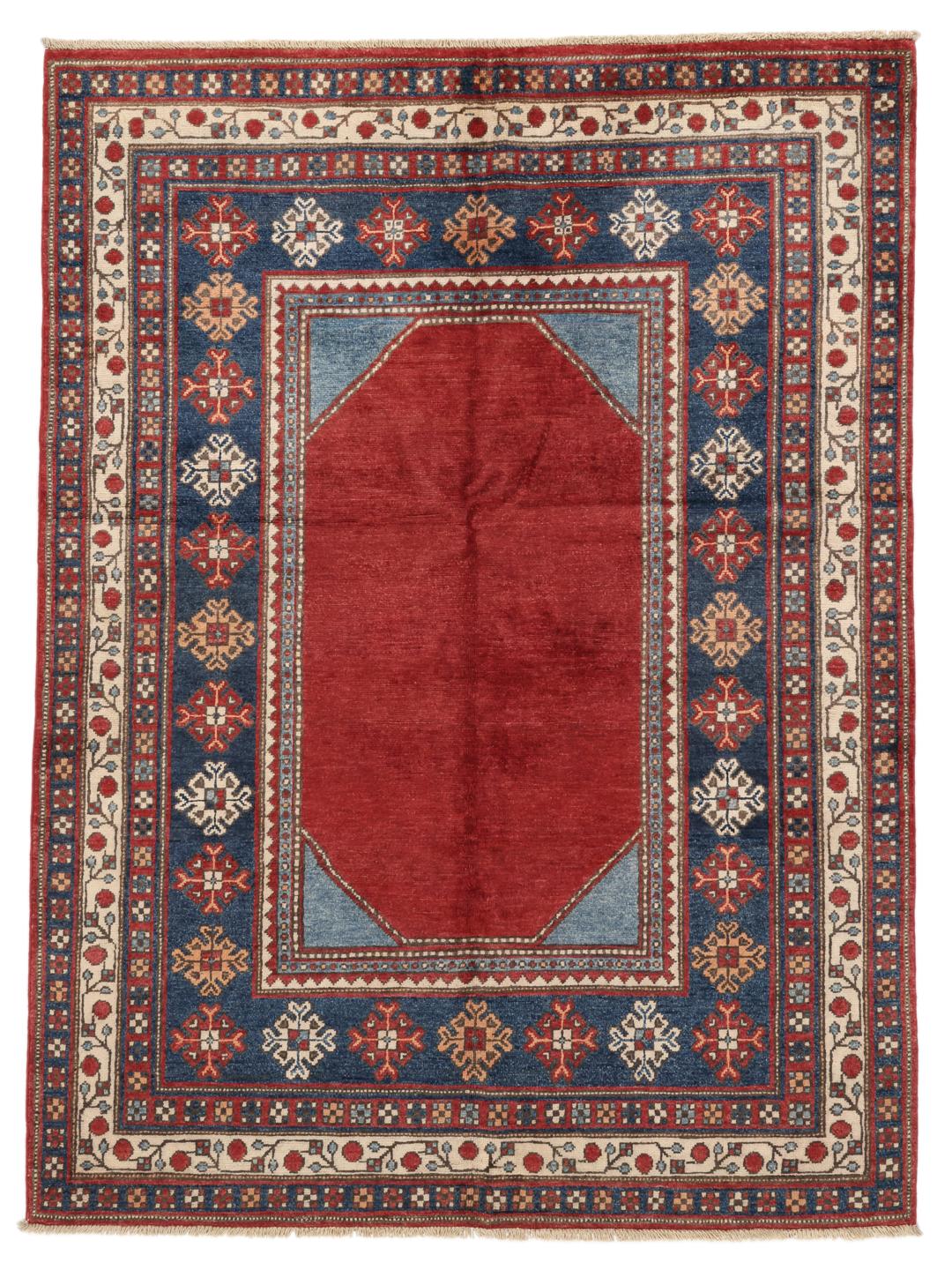
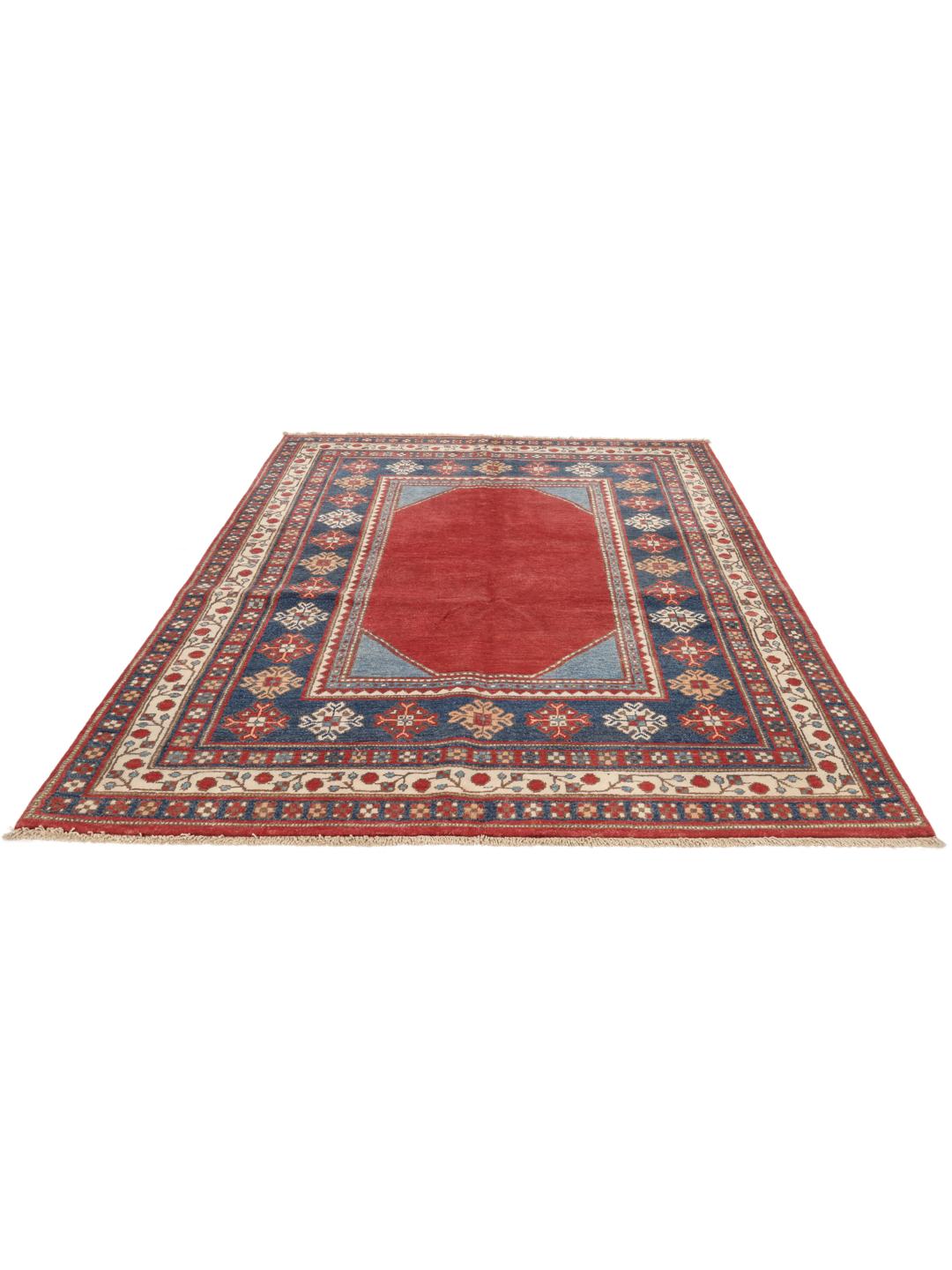
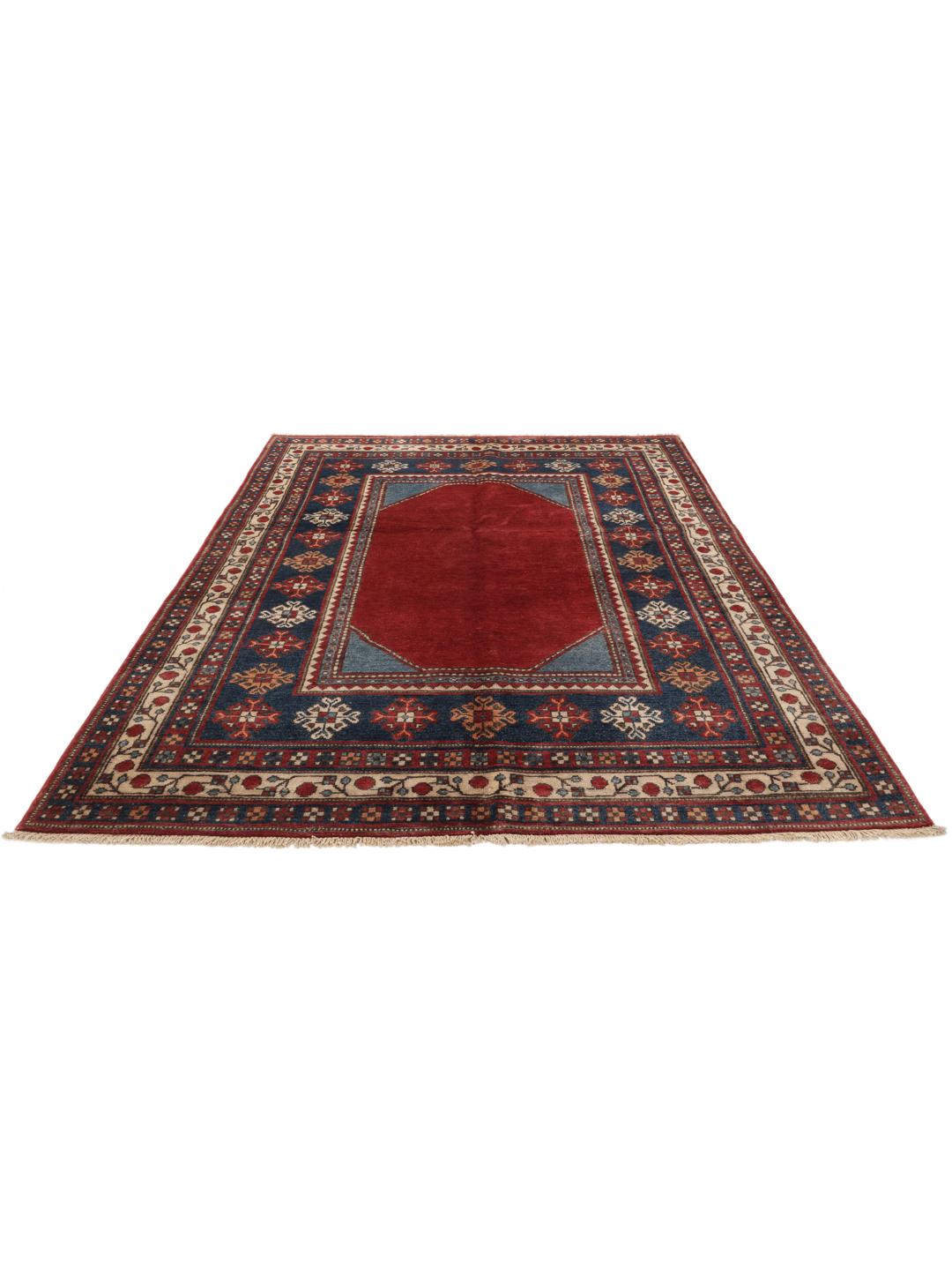
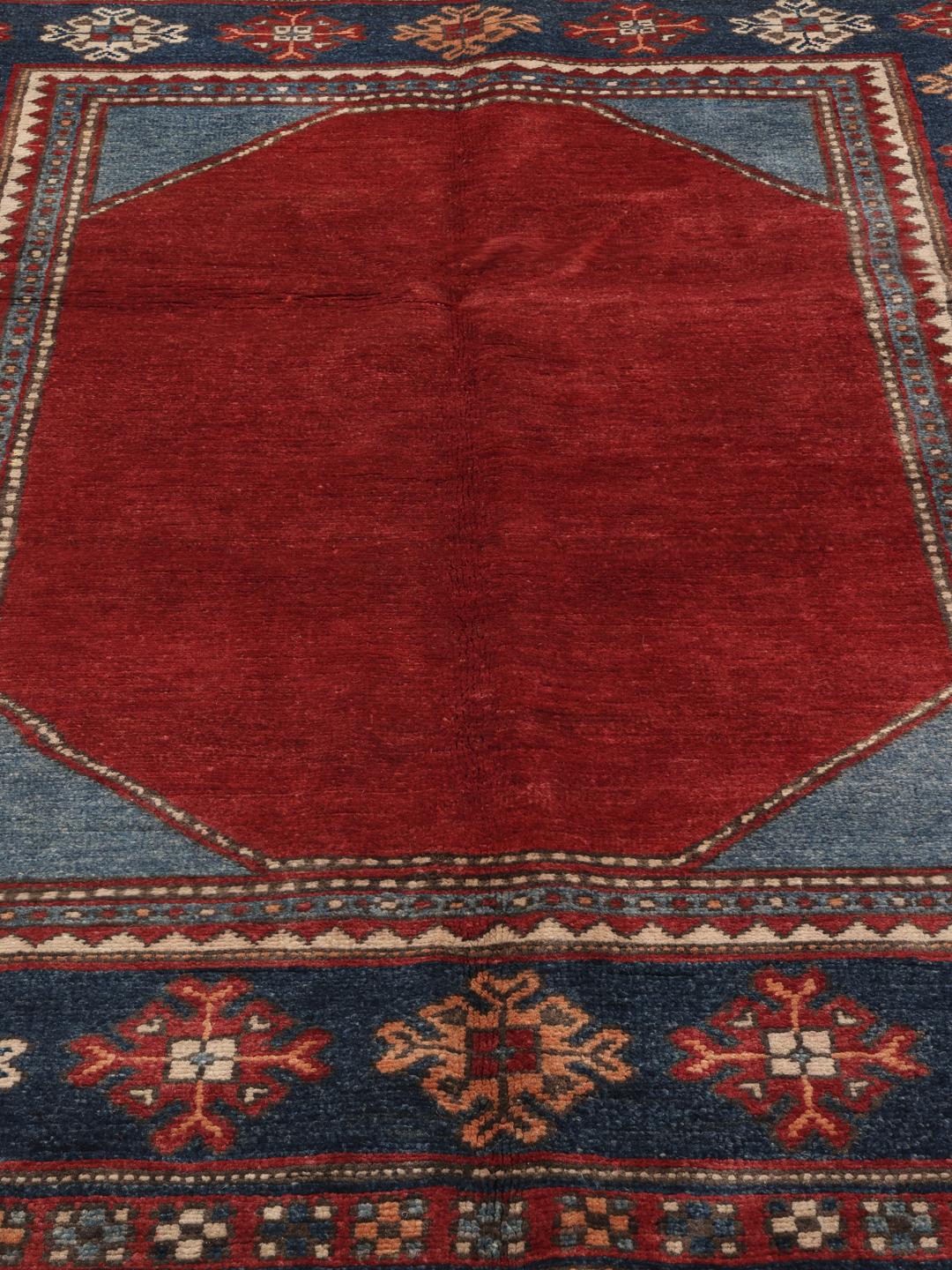
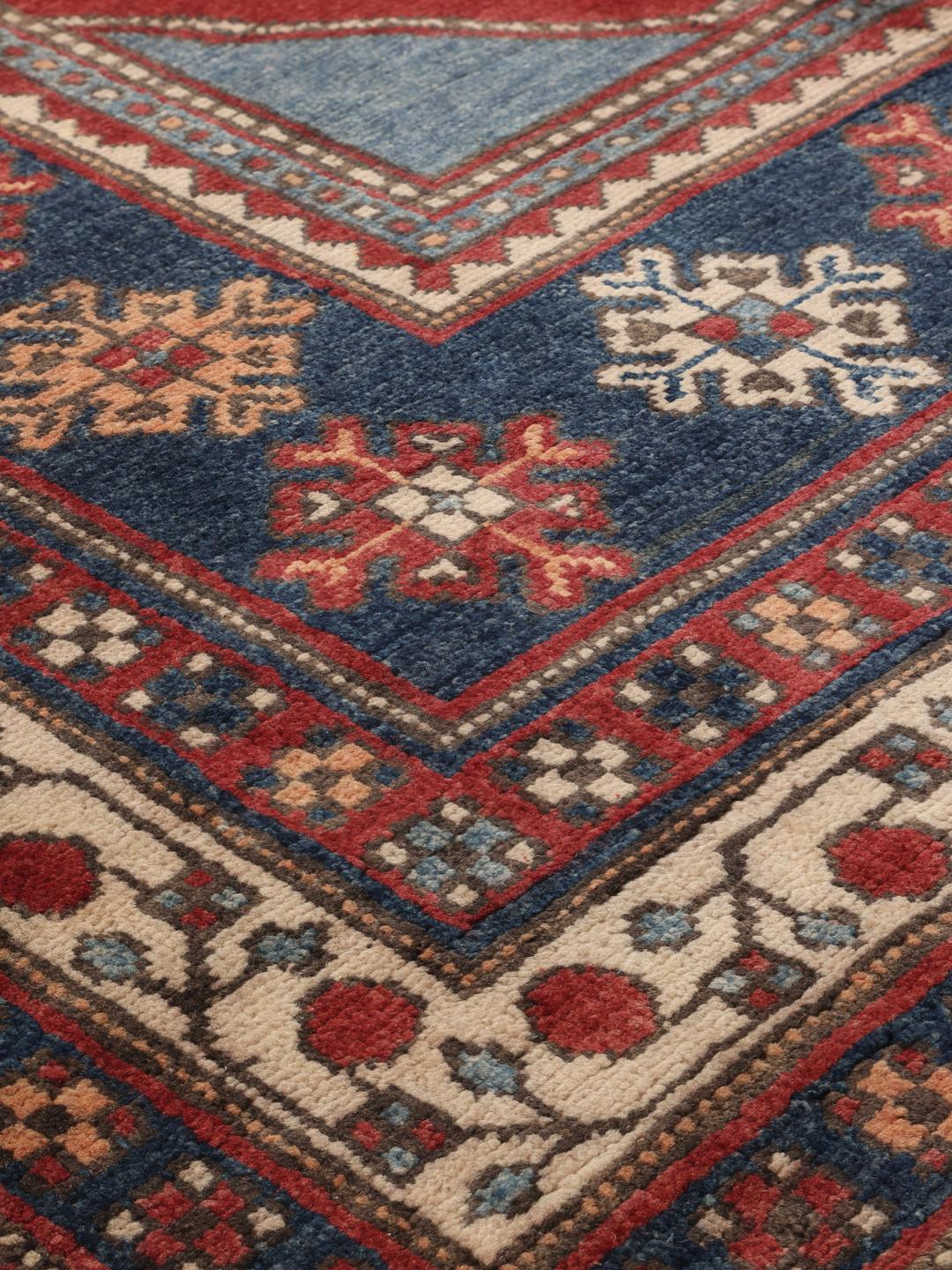
Signature elements of a Kazak rug include strong geometric medallions, stylised floral motifs, and bold, hooked borders. The use of deep, saturated colours like red and blue is traditional, often accented with ivory or secondary tones to create a striking contrast. This specific piece captures that classic visual language, utilising a central medallion that draws the eye and anchors the design.
Collectors value Kazak rugs for their primitive, energetic aesthetic and the high level of human skill required to produce them. Owning a piece from this tradition is more than just purchasing a floor covering; it is an appreciation of a cultural legacy that prioritises long-lasting quality and a distinct, soulful design language.