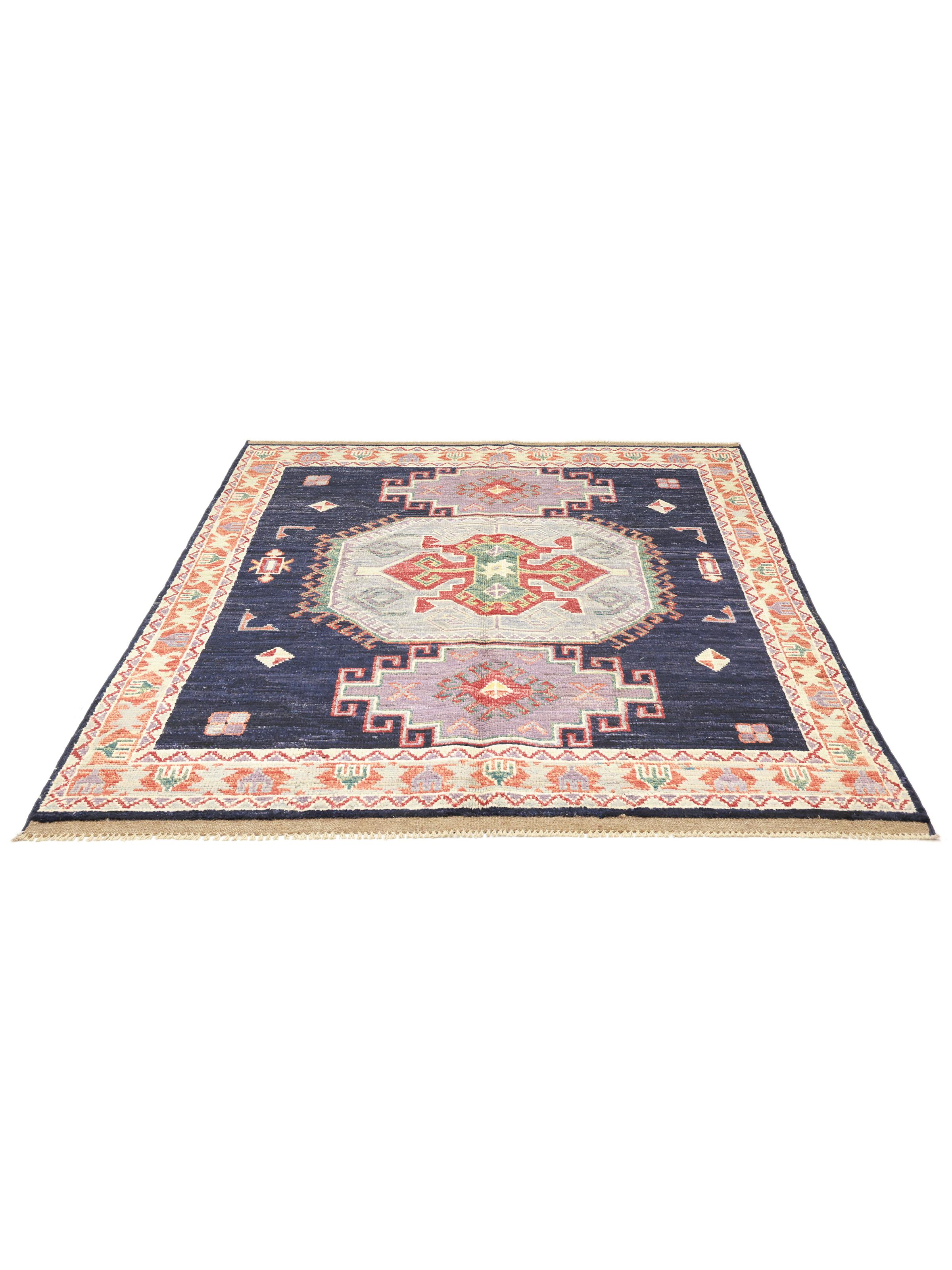
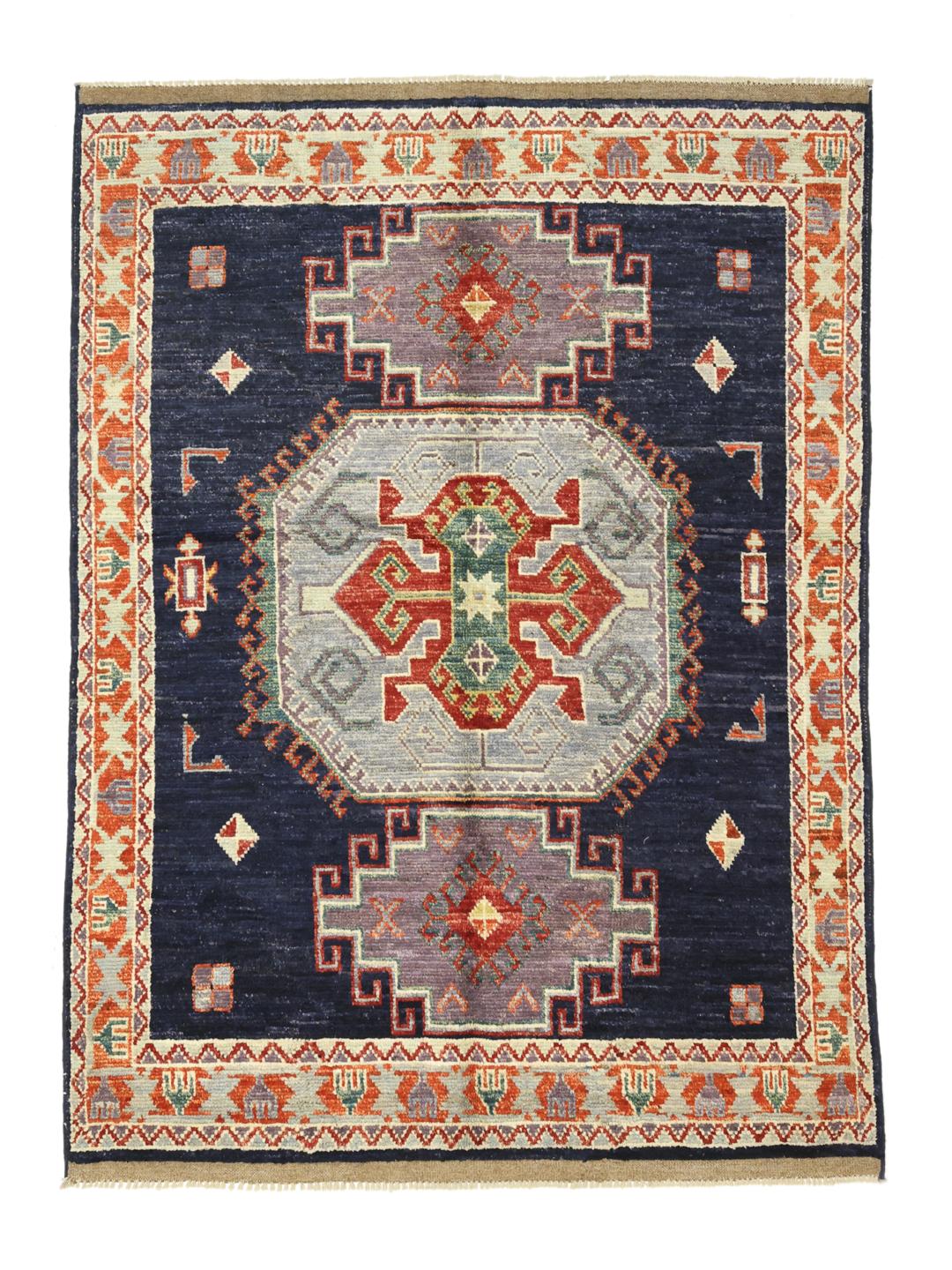
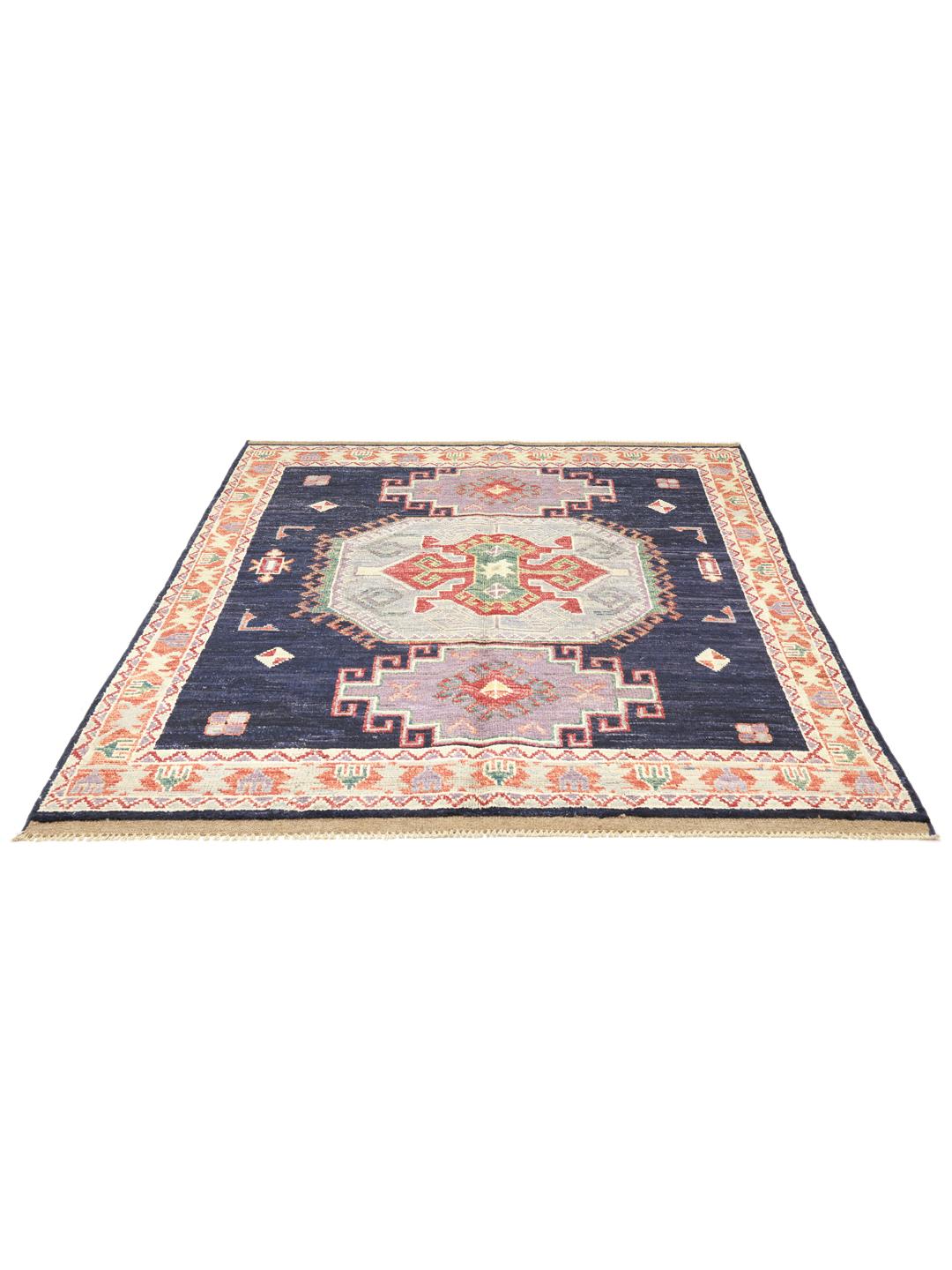
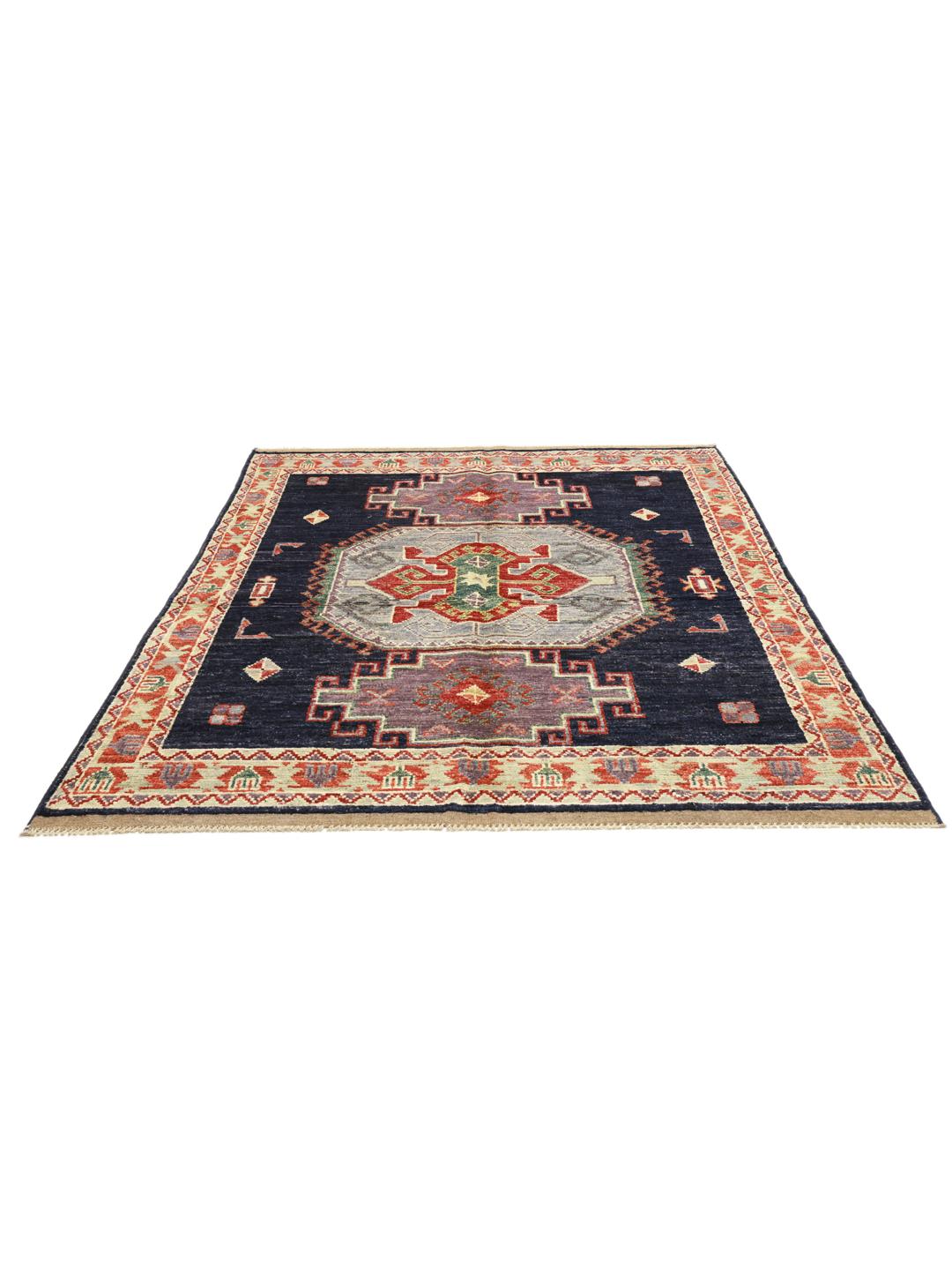
Kazak rugs originate from the Caucasus region and are celebrated for their bold, graphic aesthetics. While the tradition began in the mountainous areas between the Black and Caspian Seas, the craft has evolved significantly over centuries, with some of the most vibrant and high-quality contemporary examples now being produced in Afghanistan.
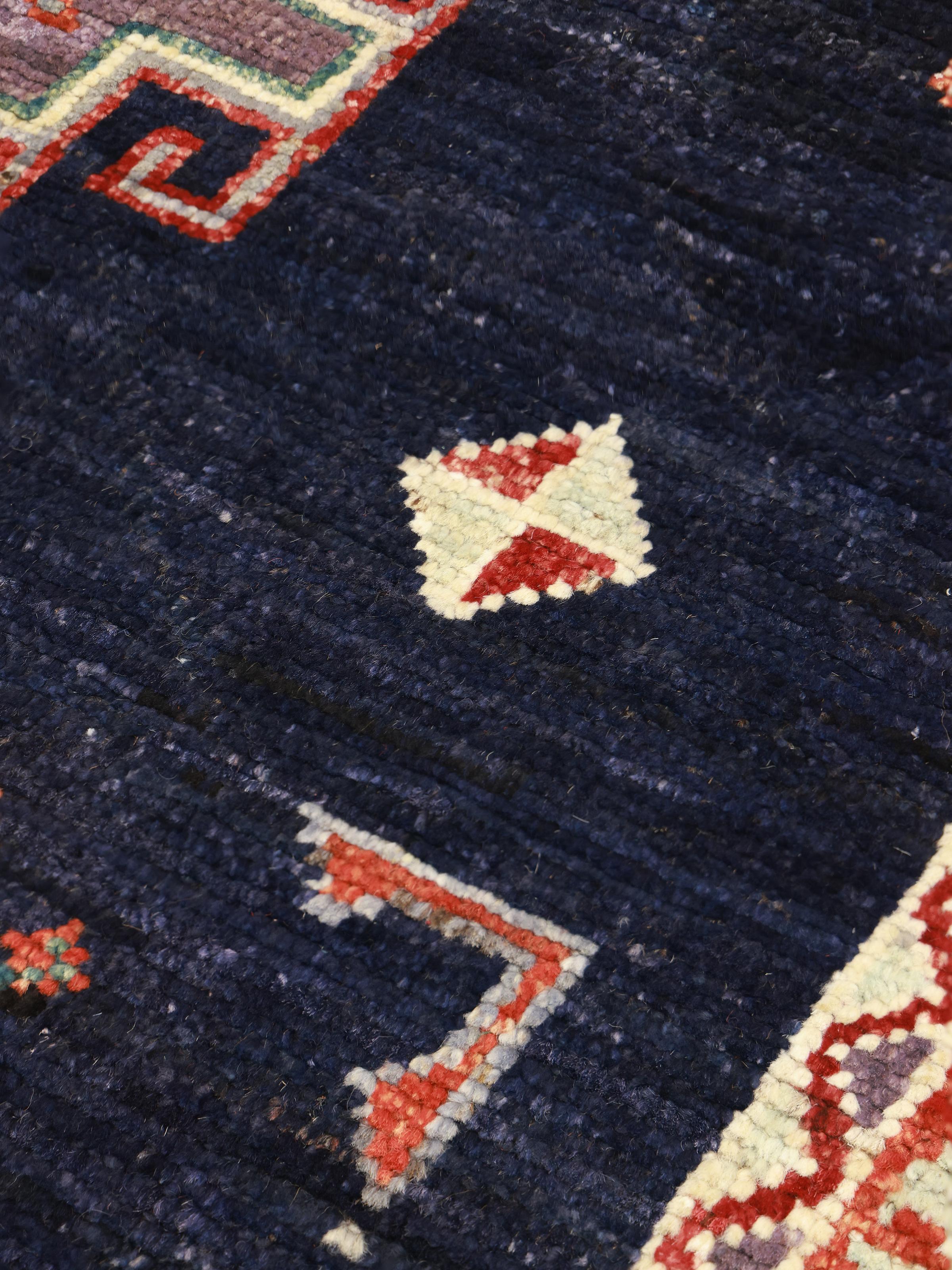
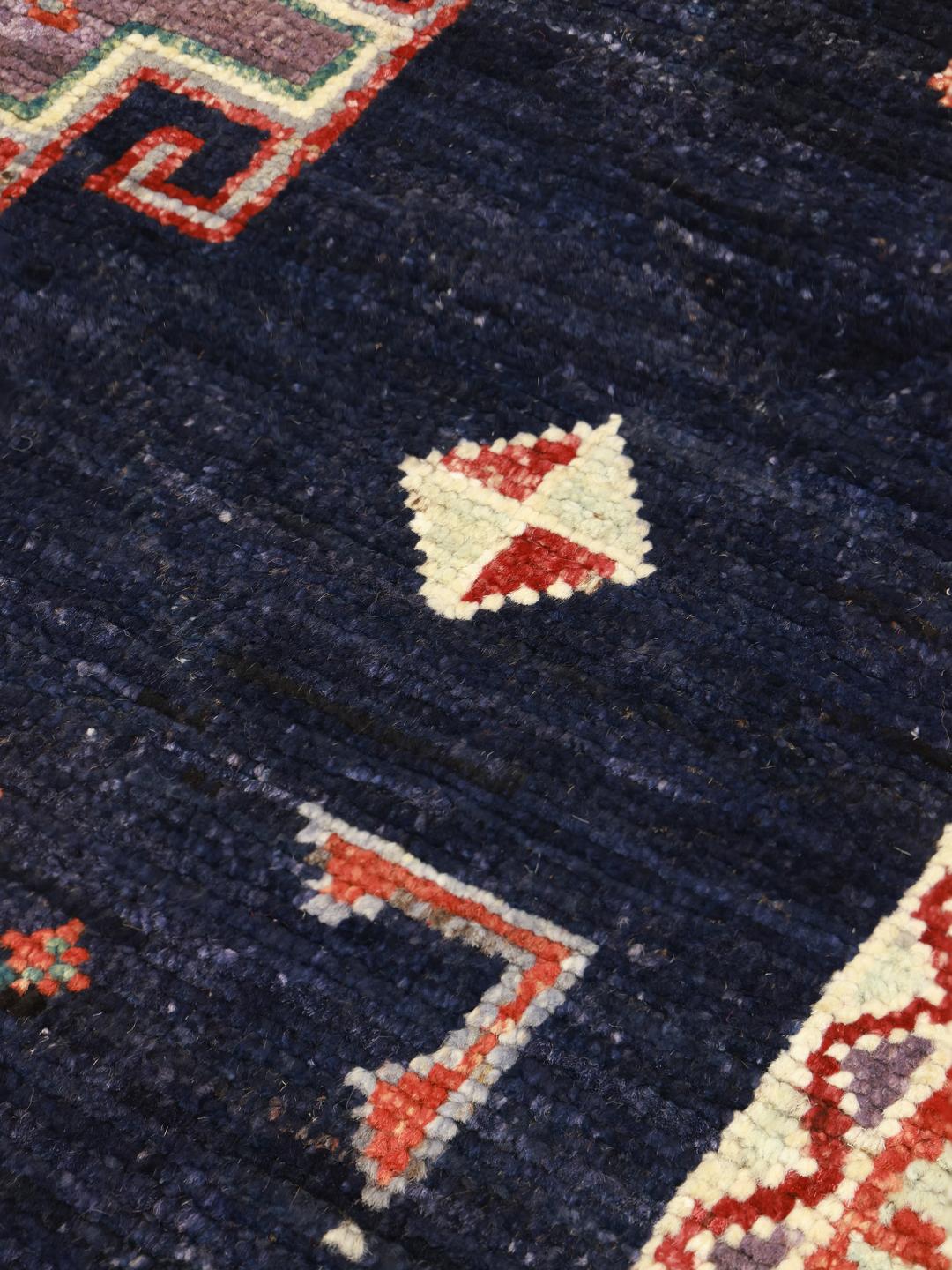
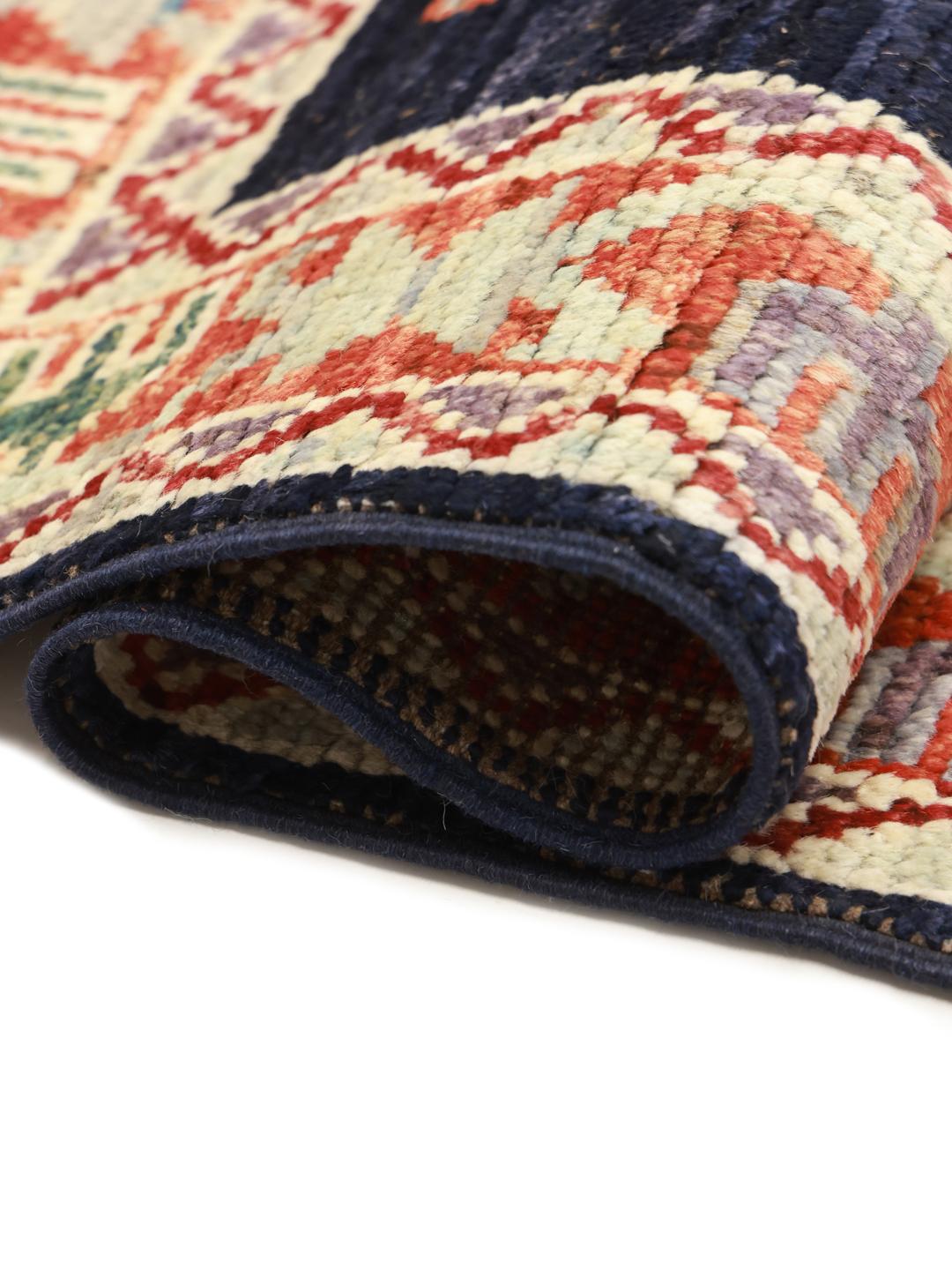
The term Kazak refers to a specific style rather than a single village, characterised by geometric shapes and a powerful use of primary colours. These rugs are traditionally made with a thick, durable pile that is designed to withstand the rigours of daily life, making them as functional as they are decorative.
The design language of this tradition is immediately recognisable by its strong use of medallions, latch-hook borders, and stylised floral motifs. The symmetry and clarity of the patterns often reflect regional symbols, each carrying a history that connects the viewer to the nomadic and village cultures of the Middle East.
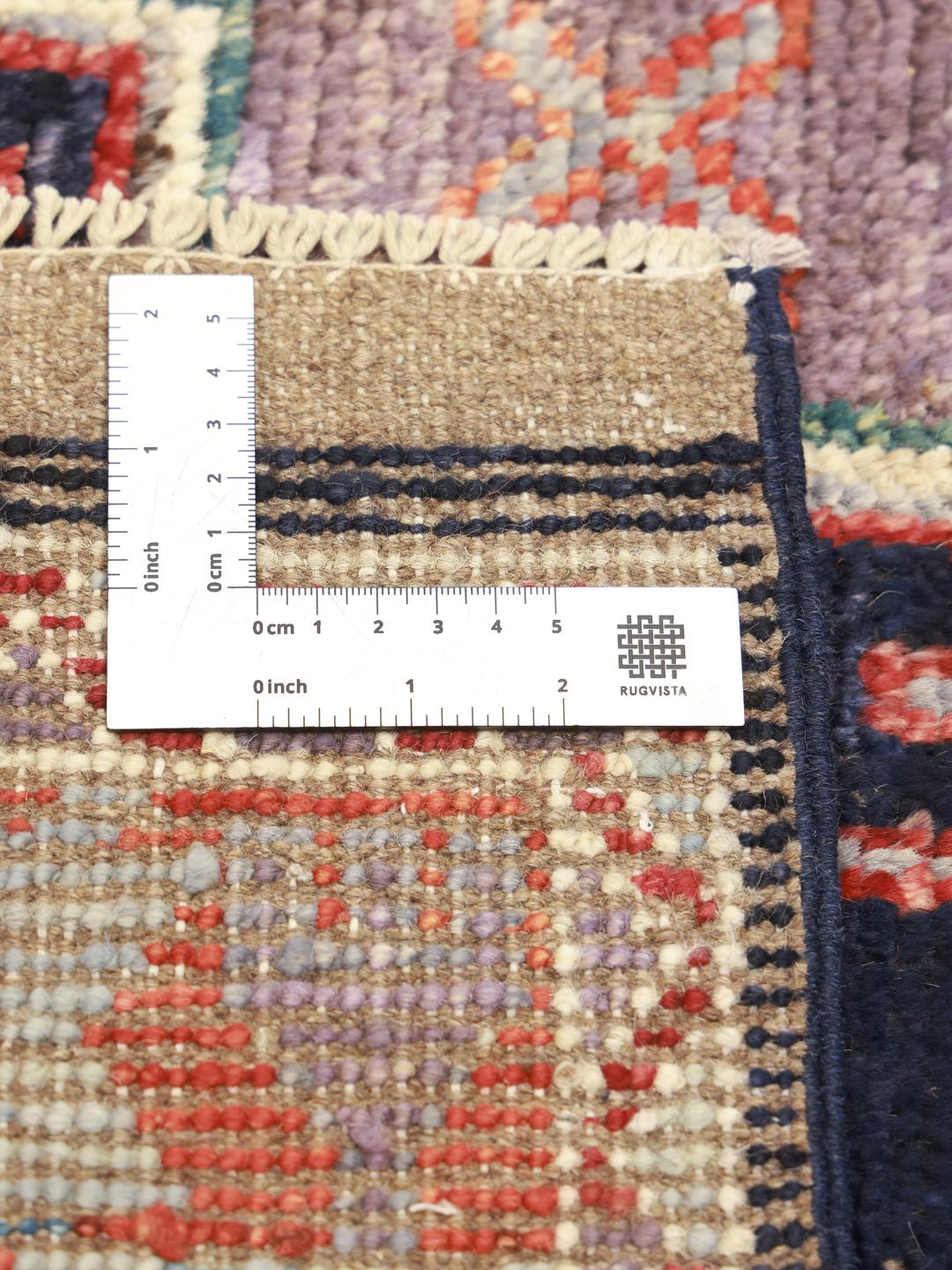
Collecting these rugs is a way to preserve a rich artistic legacy. Because each piece is created by hand without a rigid template, they represent a high level of individual skill and cultural continuity, making them cherished additions to homes that value history, authenticity, and lasting craftsmanship.