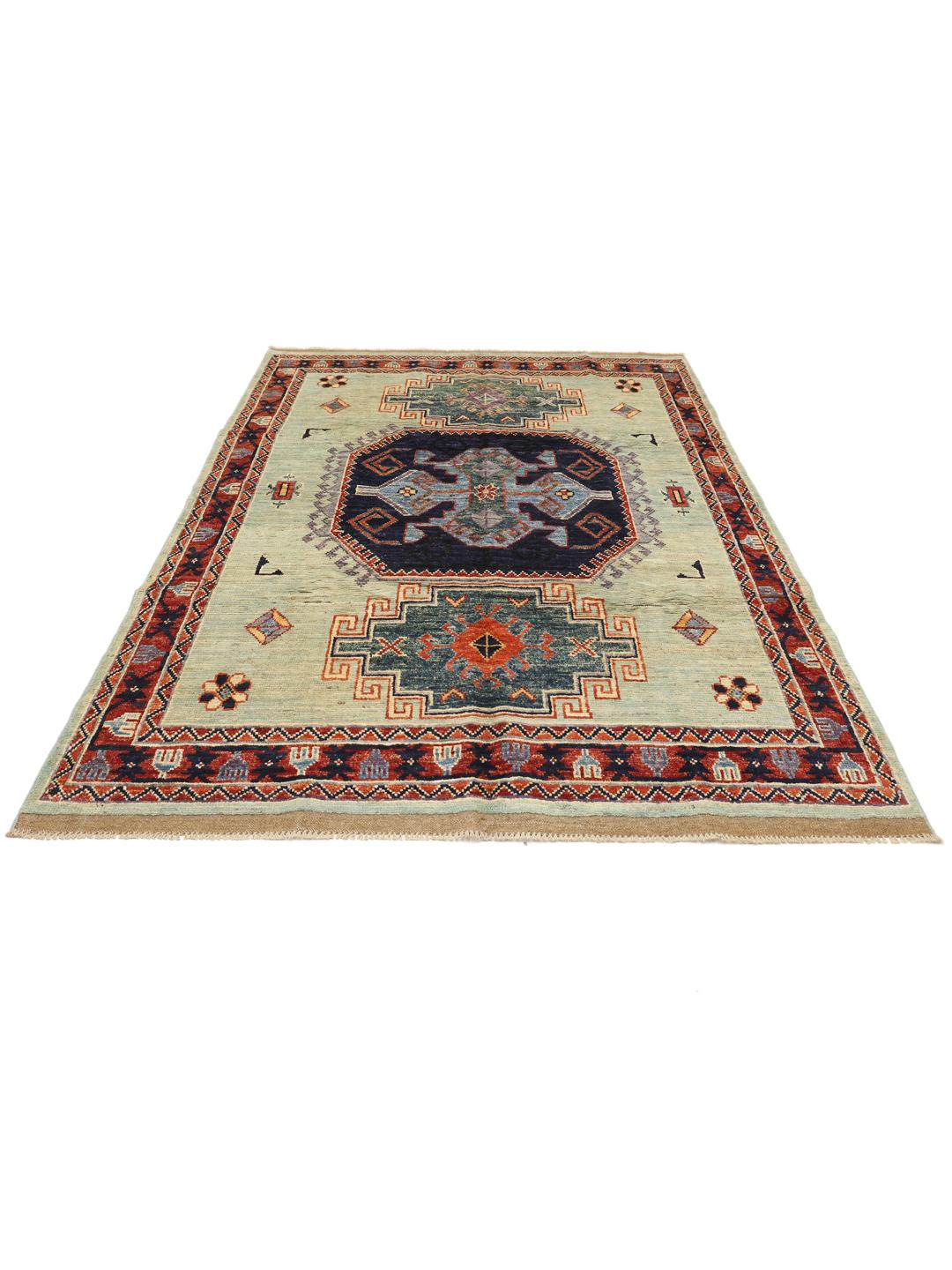
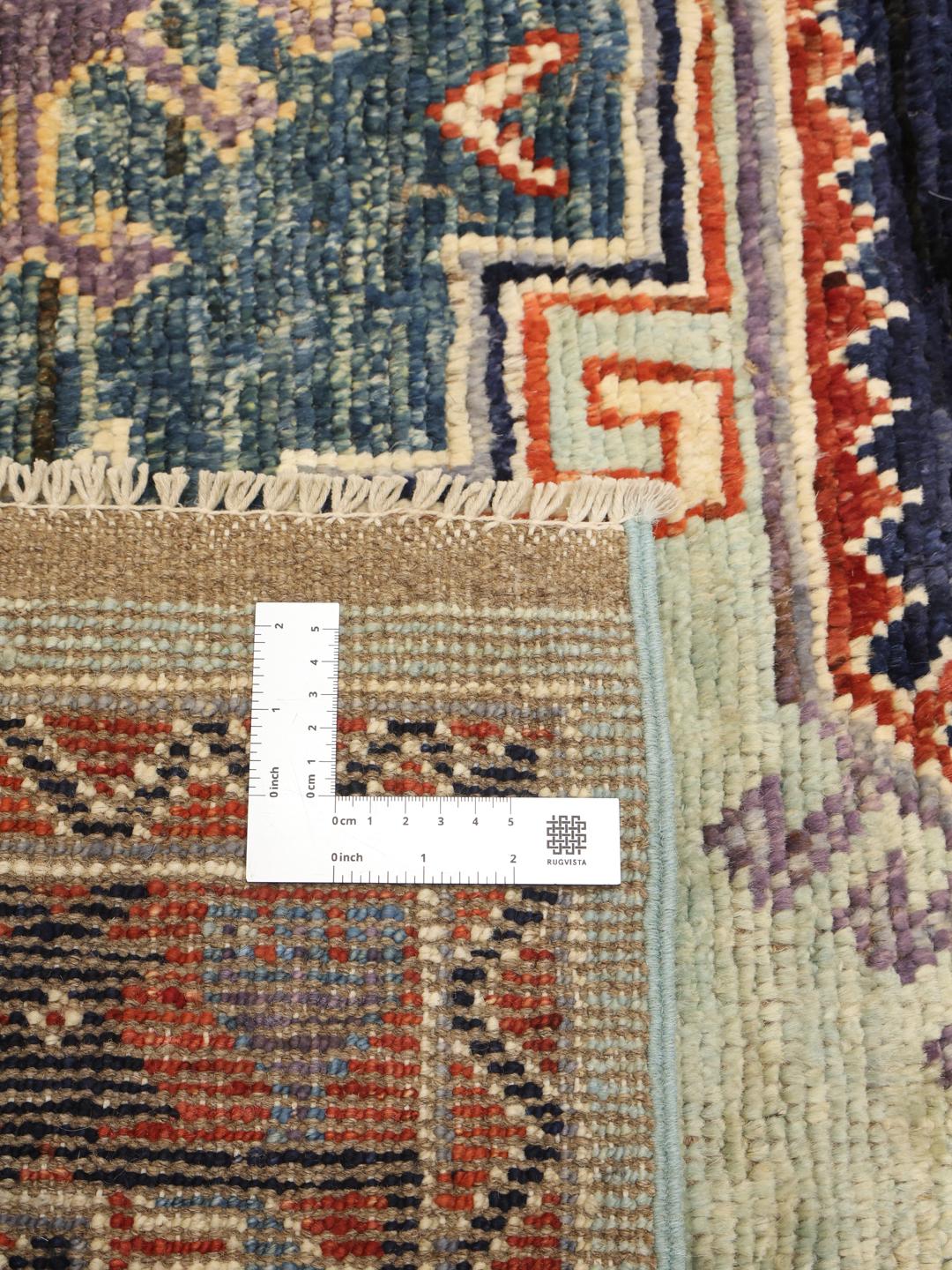
Kazak rugs originate from the Caucasus region, a mountainous area with a long history of weaving that blends diverse cultural influences. While the name historically refers to rugs produced by various tribes in this region, the tradition has evolved over centuries, with modern fine examples now being expertly produced in Afghanistan.
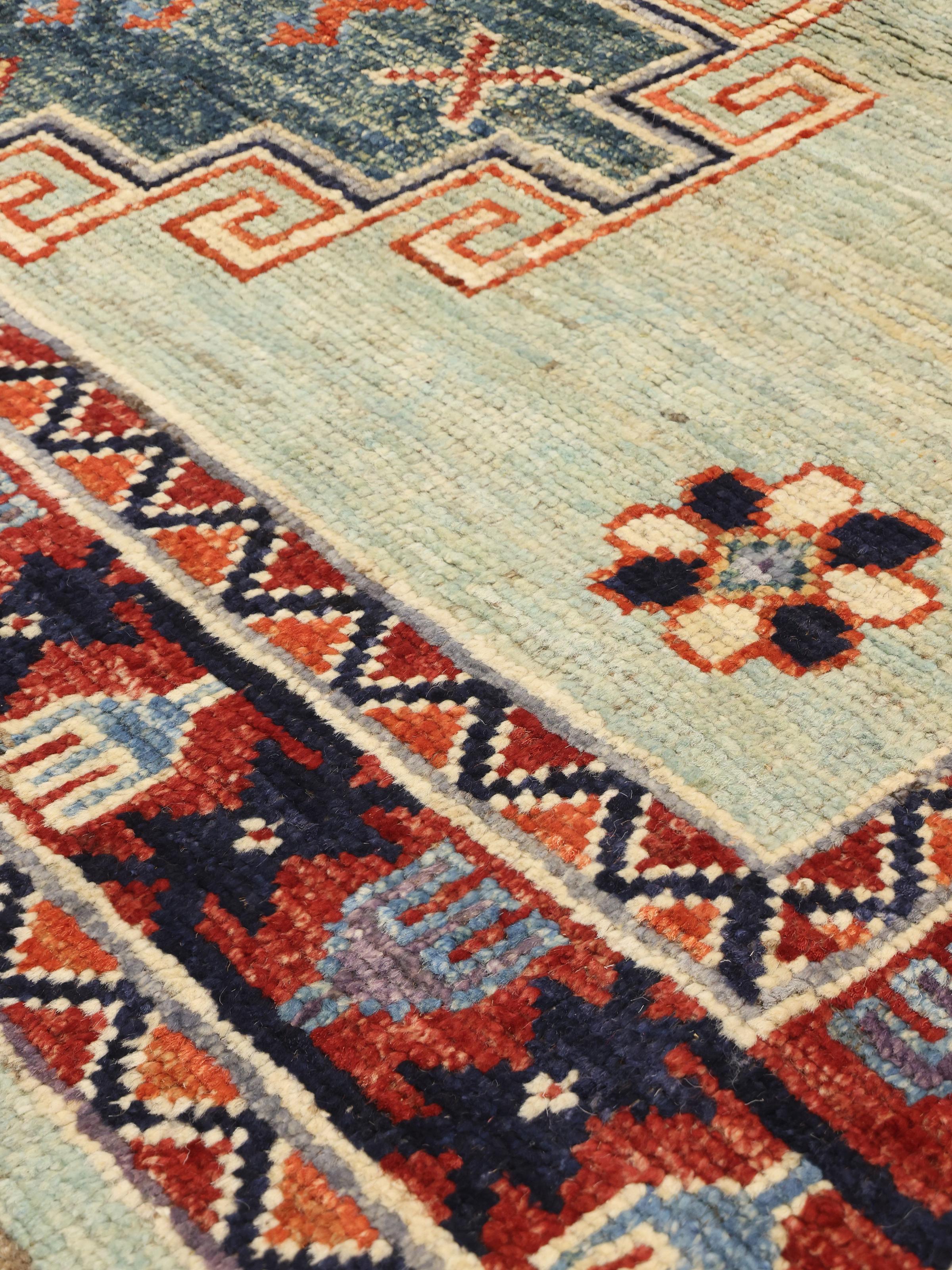
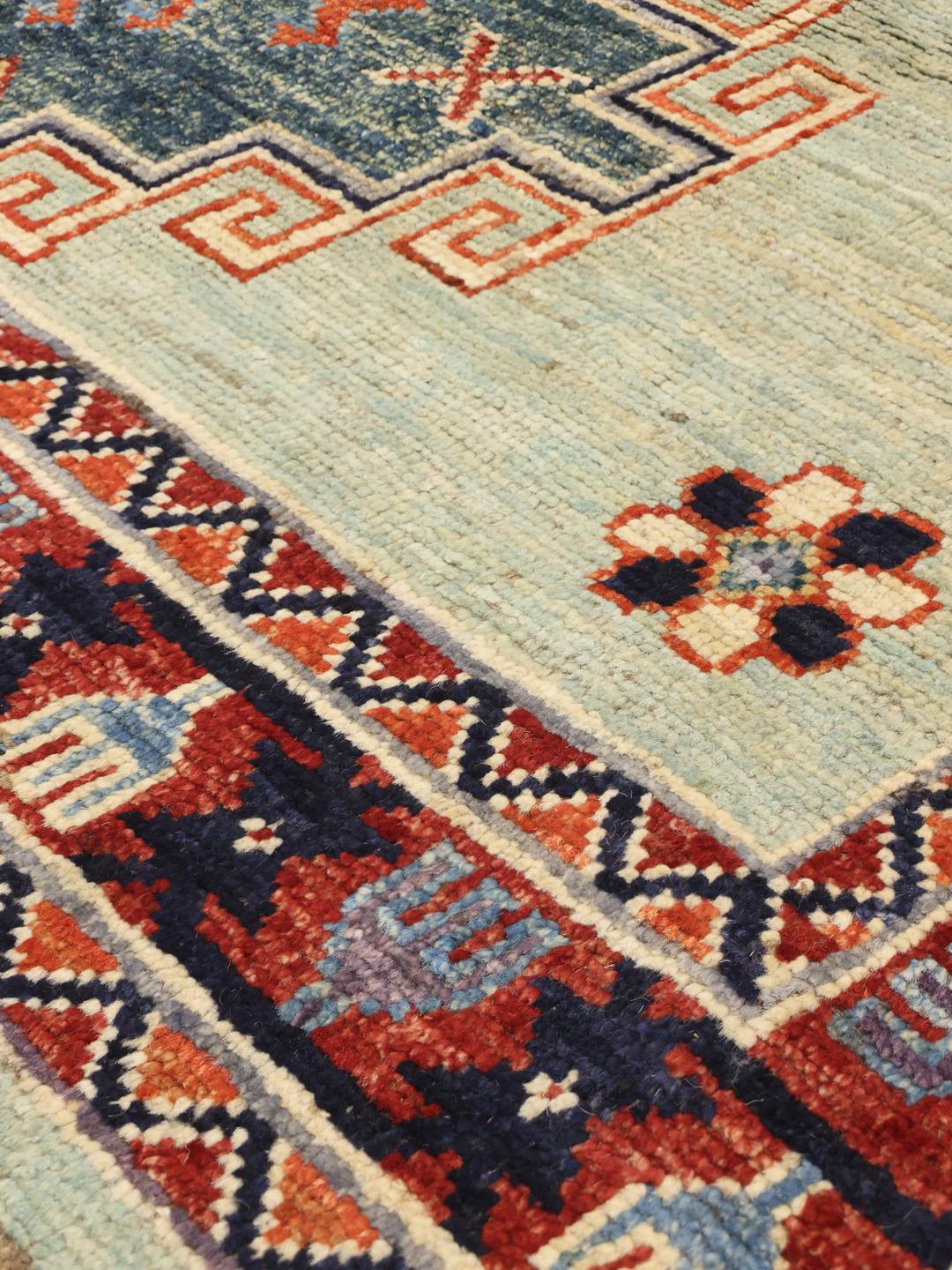
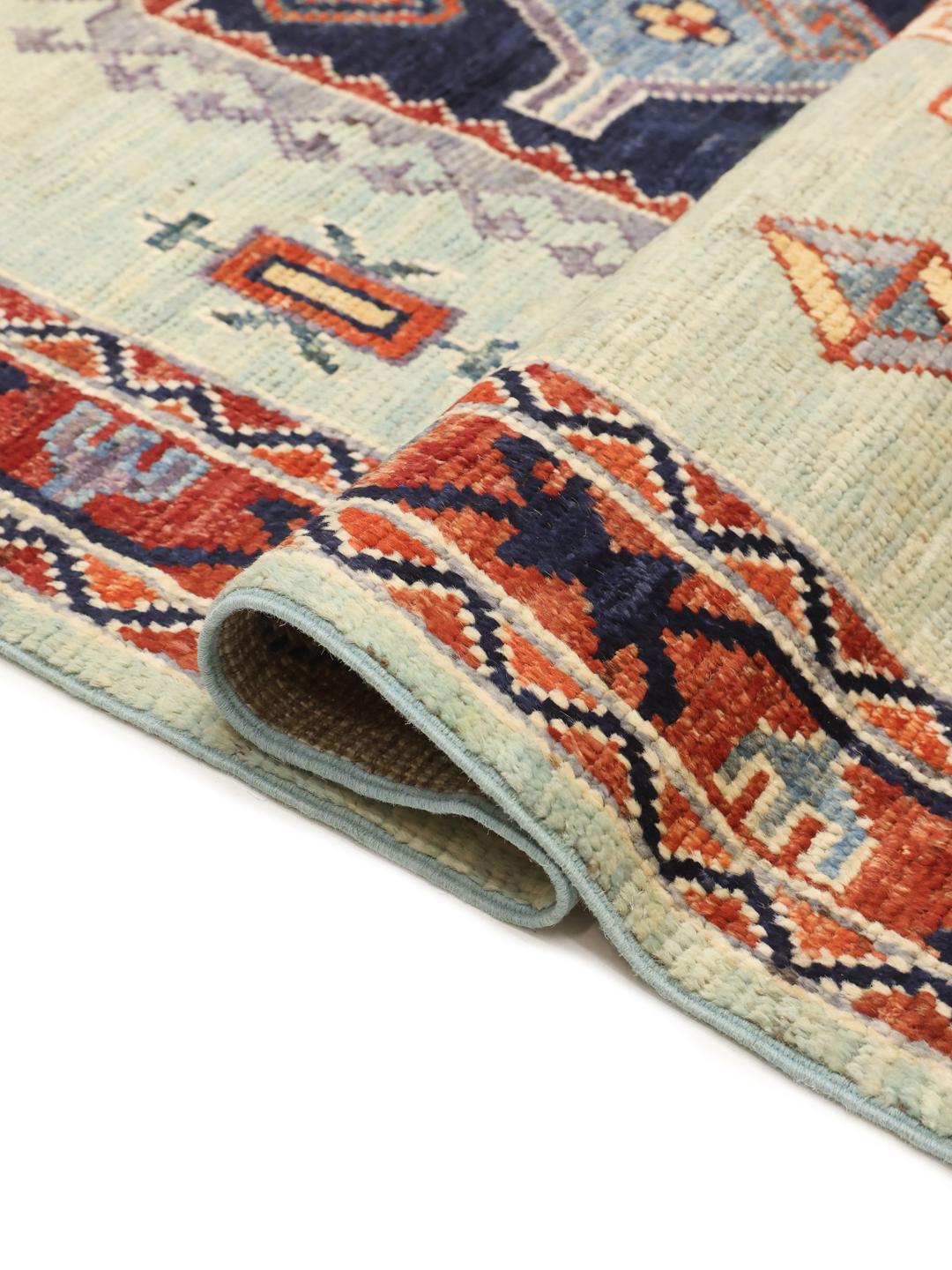
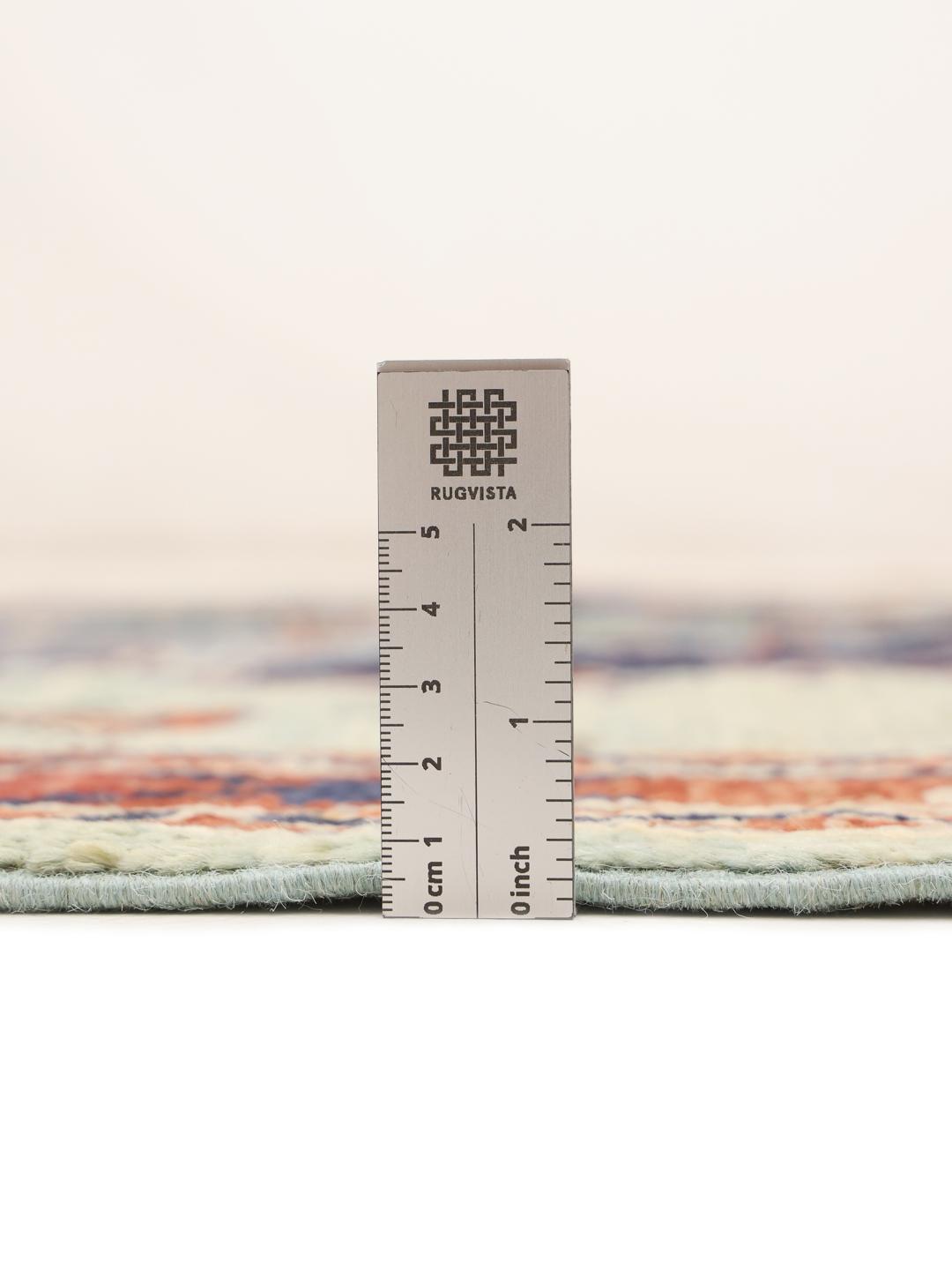
The term Kazak refers to the specific style of weaving and the bold, geometric aesthetic that defines these rugs. These pieces are traditionally hand-knotted using a dense, sturdy technique that produces a thick, lustrous pile. This construction is key to their longevity, as it creates a robust surface that stands up to decades of use while retaining its soft feel.
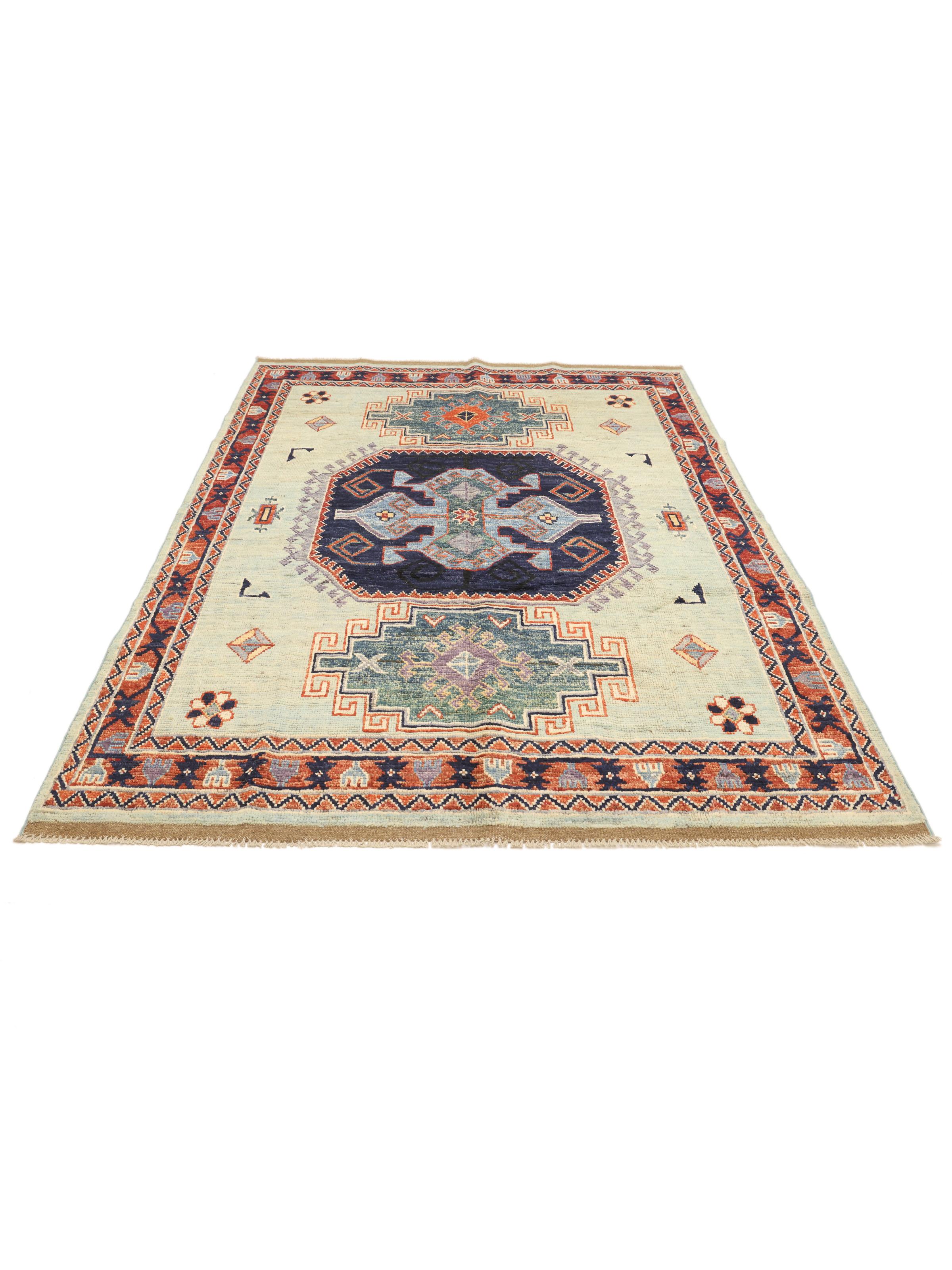
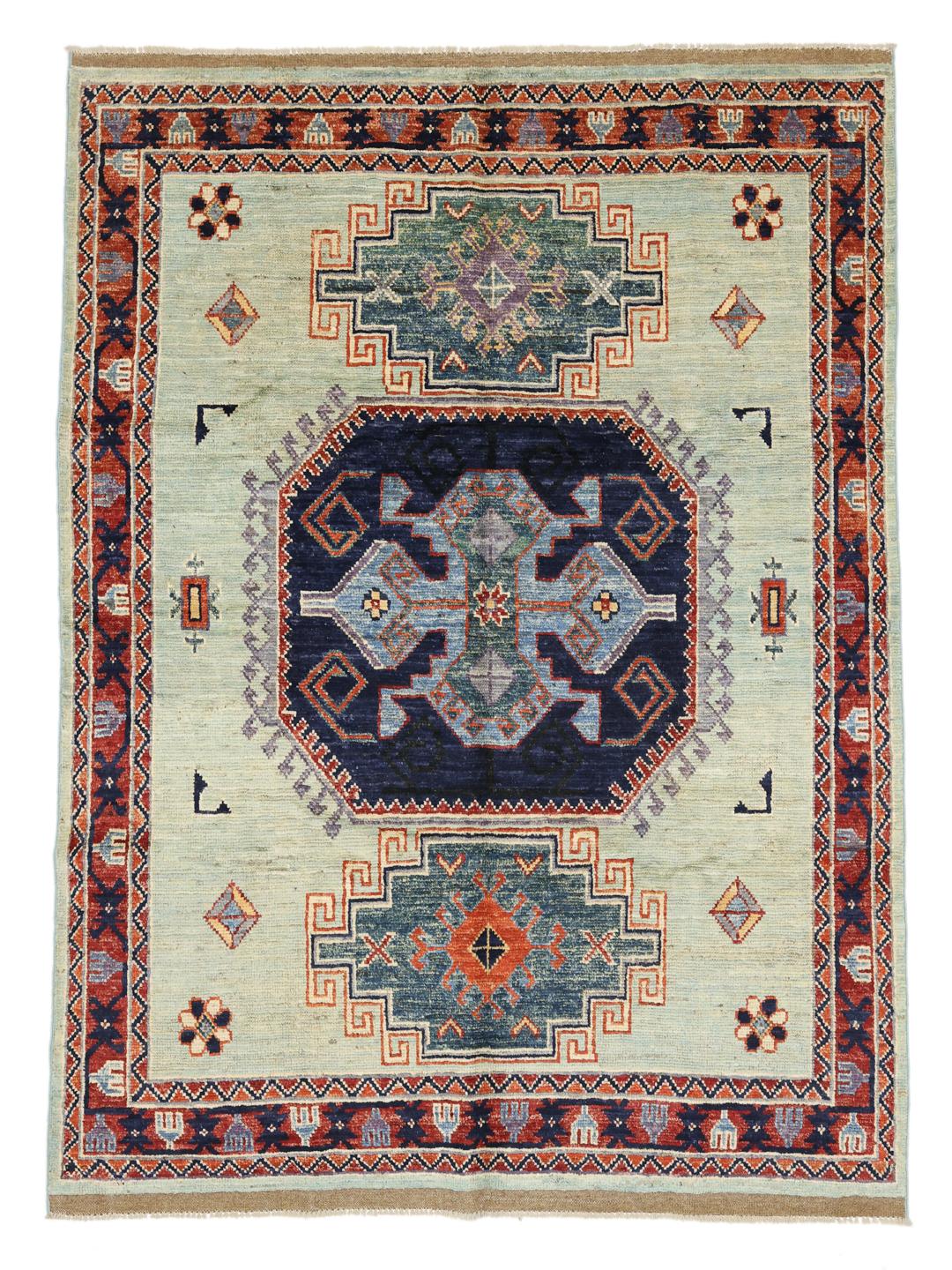
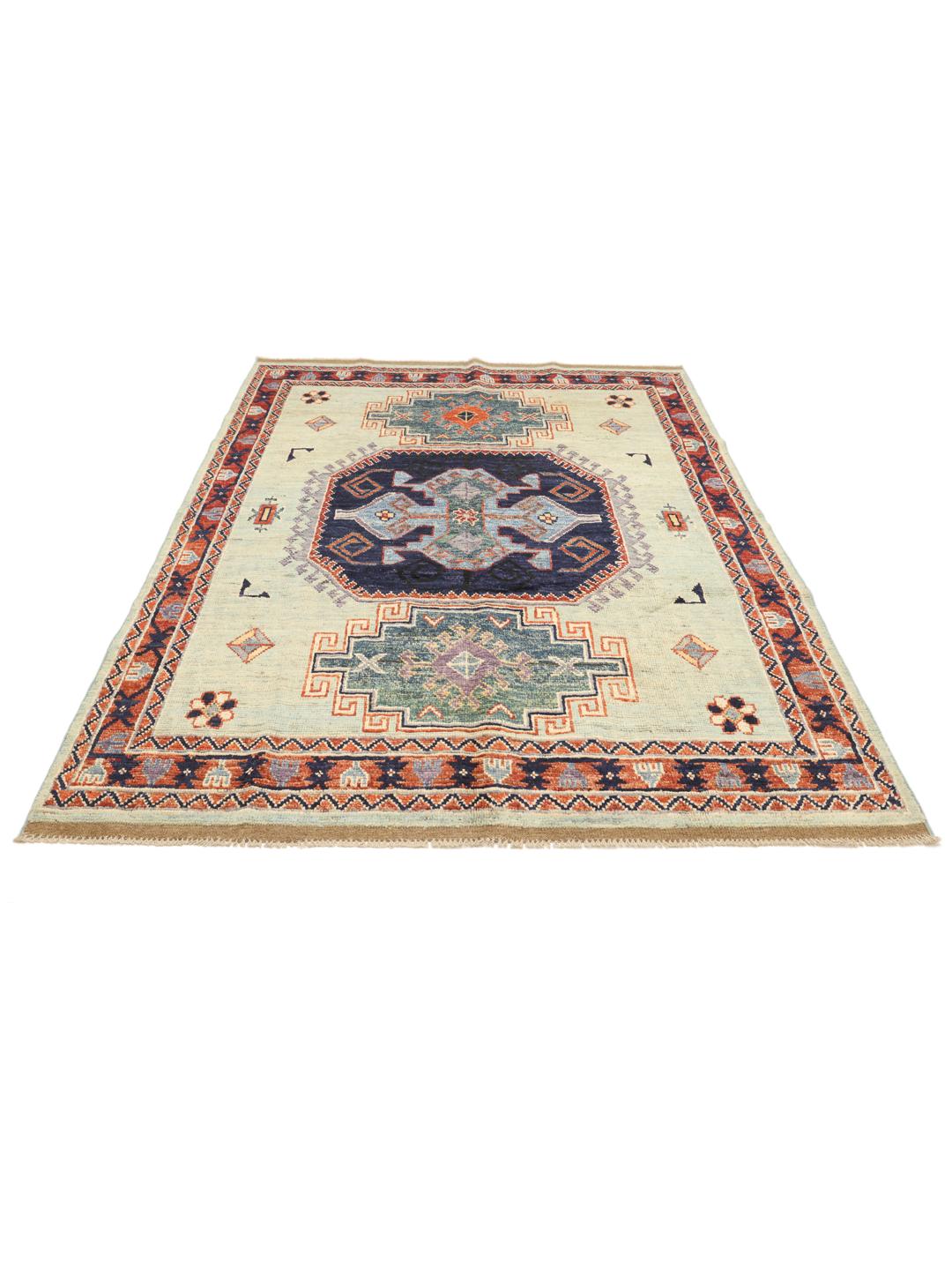
Visually, Kazak rugs are known for their striking, large-scale geometric motifs, often featuring stylised medallions, latch-hook designs, and symbolic tribal patterns. The borders are typically wide and formal, framing the central field with repeating motifs that create a sense of balance and rhythm. This specific rug showcases these classic elements in a vibrant, artistic way.
These rugs are highly valued by collectors for their cultural weight and the undeniable skill required to produce them. Owning a piece from this tradition is more than just purchasing a floor covering; it is an investment in a craft that has been passed down through generations, representing a bridge between the artistic heritage of the past and the modern home.