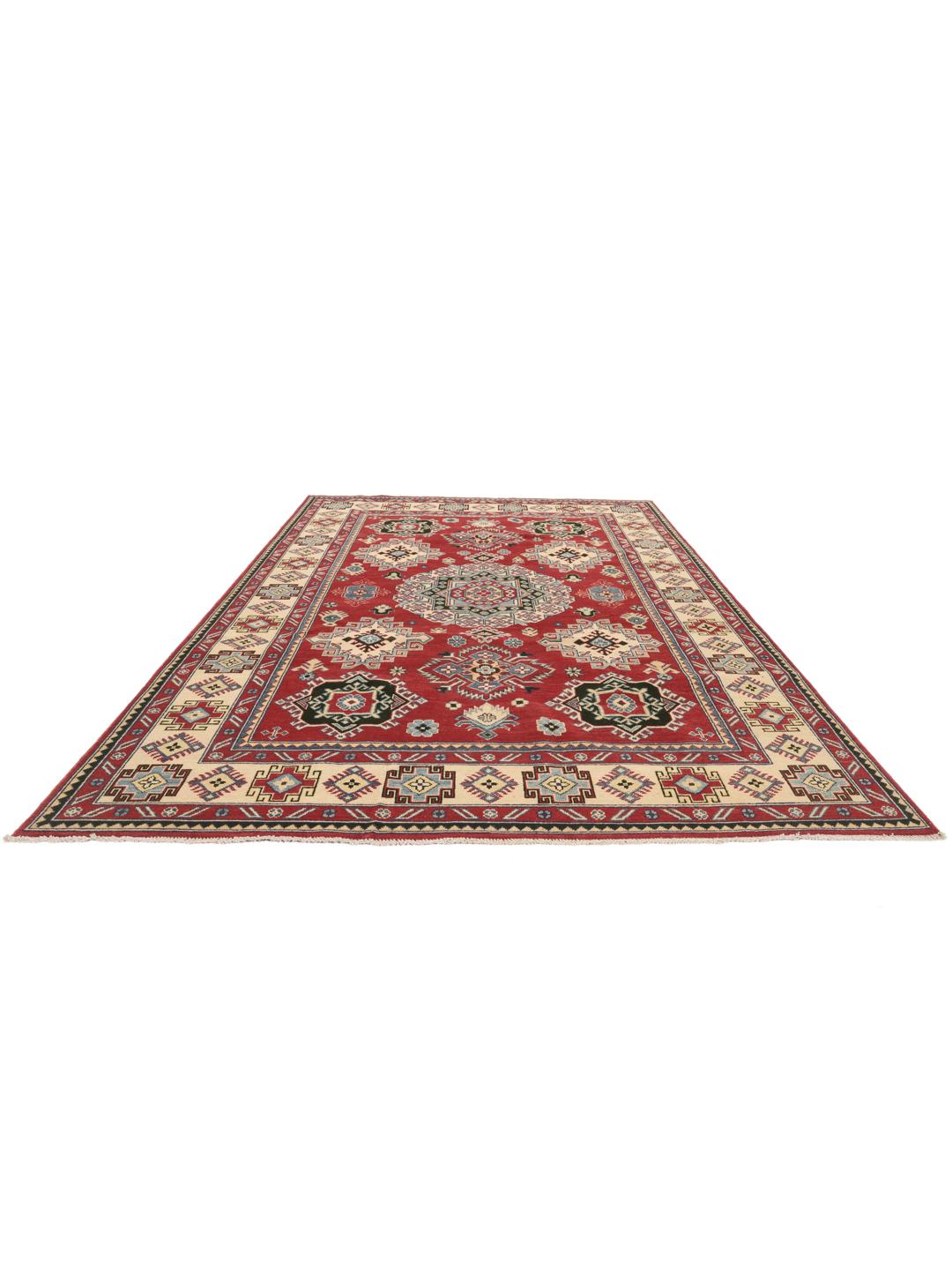
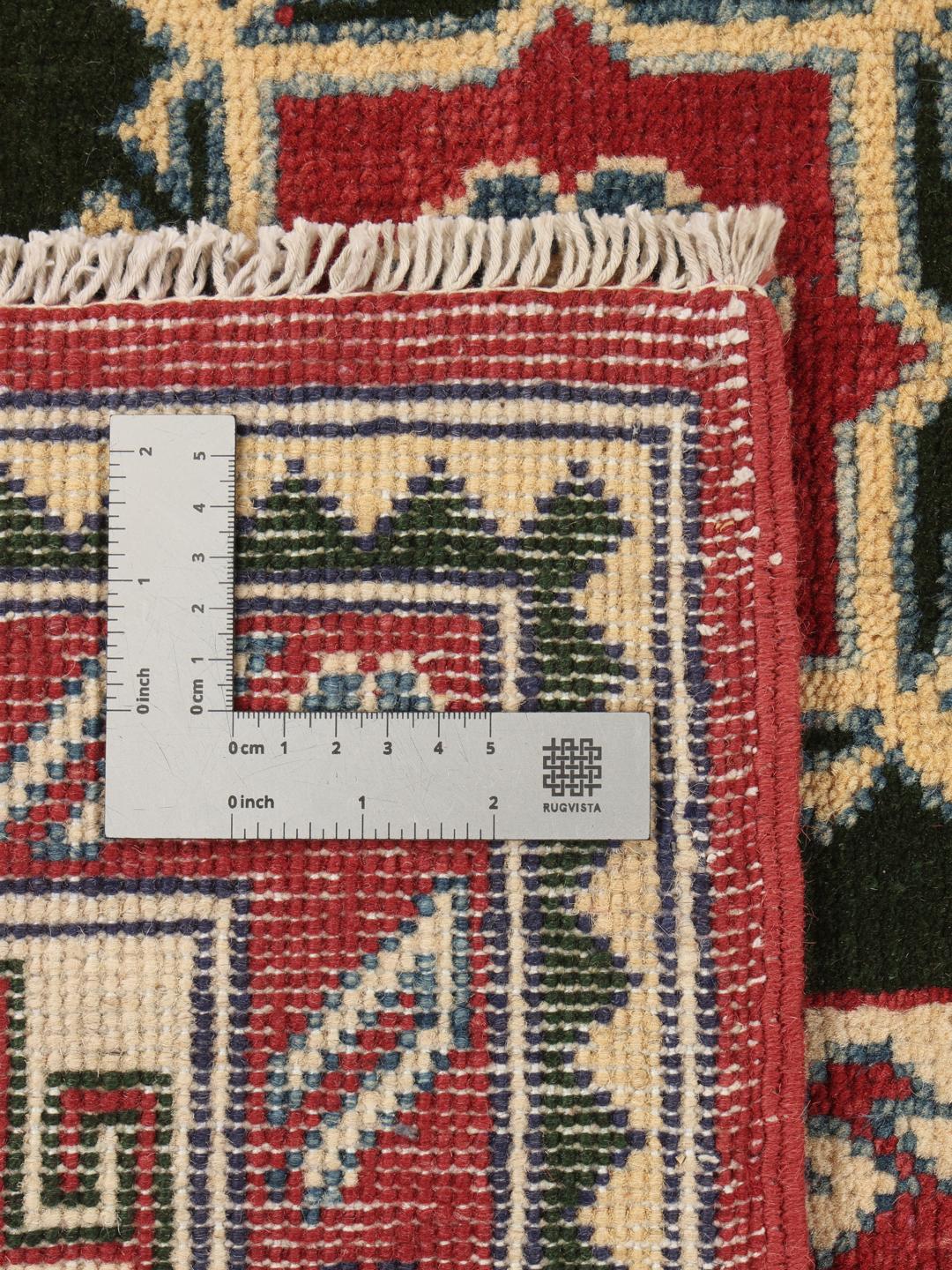
Kazak rugs originate from the mountainous regions of the Caucasus, a land historically known for its bold, expressive weaving traditions. While the term originally described rugs from specific Caucasian villages, the tradition has evolved significantly over time. Today, the most vibrant and high-quality examples are primarily crafted in Afghanistan, where weavers have masterfully adopted and preserved these iconic styles.
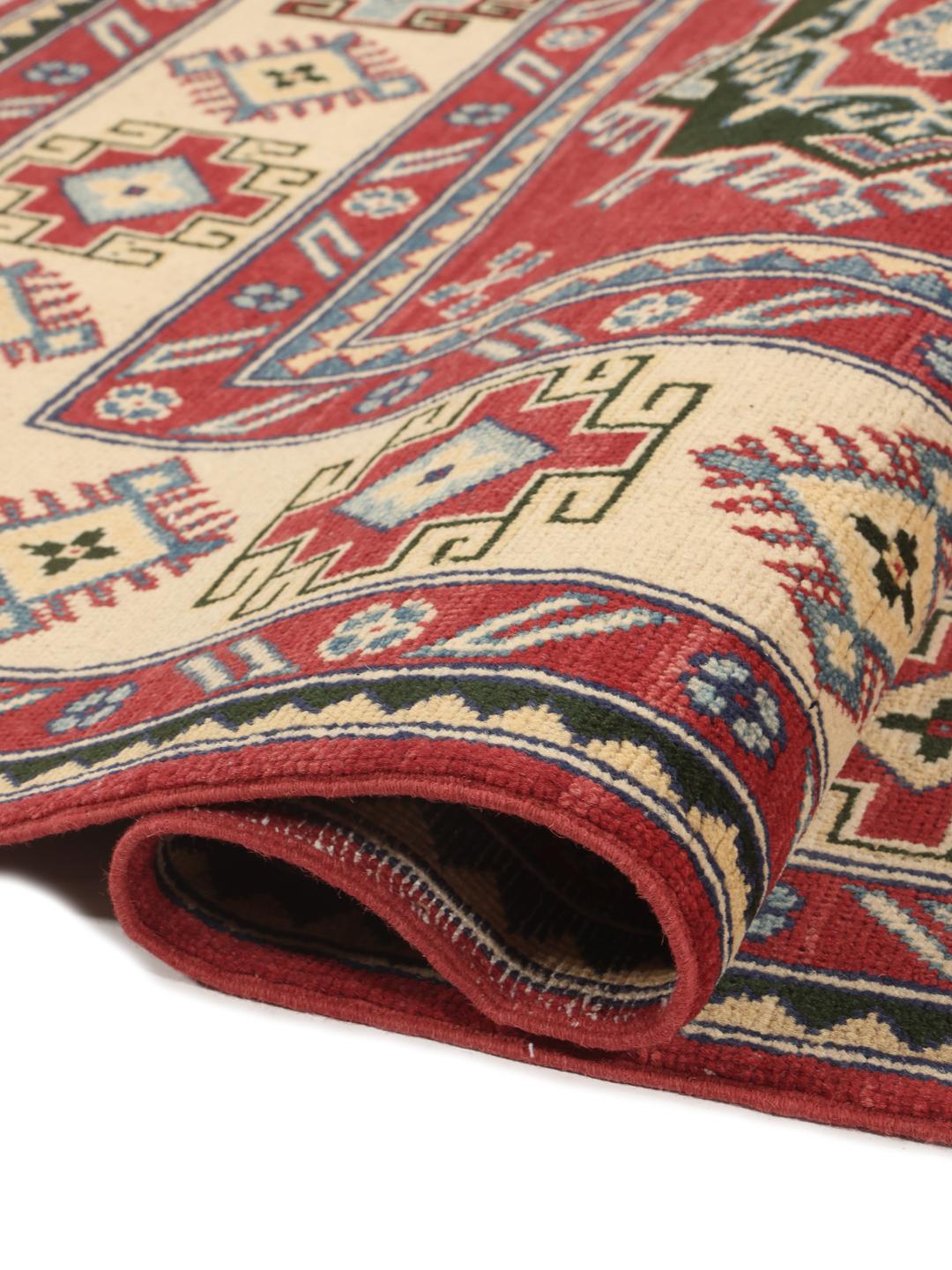
The term Kazak refers to a specific aesthetic characterised by its strong, geometric character rather than a single production technique. These rugs are celebrated for their use of bold, primary colours and dramatic, large-scale motifs. The construction typically involves sturdy wool, chosen for its resilience and ability to hold deep, rich dyes that develop a beautiful patina over the years.
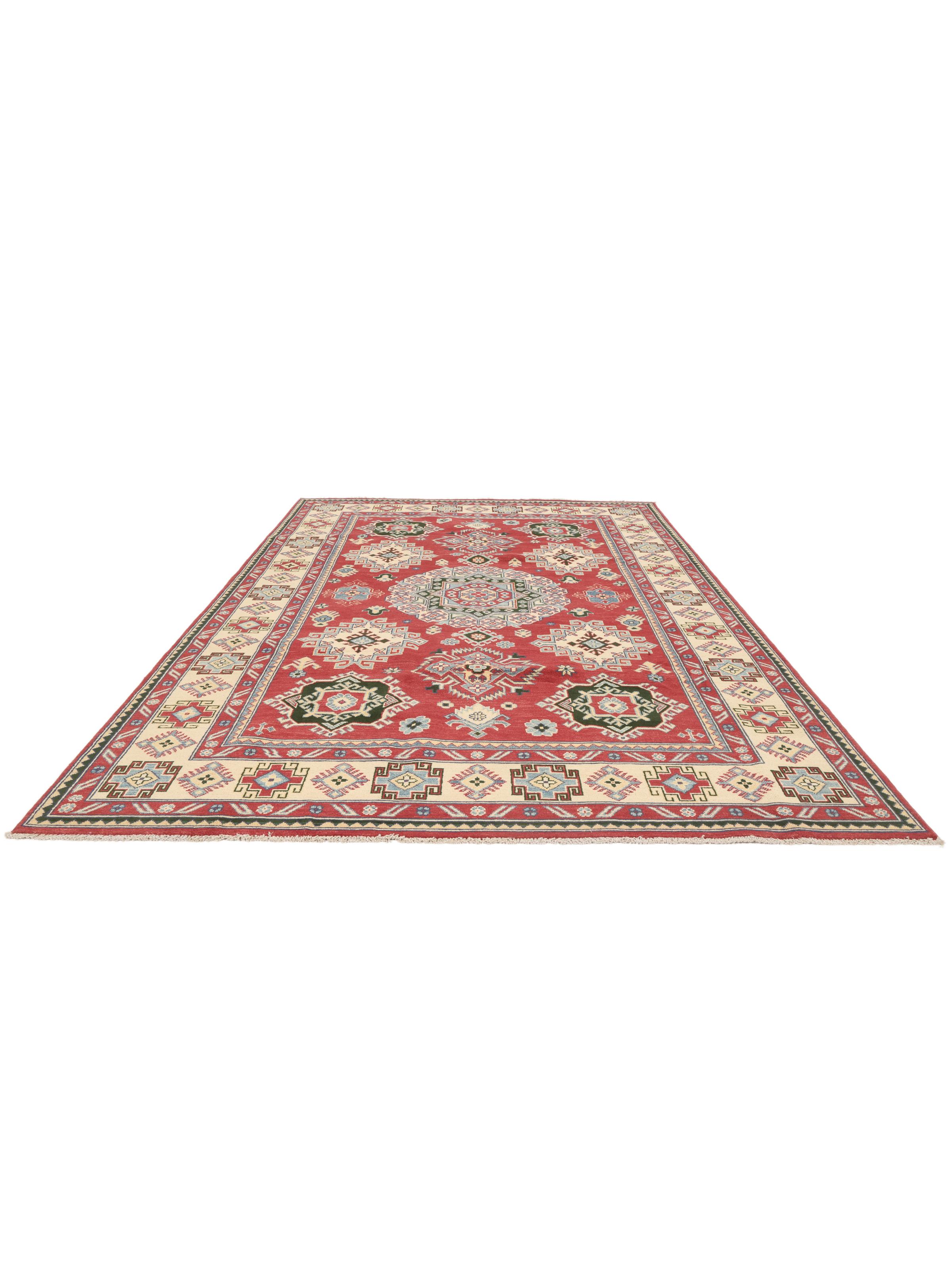
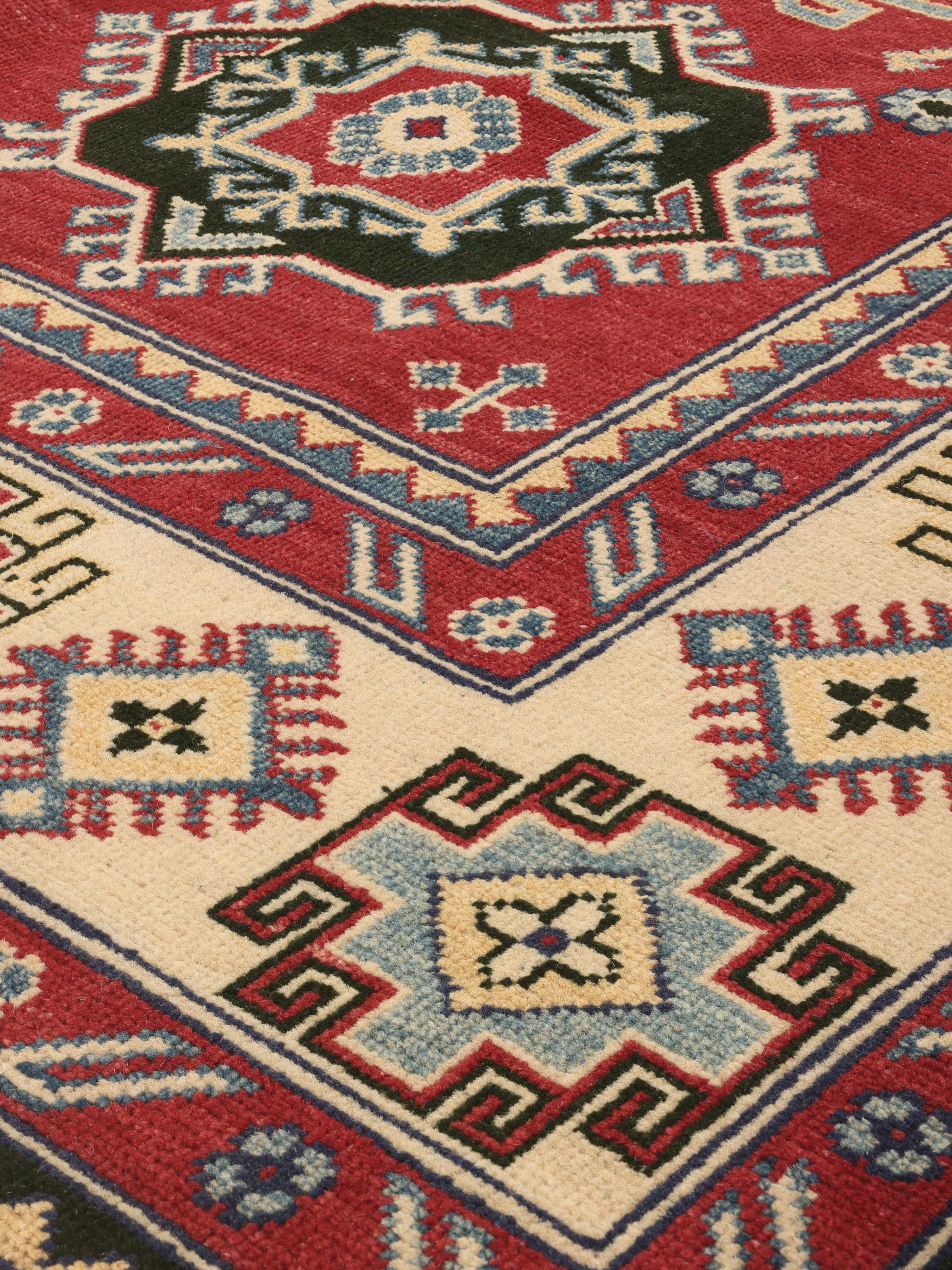
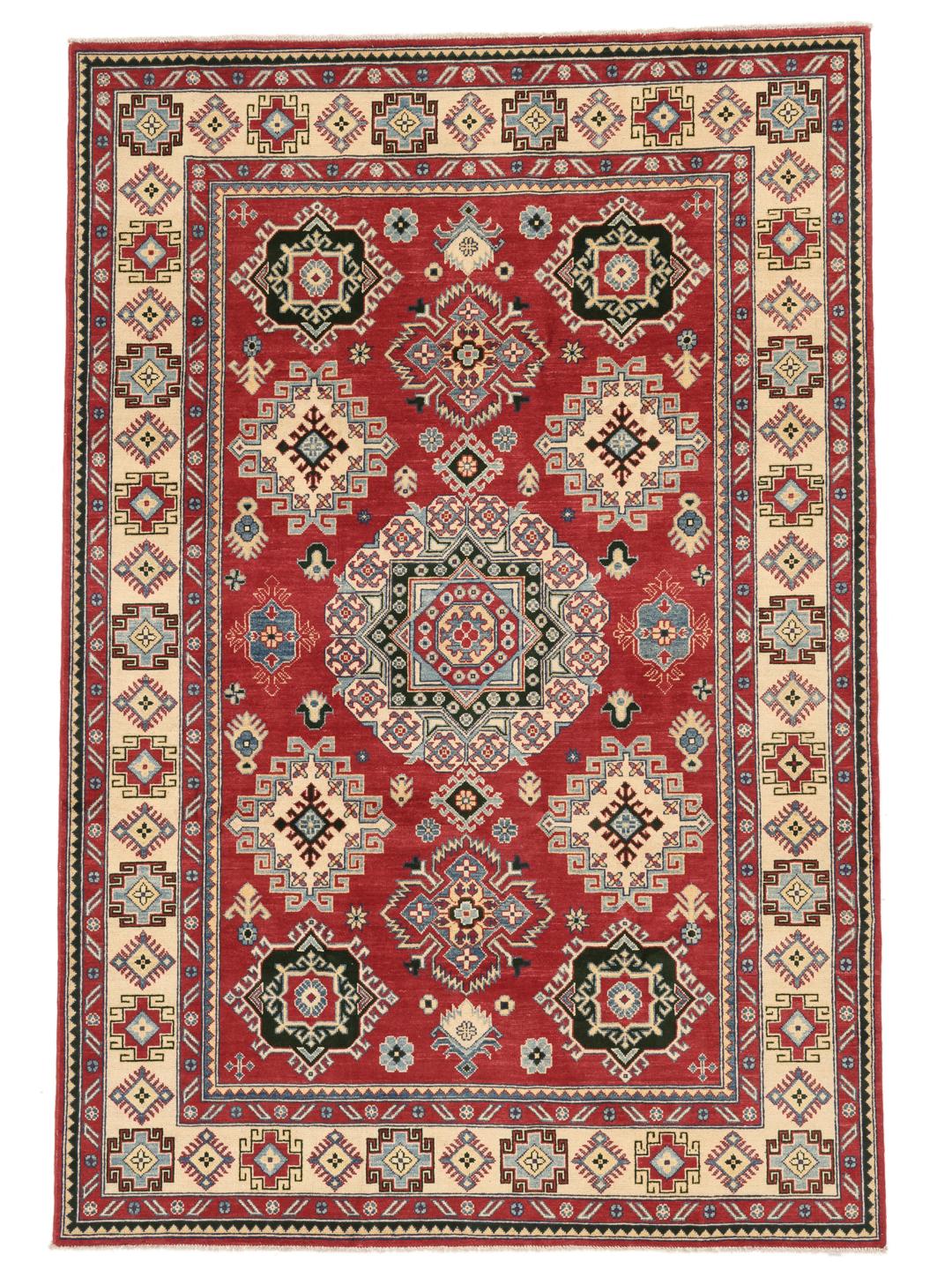
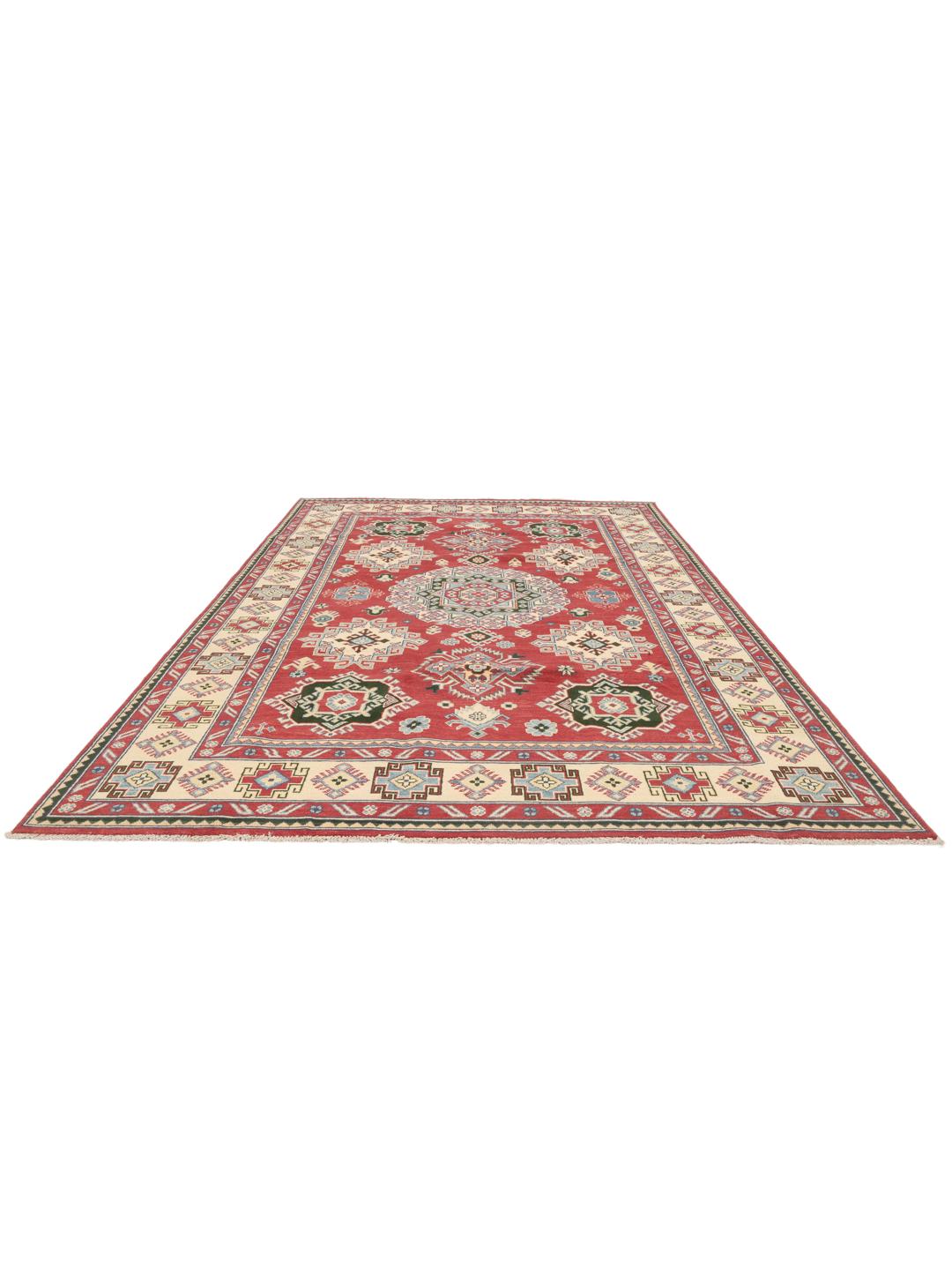
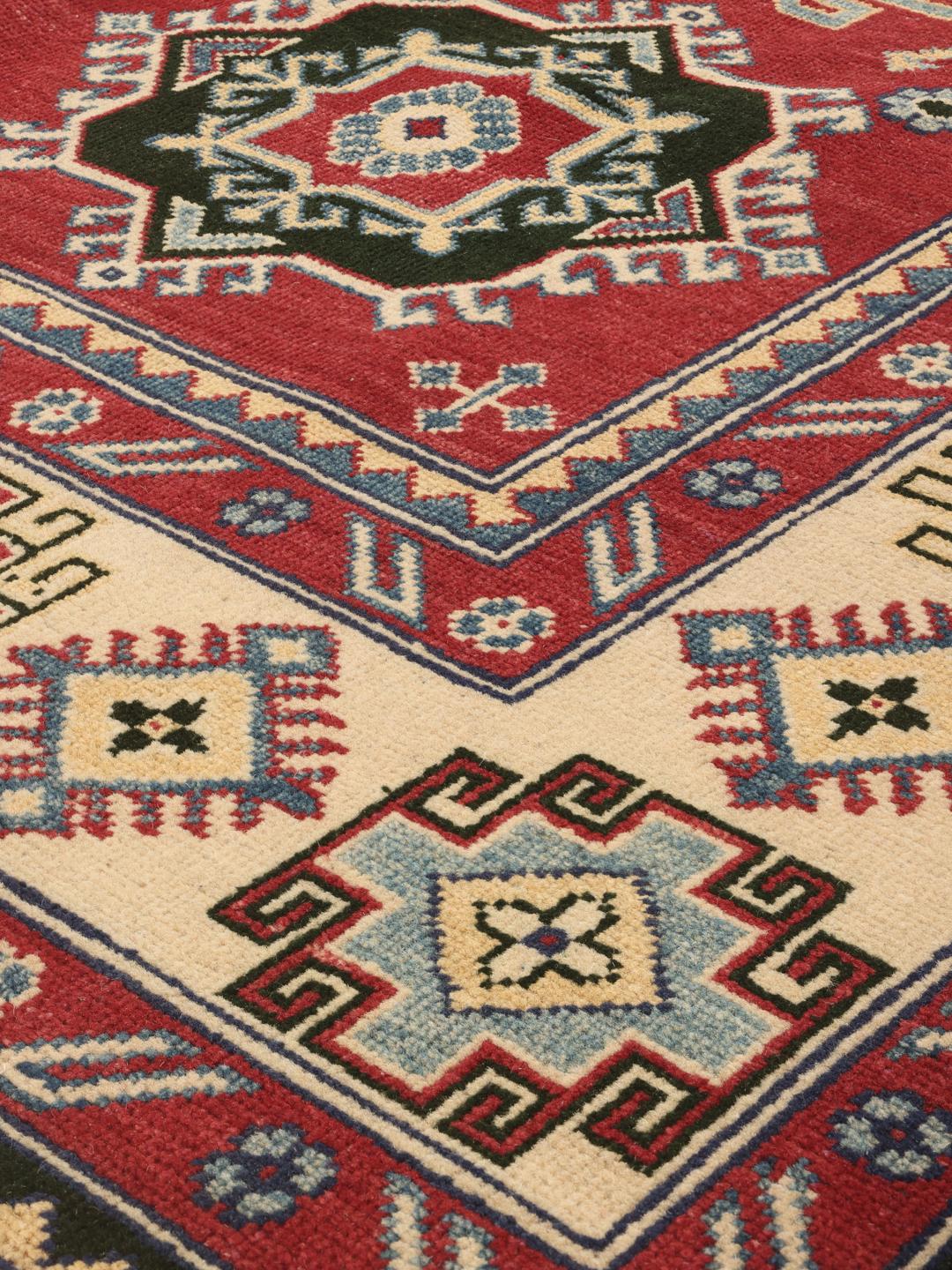
The visual language of a Kazak rug is unmistakable, featuring large, stylised medallions, latch-hook motifs, and geometric animals or plants. The borders are often complex and secondary to the main field, framing the central designs with a rhythmic, repeating pattern. This rug's particular arrangement of motifs is a classic example of this tribal geometry, where every shape tells a story through symbolic abstraction.
Collectors value Kazak rugs for their raw, unrefined energy and their ability to bridge the gap between ancient tribal art and modern living. Owning a piece from this tradition is an act of preserving history, as it represents a style that has remained relatively unchanged by industrial pressures. It is a testament to the enduring skill of the weaver and the cultural weight of the region.