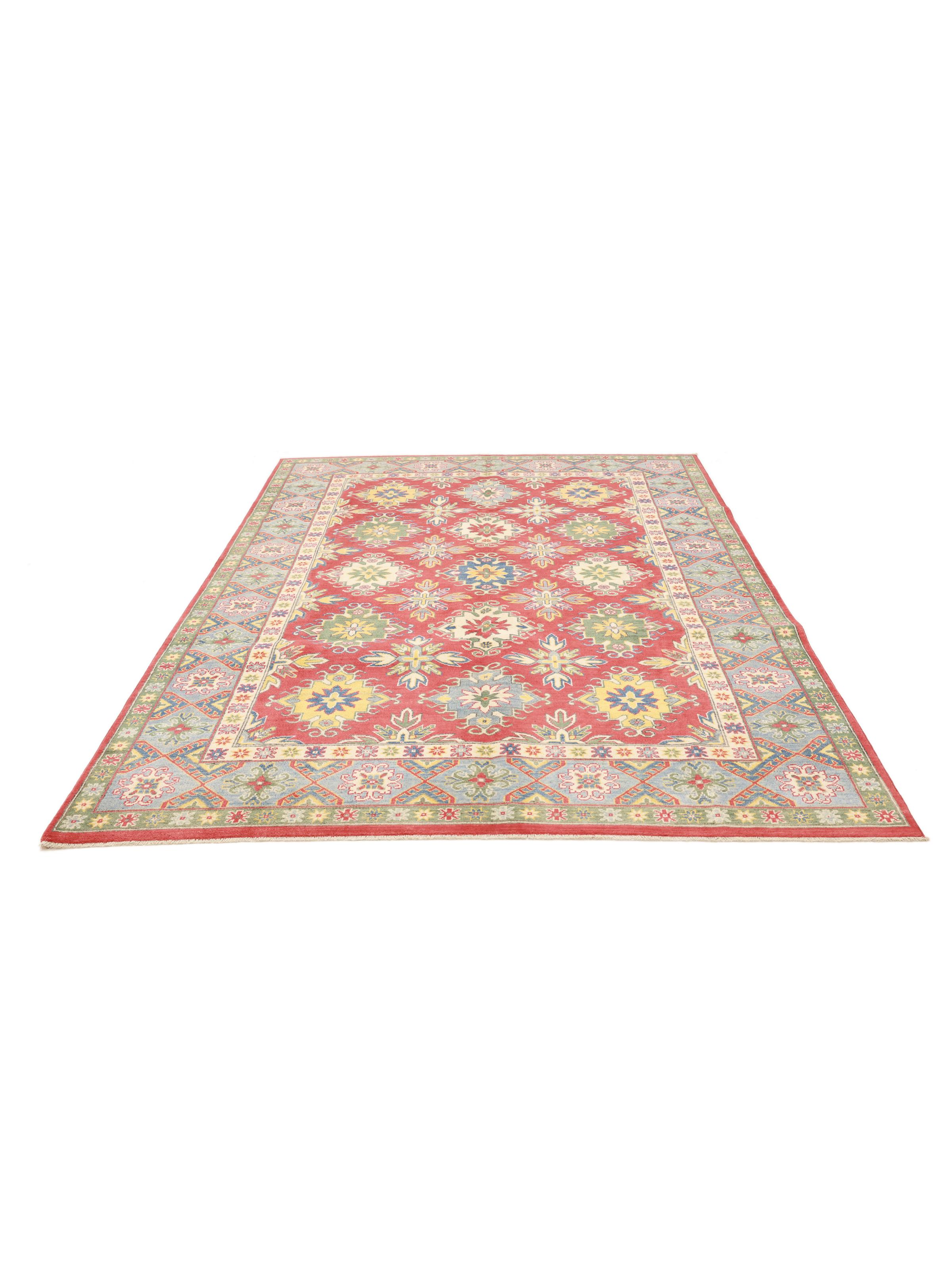
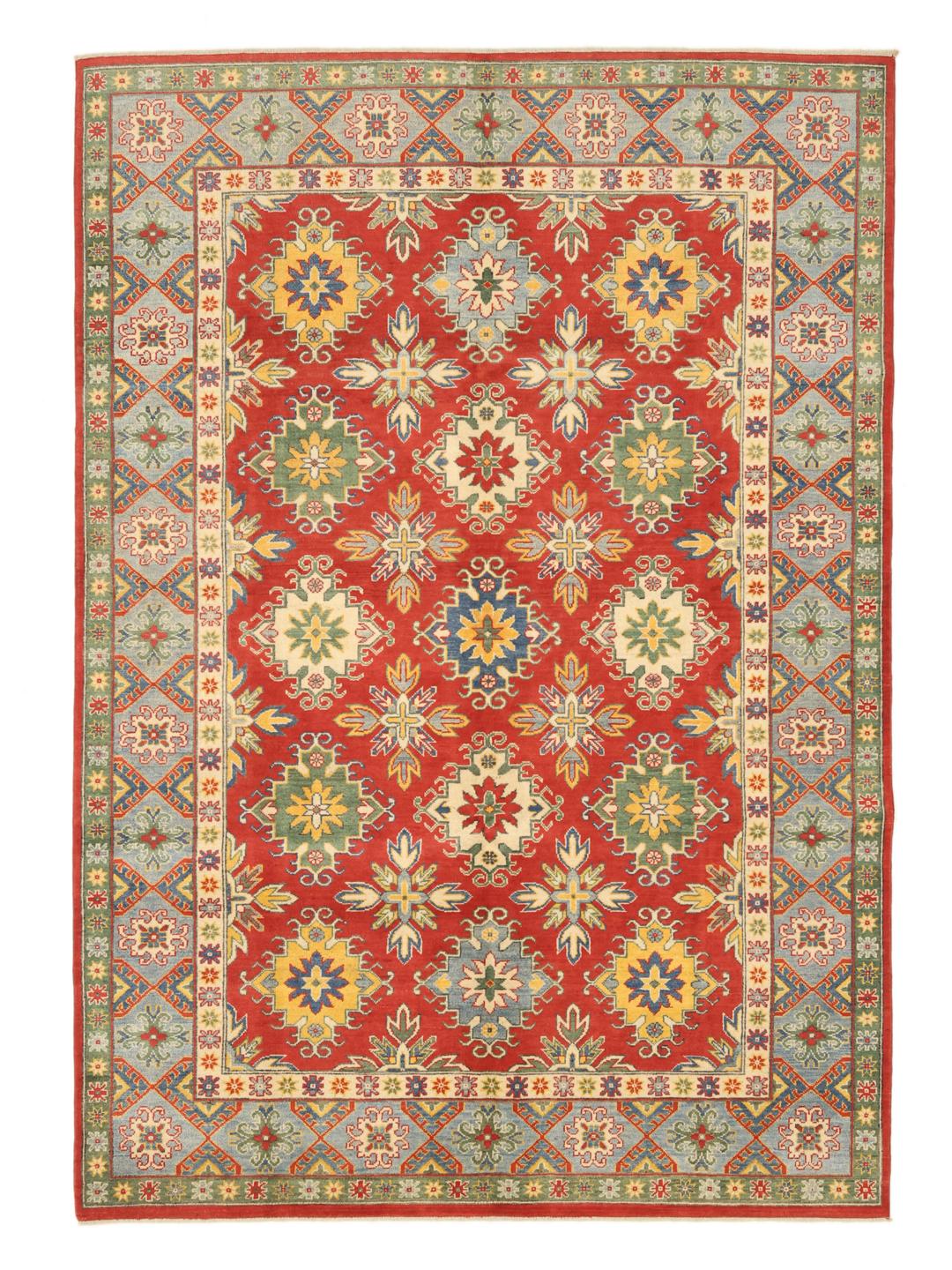
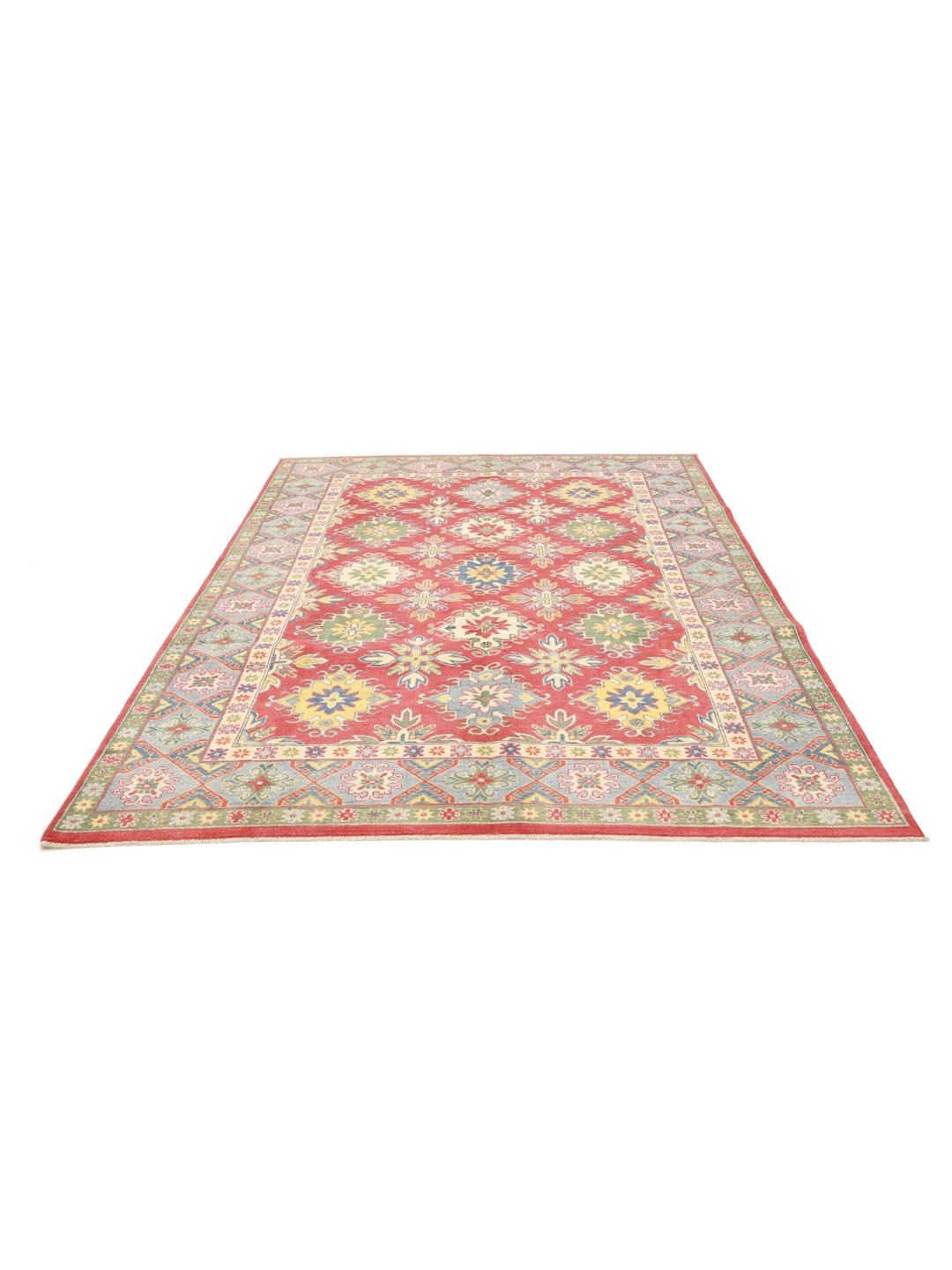
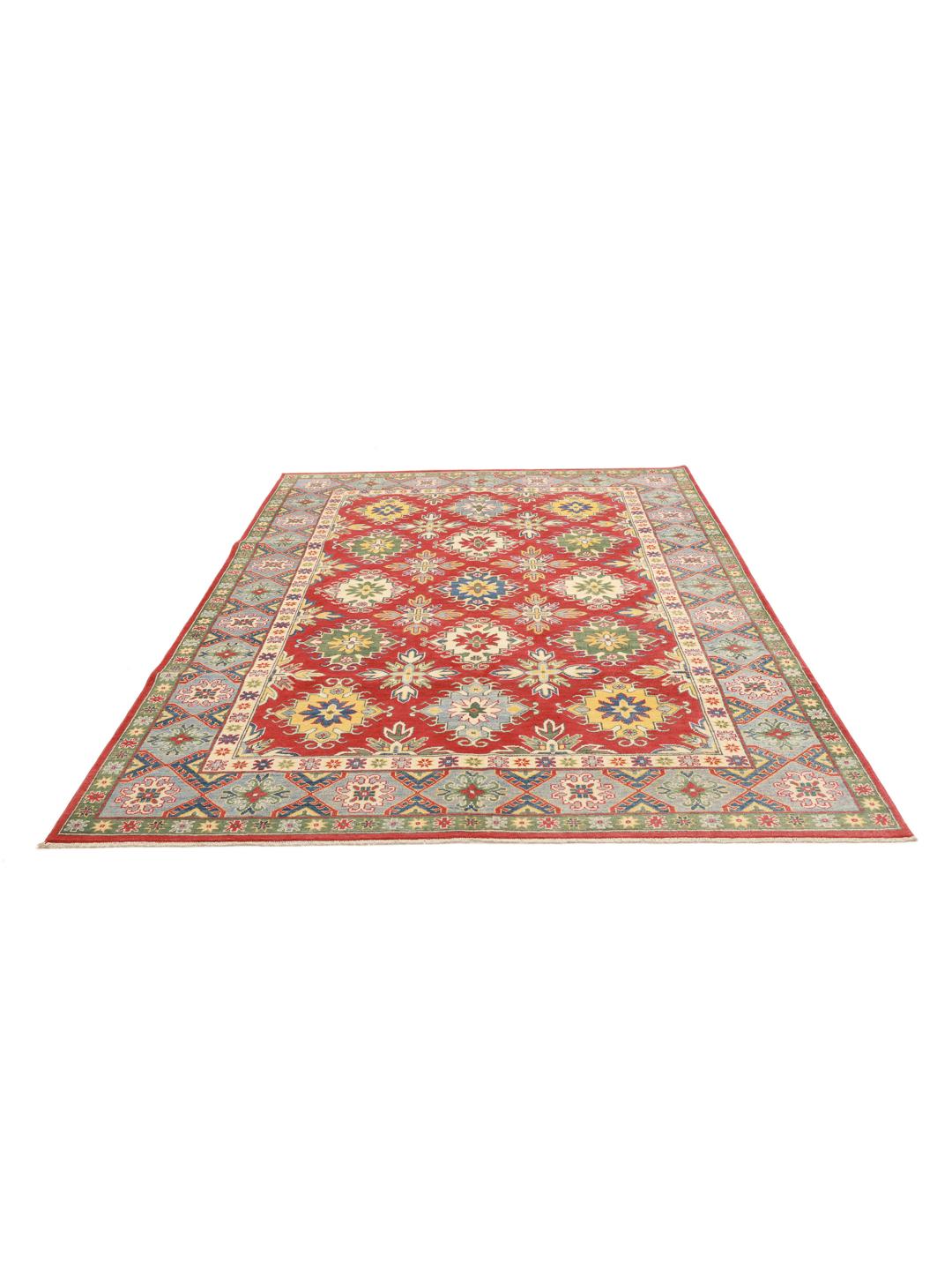
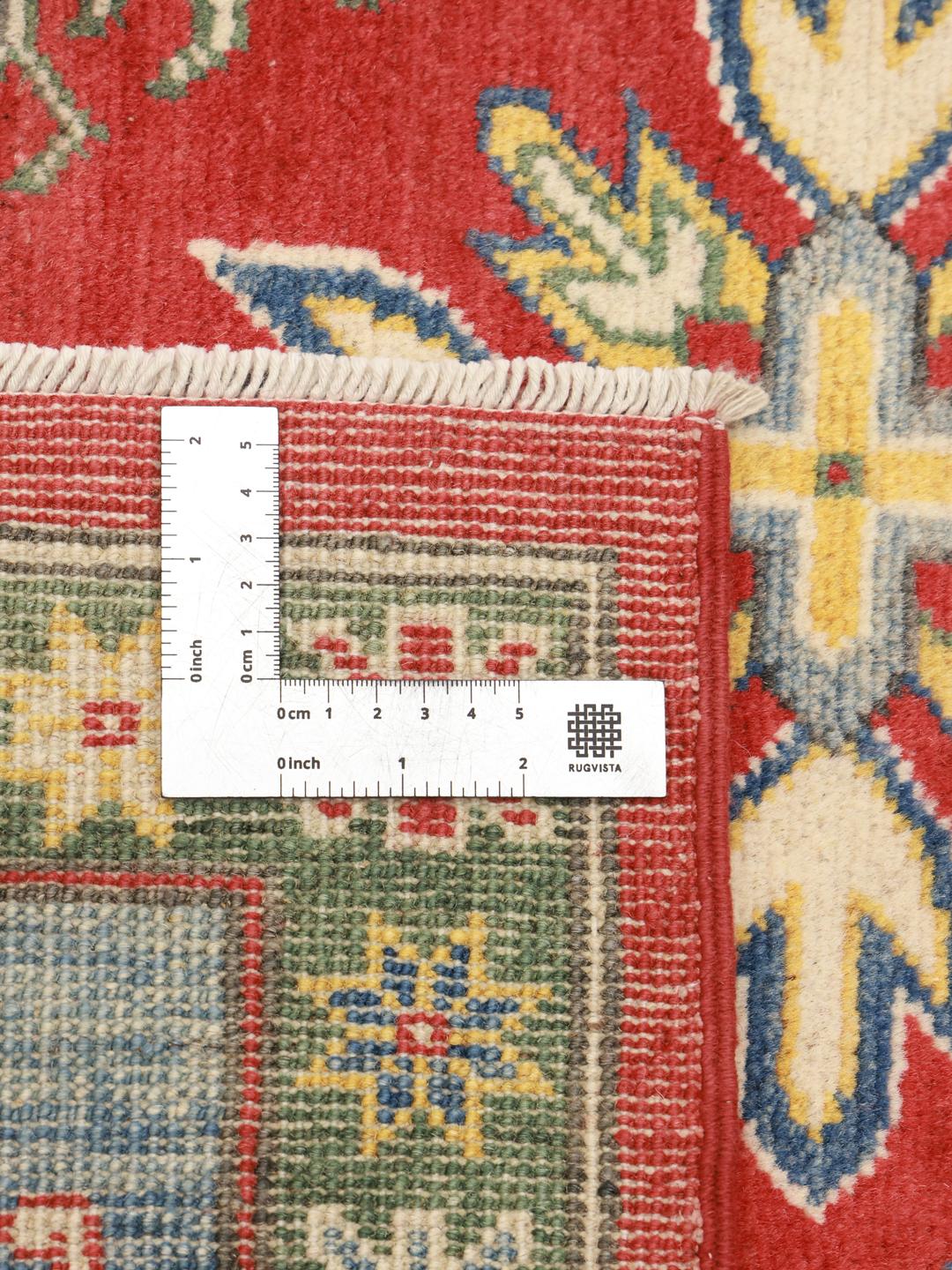
Kazak rugs originate from the Caucasus region, historically serving as a bridge between nomadic traditions and settled village life. While the term originally described specific tribal weaves from the Caucasus mountains, the tradition has evolved significantly over centuries. Today, the finest examples of these rugs are masterfully produced in Afghanistan, where weavers have adopted and refined the classic styles, keeping the spirit of these historic patterns alive for modern homes.
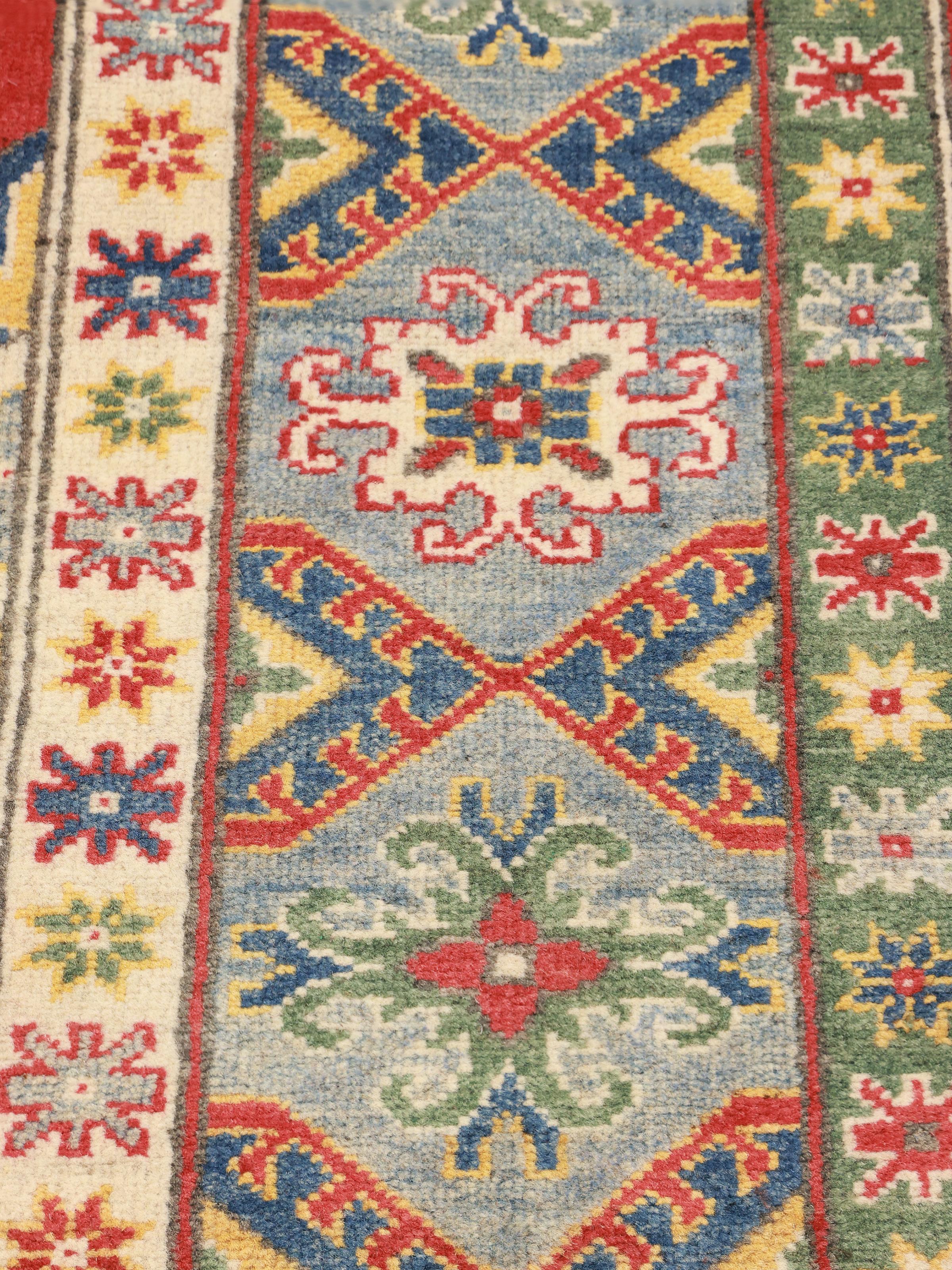
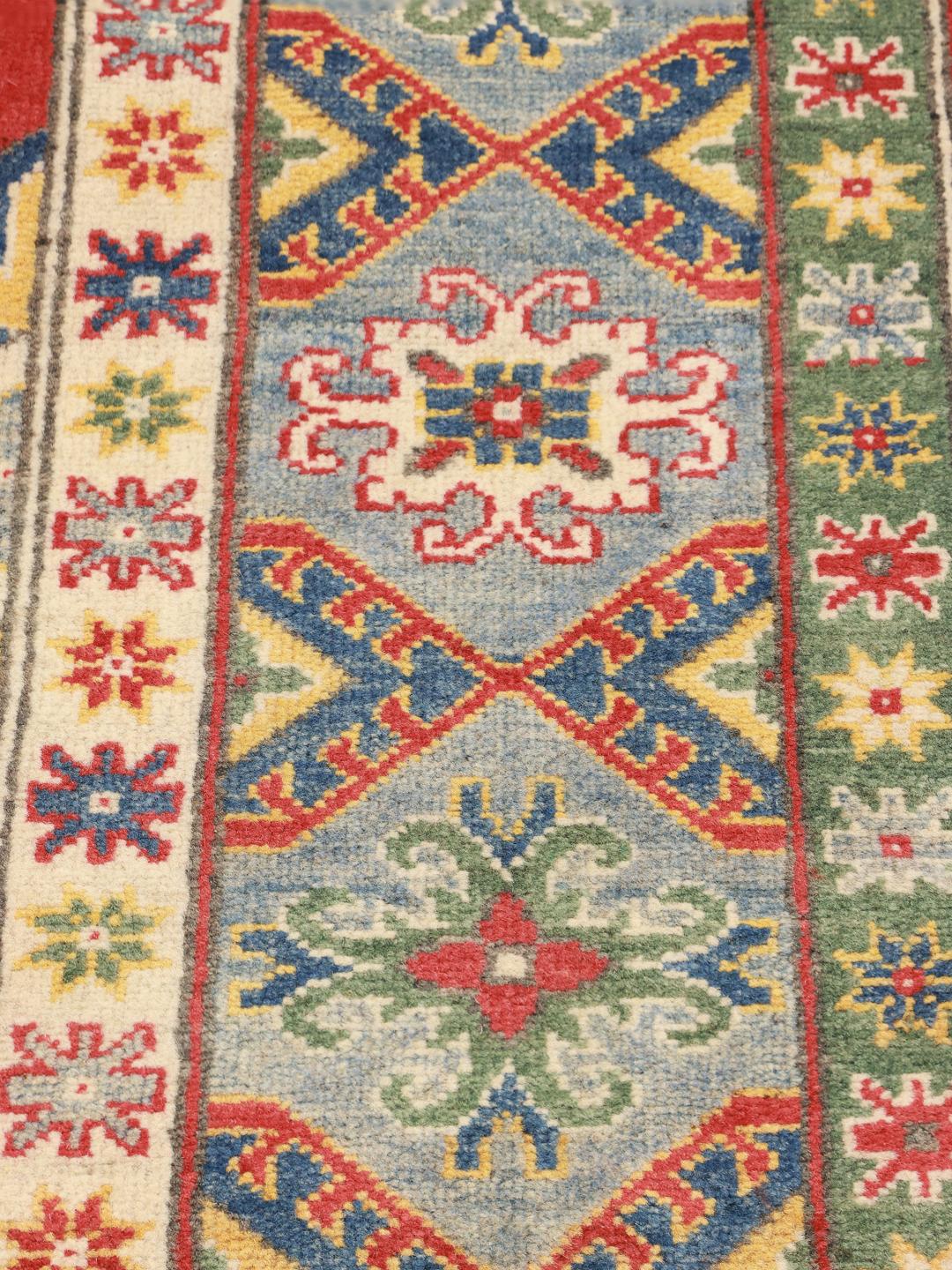
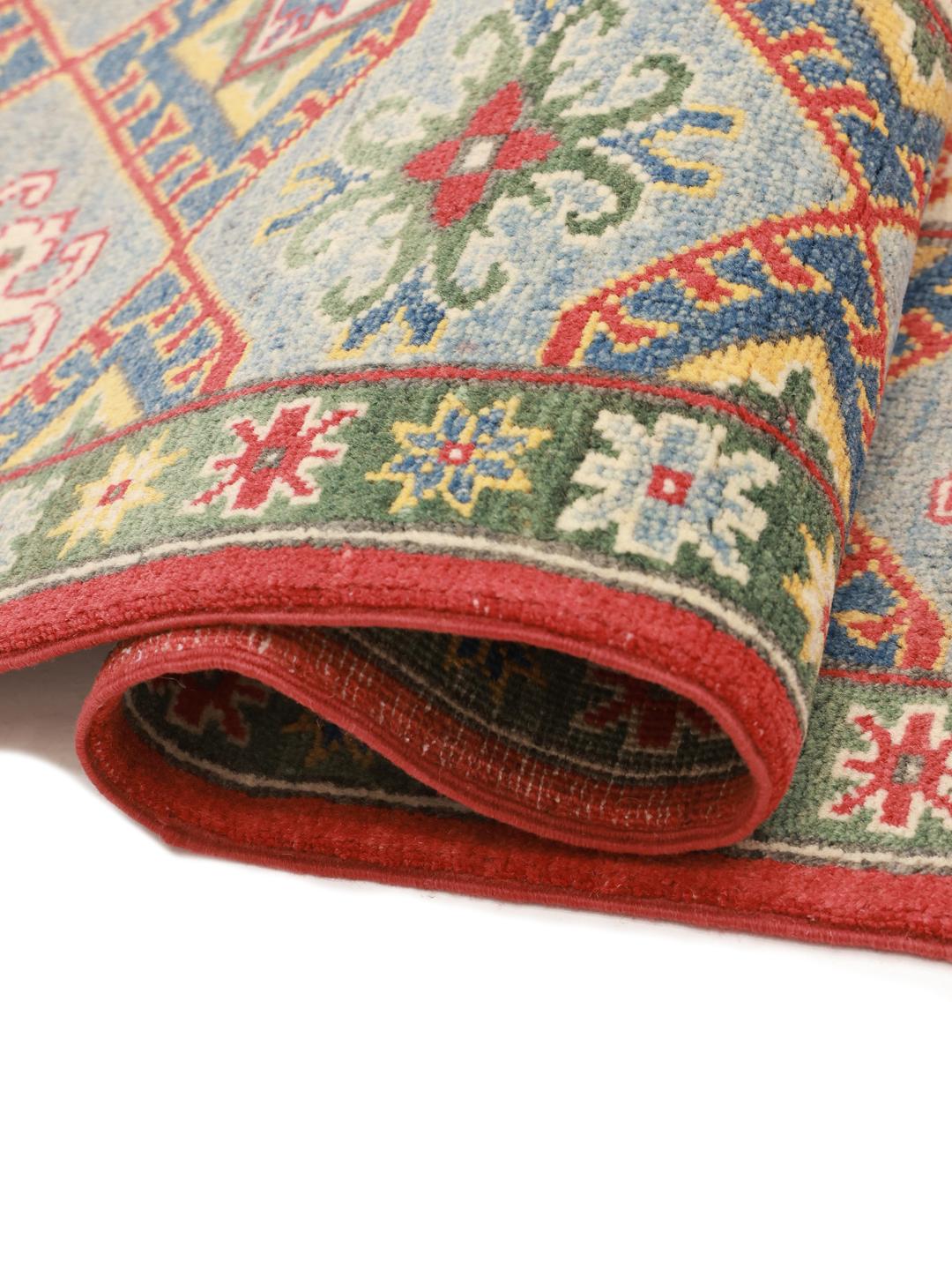
The term 'Kazak' is synonymous with a bold, geometric aesthetic that favours clarity and impact over intricate floral vines. These rugs are recognised for their deep, saturated colours, which were historically derived from natural vegetable dyes. The technical construction of these pieces usually involves a sturdy foundation, ensuring that the wool pile is held firmly in place, allowing the bold motifs to stand out with crisp edges and clear definition.
Signature design elements of the Kazak tradition include large, stylised medallions—often referred to as 'guls'—and varied geometric symbols that carry deep cultural meaning. You will often see stepped diamonds, latch-hook borders, and serrated leaves, all arranged in a balanced, symmetrical field. While the patterns follow traditional rules, the beauty lies in the slight variations introduced by the weaver, making every rug a unique interpretation of a classic visual language.
Owning a Kazak rug is an investment in cultural heritage and skilled artistry. These rugs are highly valued by collectors and homeowners alike because they represent a living history of nomadic design. By bringing one into your space, you are not just acquiring a floor covering, but a piece of functional art that celebrates the patience, skill, and creative legacy of generations of artisans.