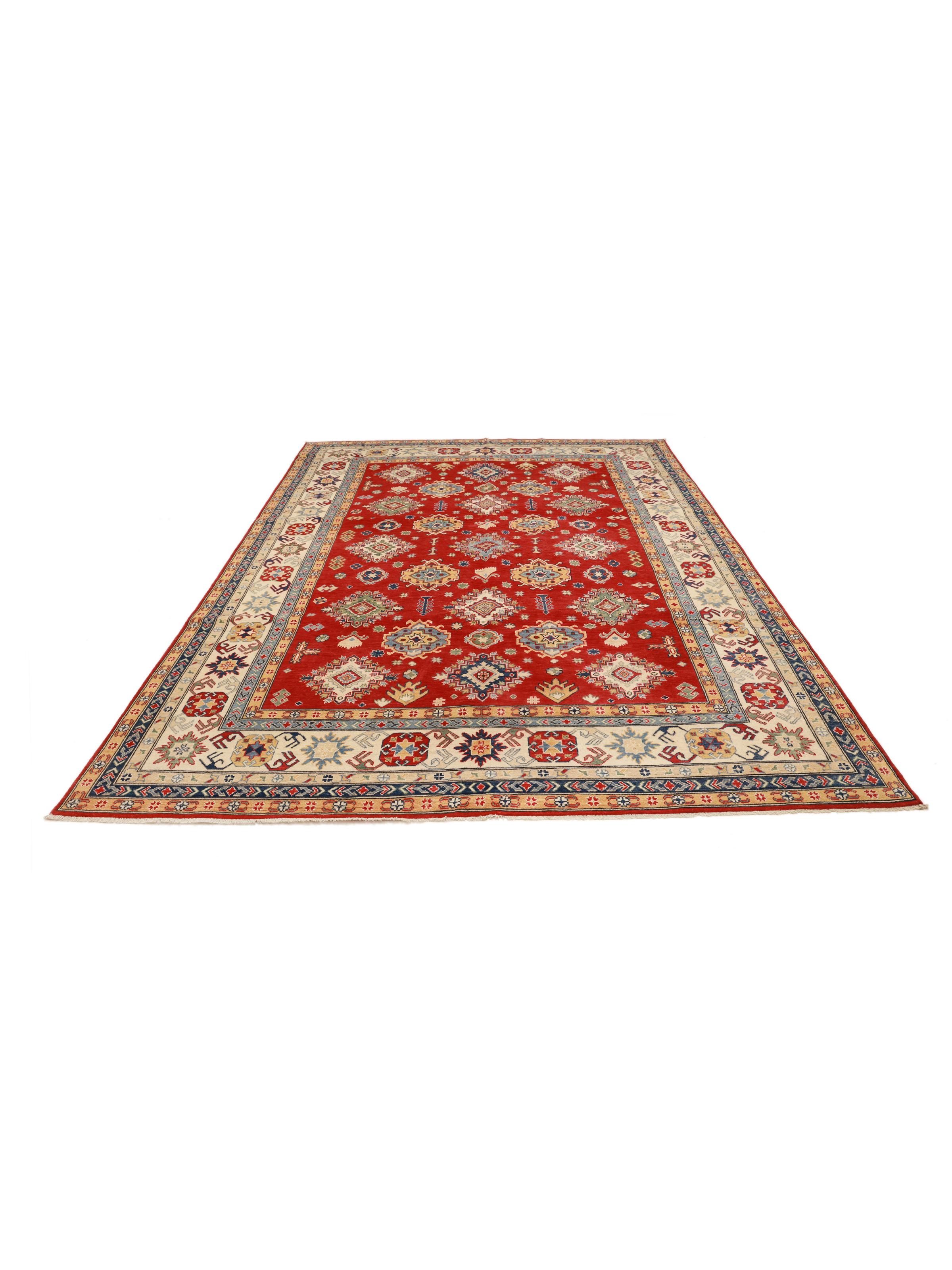
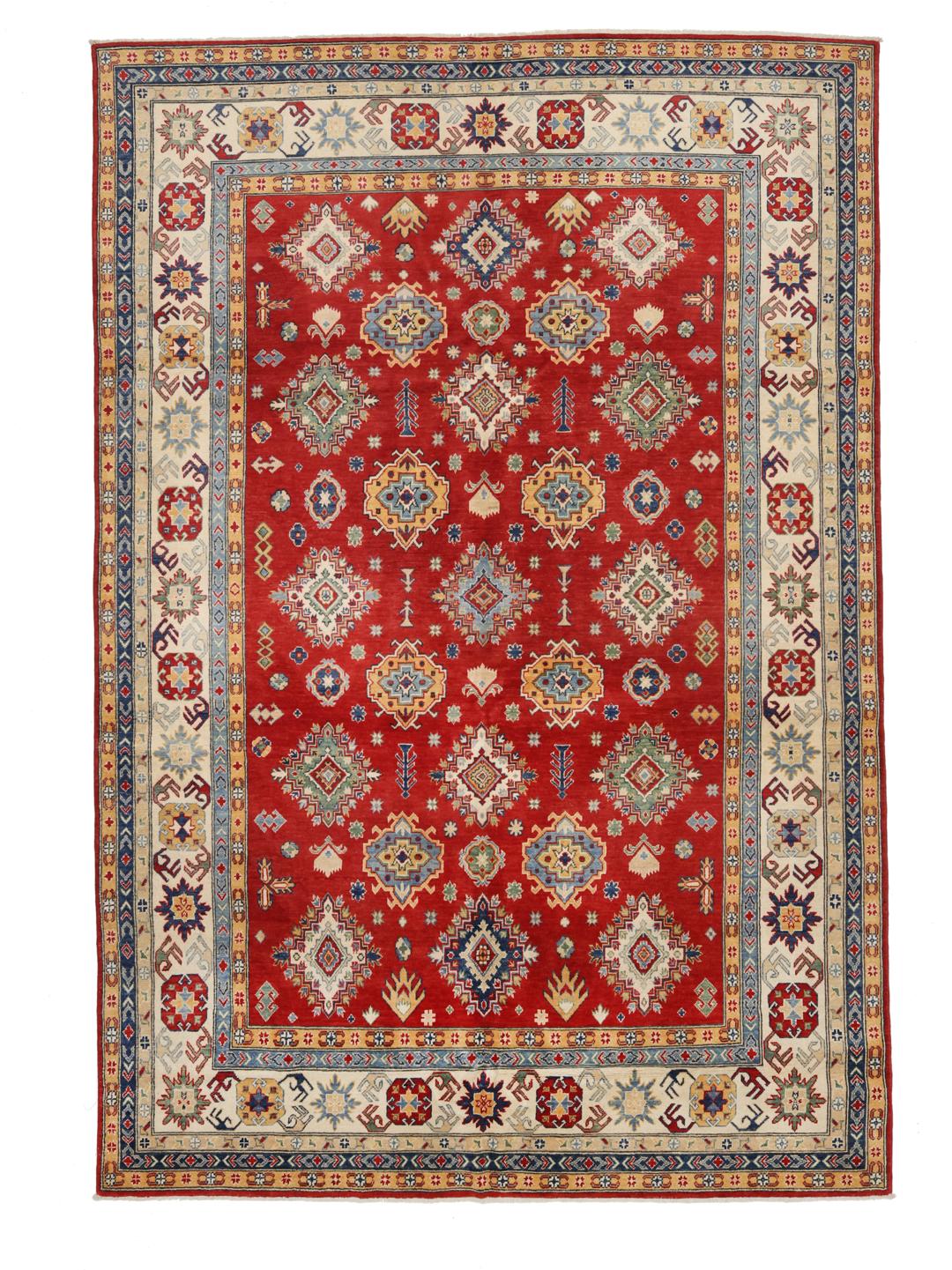
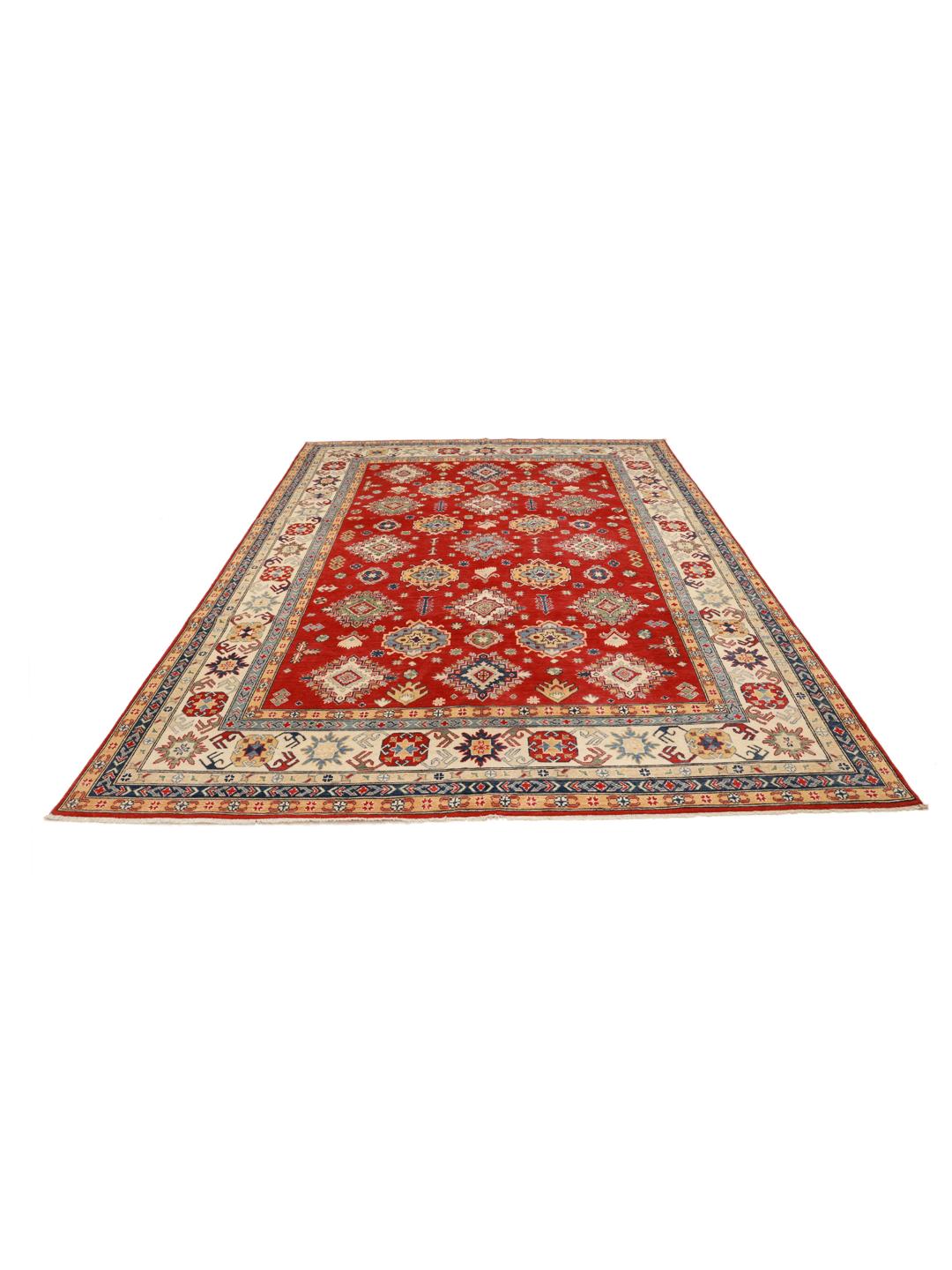
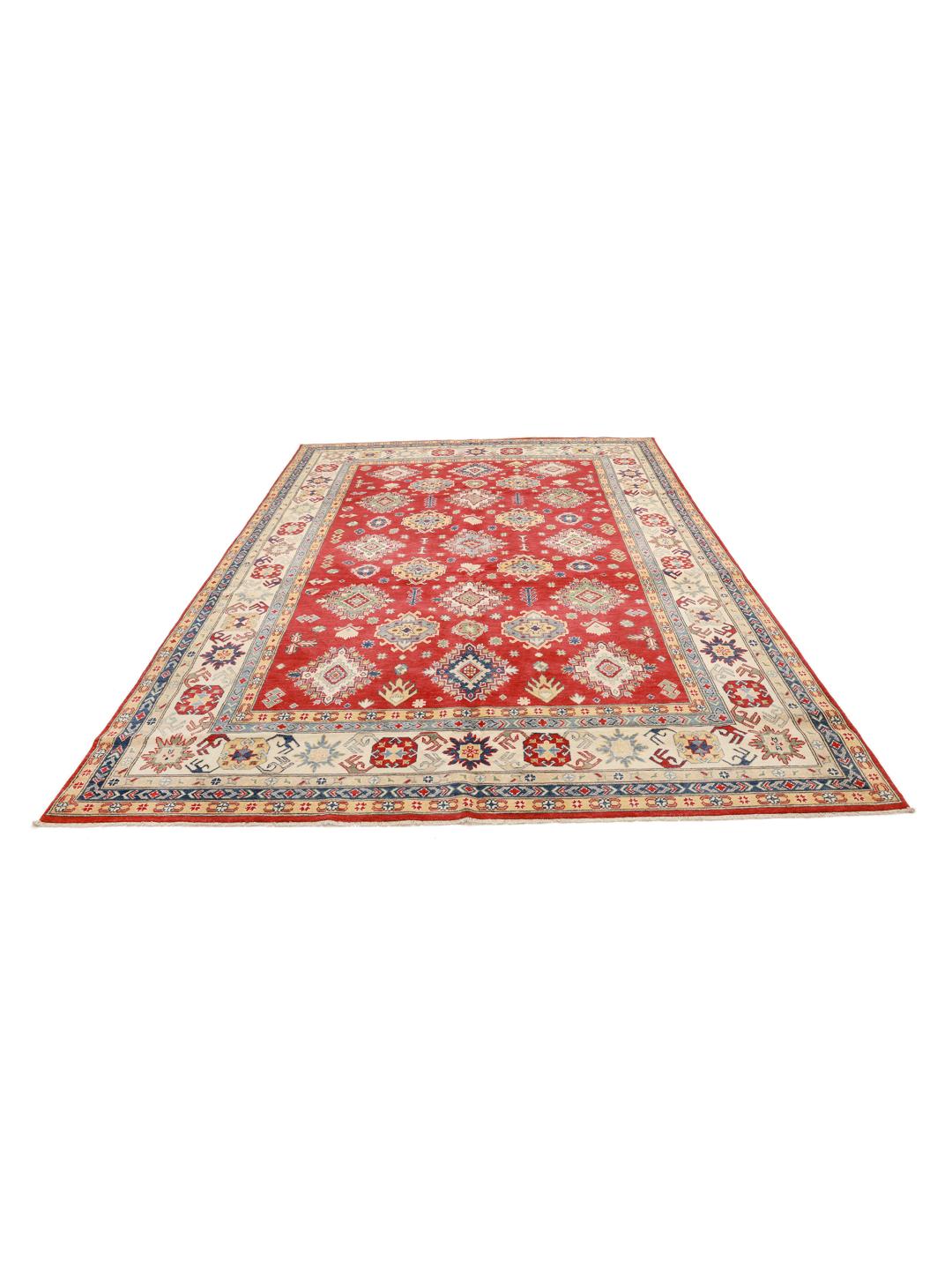
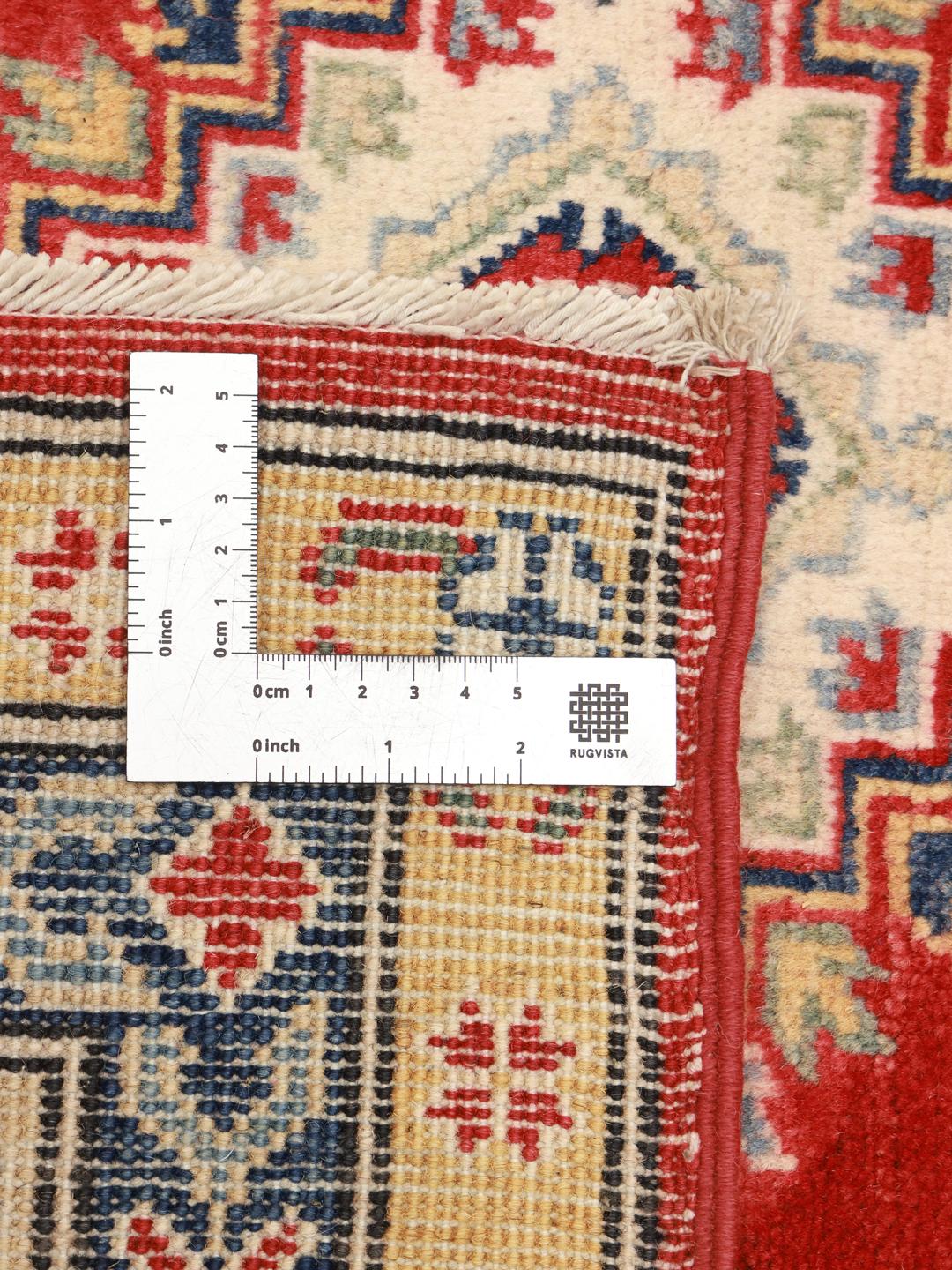
Kazak rugs originate from the Caucasus region, a mountainous area known for its rich weaving heritage. While the style takes its name from the Kazakh people, these rugs have long been celebrated for their bold, tribal aesthetic, and today, some of the finest examples are meticulously crafted in Afghanistan by weavers who have mastered these ancient, expressive techniques.
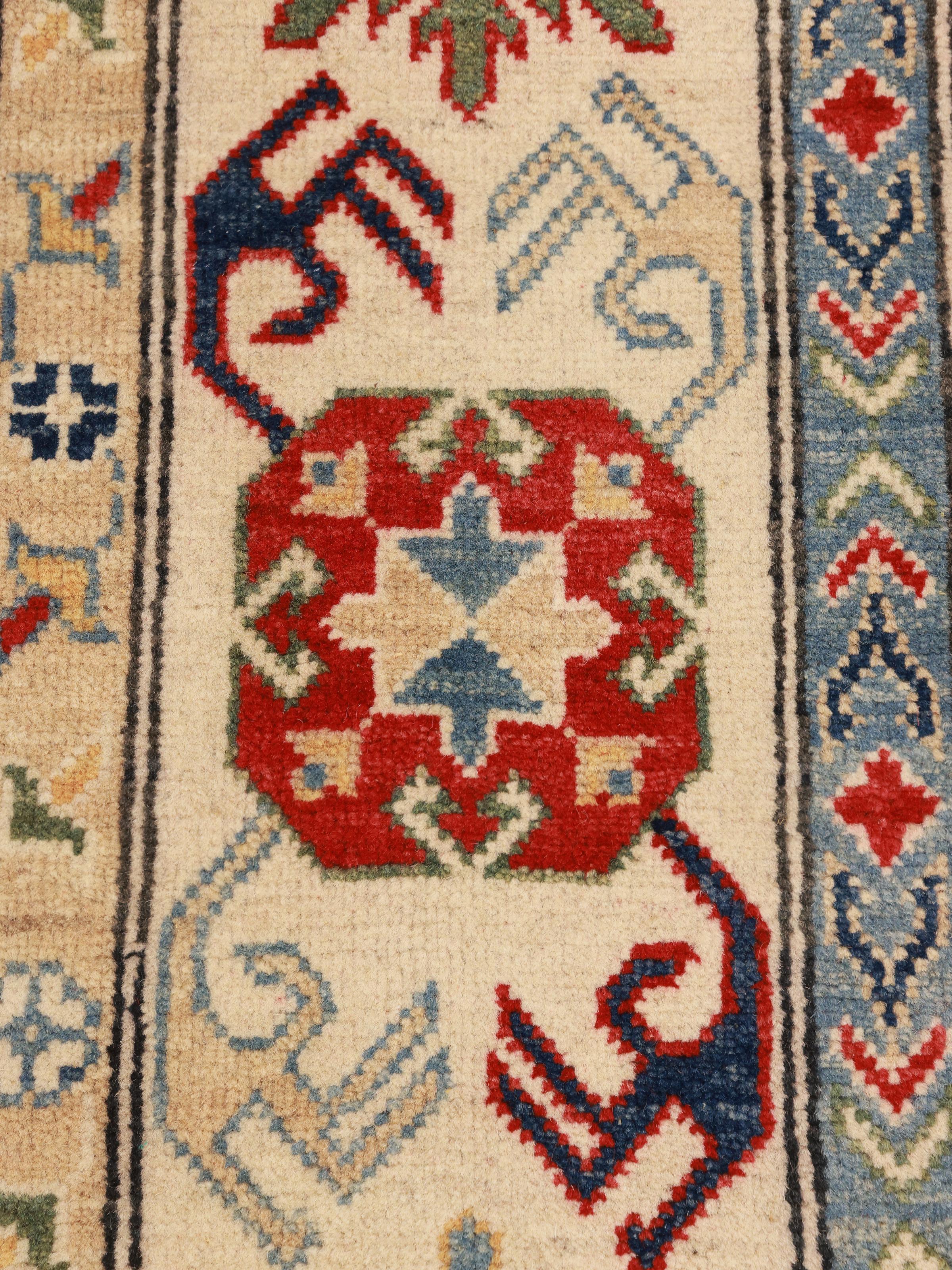
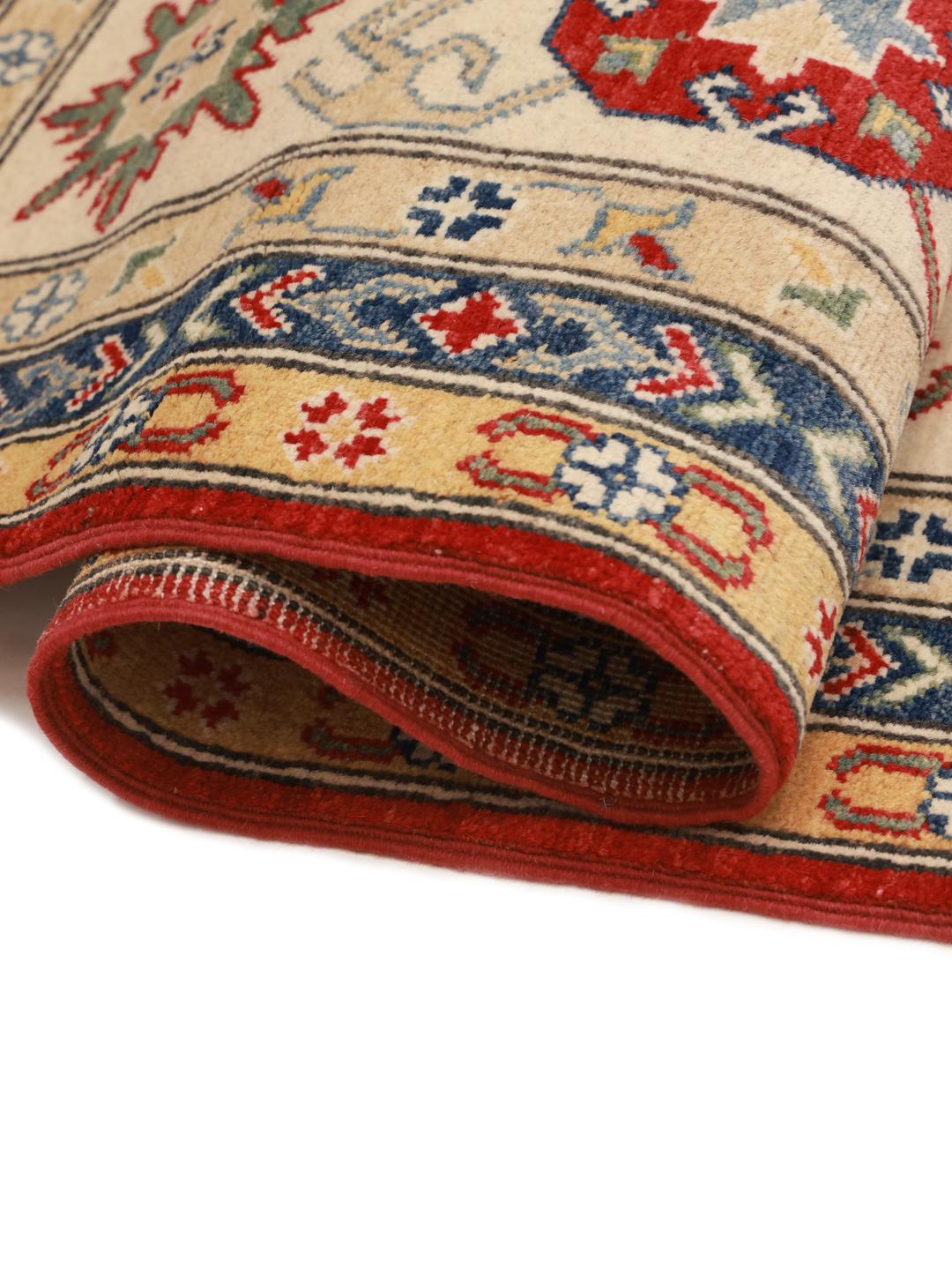
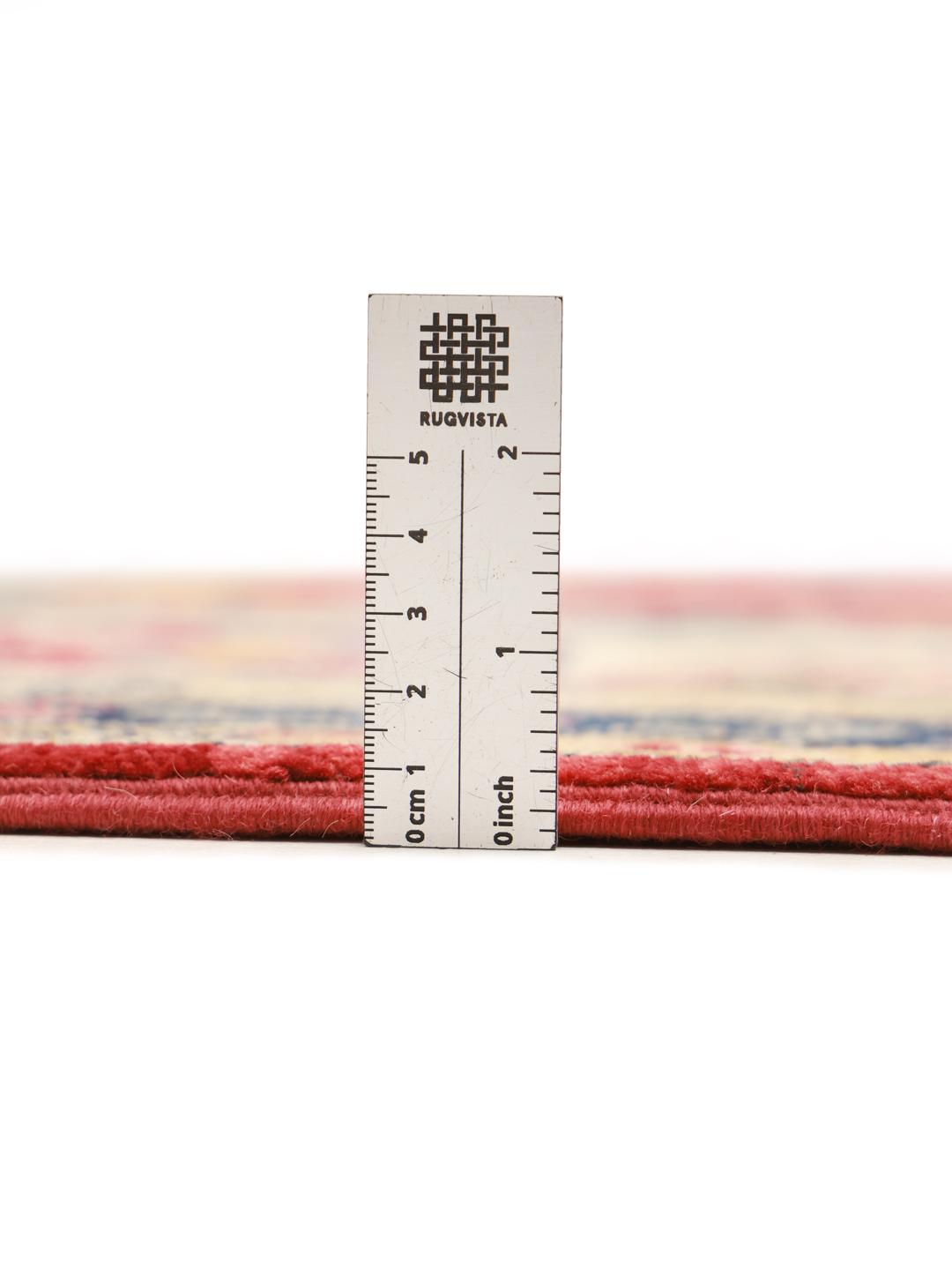
The term 'Kazak' refers to a specific design tradition rather than a single village, characterised by a focus on high-quality wool and expressive, geometric motifs. The construction typically involves hand-knotting, which creates a durable, dense pile that is highly valued for its ability to withstand decades of use while retaining its lustre.
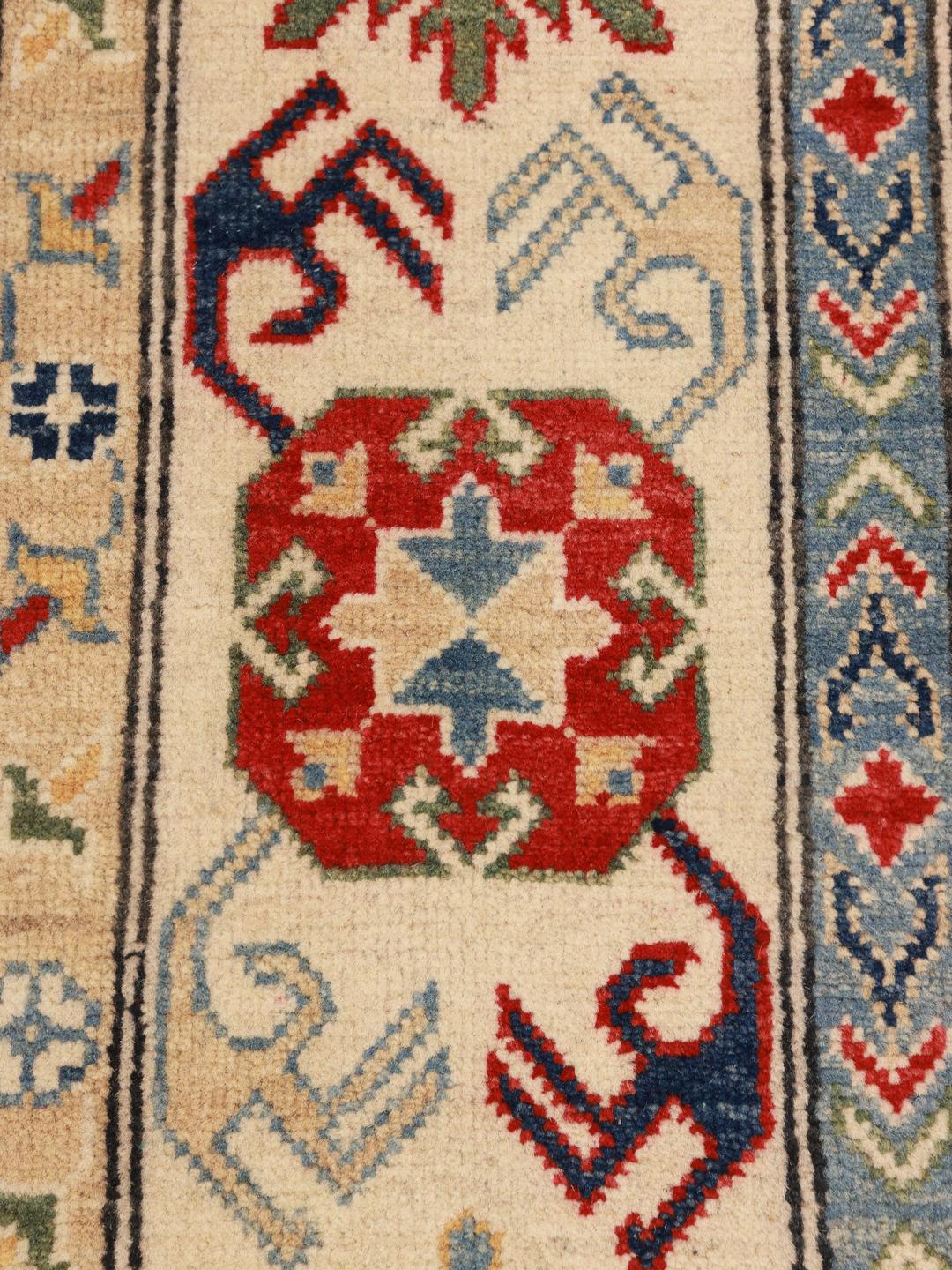
Signature elements of this tradition include the use of bold, saturated colours and large-scale geometric medallions, often referred to as guls. The borders are typically framed by intricate, repeating patterns that provide a formal structure to the otherwise free-flowing and symbolic designs found within the field.
Collectors value Kazak rugs for their cultural significance and the skill required to produce them. Owning one is an opportunity to connect with a storied tradition of craftsmanship, where every rug serves as a canvas for cultural expression, making these pieces highly sought after for their enduring beauty and historical weight.