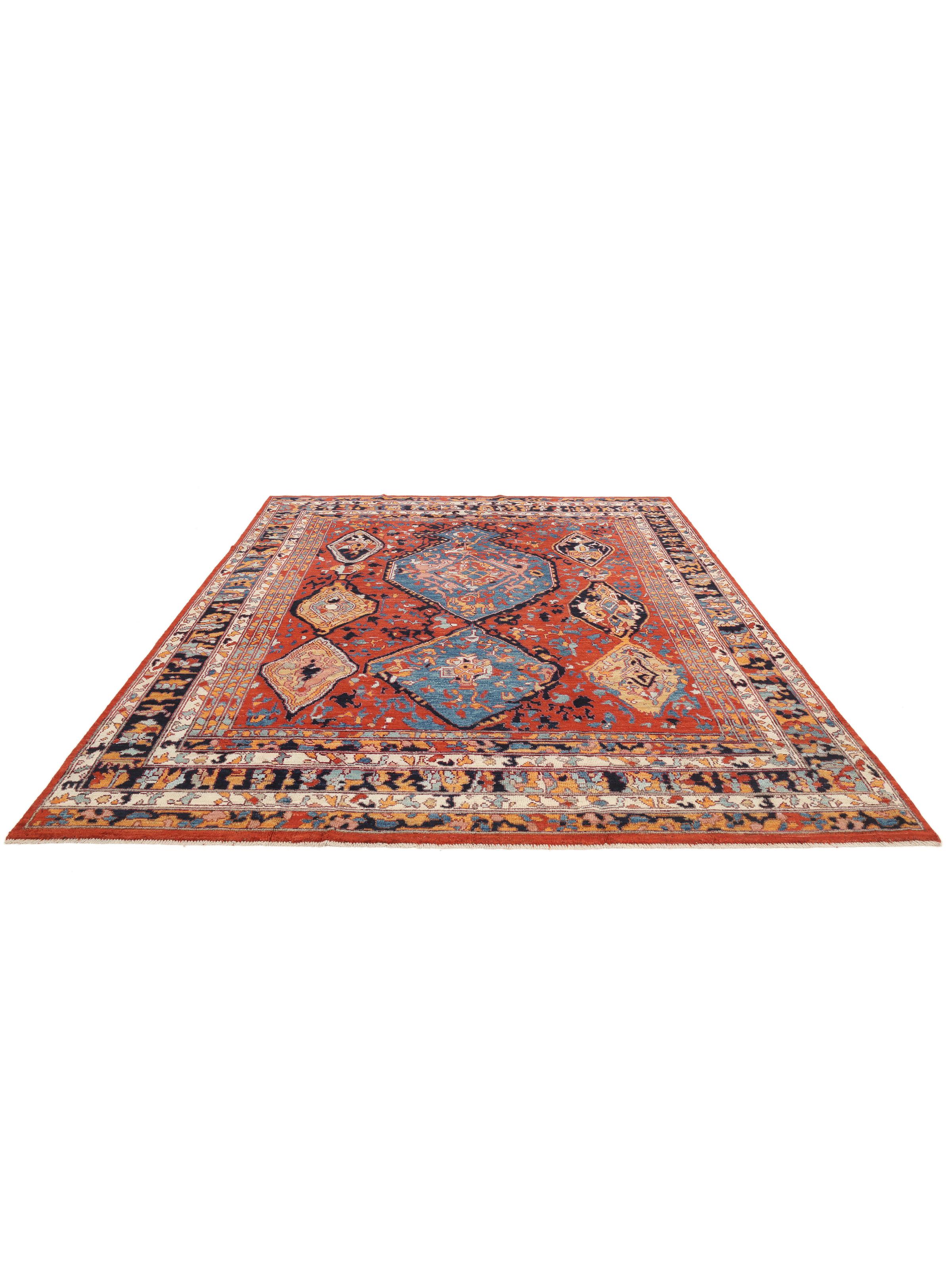
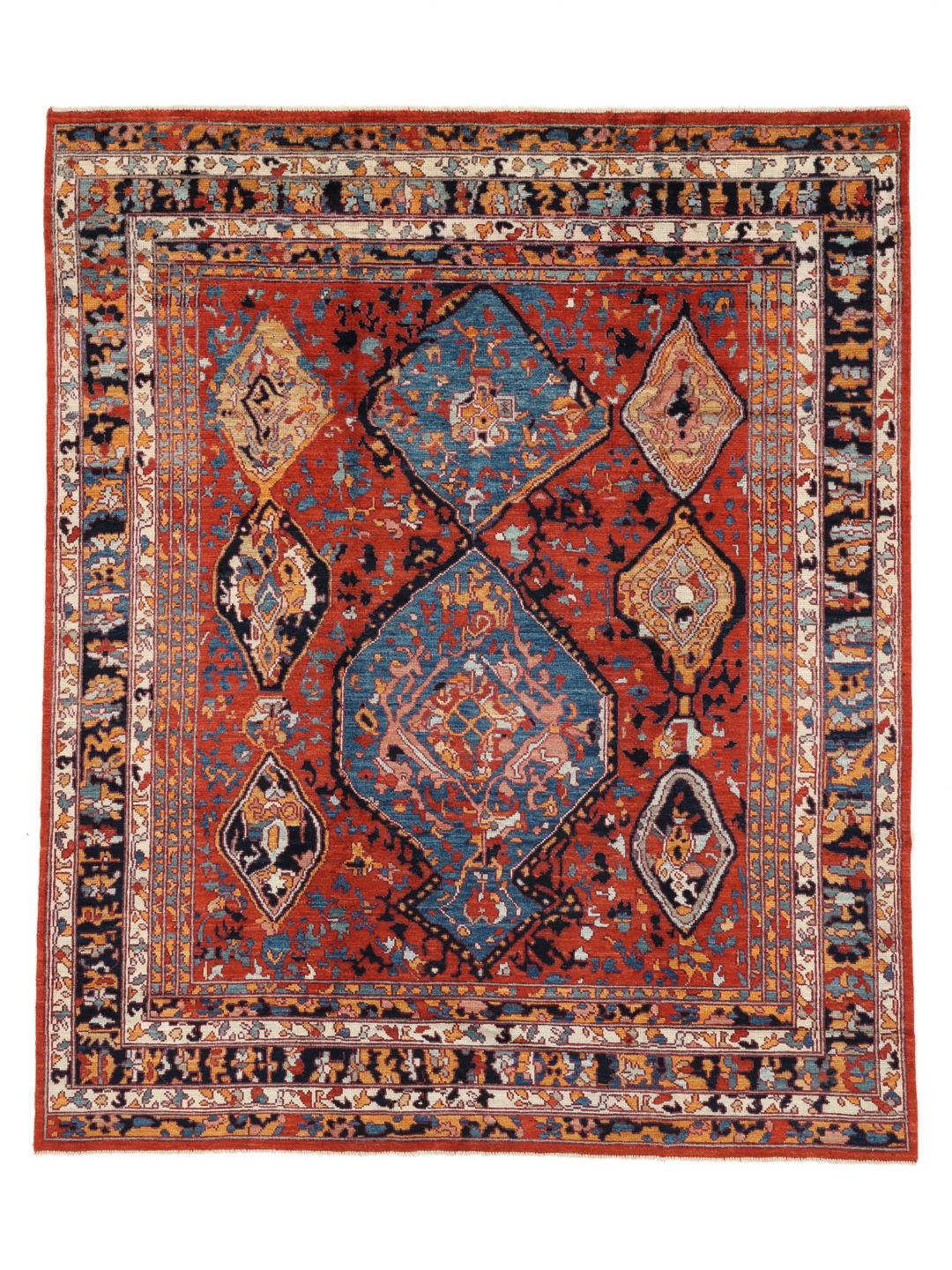
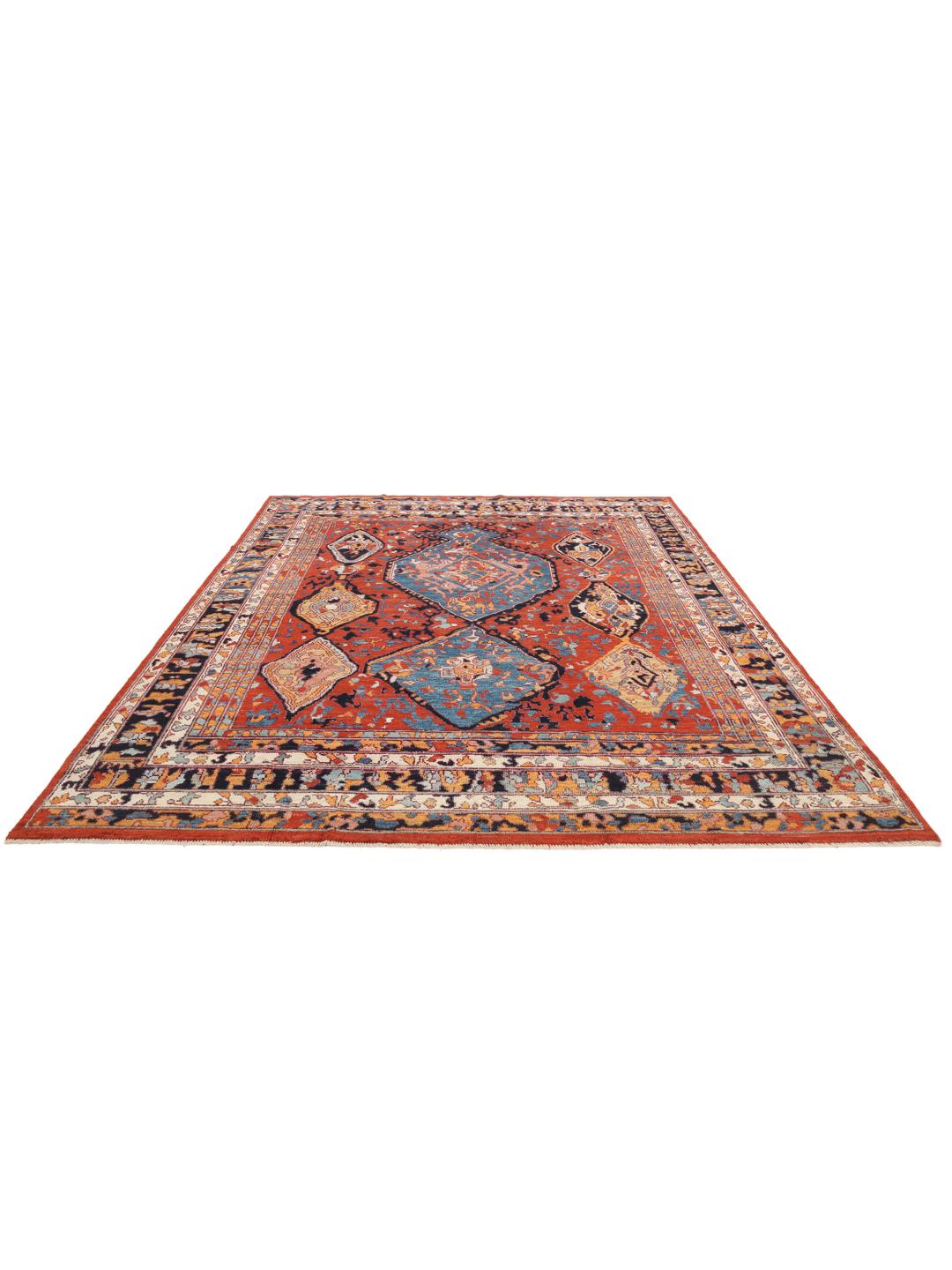
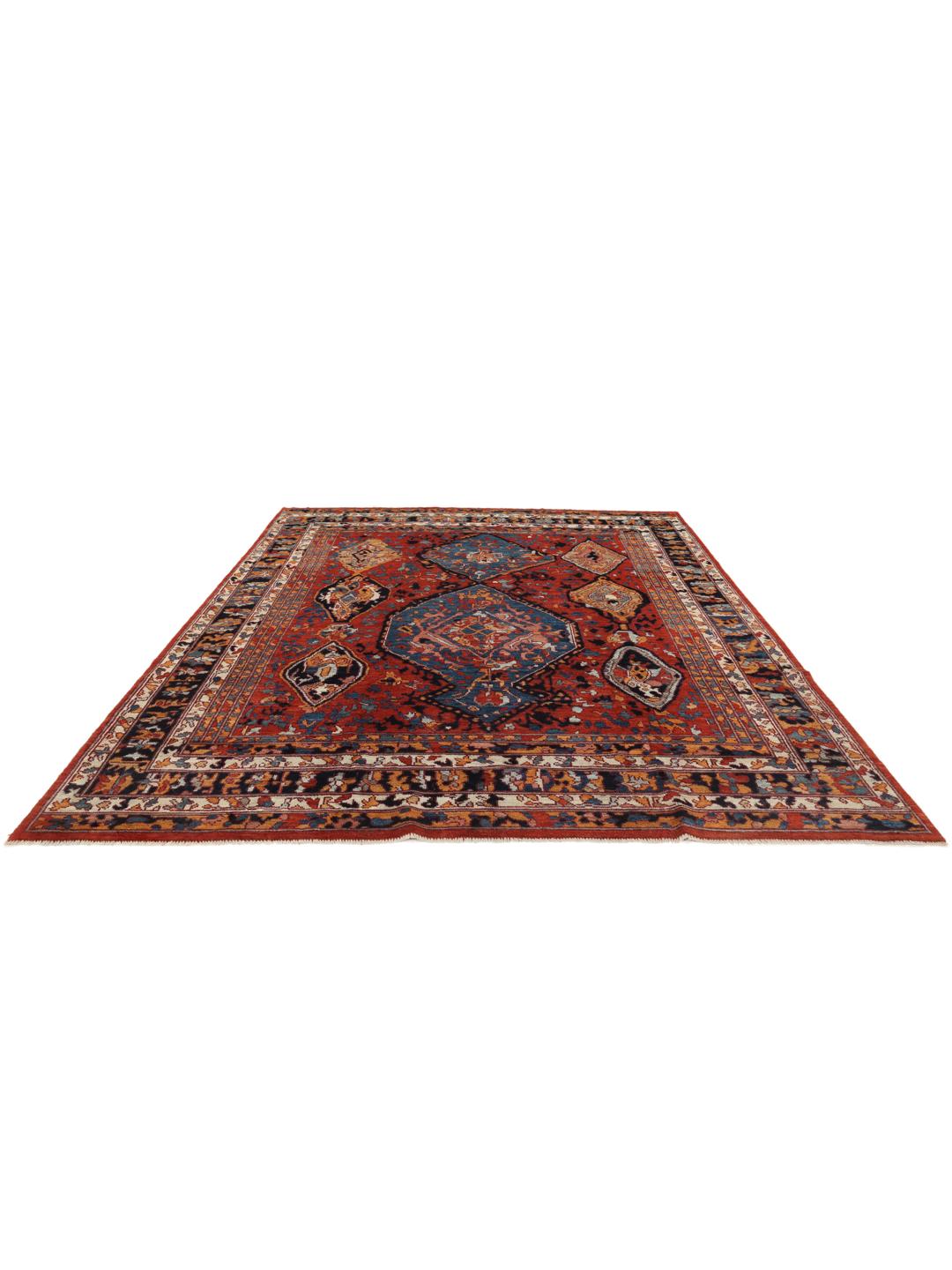
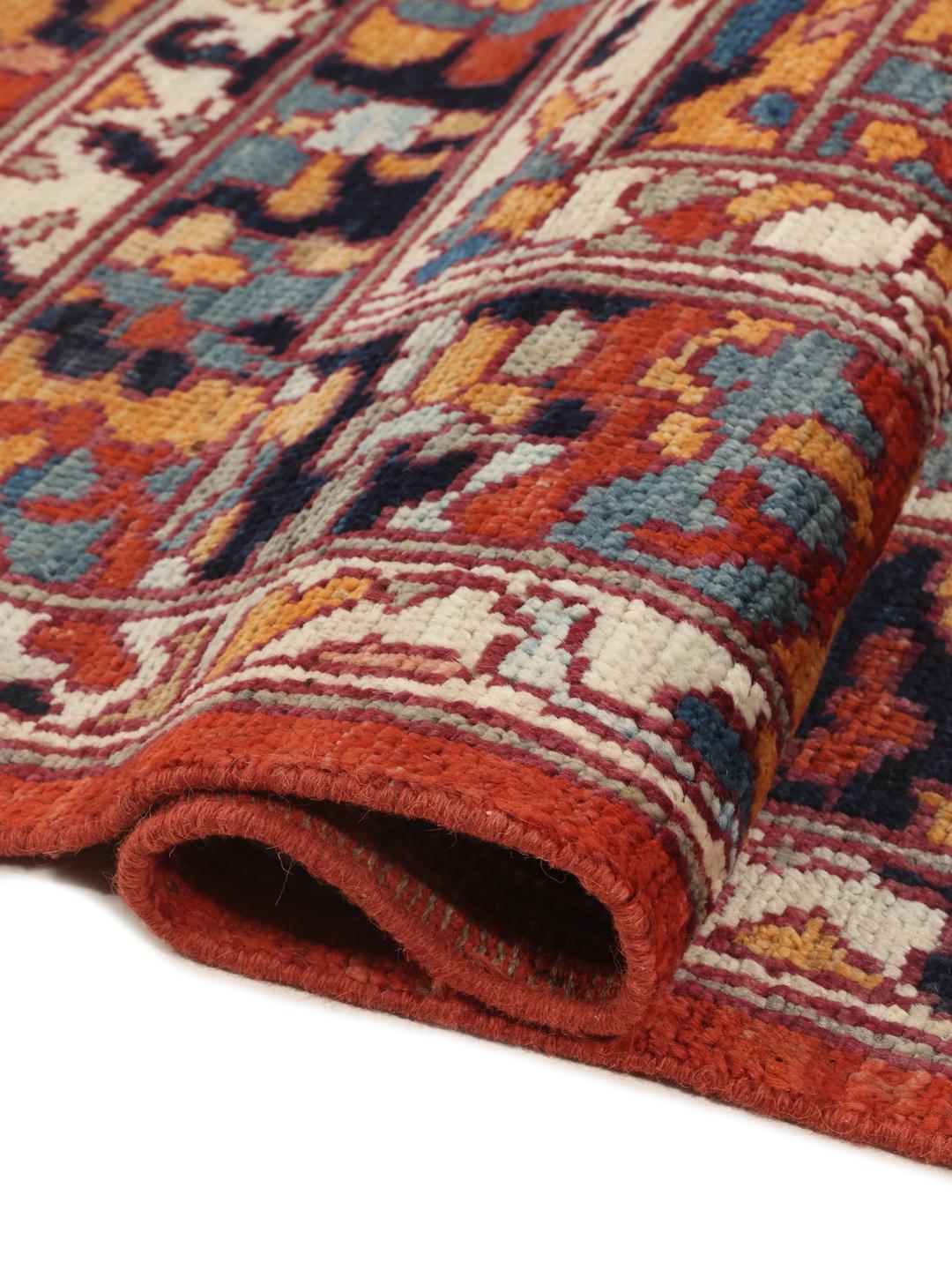
Kazak rugs originate from the Caucasus region, a mountainous area known for its rich history of textile production and nomadic influences. While the traditional designs were born in the rugged landscapes of the Caucasus, the craft has migrated and evolved, with modern Afghan weavers now producing some of the most sought-after examples. These weavers have kept the spirit of the tradition alive, adapting ancient techniques to create rugs that honour their historical roots while fitting perfectly into contemporary homes.
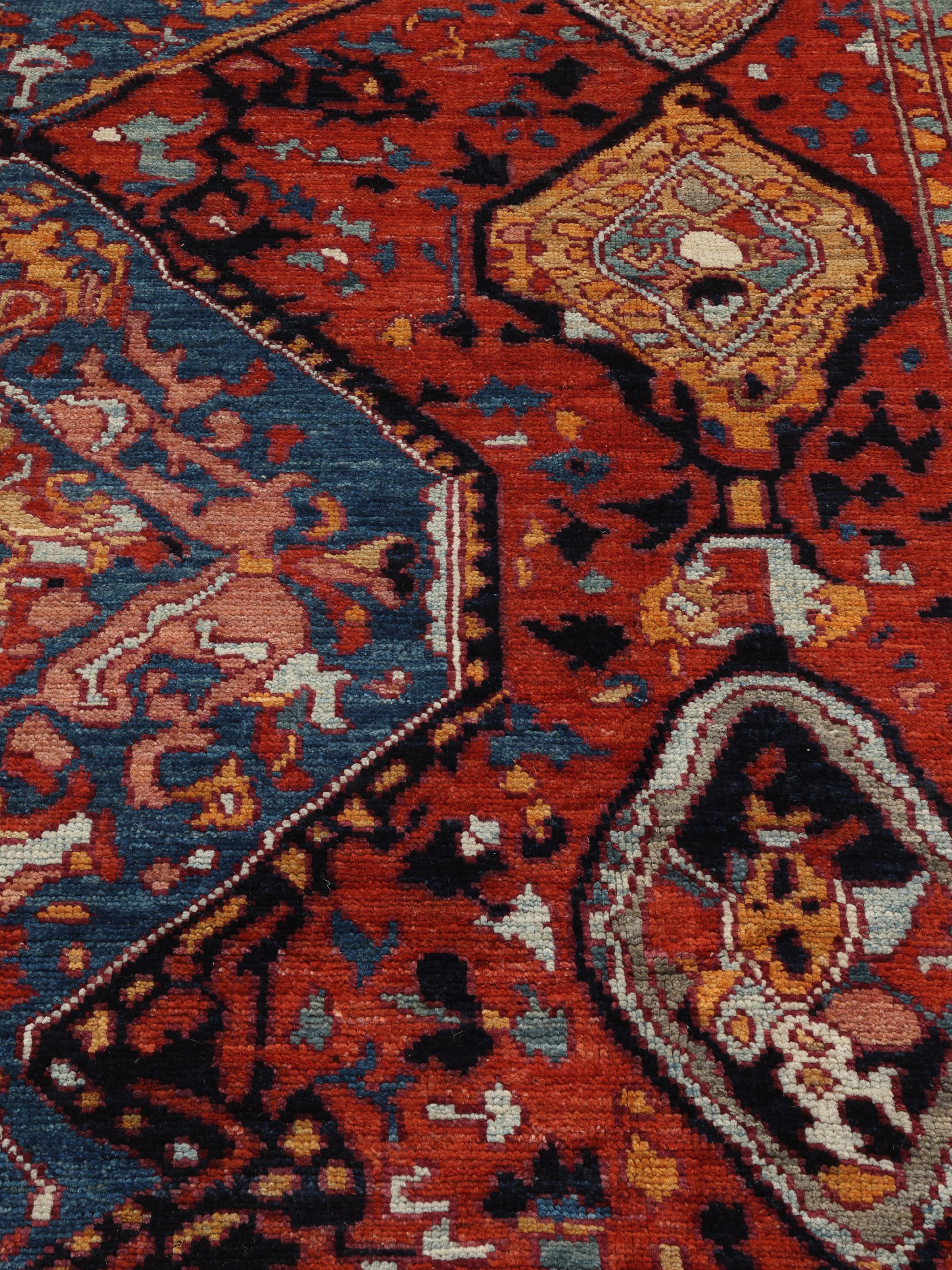
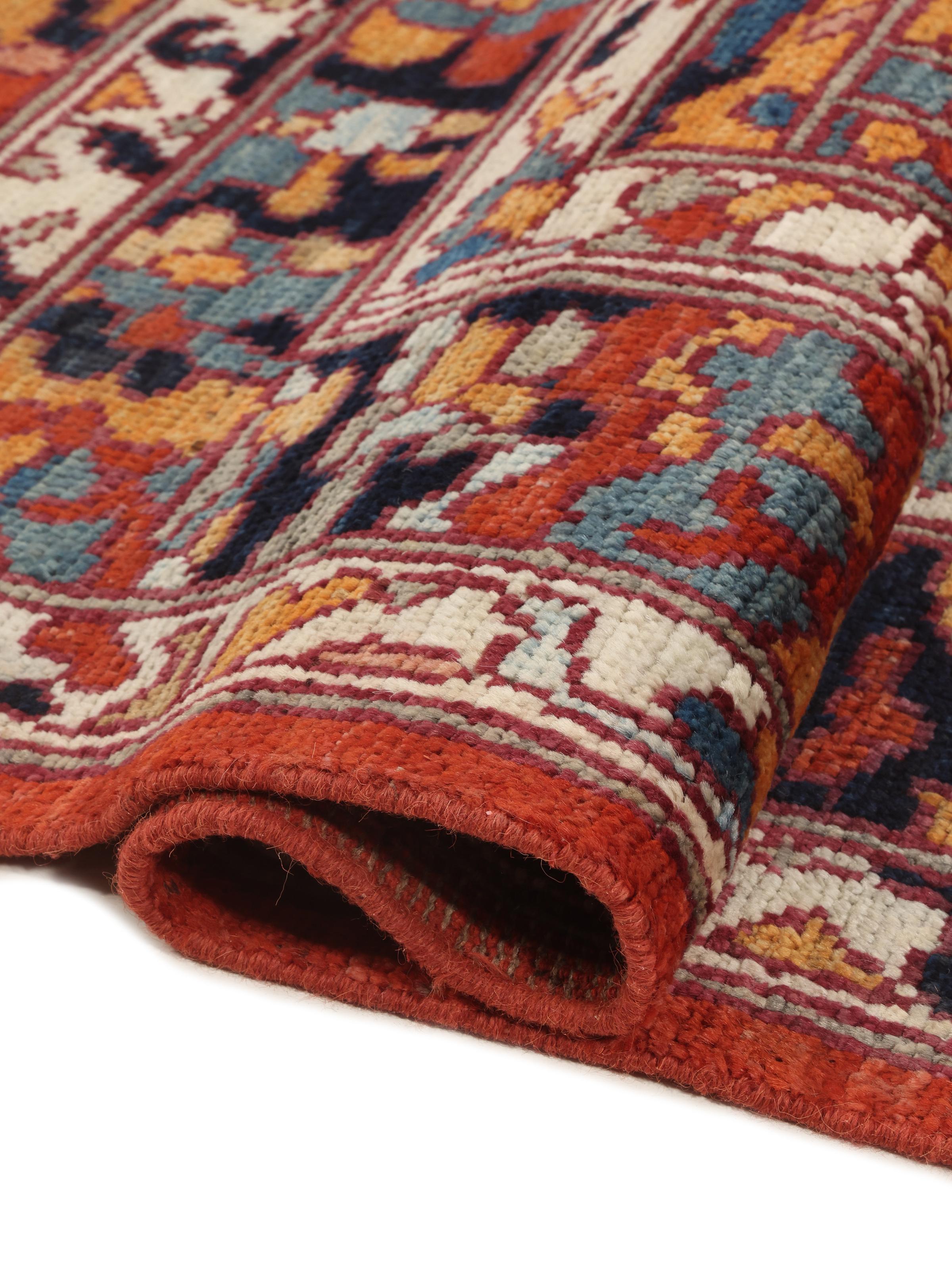
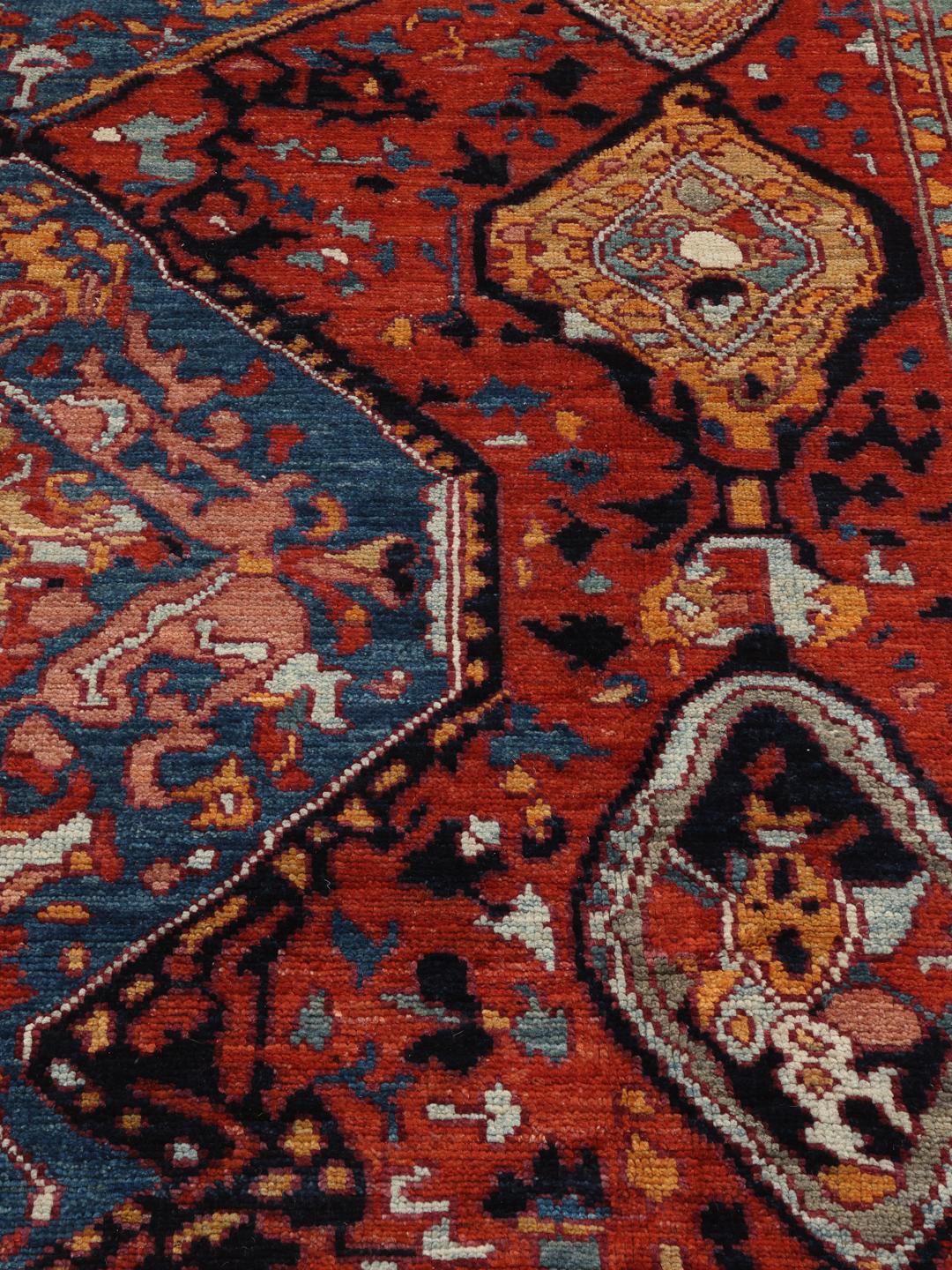
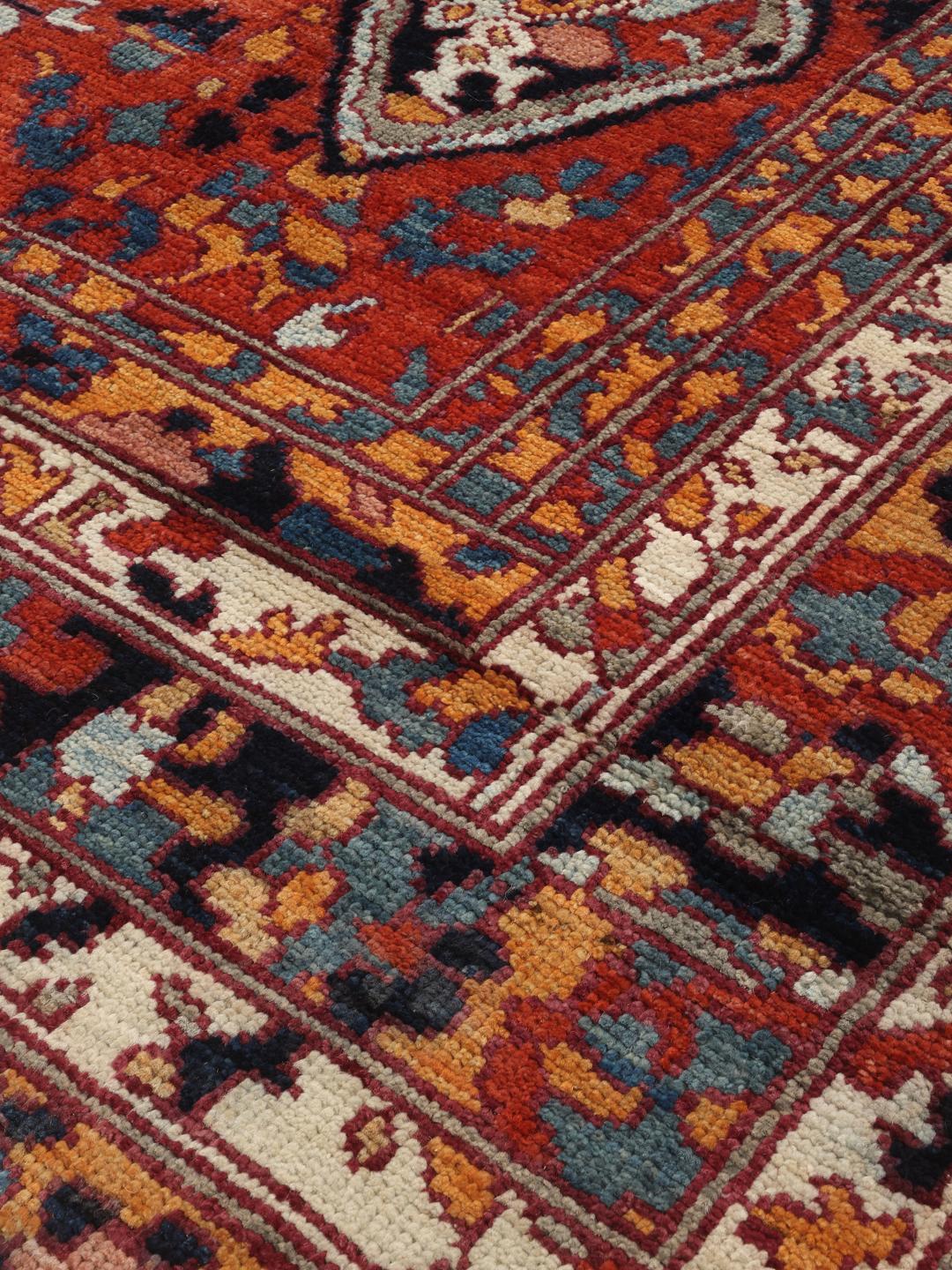
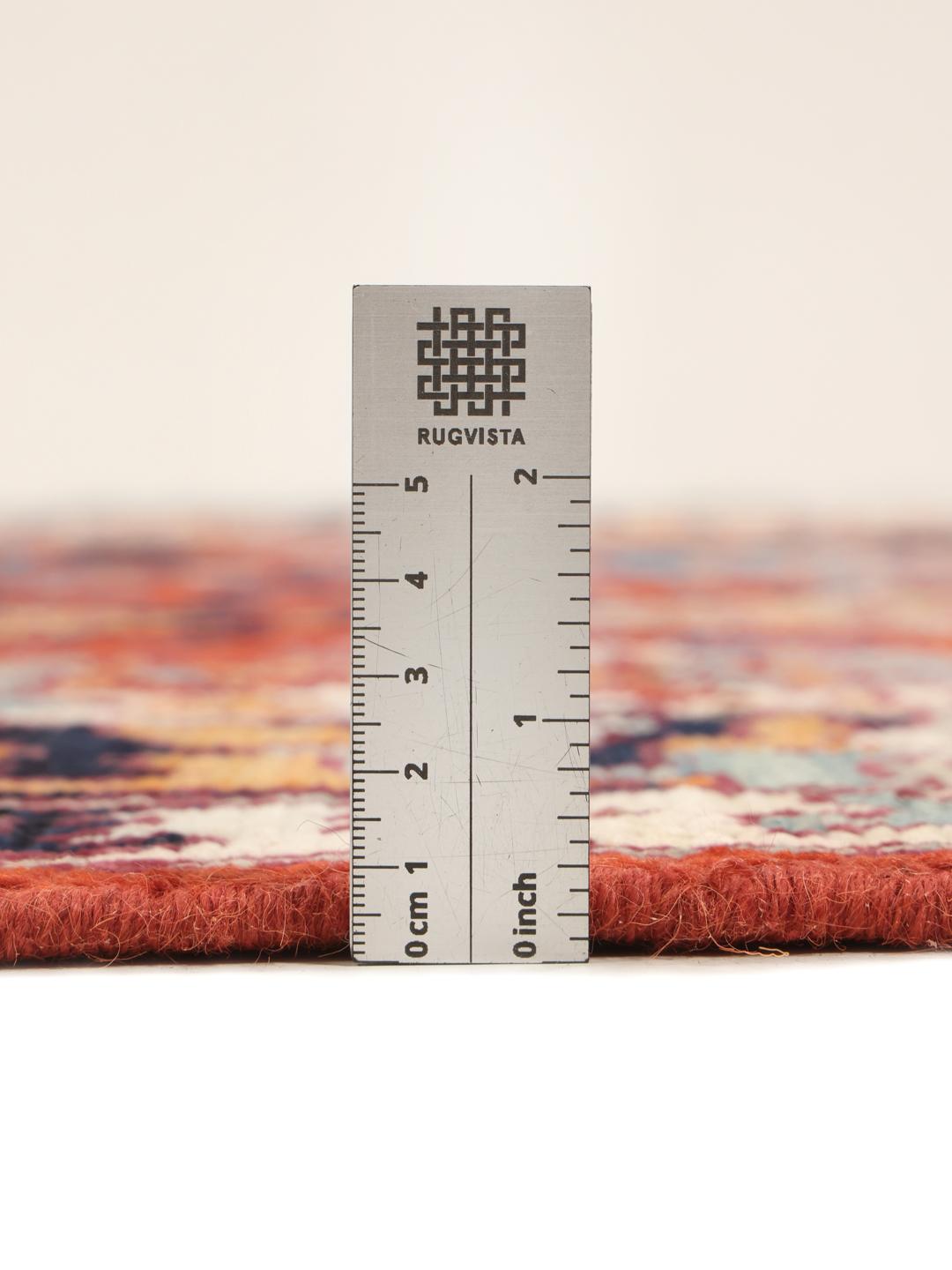
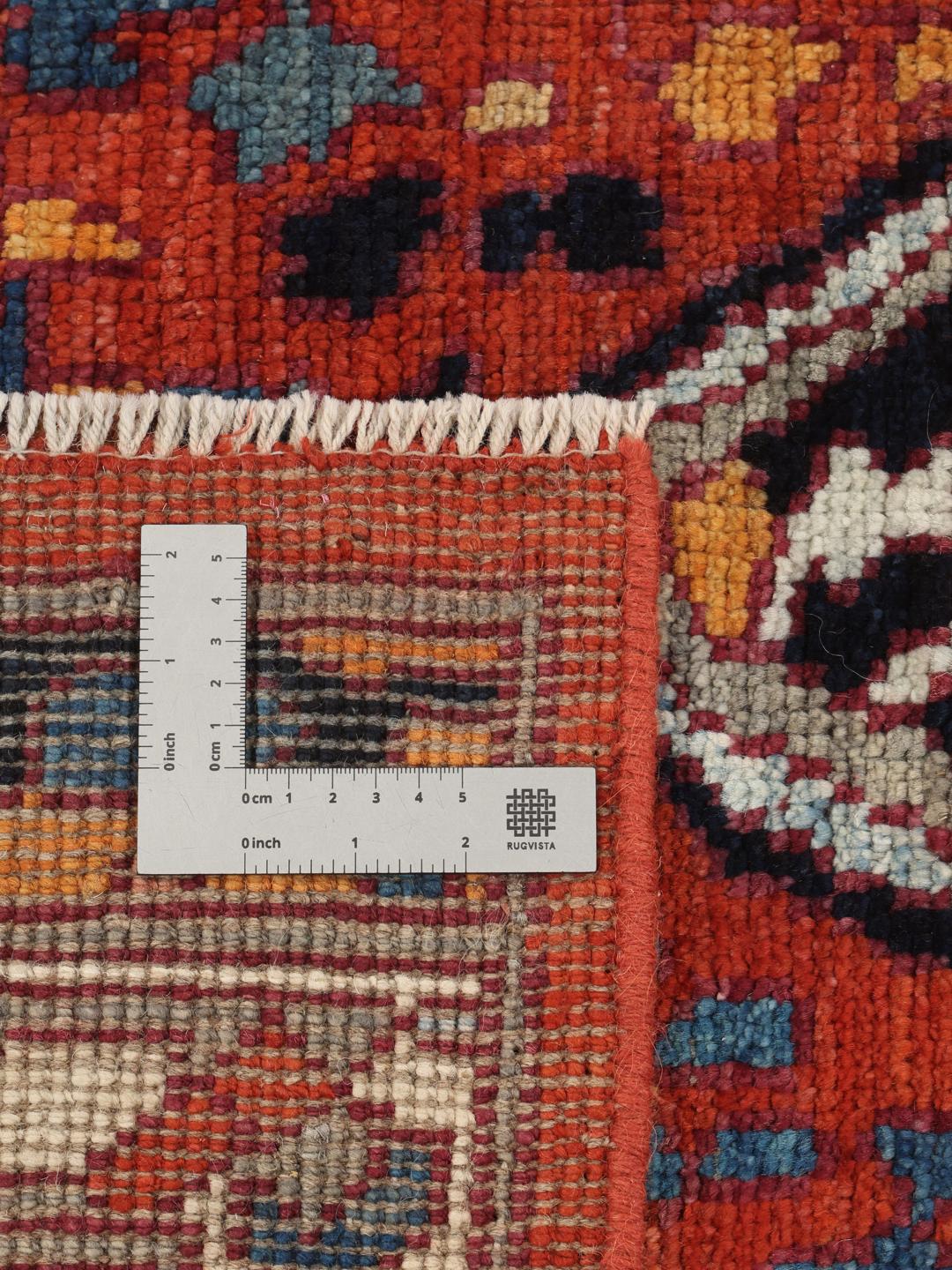
The terminology surrounding these rugs often refers to the specific way they are constructed and the materials used. The term Kazak itself is synonymous with a bold, geometric aesthetic that prioritises strong lines and striking colour combinations. The use of natural, high-quality wool is central to this tradition, as it offers the perfect combination of durability, softness, and the ability to hold rich, vibrant dyes that age gracefully over time.
Signature design elements of these rugs include bold, oversized geometric motifs, such as medallions or stylised floral and animal forms, which are often arranged in a symmetrical or repeating pattern. The borders are typically wide and highly decorative, framing the central field to create a cohesive and powerful visual impact. This specific piece showcases the classic red and blue tones that have defined this aesthetic for centuries, making it a quintessential example of the style.
Collectors value these rugs not only for their aesthetic beauty but also for the cultural heritage they represent. Owning a Kazak rug is an opportunity to connect with a long-standing tradition of craftsmanship that values human skill over industrial efficiency. These pieces are often seen as heritage items, capable of lasting for decades while continuing to serve as a testament to the weaver's talent and the enduring power of traditional design.