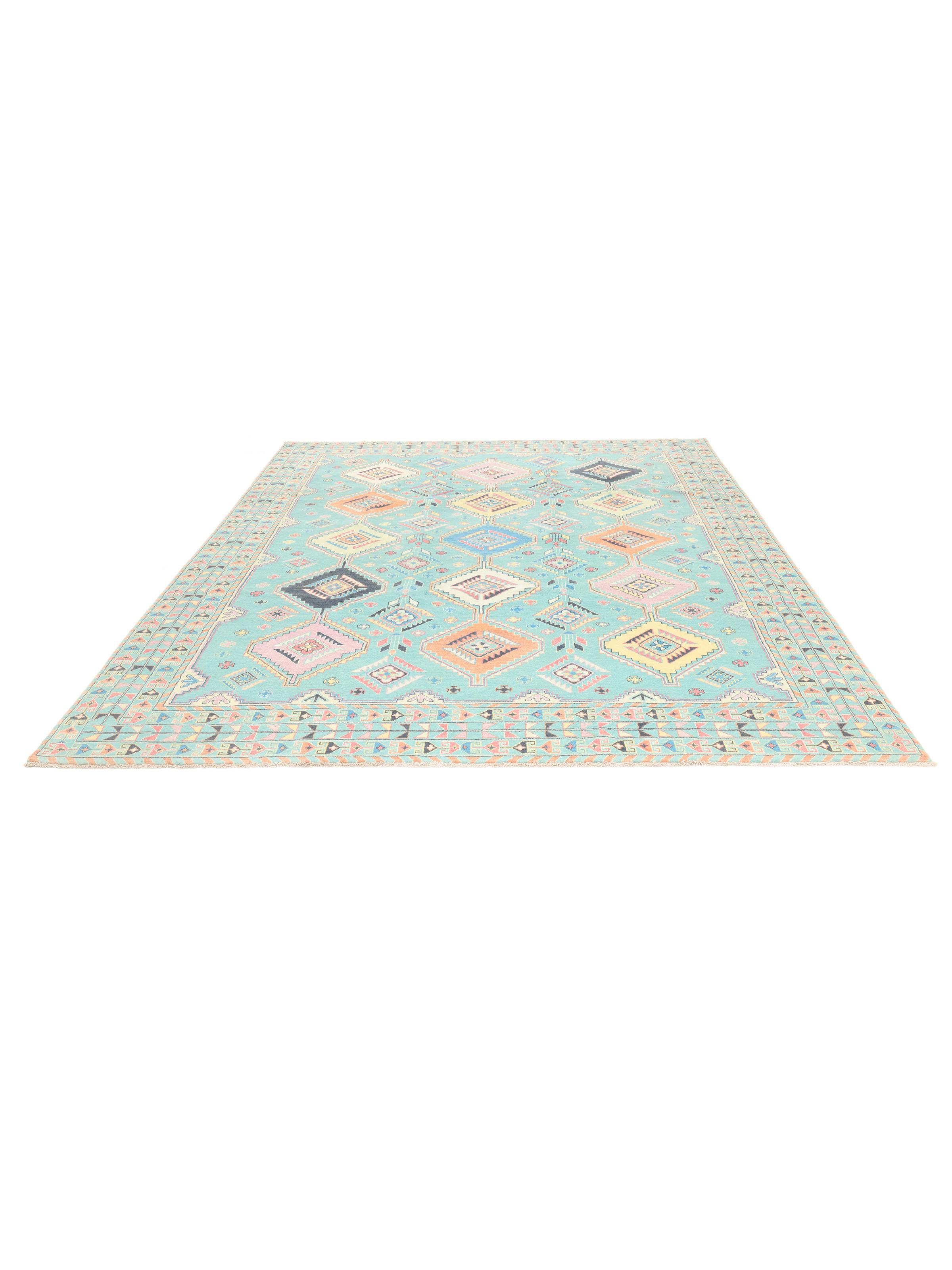
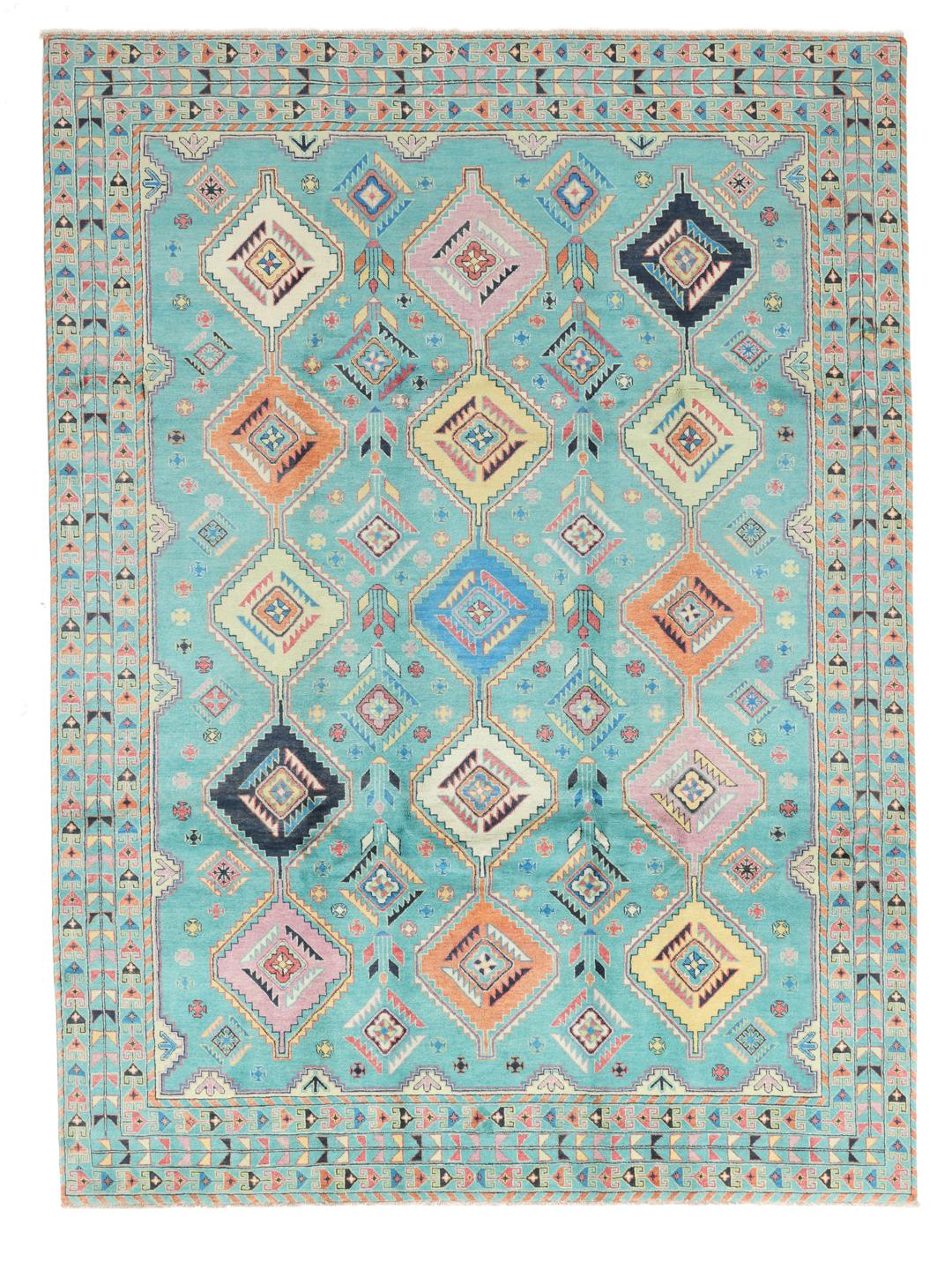
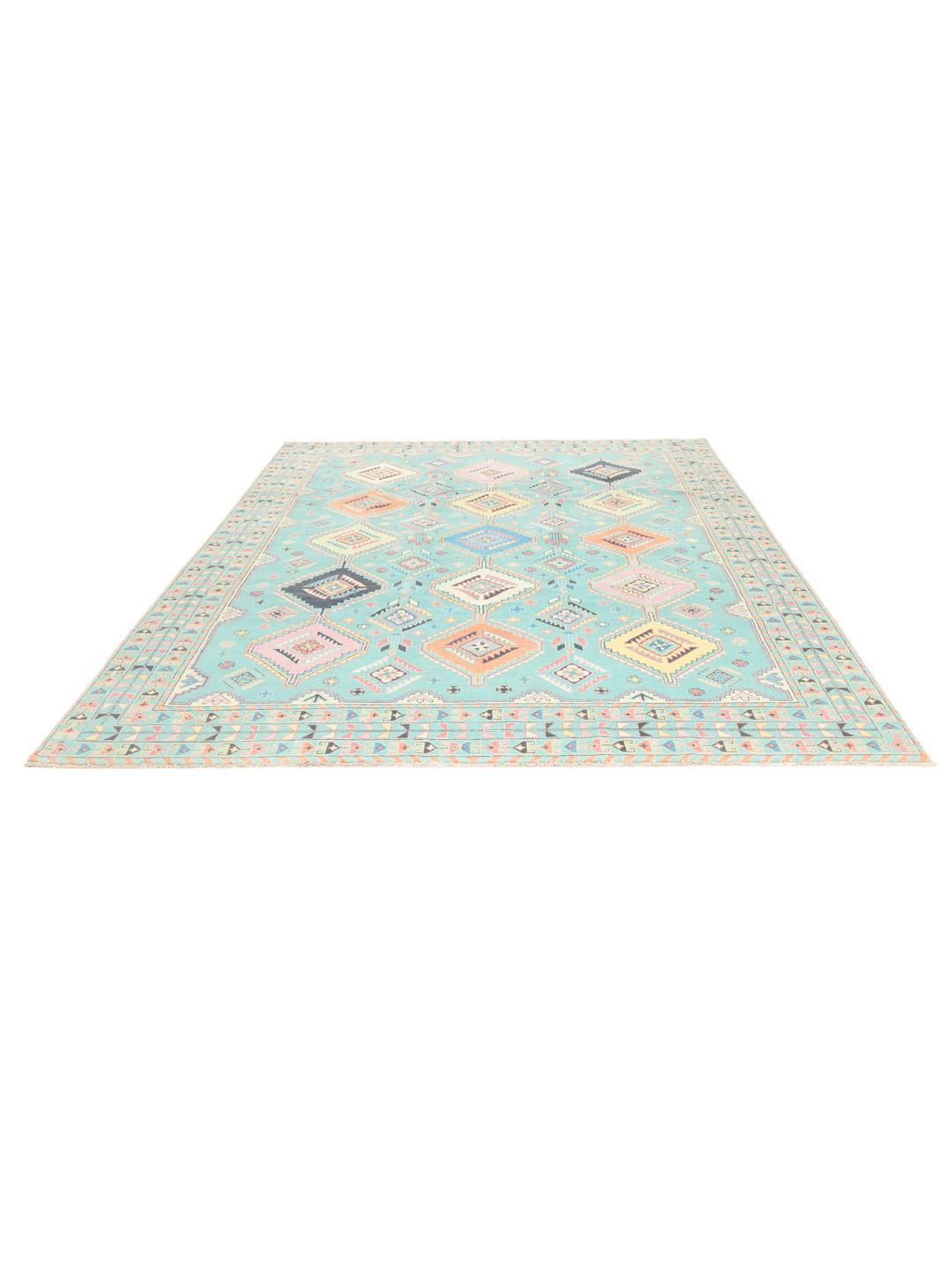
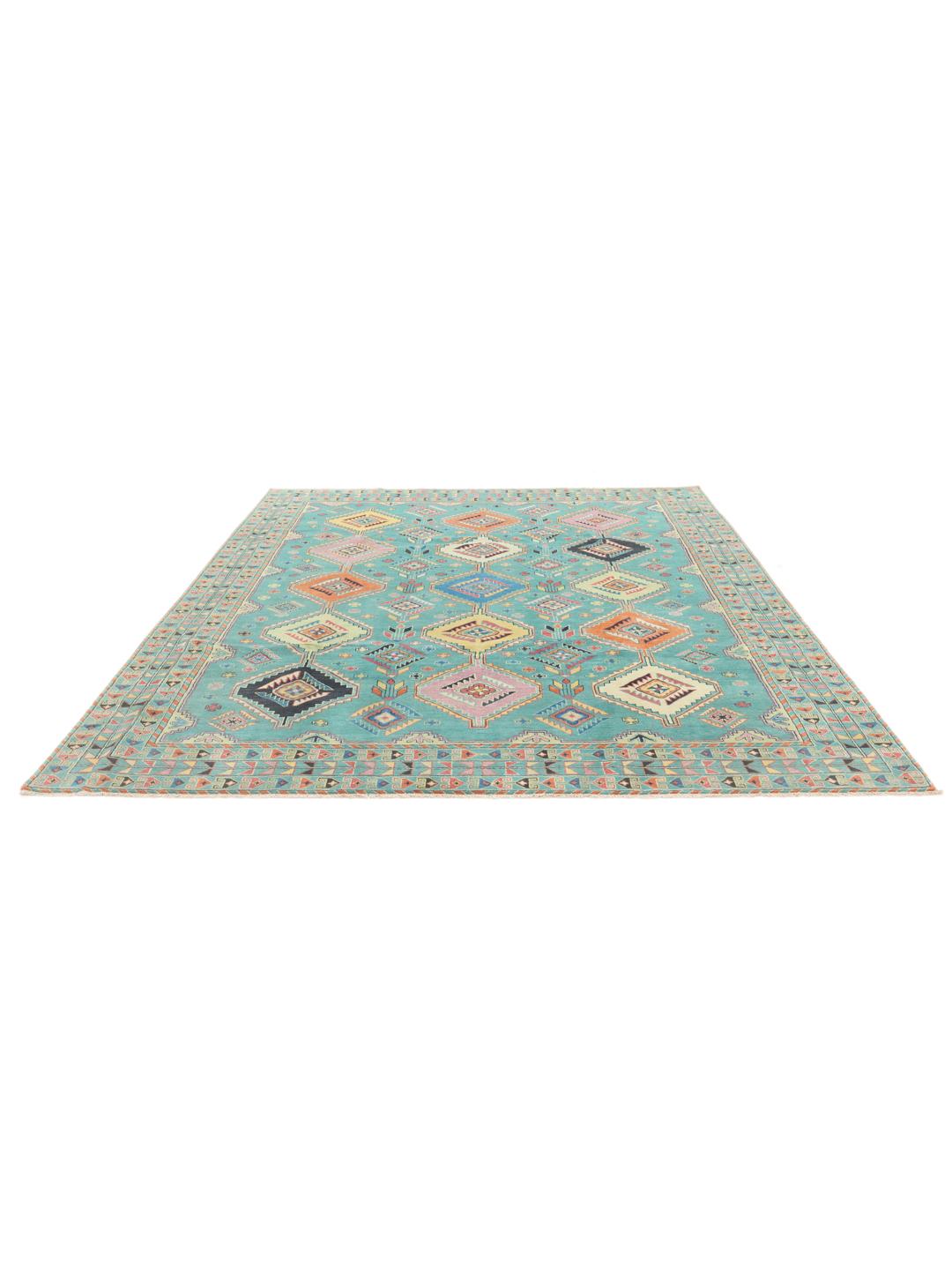
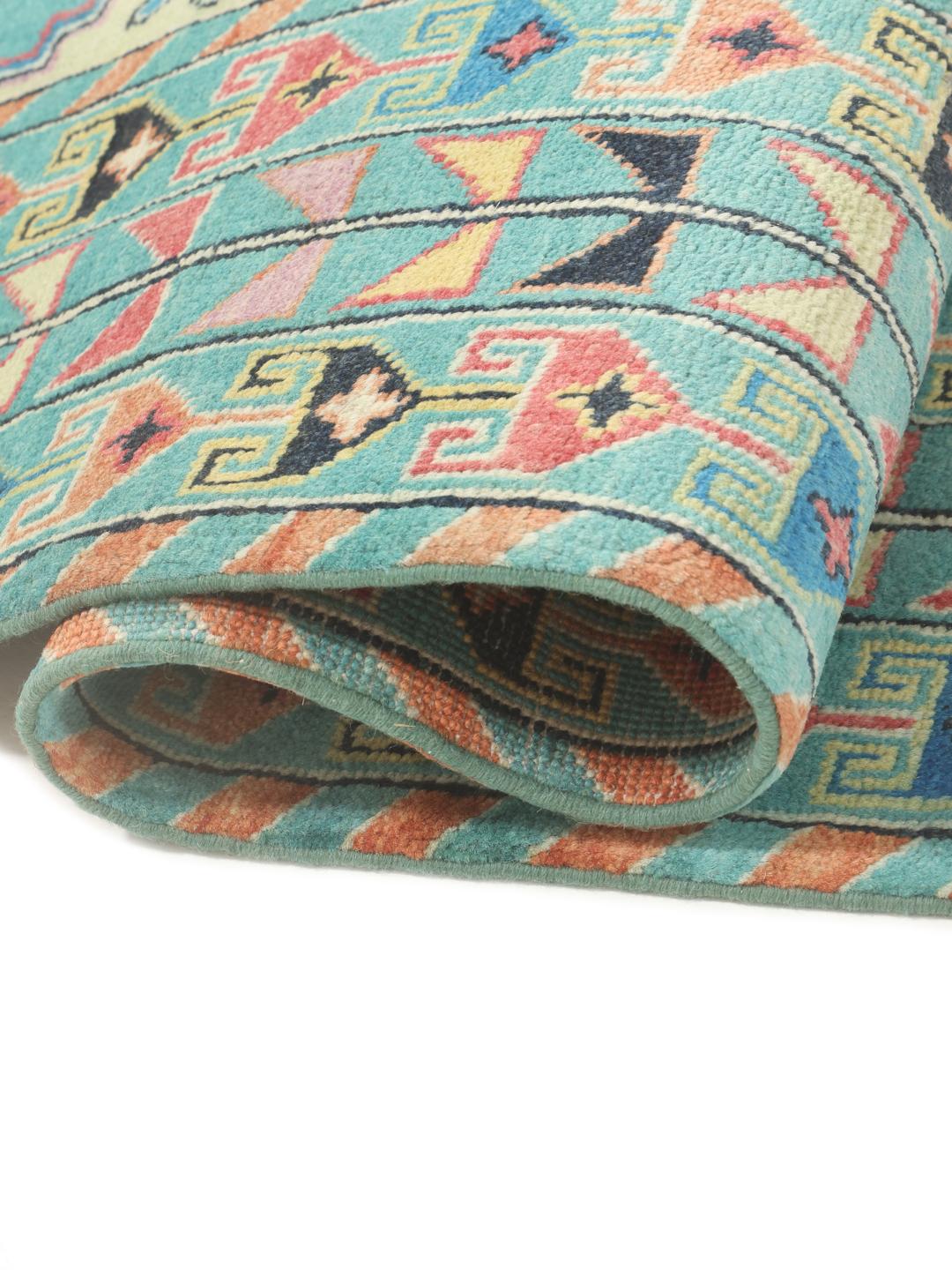
Kazak rugs originate from the Caucasus region, a mountainous area known for its rich history of textile production and distinct tribal aesthetics. While the tradition began in the Caucasus, the craft has evolved and migrated over centuries, with modern fine examples like this one being expertly woven in Afghanistan. These rugs are highly regarded for their bold, graphic designs that have captured the imagination of collectors for generations.
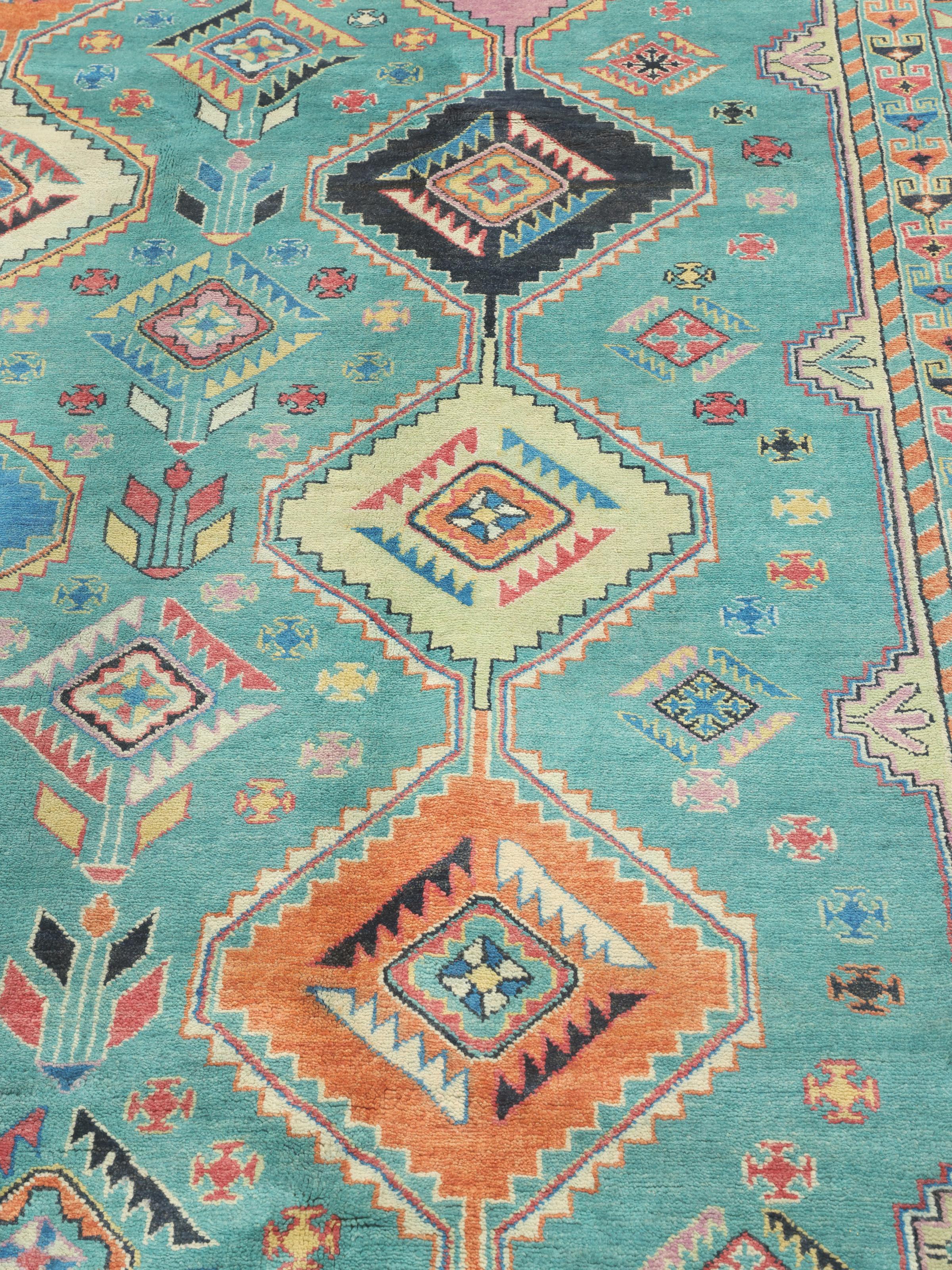
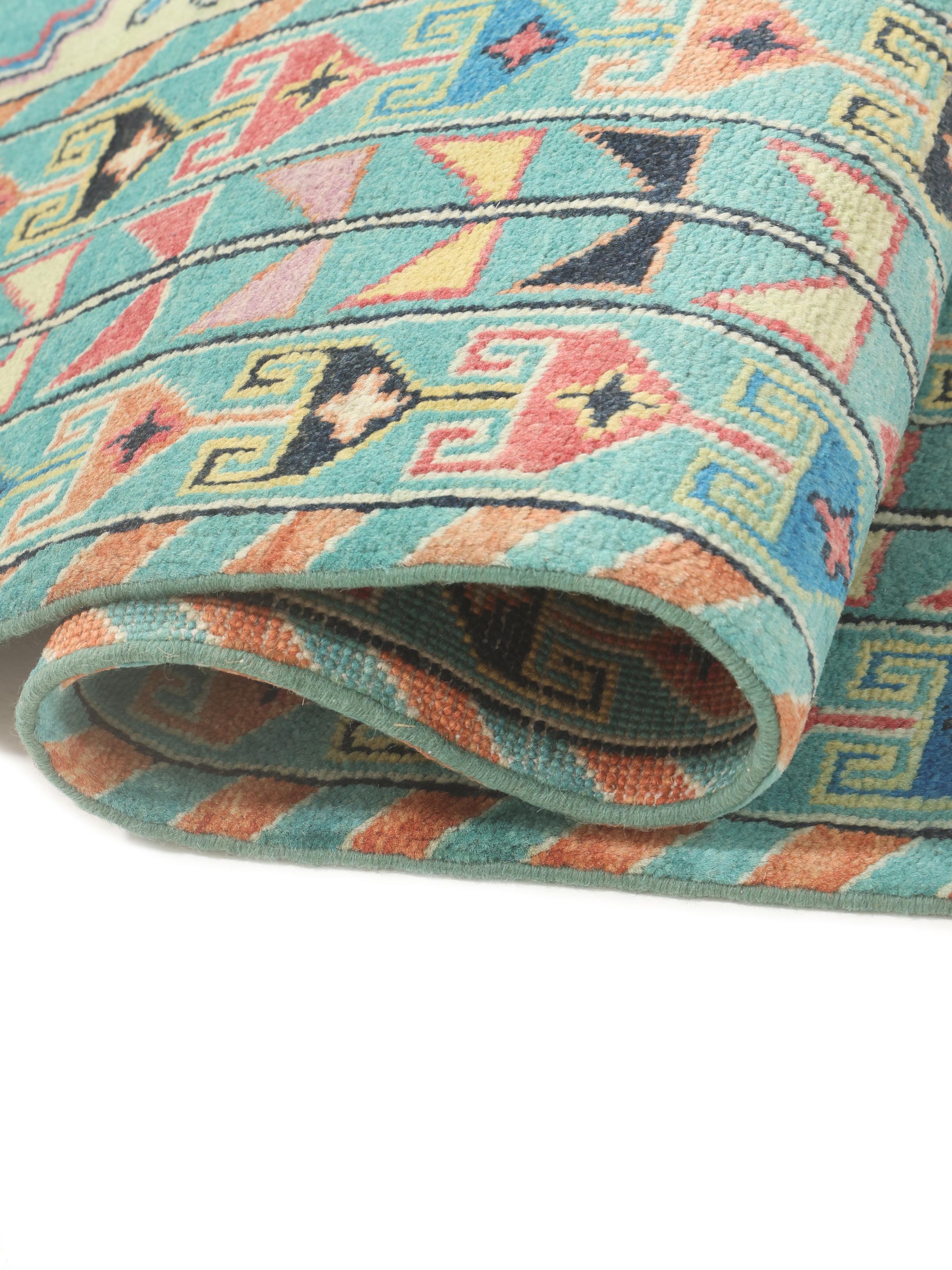
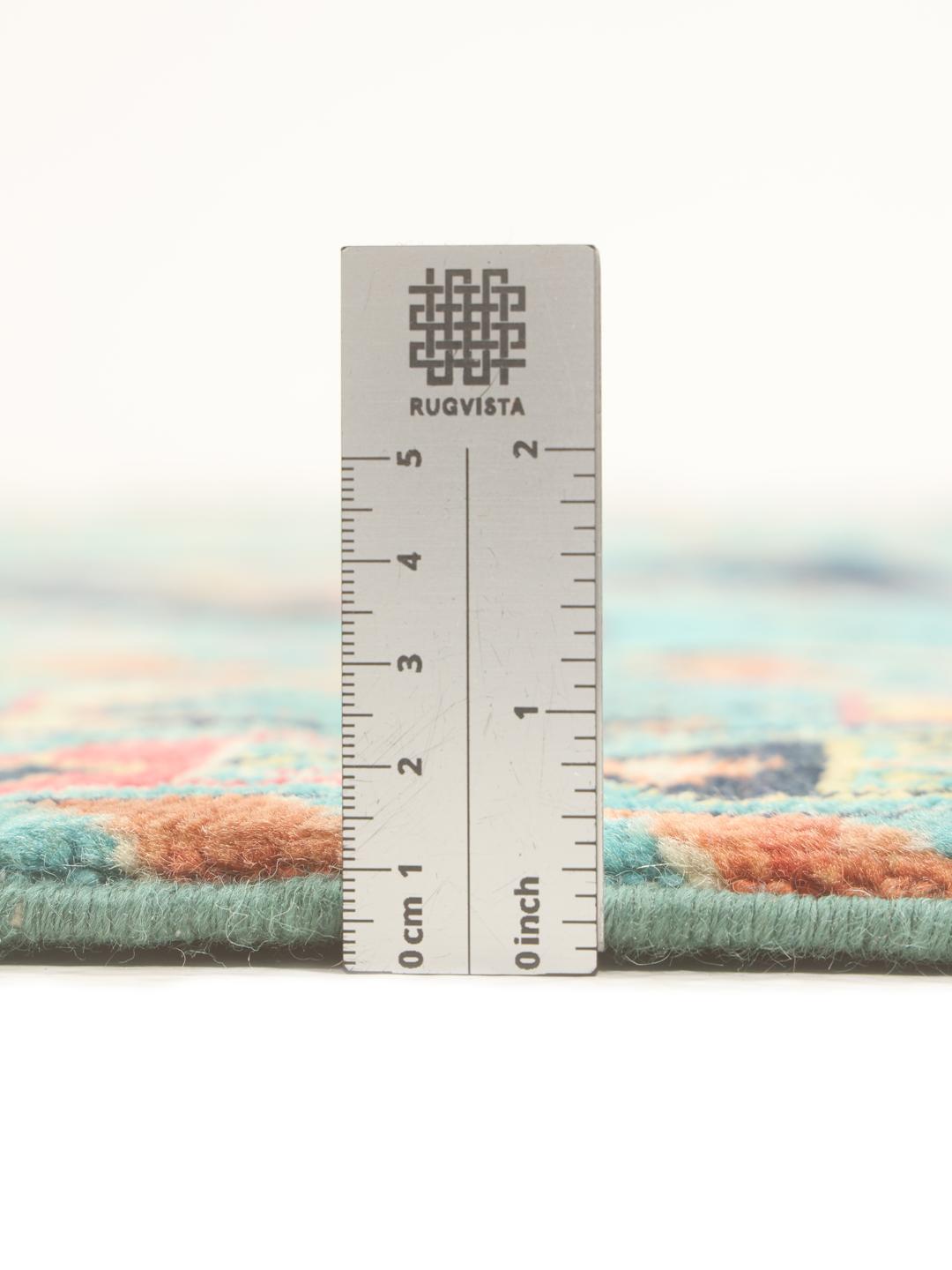
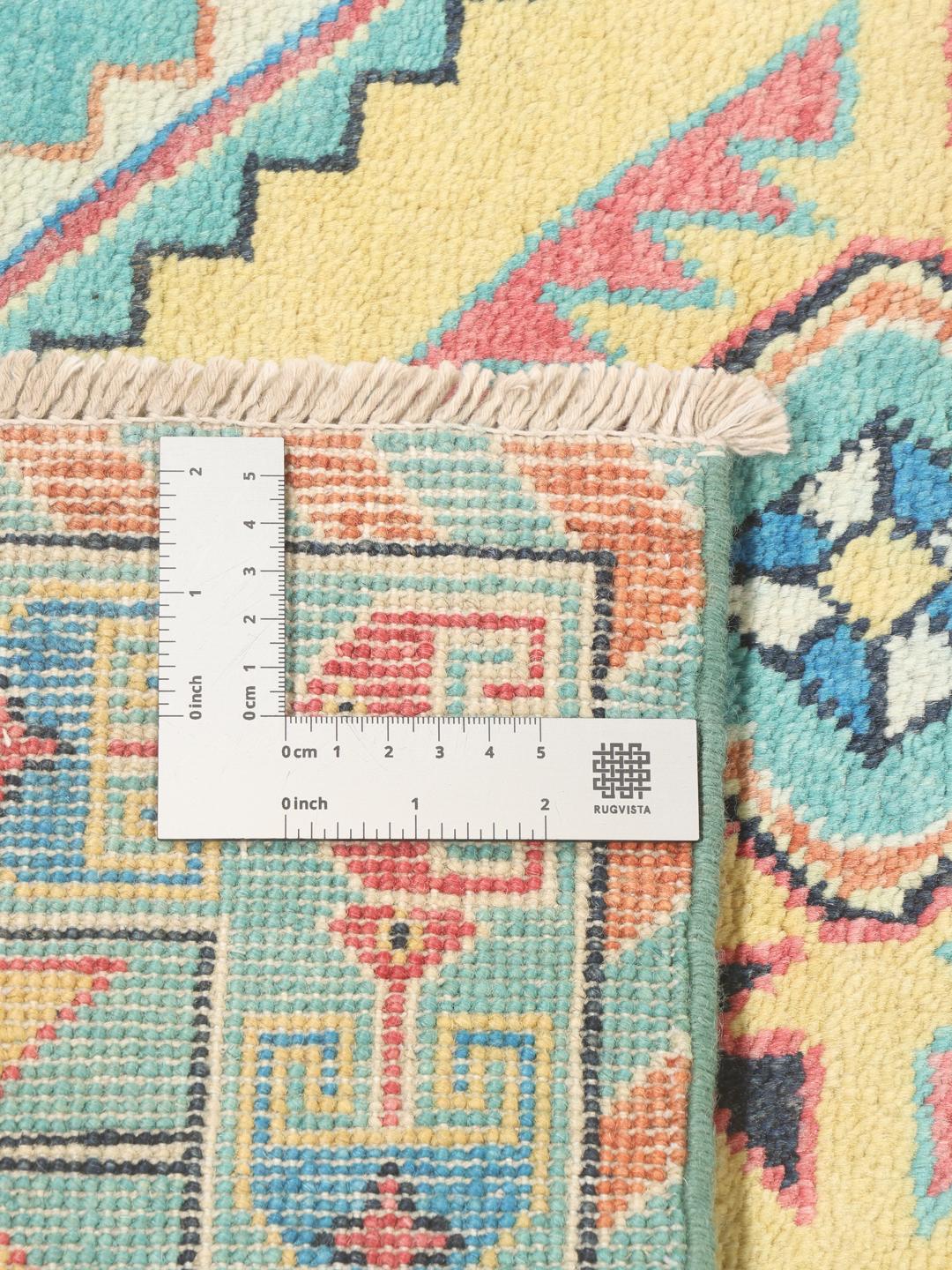
The terminology used to describe these rugs reflects a tradition that prioritises durability and visual impact. The techniques employed, such as the use of high-quality wool and traditional knotting methods, are designed to create a heavy, long-lasting pile. This construction is not merely functional but is a hallmark of the craft, ensuring that the rug retains its structural integrity and vibrant colours throughout years of use.
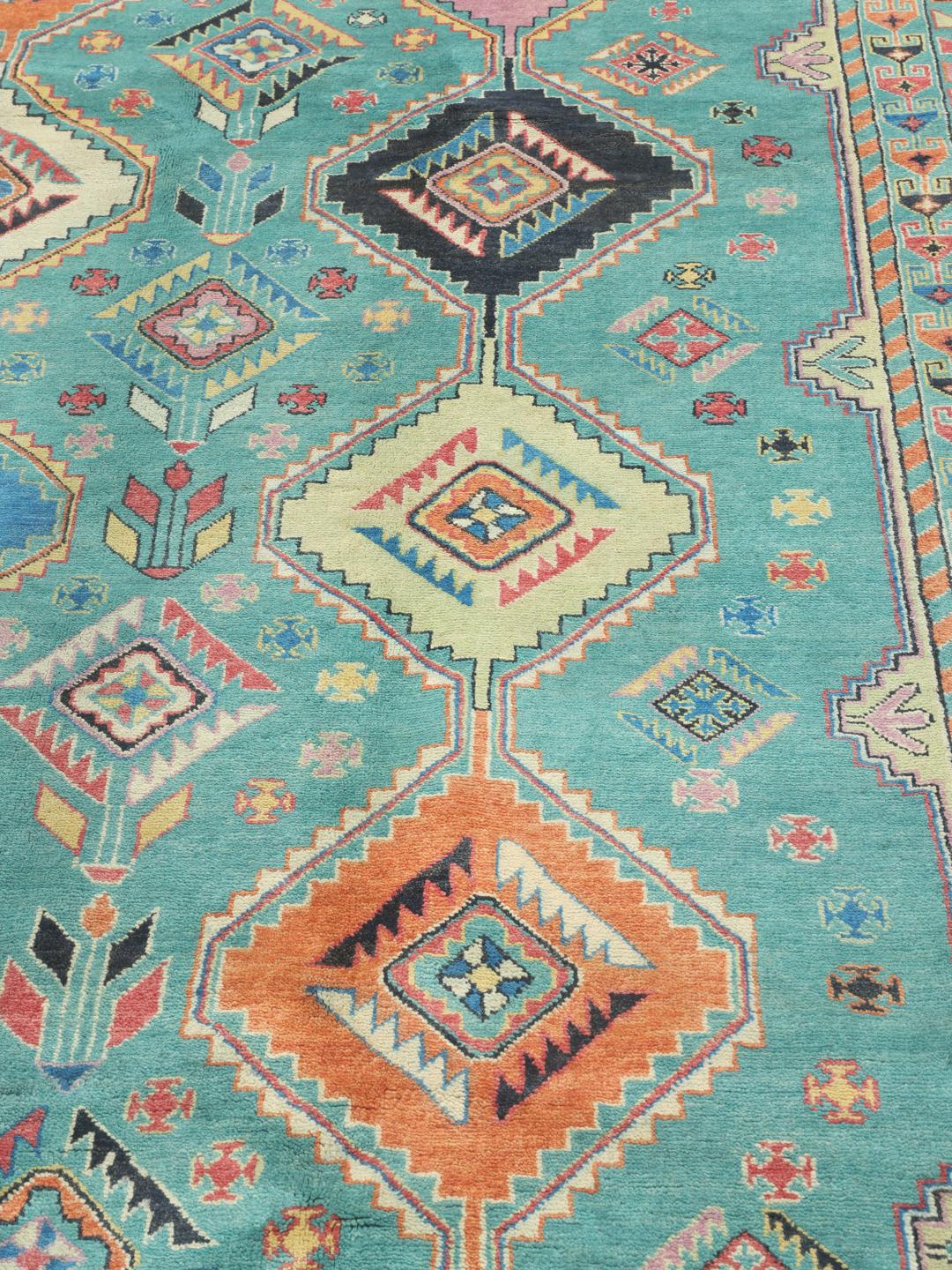
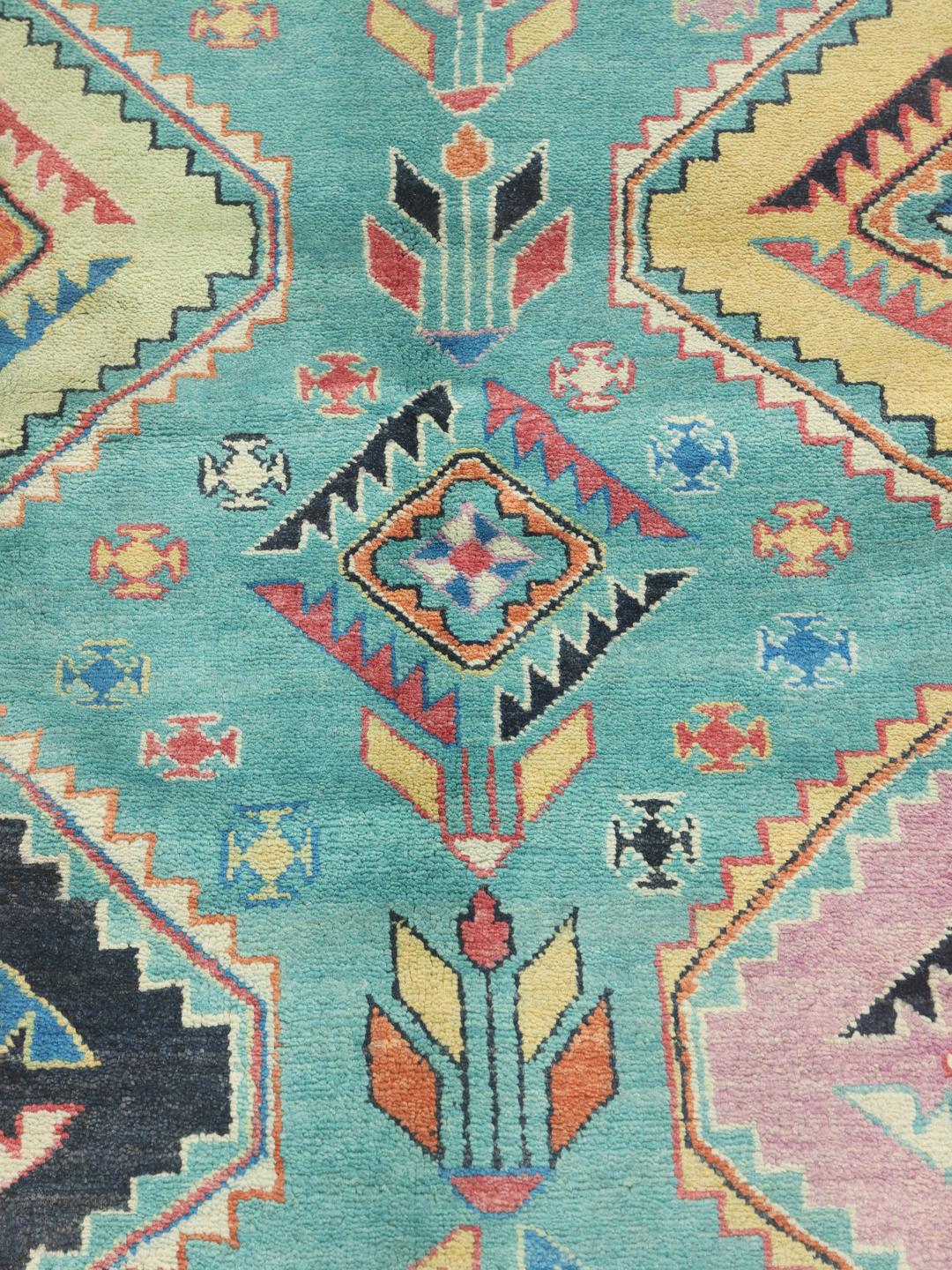
Signature design elements in Kazak rugs typically feature geometric medallions, often referred to as guls, alongside stylised animal motifs and serrated leaf patterns. This particular rug showcases this lineage through its use of sharp, repeating diamonds and geometric shapes. The use of a bold teal field is a beautiful departure from more traditional red-dominant palettes, highlighting the artistic freedom and creative evolution found within this specific weaving tradition.
Owning a Kazak rug is an investment in heritage and human skill. They are valued not just for their utility as floor coverings, but as pieces of cultural history that demonstrate the mastery of the weaver. To own one is to appreciate the patience and precision required to translate complex, ancestral patterns into a tangible, high-quality object that anchors a room with its weight and soul.