Kazak rugs originate from the Caucasus region, though the tradition has found a vibrant new home in Afghanistan. These rugs are historically celebrated for their bold, graphic designs and rich colour palettes, which were traditionally derived from natural dyes. The migration of these weaving techniques has allowed the Kazak style to evolve, blending historic regional aesthetics with the deep-rooted weaving traditions of Afghan artisans.
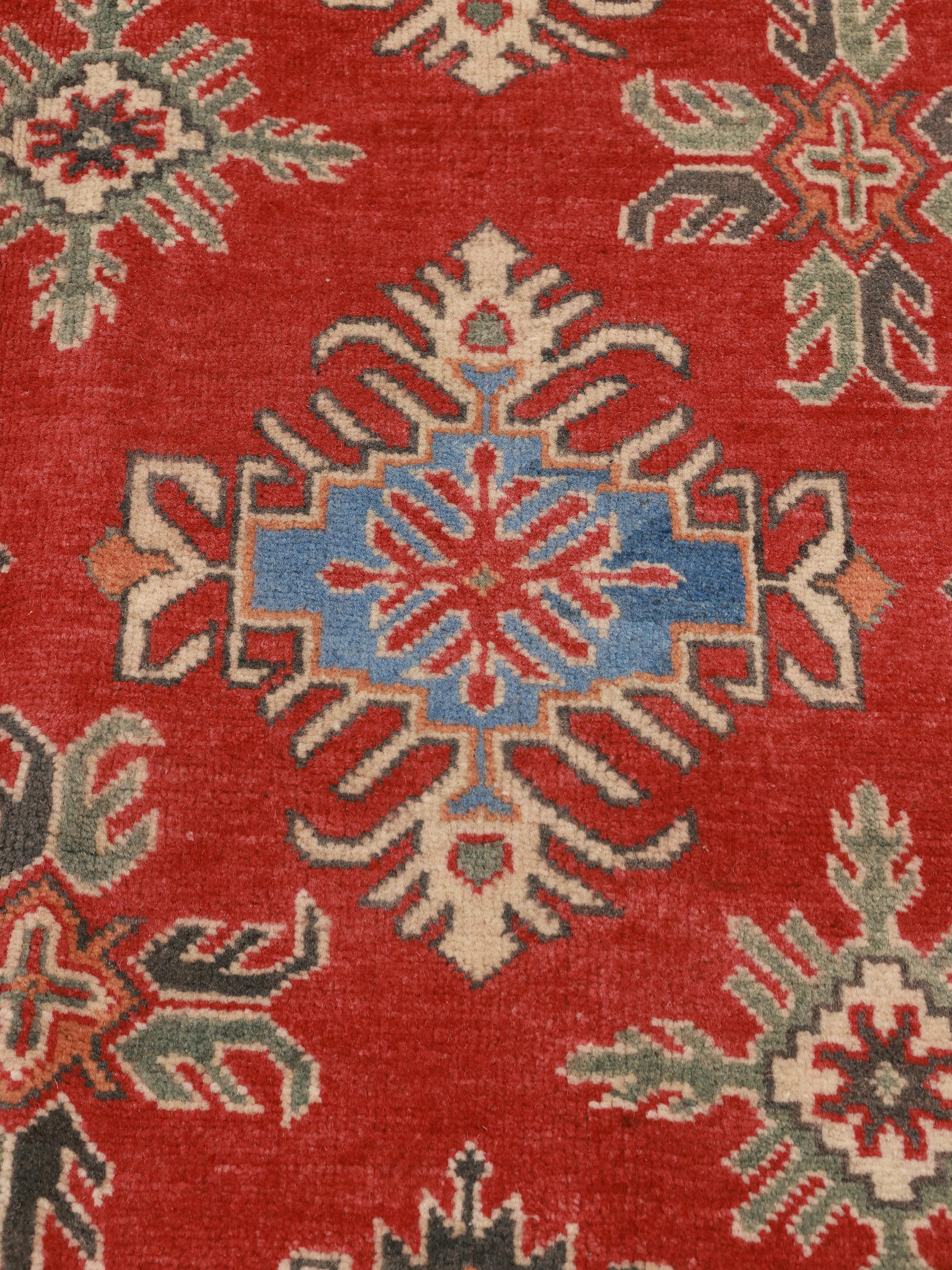
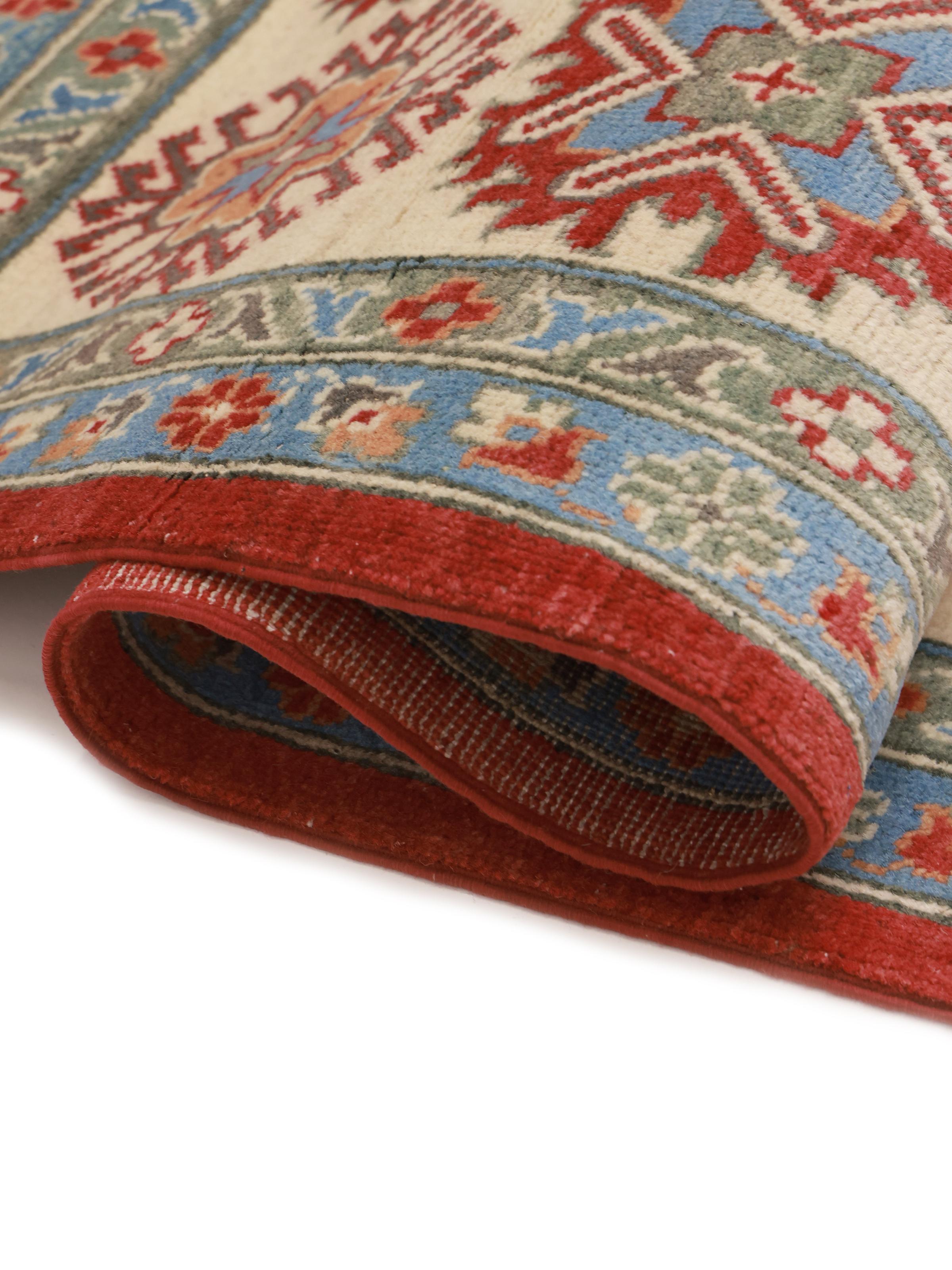
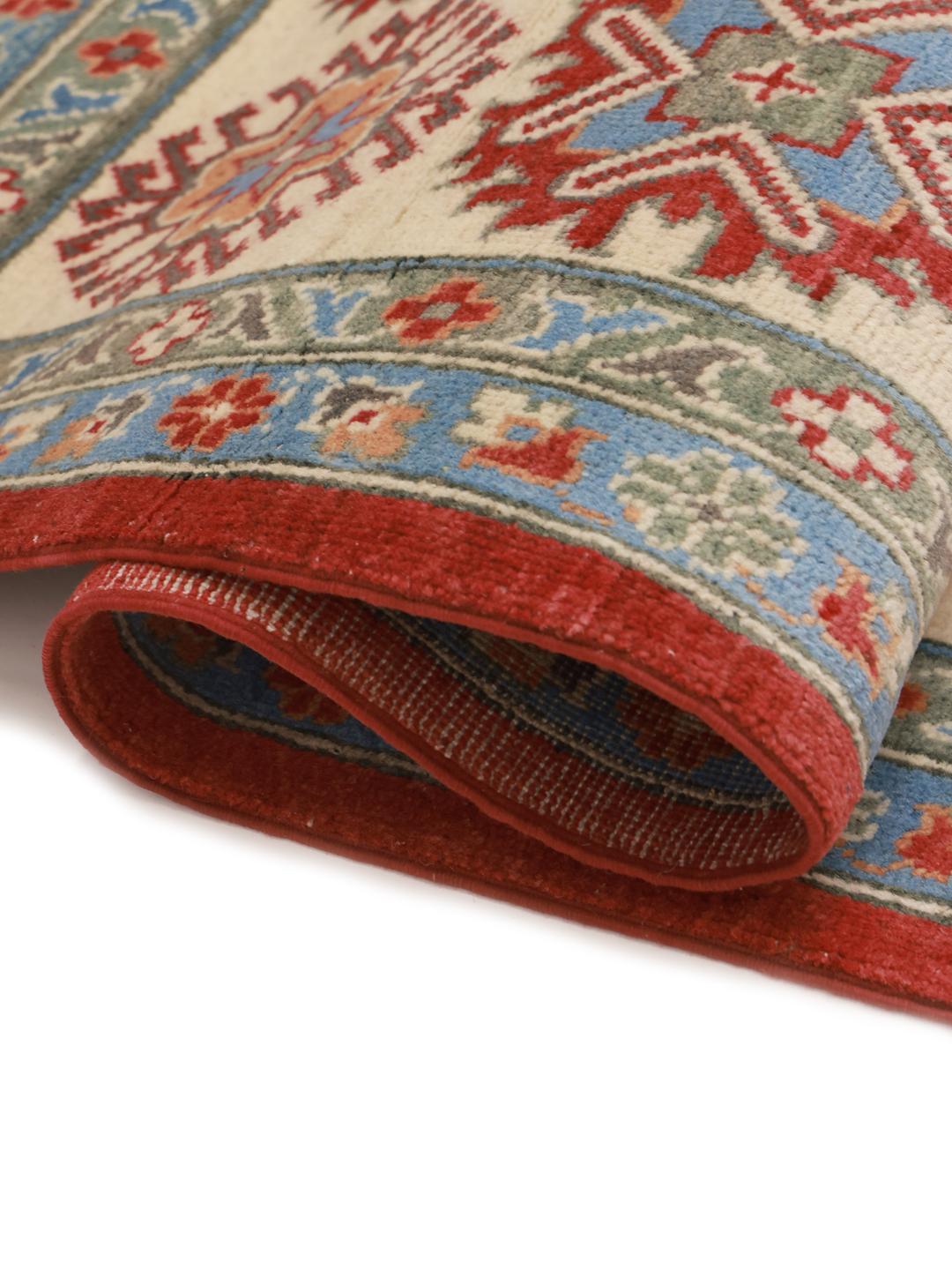
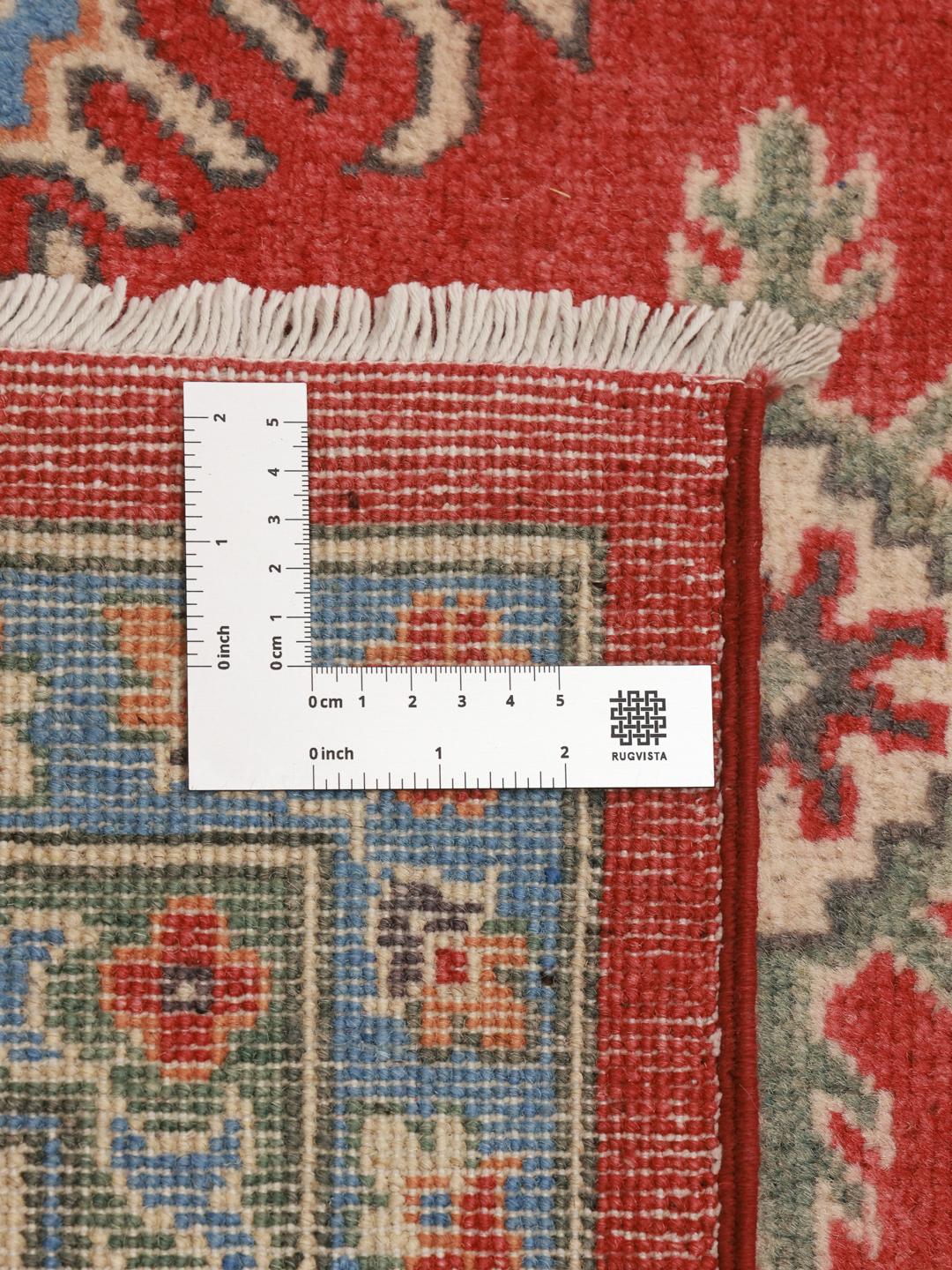
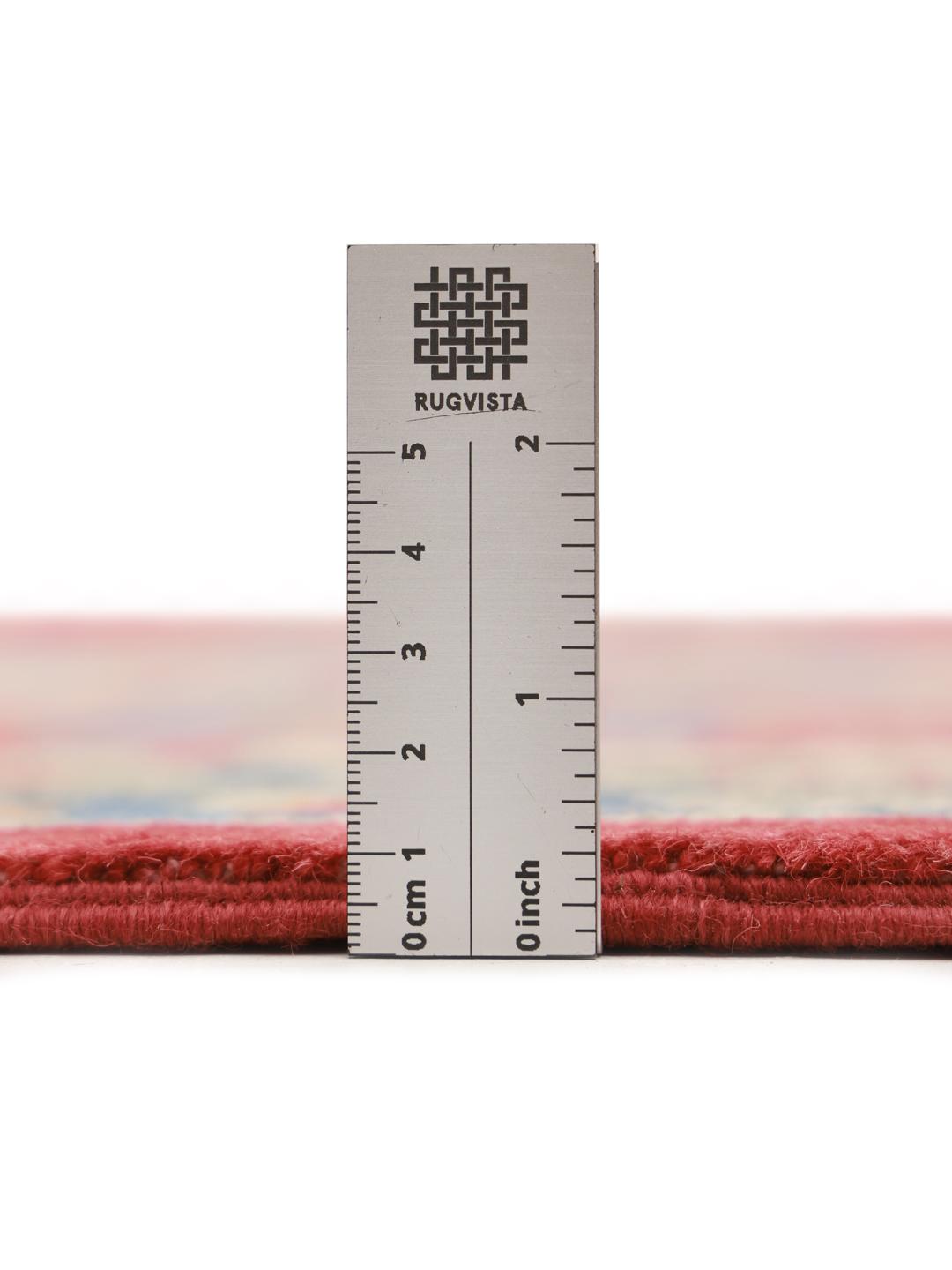
The terminology used to describe these rugs often refers to the specific methods of construction that define their quality. A hand-knotted Kazak is characterised by its sturdy foundation and dense pile, which are achieved through precise techniques passed down through generations. This construction is crucial, as it determines how the rug wears over time, ensuring that the wool remains plush and the structural integrity stays firm even in high-traffic areas.
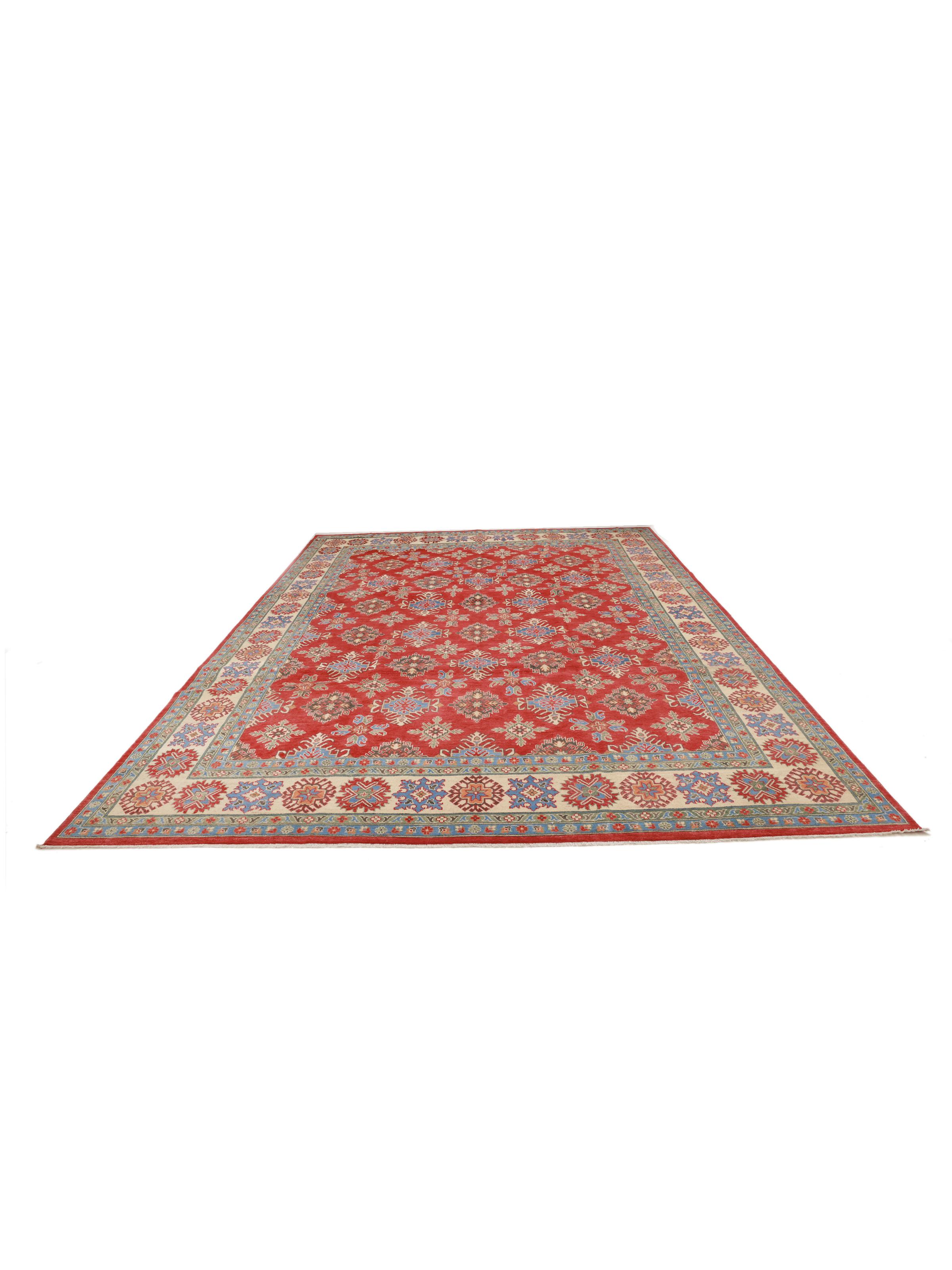
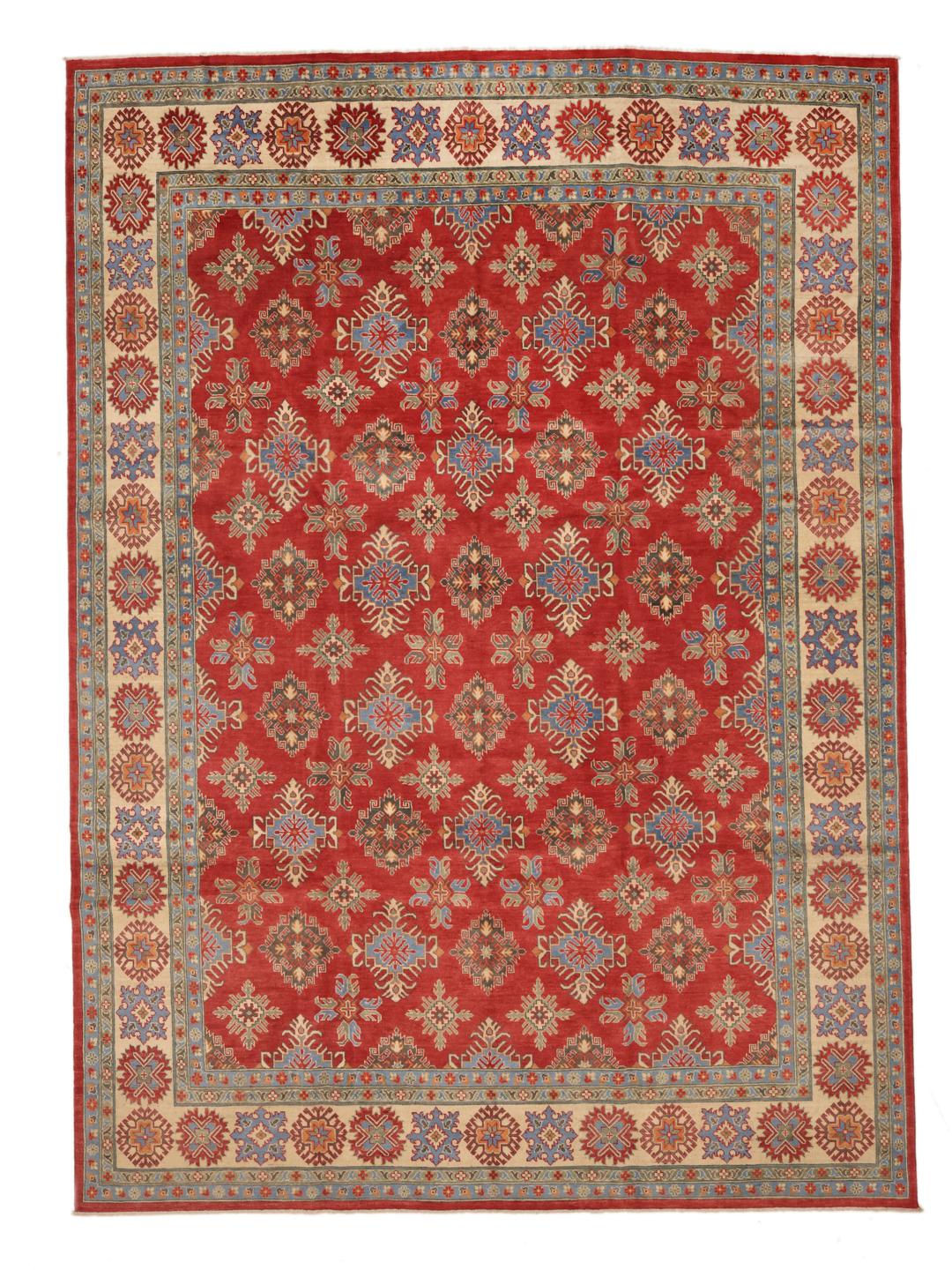
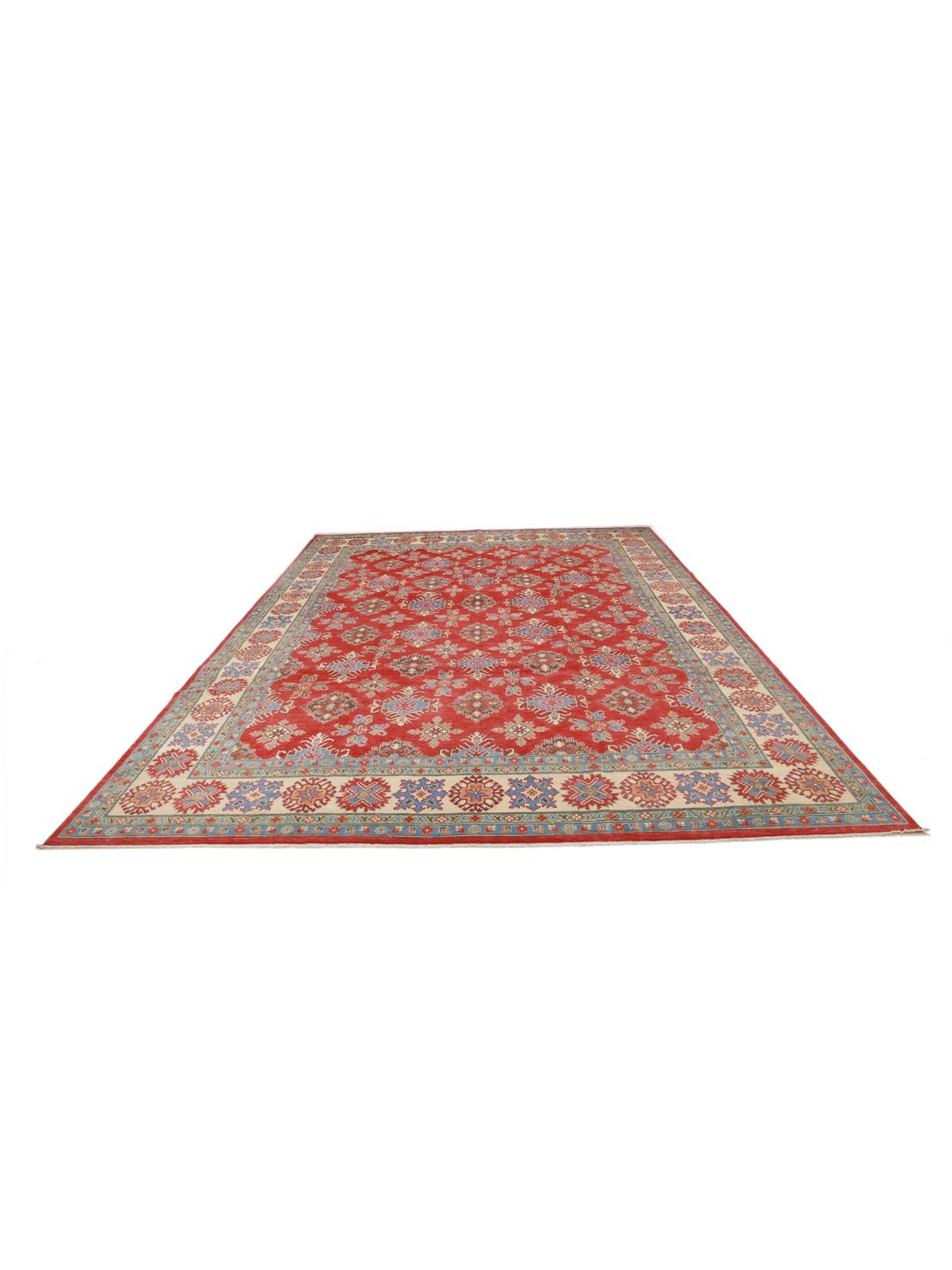
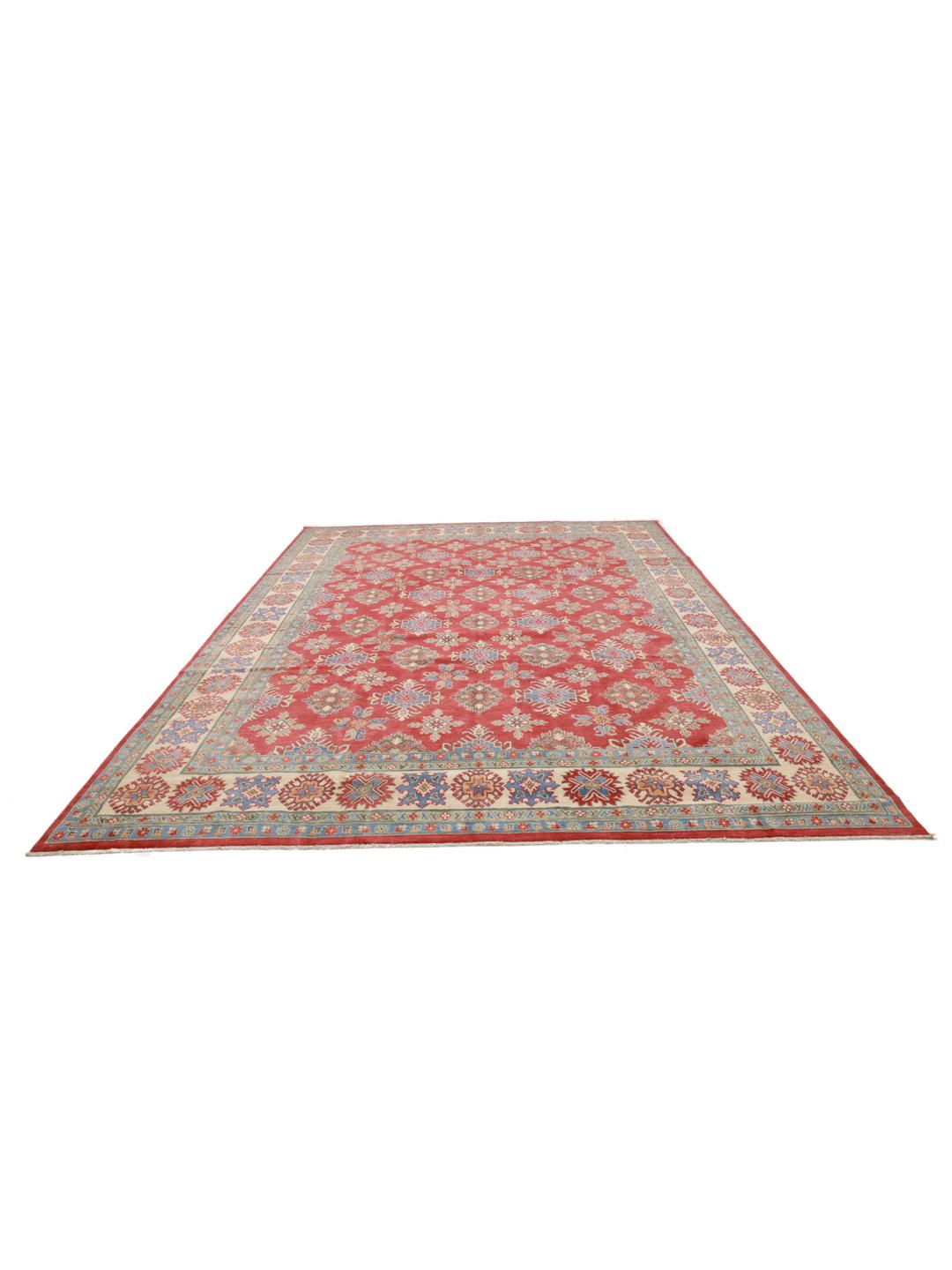
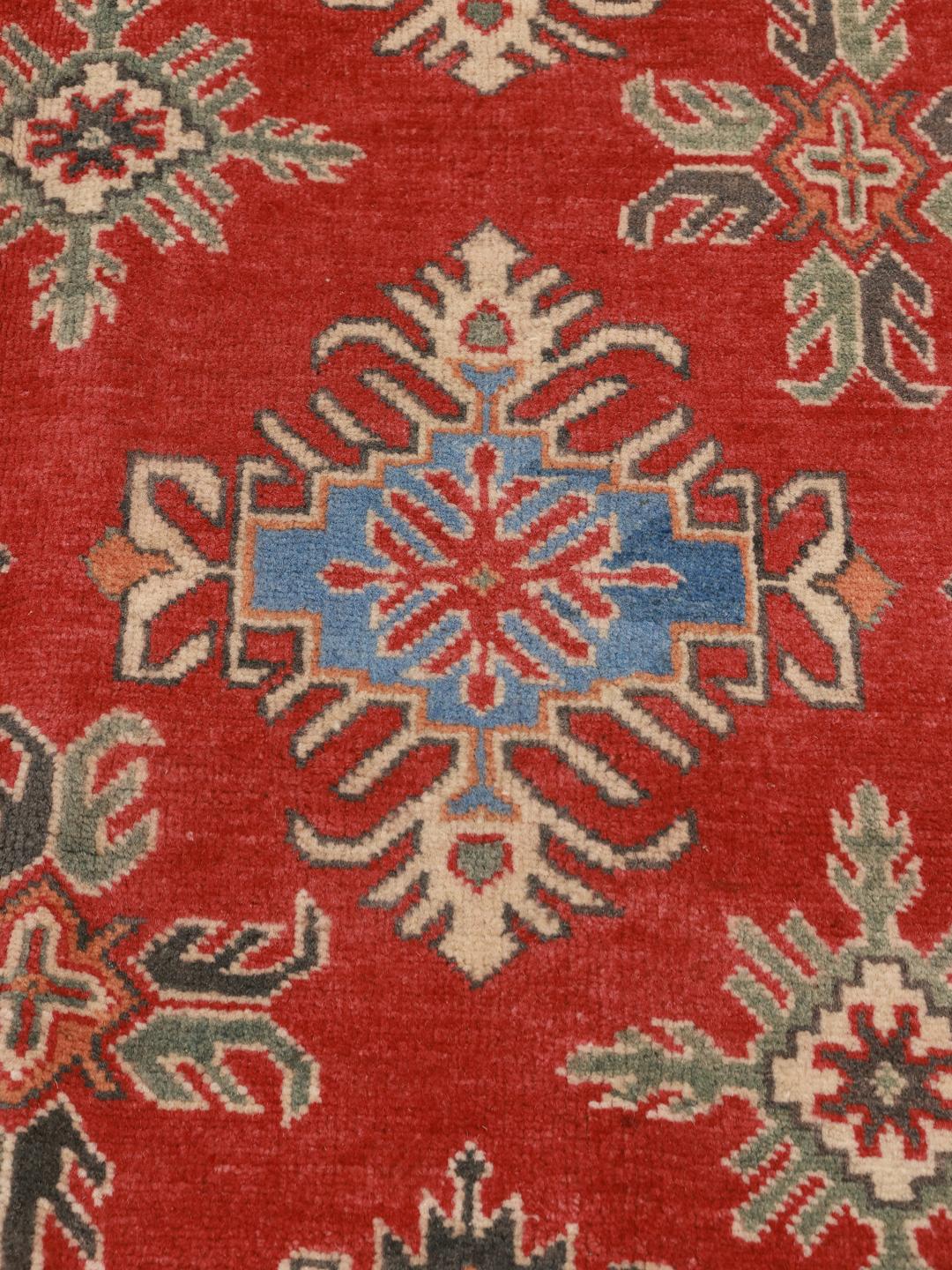
Visually, Kazak rugs are known for their geometric language, often featuring bold medallions, latch-hook motifs, and stylised floral or animal elements. These designs are not merely decorative but are deeply symbolic, often representing local legends or the natural world. The use of a vibrant red field, as seen here, is a hallmark of the tradition, providing a warm and energetic backdrop for the intricate blue and beige detailing that defines the border and central patterns.
Owning a Kazak rug is an investment in cultural heritage and skilled artistry. Collectors prize these pieces for their authenticity and the way they bridge the gap between ancient nomadic traditions and modern home design. Because each rug is crafted individually, they carry the unique signature of the weaver, making them more than just floor coverings — they are functional works of art that bring history, warmth, and a distinct character to any space.