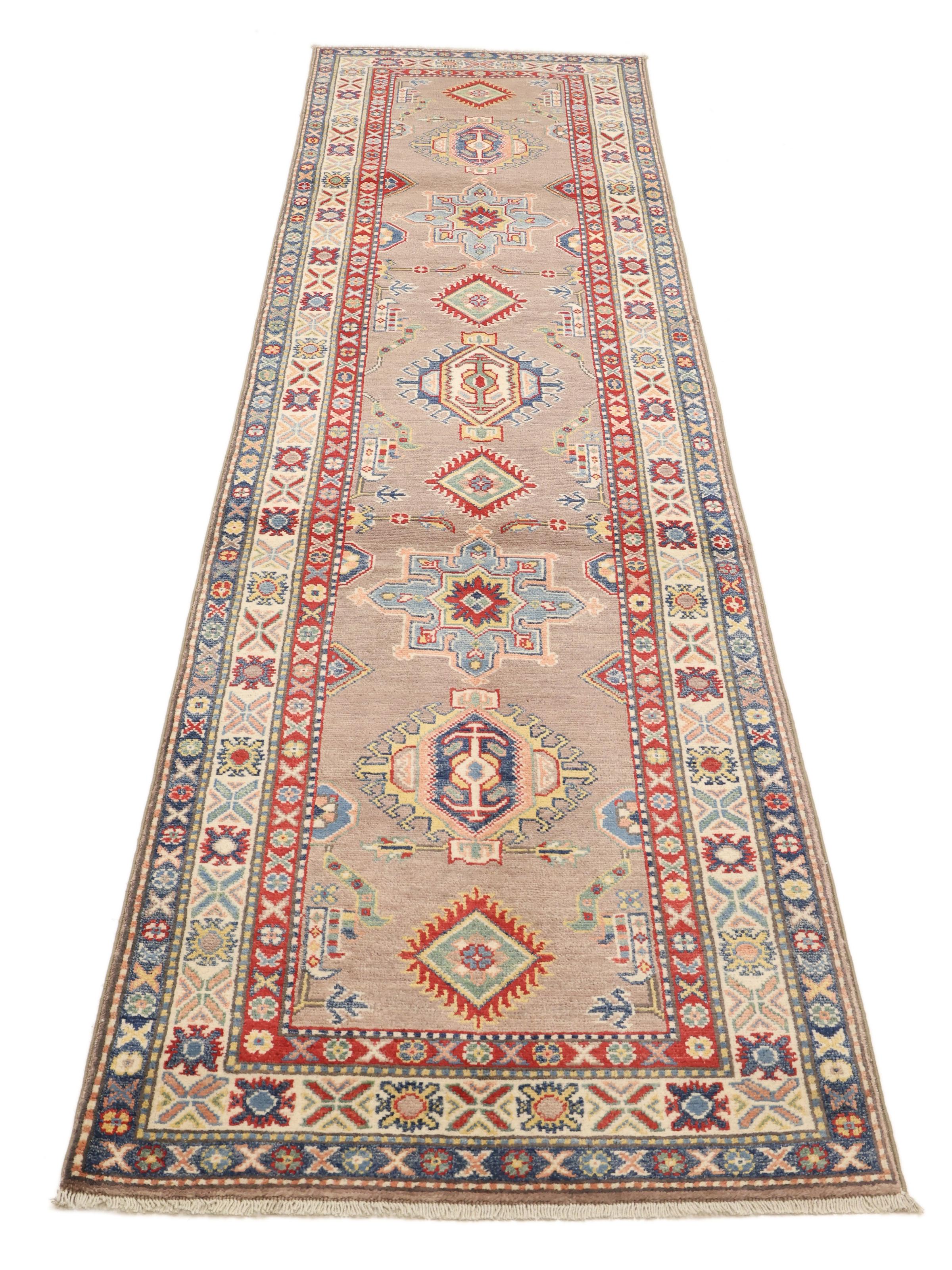
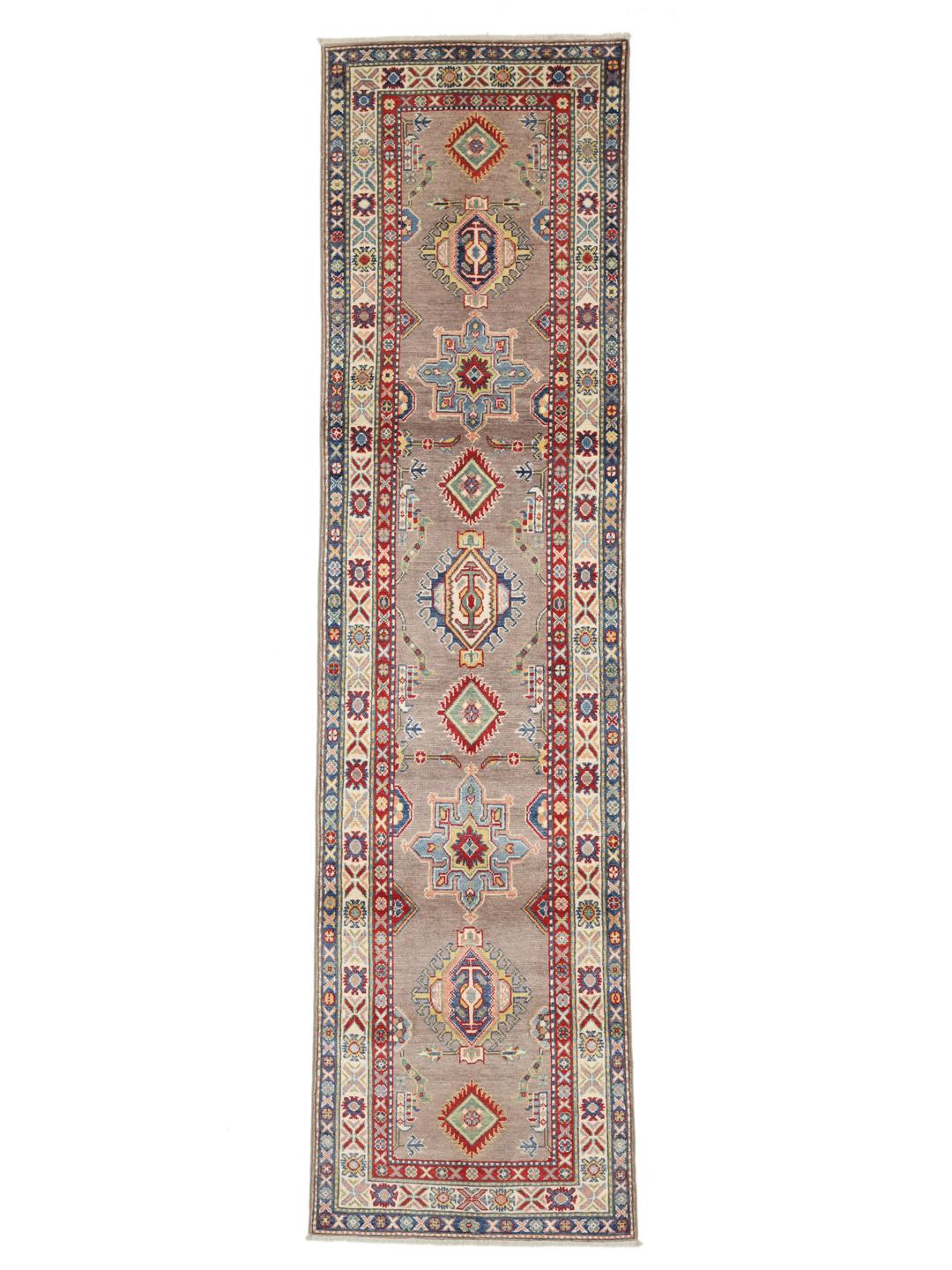
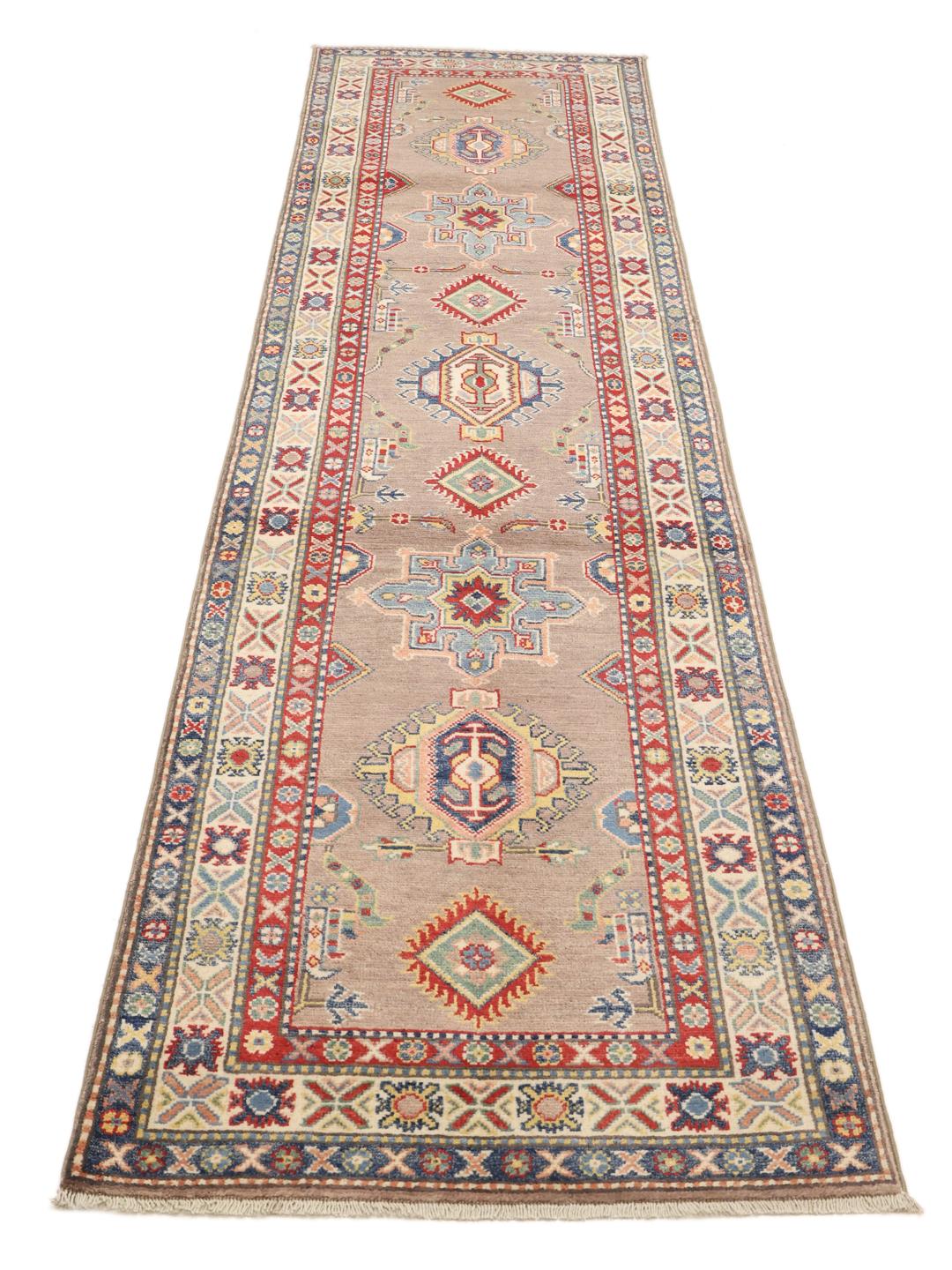
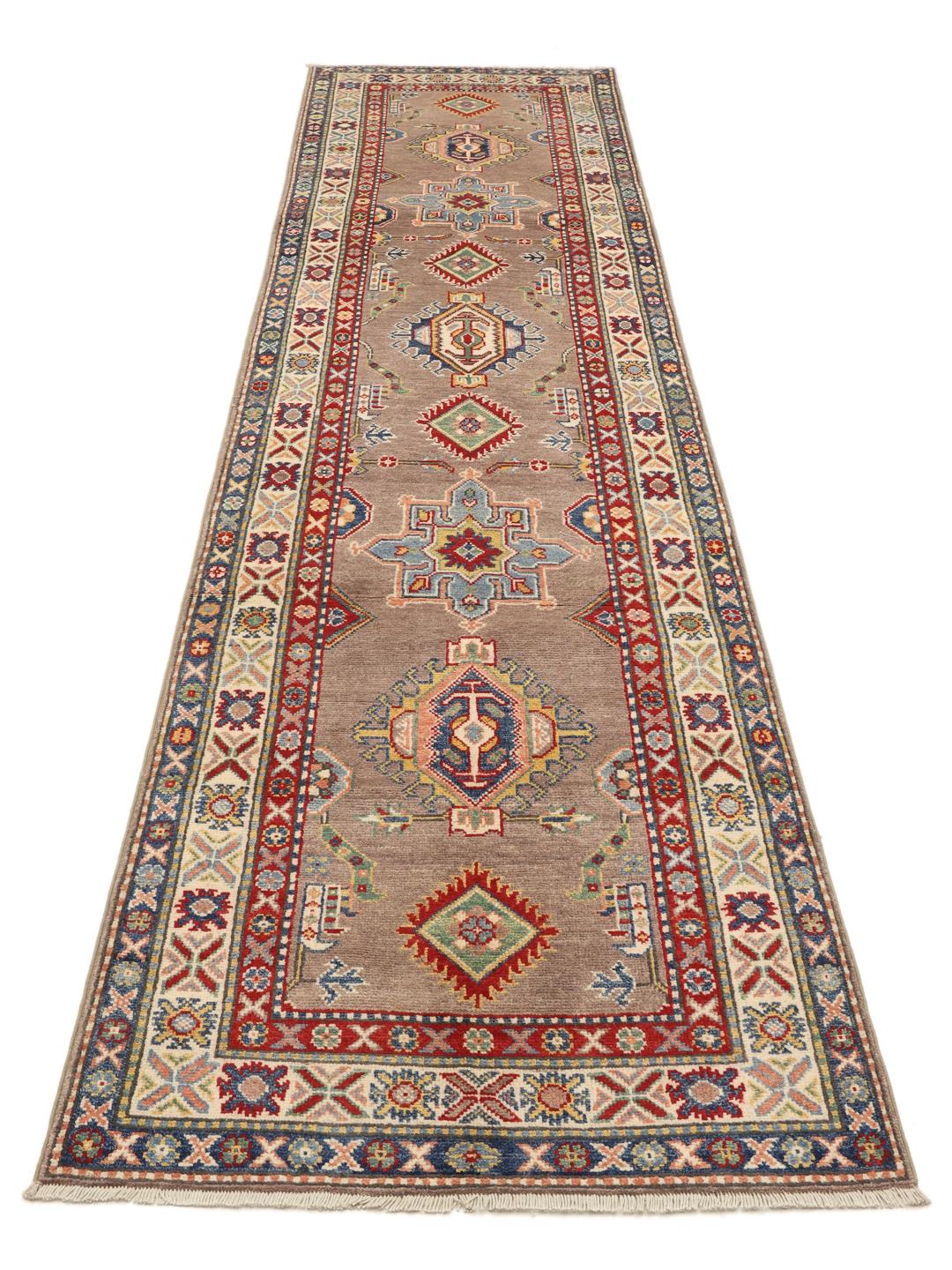
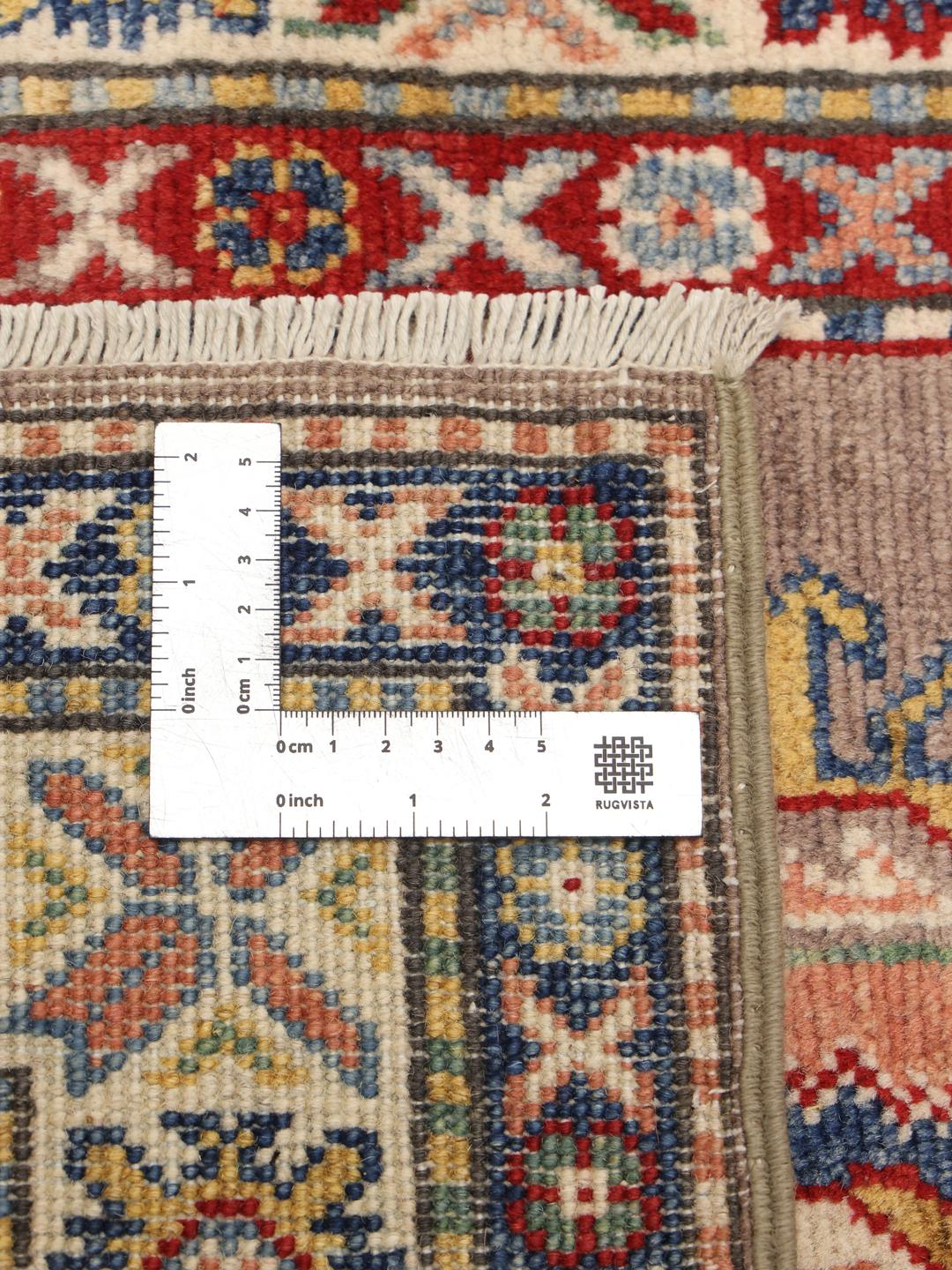
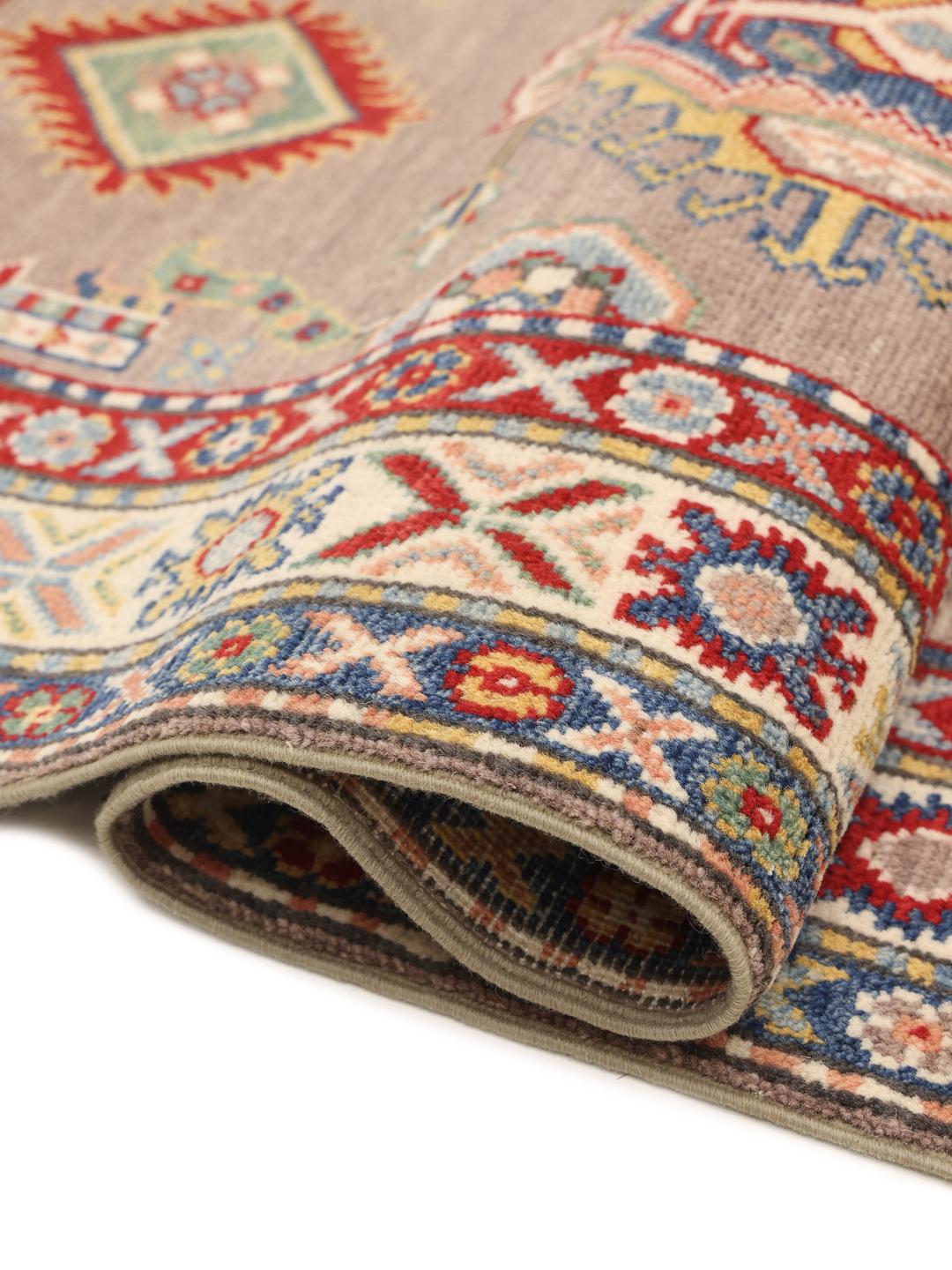
The history of Kazak rugs is rooted in the mountainous regions of the Caucasus, where nomadic tribes developed a distinct visual language characterised by bold geometric shapes and vibrant, earthy tones. While the original style emerged from this mountainous terrain, the tradition has evolved and flourished through migrations, finding a modern home in the weaving workshops of Afghanistan.
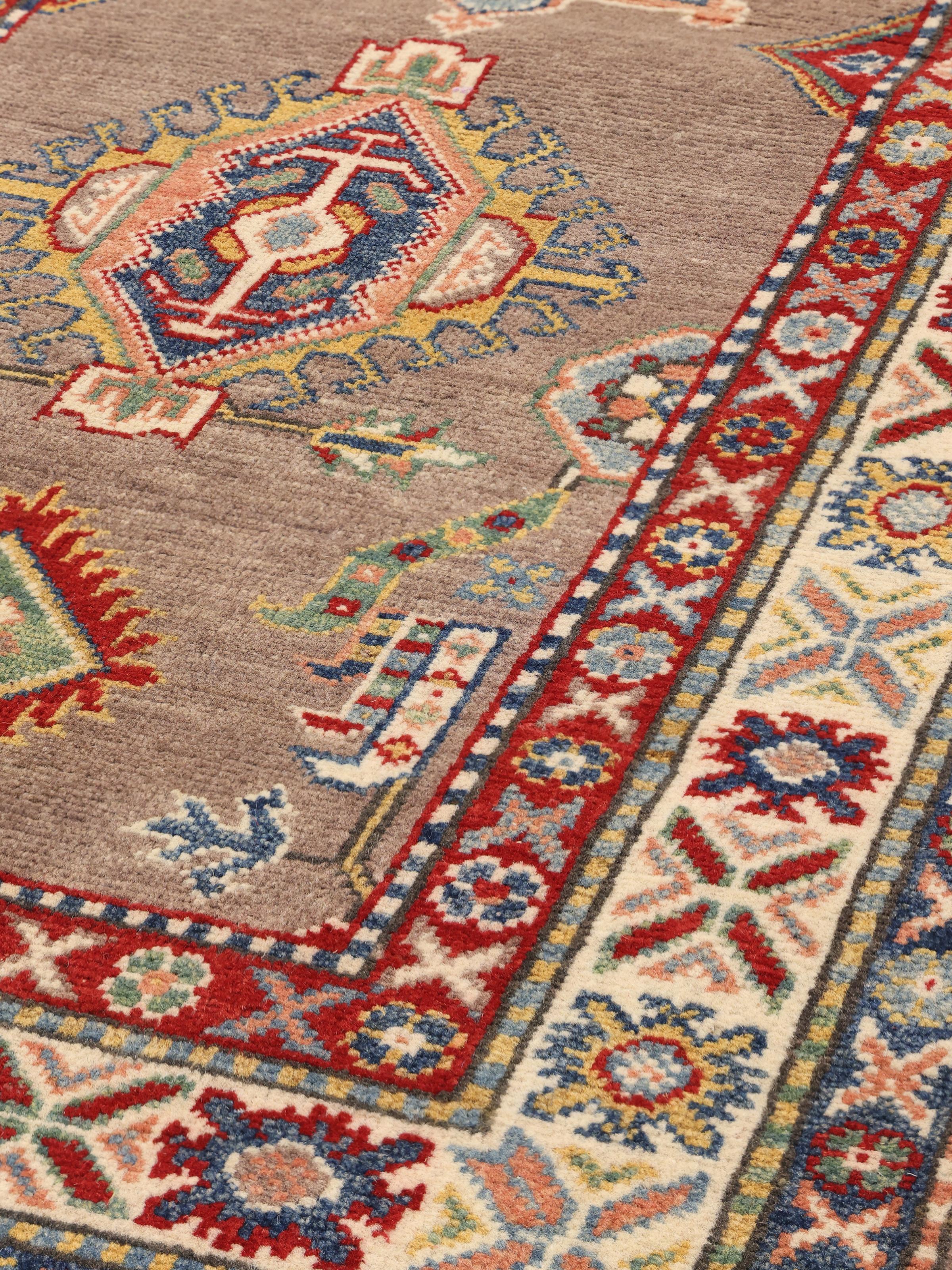
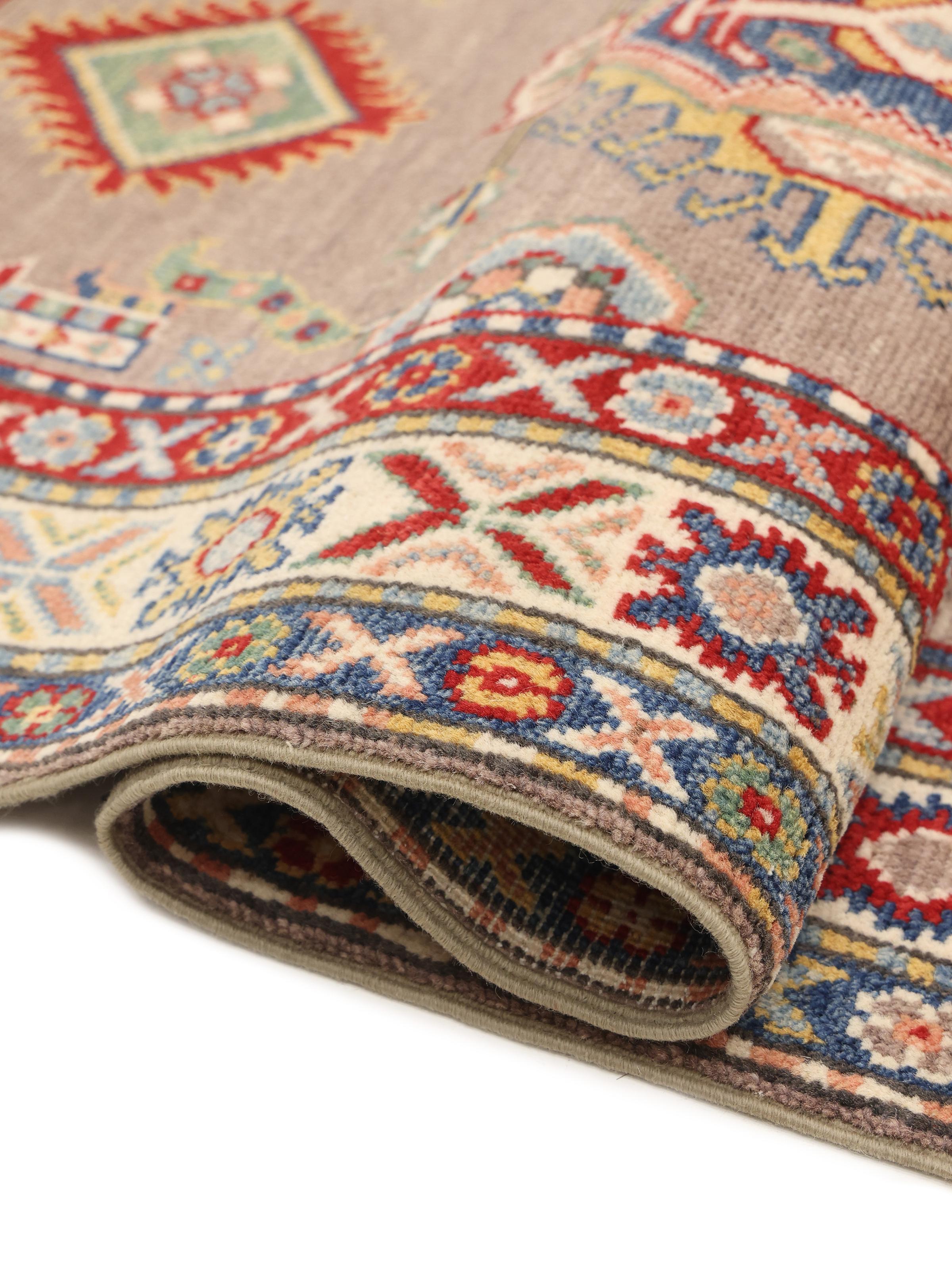
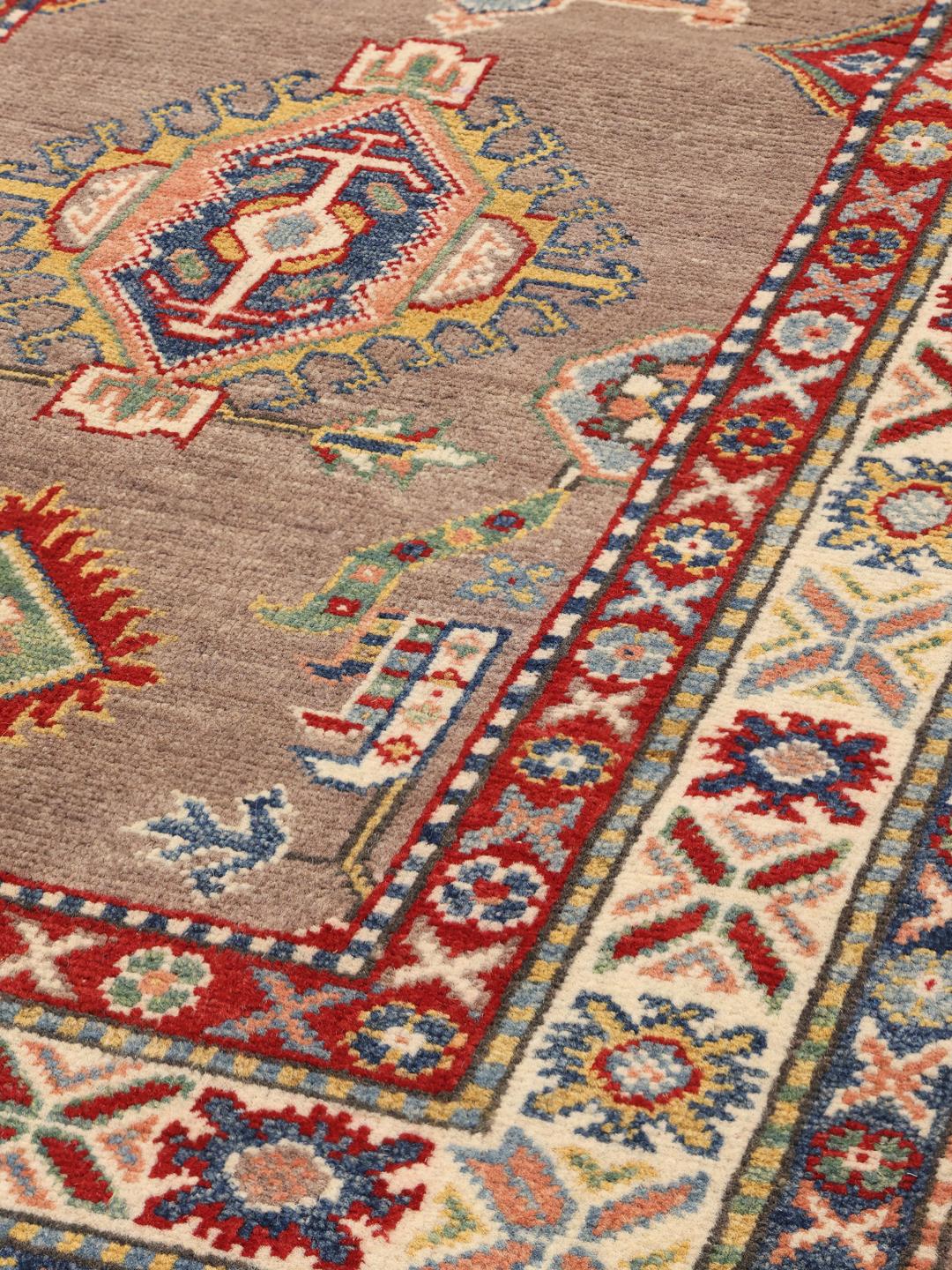
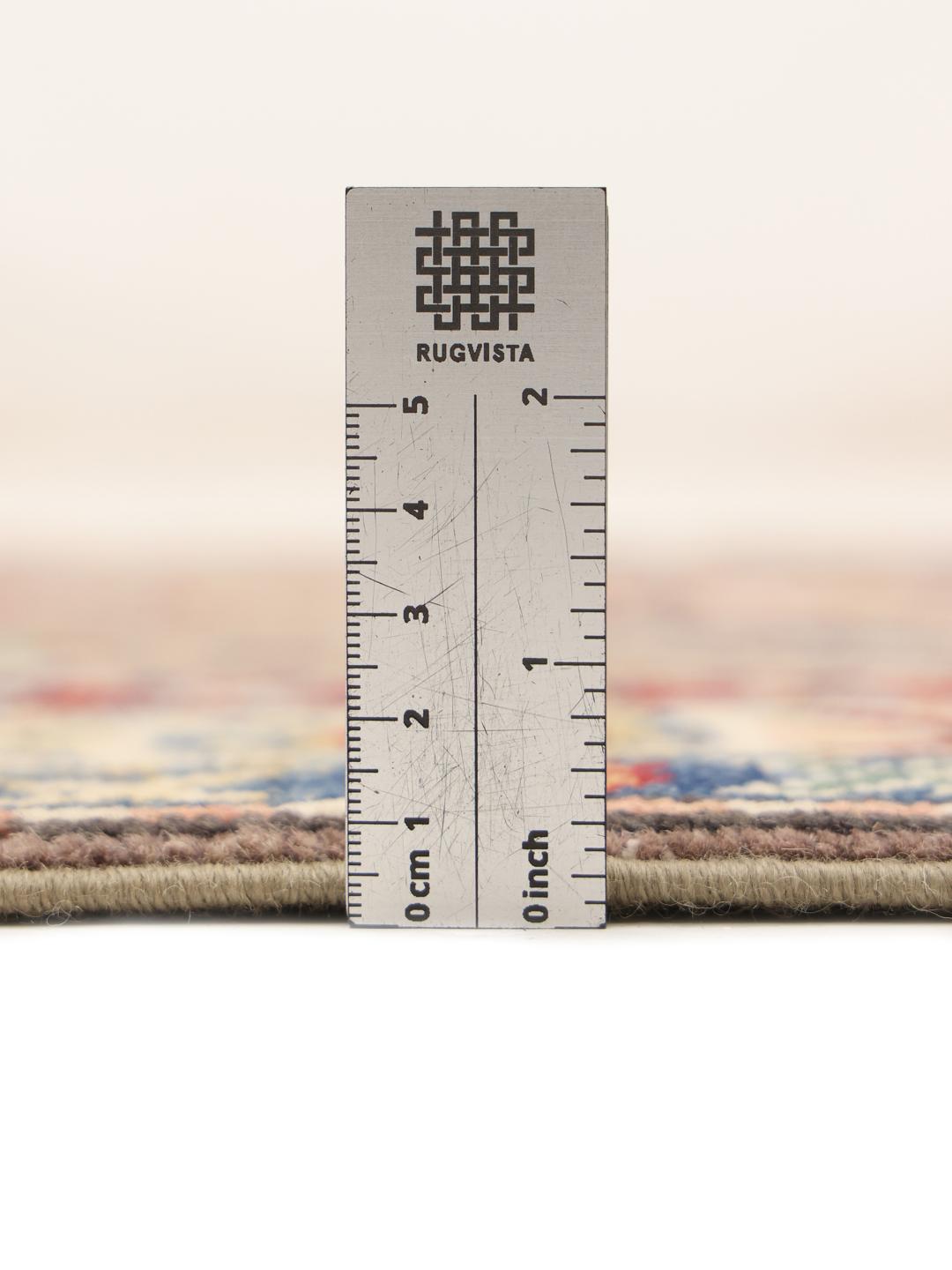
The term 'Kazak' refers to these specific, high-contrast, and often large-scale geometric designs. These rugs are celebrated for their thick, lustrous Wool, which is traditionally knotted to create a sturdy pile. This construction style is not merely aesthetic; it was designed to provide insulation and comfort in harsh climates, a functionality that remains a hallmark of the style today.
Visually, these rugs are defined by their iconic use of medallions, latch-hook motifs, and stepped diamonds. The borders often feature intricate, repetitive patterns that frame the field, creating a sense of balance and order. Each rug tells a story through its symbols, which often reflect the local environment, tribal identity, and the weaver's own interpretation of traditional motifs.
Collectors value these rugs for their authenticity and the sheer skill required to produce them. Owning a Kazak is an invitation to connect with a long-standing heritage of textile art. These pieces are not just functional floor coverings; they are cultural artefacts that bring history, skill, and a deep sense of character into the modern home.