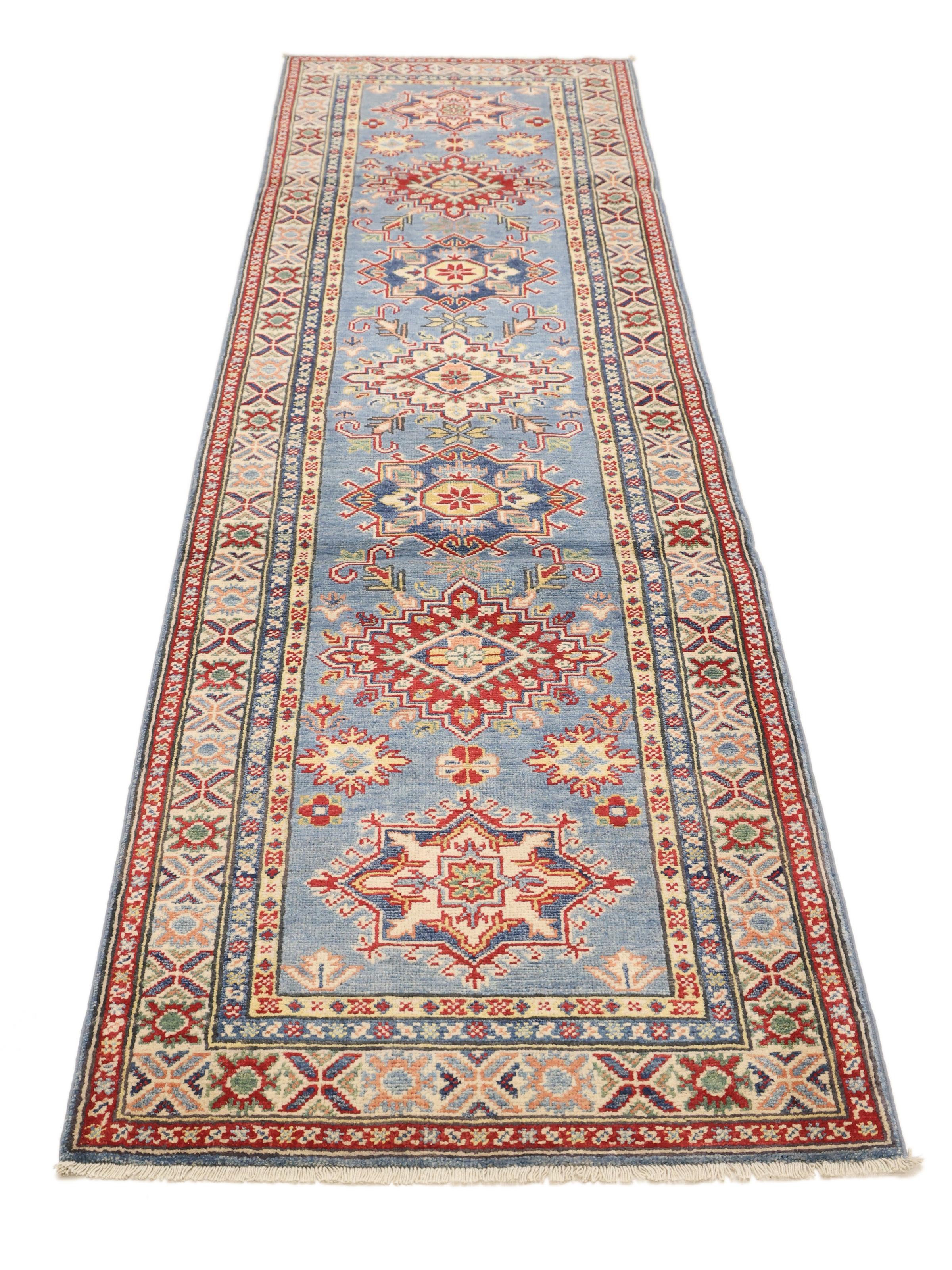
Kazak rugs originate from the Caucasus region, a mountainous area known for its rich weaving history and distinct cultural heritage. While the term historically referred to rugs woven by various ethnic groups in the Caucasus, the tradition has evolved and flourished in Afghanistan, where master weavers have revitalised these classic designs. This migration of craft has allowed the bold, geometric spirit of the style to reach a new audience while maintaining its authentic roots.
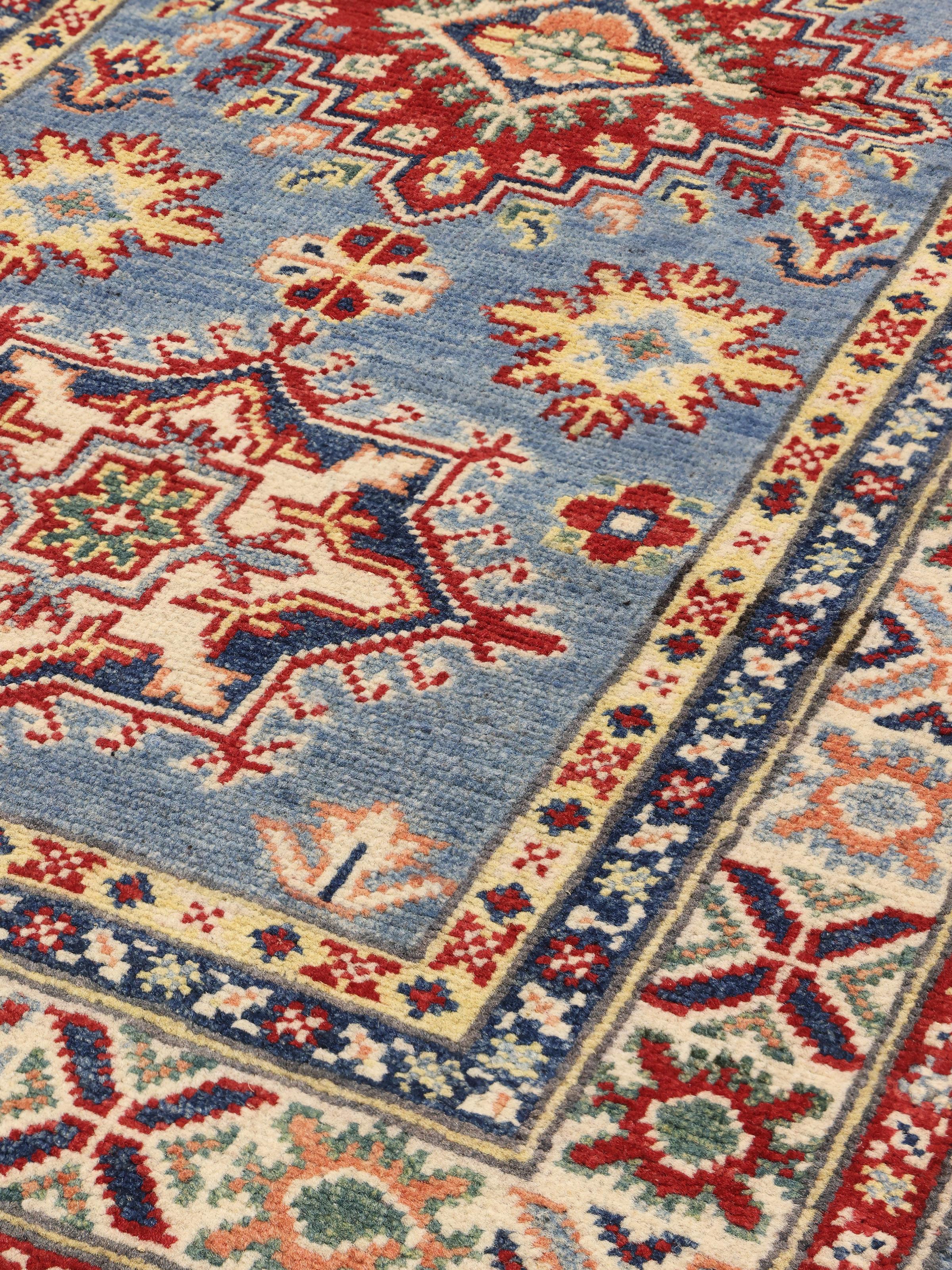
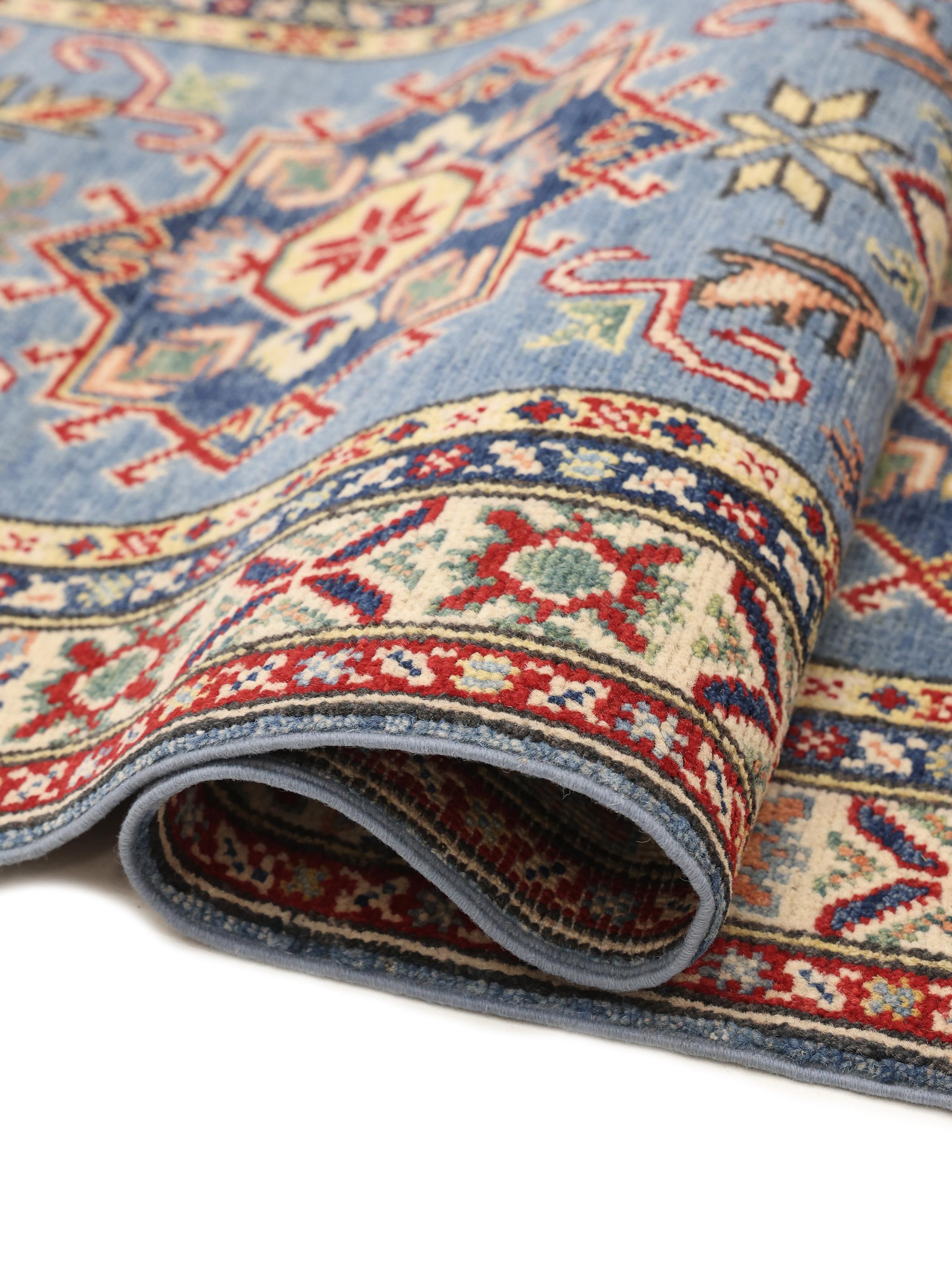
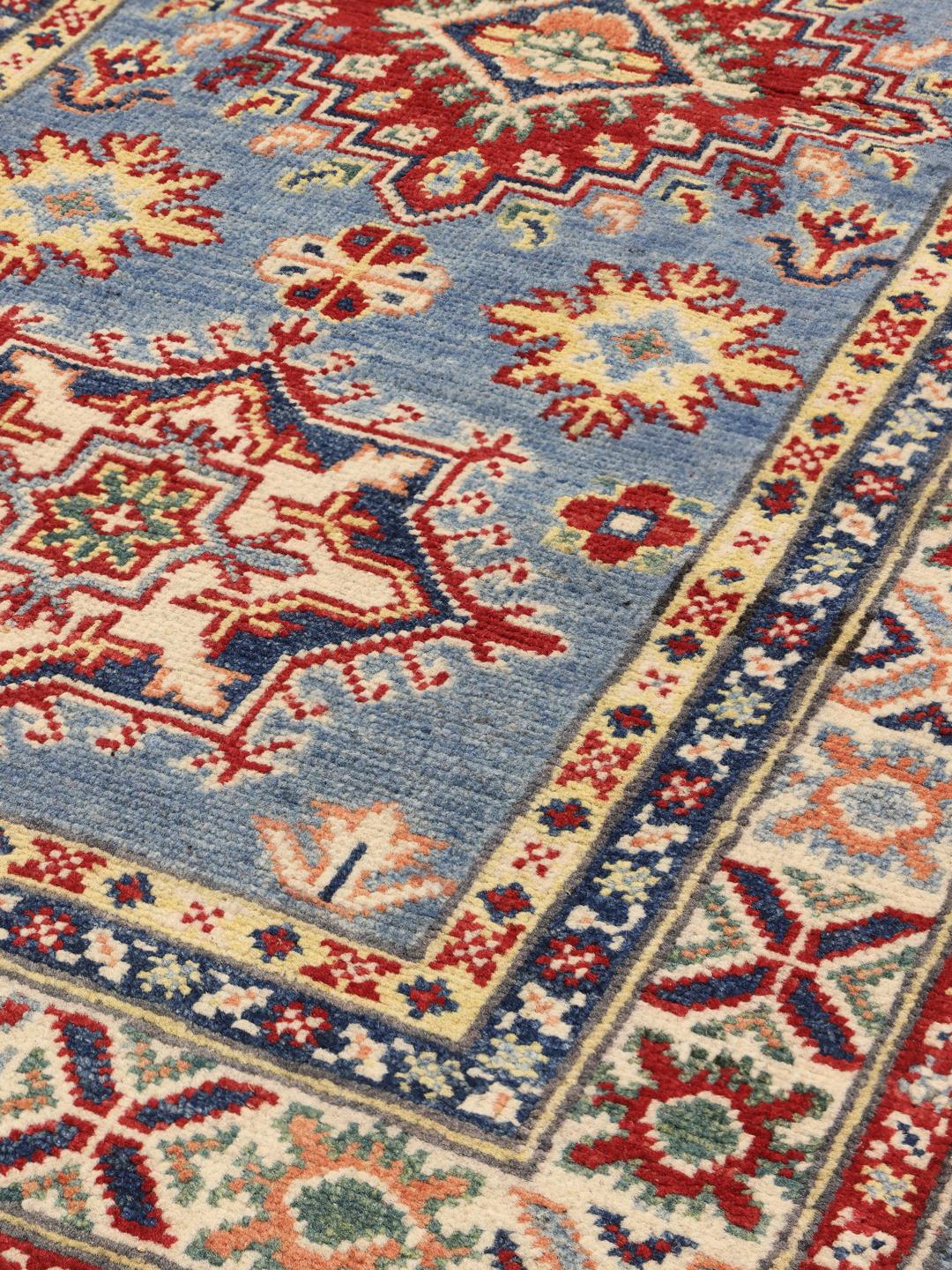
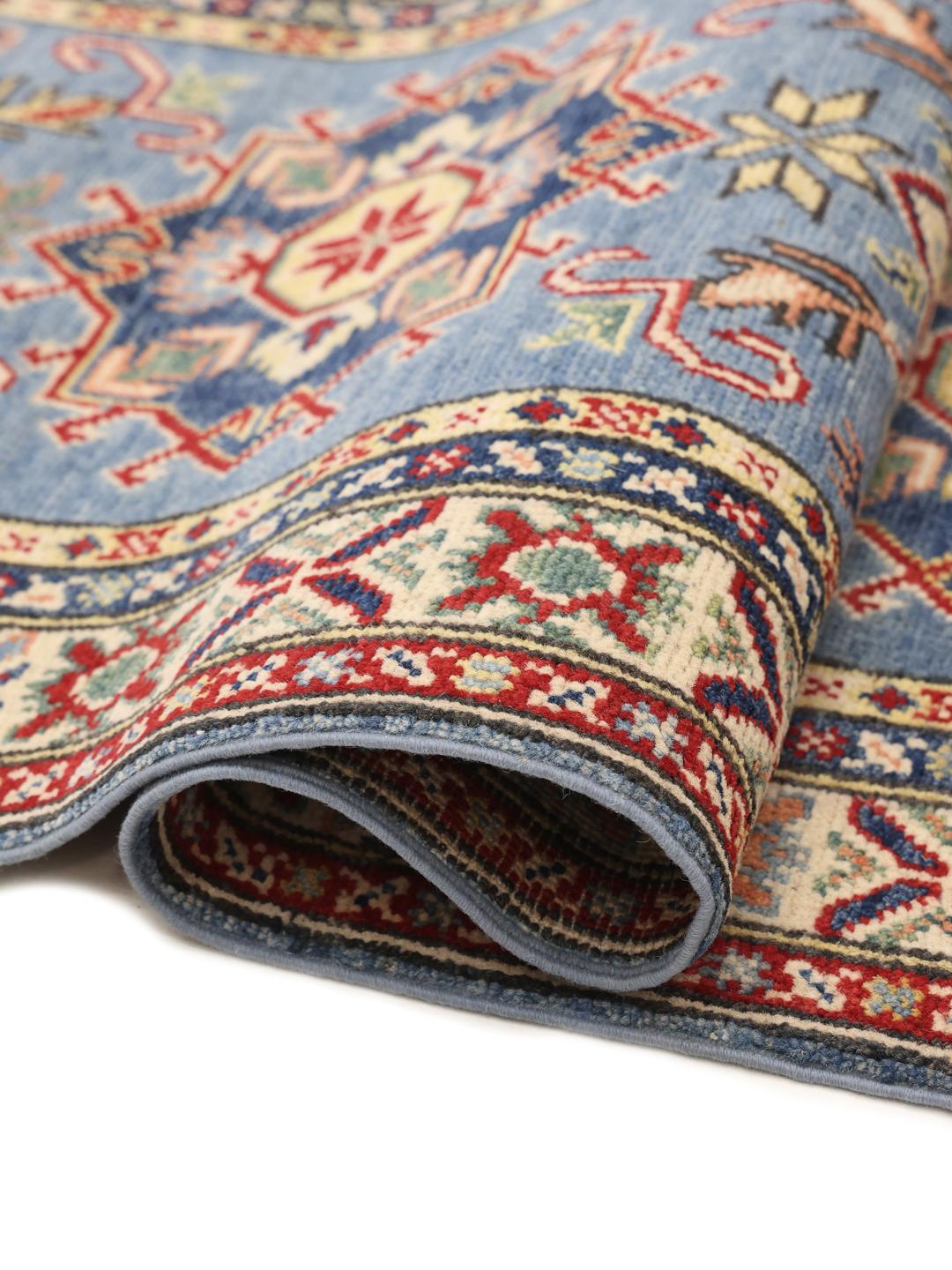
The term 'Kazak' is synonymous with a specific, bold aesthetic that prioritises geometric clarity over floral intricacy. These rugs are renowned for their use of large-scale medallions, often referred to as 'gul' motifs, which are arranged in a balanced, rhythmic fashion. The technical quality is defined by the use of high-quality, hand-spun wool, which provides both the structural integrity and the lustrous finish that collectors prize.
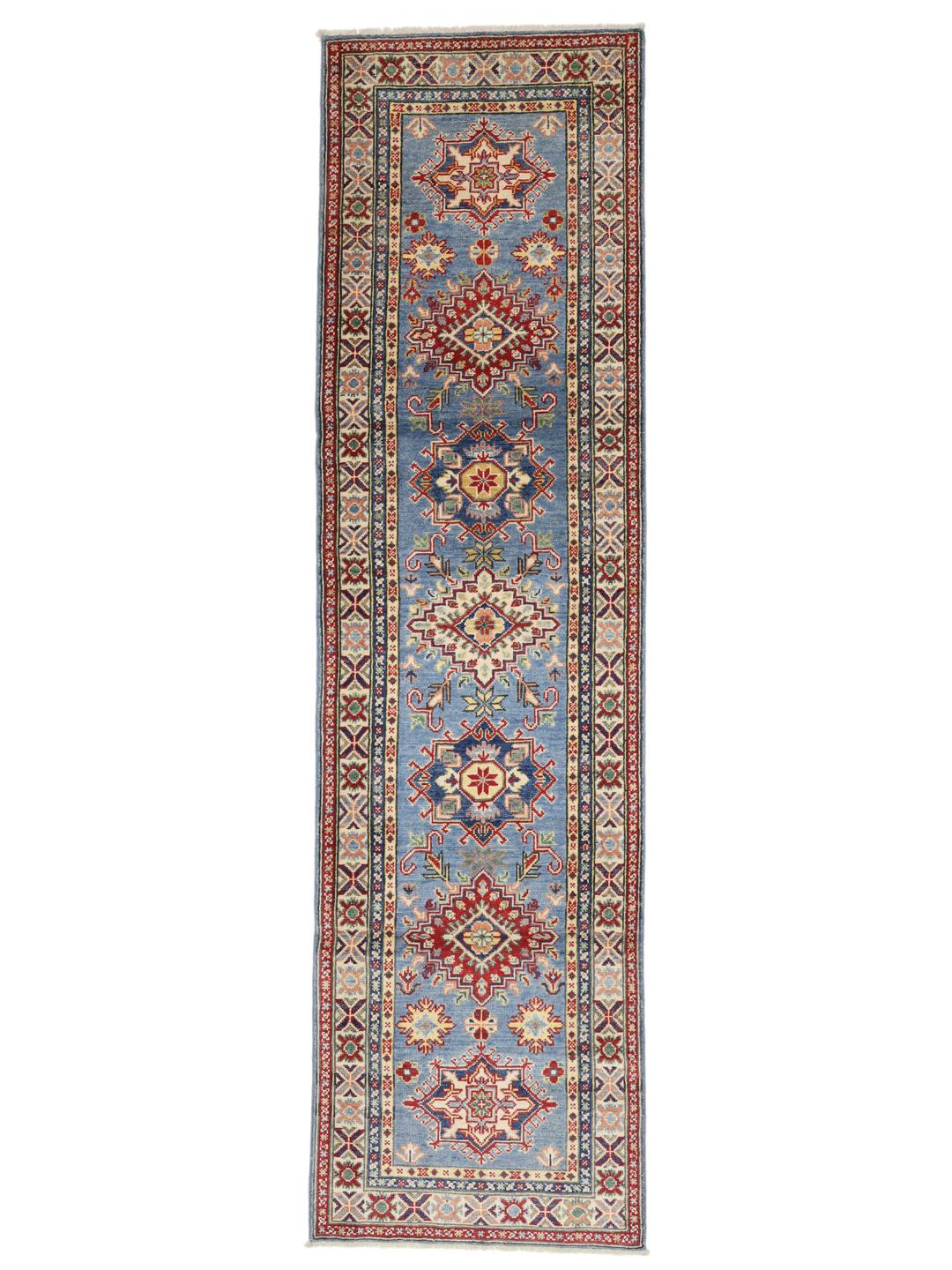
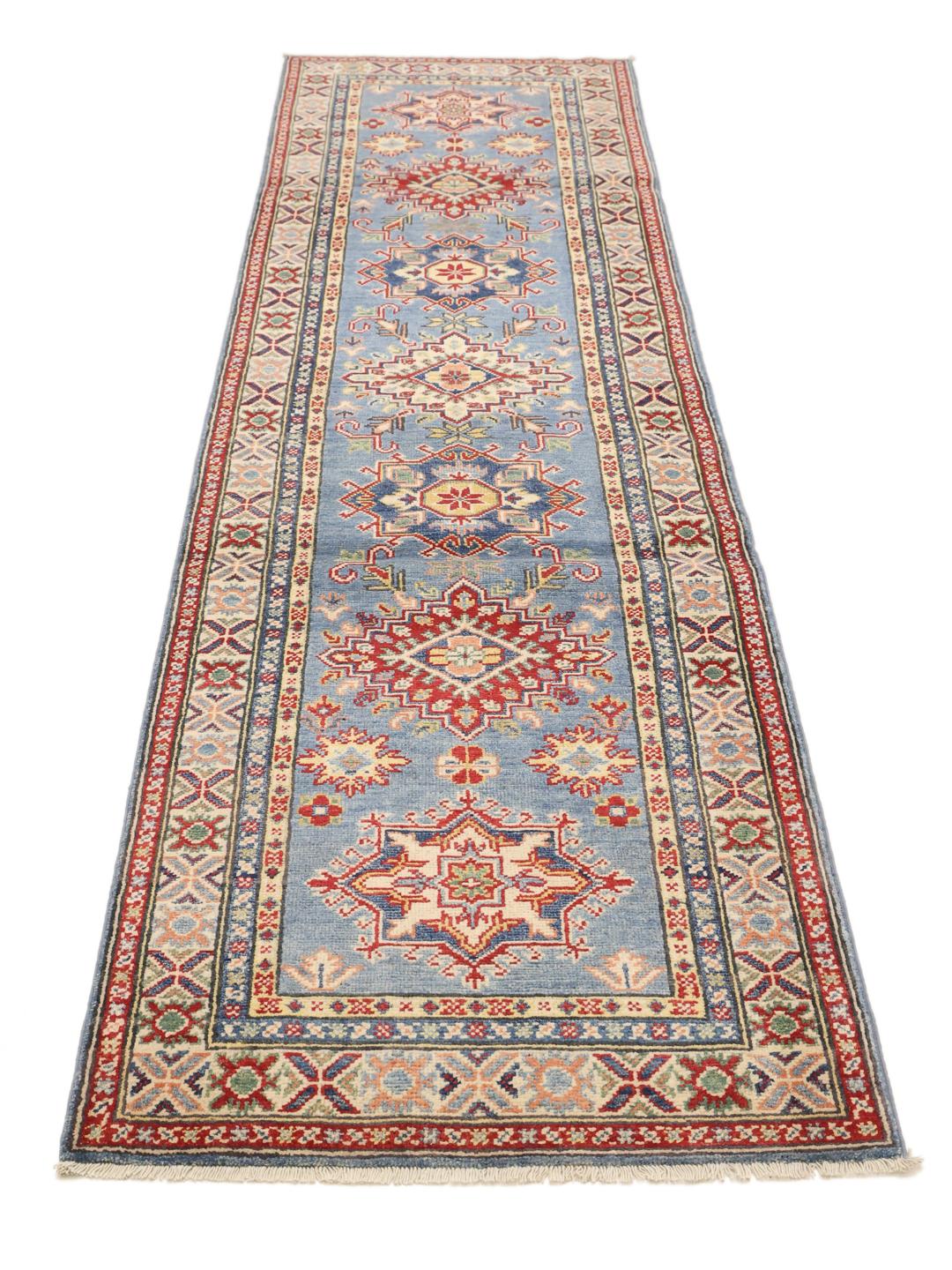
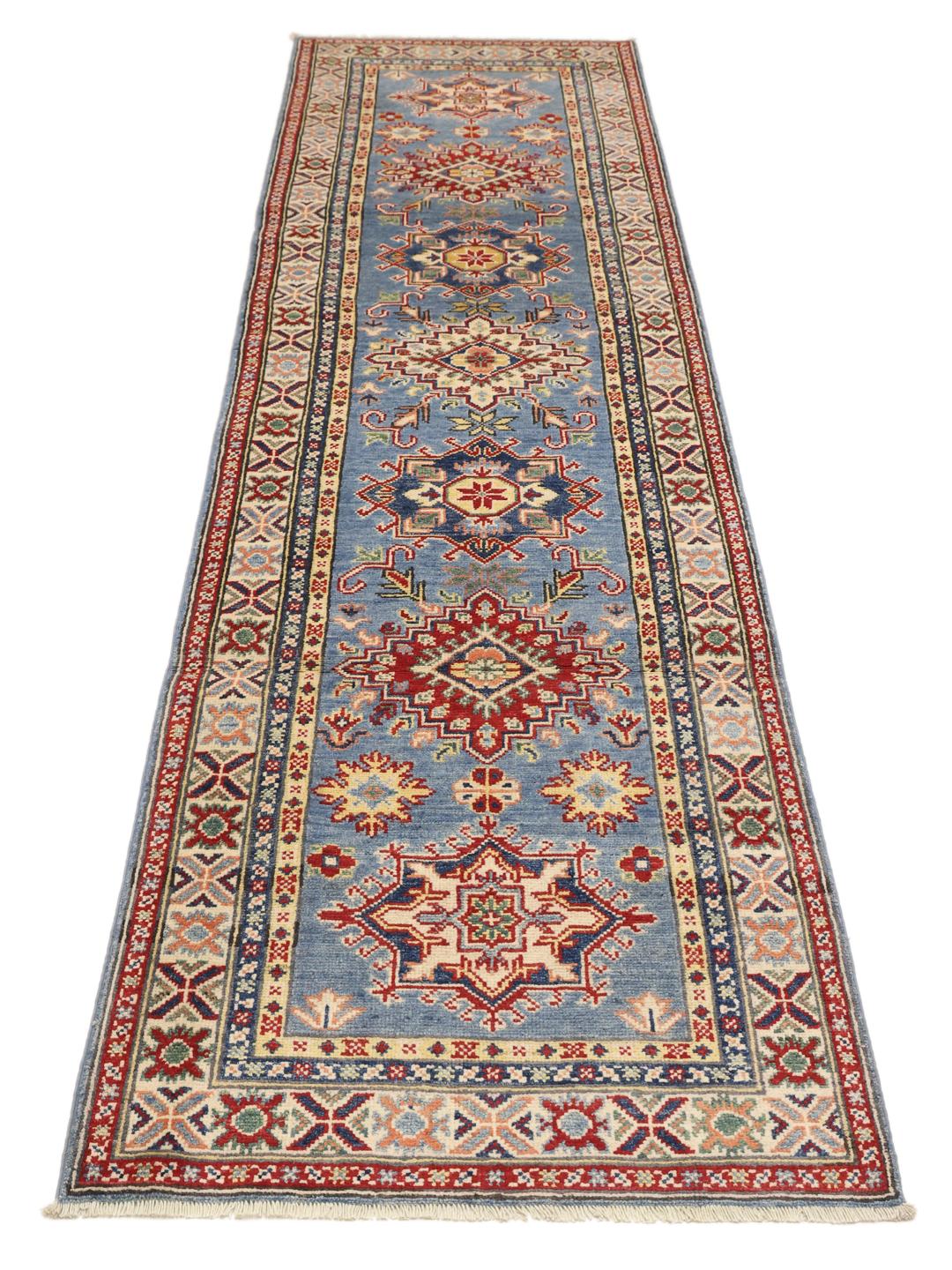
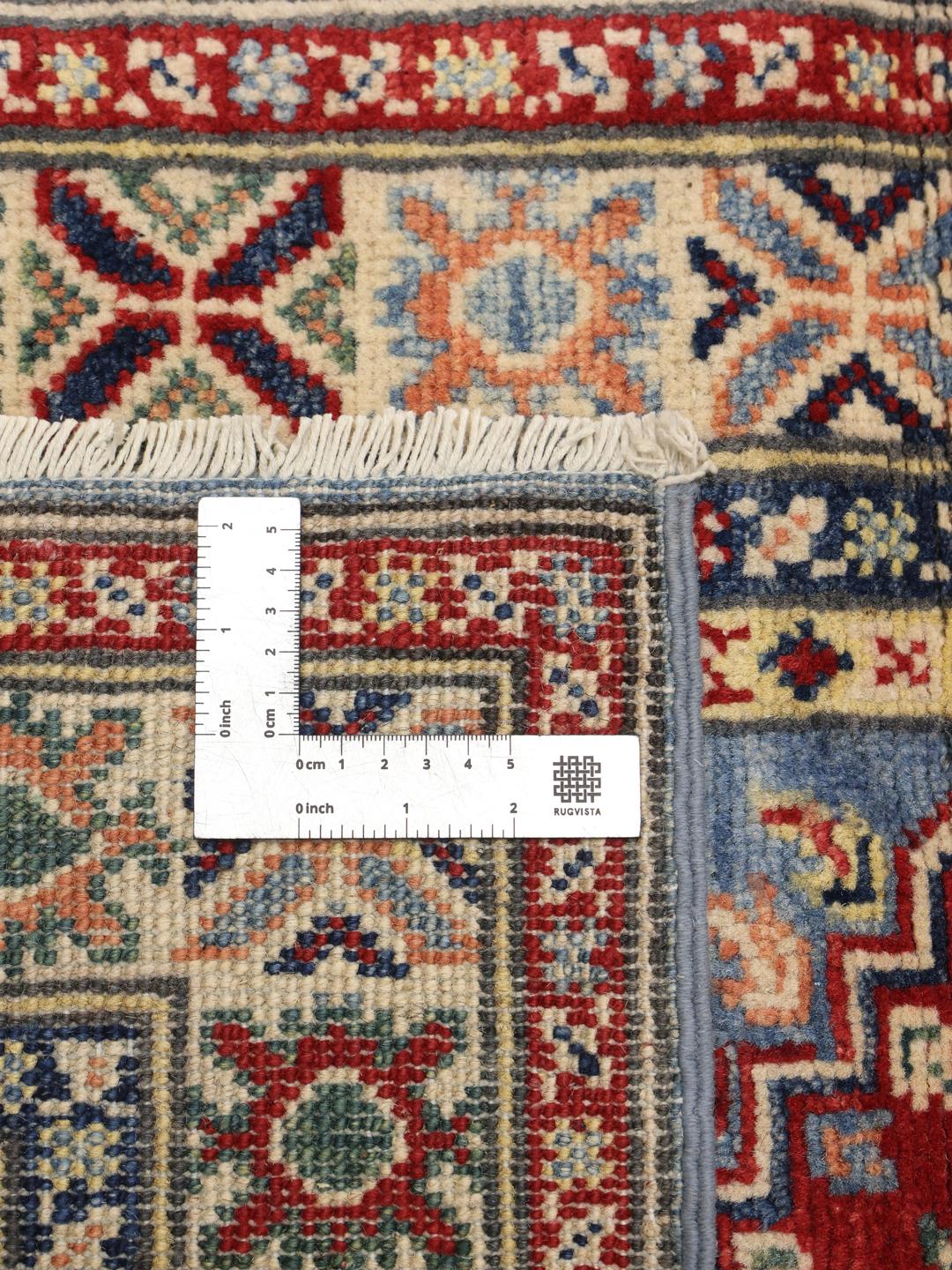
Visually, these rugs are defined by their strong, primary colour palettes and sharp, angular motifs. The borders are typically as important as the field, often featuring complex latch-hook designs or repeating geometric patterns that frame the central medallions. This specific runner showcases this traditional balance, with its blue field providing a serene backdrop for the vibrant, patterned medallions that define the style.
For collectors and enthusiasts, the value of a Kazak rug lies in its connection to a centuries-old tradition of nomadic and village weaving. Owning one is an opportunity to house a piece of cultural history that values the human touch and the imperfections that define authentic, hand-knotted work. It is a testament to the skill of the weaver and the enduring appeal of geometric design in contemporary living.