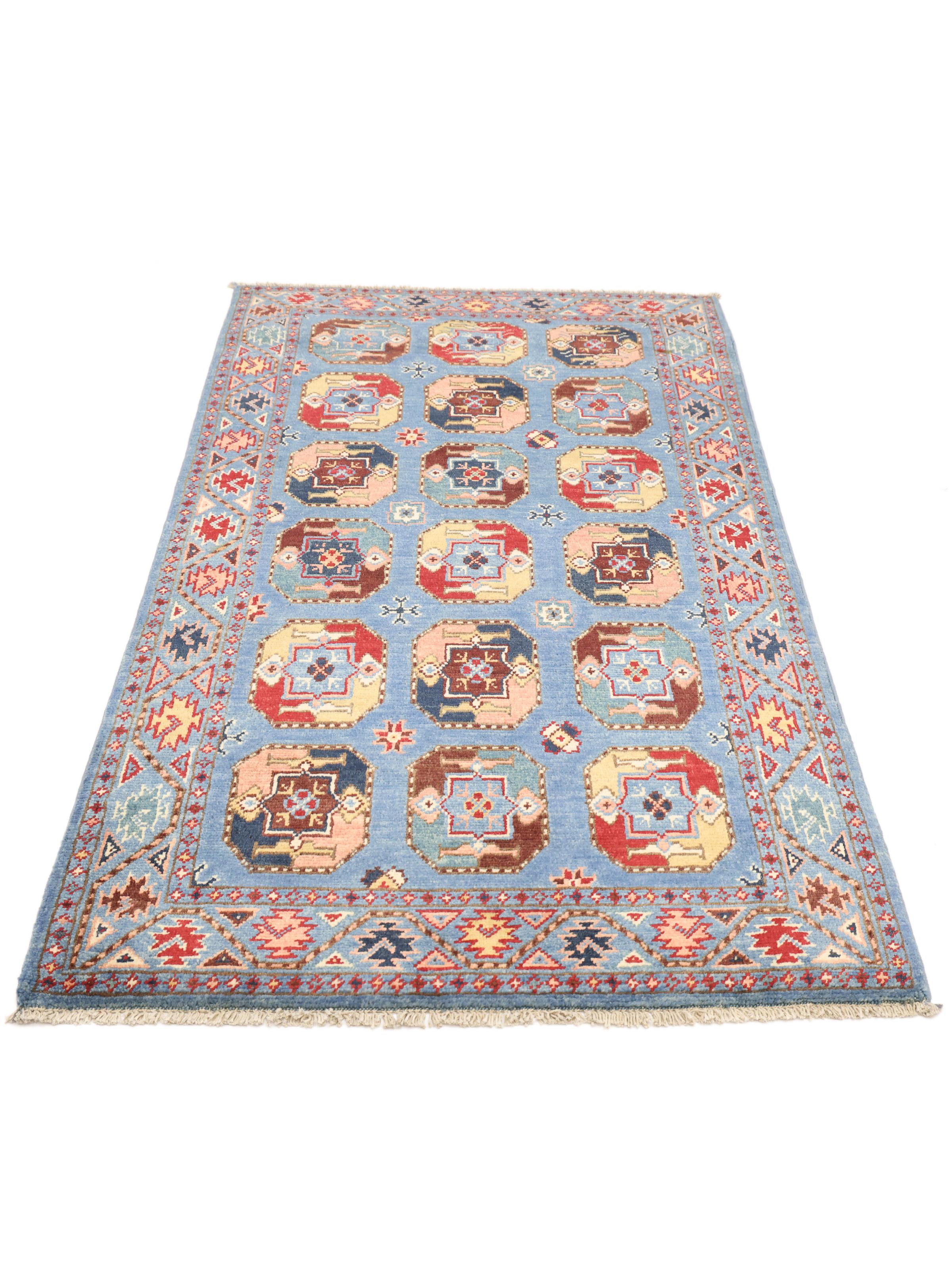
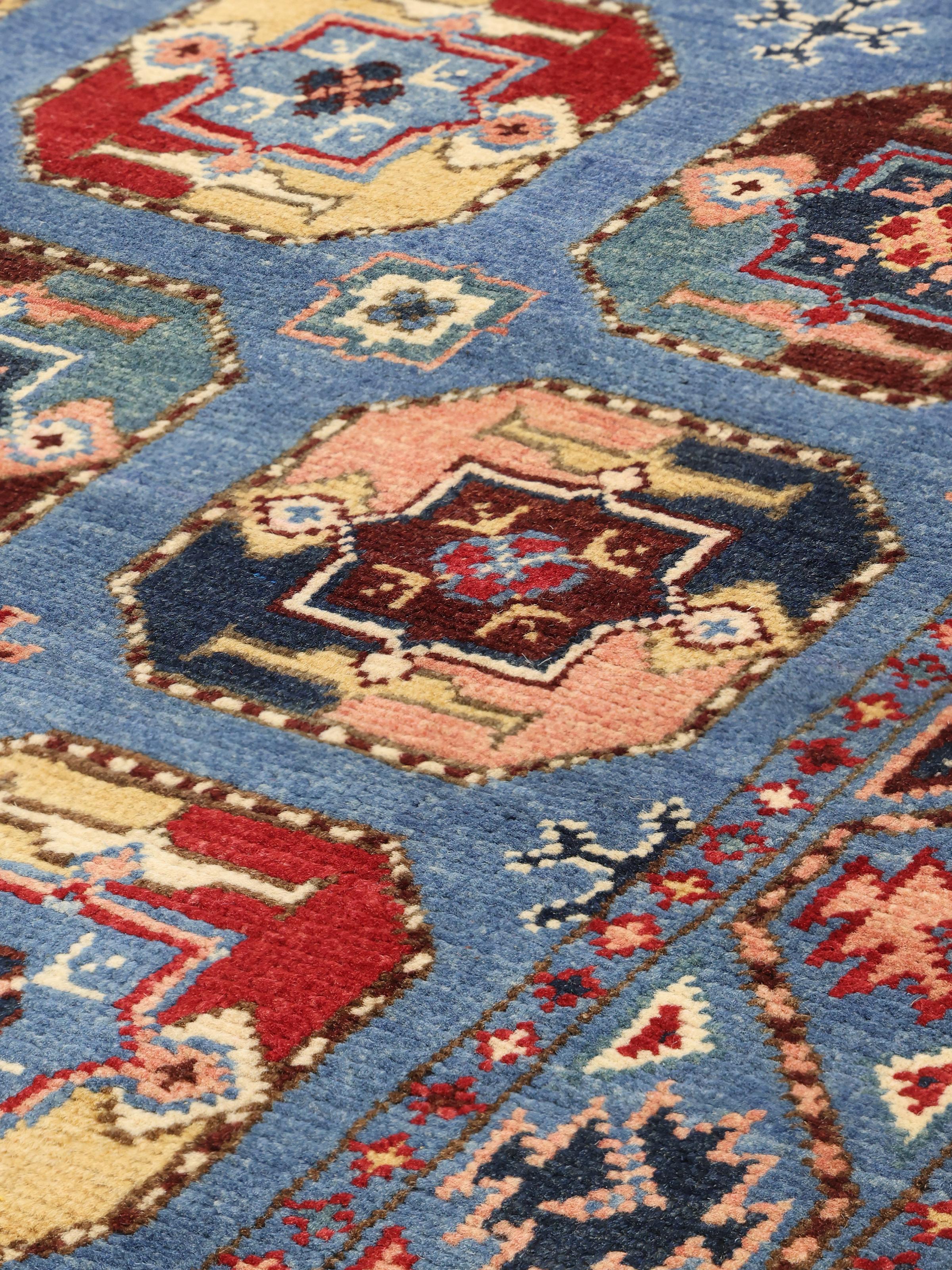
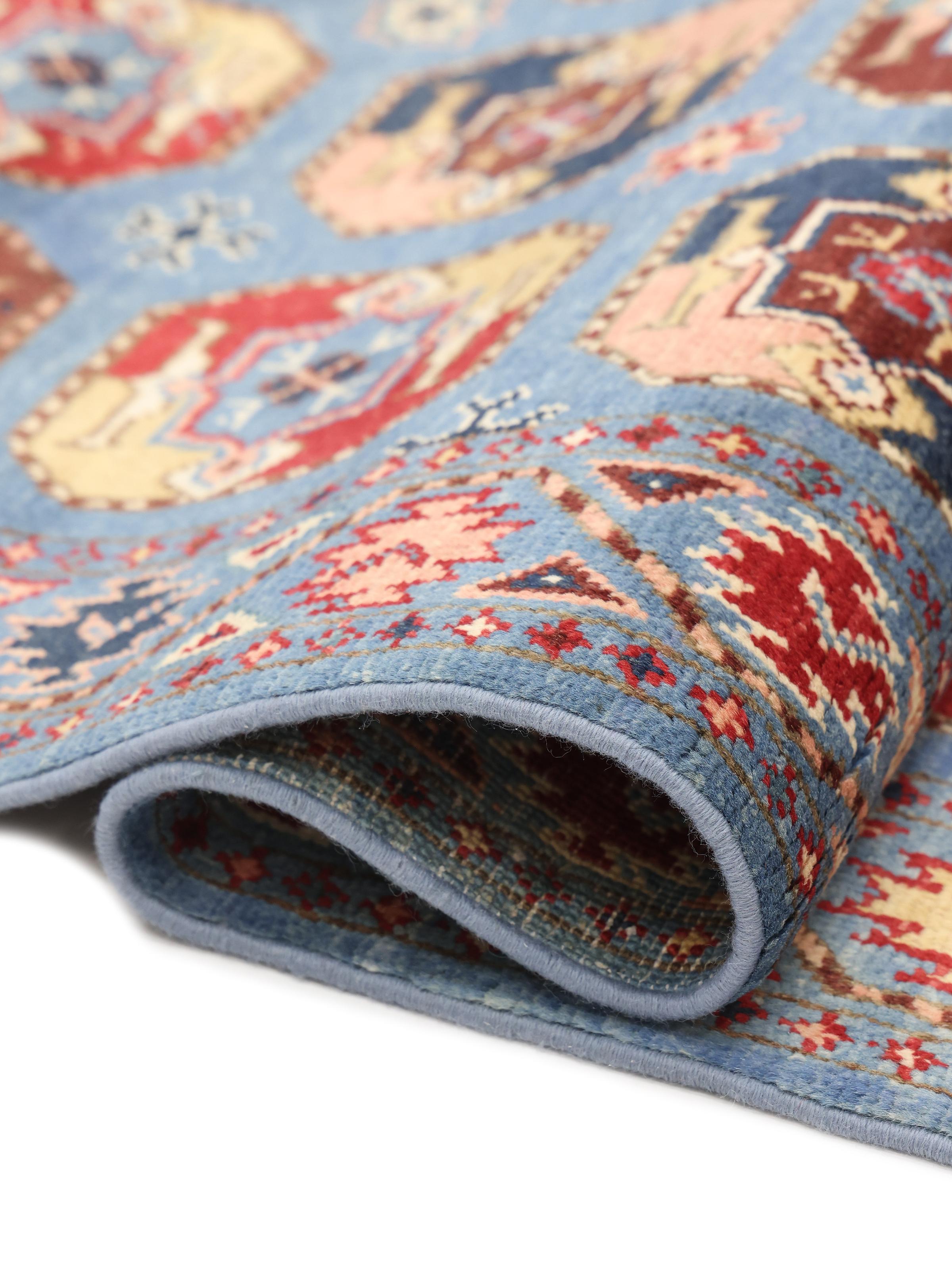
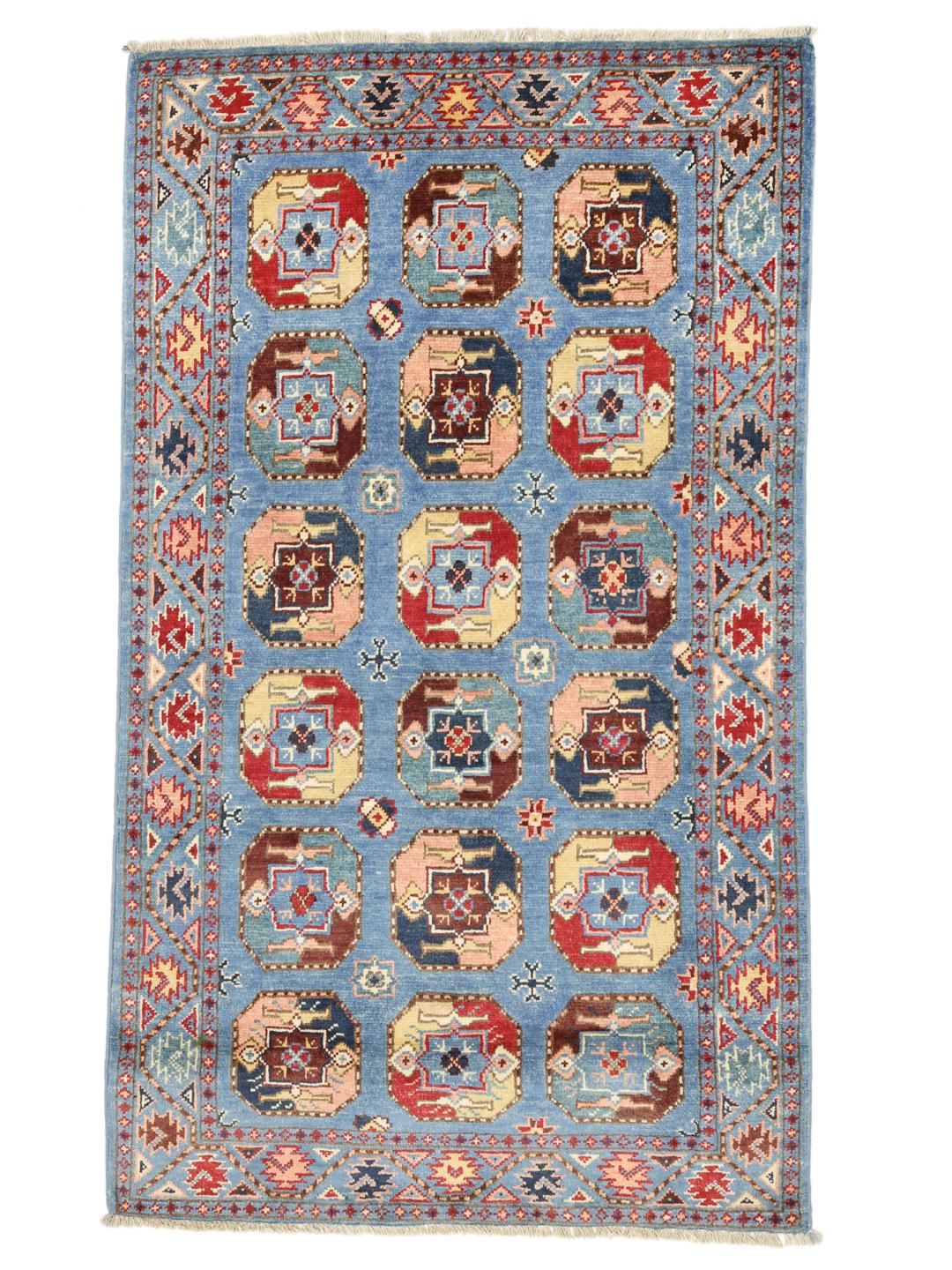
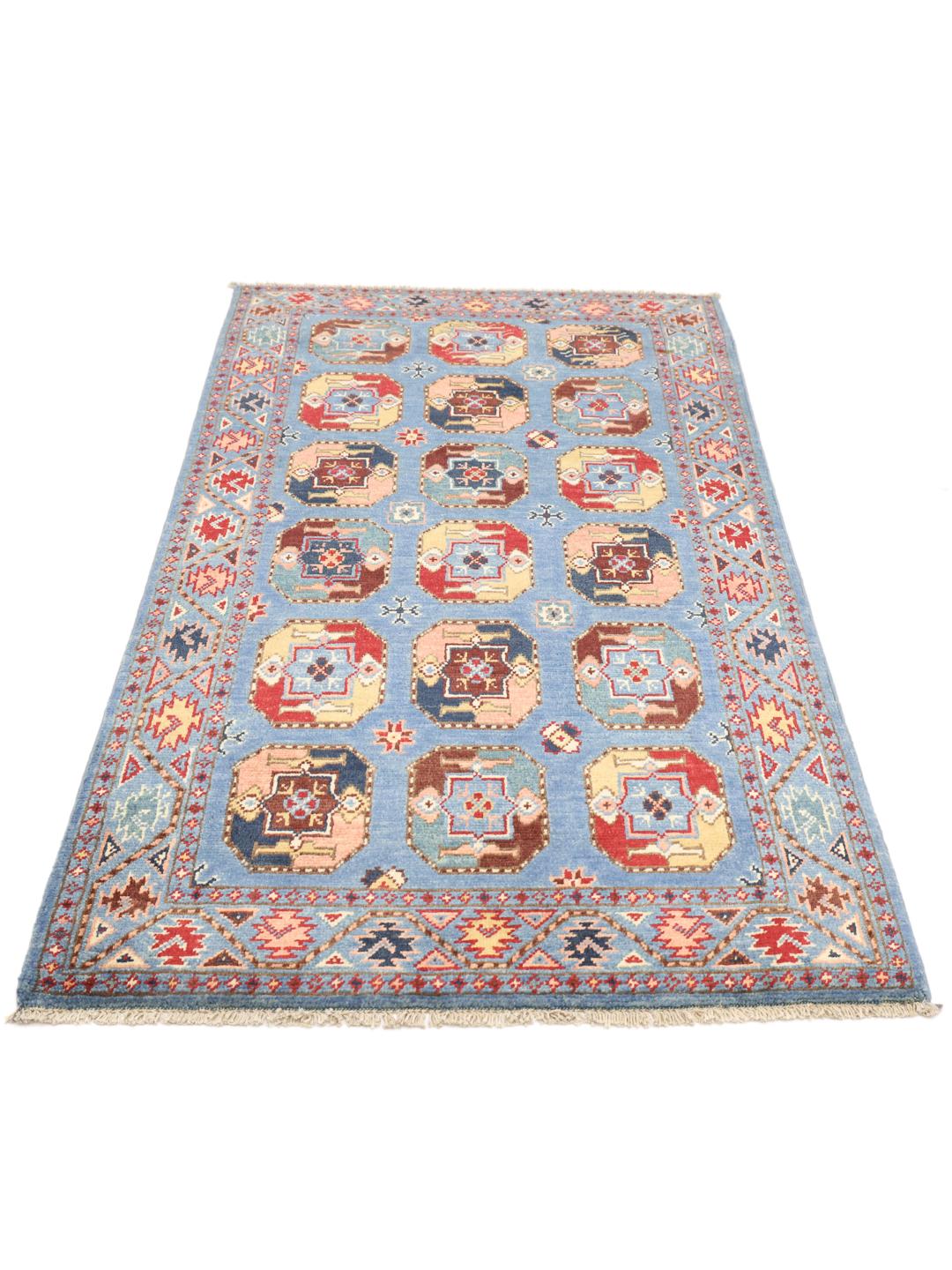
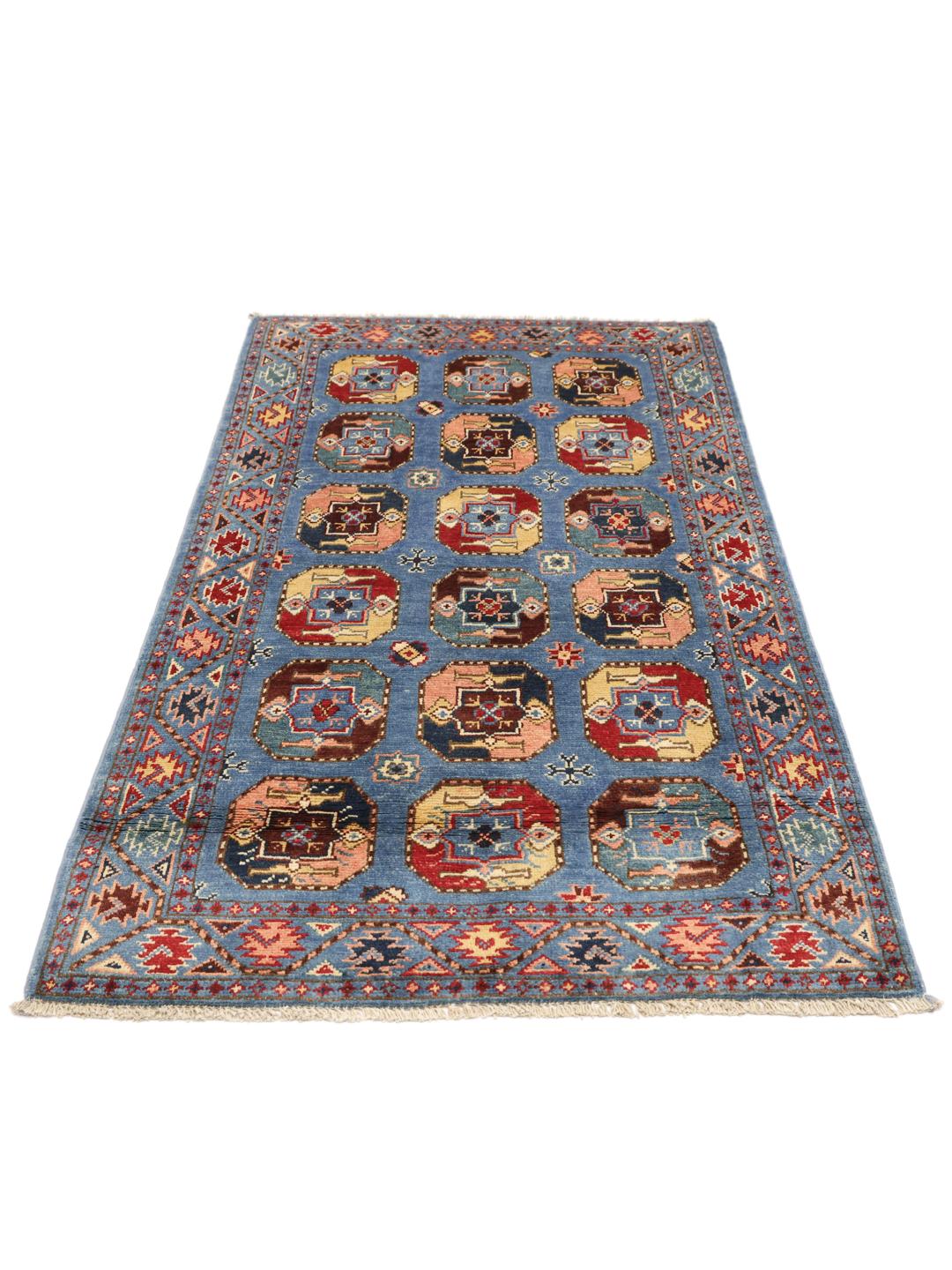
Kazak rugs originate from the Caucasus region, a mountainous area known for its rich weaving traditions and bold, geometric aesthetics. While the original Kazak rugs were woven by nomadic tribes using local wool and natural dyes, the style has evolved significantly over the centuries, with modern fine examples now being masterfully produced in Afghanistan.
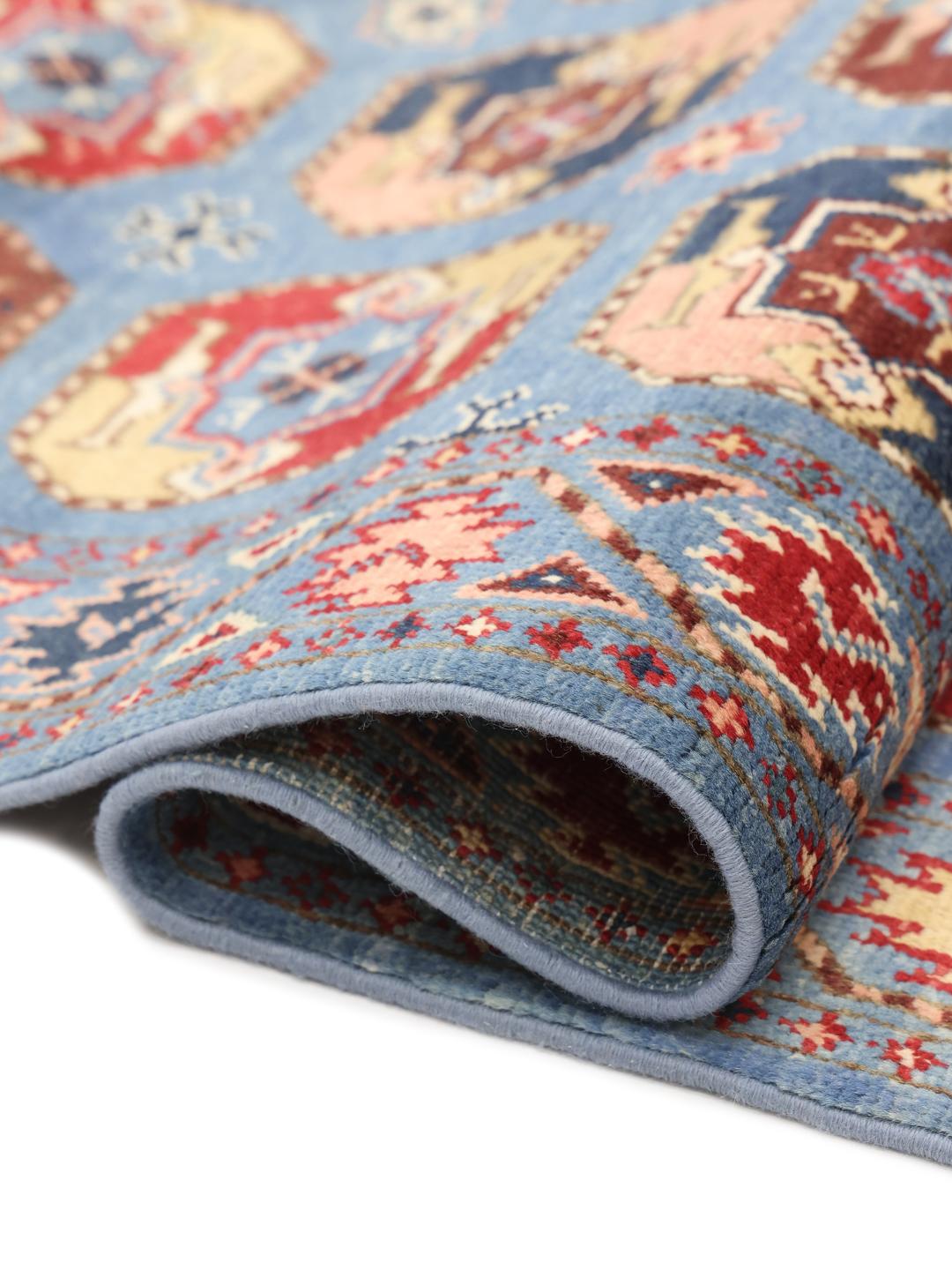
The term Kazak refers to a specific style rather than a precise location, characterised by its reliance on bold colours and stylised, geometric patterns. These rugs are highly regarded for their sturdy construction and the way they blend traditional tribal motifs with a sense of artistic freedom, resulting in a look that is both ancient and contemporary.
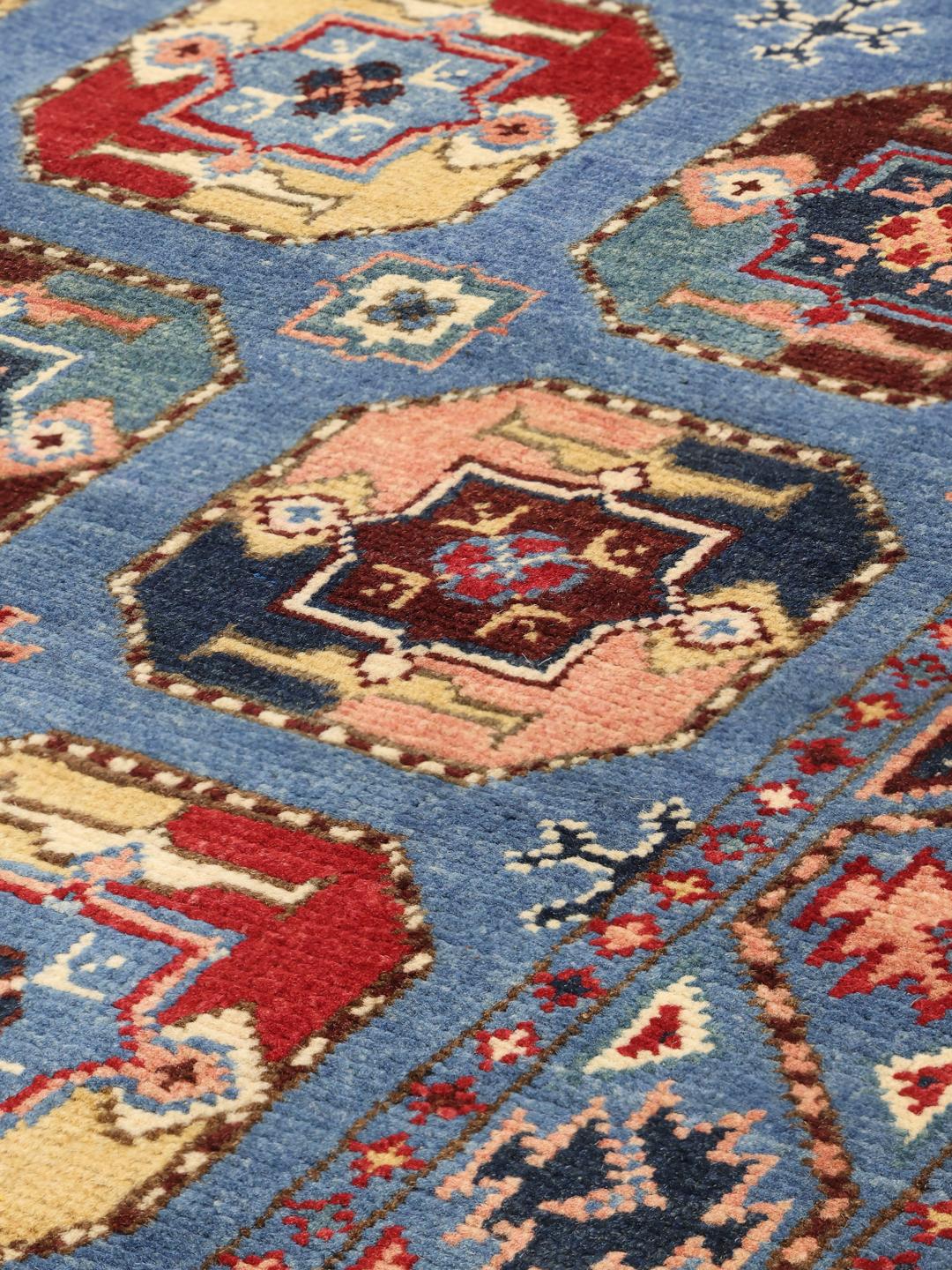
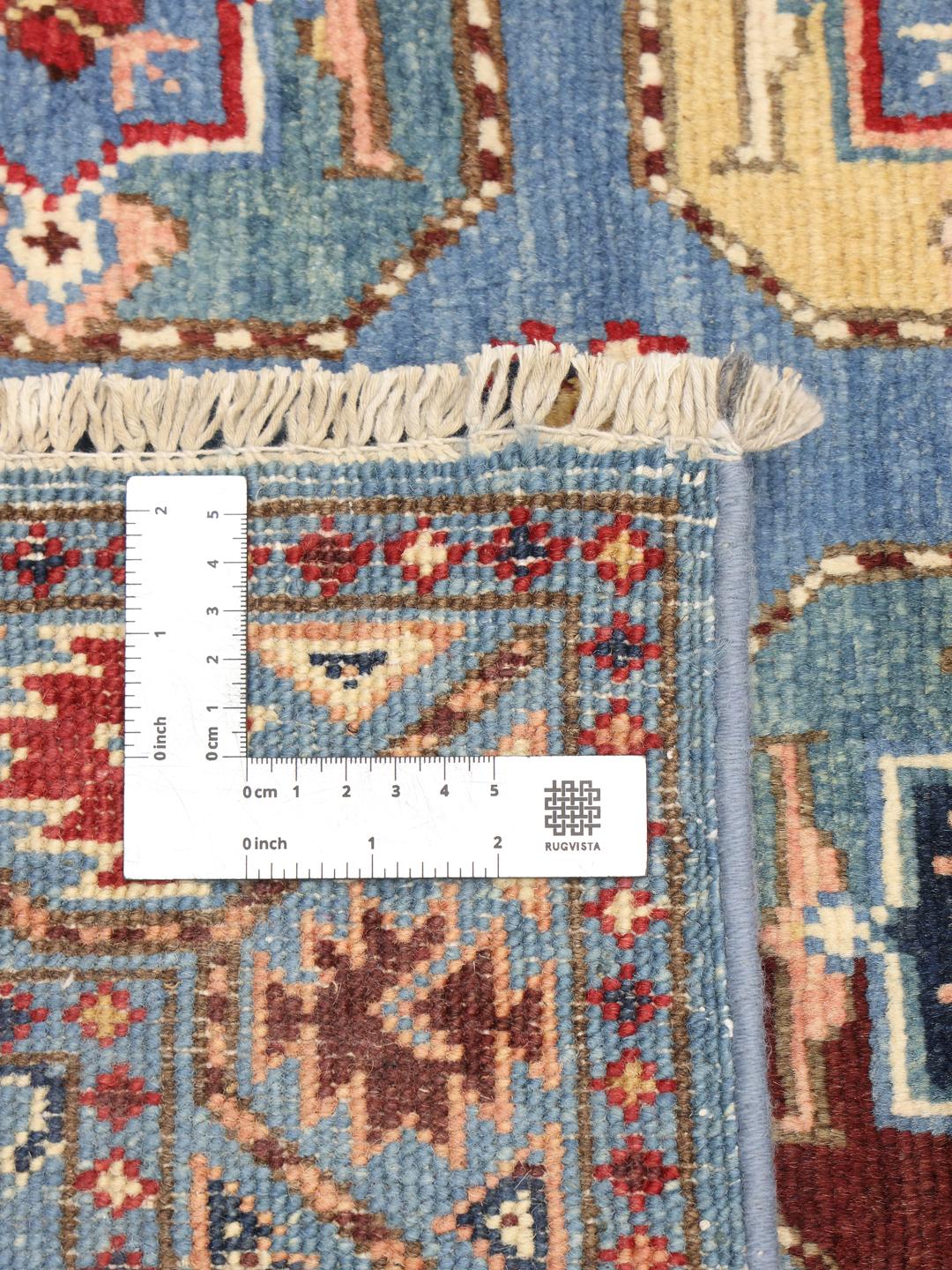
Signature elements of this tradition include the use of large, repeating medallions, often referred to as guls, and stepped geometric borders. These patterns are not merely decorative but are deeply rooted in the cultural heritage of the weavers, often representing local flora, fauna, or abstract symbols of protection and prosperity.
Collectors value these rugs for their authenticity and the human story behind every knot. Owning a Kazak is a way to connect with a long lineage of skilled artistry, where the rug serves as a canvas for cultural expression and a symbol of enduring quality that transcends fleeting trends.