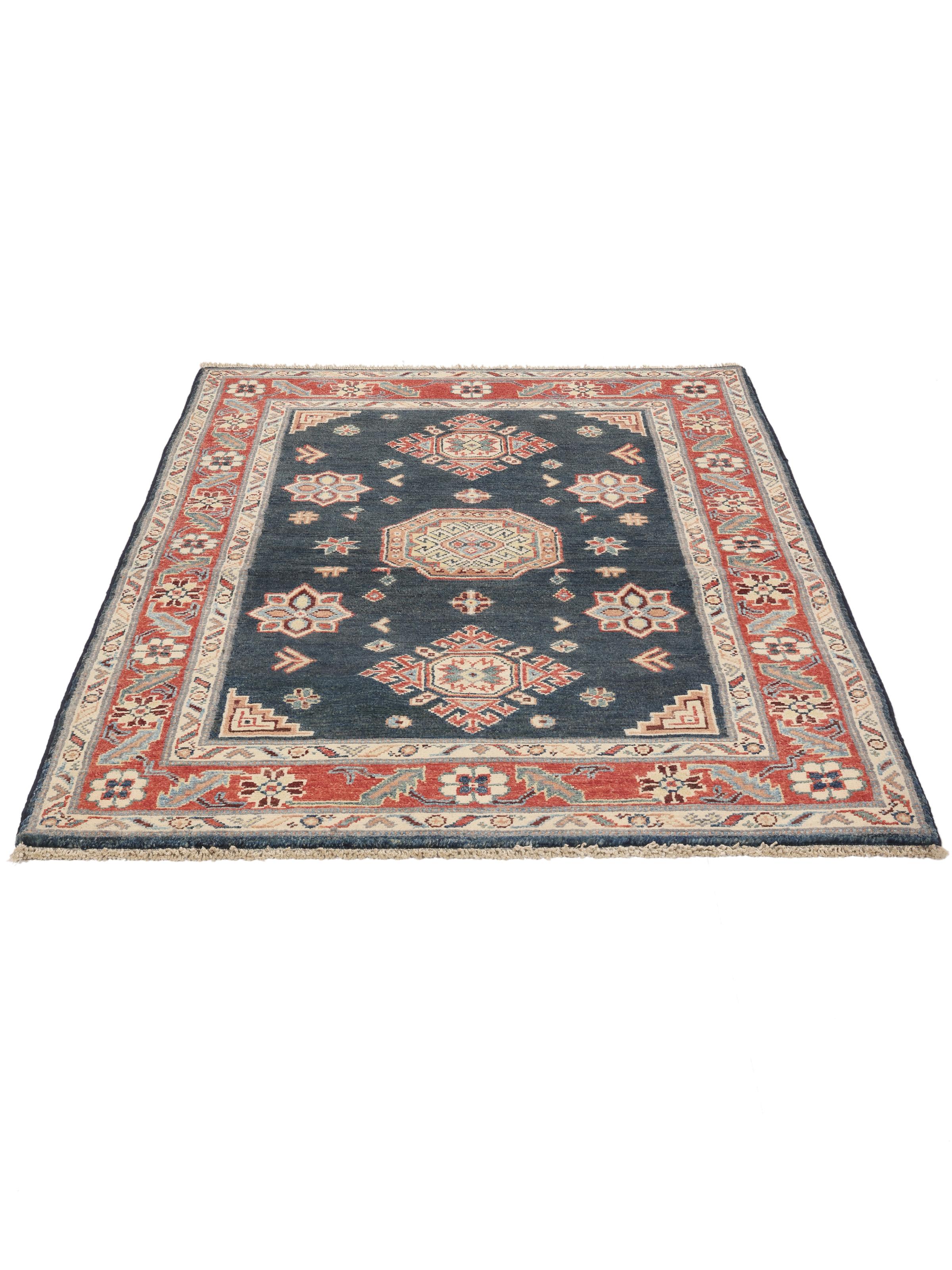
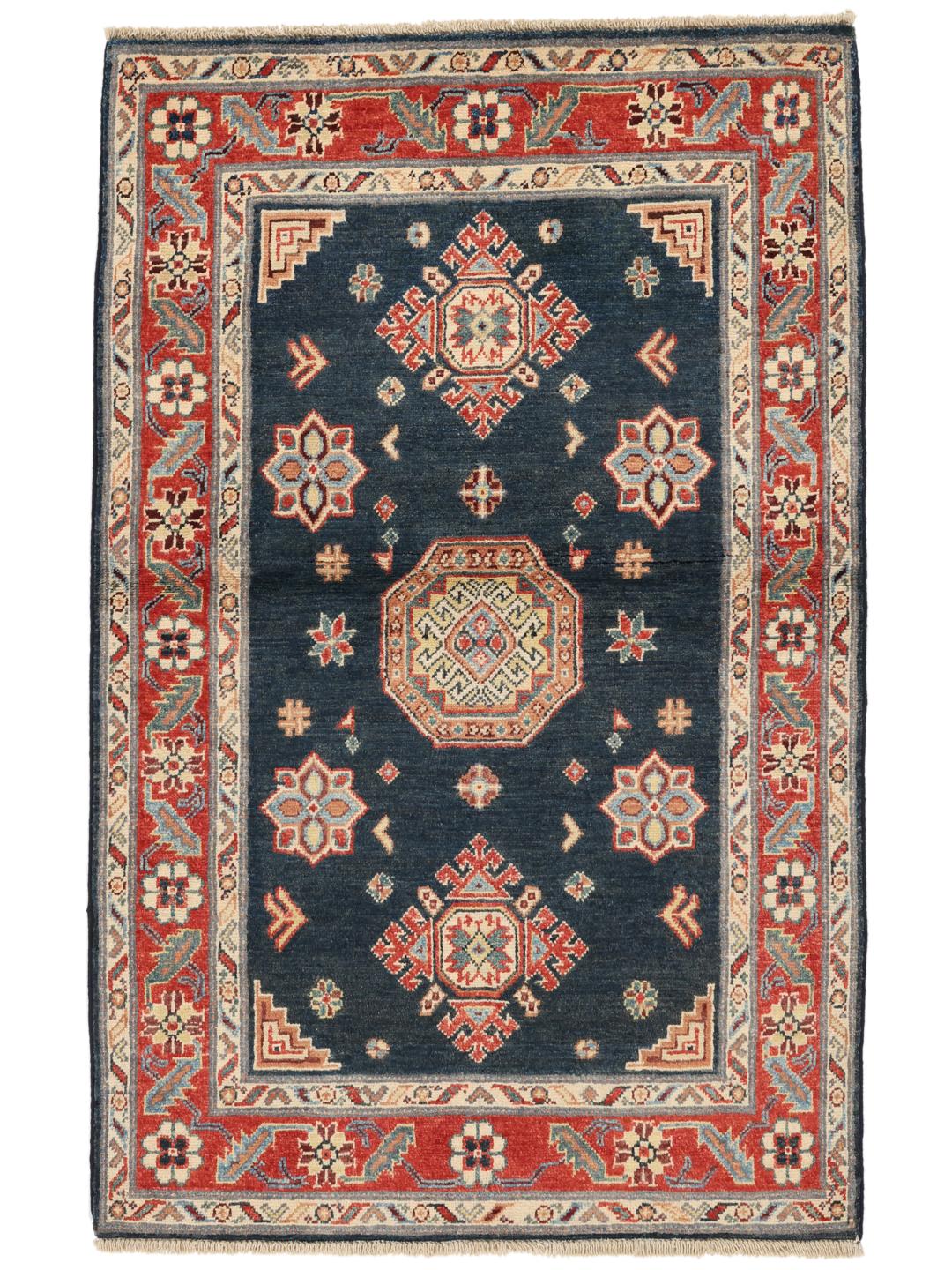
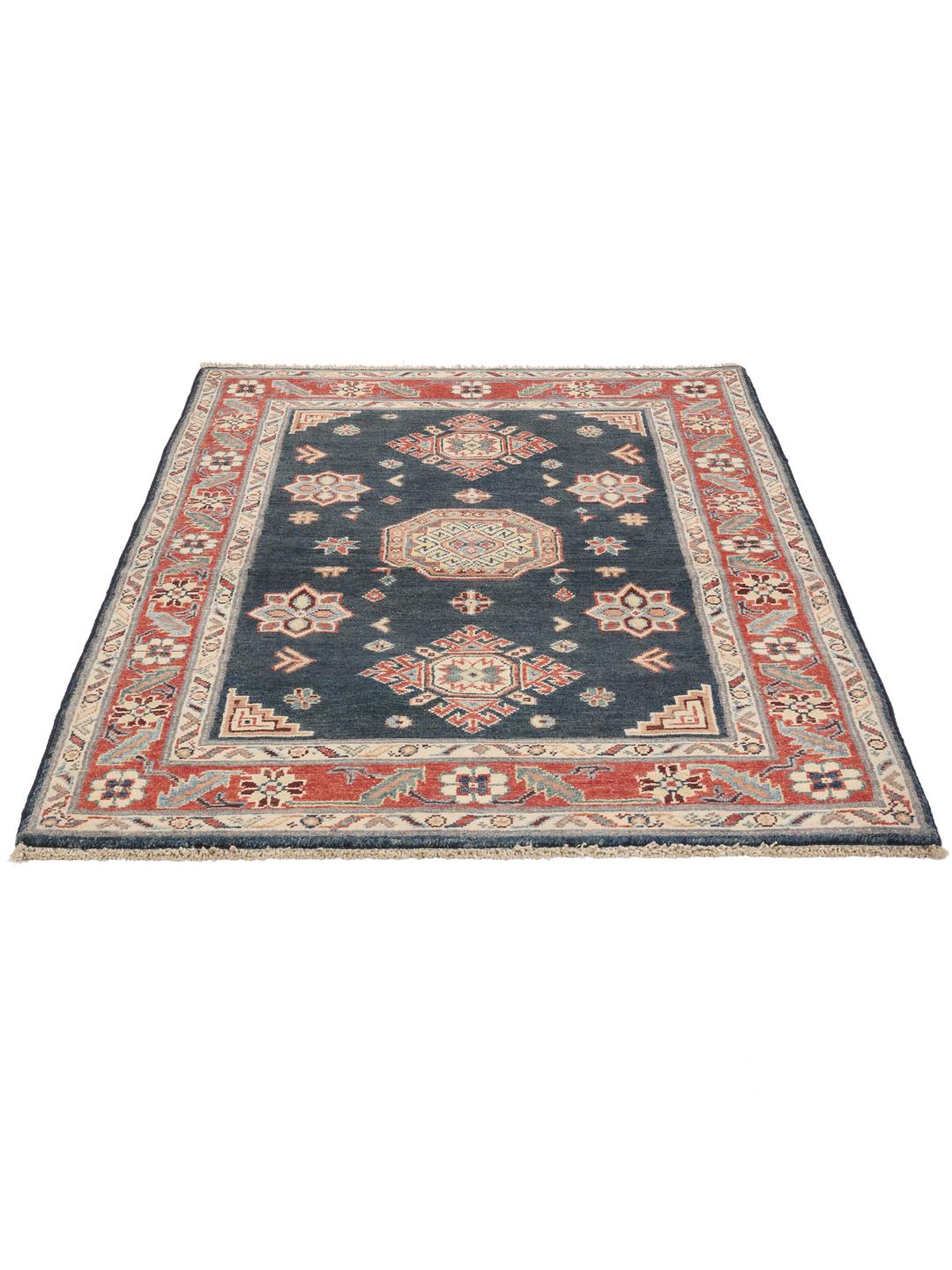
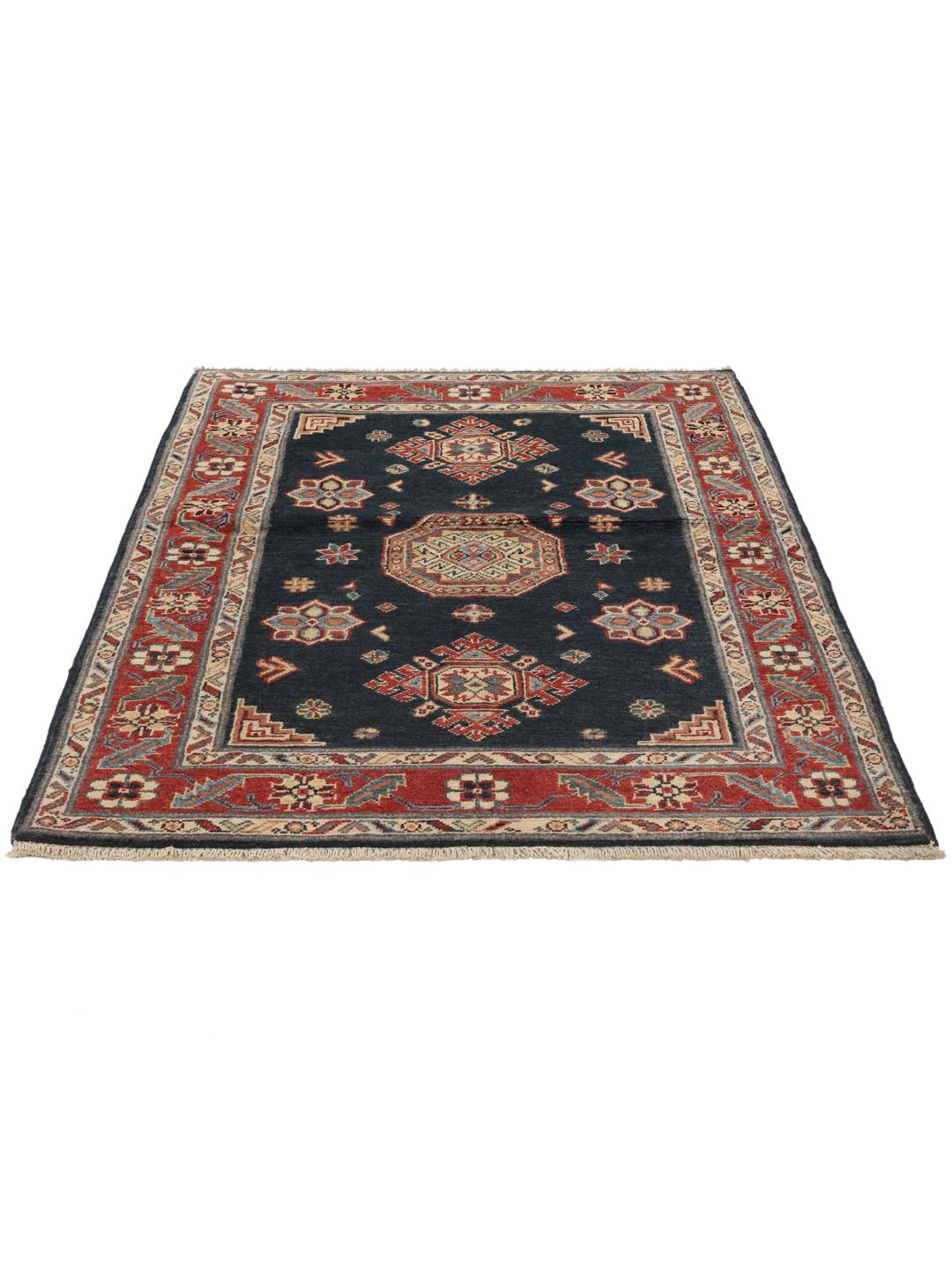
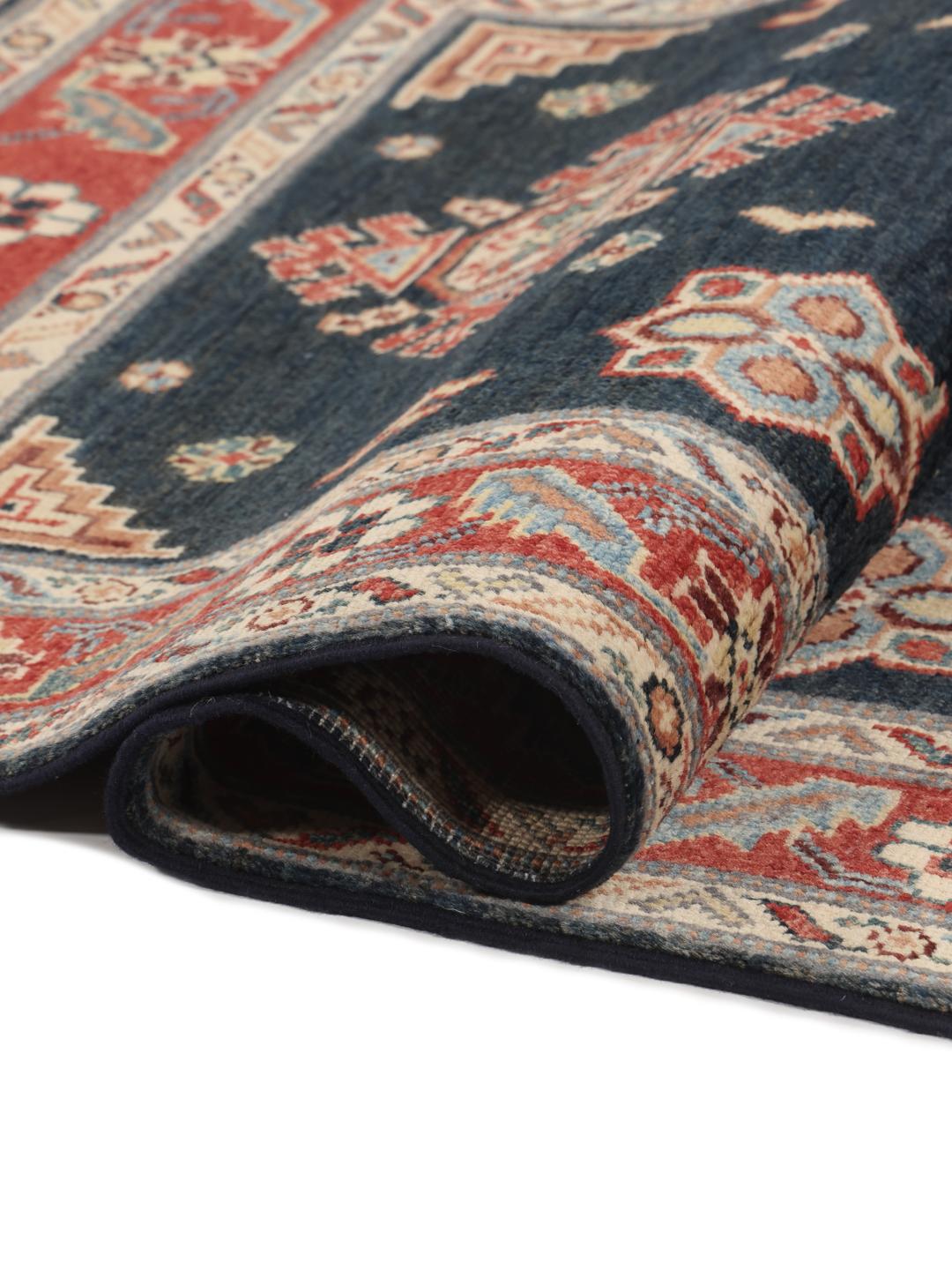
Kazak rugs originate from the Caucasus region, a mountainous area with a long, complex history of weaving that blends diverse cultural influences. While the name historically refers to rugs from the Southern Caucasus, the tradition has evolved significantly over time. Today, some of the most vibrant and authentic examples of this craft are produced in Afghanistan, where weavers maintain the ancient techniques and design vocabularies of their ancestors.
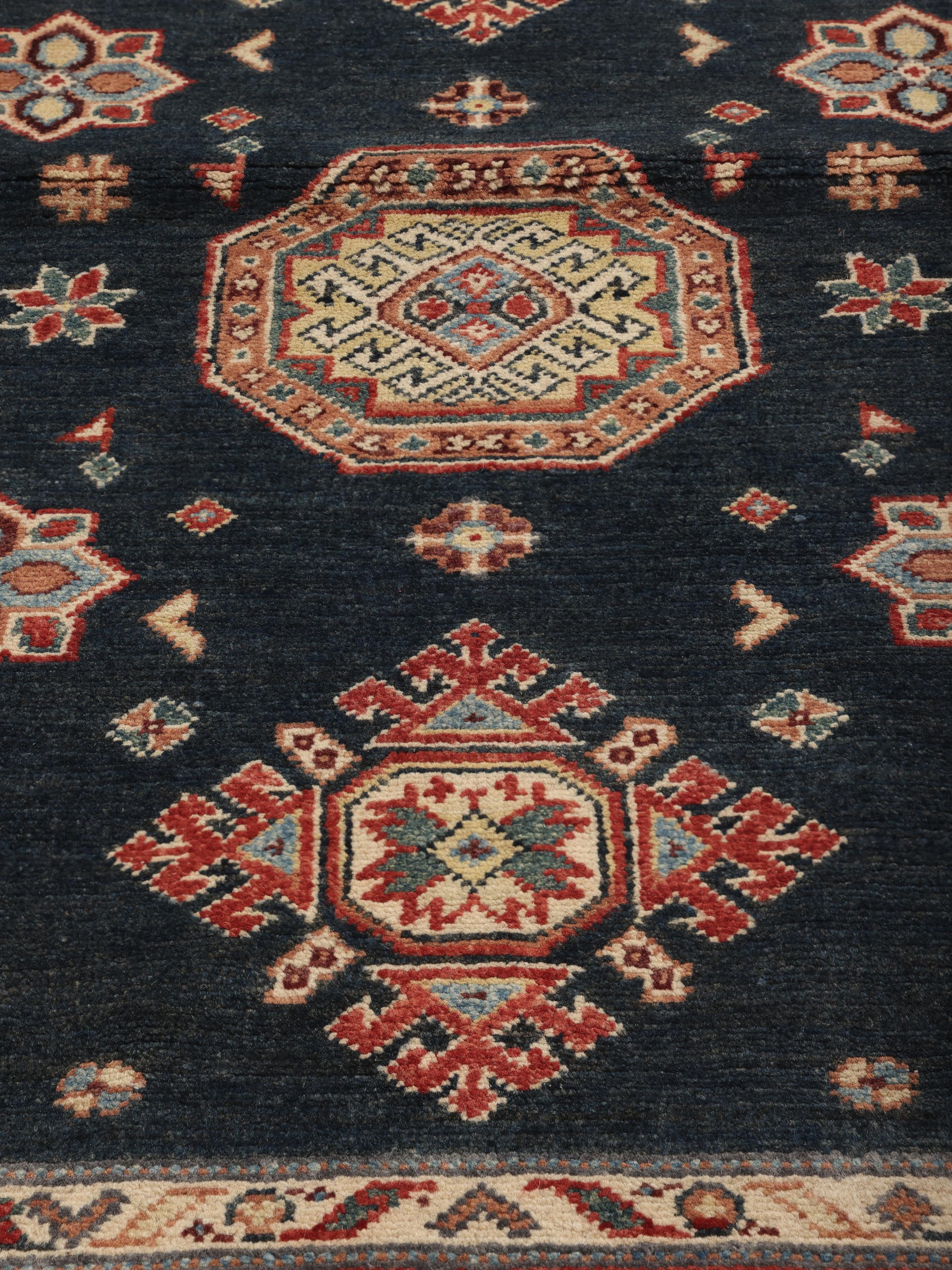
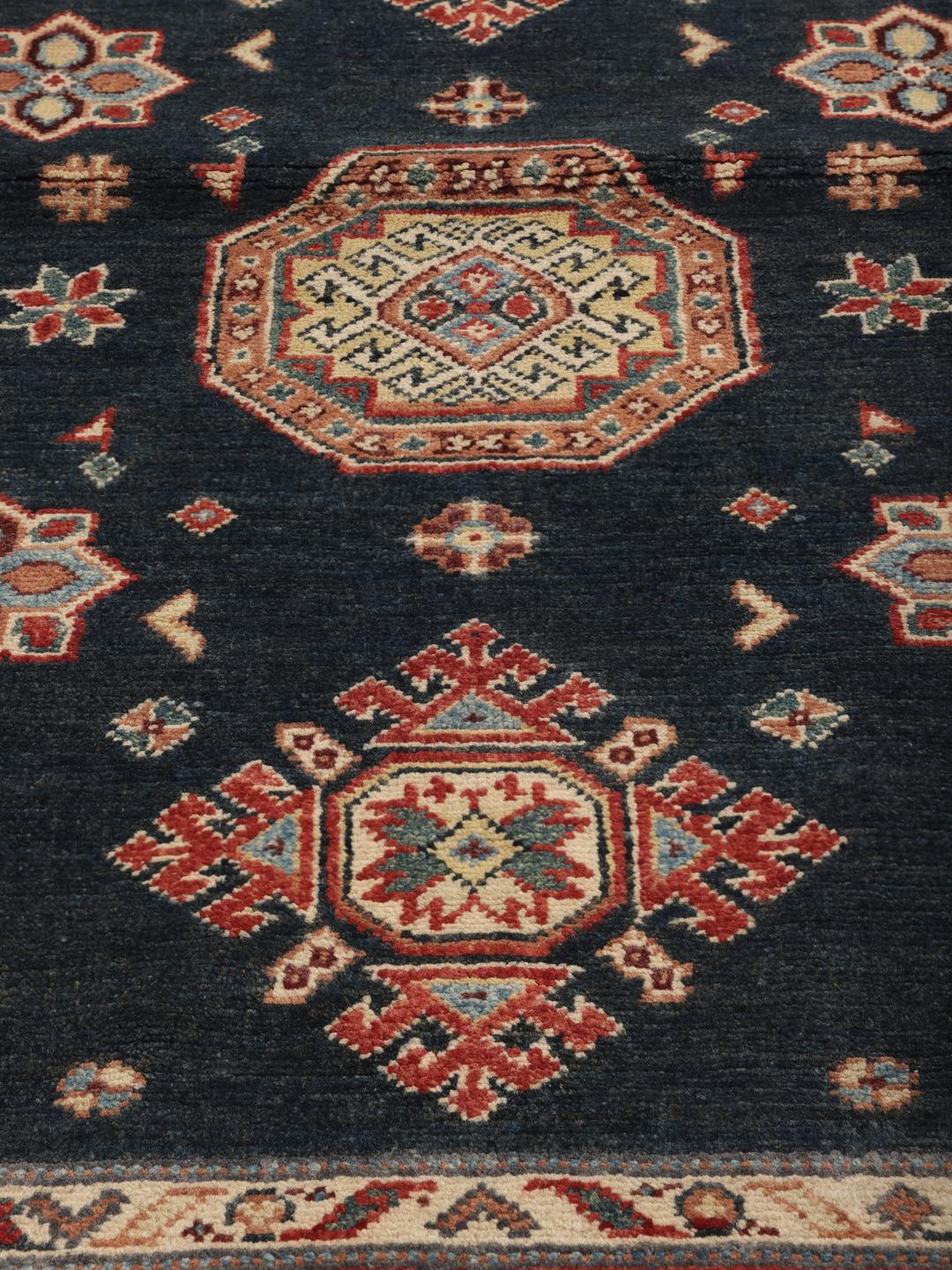
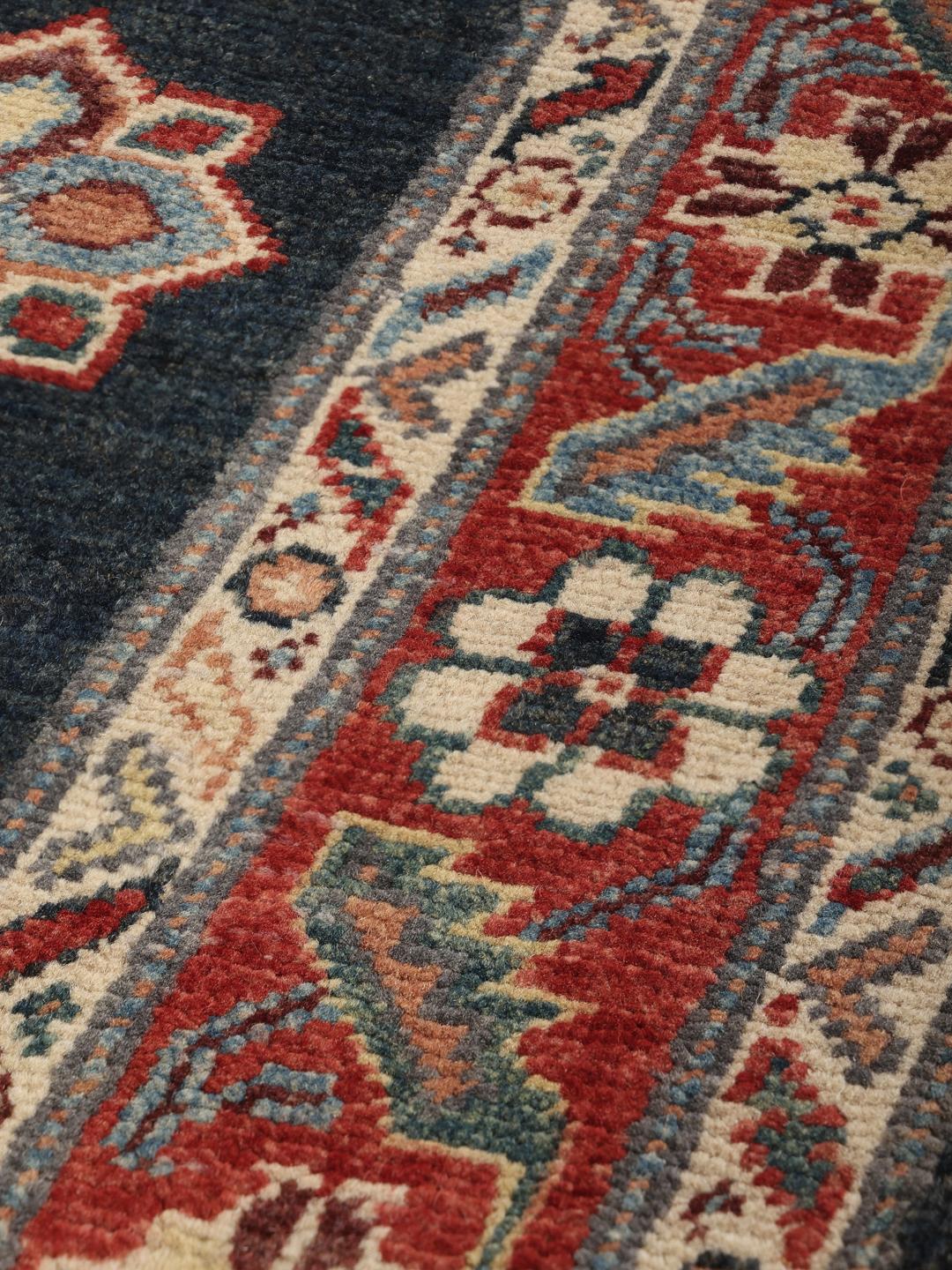
These rugs are defined by their bold, geometric design language. Typical motifs include powerful medallions, stylised floral elements, and protective symbols, all set against a rich, often saturated field. The borders are usually formal and structured, providing a striking frame that balances the more free-flowing tribal designs found in the centre of the rug.
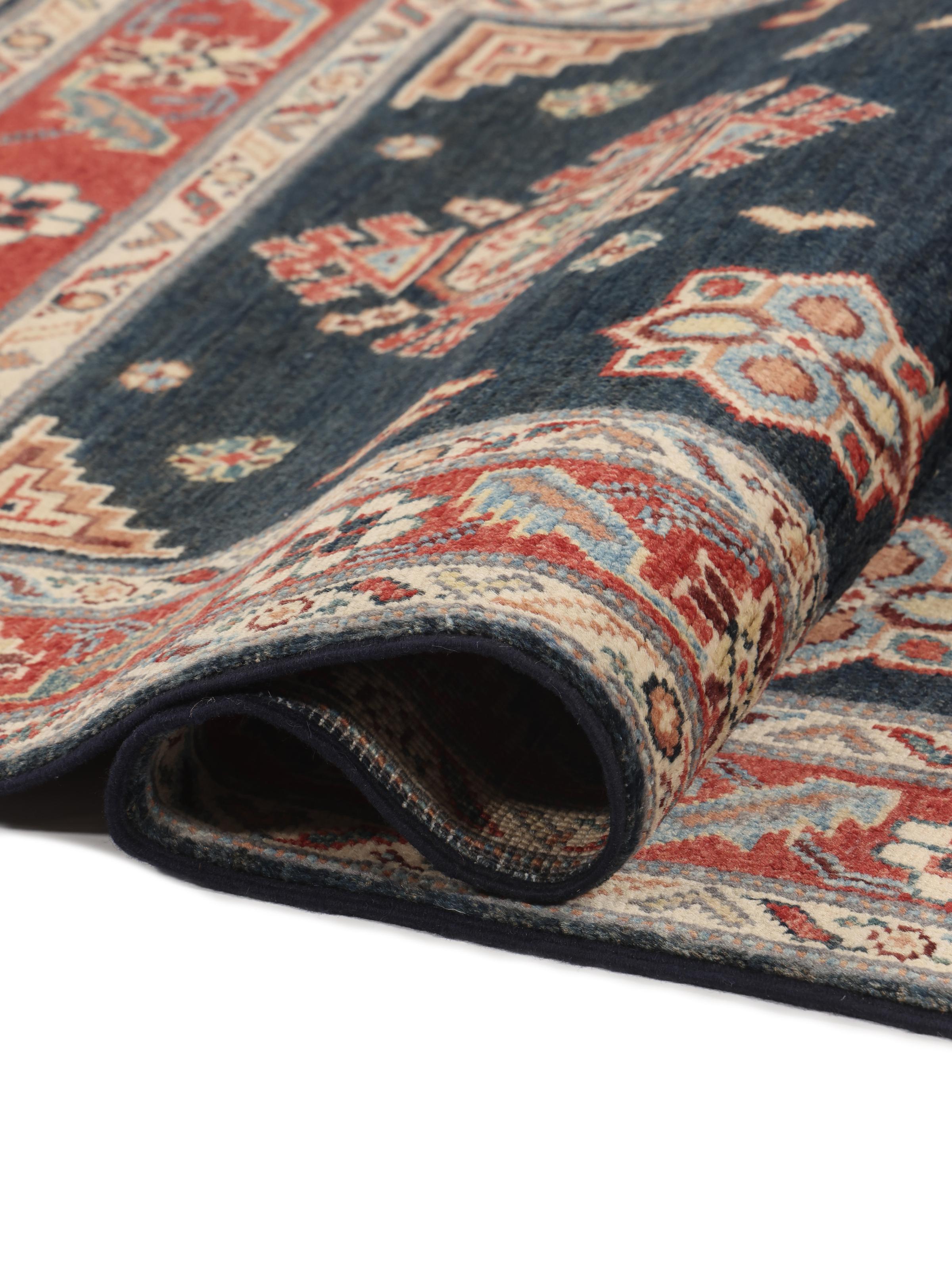
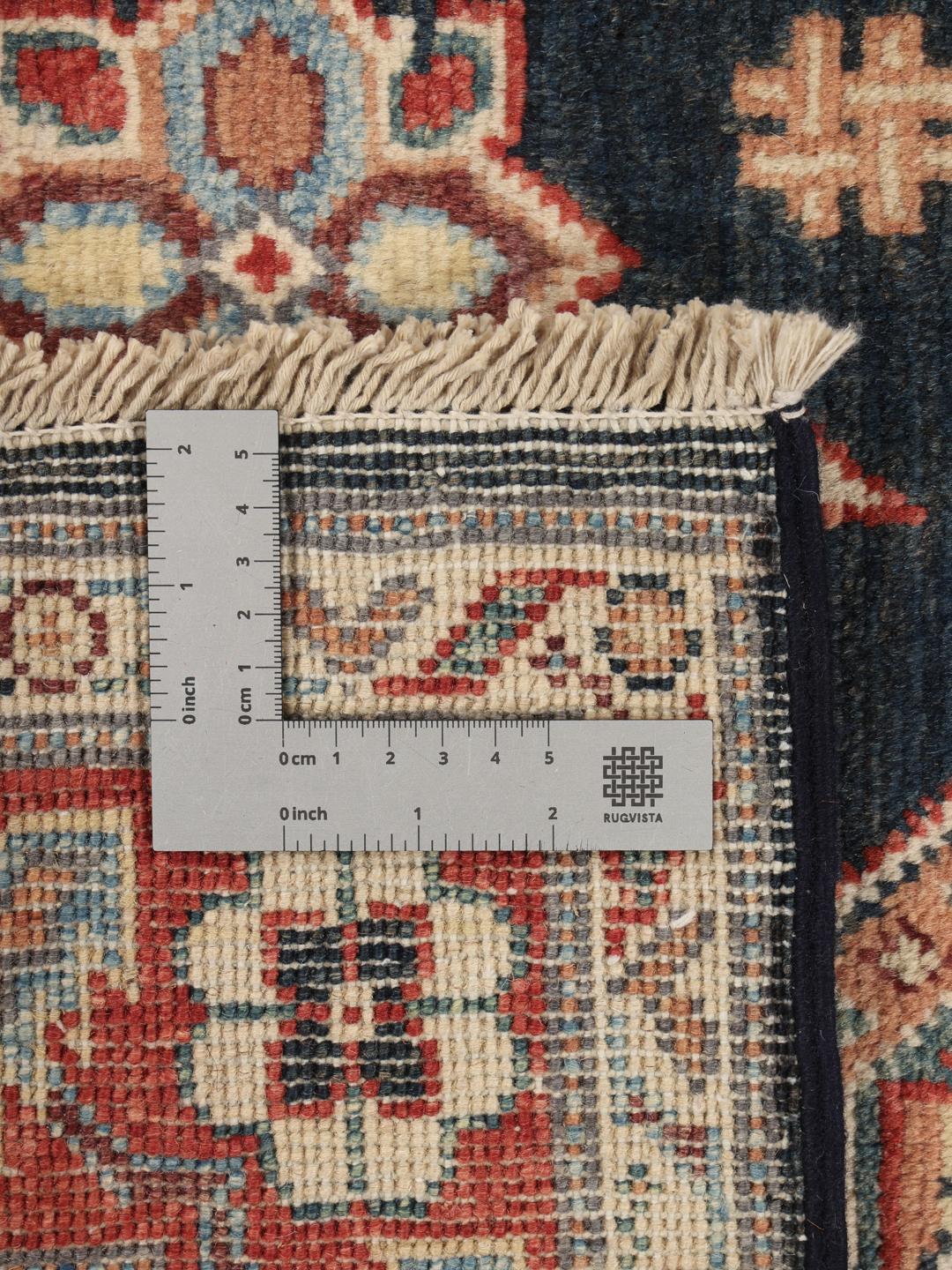
The art of hand-knotting is a cornerstone of this tradition. This method is not merely a way to create a floor covering, but a way to preserve a cultural legacy. The density of the knots, combined with the quality of the wool, allows these rugs to age beautifully, often developing a soft lustre and a deeper character as they are used over the decades.
Collectors value these pieces for their authenticity and the human skill they represent. Owning a Kazak rug is an investment in heritage and craftsmanship. Each rug serves as a bridge between the past and the present, offering a piece of history that adds genuine weight and cultural substance to a modern interior.