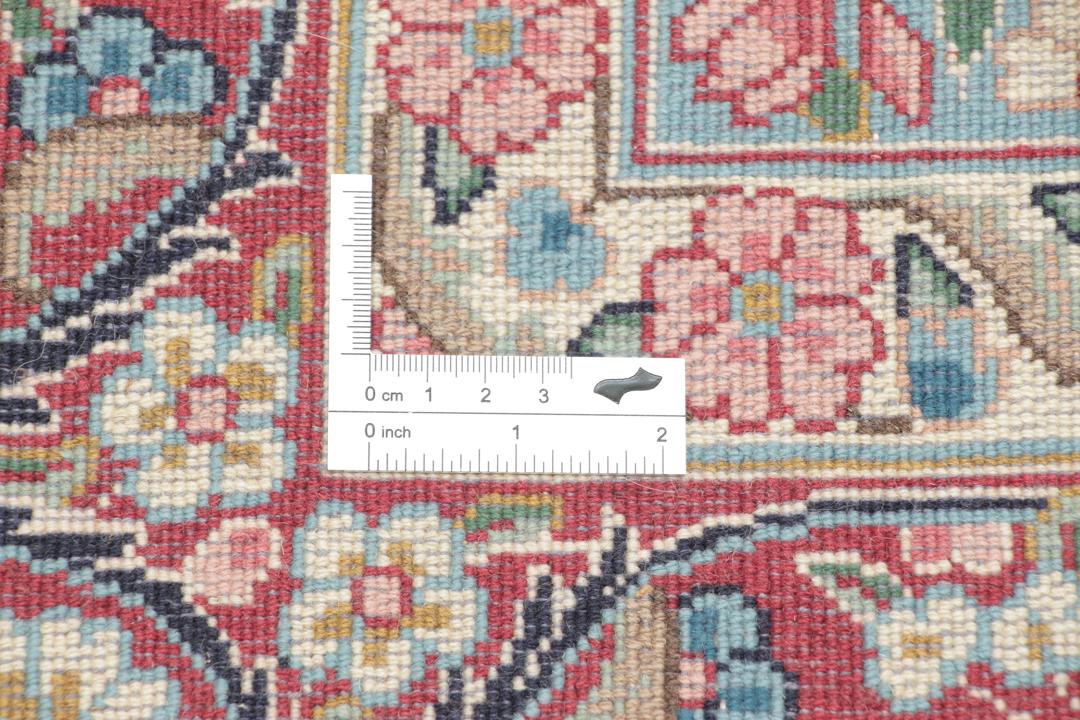
Kerman rugs originate from a famous city and province in the south-east of the Middle East, a region long celebrated as a major hub for high-quality textile weaving. Historically, the area became famous for its highly skilled weavers who produced some of the most sophisticated designs ever seen. These rugs were highly sought after by collectors and nobility alike, establishing a reputation for artistic complexity that remains influential today.
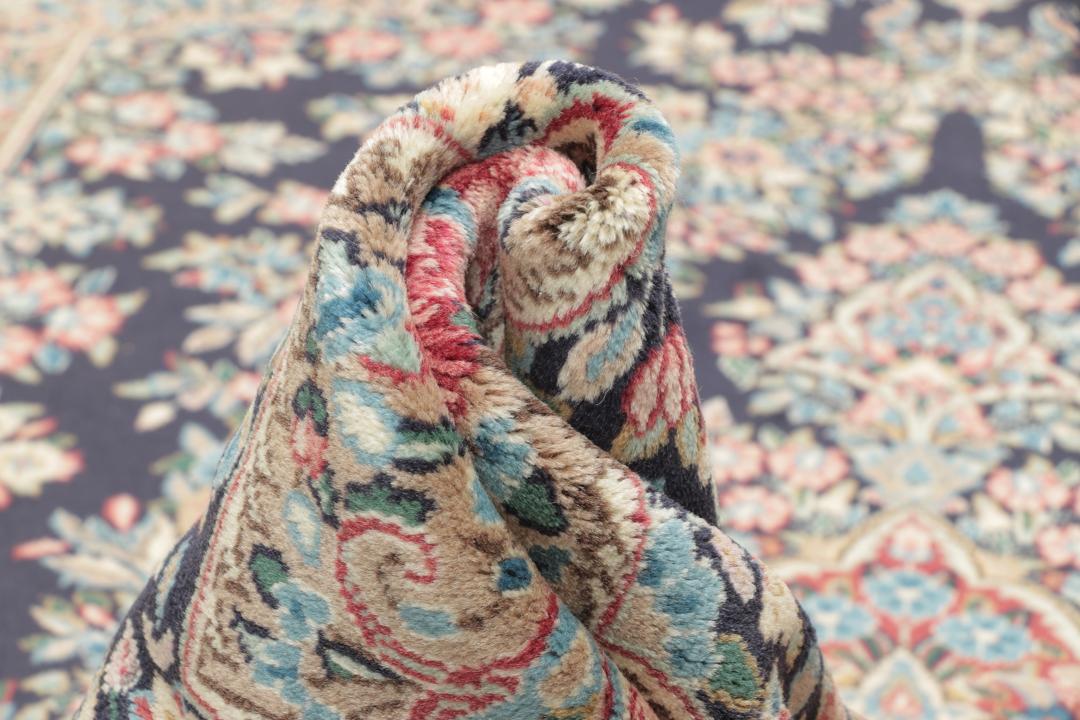
The designation of Kerman Fine refers to the exceptional clarity and precision of the design. In this tradition, weavers use a specific knotting technique that allows for incredibly fluid, curved lines rather than the angular patterns found in nomadic rugs. This technical precision means that the elaborate floral patterns and delicate borders are rendered with remarkable sharpness, showcasing the high level of skill required to translate complex drawings into woven form.
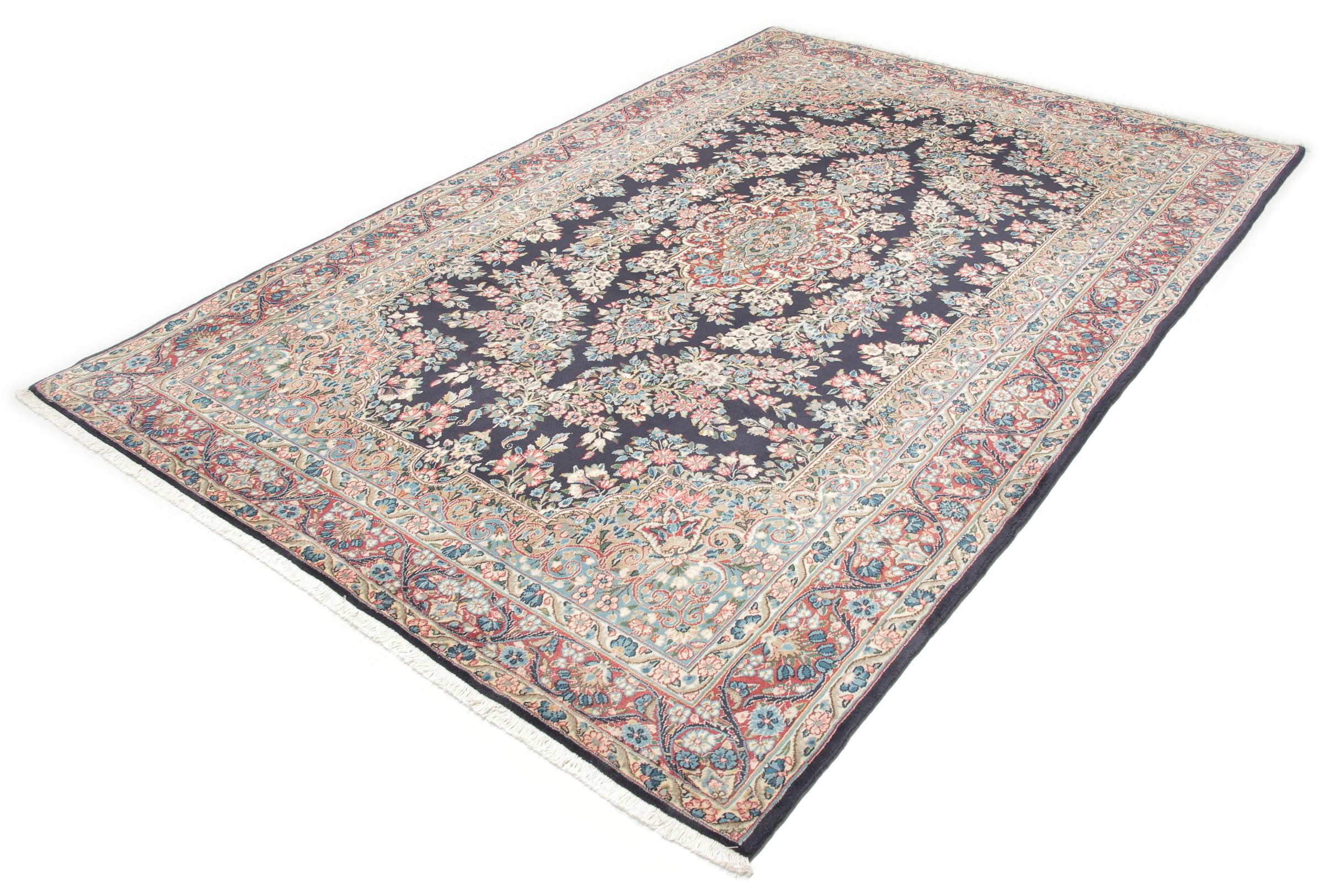
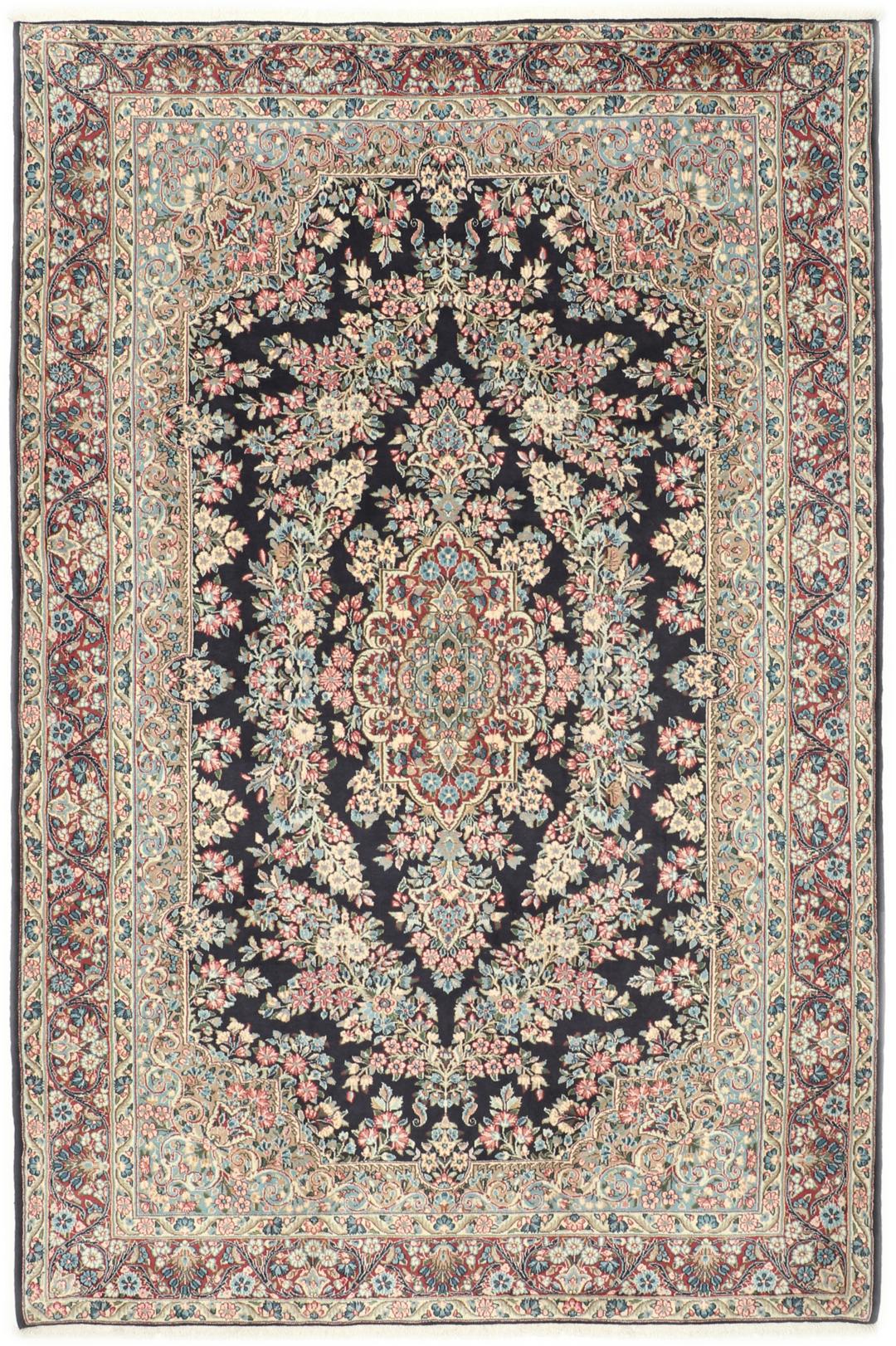
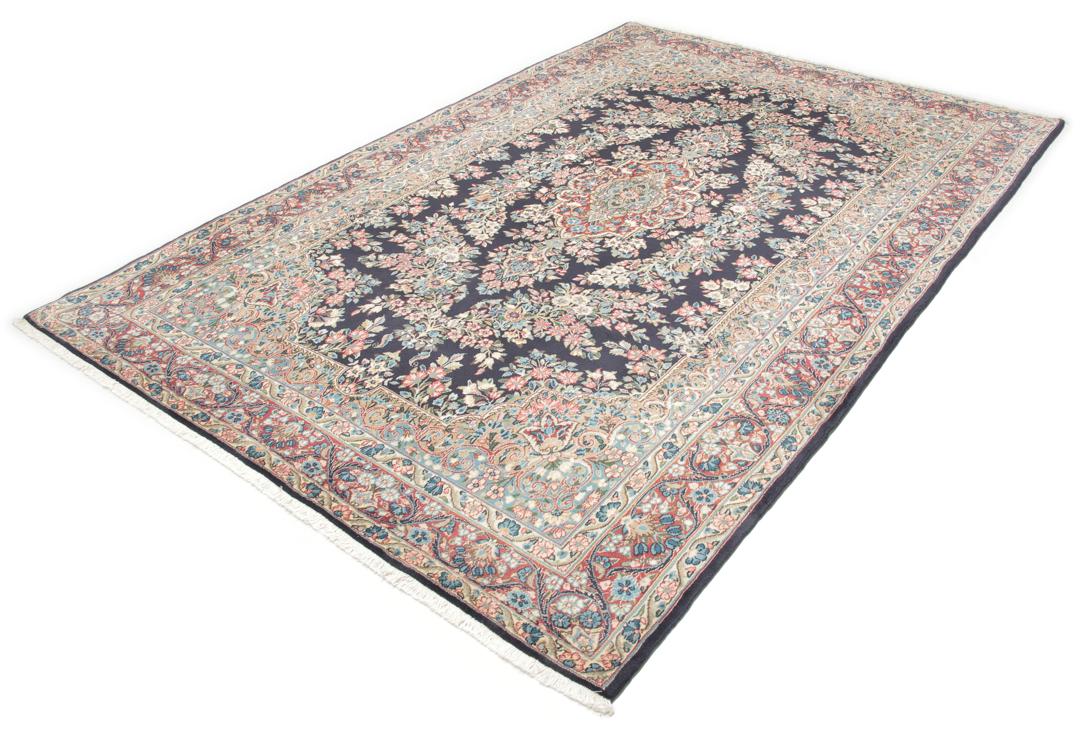
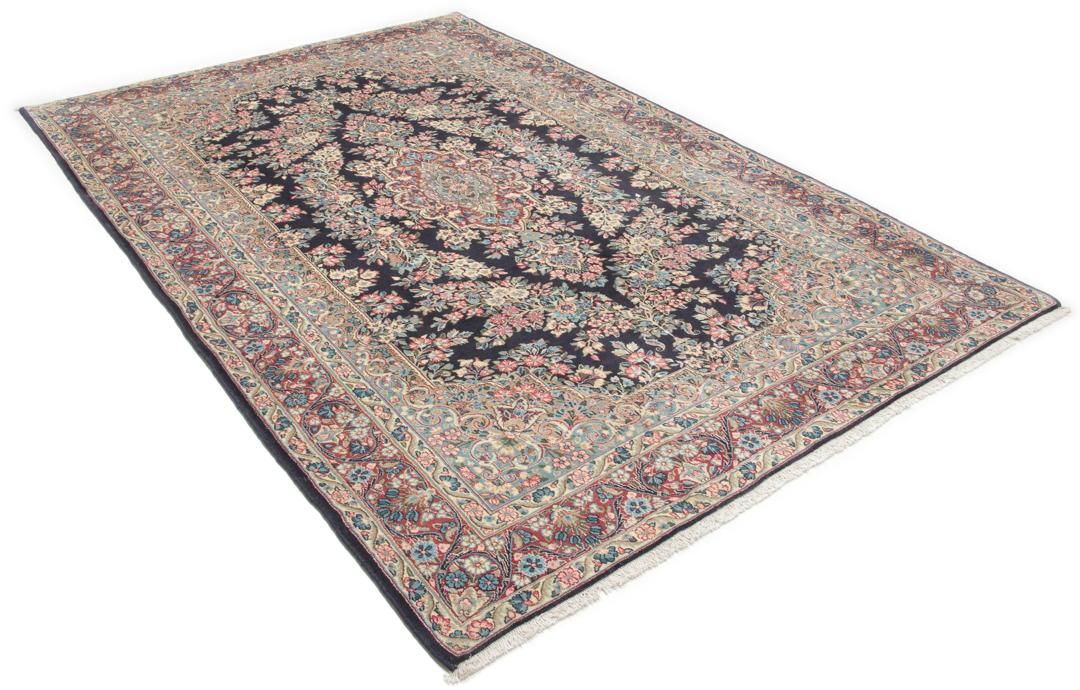
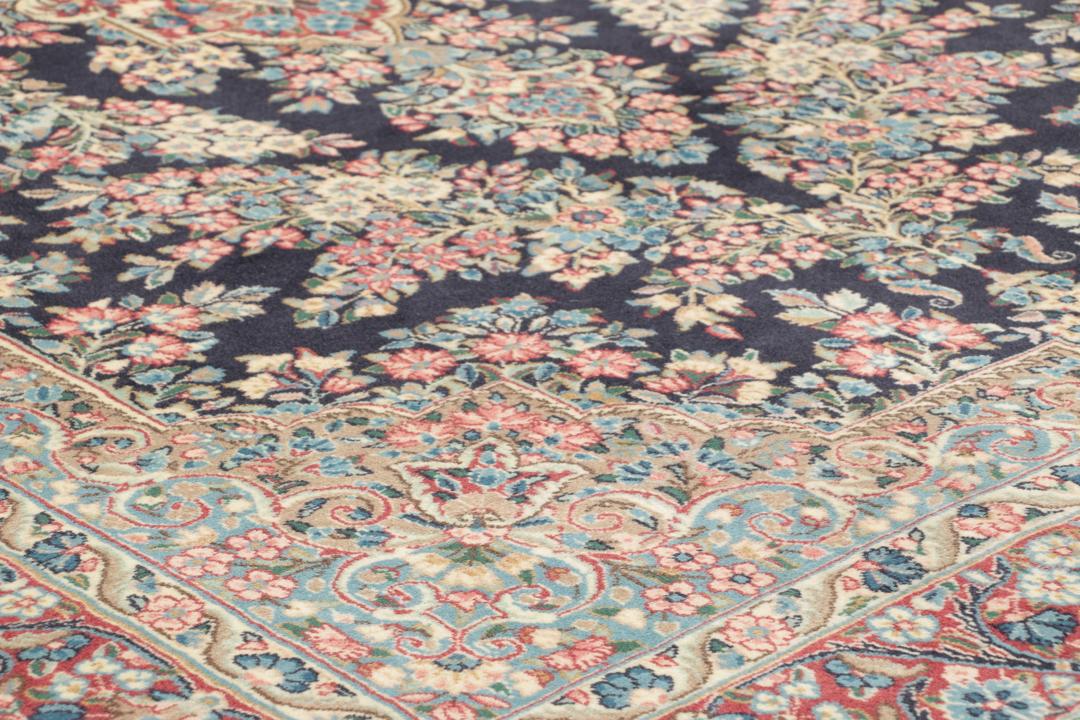
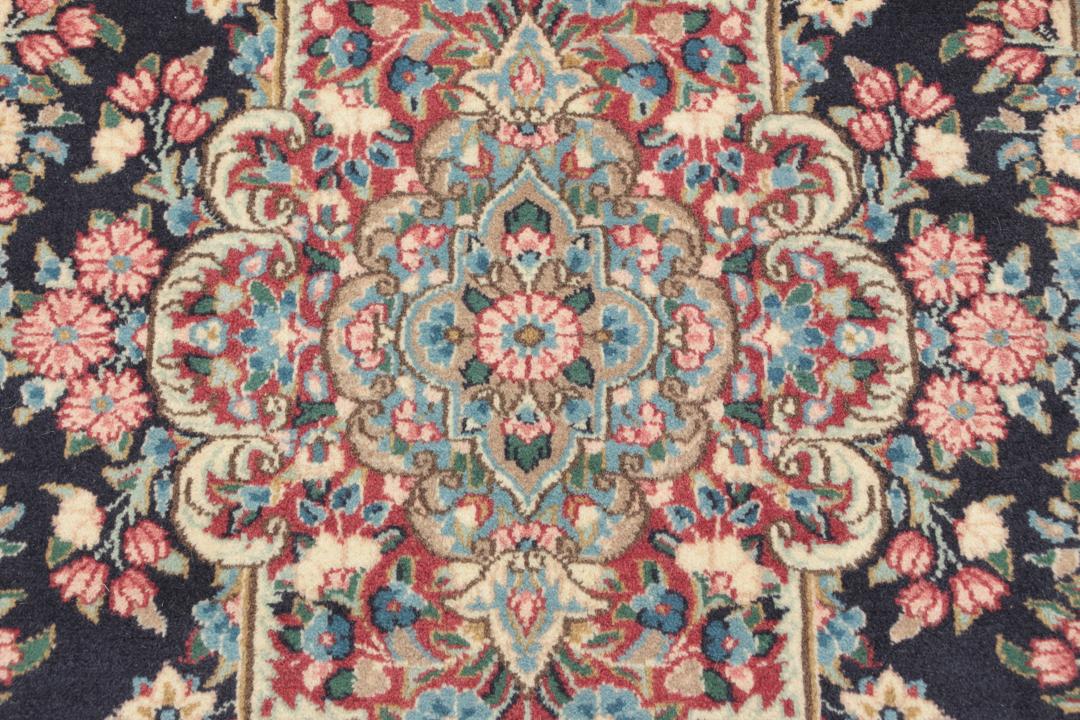
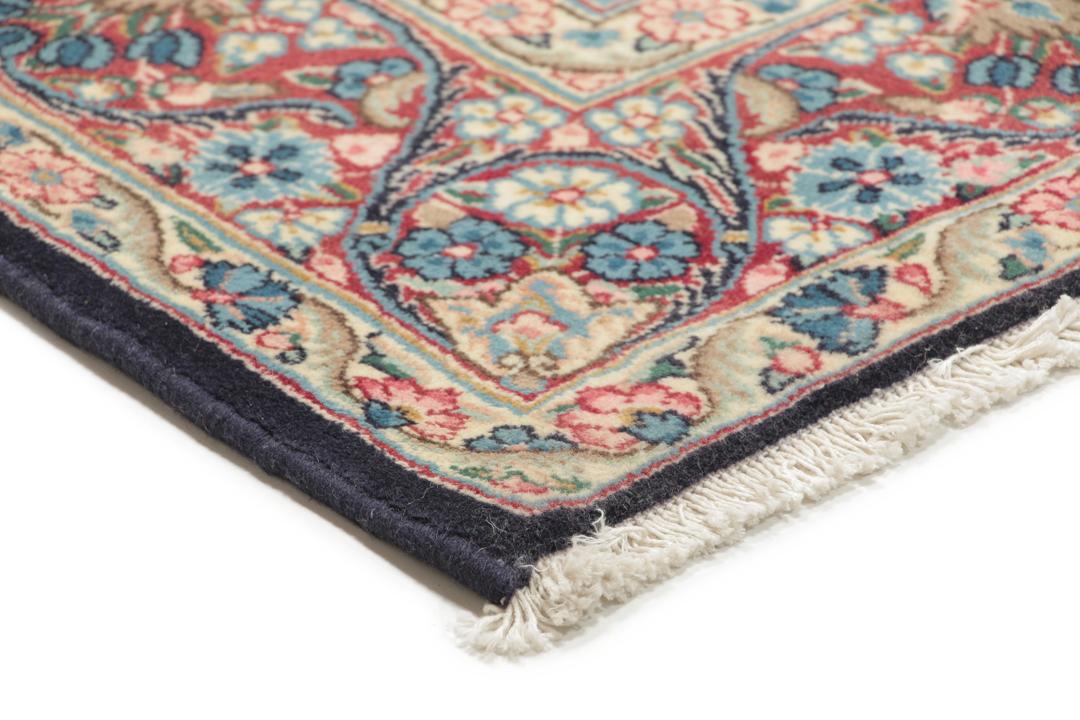
Traditional Kerman designs are famous for their elegant central medallions and lush, all-over floral motifs. The field is often filled with garden-like imagery, including delicate vines, palmettes, and scrolling leaves enclosed by multiple decorative borders. This specific piece showcases a classic layout, where the detailed medallion acts as a focal point, surrounded by a rich tapestry of botanical elements that create a harmonious sense of balance.
Owning a Kerman rug is a way of connecting with a rich cultural heritage that has been refined over generations. These pieces are valued not just as floor coverings, but as works of woven art that represent the peak of regional craftsmanship. Their enduring appeal lies in their ability to bring a sense of history, warmth, and artistic depth into contemporary homes, making them cherished additions to any collection.