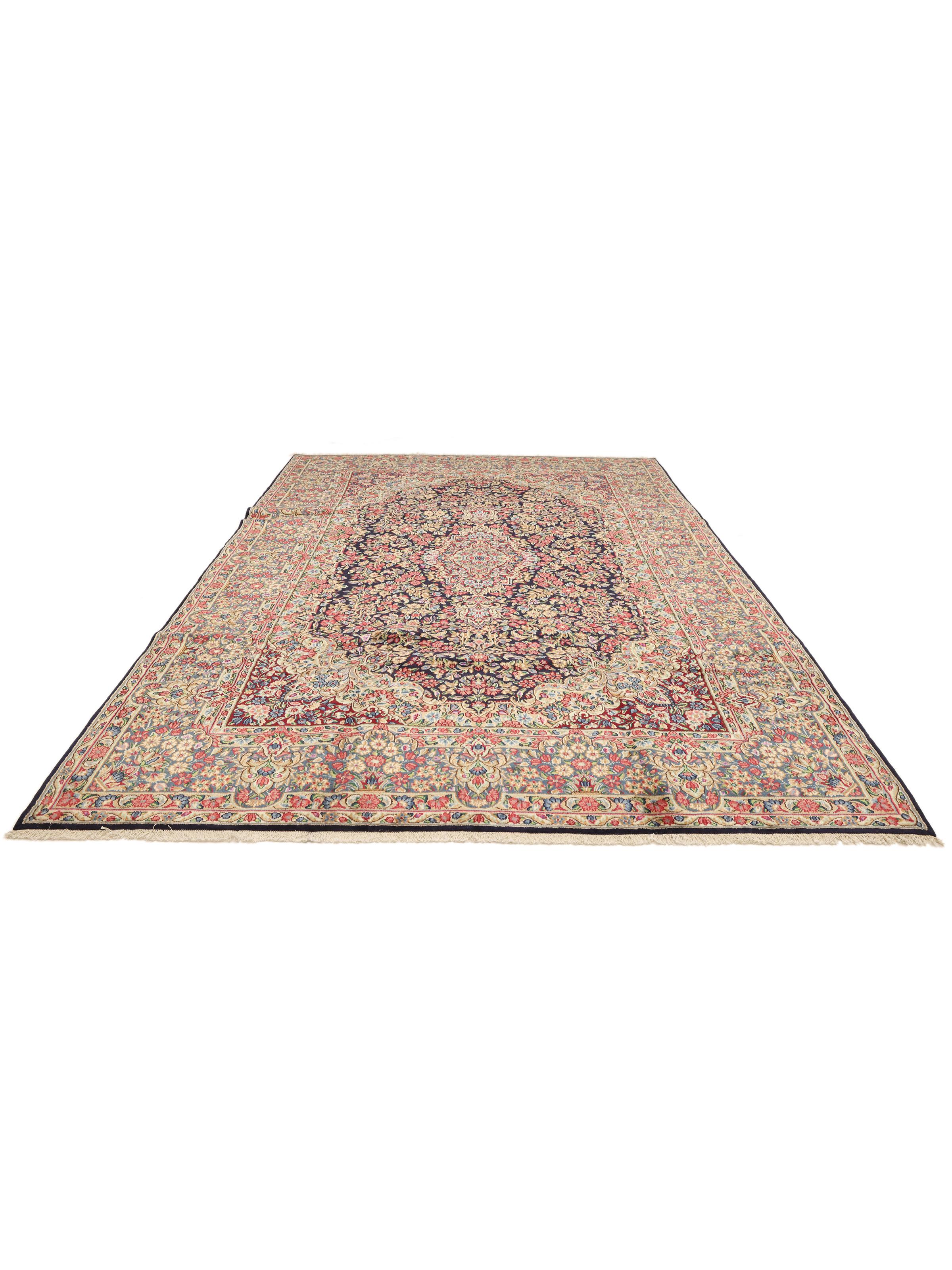
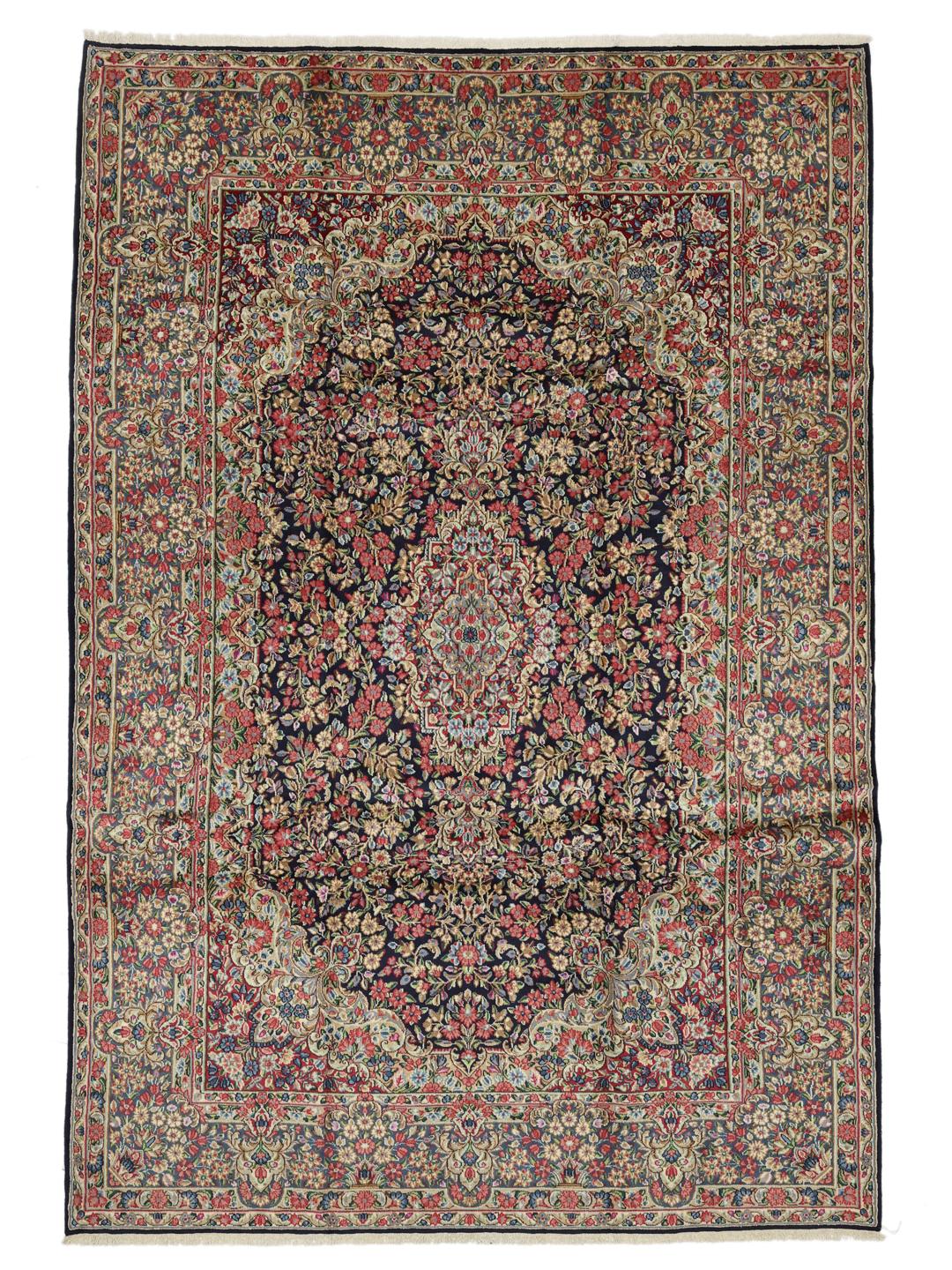
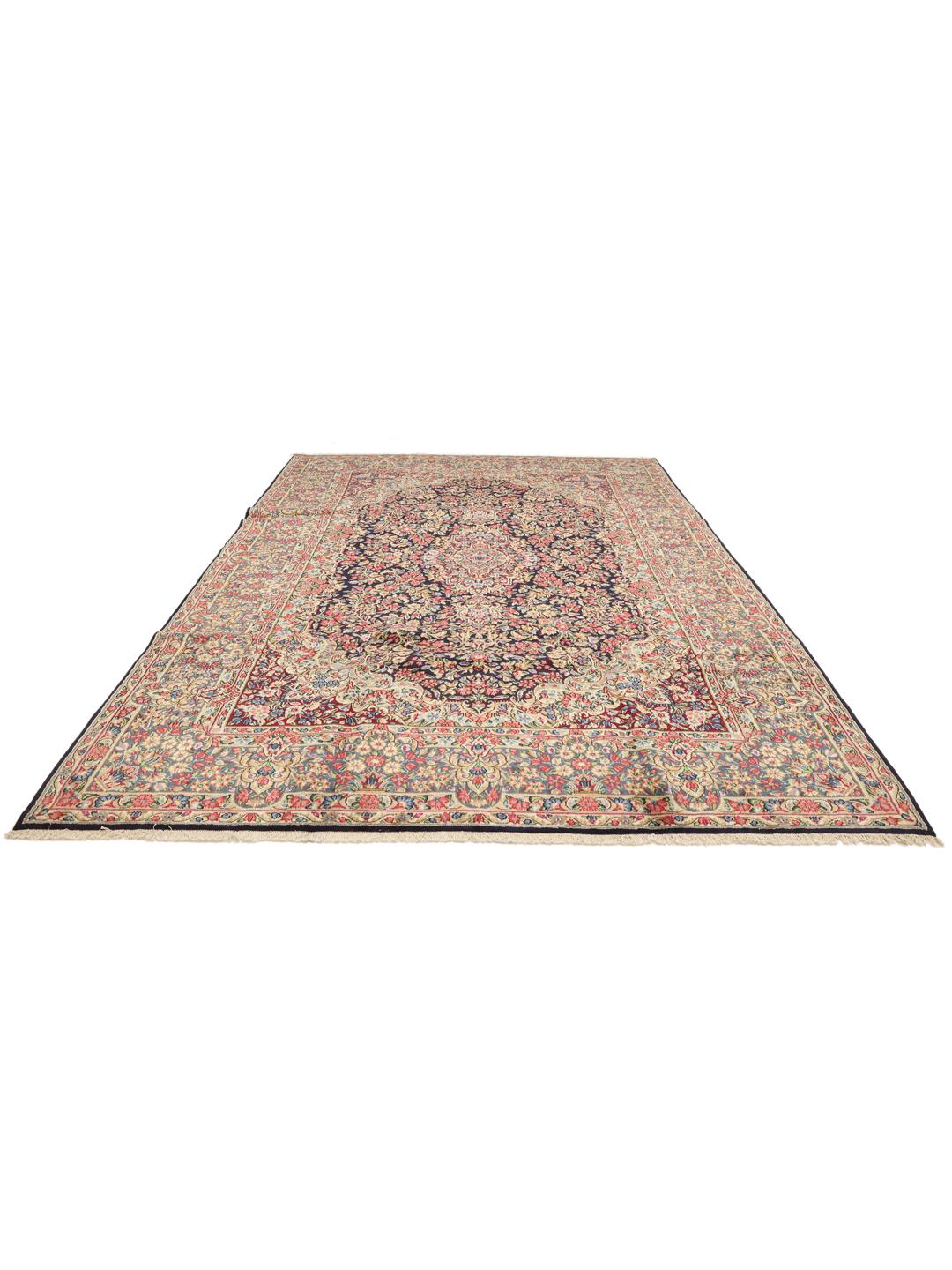
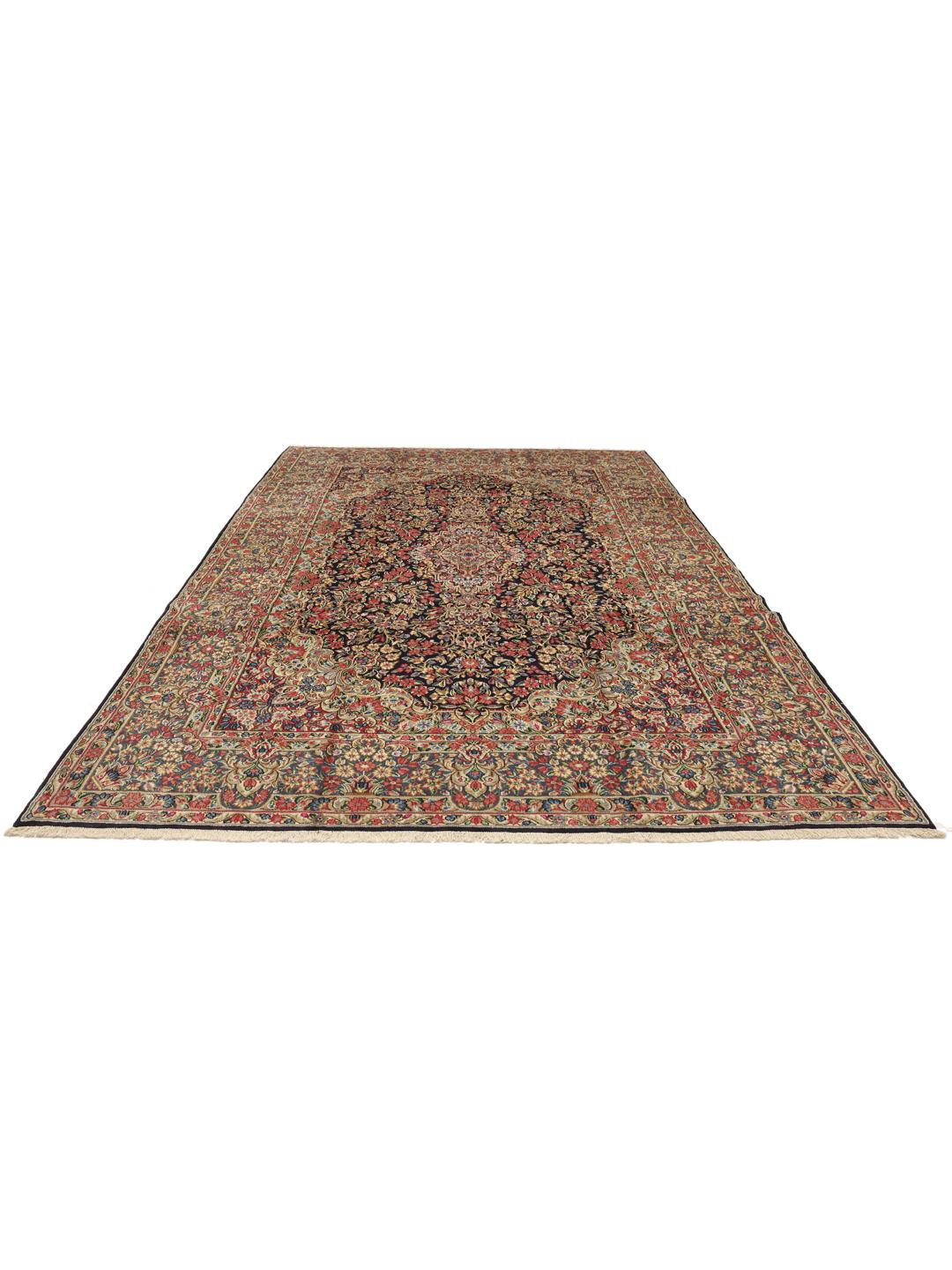
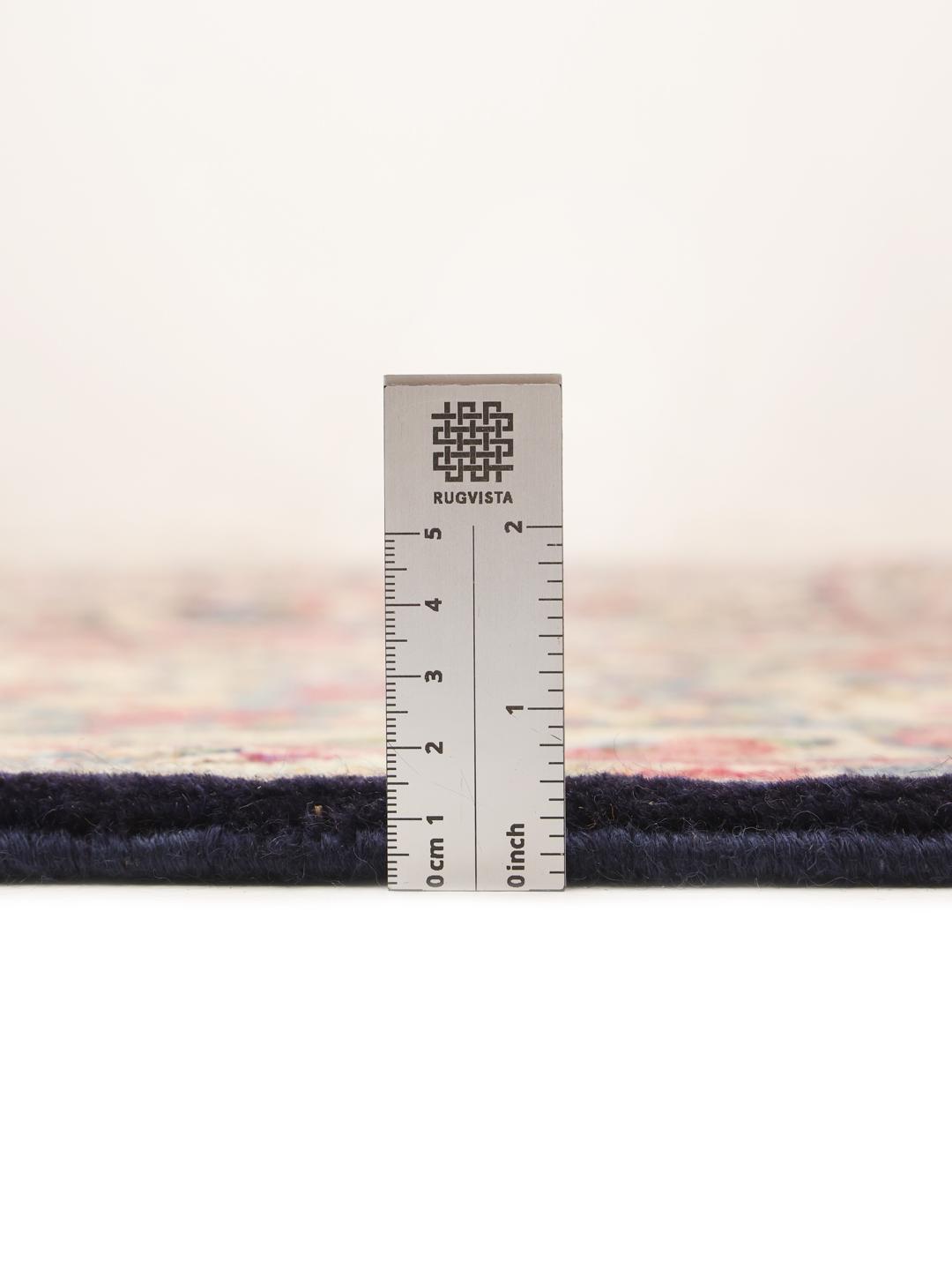
Kerman rugs hail from the high-desert region of the Middle East, a city renowned for centuries as a hub of textile excellence. The tradition here is defined by a unique approach to design that moves away from strictly geometric patterns, favouring instead a more fluid, organic, and realistic depiction of nature. These rugs are celebrated for their sophisticated colour palettes and technical precision.
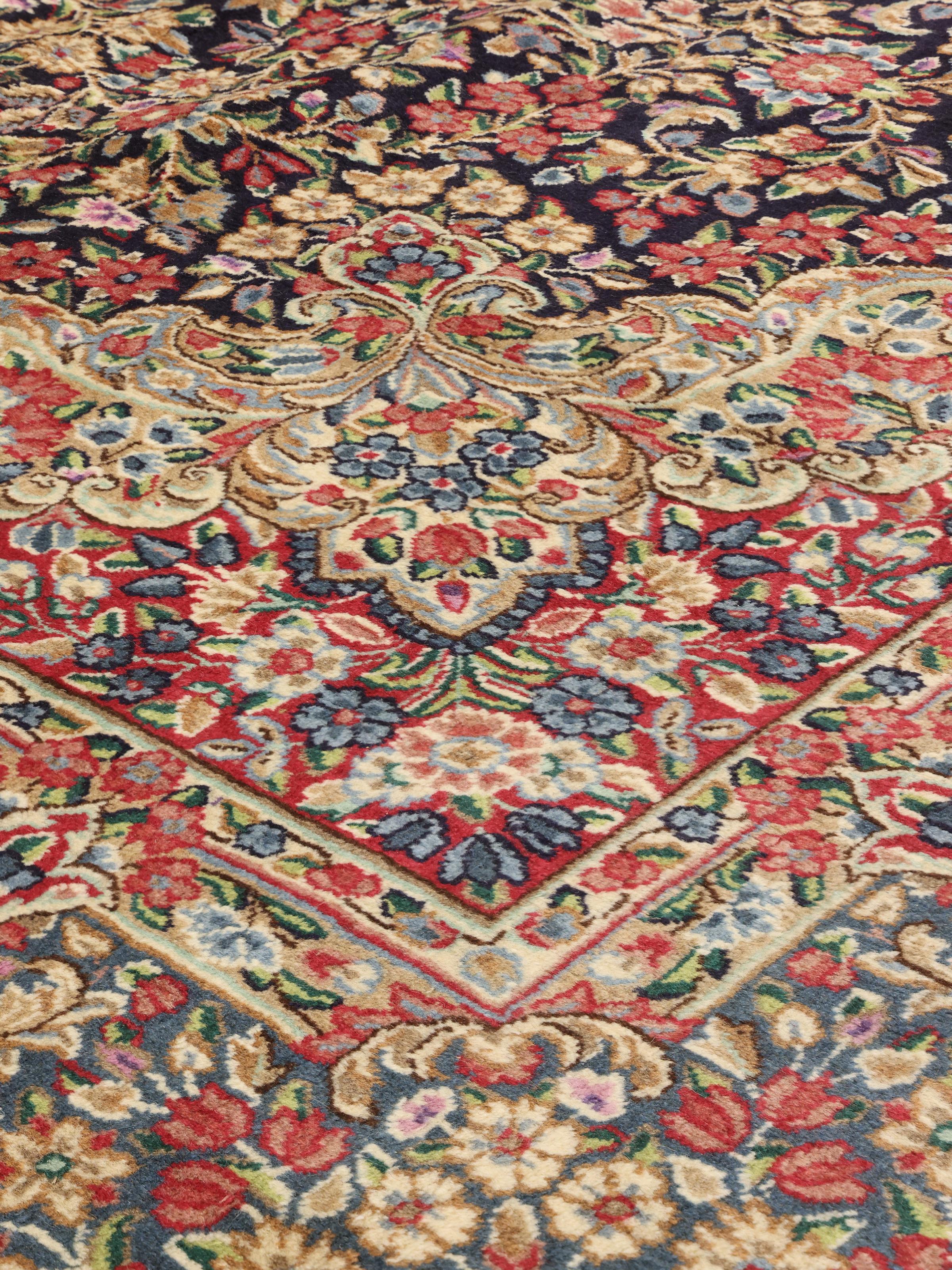
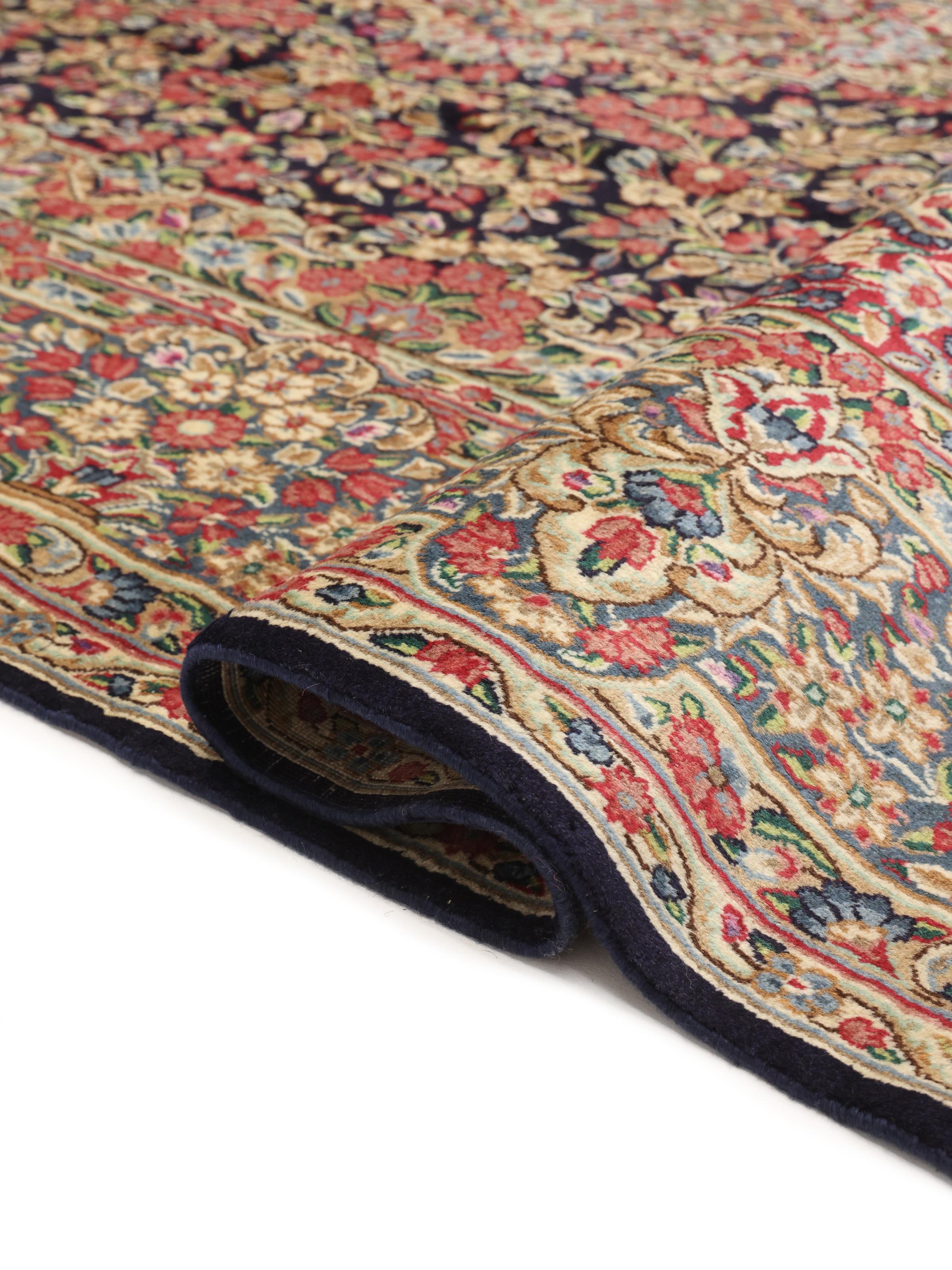
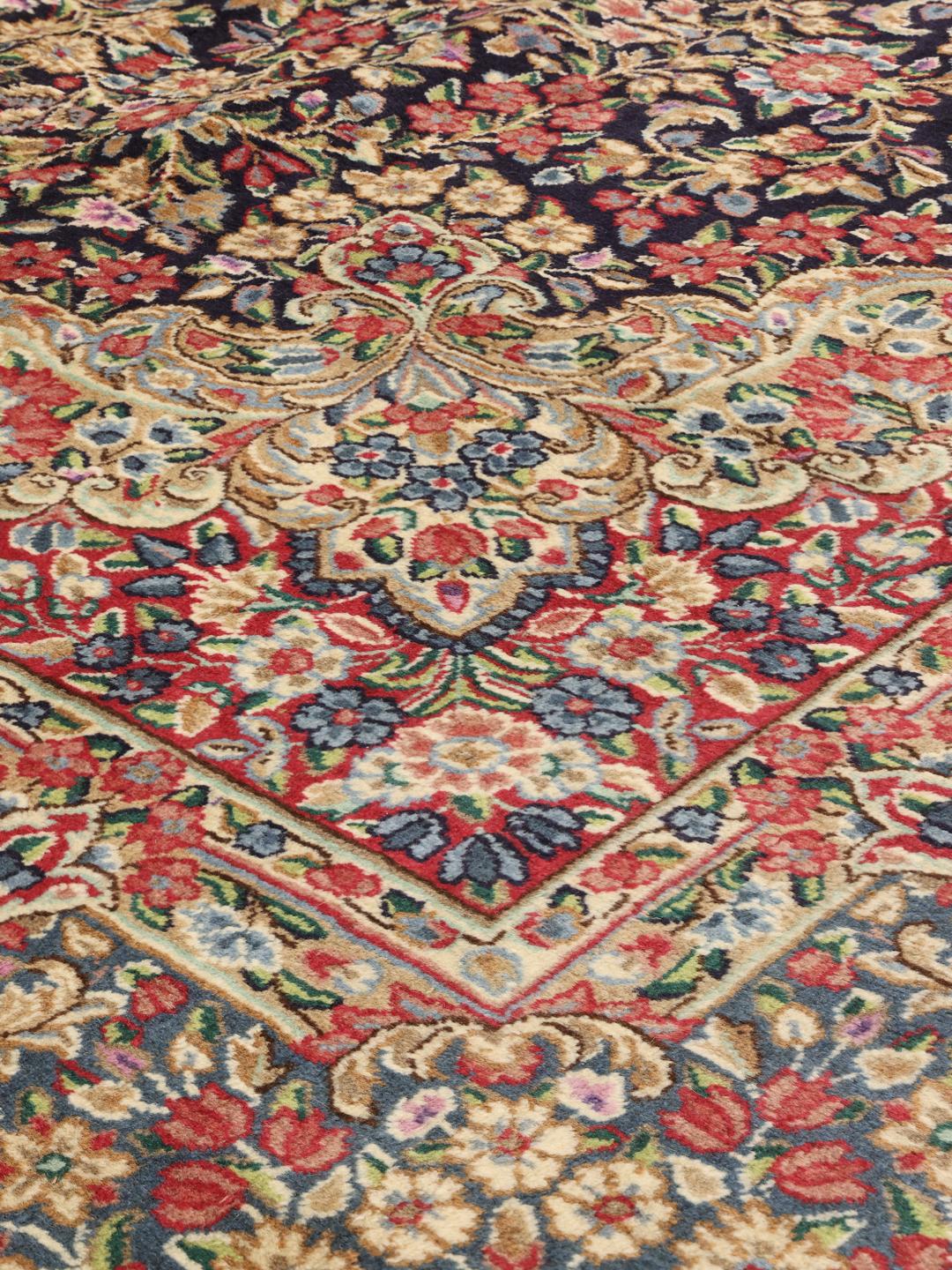
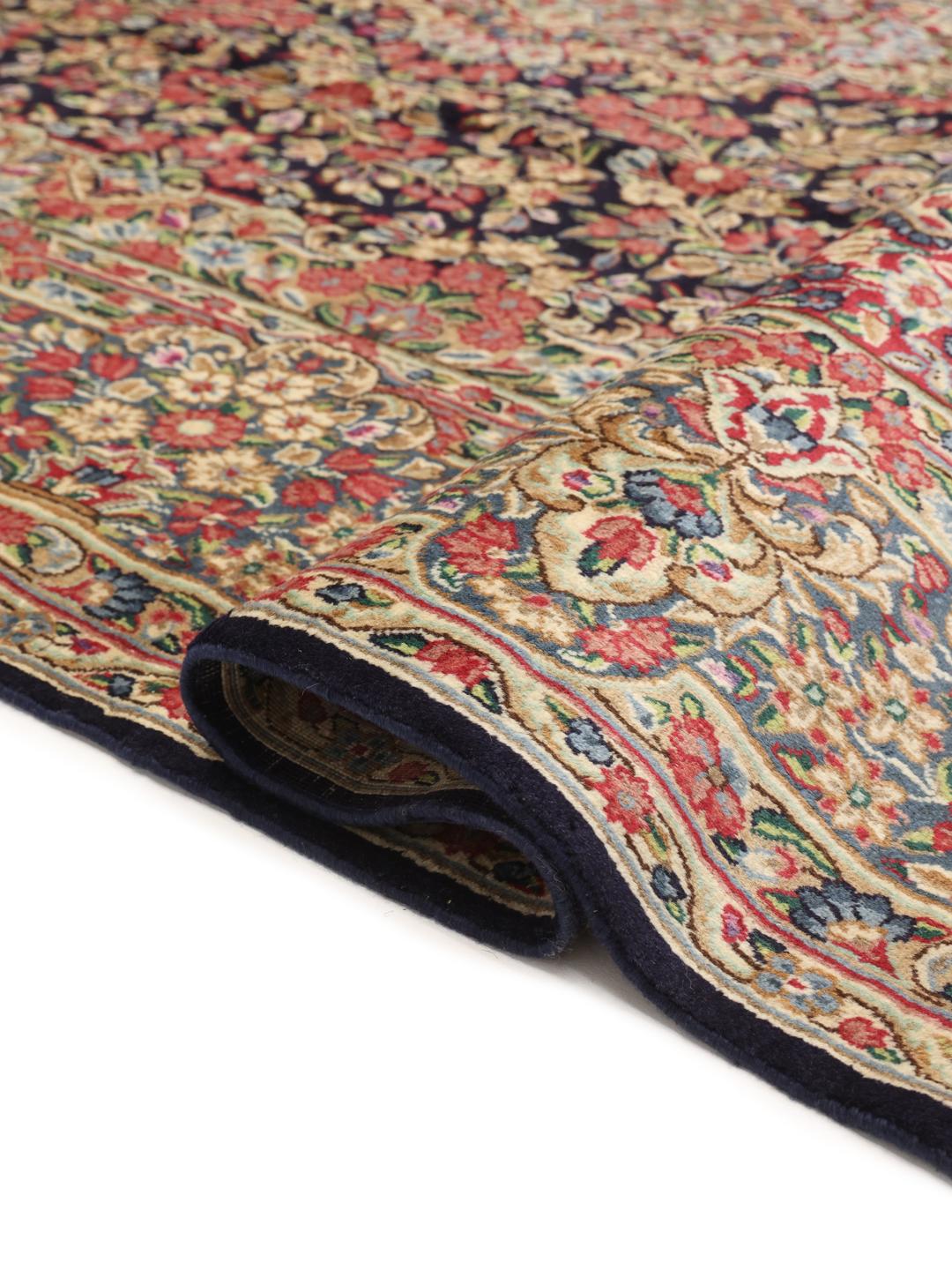
The term hand-knotted refers to the laborious method where each thread of the pile is individually tied to the foundation of the rug. This is the gold standard of rug making, as it creates a product that is significantly more durable, dense, and vibrant than machine-made alternatives. The quality of the foundation—the warp and weft—is crucial, as it provides the backbone that holds these thousands of knots in place for a lifetime.
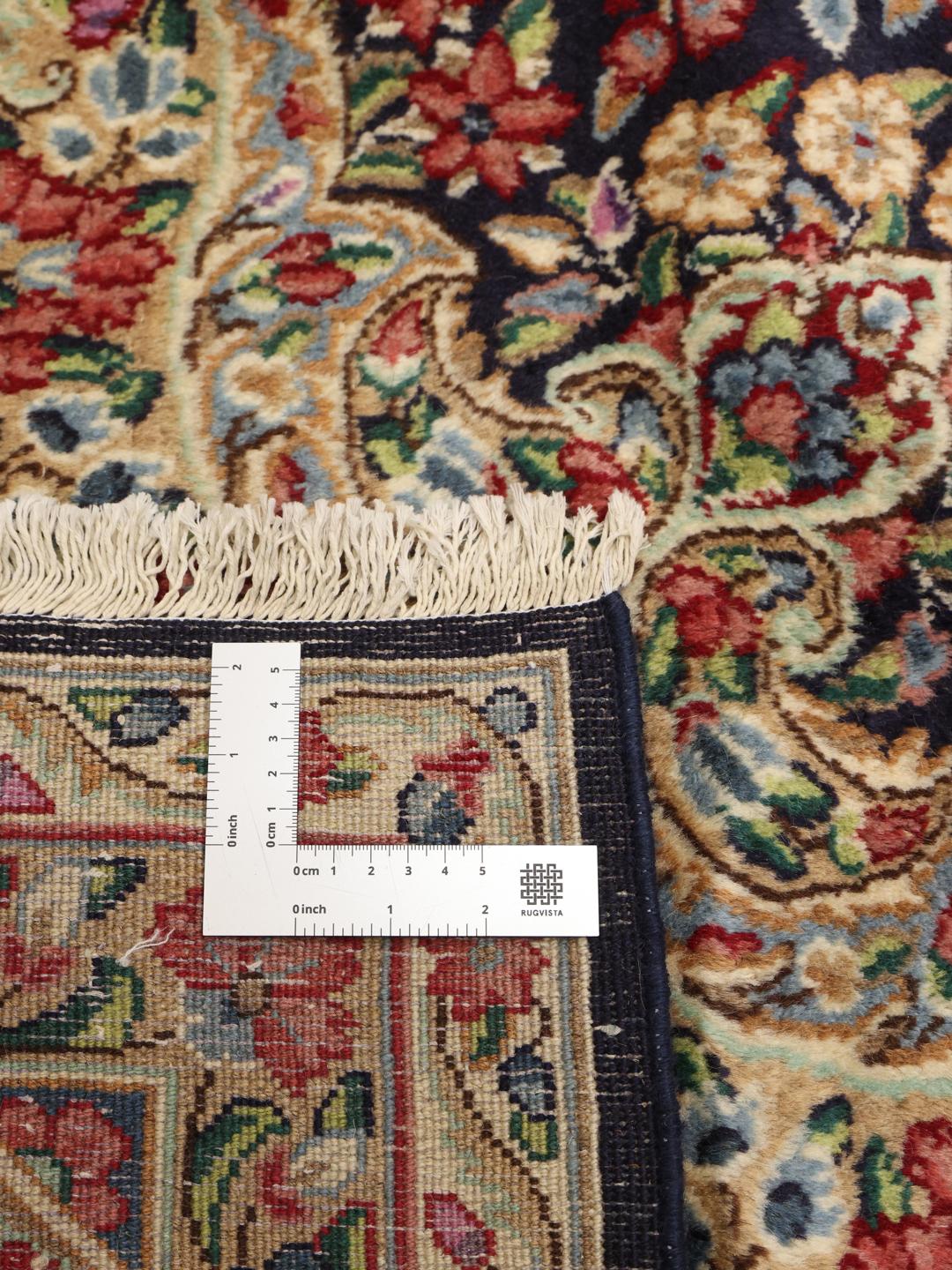
Visually, Kerman rugs are famous for their lush floral arrangements, often featuring central medallions surrounded by intricate vines, palmettes, and blossoms. While many regions focus on tribal or repetitive geometric motifs, the Kerman tradition leans toward a more painterly, artistic style. This particular rug showcases this legacy with its ornate border and detailed field, demonstrating the characteristic elegance that has made these rugs prized by collectors worldwide.
Owning a piece from this tradition is a commitment to heritage and craft. These rugs are not mere decor; they are historical narratives woven in wool. Their value lies in the combination of rarity, the immense time required for their production, and the cultural weight they carry. By choosing a Kerman rug, you are participating in a long-standing tradition of beauty and excellence that continues to inspire homes around the globe.