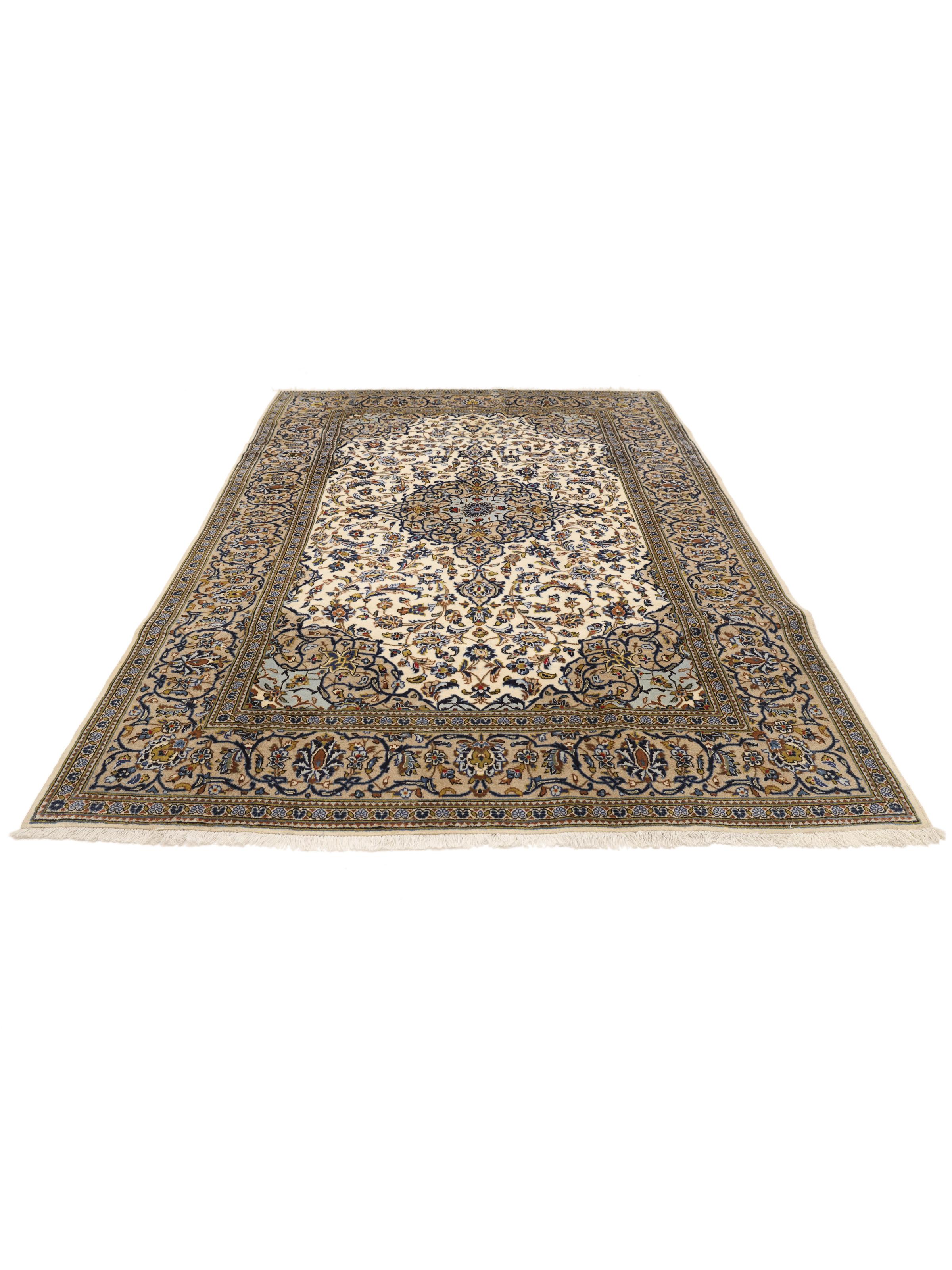
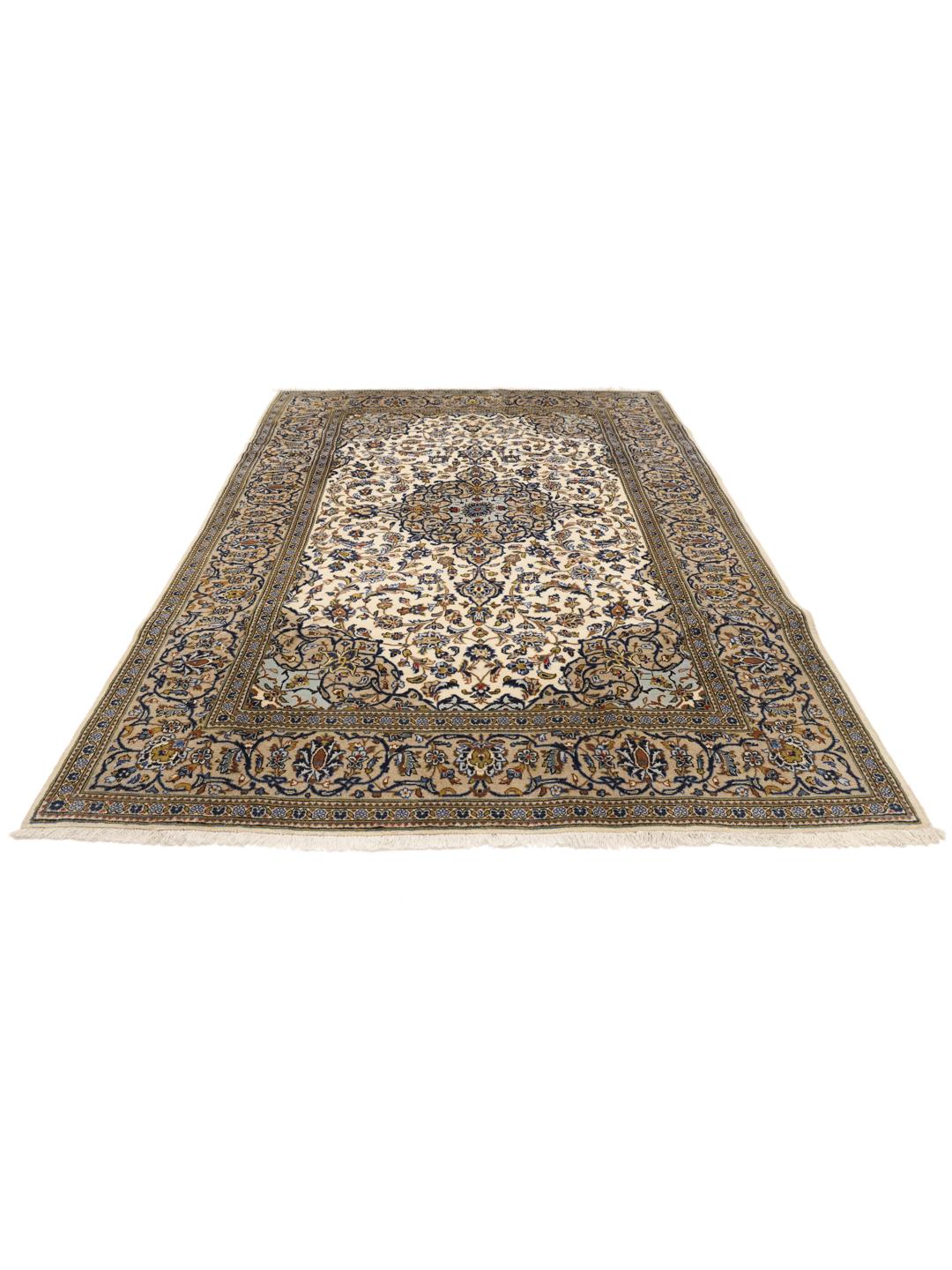
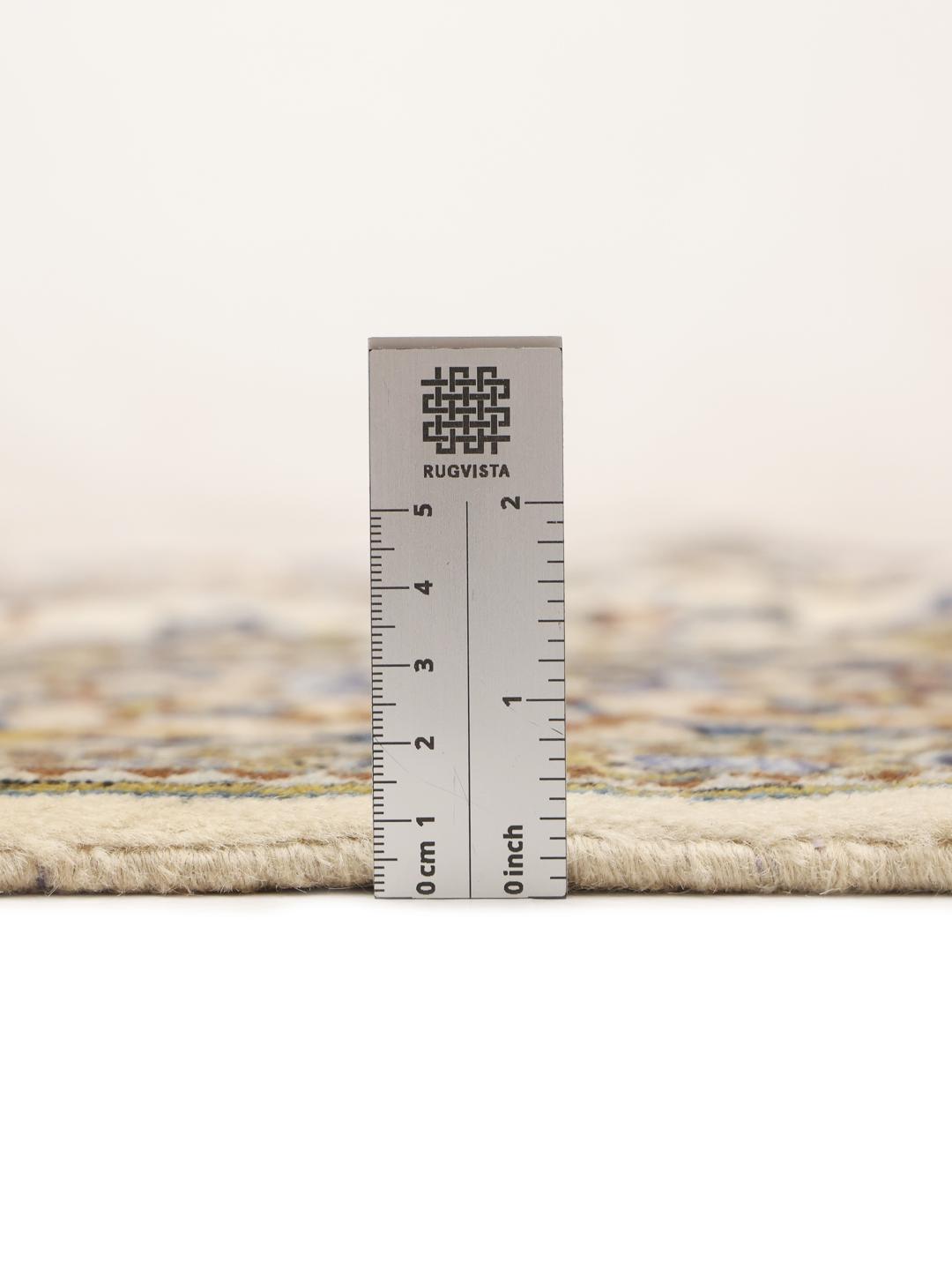
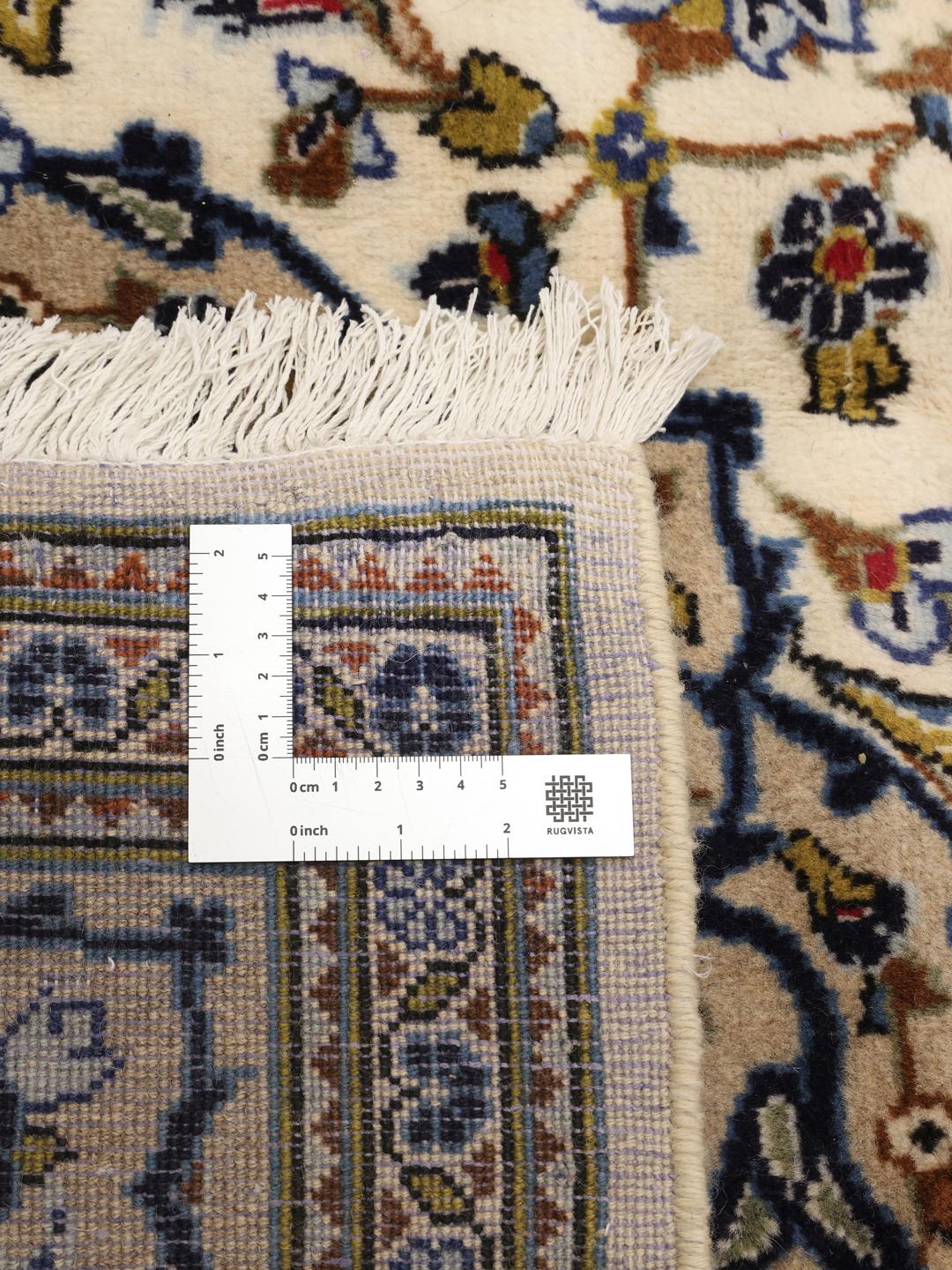
Keshan rugs originate from the historic city of Kashan in the Middle East, a region long celebrated as a vital centre for textile production. Historically, these rugs were favoured by royalty and the elite, prized for their exceptional quality and the sophistication of their designs. The tradition has evolved over centuries, blending local artistic sensibilities with the demands of an international appreciation for fine craftsmanship.
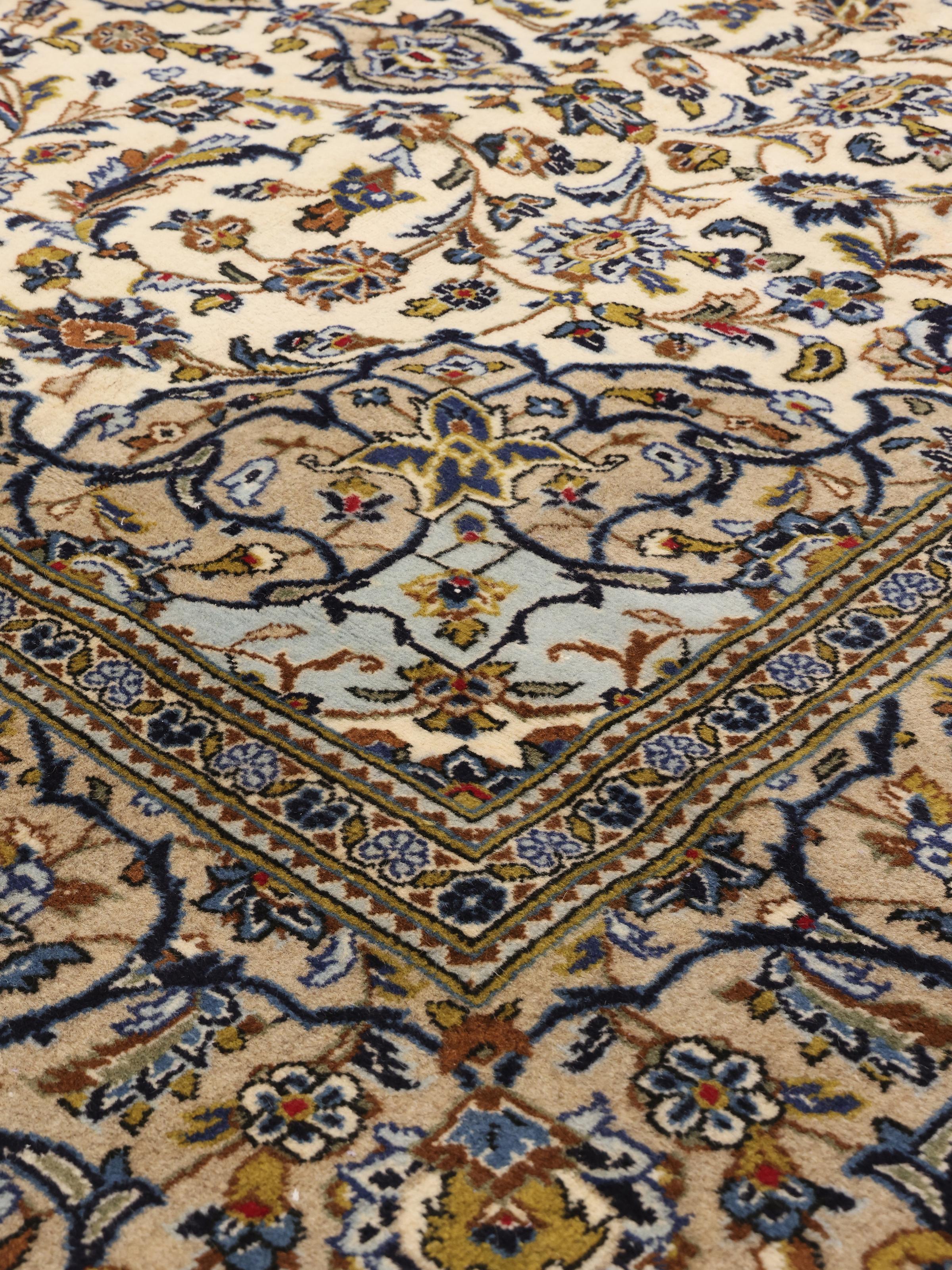
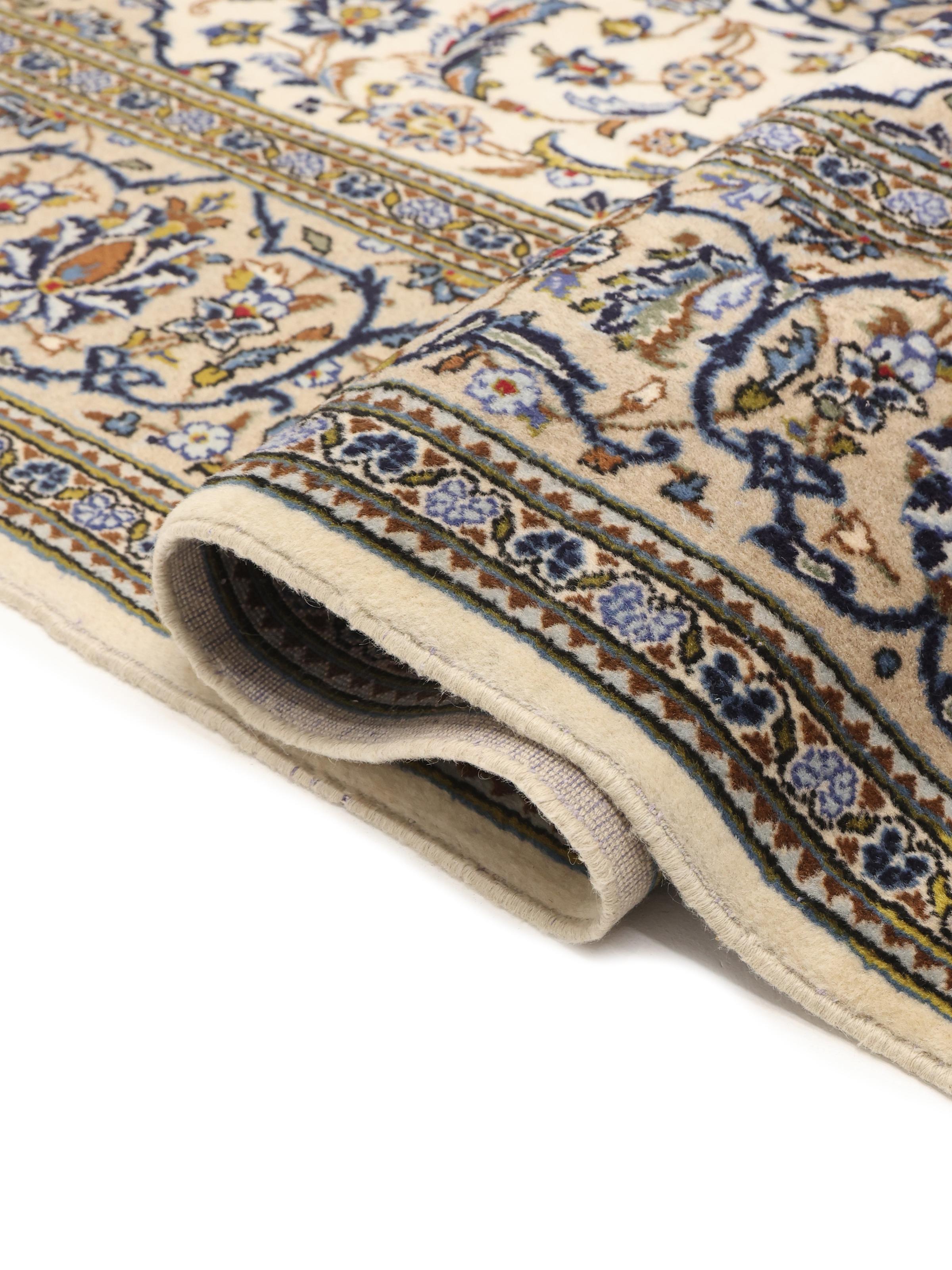
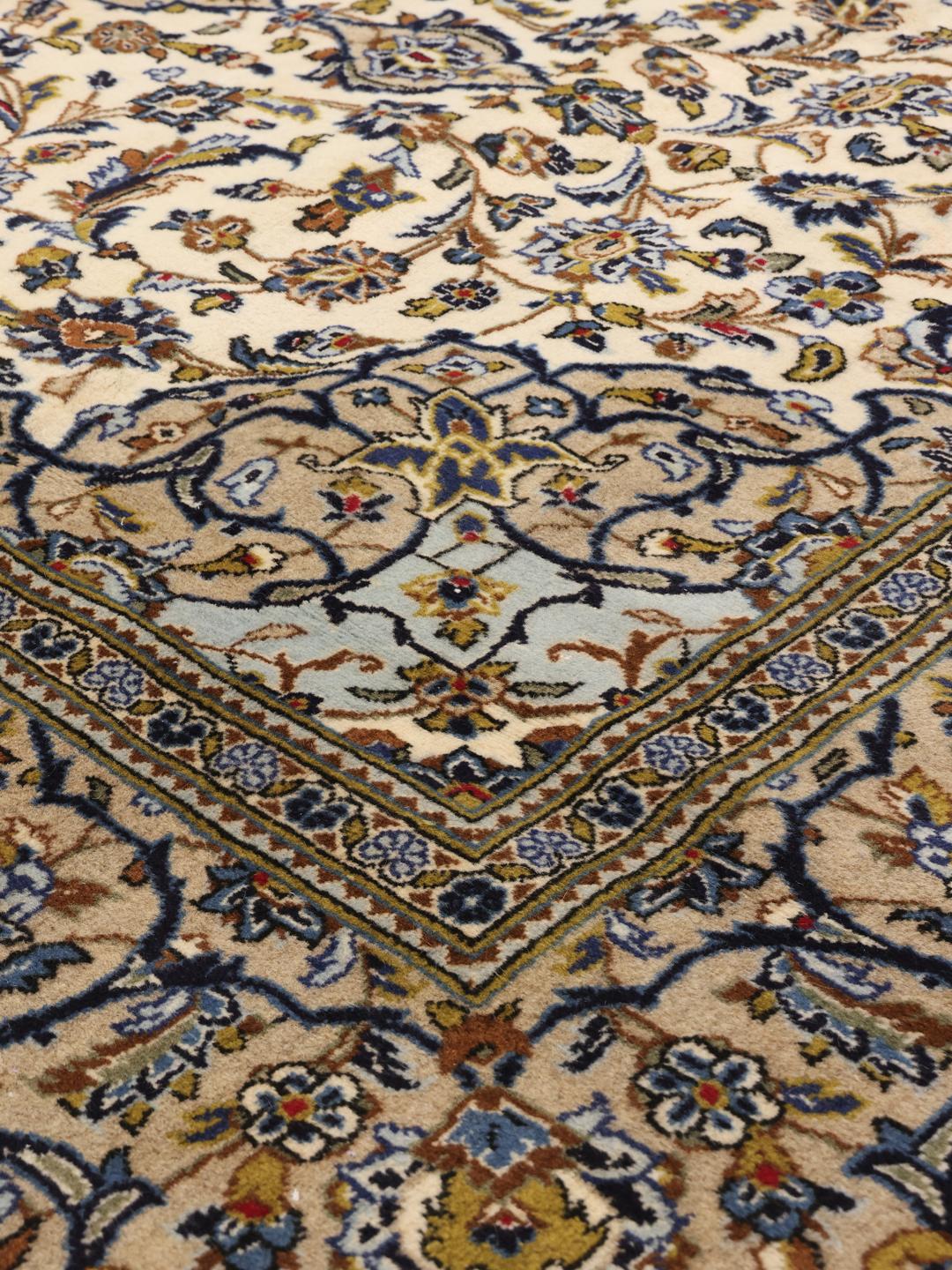
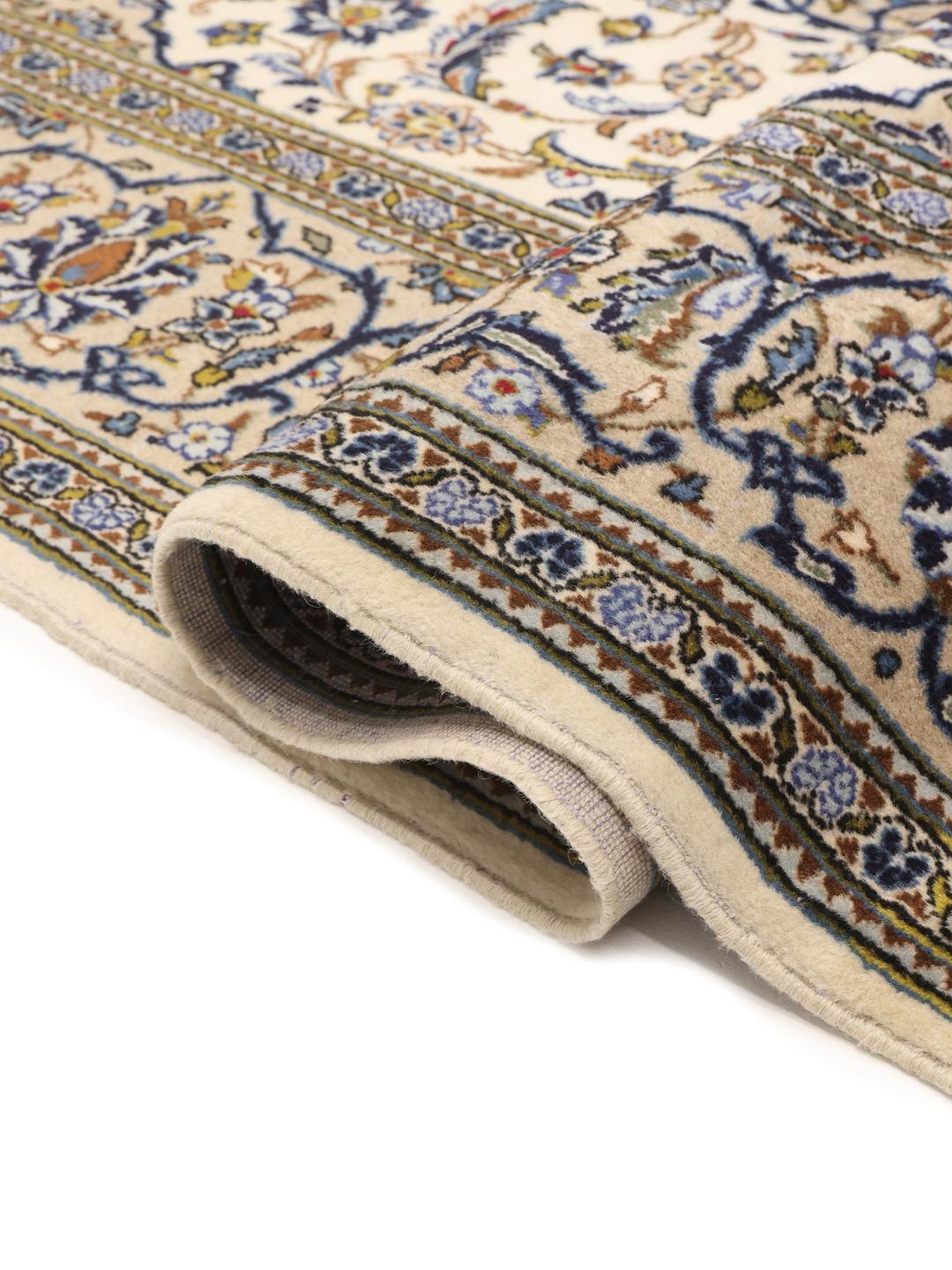
The term Keshan refers to both the geographical origin and the specific design language associated with this tradition. These rugs are known for their complex construction, often featuring a cotton foundation that provides a stable base for the intricate wool pile. This combination of materials is deliberate, chosen to ensure that the rug maintains its shape and structural integrity over decades of use.
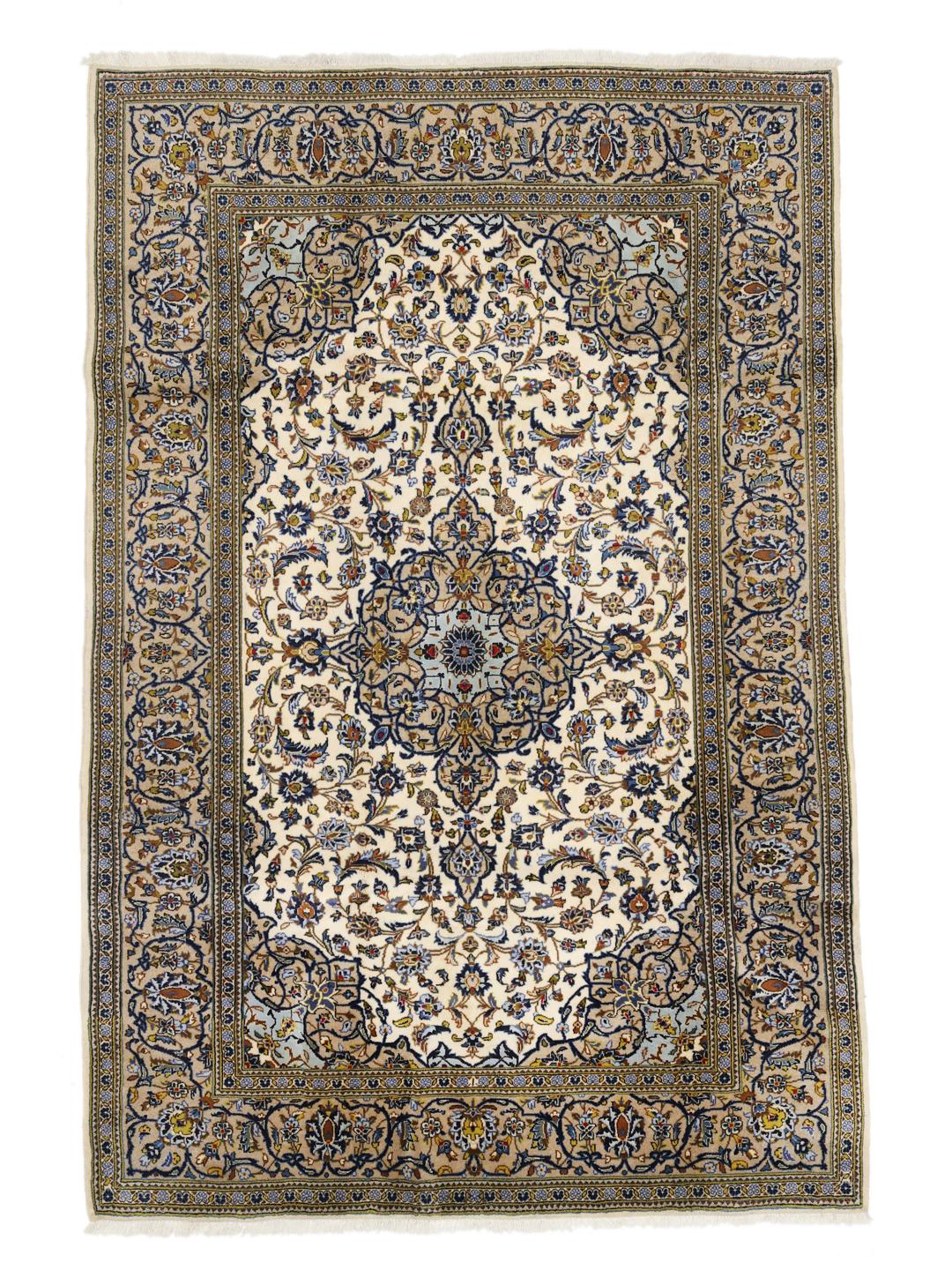
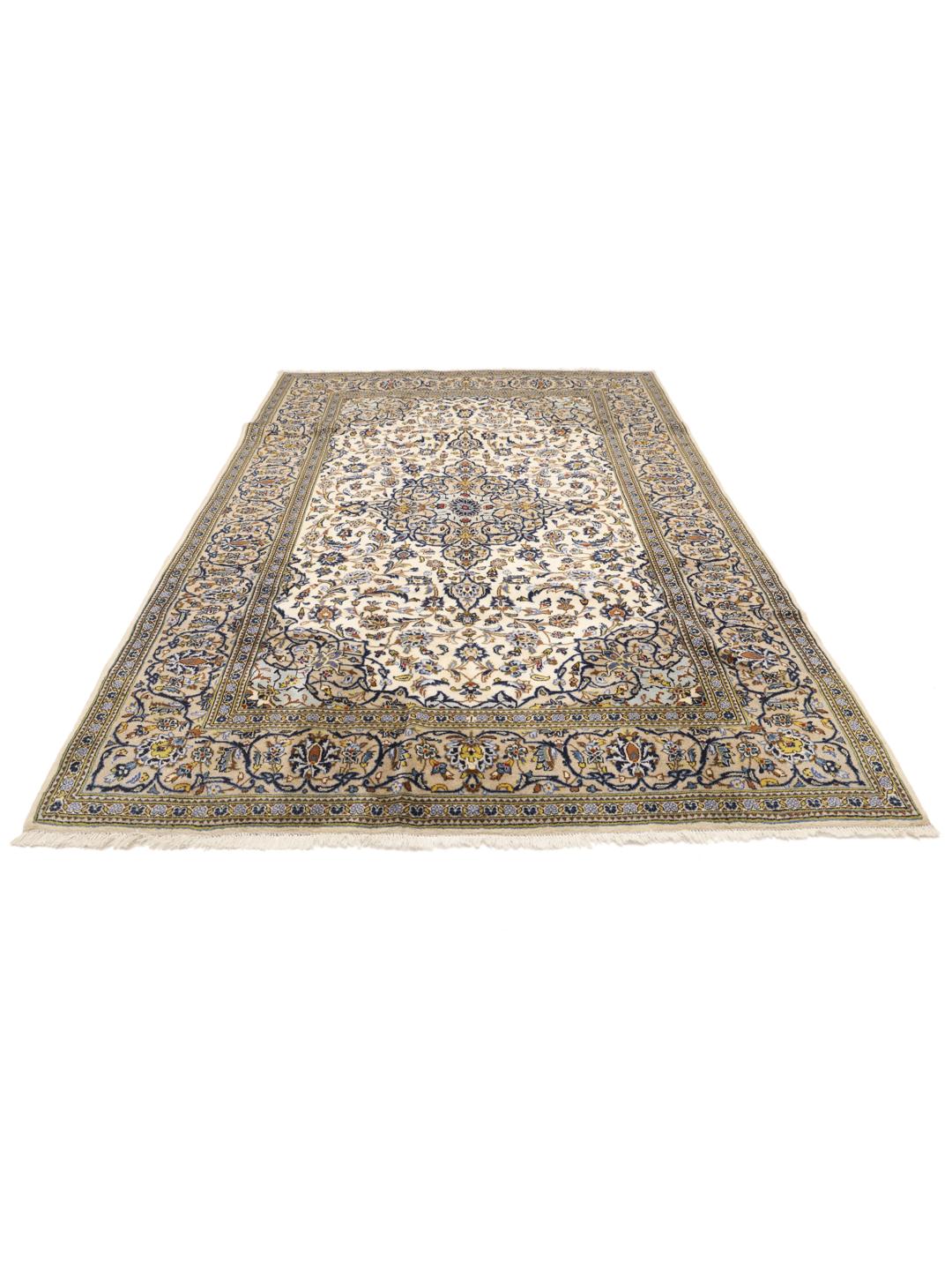
Visually, Keshan rugs are defined by their elegant floral patterns and often feature a prominent central medallion surrounded by dense, scrolling vines and palmettes. The borders are typically wide and highly detailed, serving to frame the central field. While traditional palettes often lean towards deep reds and blues, many variations exist, including the sophisticated beige and blue tones seen here, which offer a slightly lighter, more contemporary feel.
Collectors value these rugs not only for their aesthetic beauty but for the immense human skill they represent. Owning a piece from this tradition is an investment in cultural heritage, as it carries the weight of generations of weaving knowledge. Each rug is a testament to a craft that prioritises patience and precision, making them highly sought-after additions to any considered collection.