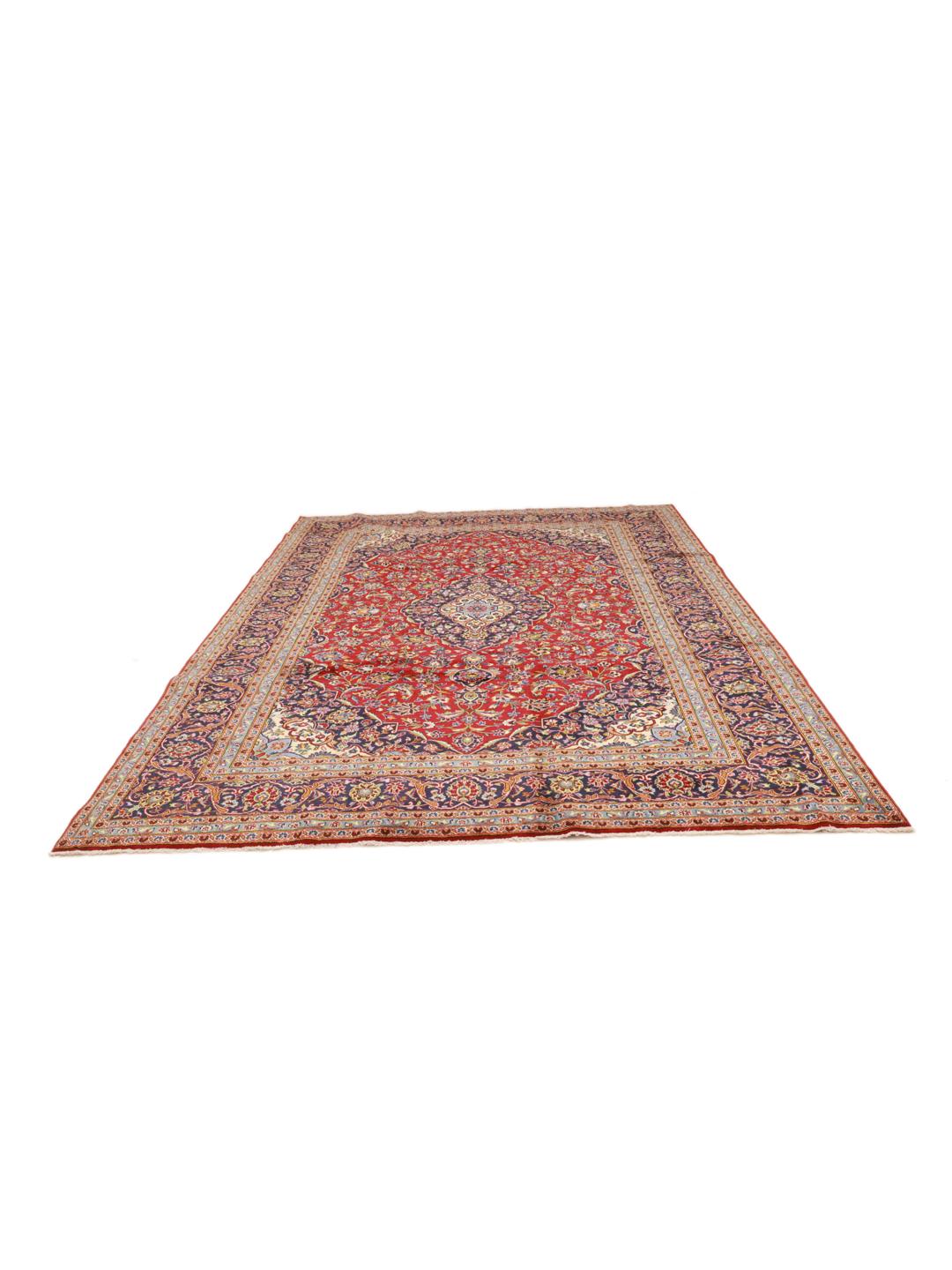
Keshan rugs originate from the historic city of Kashan, located in the heart of the Middle East. This city has long been a centre for textile production, with a history of weaving that dates back centuries. The tradition of weaving in this region is deeply intertwined with the cultural and artistic development of the area, drawing inspiration from classical gardens and royal courts to create sophisticated, harmonious designs.
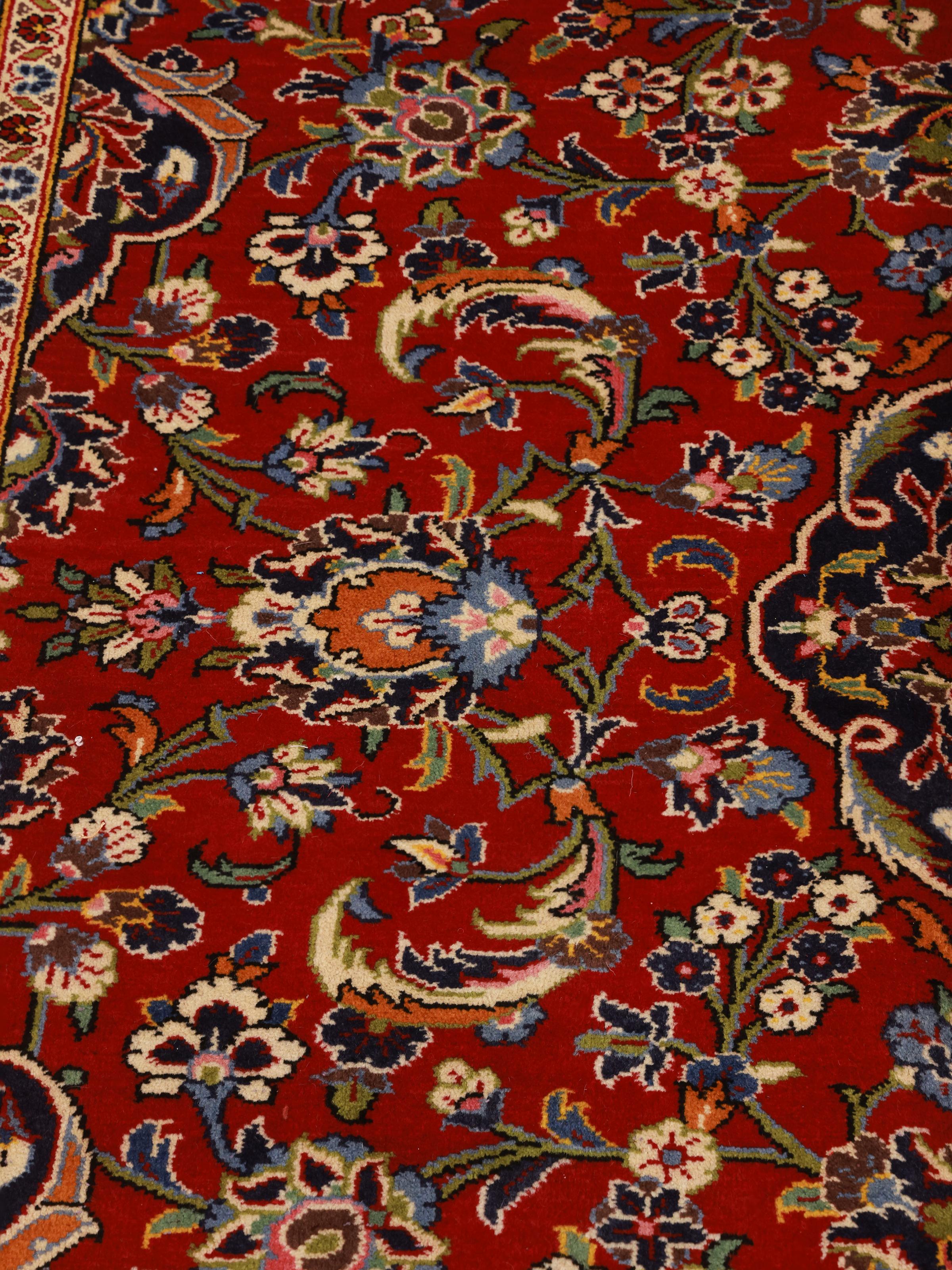
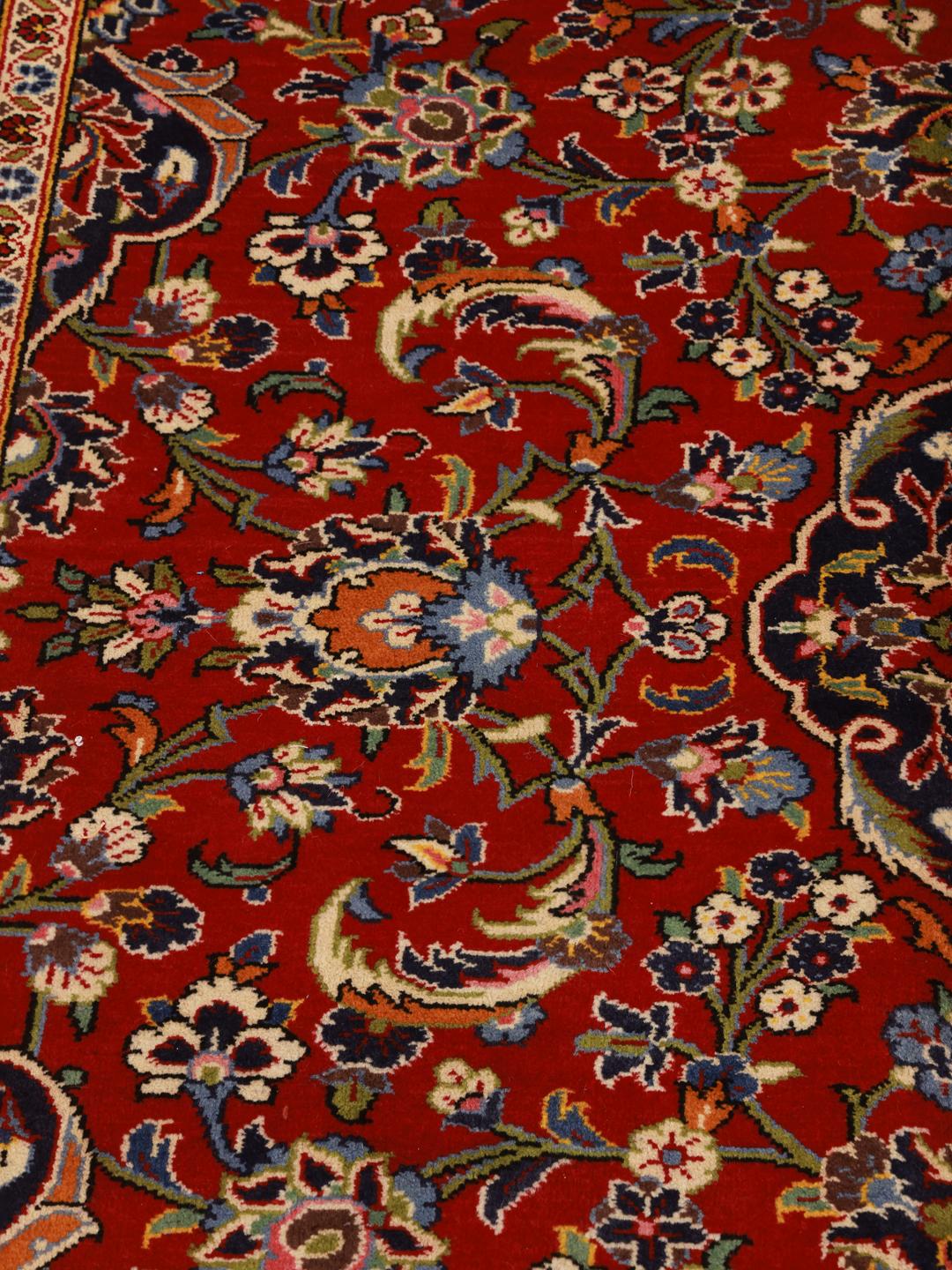
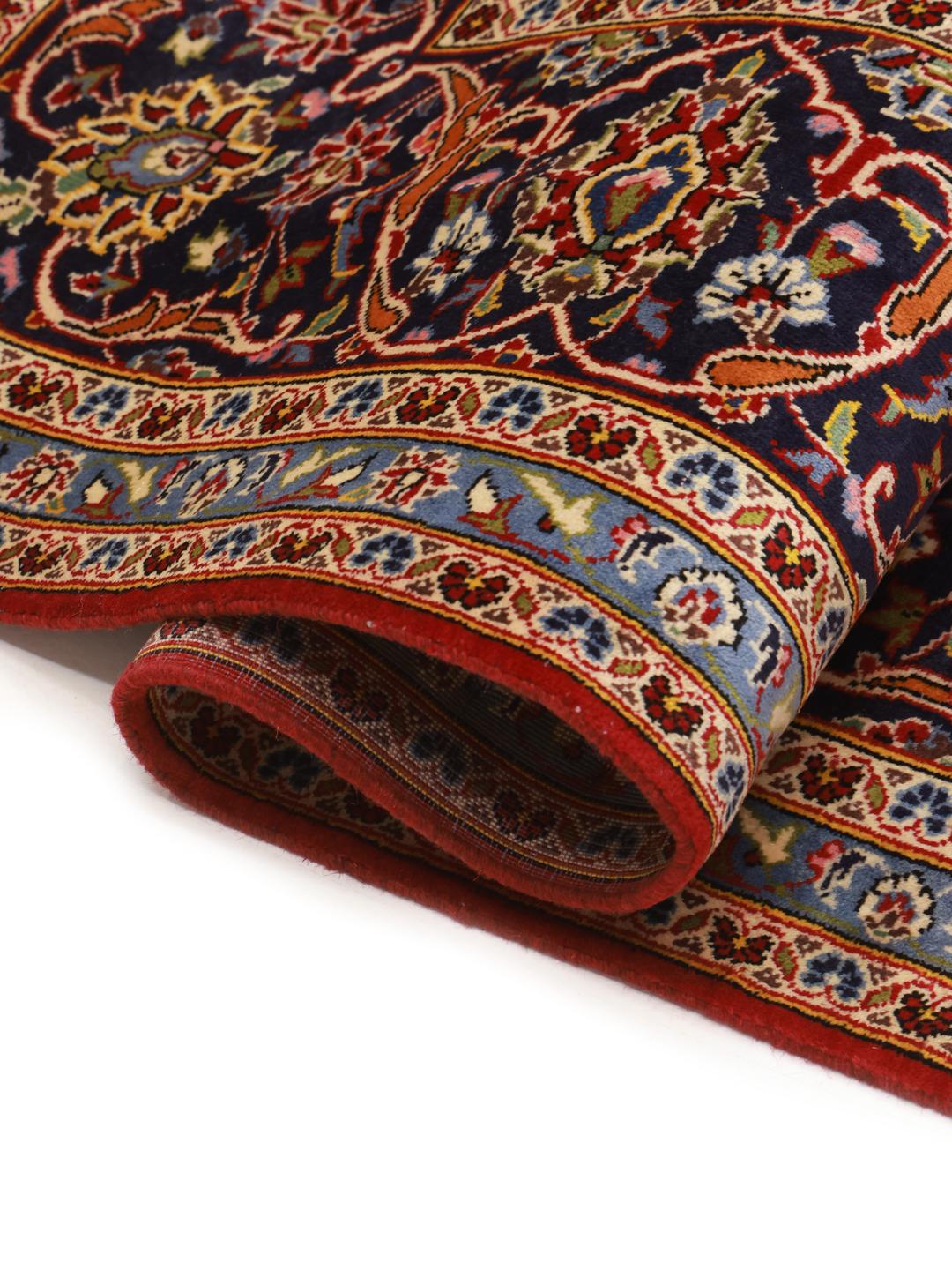
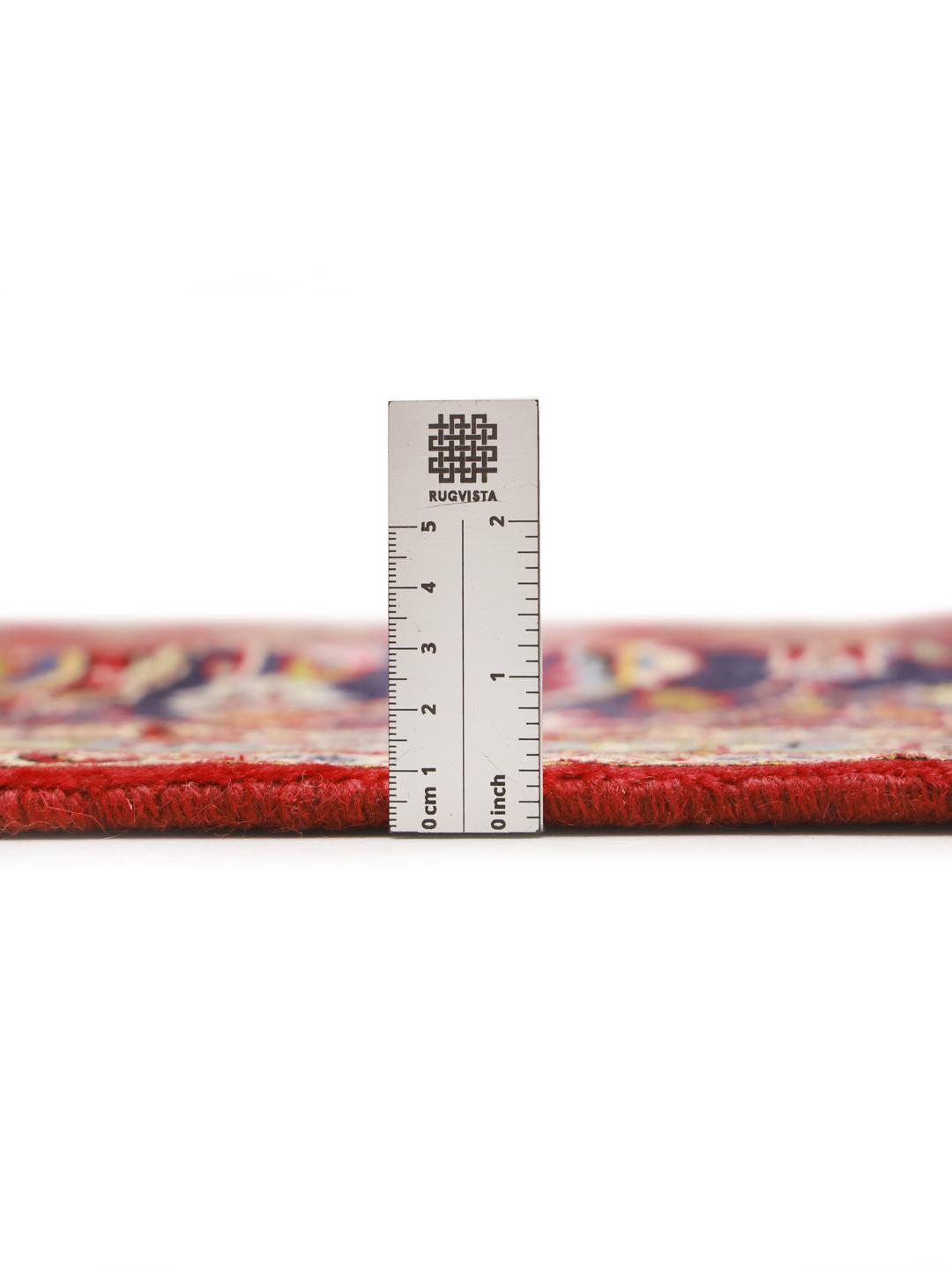
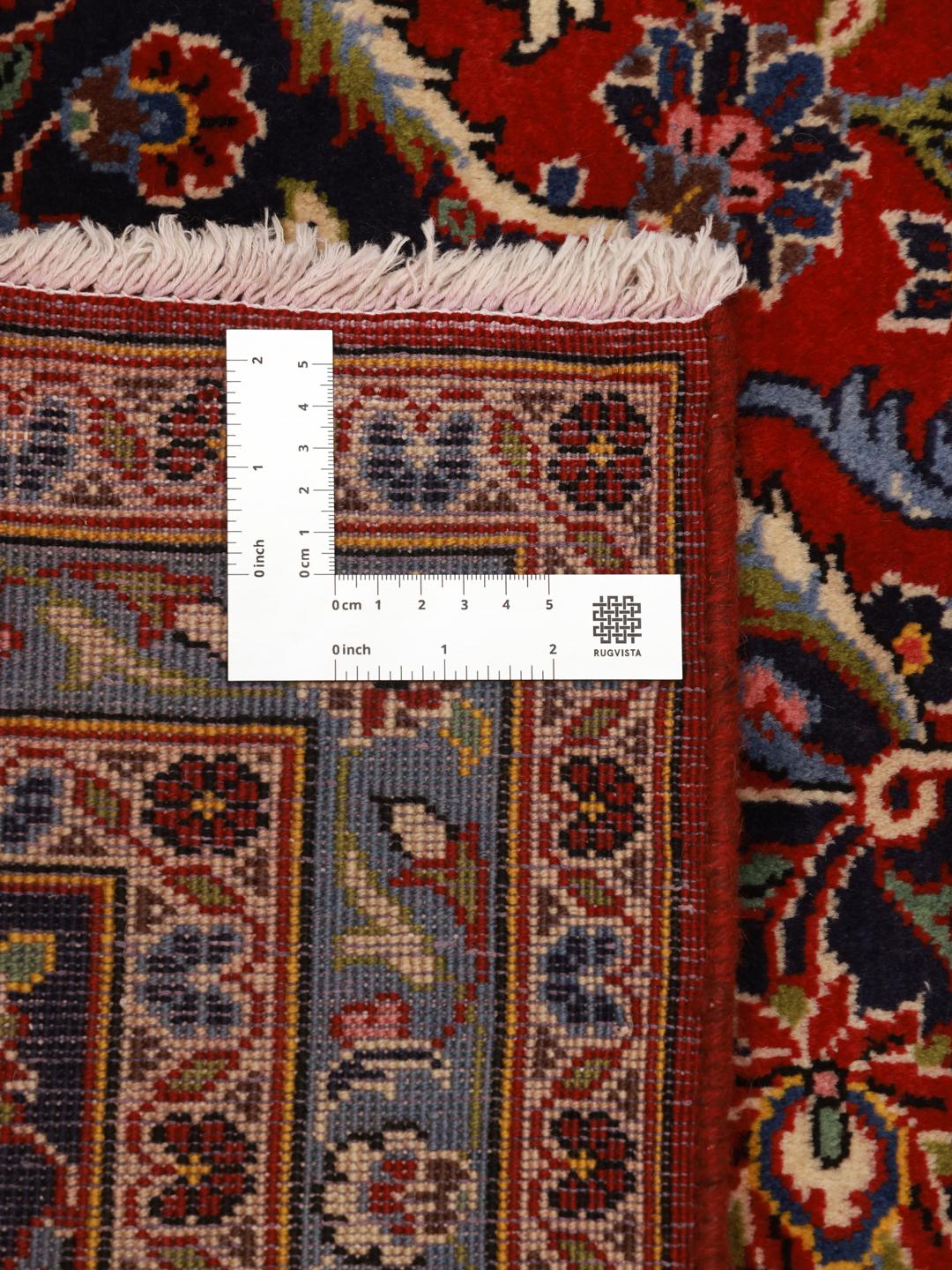
The term Keshan refers to a specific style of weaving that emphasises precision and balance. The construction typically involves a dense pile, which allows the weavers to achieve the fine, curvilinear patterns that the region is famous for. This density is not just for aesthetic appeal; it provides a durable, lustrous surface that remains resilient over time, showcasing the technical mastery inherent in the tradition.
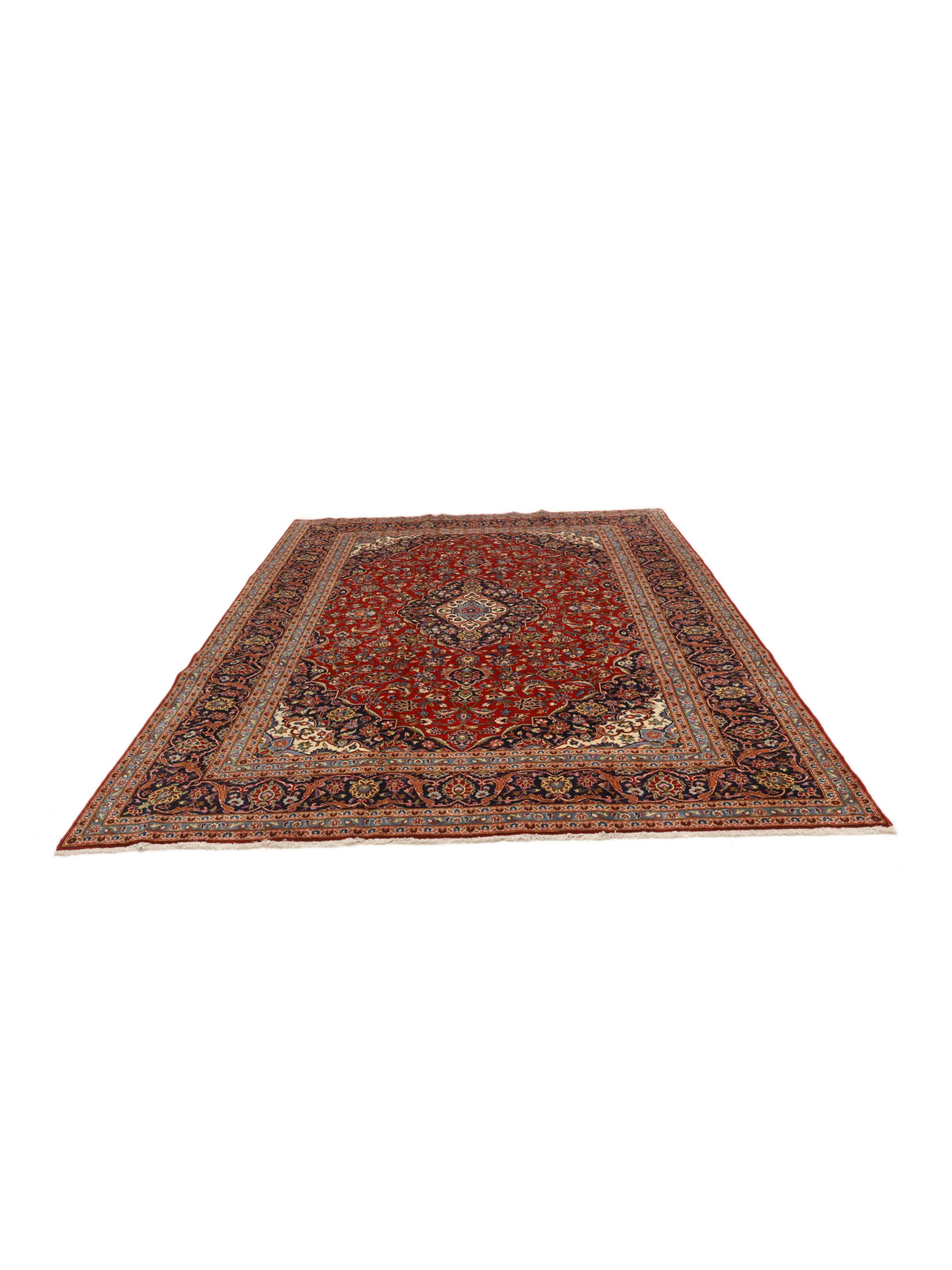
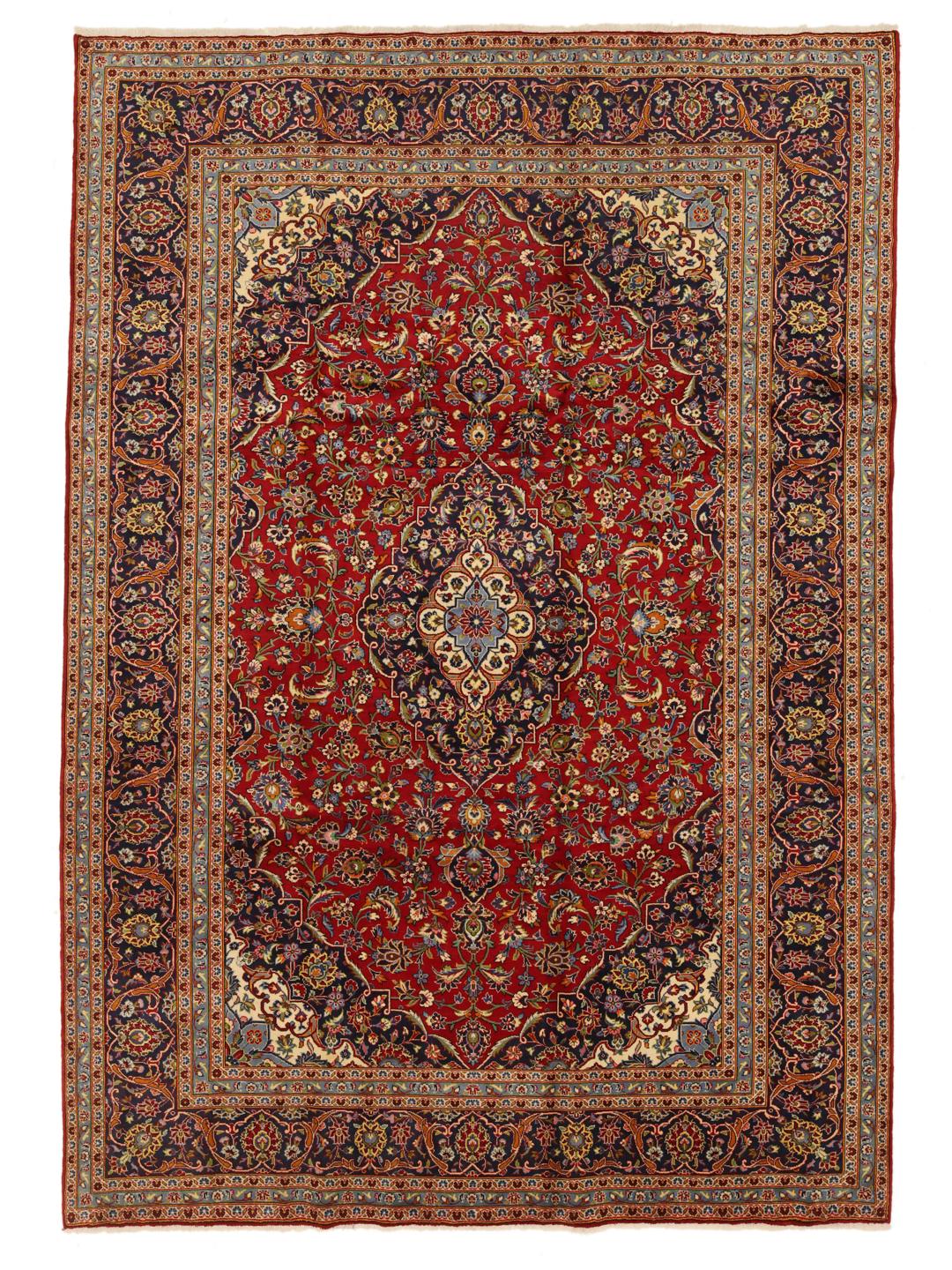
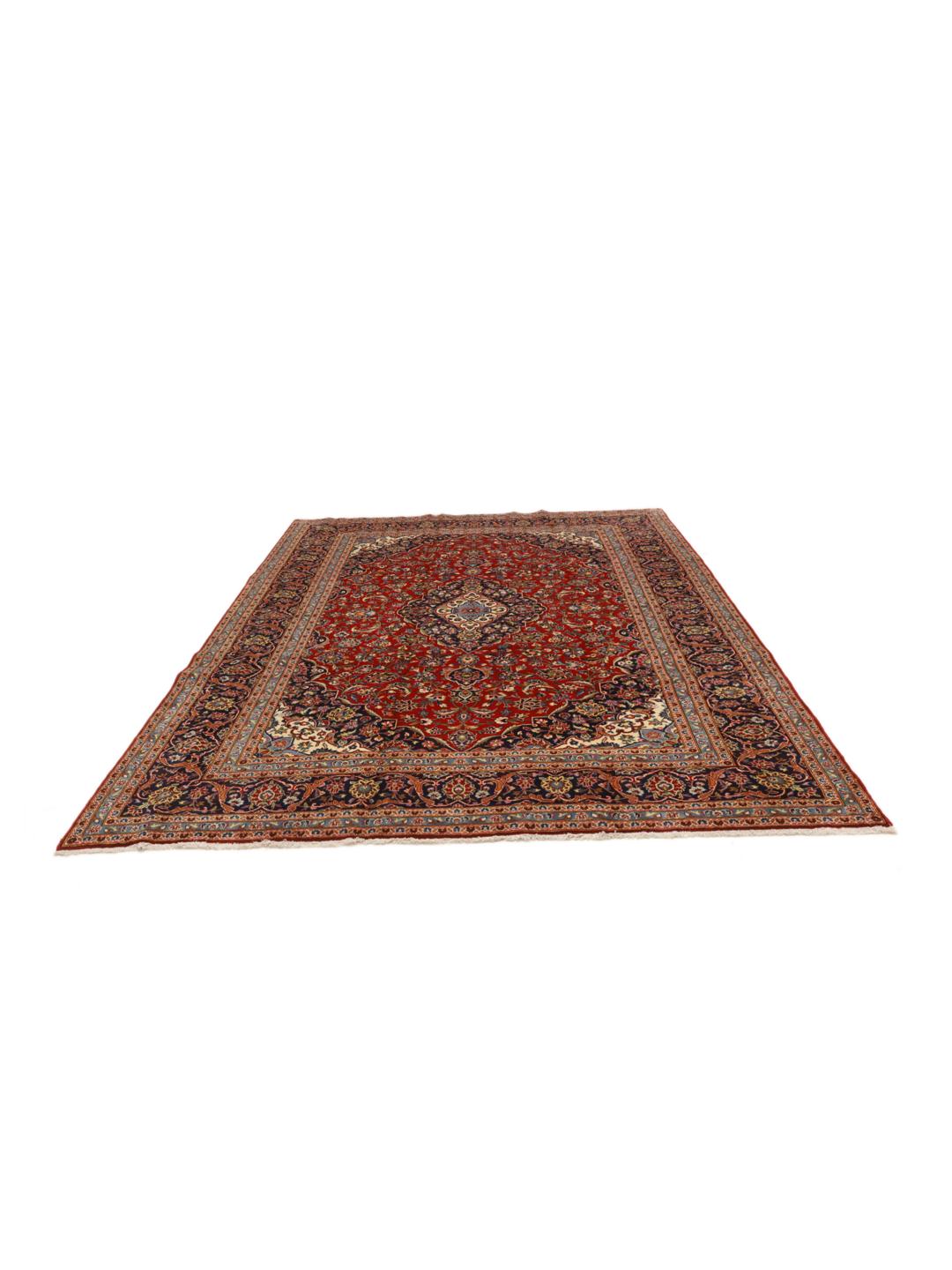
Visually, these rugs are defined by their central medallion and elaborate floral fields, often filled with intricate vine scrolls and palmettos. The borders are typically multi-layered, providing a formal frame for the central design. While deep reds and blues are traditional, the specific colour balance and the way the motifs are arranged in this piece highlight the unique artistic vision of the weaver who crafted it.
Collectors value these pieces not only for their beauty but for the cultural heritage they represent. Owning a hand-knotted rug from this tradition is an investment in a craft that has been passed down through generations. It serves as a bridge between ancient artistic practices and modern living, offering a sense of depth and history that mass-produced items cannot replicate.