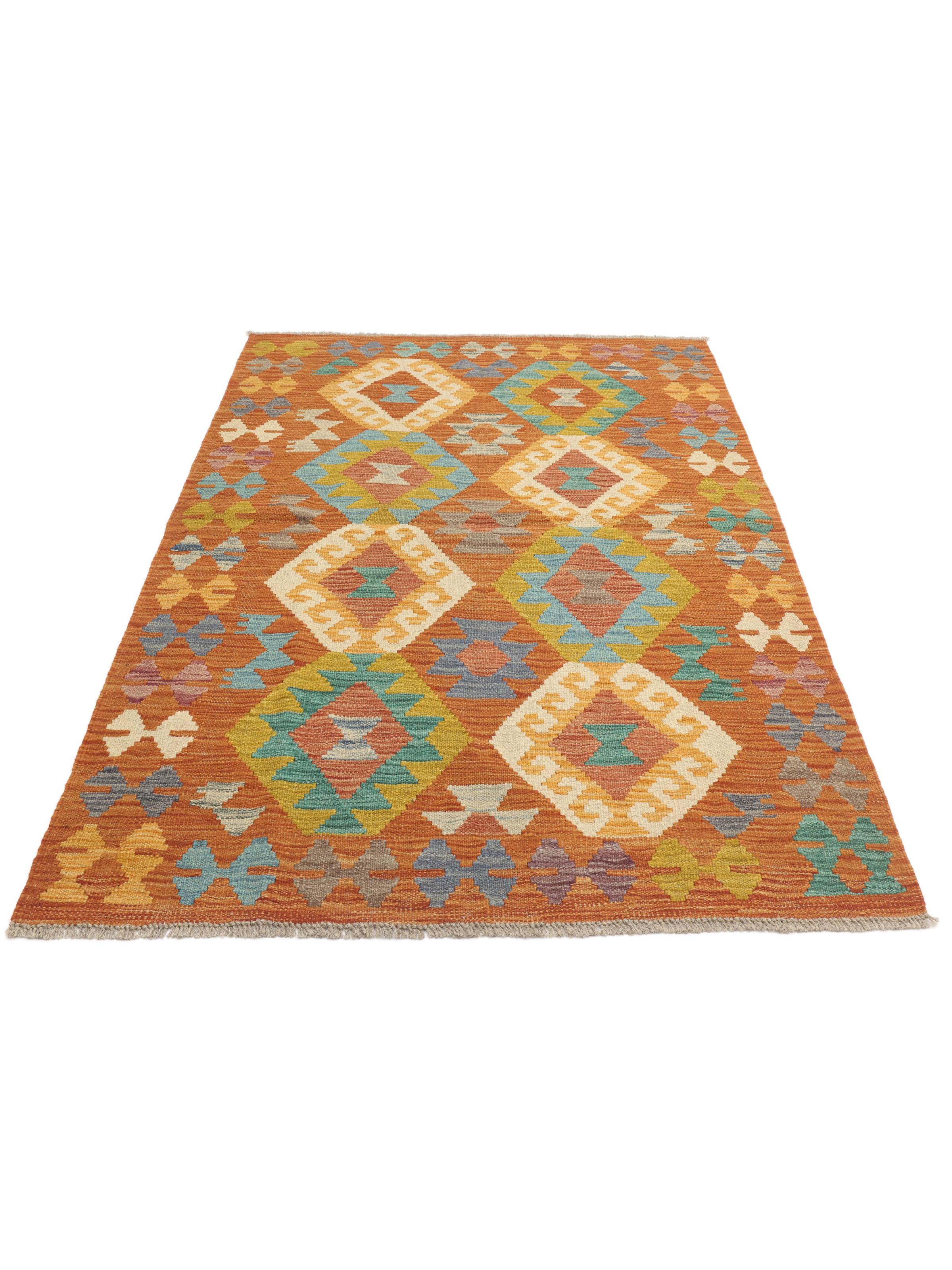
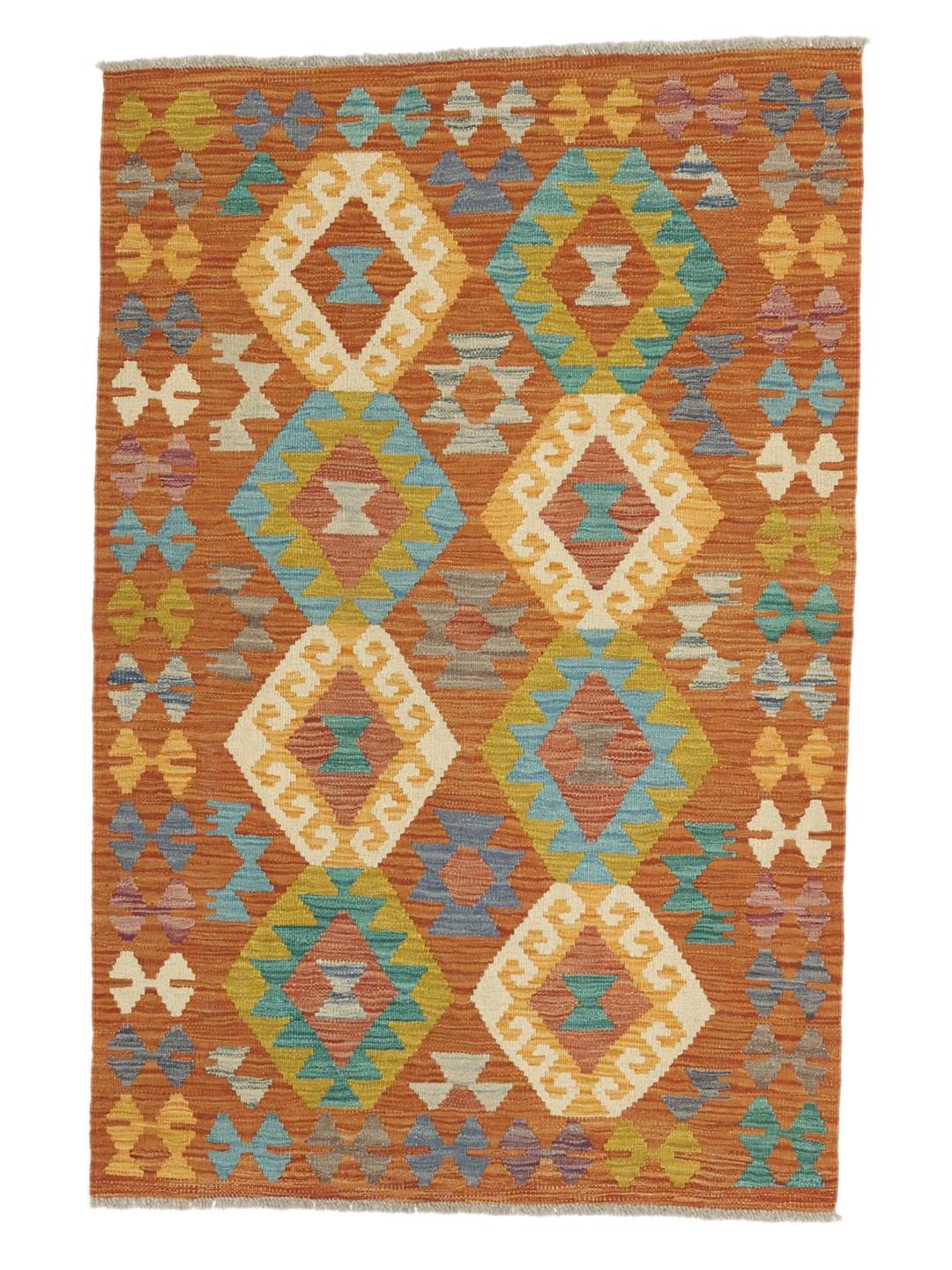
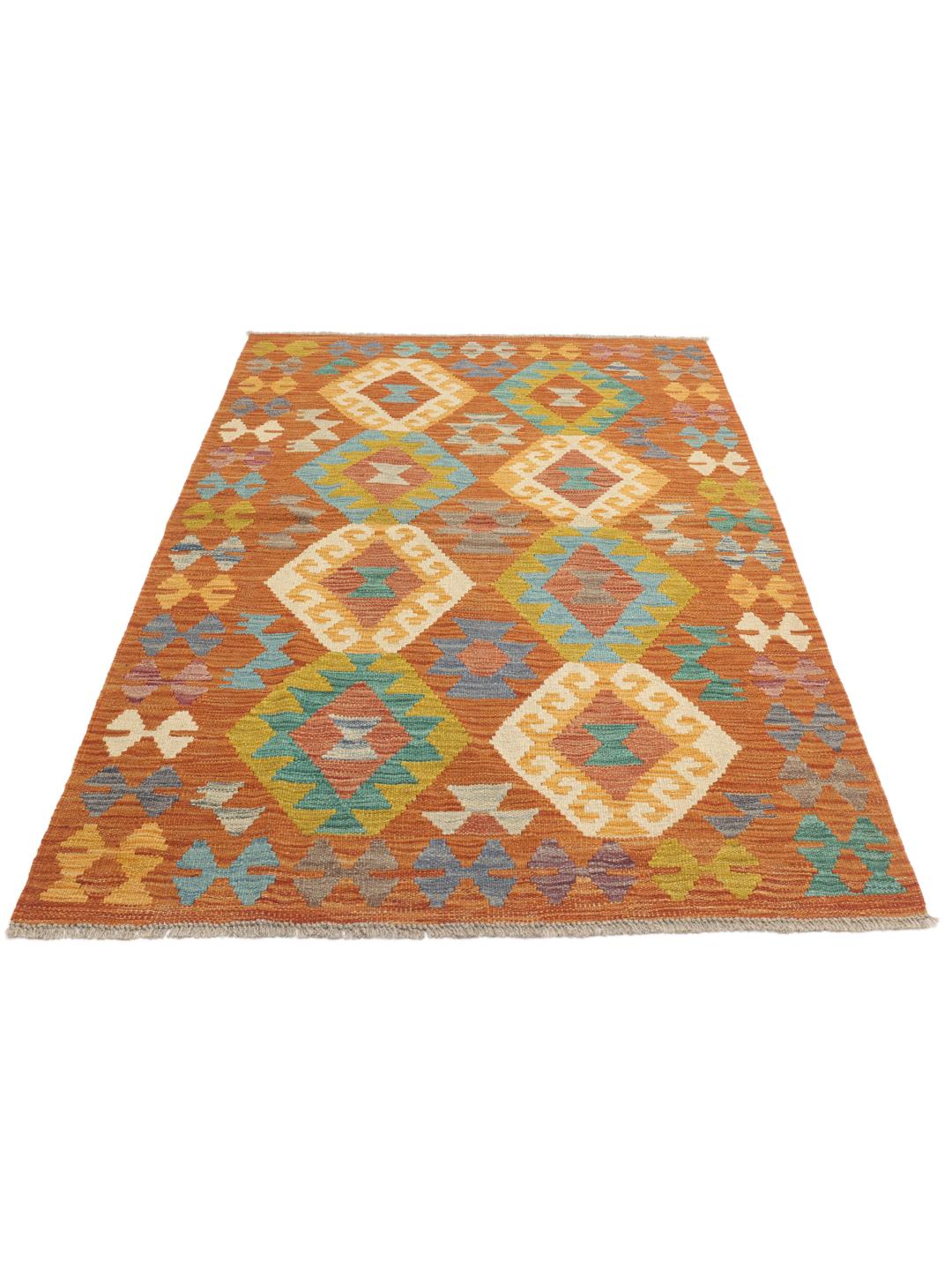
Kelim rugs have a history that stretches back centuries across the Middle East, Central Asia, and beyond. These flat-woven textiles were originally created by nomadic tribes as functional items, serving as floor coverings, blankets, and storage bags during their migrations across vast, rugged landscapes.
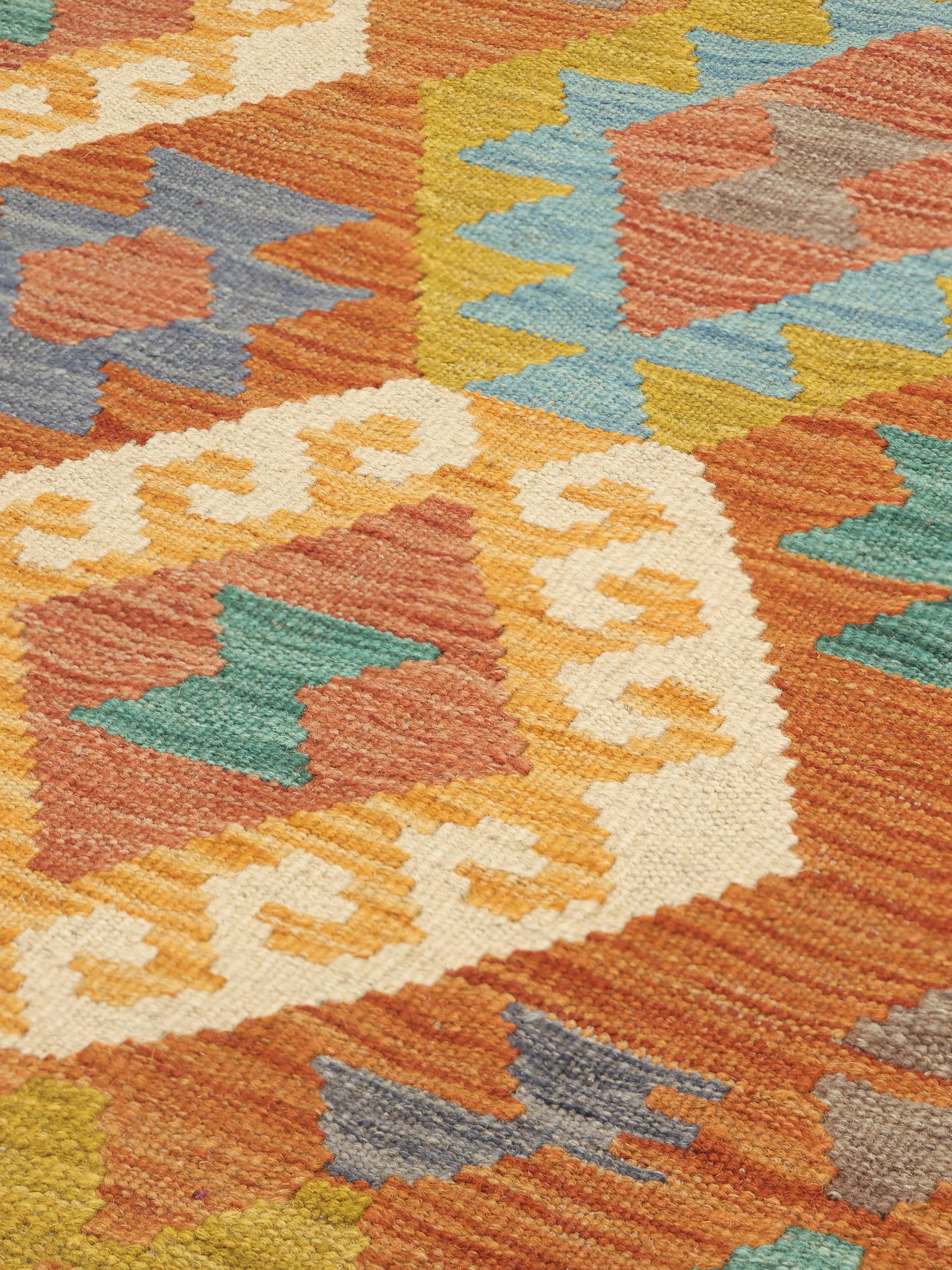
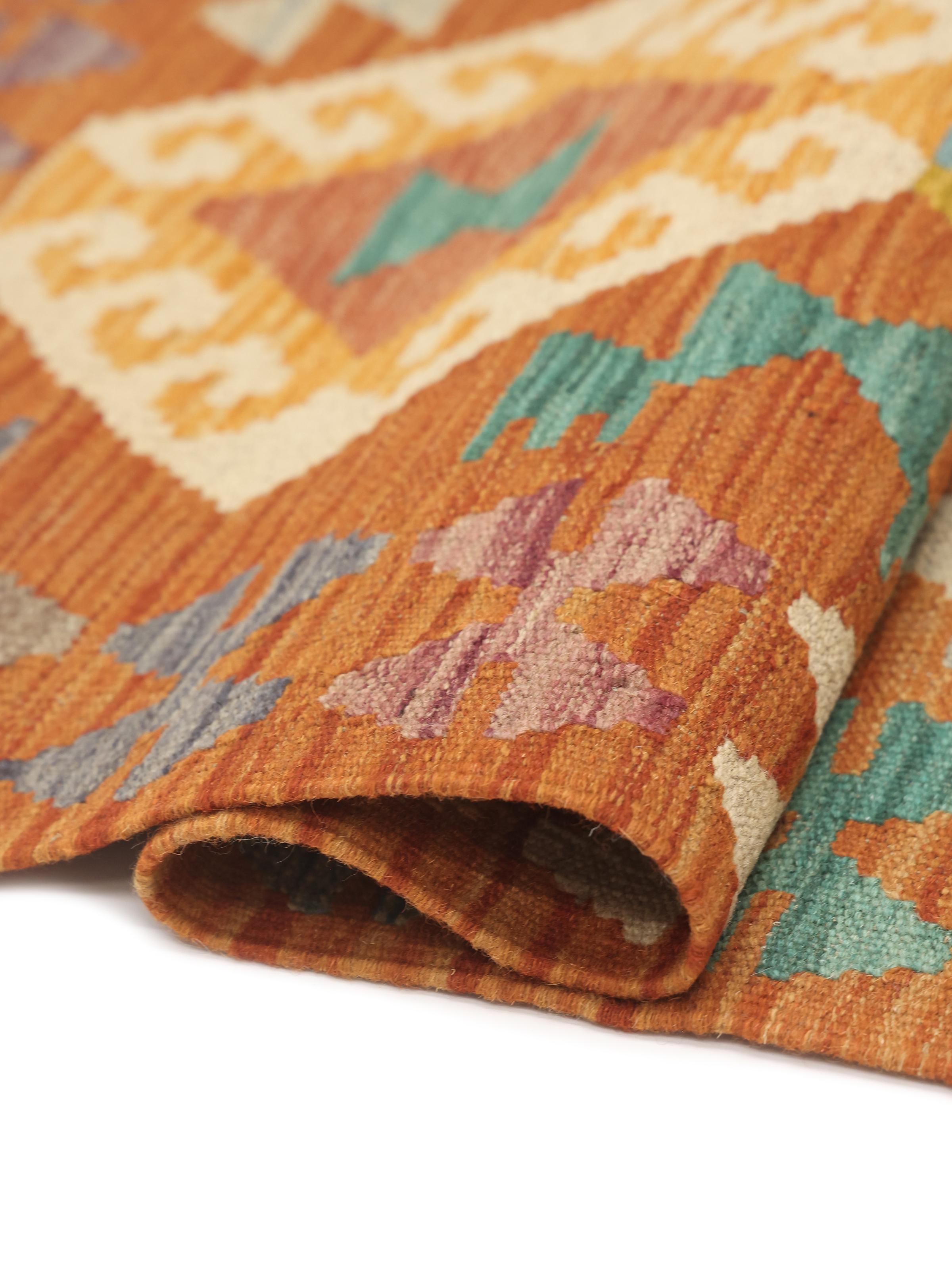
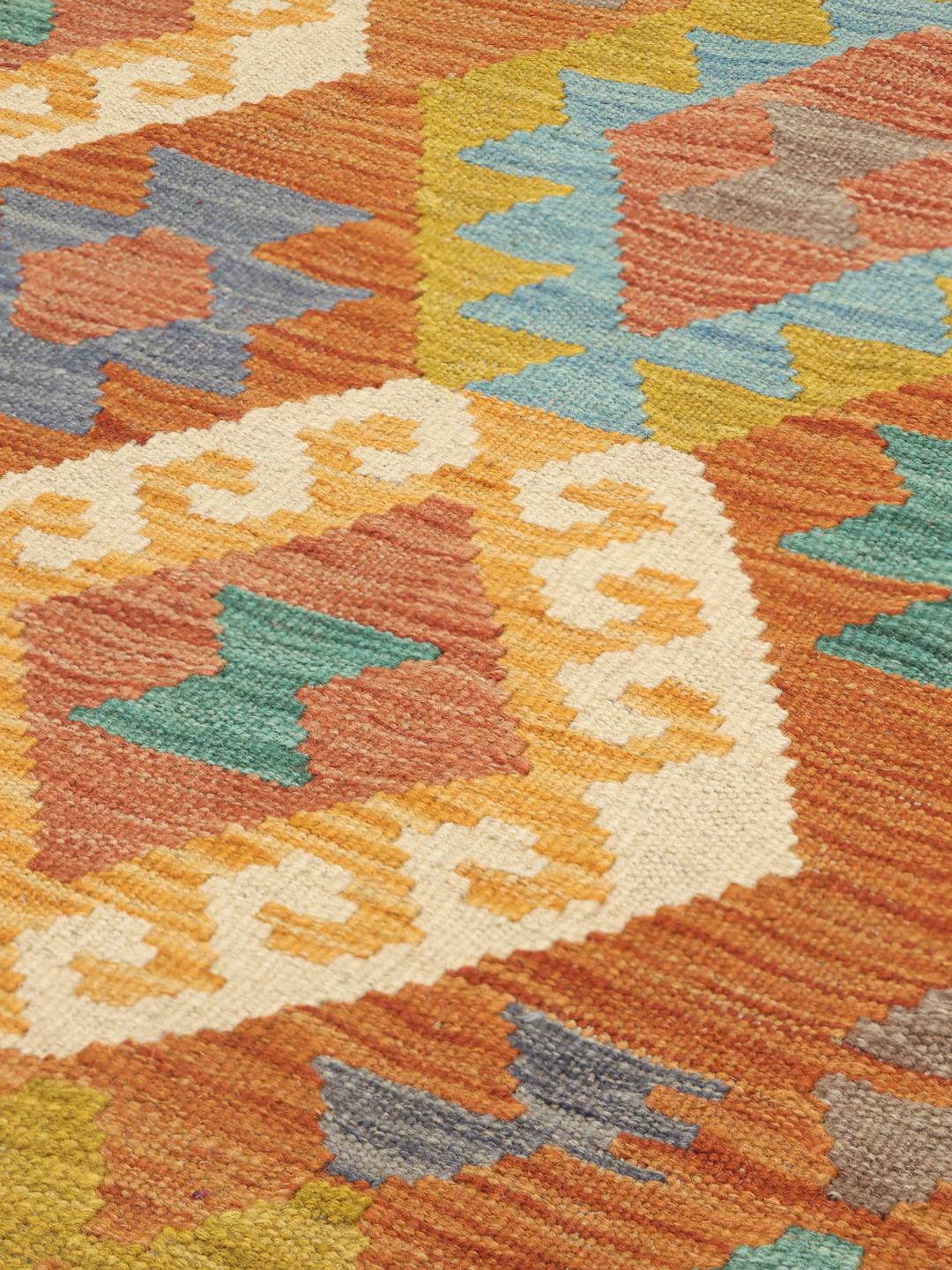
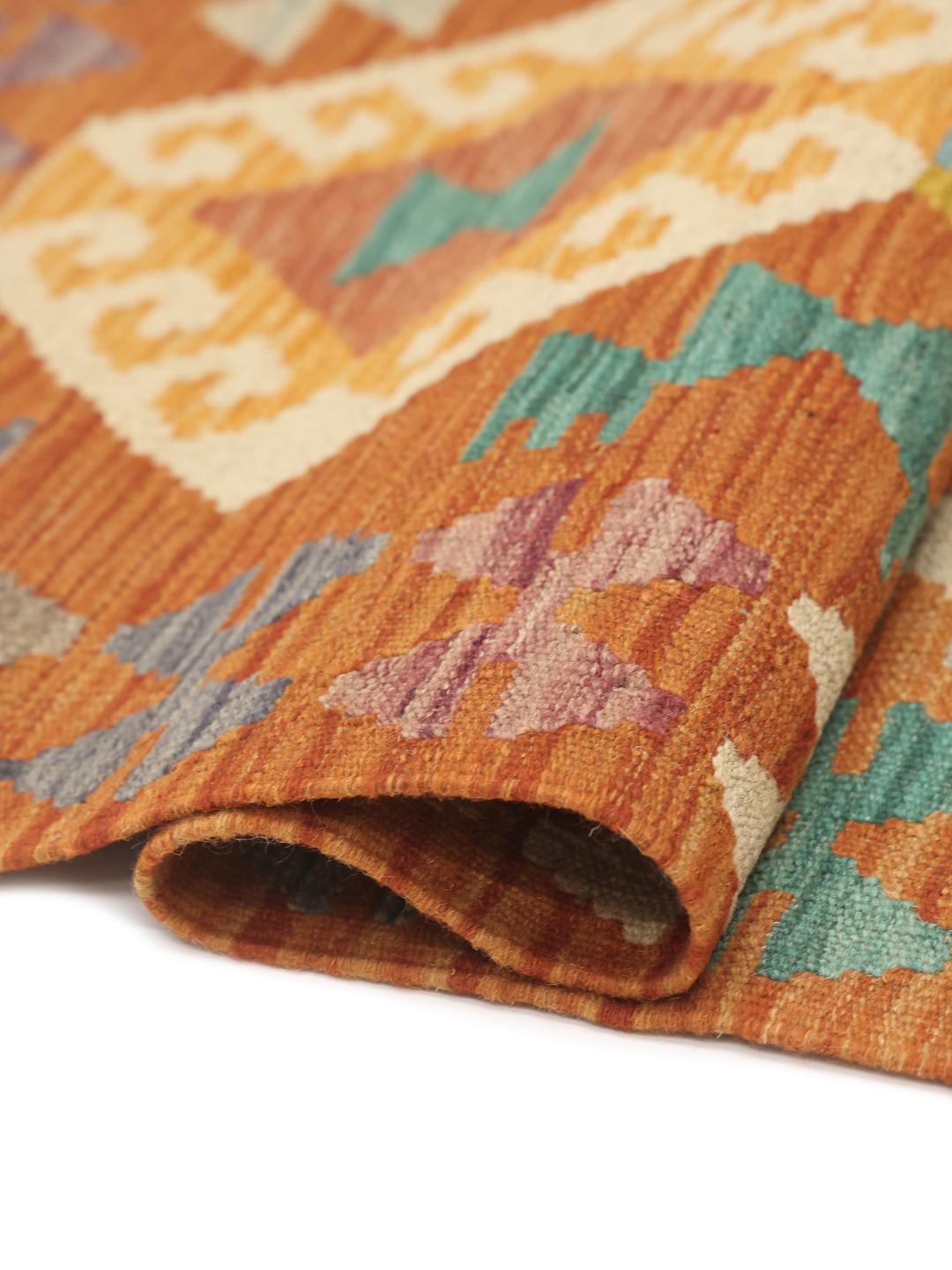
The term 'Kelim' refers specifically to the weaving technique where the weft threads are passed through the warp to create a smooth, pileless surface. This method allows for sharp, crisp geometric designs, as the patterns are formed by the interplay of the coloured threads themselves rather than being added later.
Signature design elements of Afghan Kelims often include bold, repeating geometric motifs like diamonds, triangles, and stylised floral shapes. These patterns are deeply rooted in local traditions, often serving as a visual language that communicates the weaver's heritage, environment, and personal history.
Owning an Afghan Kelim is an opportunity to connect with a rich cultural legacy. These rugs are highly valued by collectors for their authenticity and the human story behind every thread. They represent a bridge between ancient nomadic traditions and the contemporary home, offering a level of character that only a hand-woven piece can provide.