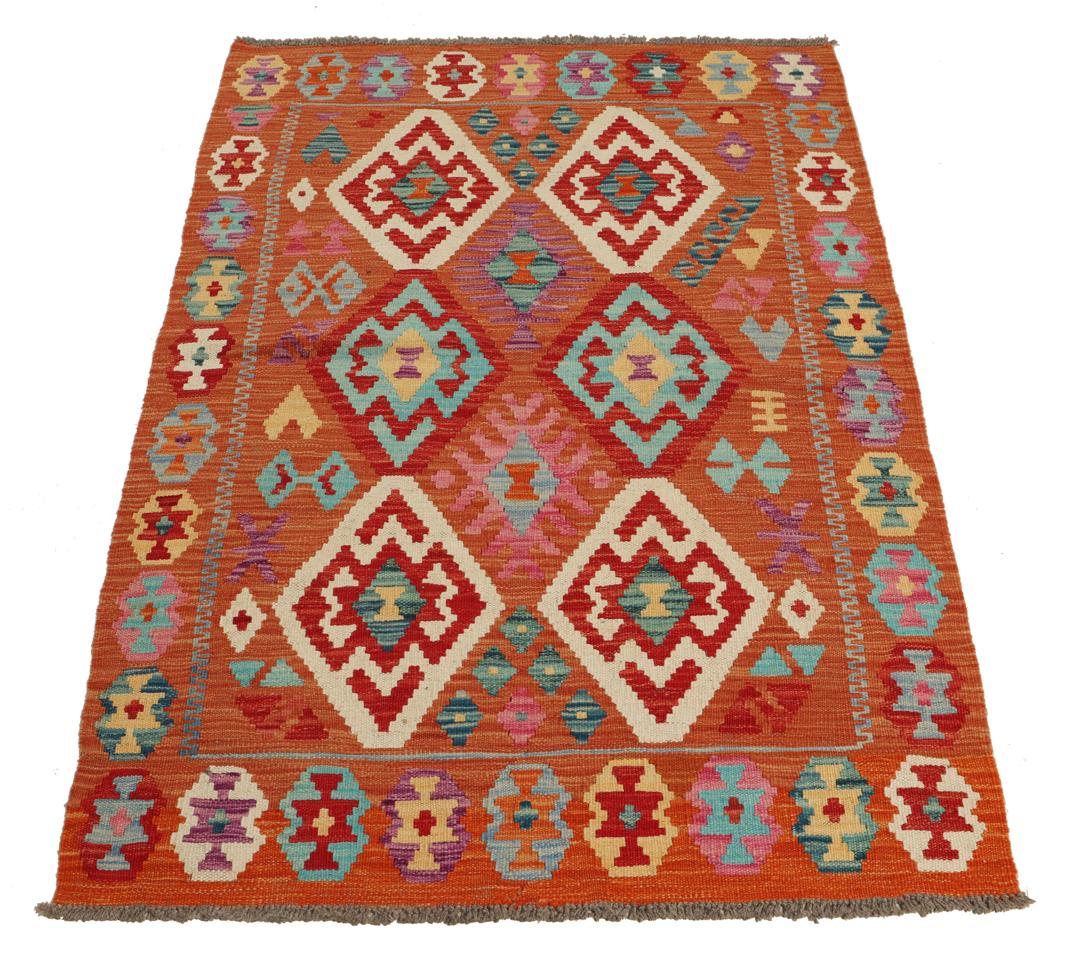
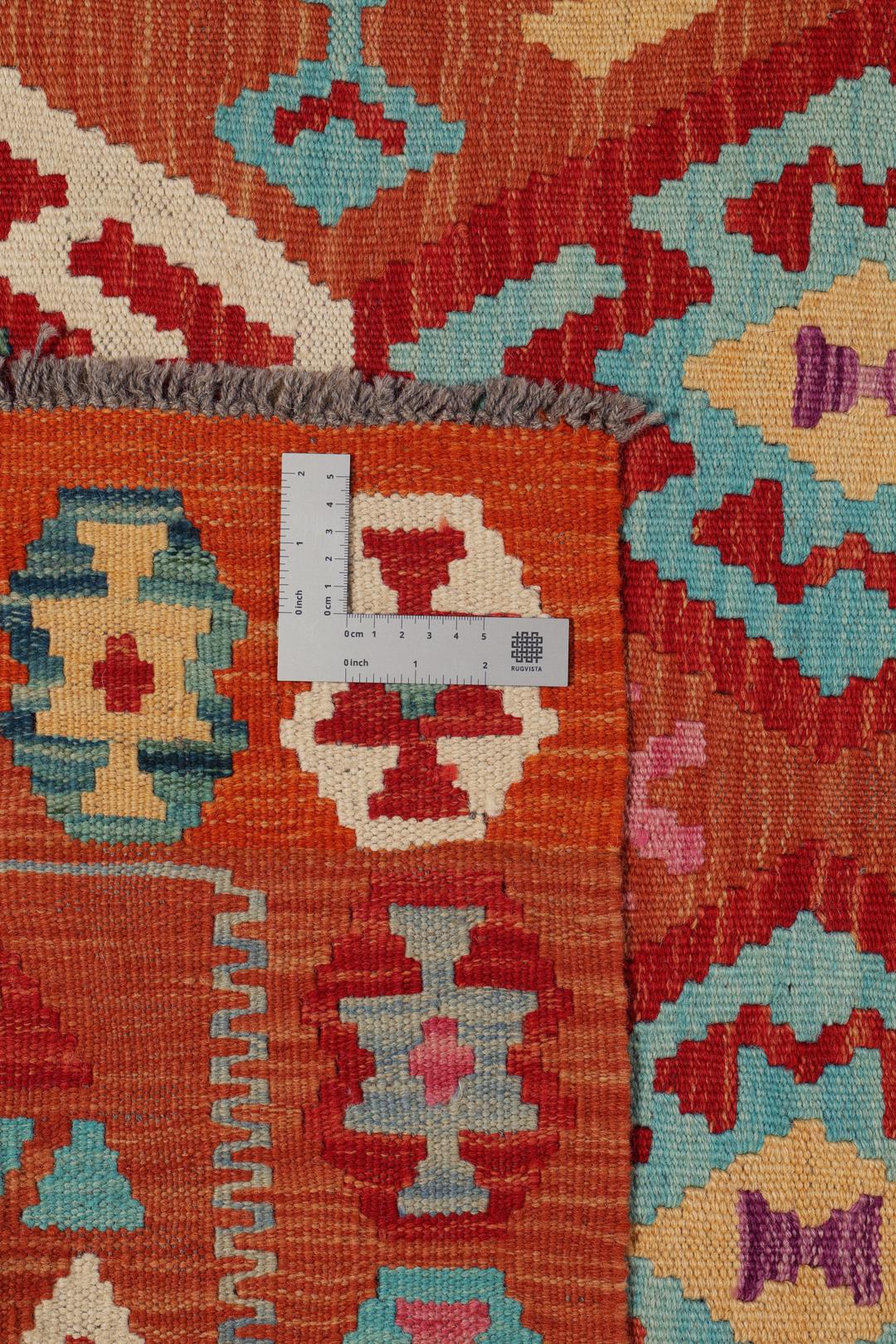
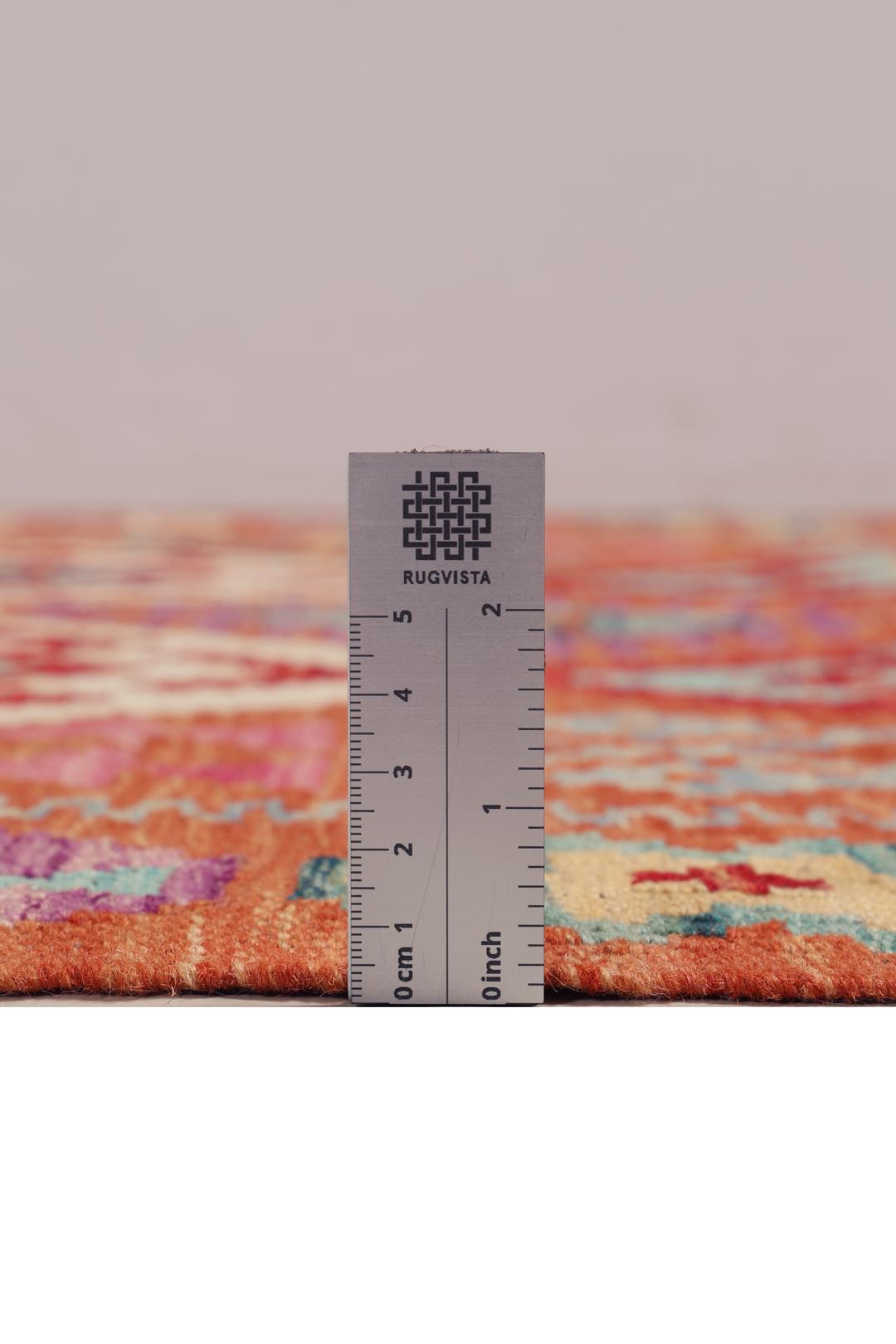
The Kelim tradition in Afghanistan is deeply rooted in the nomadic lifestyle of the region, where flat-woven textiles were essential for both practicality and beauty. These rugs were traditionally created by tribal weavers as functional items for tents, used as floor coverings, wall hangings, or storage bags, reflecting a culture that values portability and resilience.
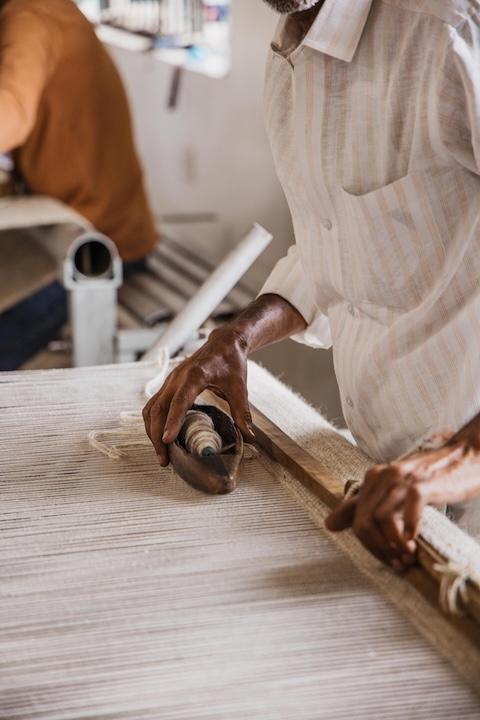
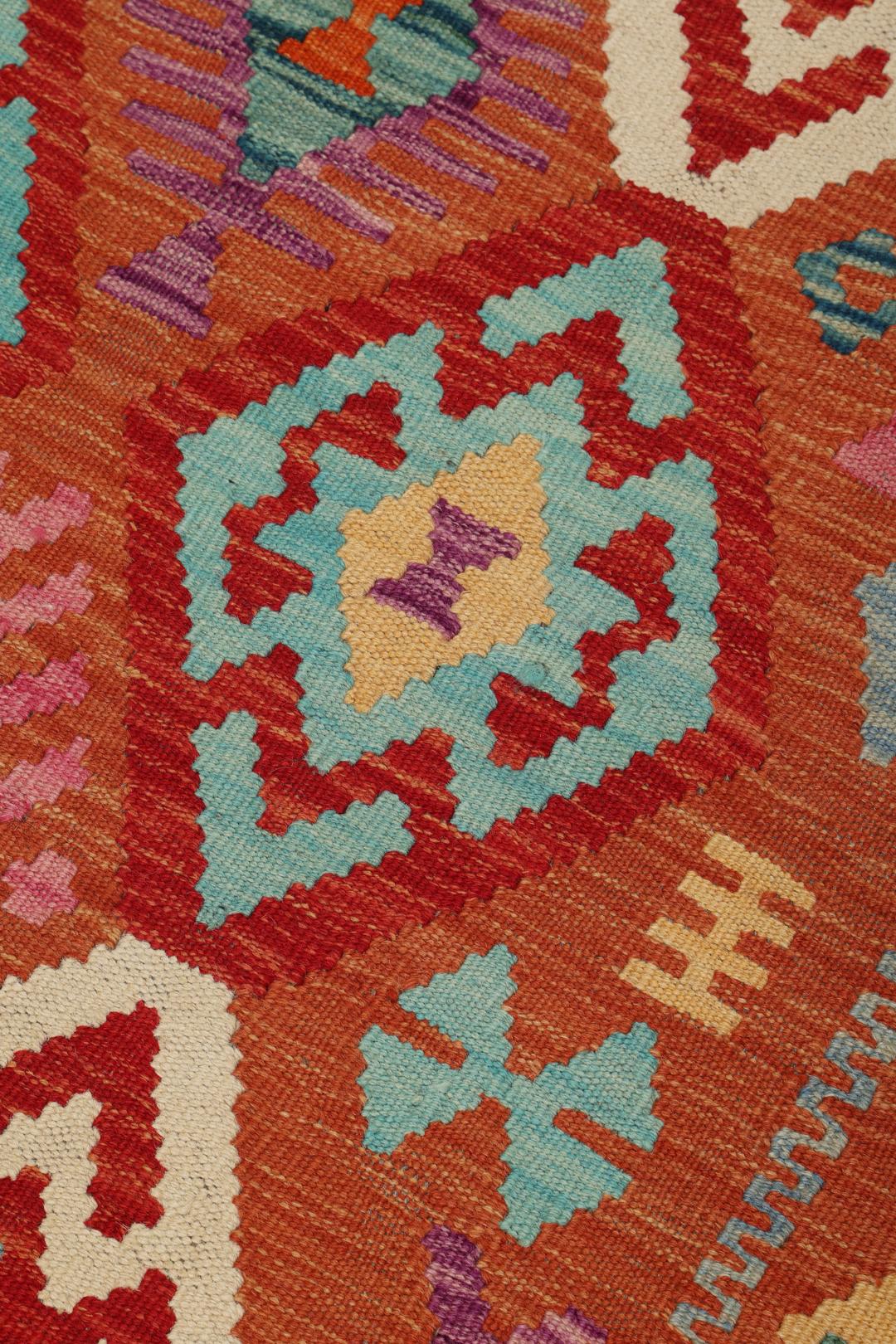
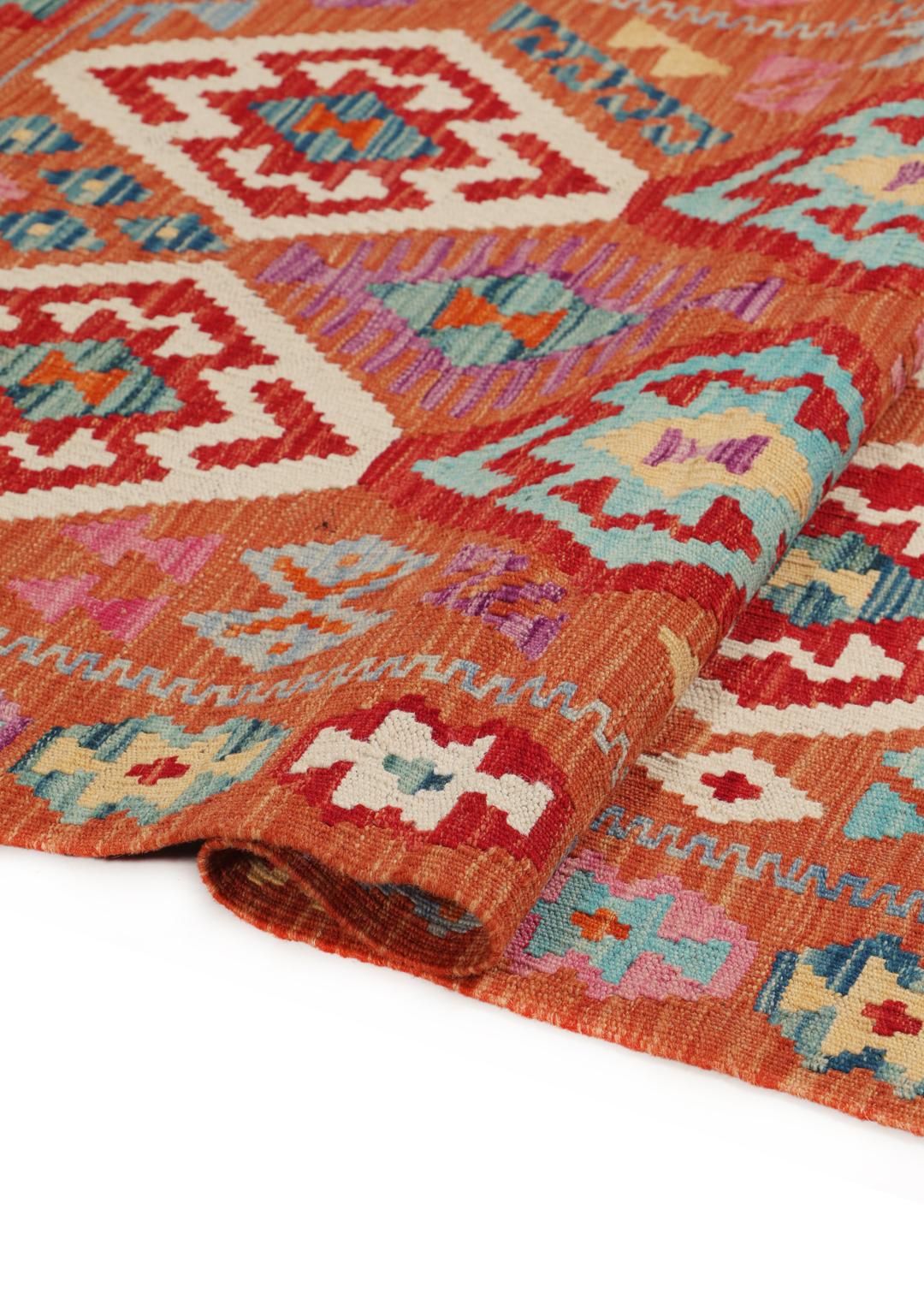
The term Kelim refers to the specific flat-weaving technique where the weft threads are woven tightly over the warp threads to create the pattern. This method results in a durable, reversible textile without a pile, making it distinct from knotted rugs. The skill involved in maintaining tension and pattern alignment across the entire surface is a testament to the weaver's expertise.
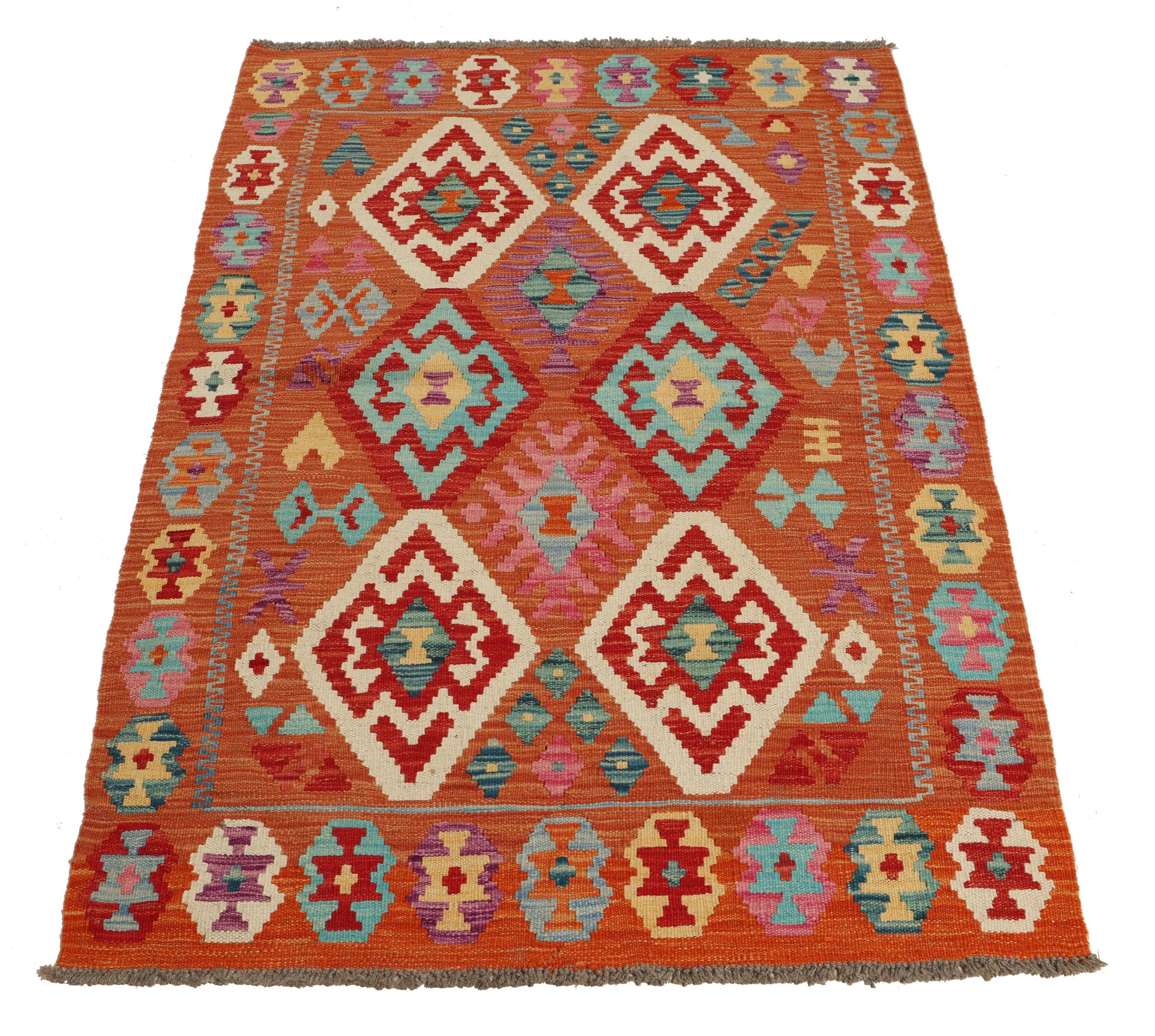
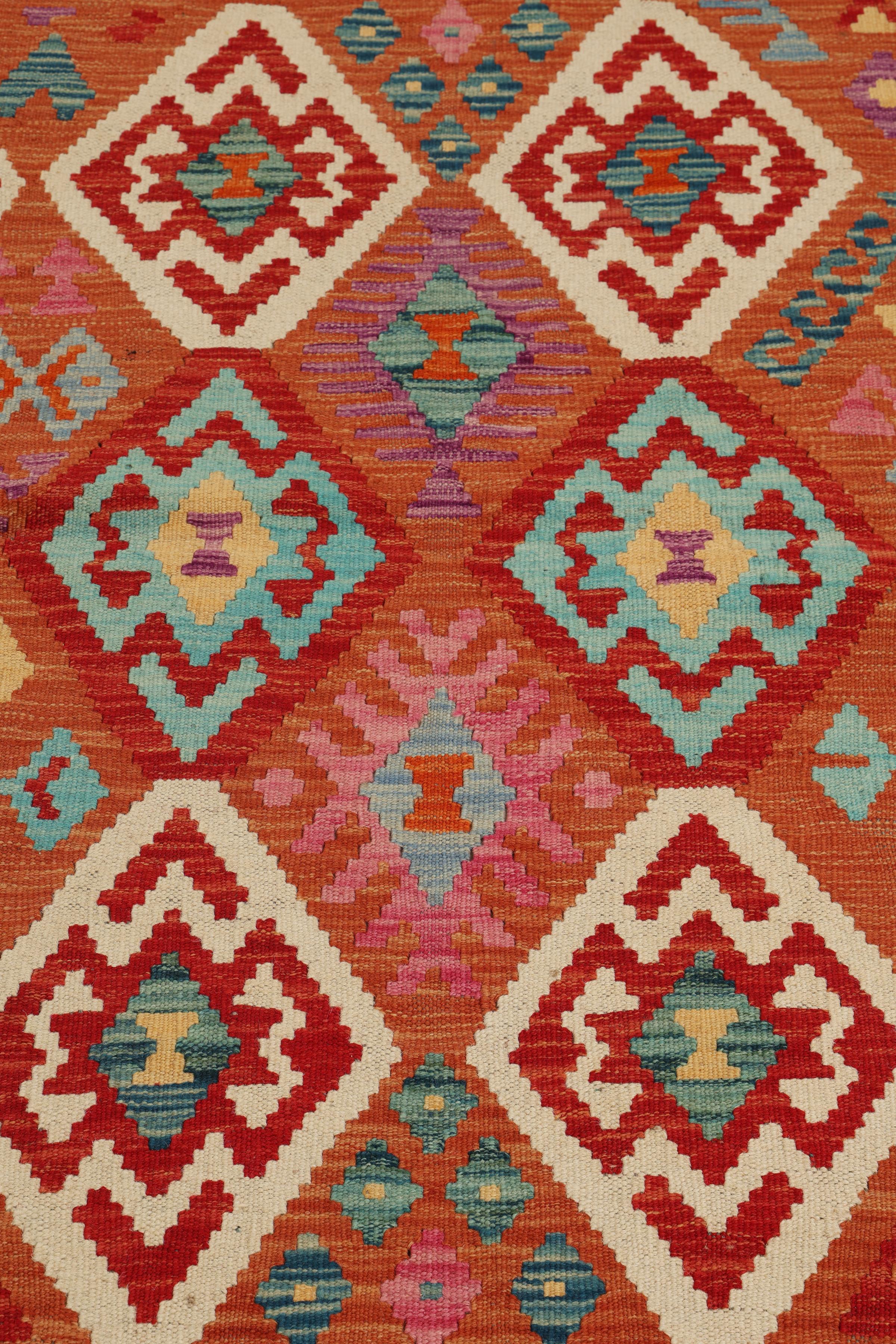
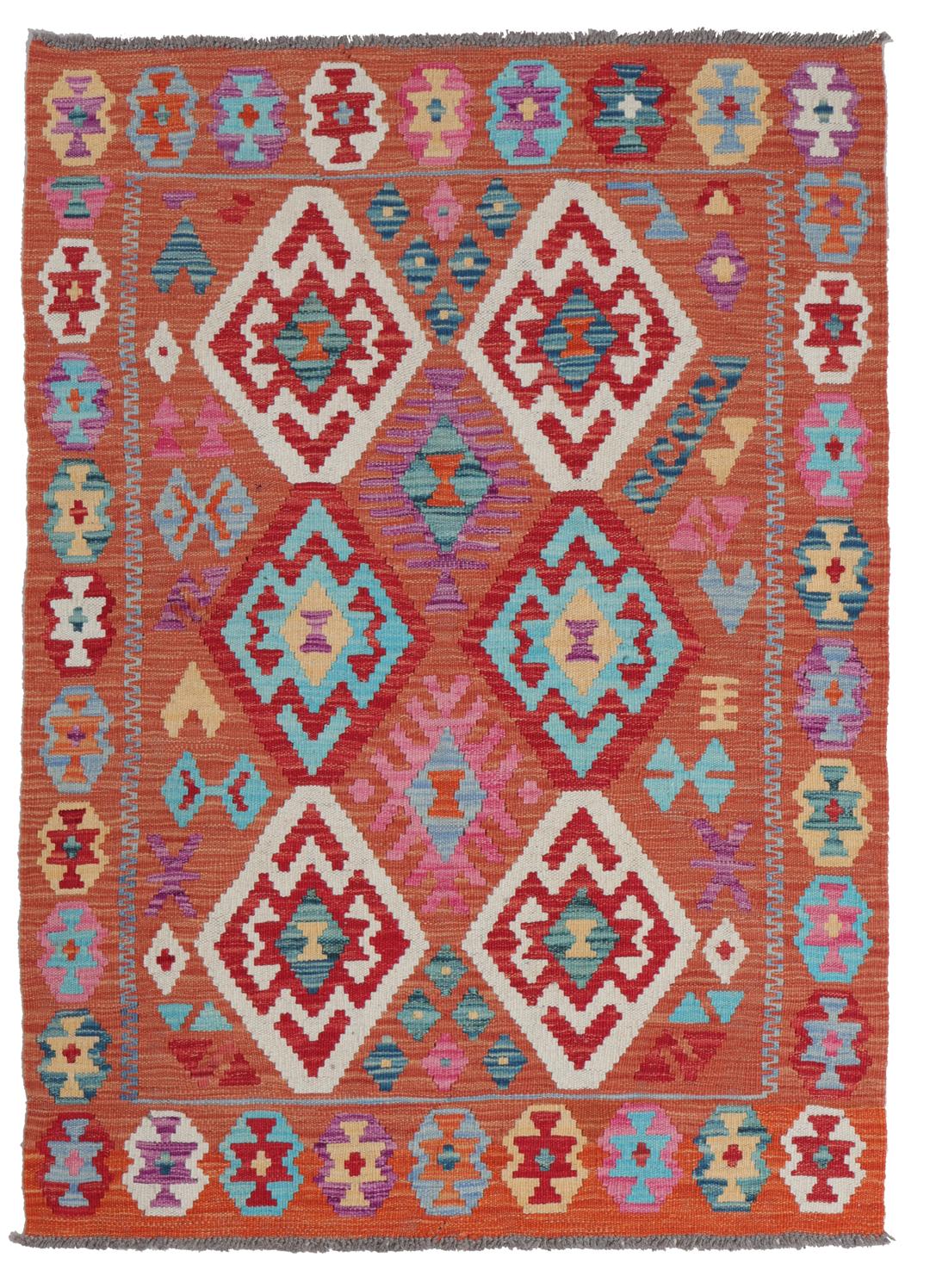
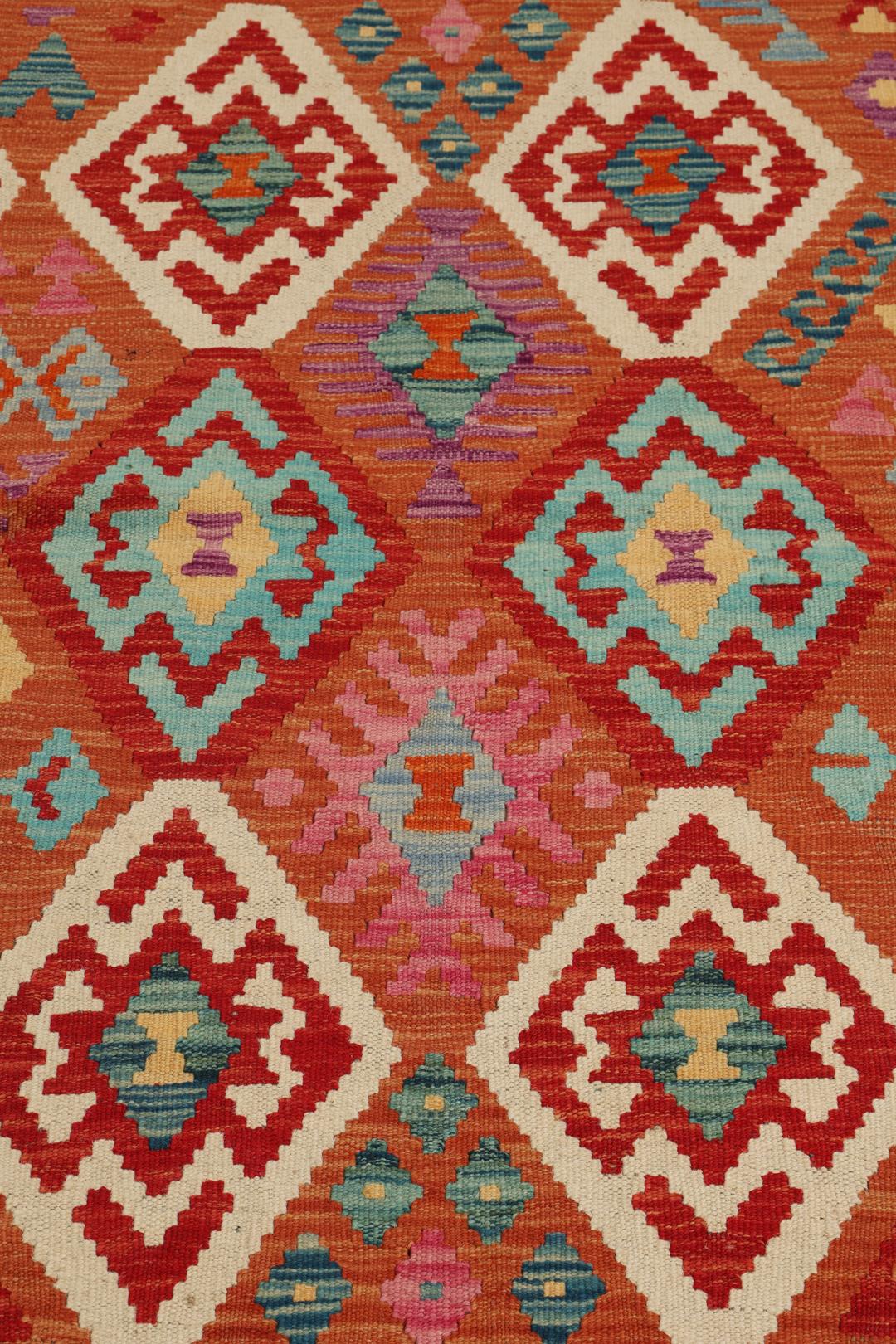
Visually, these rugs are defined by their sharp geometric language, often utilising diamonds, triangles, and stylised floral motifs. The bold use of colour is a signature element, traditionally derived from natural dyes found in the local landscape. This particular piece showcases the iconic aesthetic of the tradition, with its structured, repeating patterns that have been passed down through generations of artisans.
Collecting an Afghan Kelim is an investment in cultural heritage. Each rug acts as a visual story of the weaver's community and regional identity, carrying with it a sense of permanence and skill. By bringing such a piece into your home, you are honouring a craft tradition that has survived and thrived for centuries.