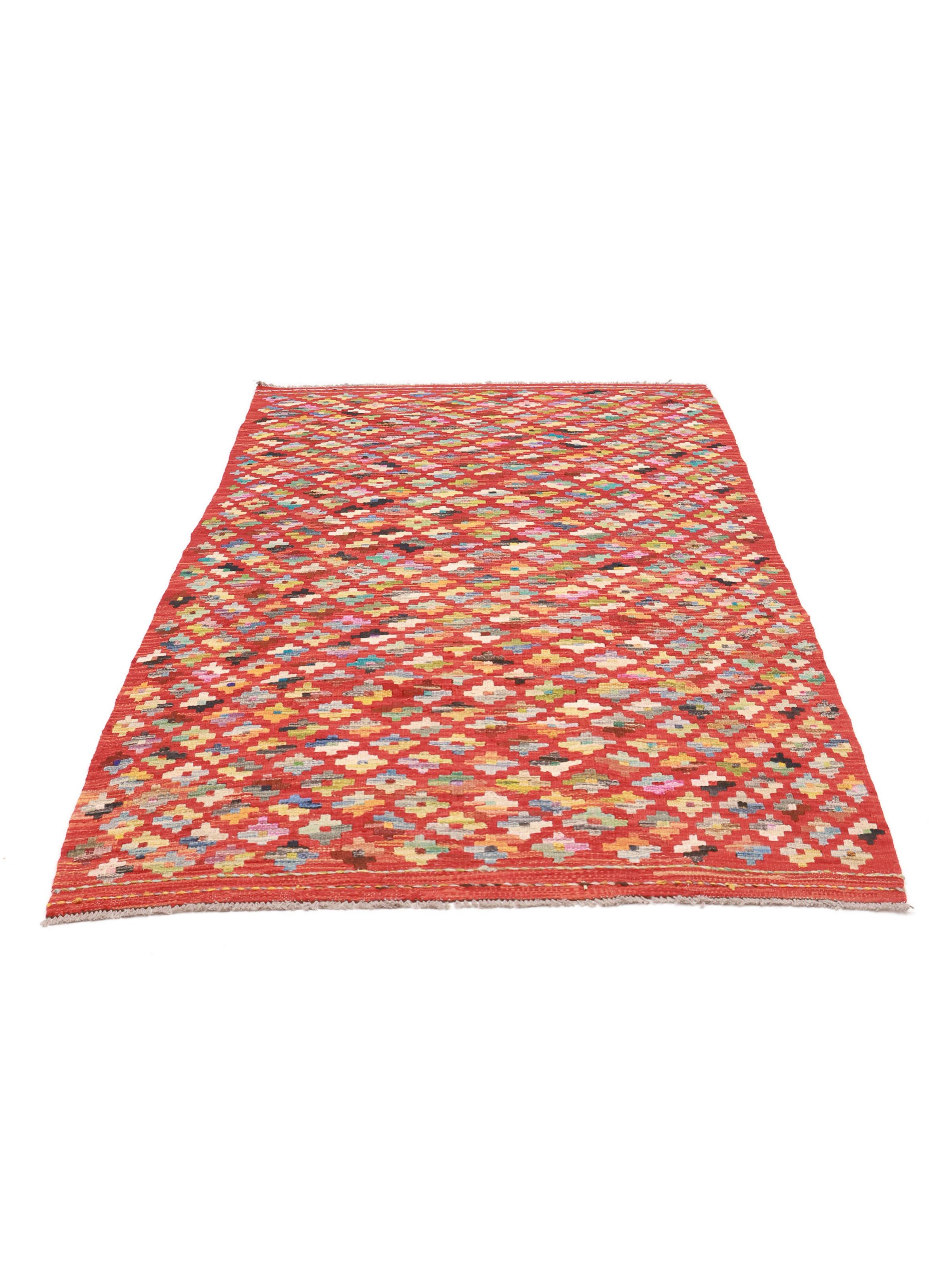
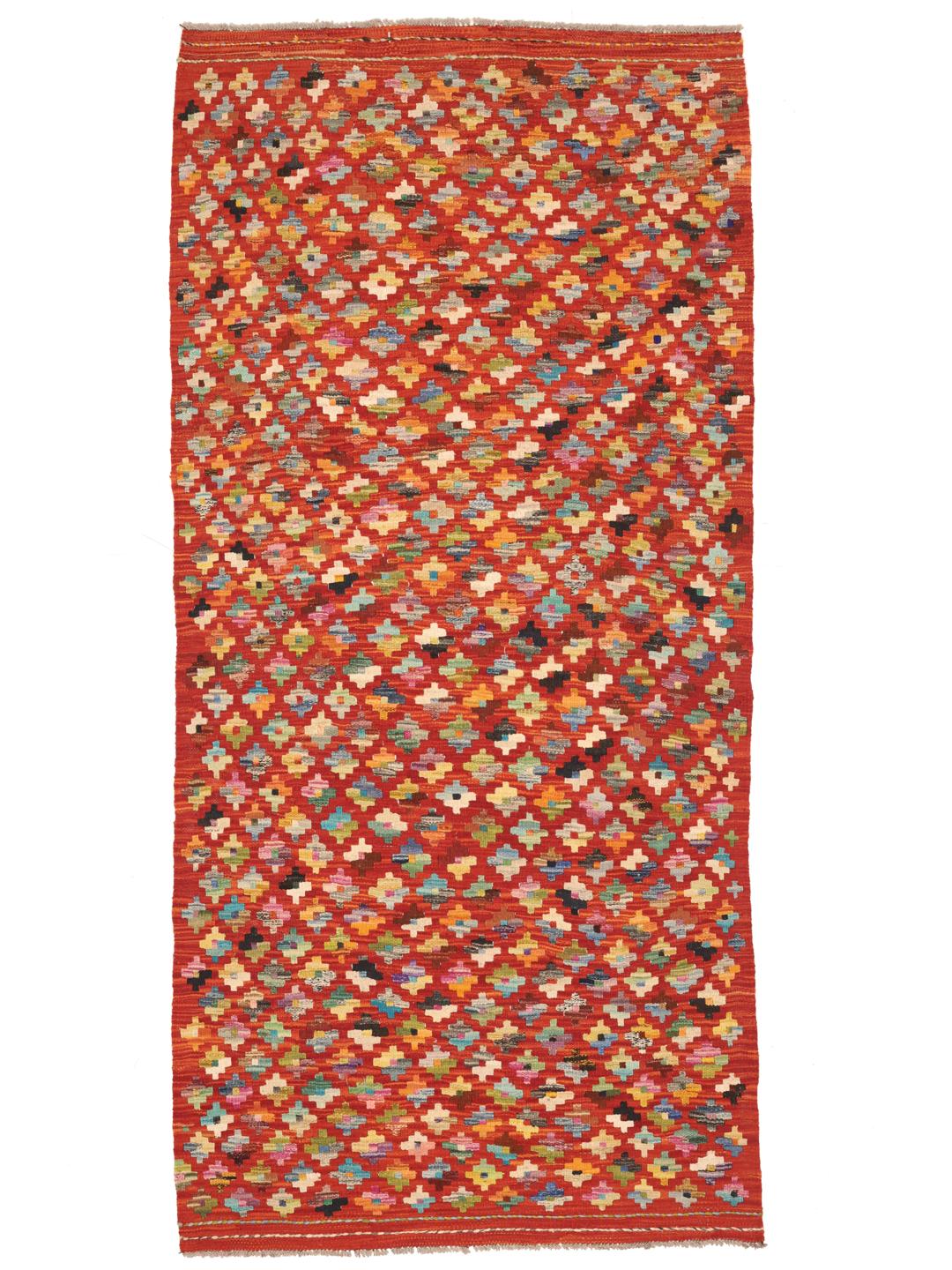
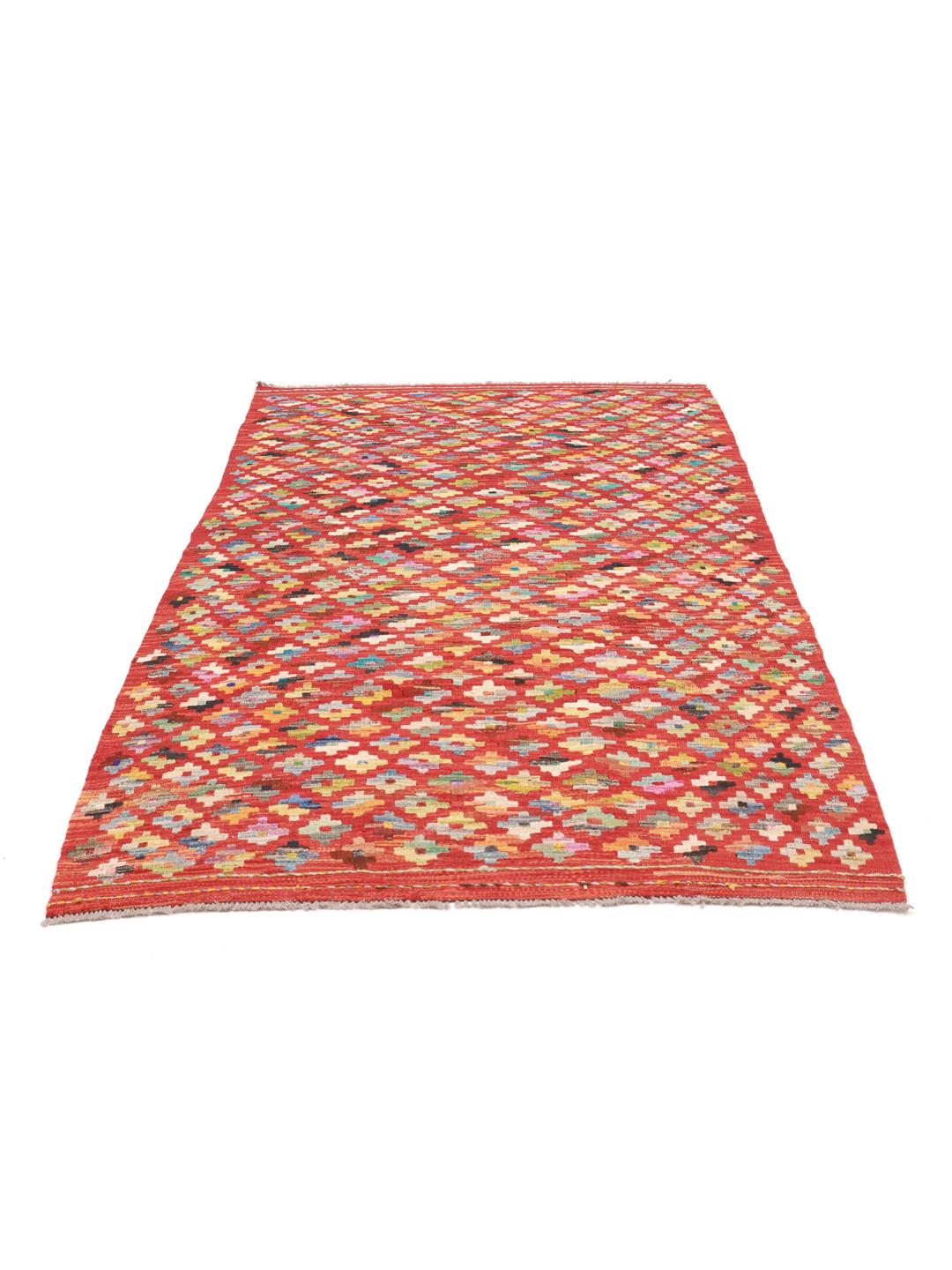
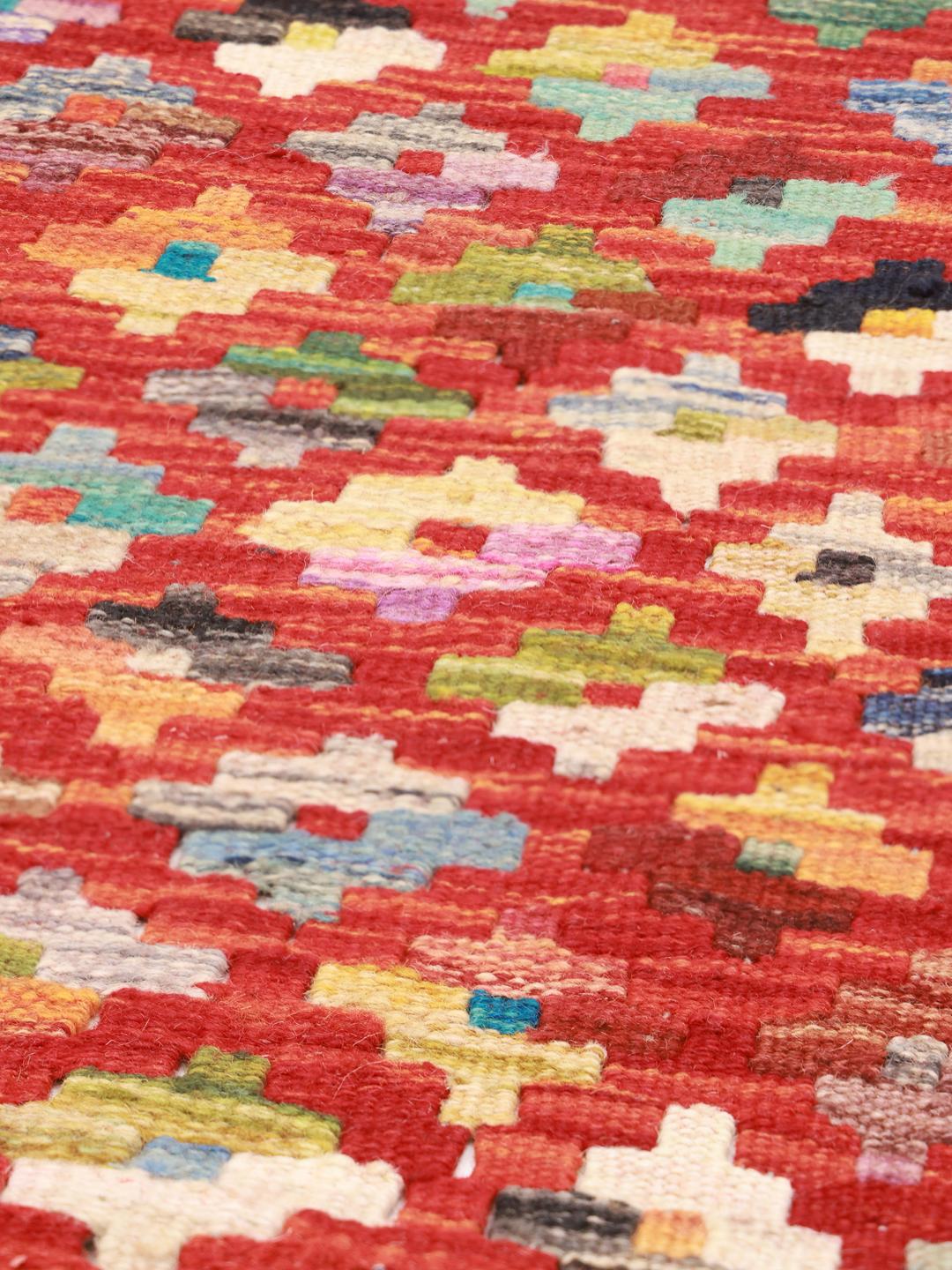
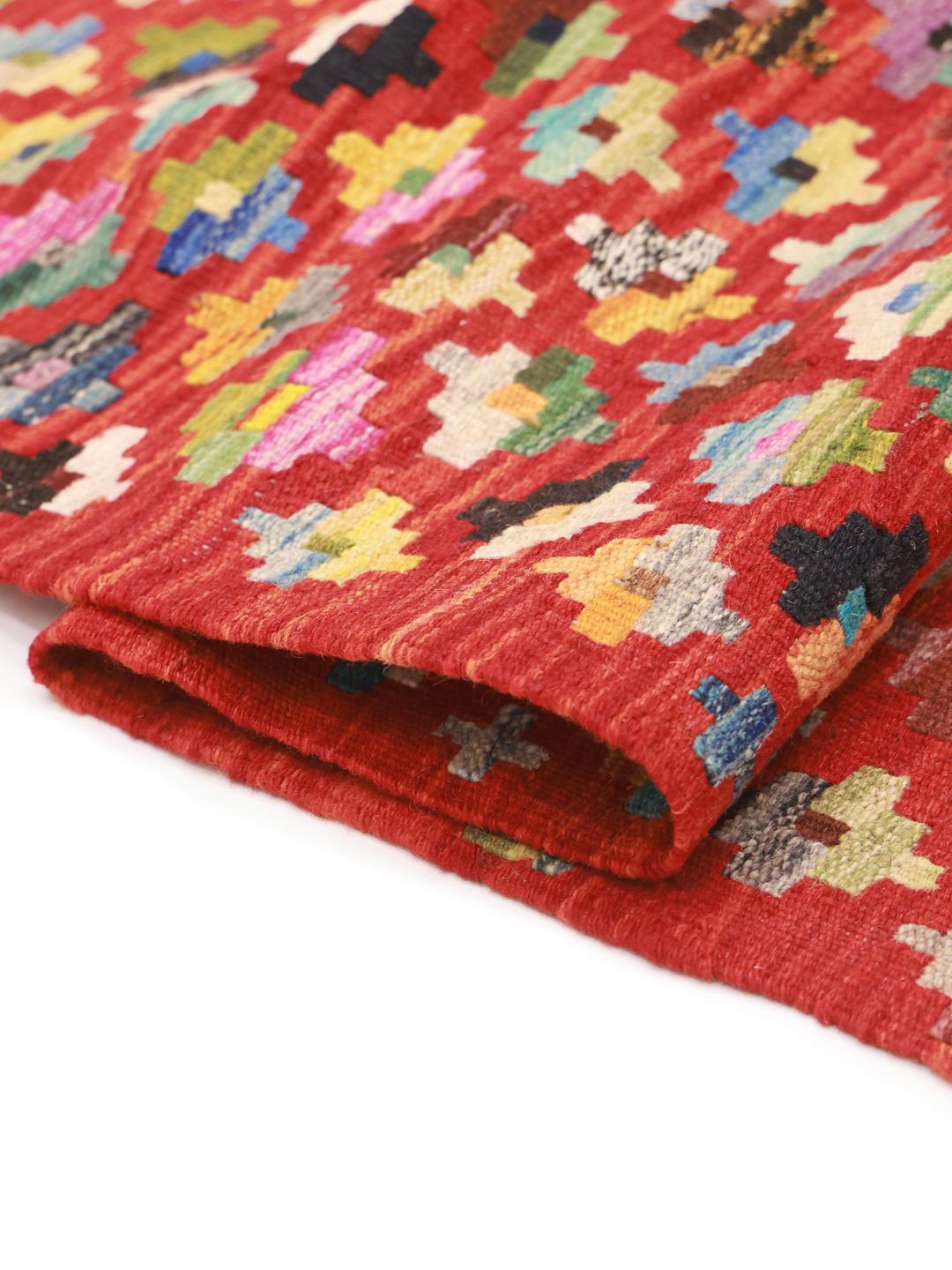
Afghan Kelims originate from a long-standing tradition of flat-weave textiles that have been essential to nomadic and village life in the Middle East for centuries. These rugs were historically created by skilled artisans to serve practical needs, acting as floor coverings, wall hangings, or blankets, all while reflecting the cultural identity of the weaving communities.
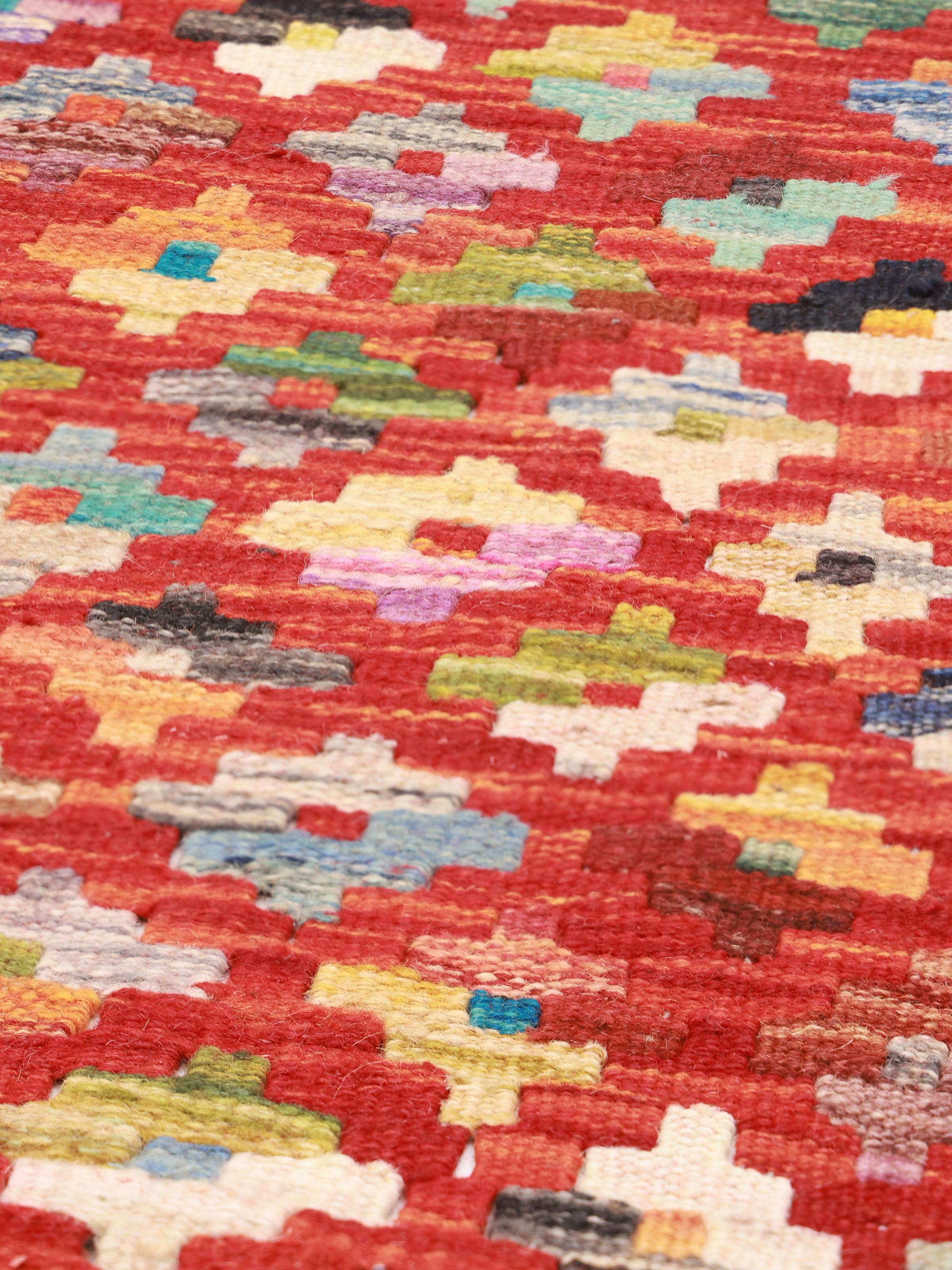
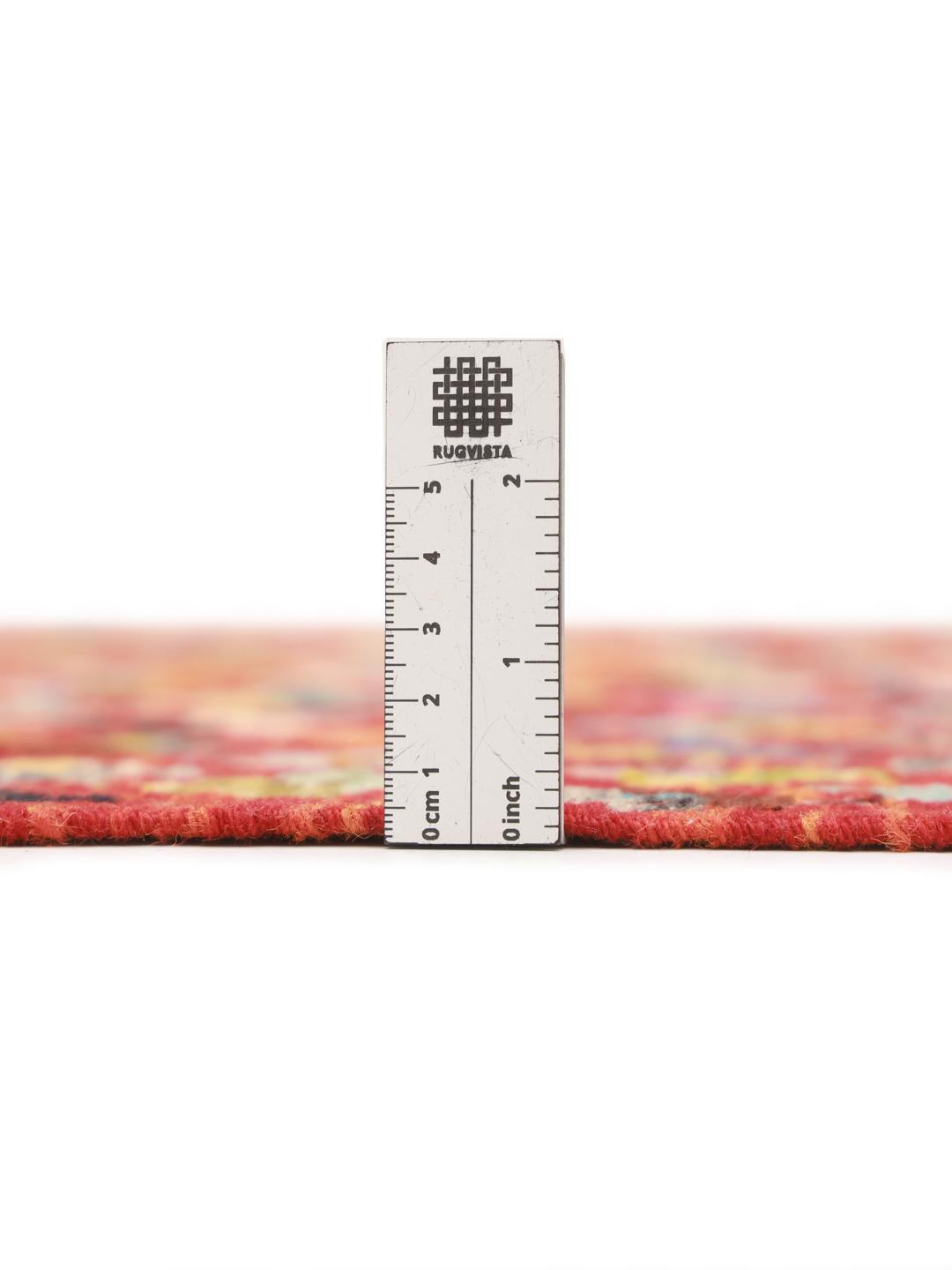
The term 'Kelim' refers specifically to the flat-woven technique where the weft threads are passed through the warp to create the pattern, resulting in a thin, reversible rug without a pile. This method requires a high level of precision, as the weaver must manage the tension and colour changes simultaneously to achieve the final design, a skill passed down through generations.
Signature design elements of these rugs often include bold geometric motifs and a rich, saturated colour palette that tells a story of the region's natural dyes and artistic preferences. The repeating patterns seen here are characteristic of tribal aesthetics, where symbols and shapes were used to convey tribal history, protection, and the weaver's personal creative expression.
Today, these rugs are highly valued by collectors and homeowners alike for their cultural weight and the undeniable skill required to produce them. Owning an authentic Afghan Kelim is an investment in a living tradition, offering a sense of heritage and connection to a craft that has remained largely unchanged by the pressures of modern mass production.