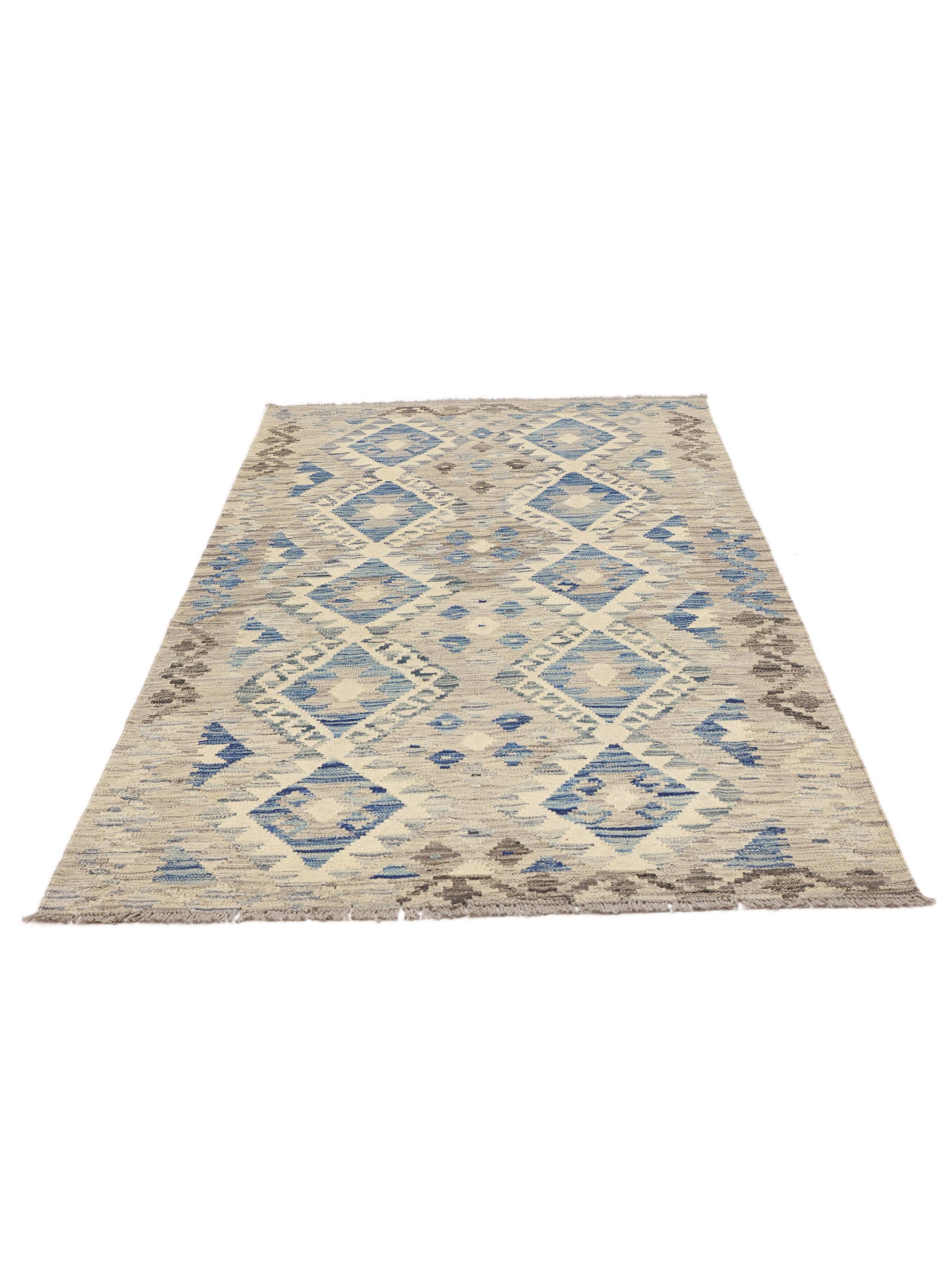
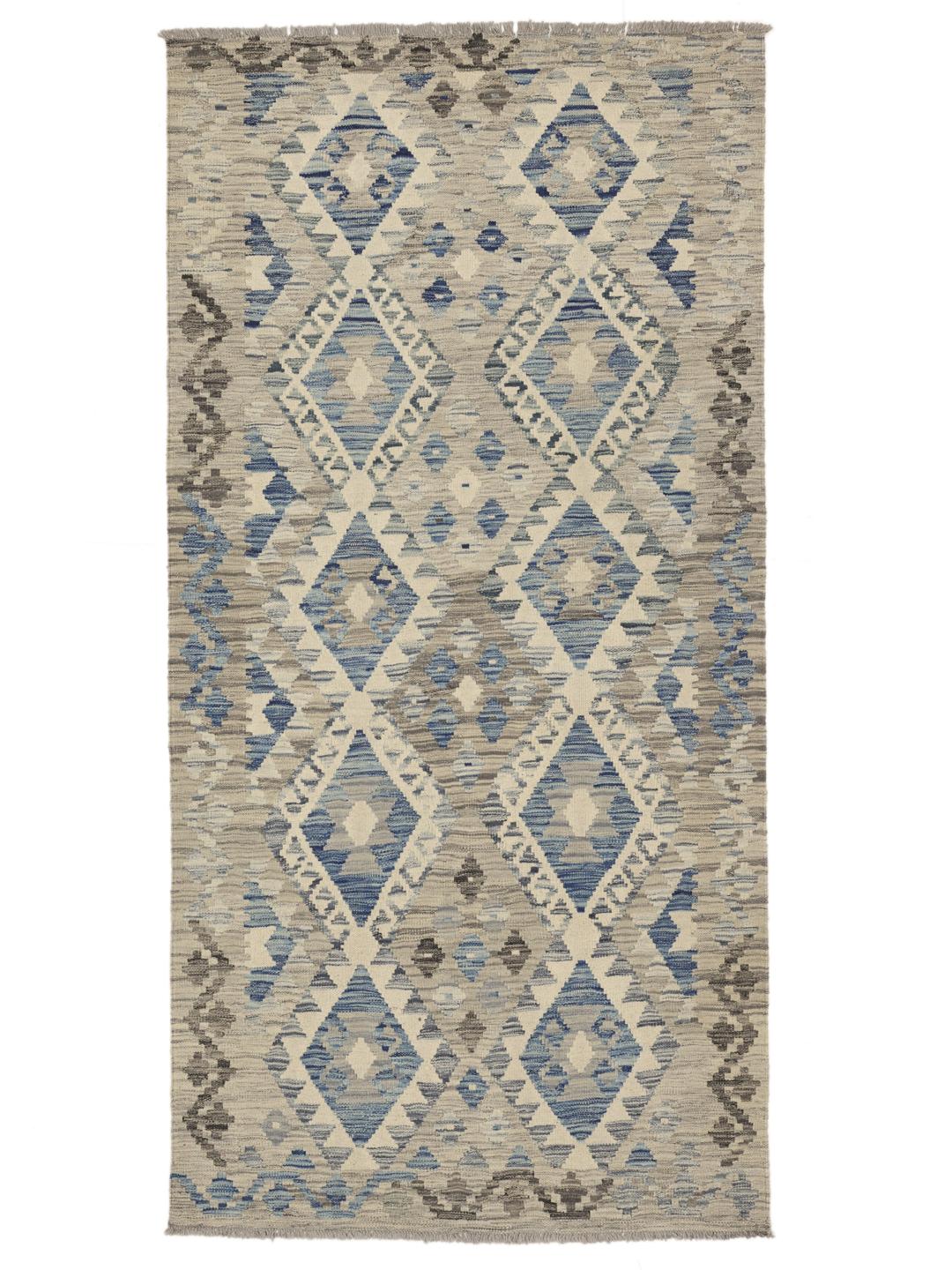
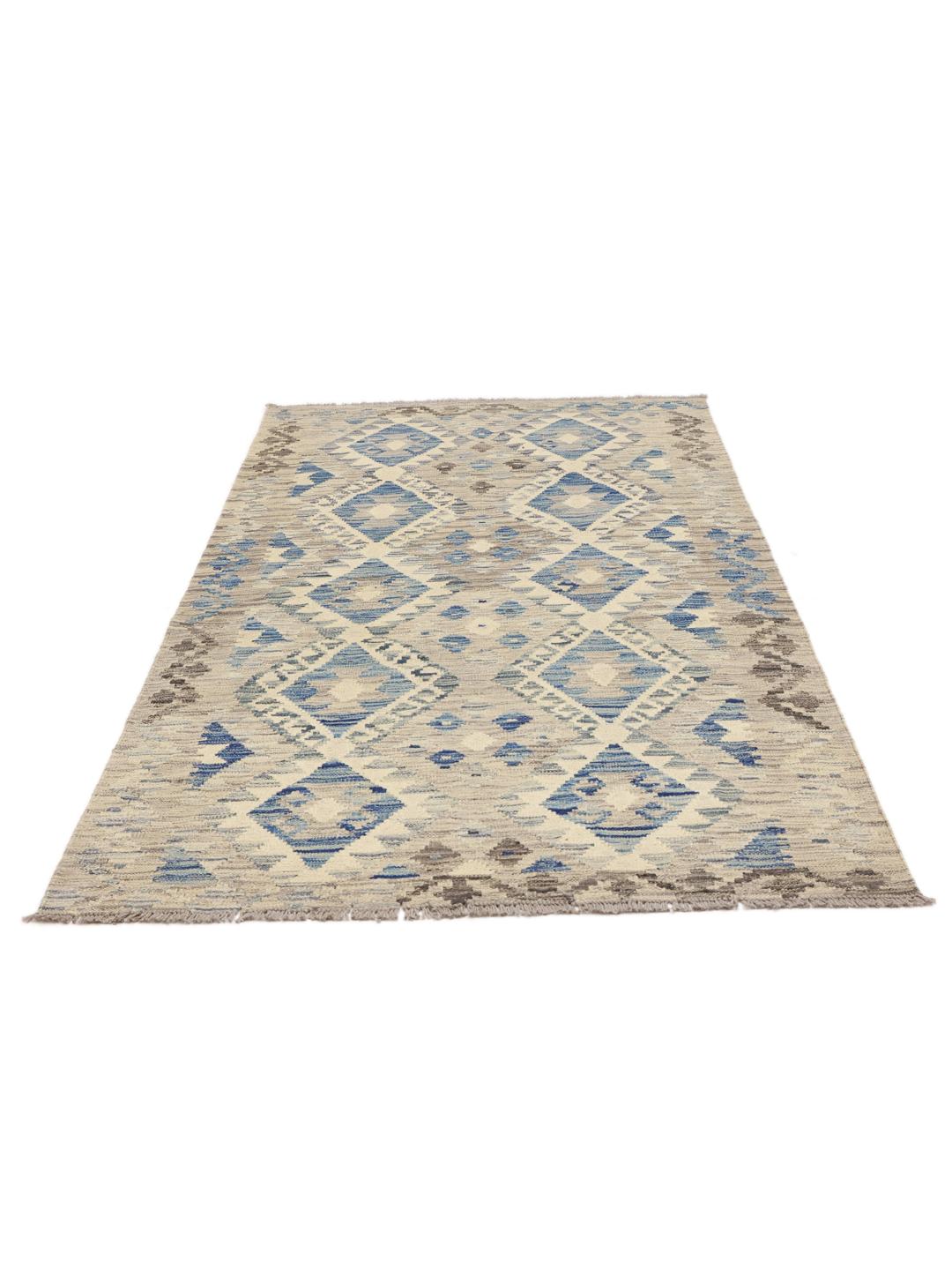
Kelim rugs have long been a cornerstone of the textile traditions across the Middle East and Central Asia. The term 'Kelim' refers to a flat-weaving technique rather than a specific region, though it is synonymous with the nomadic cultures who developed these pieces to be portable, durable, and highly functional for life on the move. Over centuries, these rugs became vital components of the home, used as floor coverings, blankets, and storage bags.
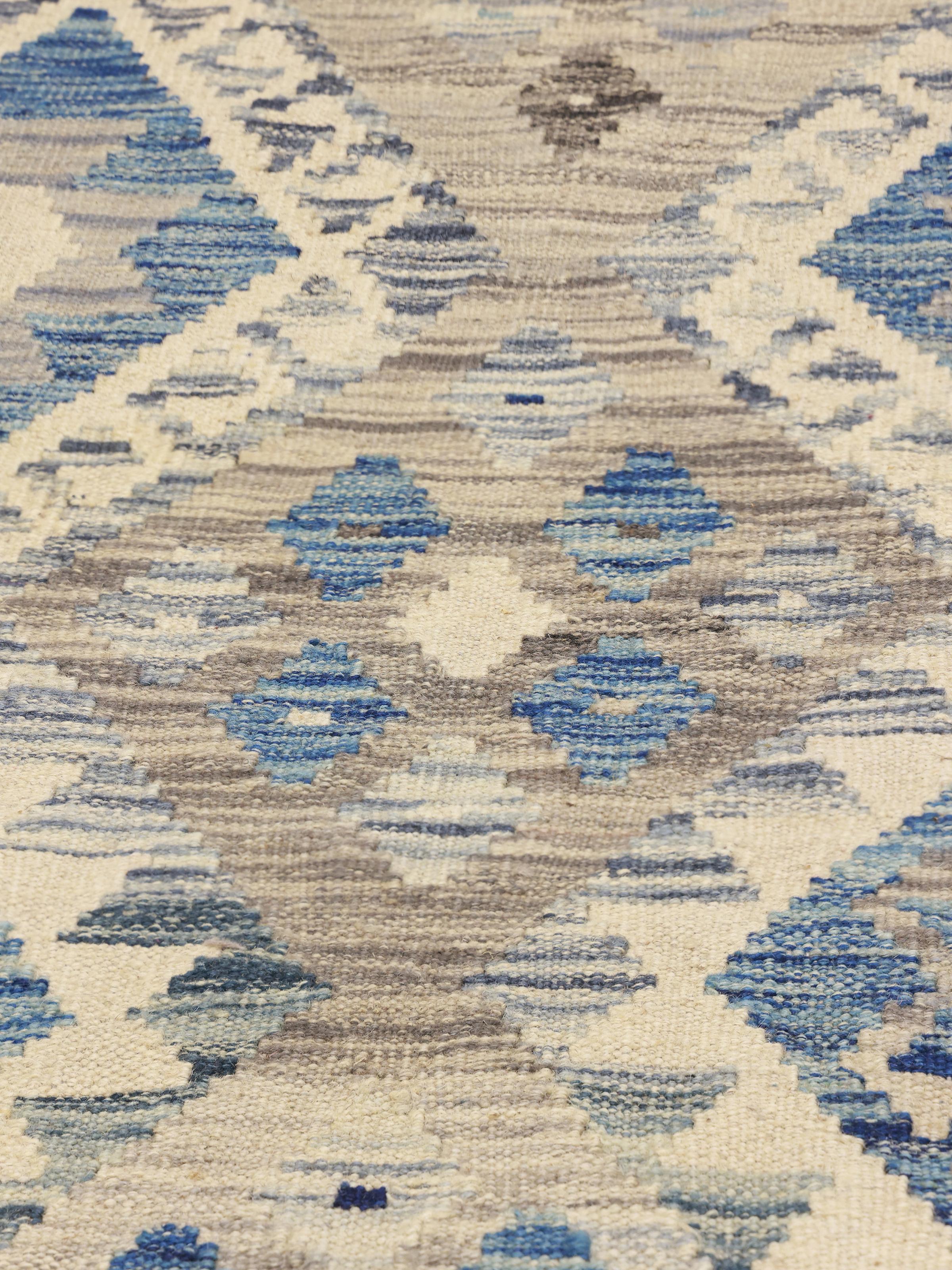
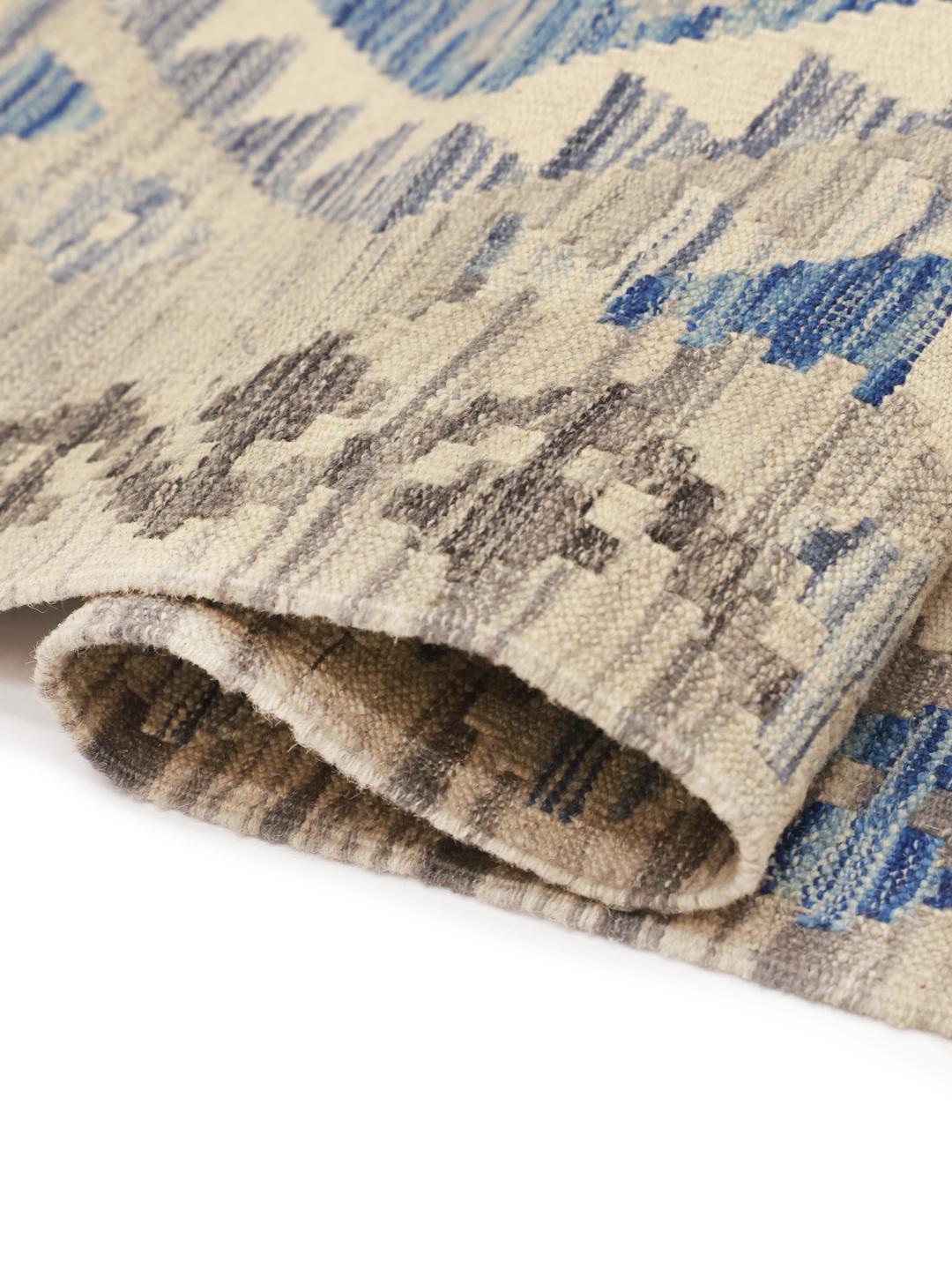
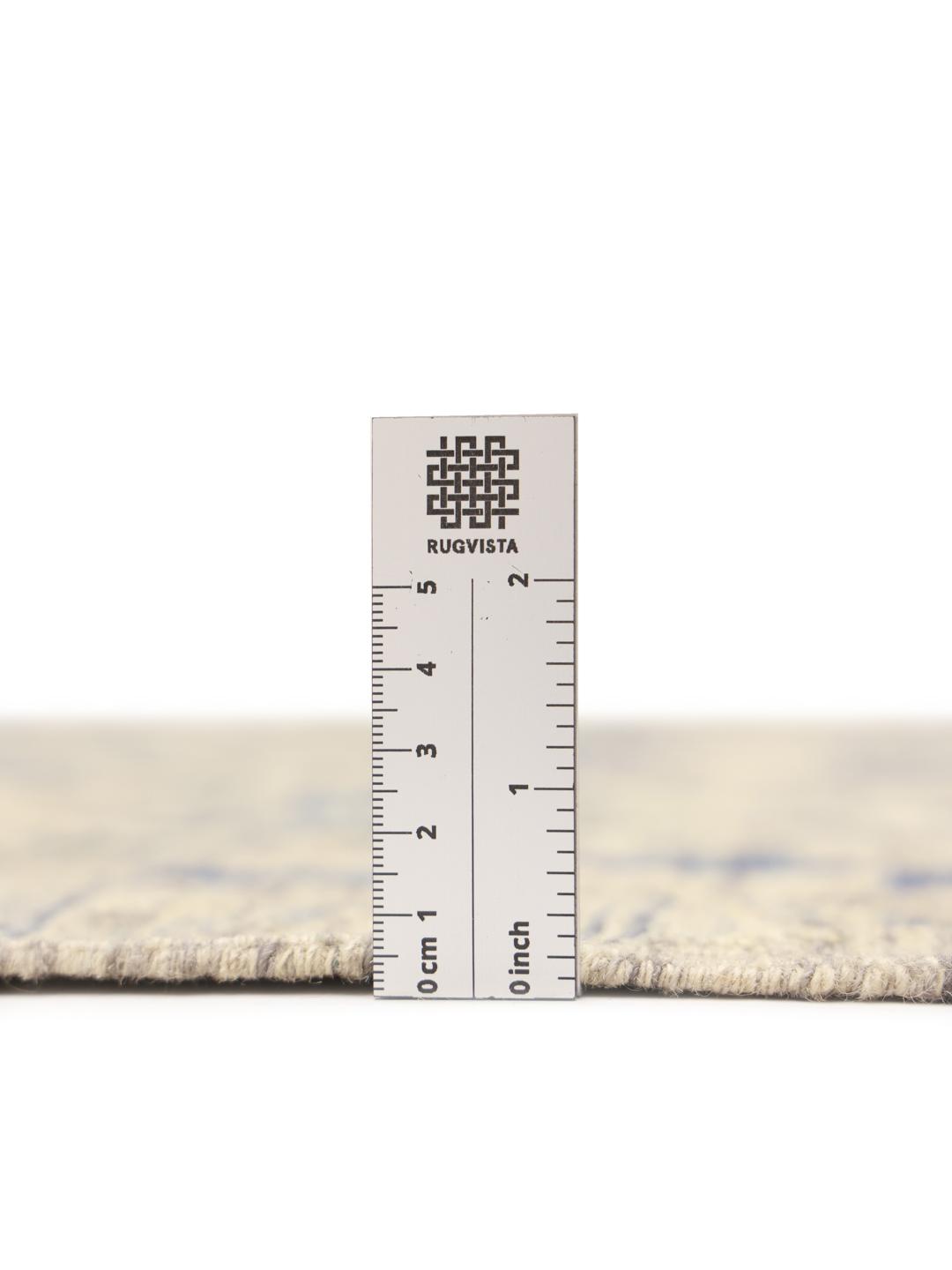
The Afghan tradition of weaving is particularly noted for its use of high-quality Wool and a commitment to preserving ancient techniques. In this style, the absence of a pile is a defining feature, achieved by interlocking the weft and warp threads tightly. This technique results in a reversible, lightweight textile that is remarkably resilient, making it a preferred choice for those who value both form and function in their home furnishings.
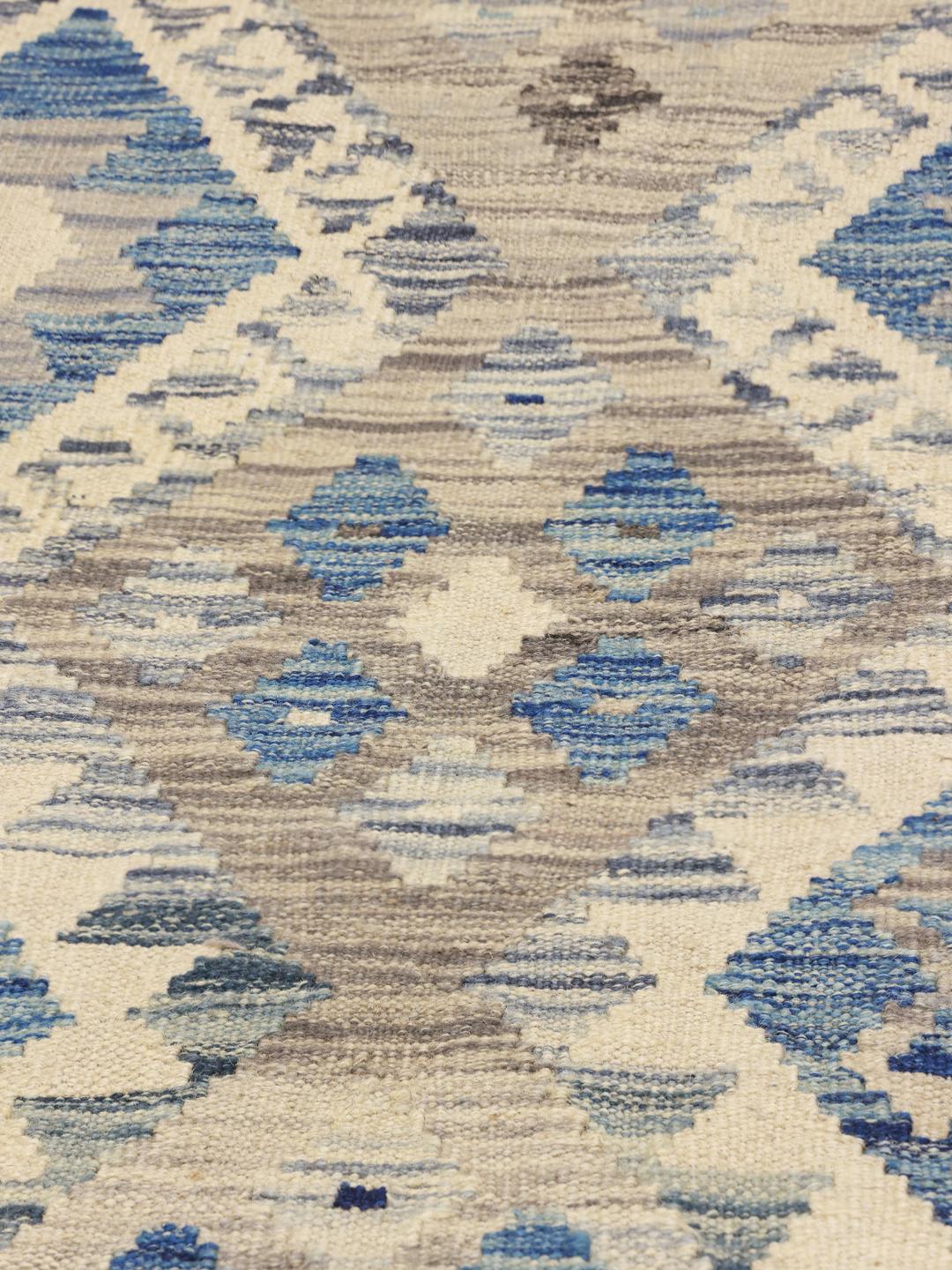
Visually, these rugs are defined by their geometric language, often utilising diamonds, stripes, and medallions that tell stories of the weaver's environment and heritage. The patterns are usually created by changing the colour of the weft threads during the weaving process. This specific piece showcases a sophisticated use of blue and beige, showcasing how modern colour sensibilities are applied to traditional motifs to create something that feels both ancient and fresh.
Collecting a Kelim is an opportunity to own a piece of living history. These rugs are not merely decorative objects; they are expressions of identity and skill, with each motif often holding symbolic meaning. By bringing this rug into your home, you are participating in a global tradition of appreciation for human-made artistry, securing a piece that represents a unique intersection of history, culture, and enduring design.