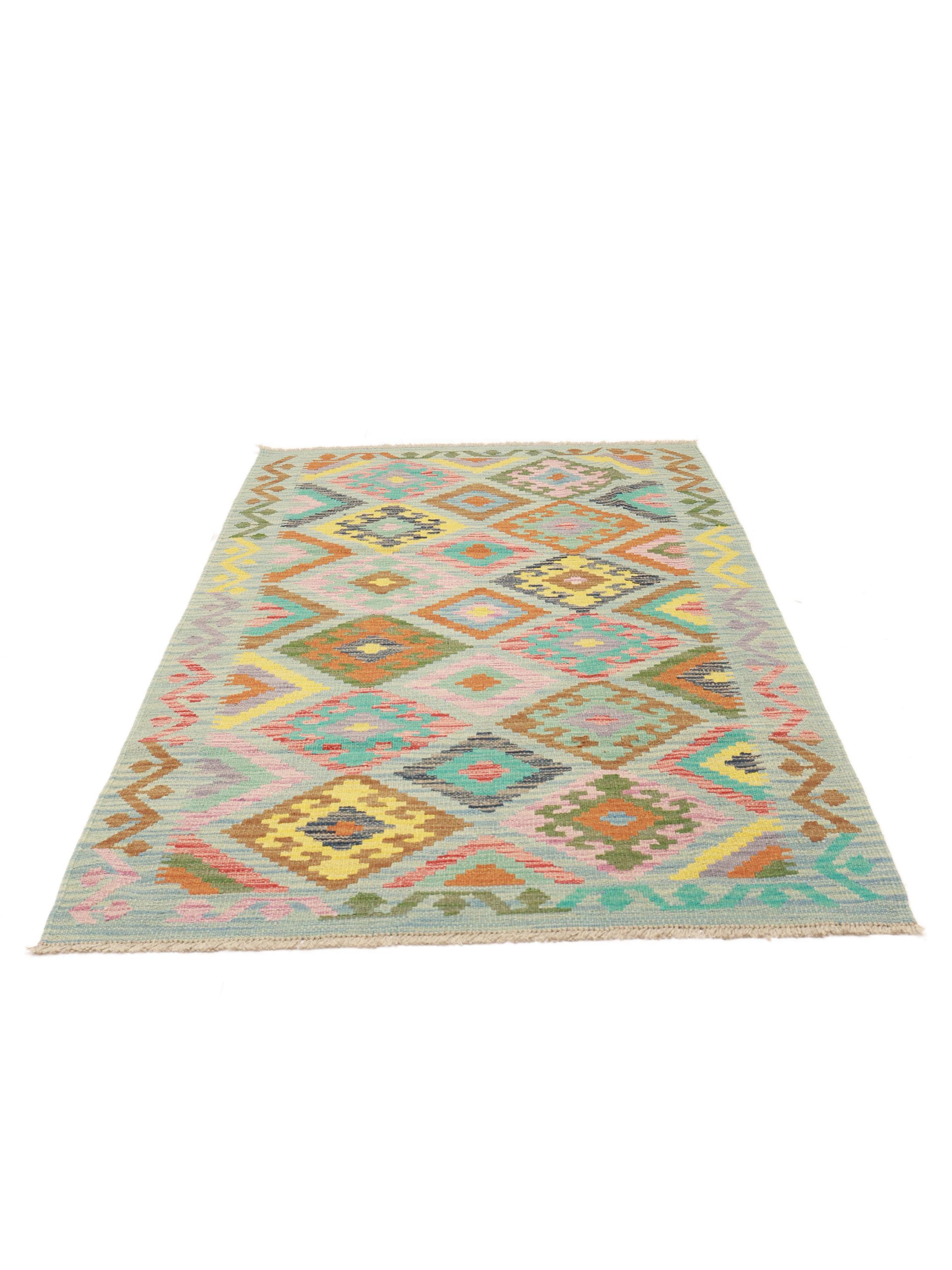
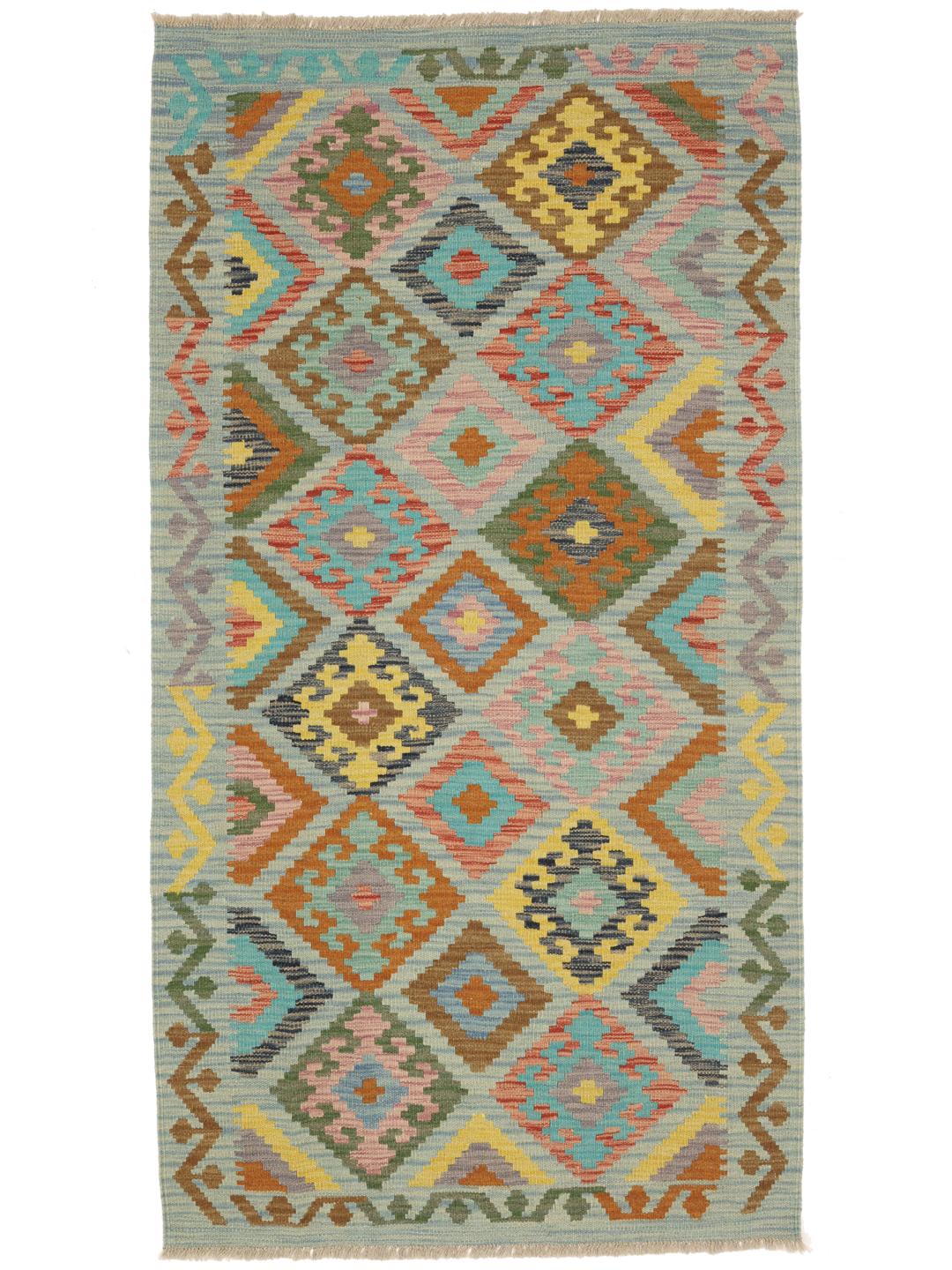
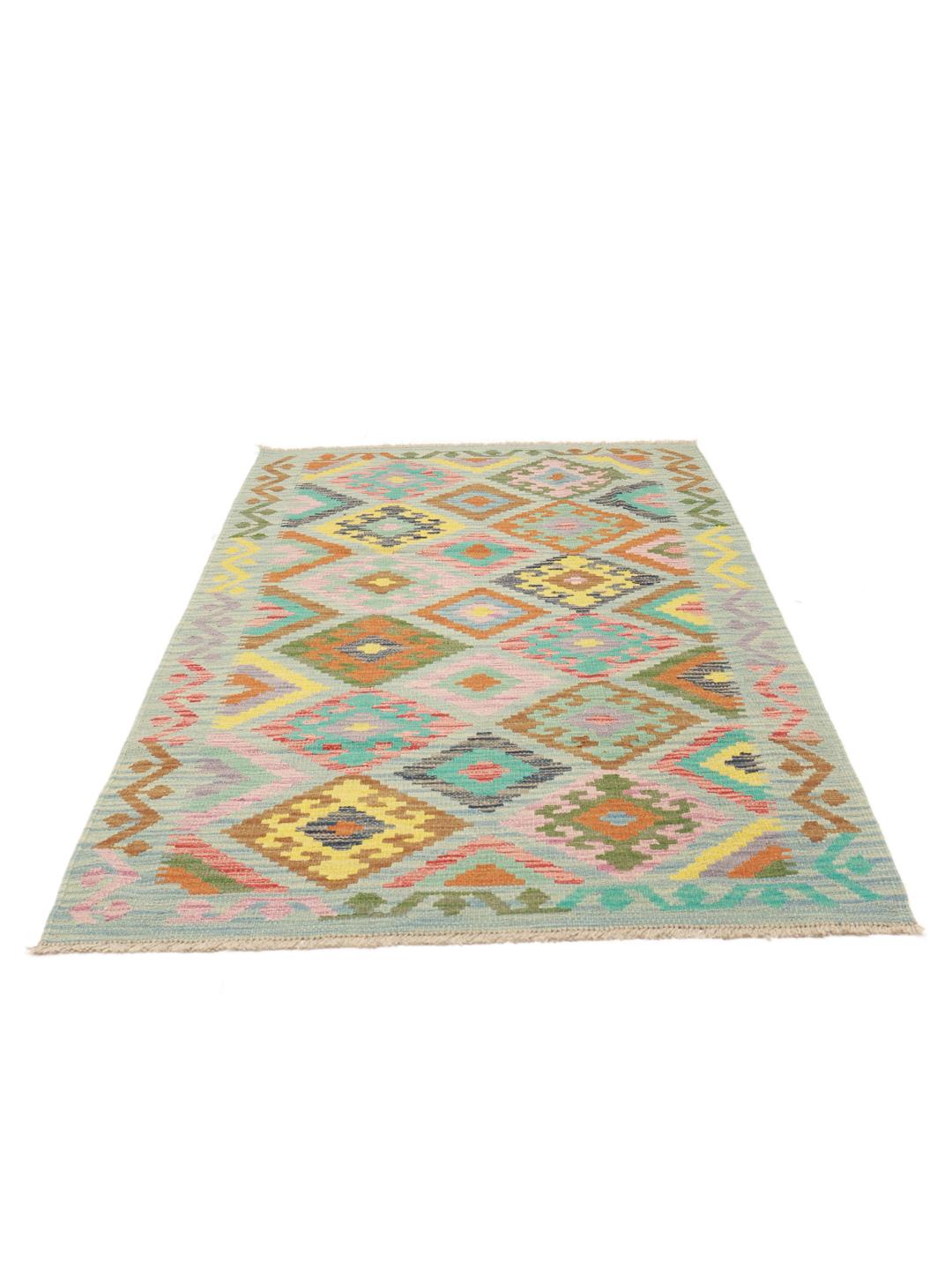
The Kelim tradition is one of the most storied textile legacies in the Middle East and Central Asia. Historically, these flat-woven rugs were created by nomadic and semi-nomadic tribes for practical use, serving as floor coverings, tent dividers, and storage sacks. Their portability and durability made them essential to a life on the move, while their designs often reflected the unique identity of the weaving community.
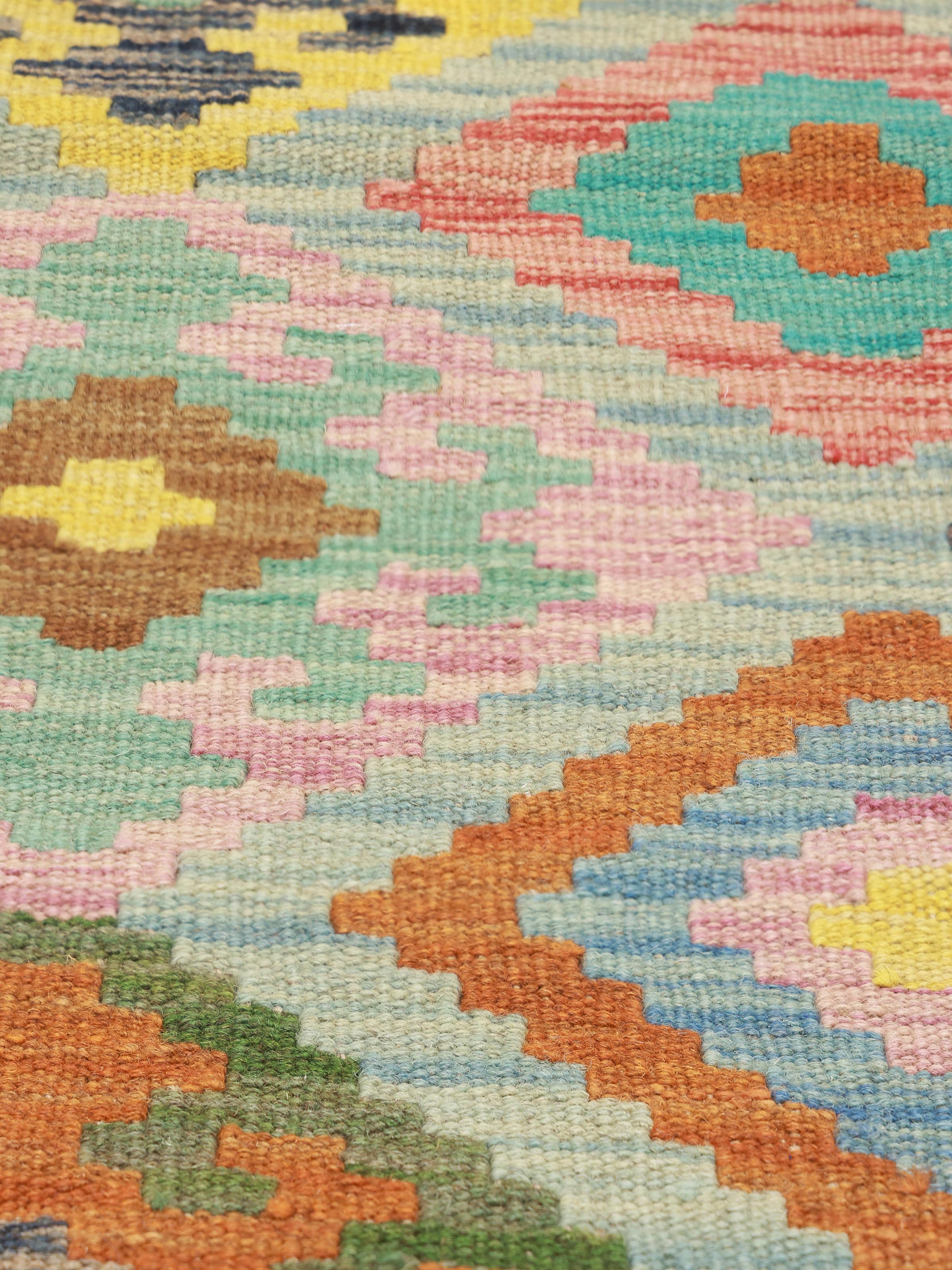
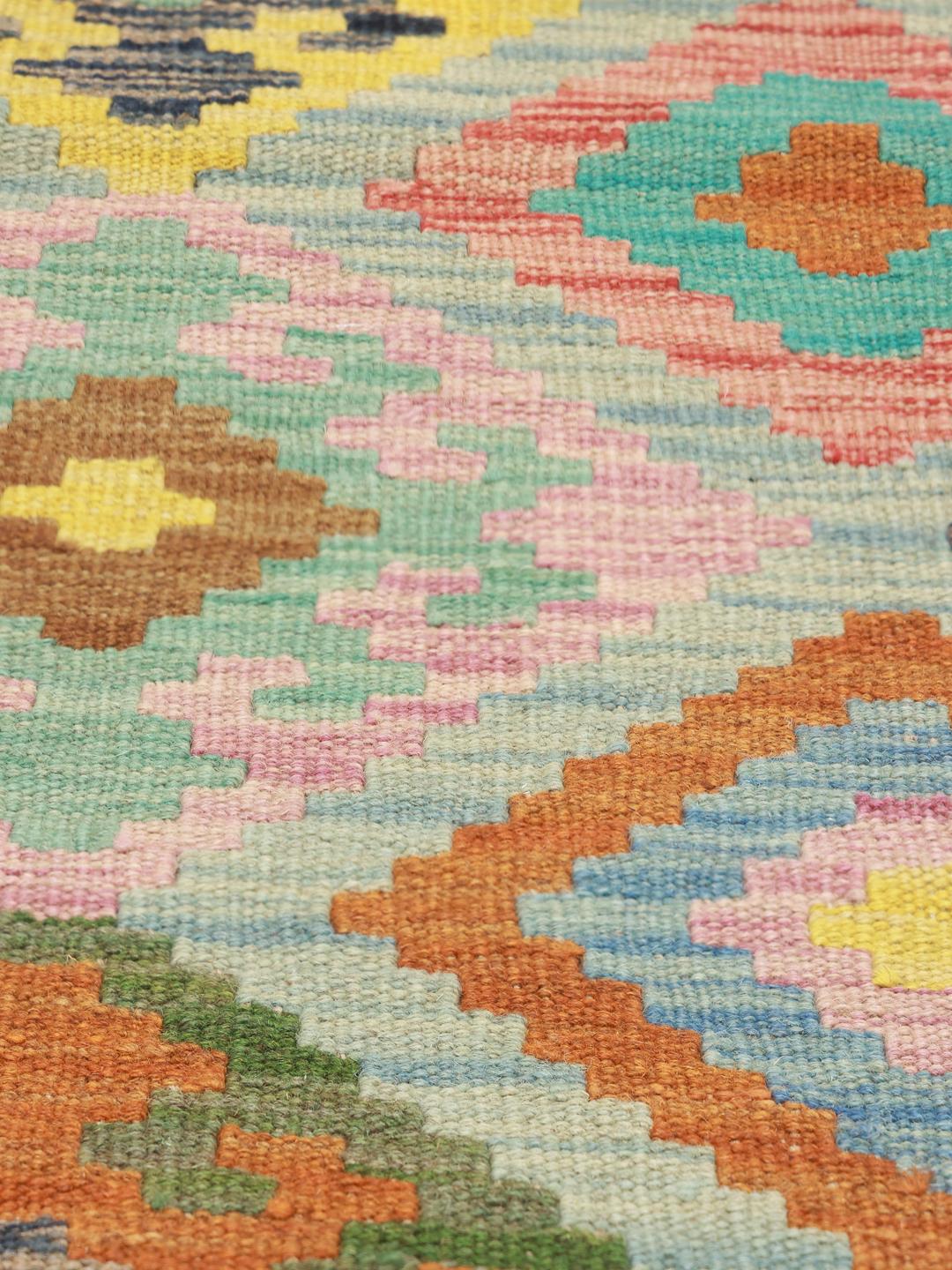
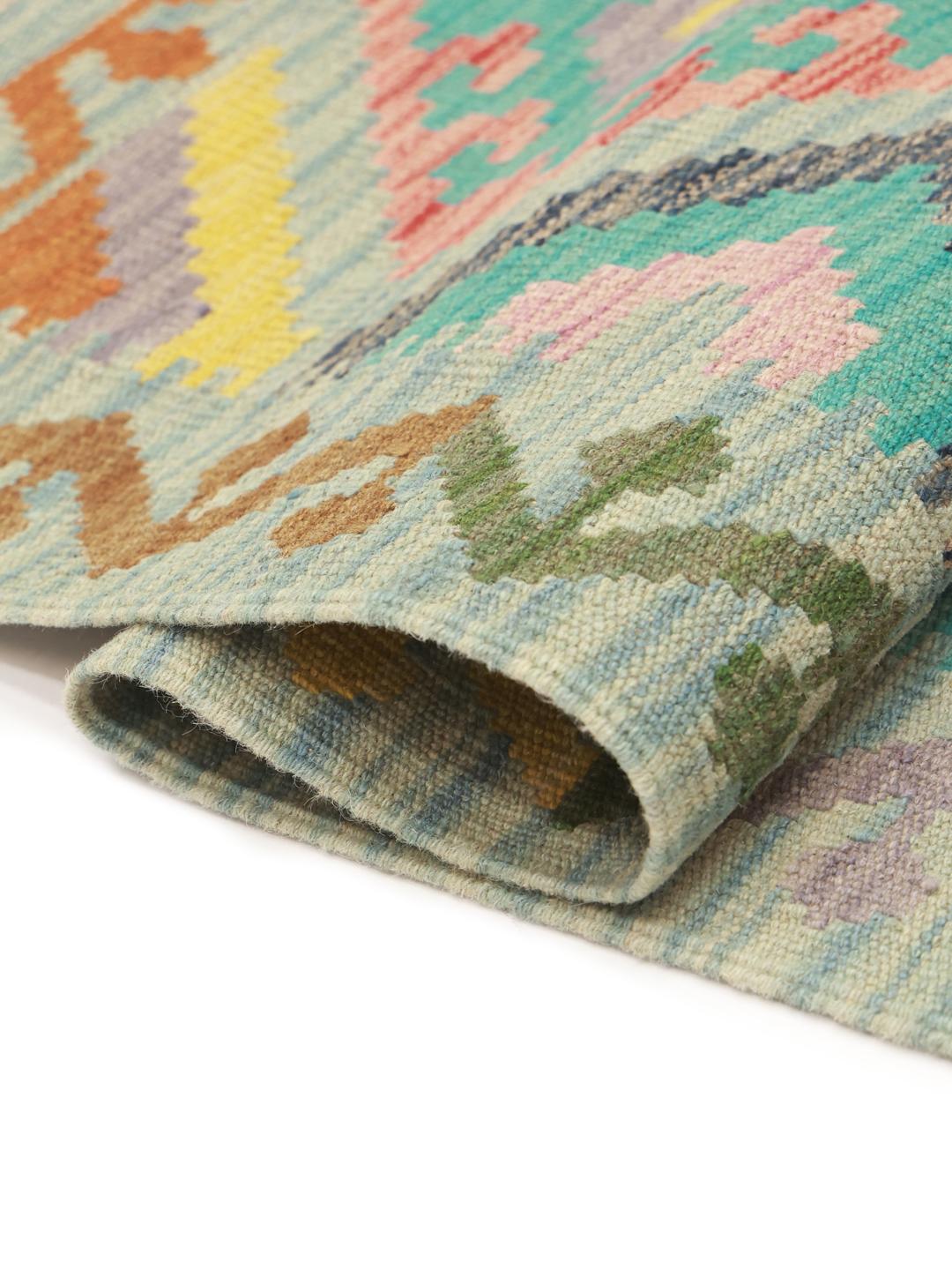
The term Kelim refers specifically to the tapestry-weave technique, where the pattern is created by tightly interlacing the weft threads through the warp. Unlike pile rugs, which are knotted, Kelims are smooth on both sides. This technique allows for sharp, crisp geometric designs and a lightweight structure that is remarkably resilient, making these rugs highly prized for their functional longevity.
The visual language of Afghan Kelims is defined by bold, geometric motifs often arranged in repeating patterns. Diamonds, chevrons, and stylised tribal symbols are common, each holding symbolic significance related to protection, fertility, or the natural landscape. The use of vibrant, often natural dyes creates a striking contrast that has made these rugs a favourite among collectors who appreciate the raw, unrefined energy of traditional tribal art.
Today, these rugs are celebrated for their cultural weight and the undeniable skill required to produce them. By preserving these ancient techniques, Afghan weavers maintain a vital link to their heritage. Owning a Kelim is more than just acquiring a floor covering; it is an investment in a living tradition that bridges the gap between the nomadic past and the modern home.