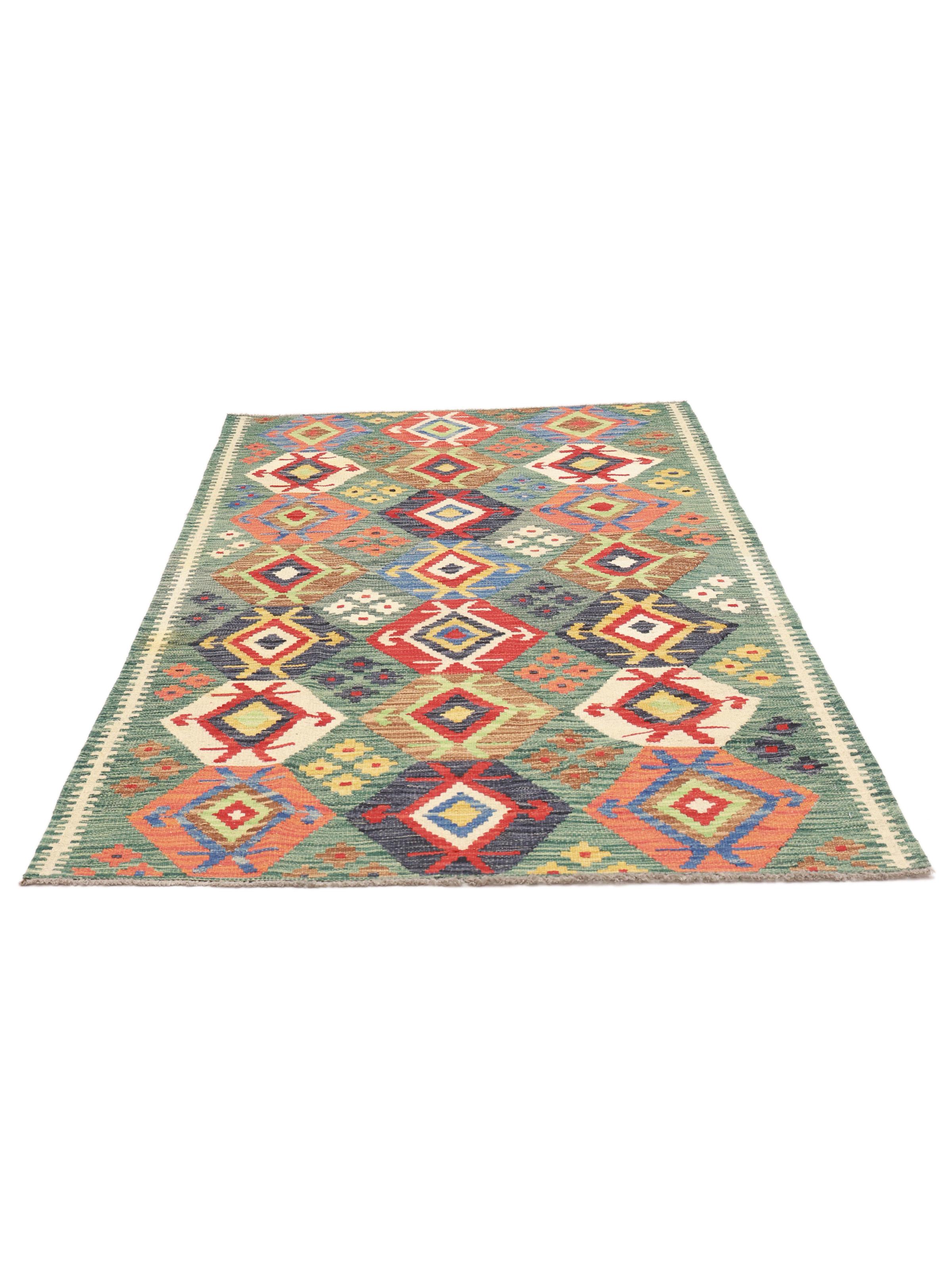
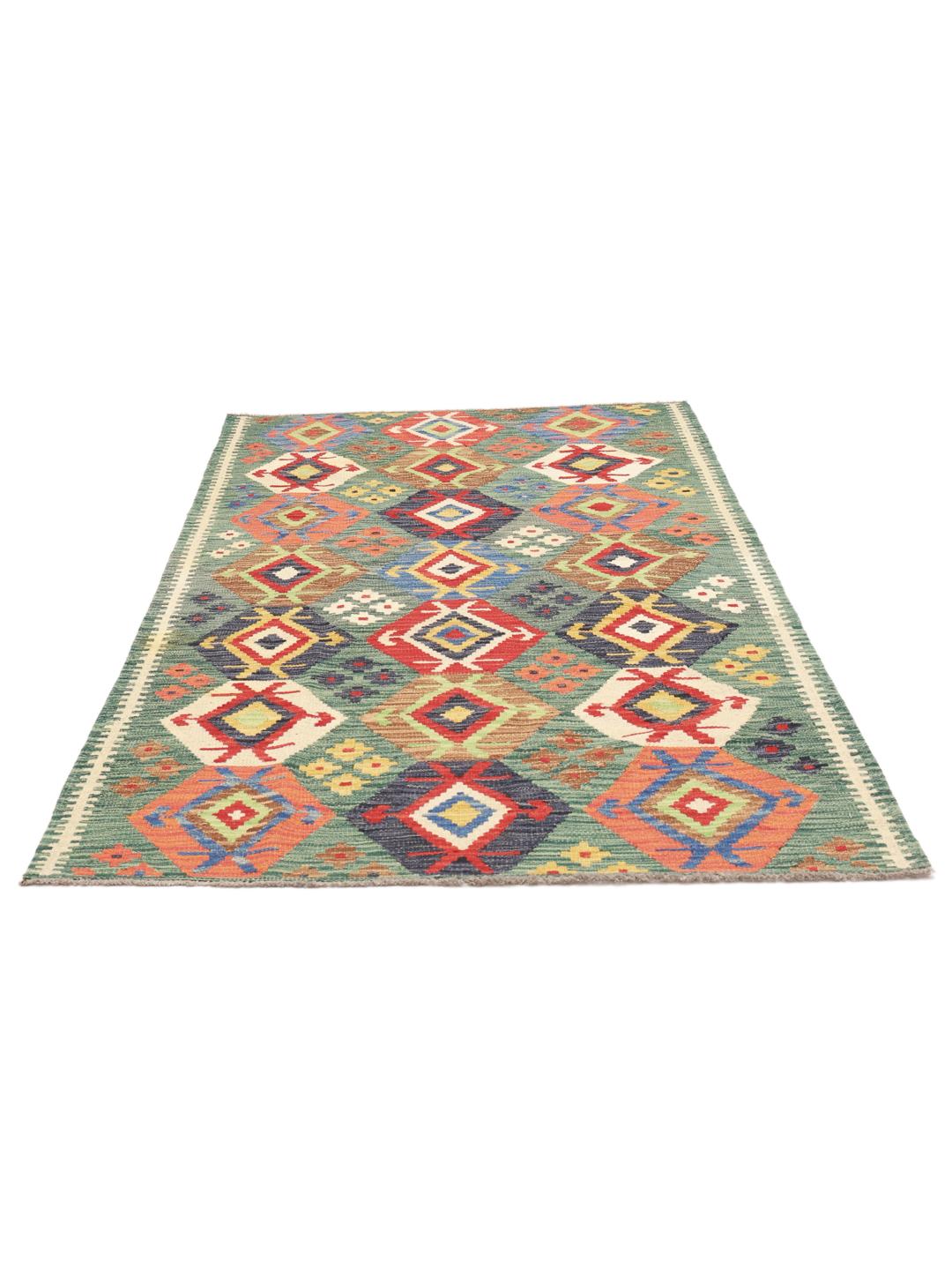
The Kelim tradition in Afghanistan is a testament to the enduring legacy of nomadic weaving cultures. For centuries, these flat-woven rugs have been produced by tribes across the region, serving as versatile, portable, and durable textiles that were essential to daily life in the harsh environments of the Middle East.
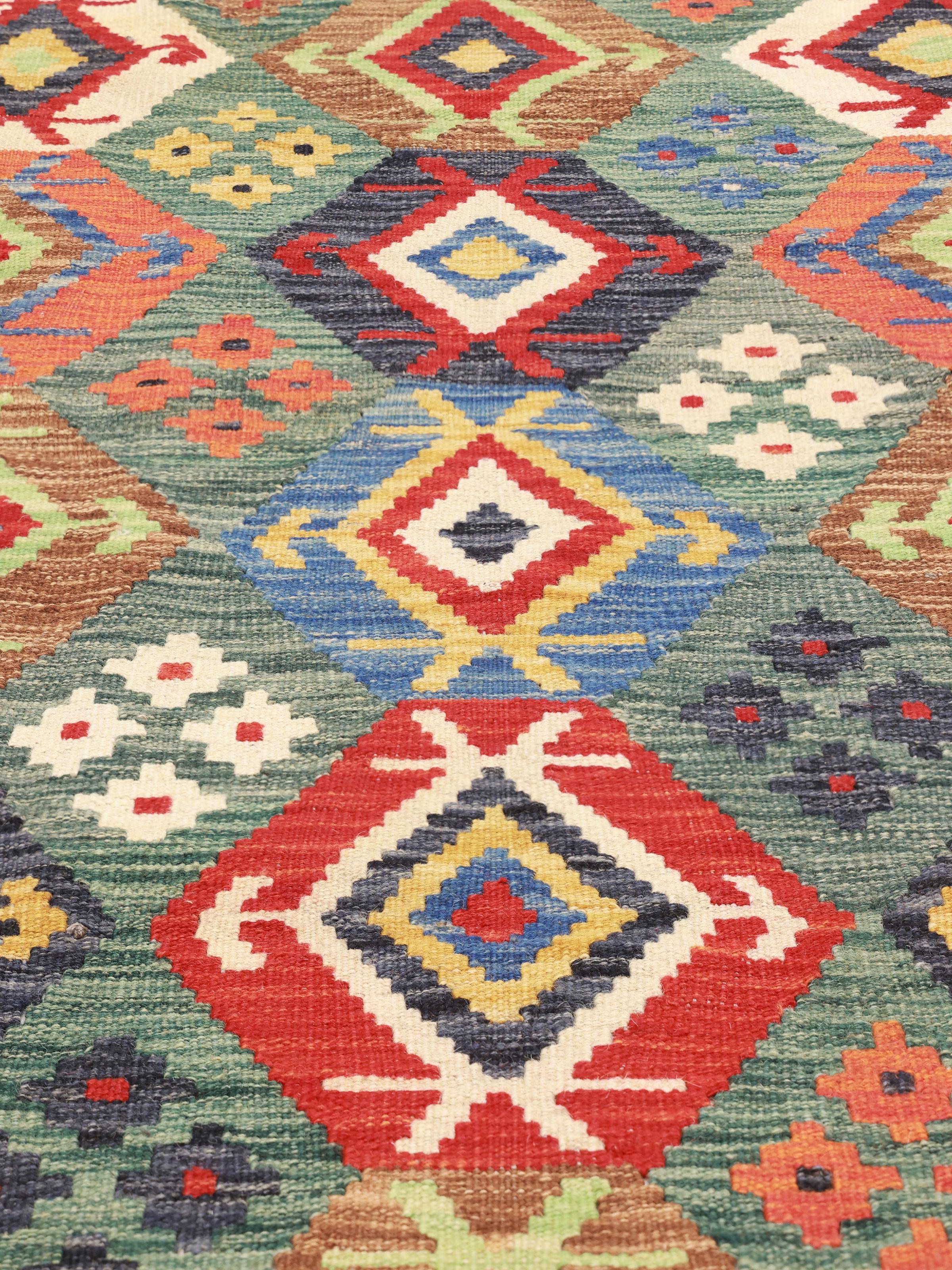
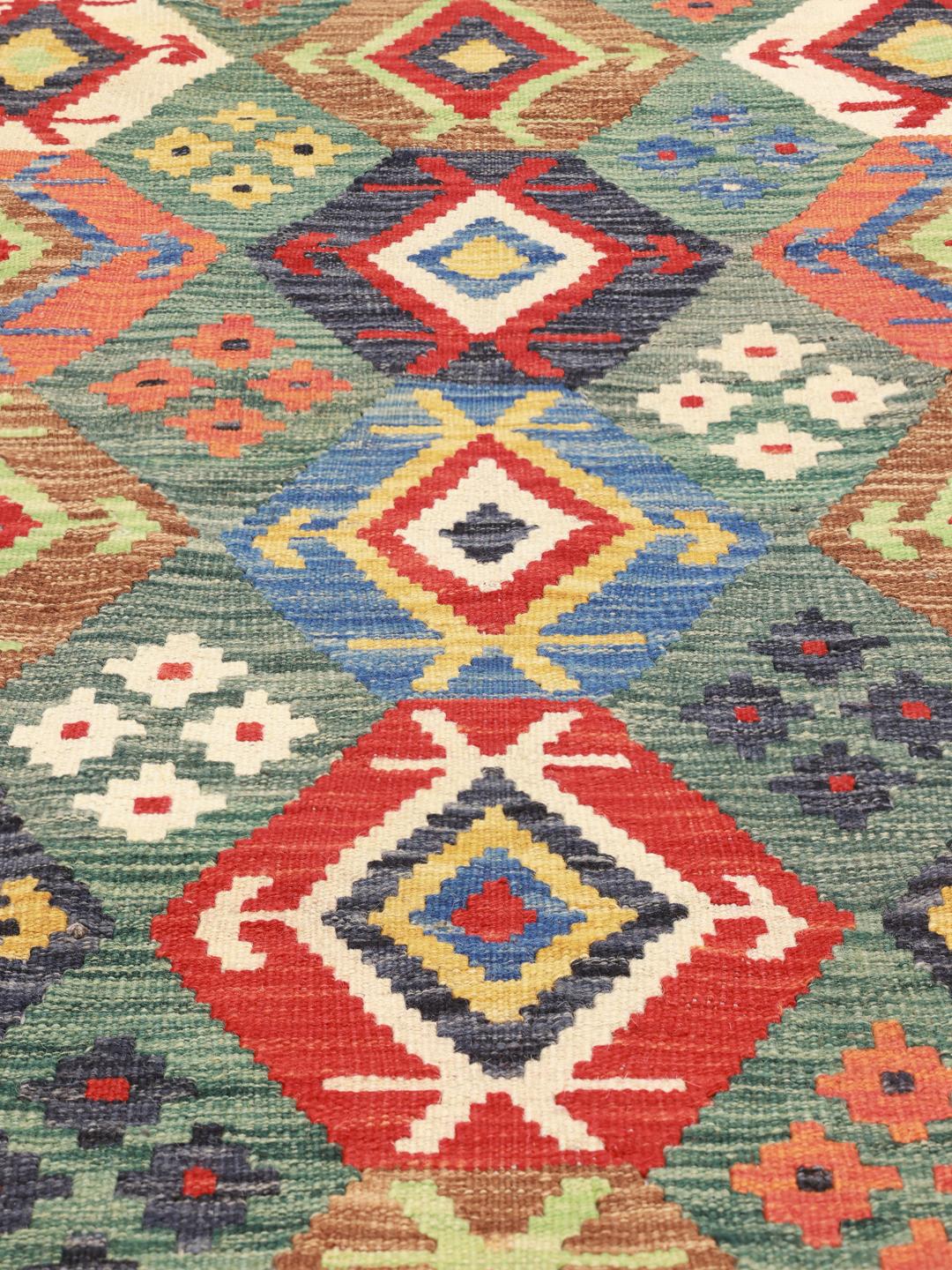
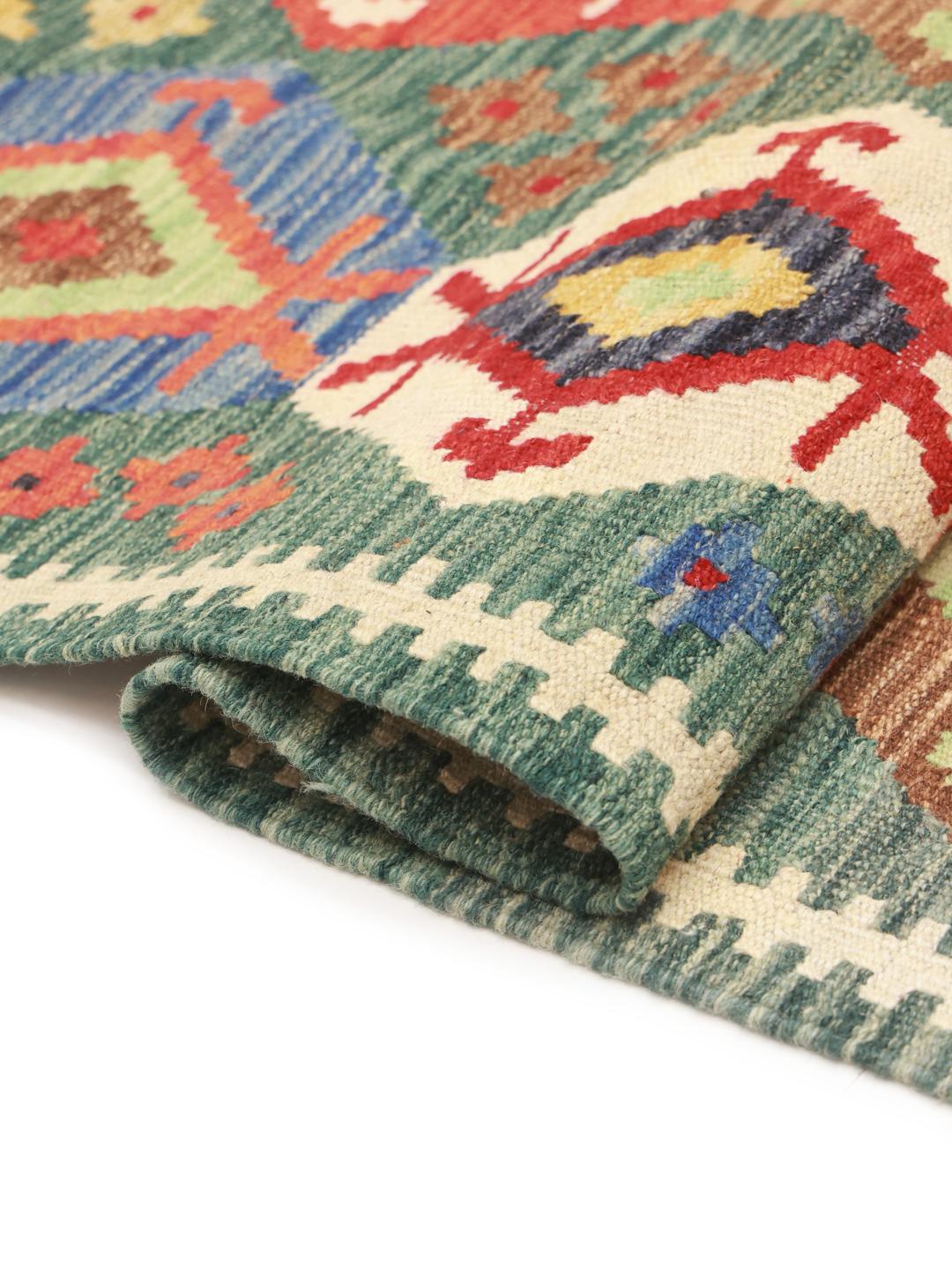
The term 'Kelim' refers to a specific tapestry-weave technique where the weft threads are passed through the warp threads to create the pattern, resulting in a rug that has no pile. This method allows for sharp, crisp geometric designs, as the weaver can easily switch colours to create intricate, mosaic-like surfaces that define the aesthetic of the region.
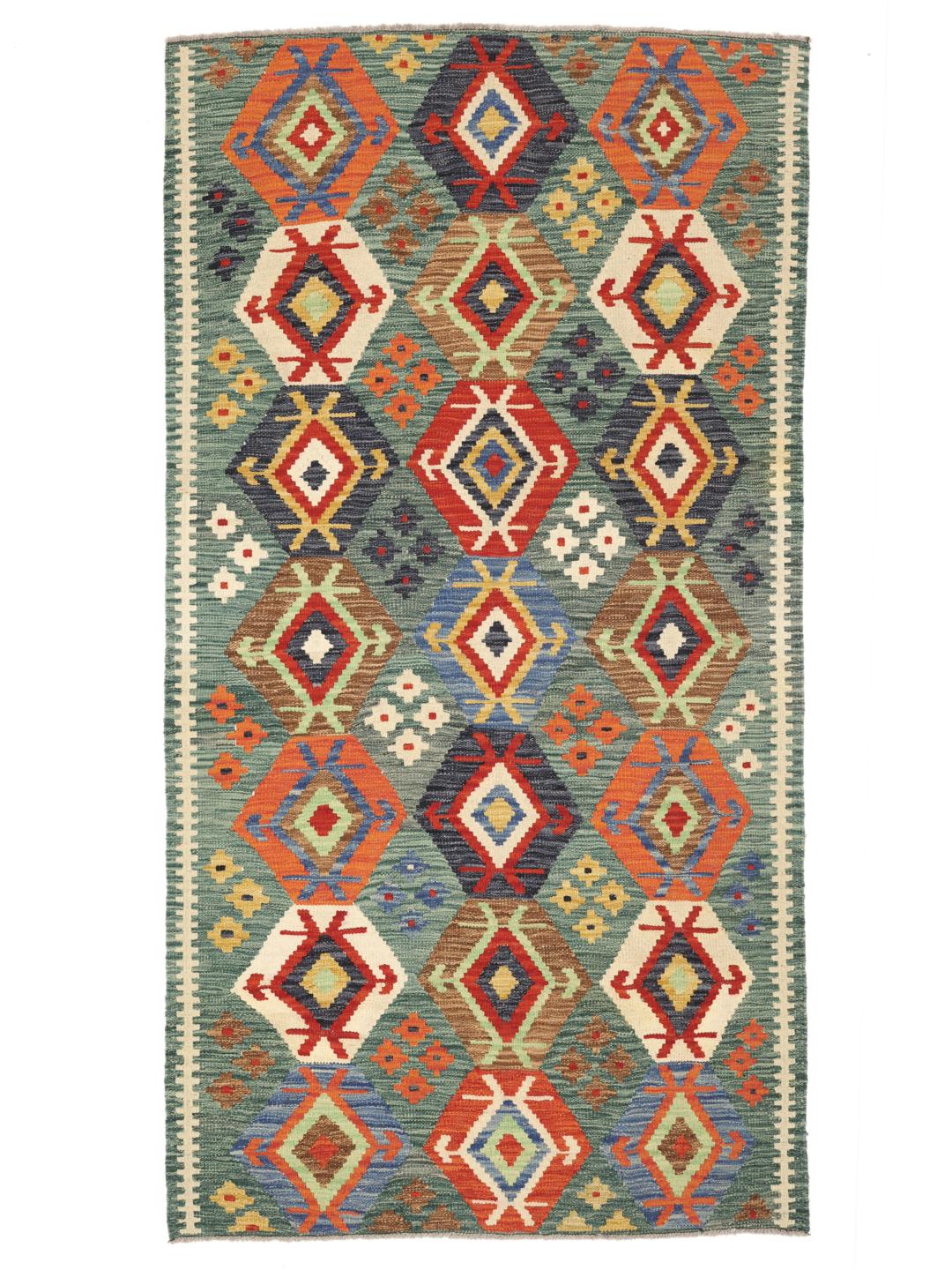
Signature design elements of these rugs often include bold diamonds, stepped triangles, and repeating medallions, all rendered in a vibrant palette of natural dyes. These motifs are not merely decorative but are deeply symbolic, often representing tribal identity, protection, or the natural world, passed down through generations of weavers.
Collecting an Afghan Kelim is an investment in cultural heritage and human skill. These rugs are valued not only for their striking visual impact but for the stories they tell through their patterns and the resilience of the craft tradition they represent, offering a tangible connection to a rich, historical lineage.