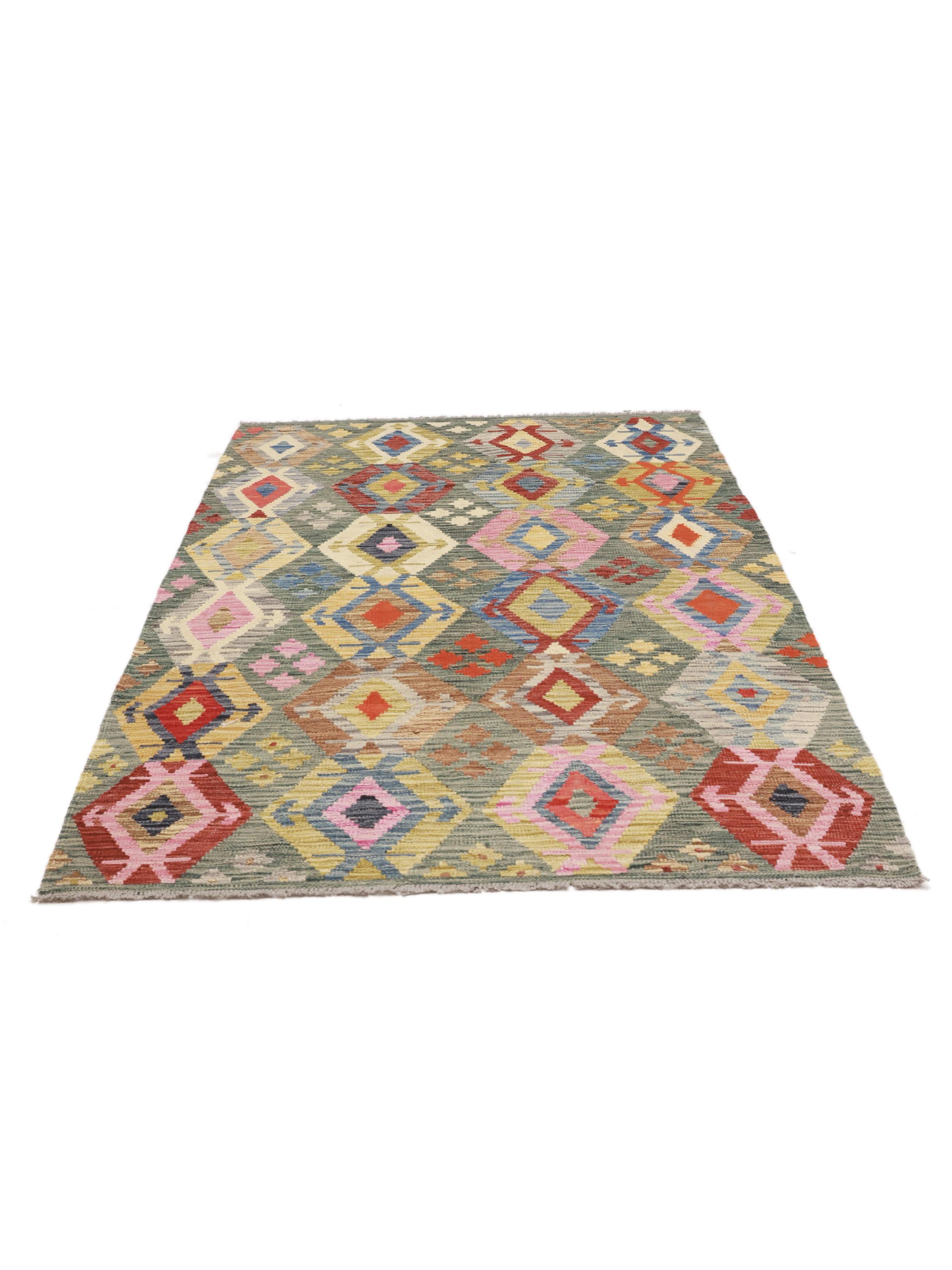
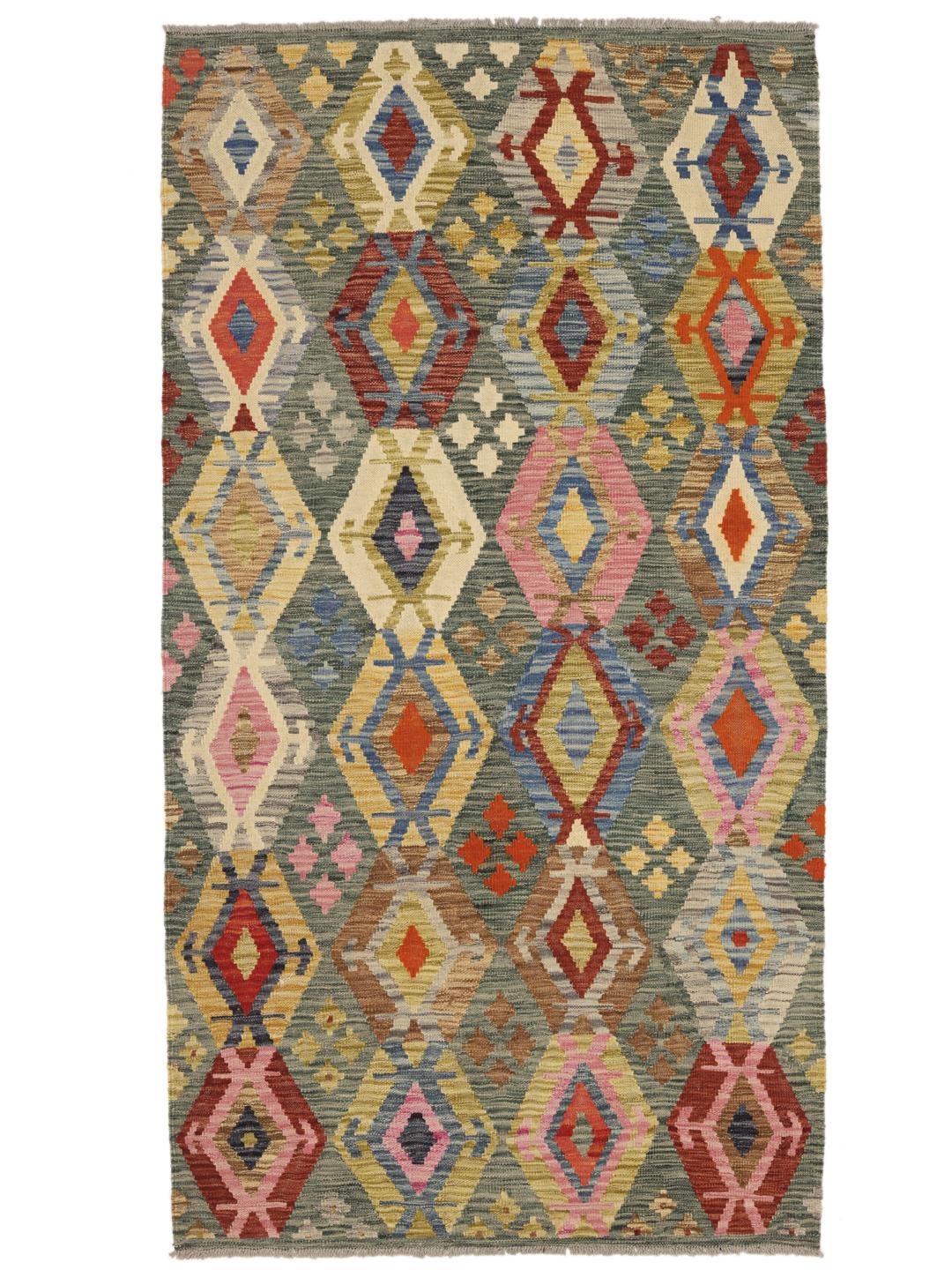
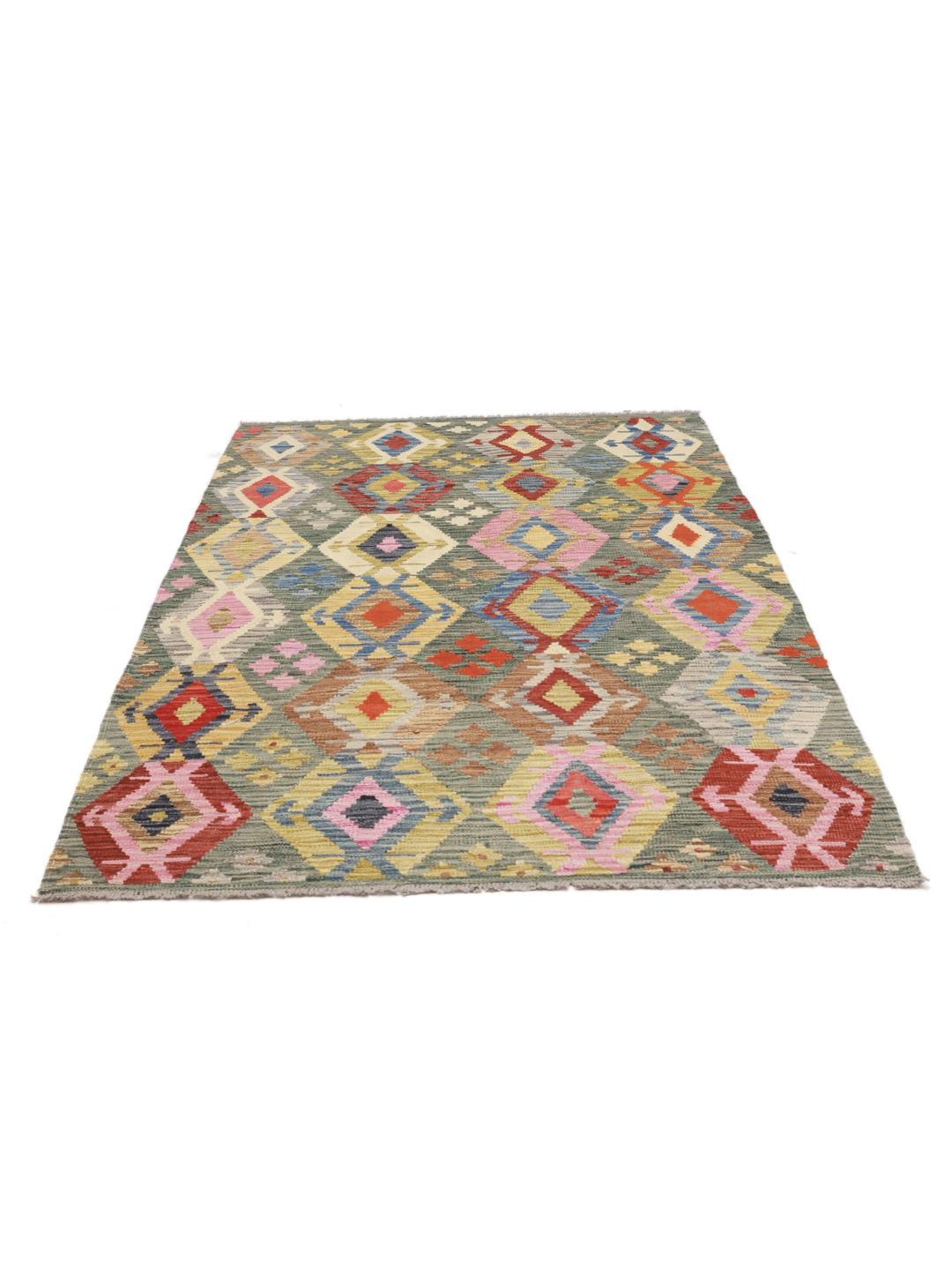
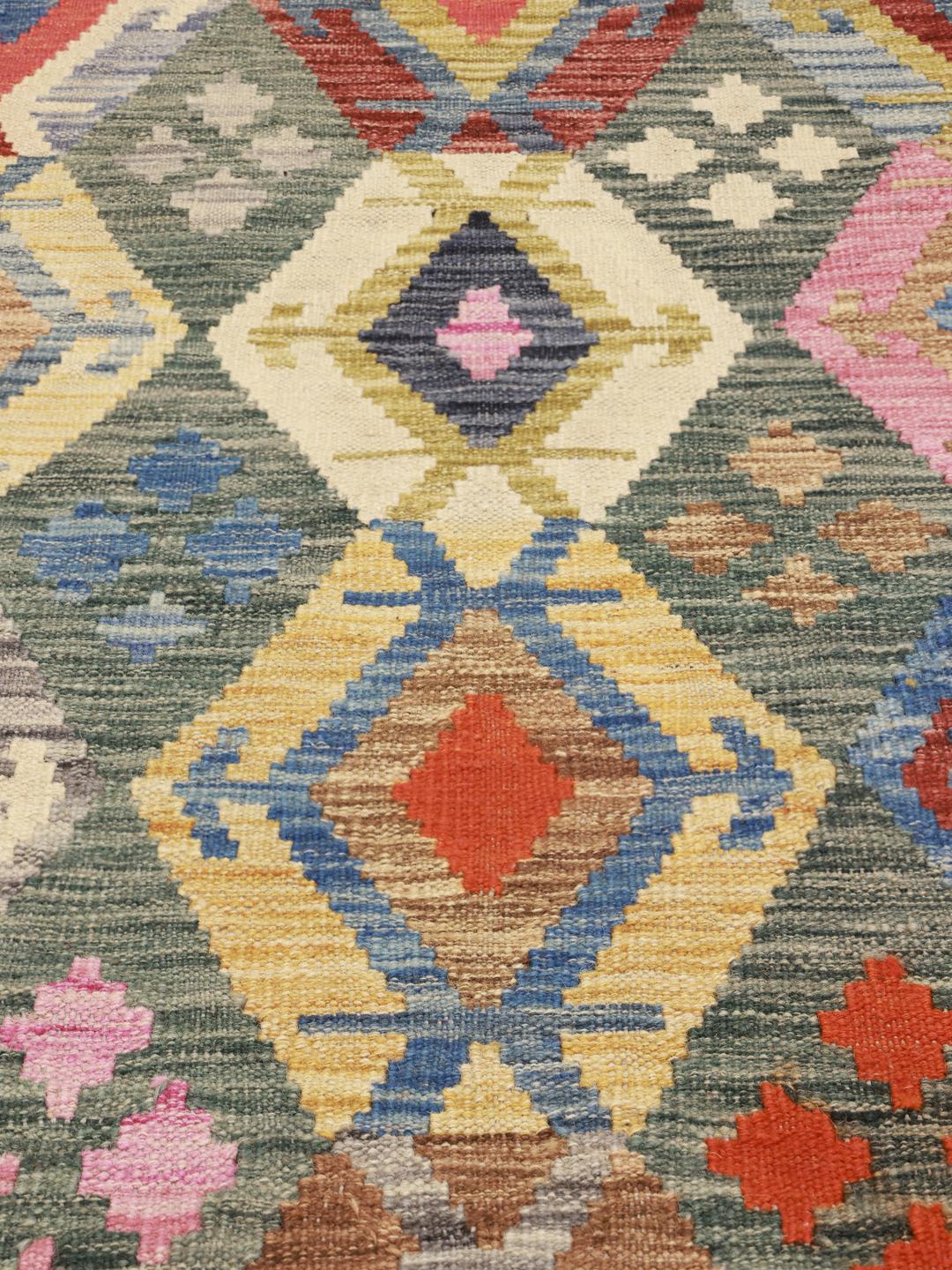
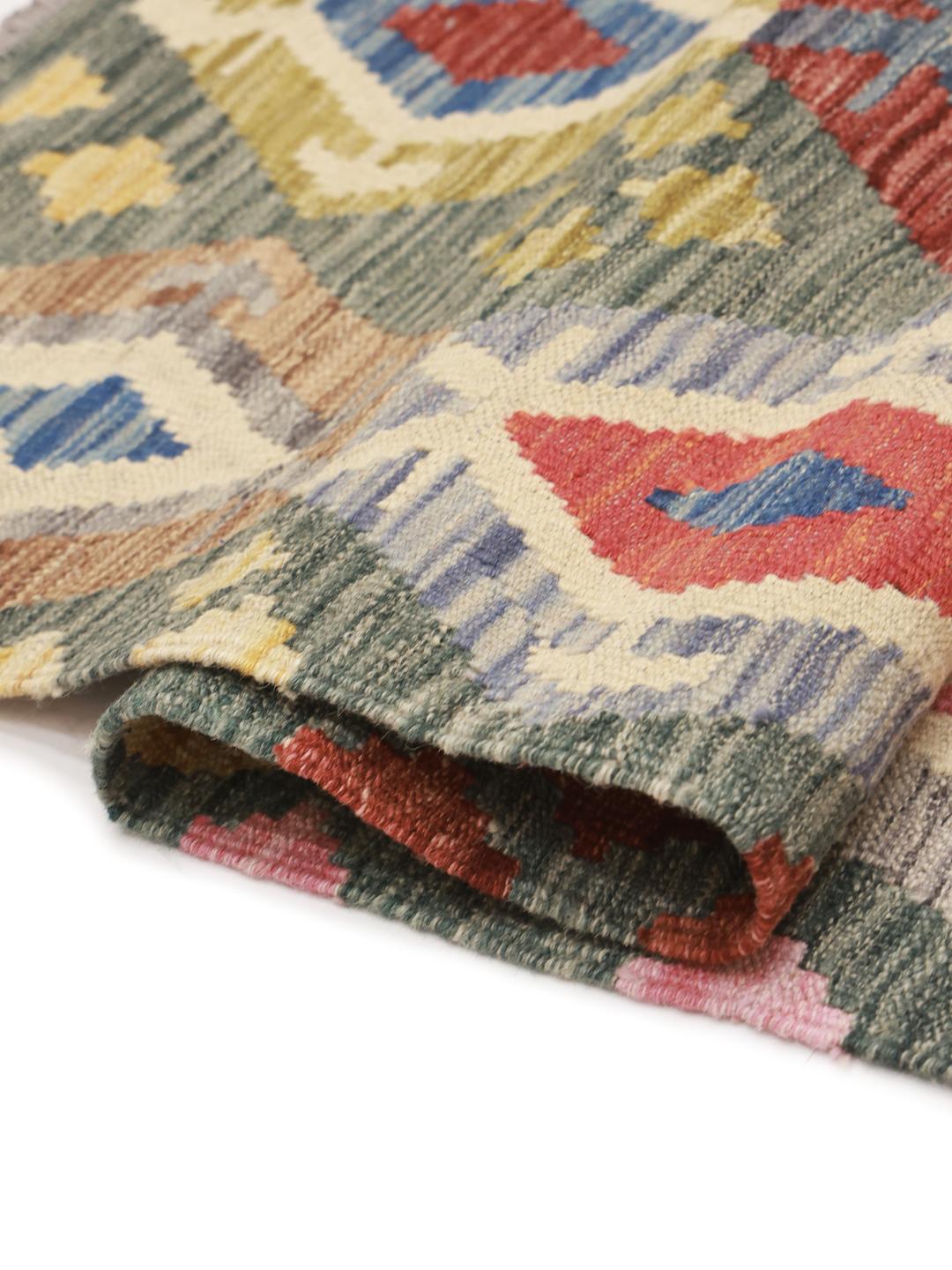
The Kelim tradition in Afghanistan is deeply rooted in the nomadic and semi-nomadic lifestyles of the region. Historically, these flat-woven textiles were crafted by tribal groups to serve practical needs such as floor coverings, tent partitions, and storage bags, reflecting a culture that valued both utility and artistic expression.
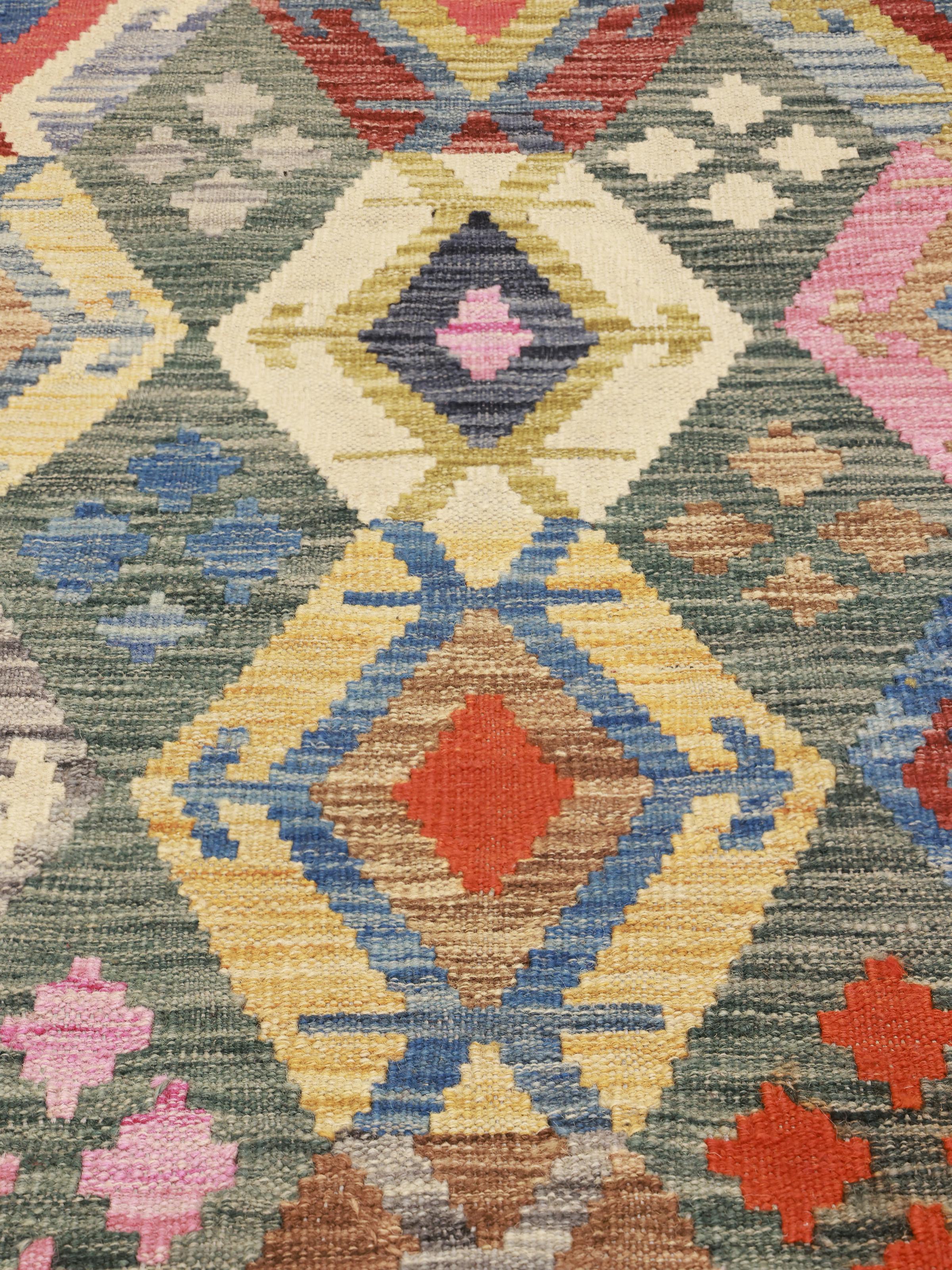
The term 'Kelim' refers to the specific technique of tapestry weaving where the weft threads are passed back and forth through the warp to create a smooth, pileless surface. This method allows for the creation of sharp, clean geometric designs and intricate patterns, which are achieved by changing the colour of the weft threads as the weaver progresses.
The visual language of these rugs is defined by a bold use of geometric motifs, such as diamonds, triangles, and stylized floral elements. These designs often carry symbolic meanings related to protection, fertility, and the natural world, passed down through generations of weavers. The colour traditions in Afghan Kelims are particularly celebrated, utilising vibrant, earthy tones derived from natural dyes.
Owning a Kelim is more than just acquiring a floor covering; it is an investment in cultural heritage. These rugs are highly valued by collectors for their authenticity and the immense skill required to produce them. By choosing a hand-woven Afghan piece, you are supporting a craft tradition that has survived for centuries, keeping a vital piece of artistic history alive in your own home.