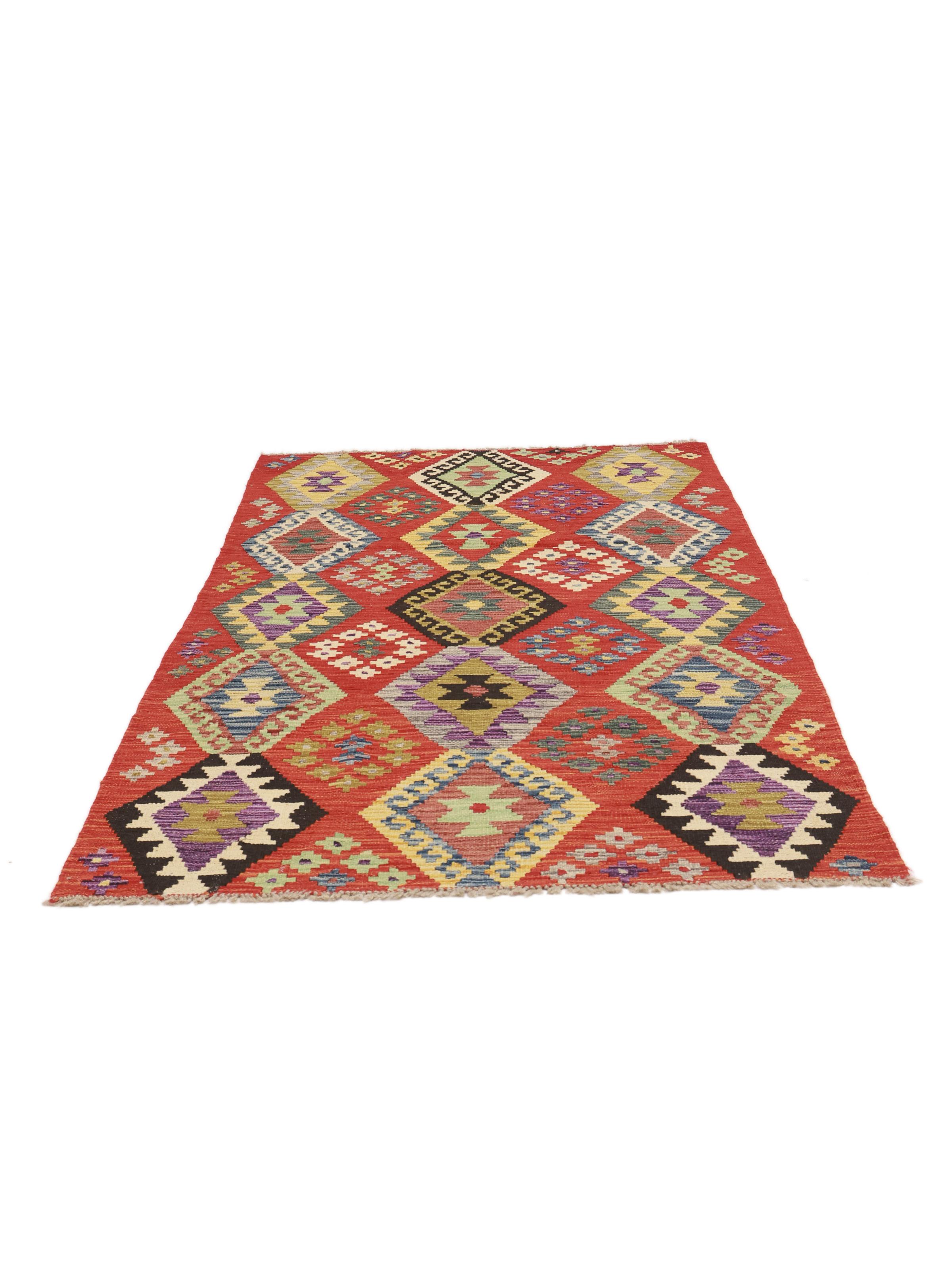
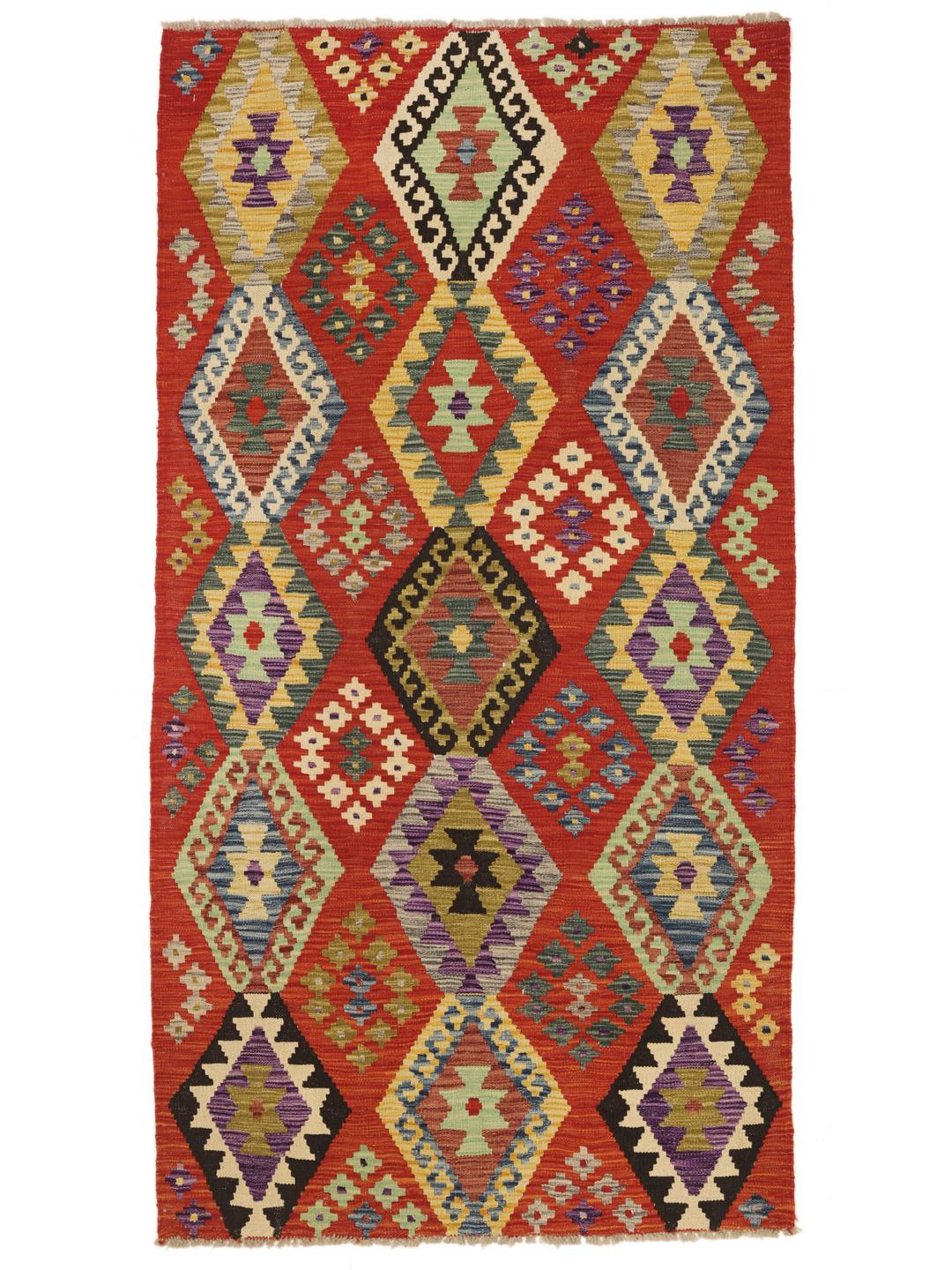
The Kelim tradition in Afghanistan is deeply embedded in the cultural history of the region, where flat-weave textiles have been produced for centuries by nomadic and semi-nomadic tribes. These rugs were historically created for practical use, serving as floor coverings, wall hangings, and storage bags, reflecting a lifestyle that valued both portability and aesthetic beauty.
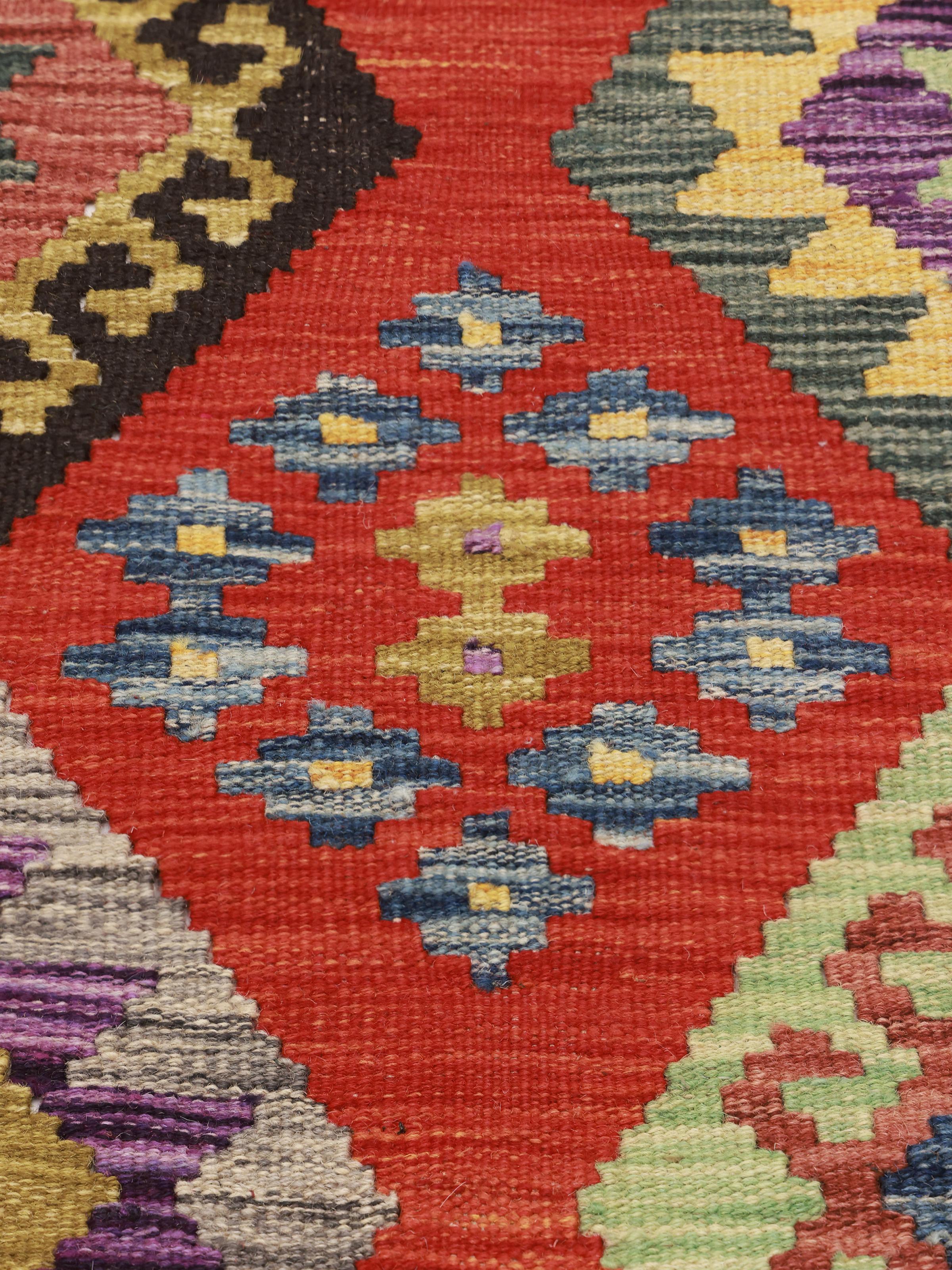
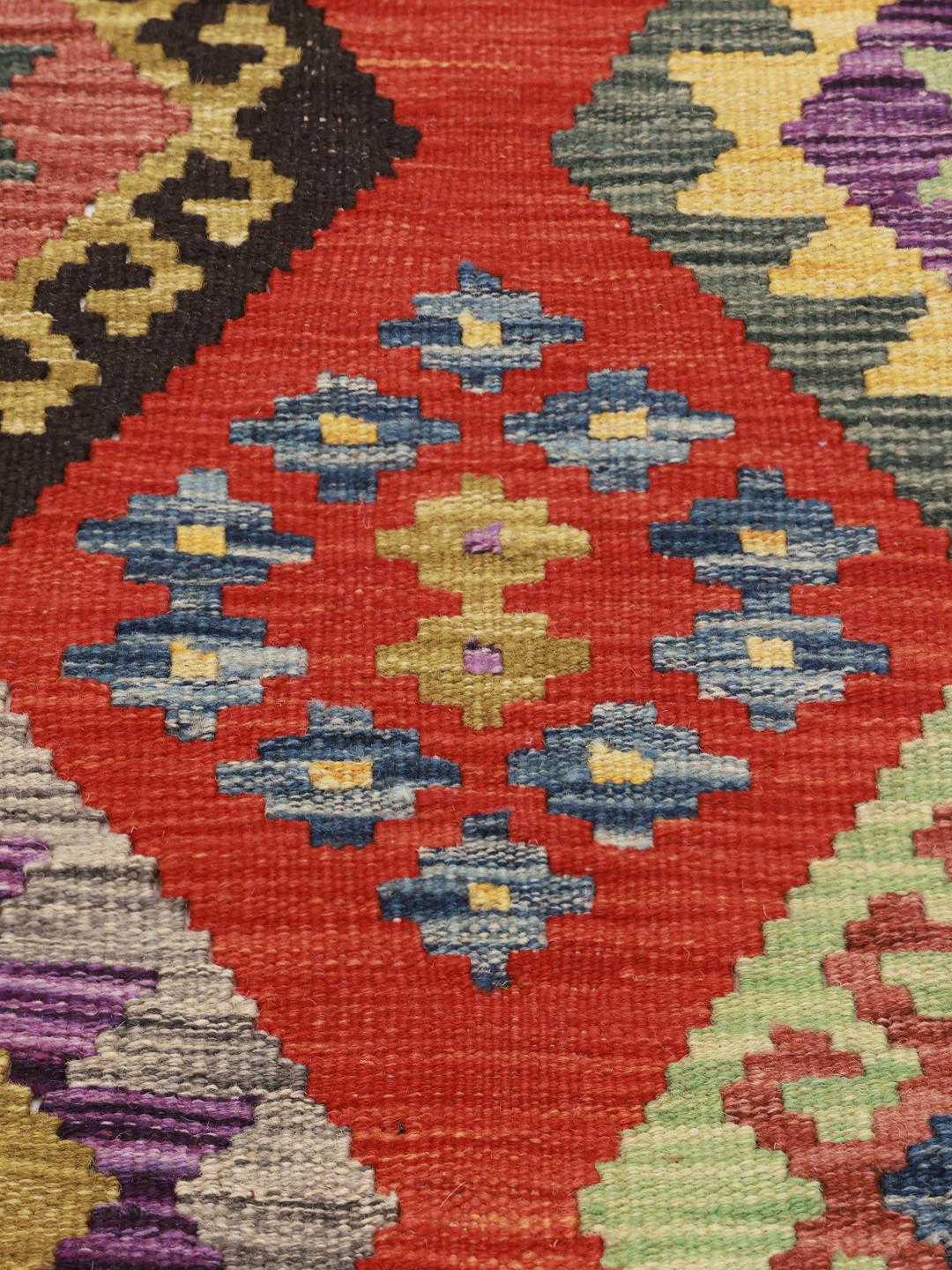
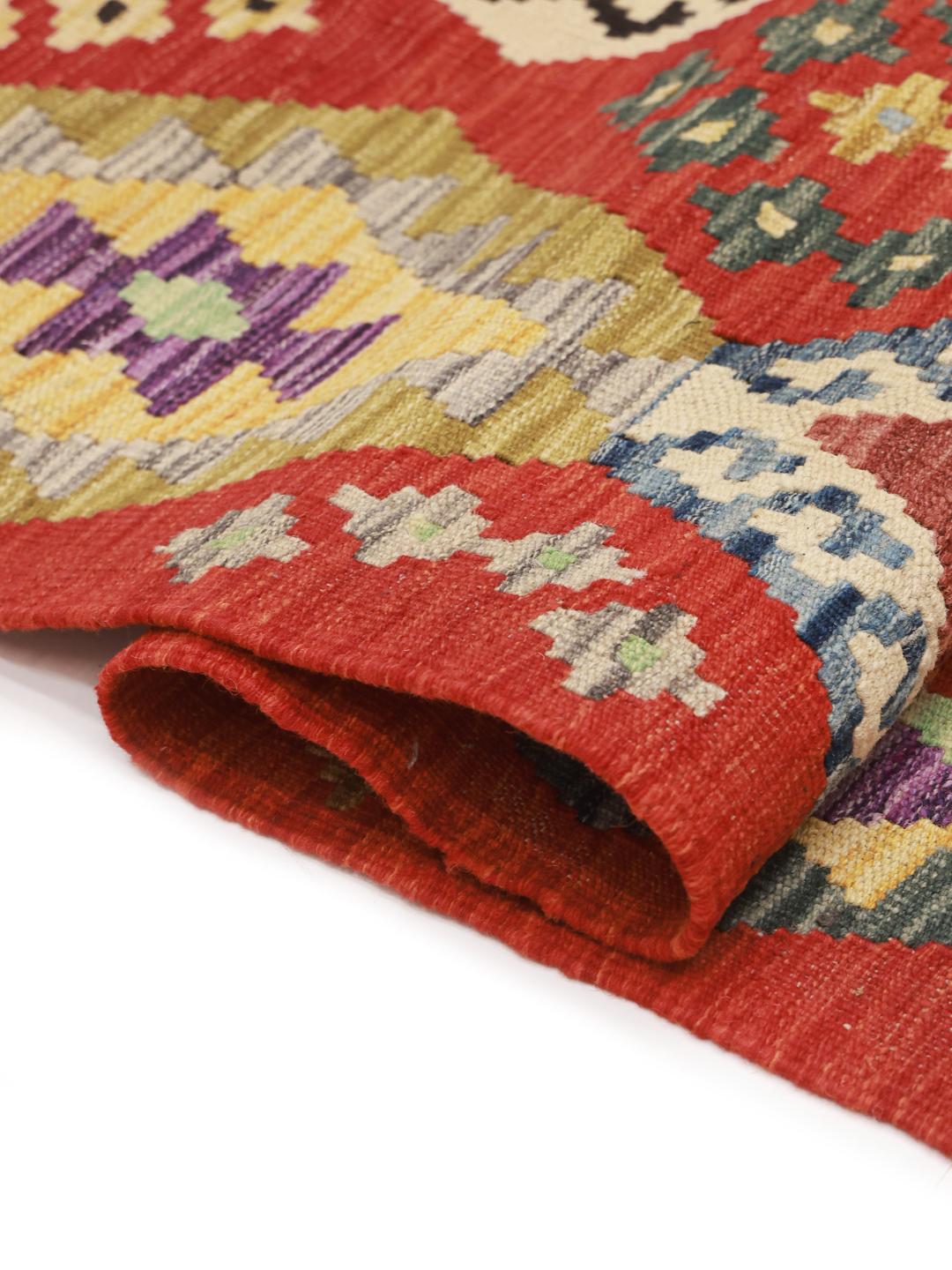
The term 'Kelim' refers to the specific flat-weaving technique used to create these pieces, which involves interweaving the warp and weft threads to create a smooth, pileless surface. This method is highly prized for its clarity of design and the way it highlights the intricate motifs, as there is no pile to obscure the crisp lines of the pattern.
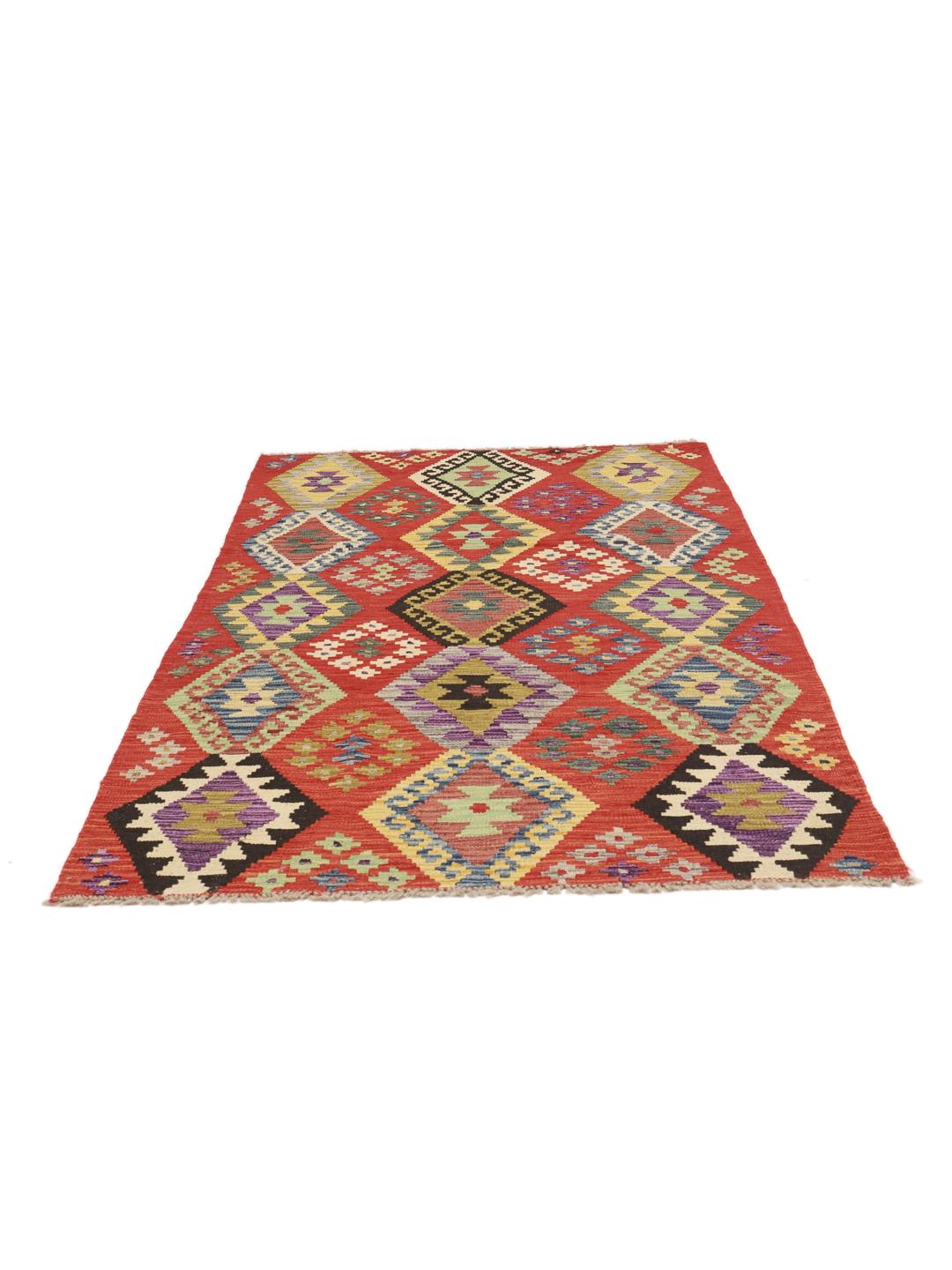
A hallmark of Afghan Kelims is the use of geometric motifs, such as the diamond shapes and repeating patterns seen here. These designs are often passed down through generations, with each symbol carrying specific cultural meanings related to protection, fertility, or the natural landscape. The use of vibrant, natural dyes and bold arrangements makes these rugs instantly recognisable and highly sought after by collectors.
Owning a Kelim is an invitation to connect with a rich heritage of human skill and creativity. These rugs are valued not just for their decorative impact, but for the story they tell of a region where weaving is an essential form of expression. By acquiring this piece, you are supporting a tradition that values lasting quality and the preservation of artisanal techniques.