Kelim rugs have long been a cornerstone of nomadic life across the Middle East and Central Asia. Originally designed as functional, portable floor coverings and storage bags for migratory tribes, these flat-woven textiles were essential for both warmth and decoration in tents. The Afghan tradition of weaving is particularly celebrated for its resilience and bold, expressive use of natural dyes.
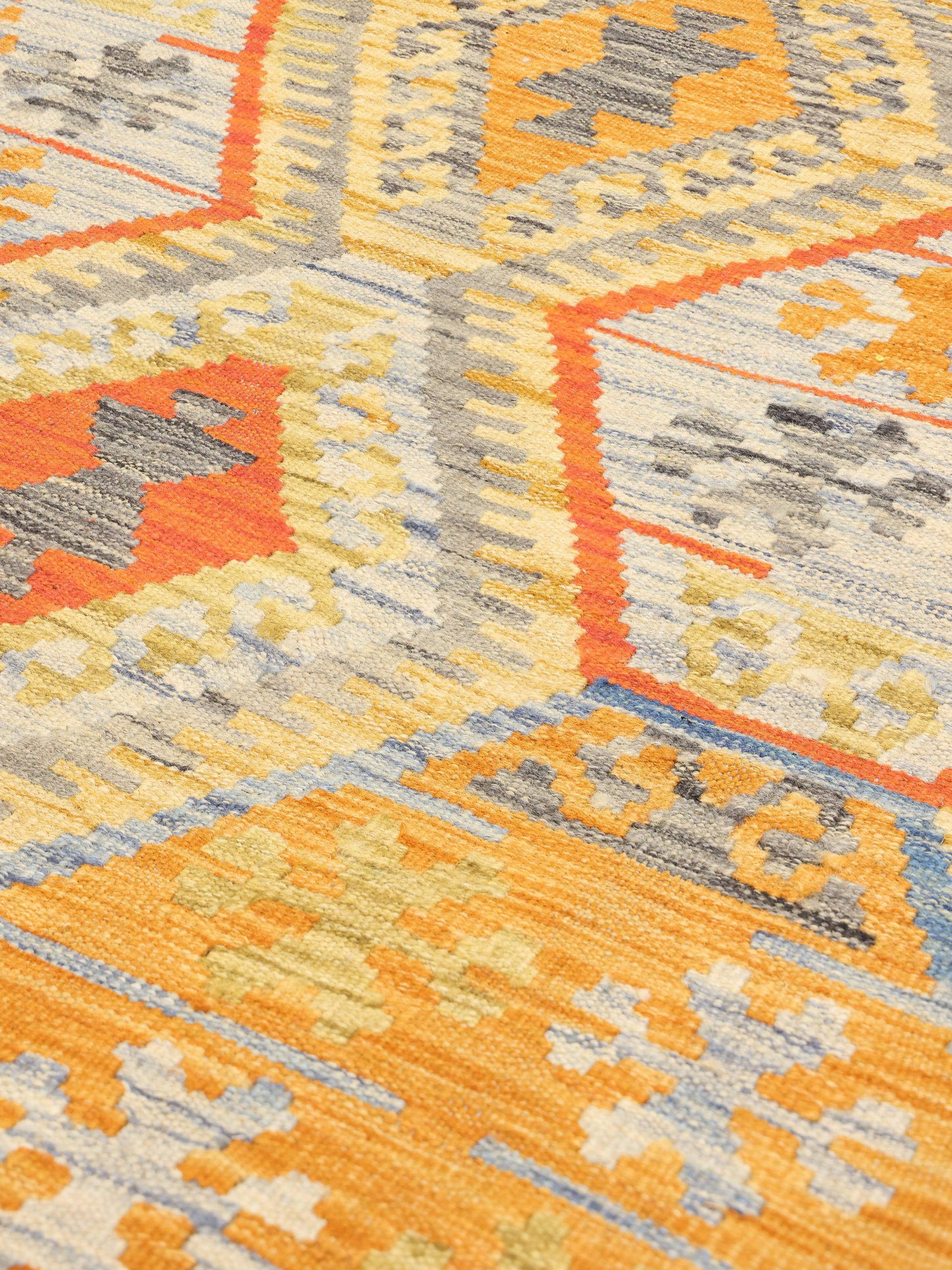
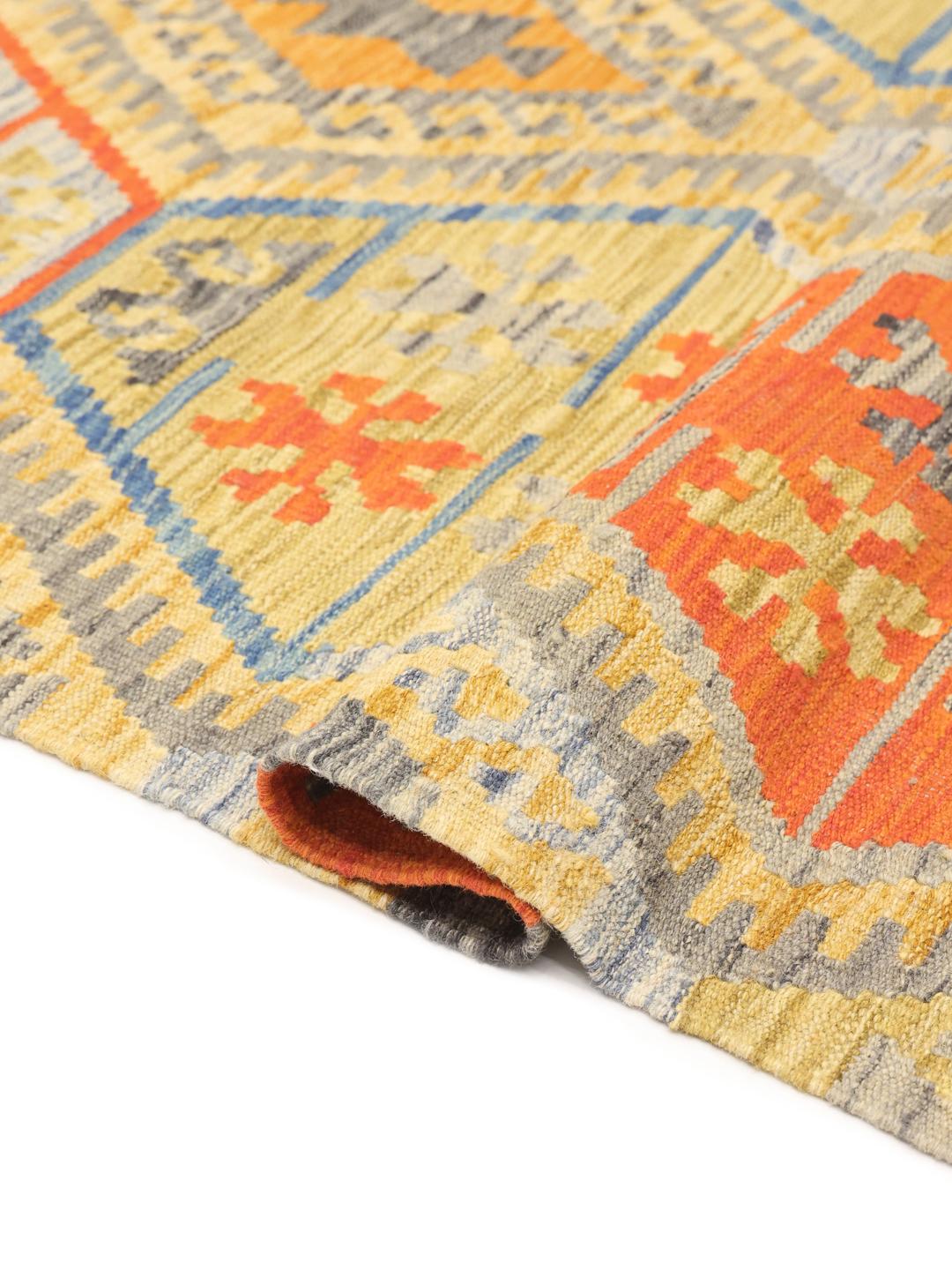
The term 'Kelim' refers specifically to the tapestry-weave technique where no pile is created. Instead, the weaver creates the pattern by interweaving coloured weft threads through the warp. This technical approach results in a reversible, lightweight, and durable rug that is prized for its clean lines and graphic clarity, standing in contrast to the dense, deep-pile rugs found in other regional traditions.
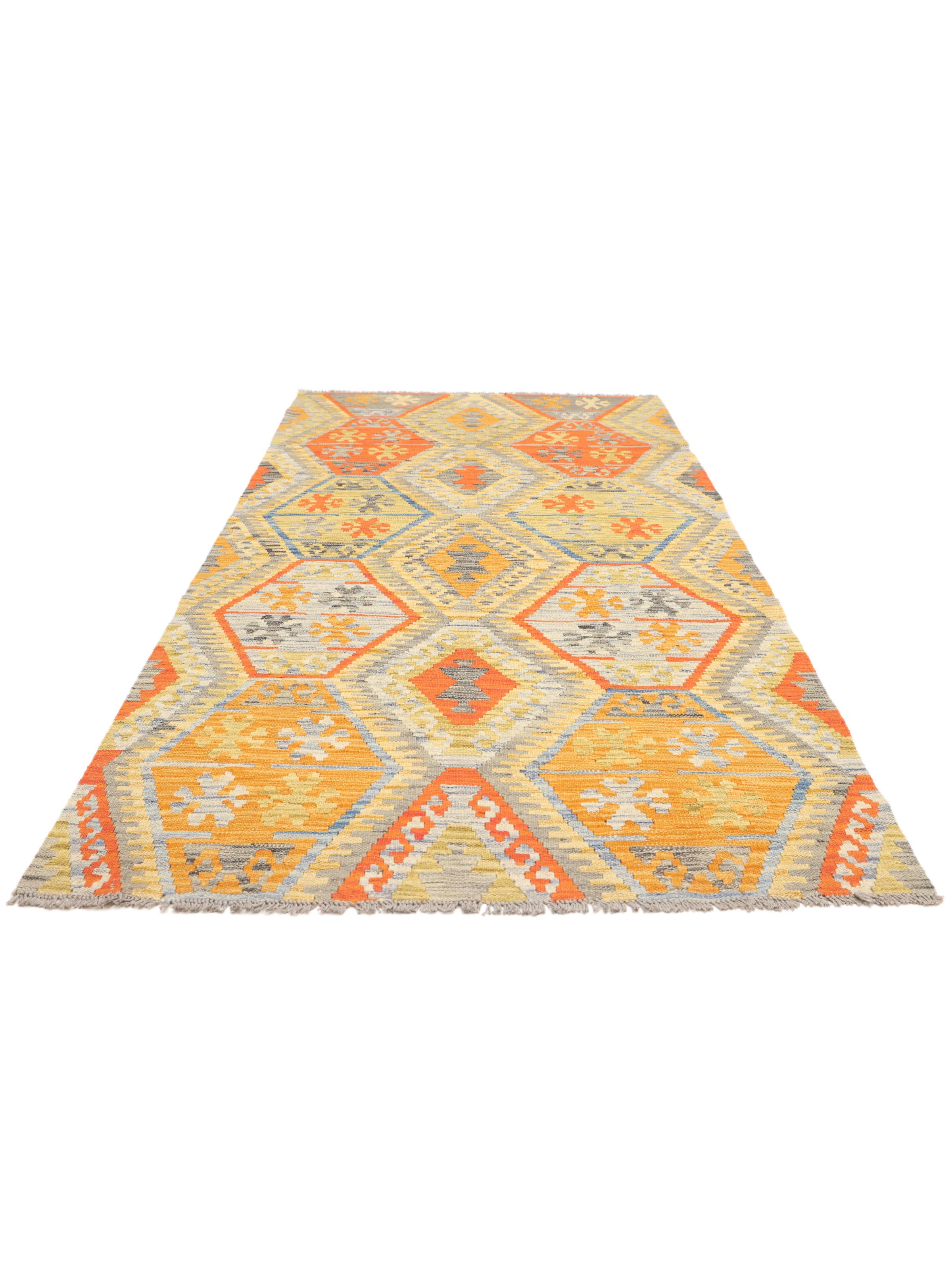
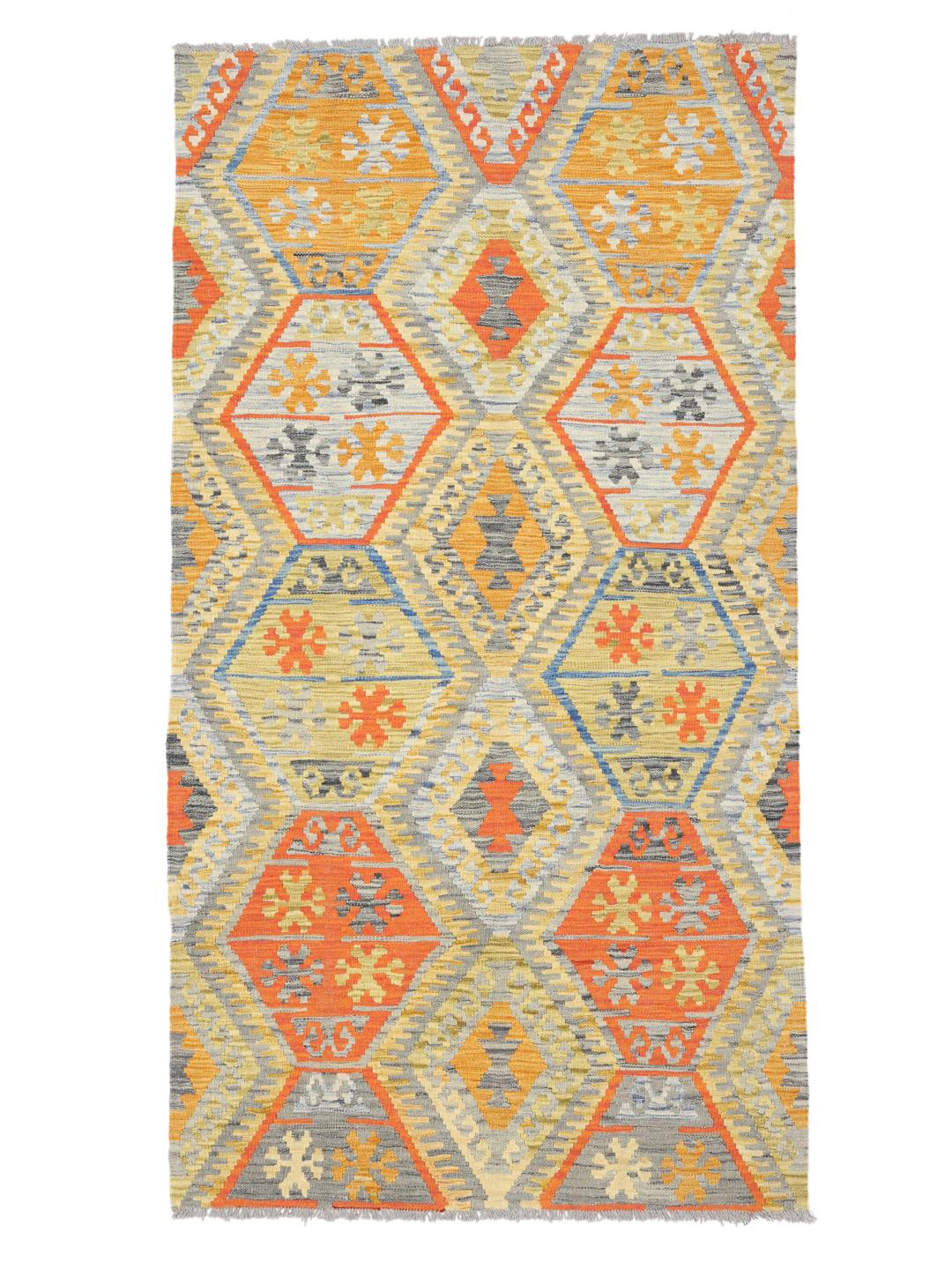
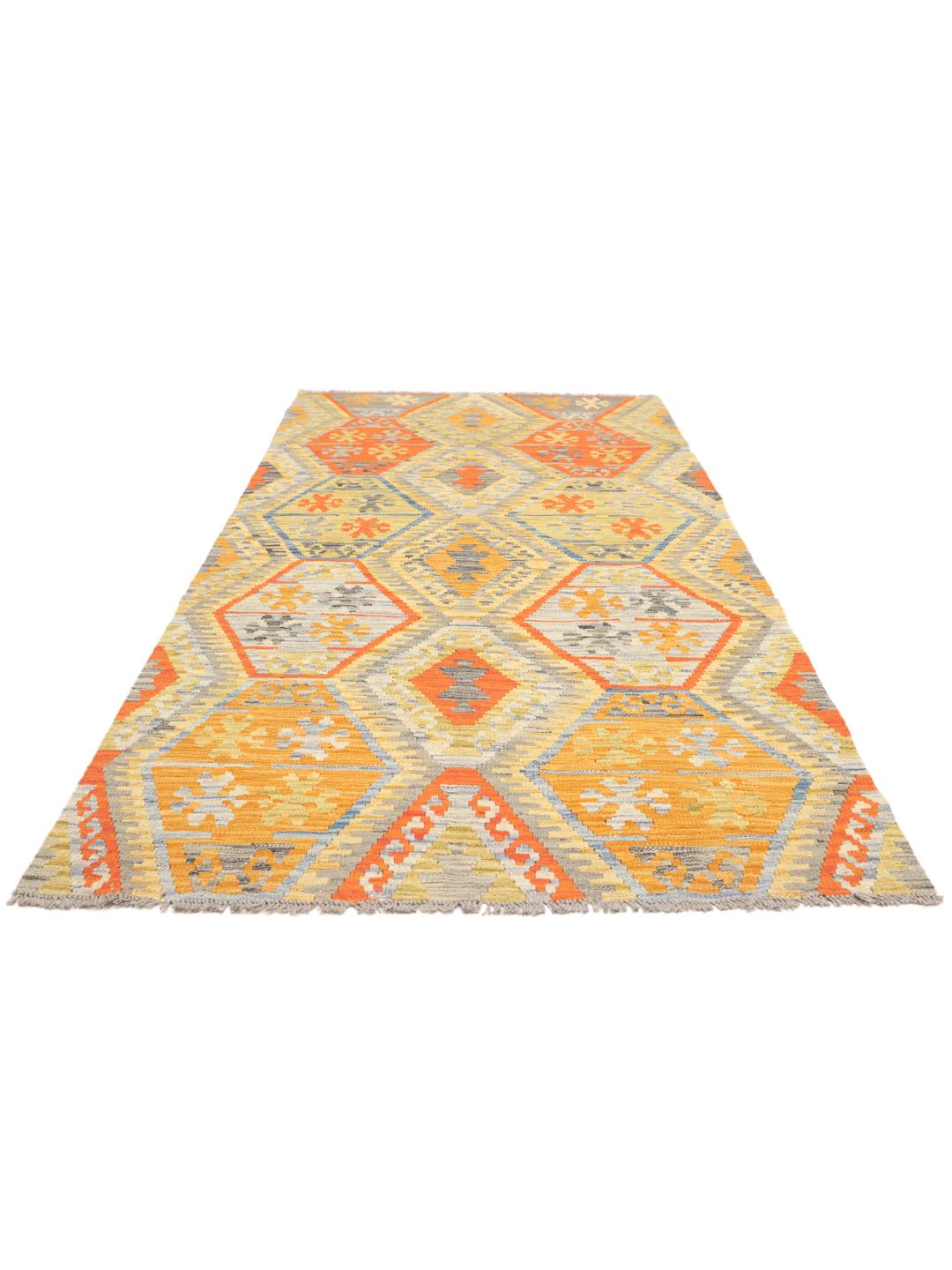
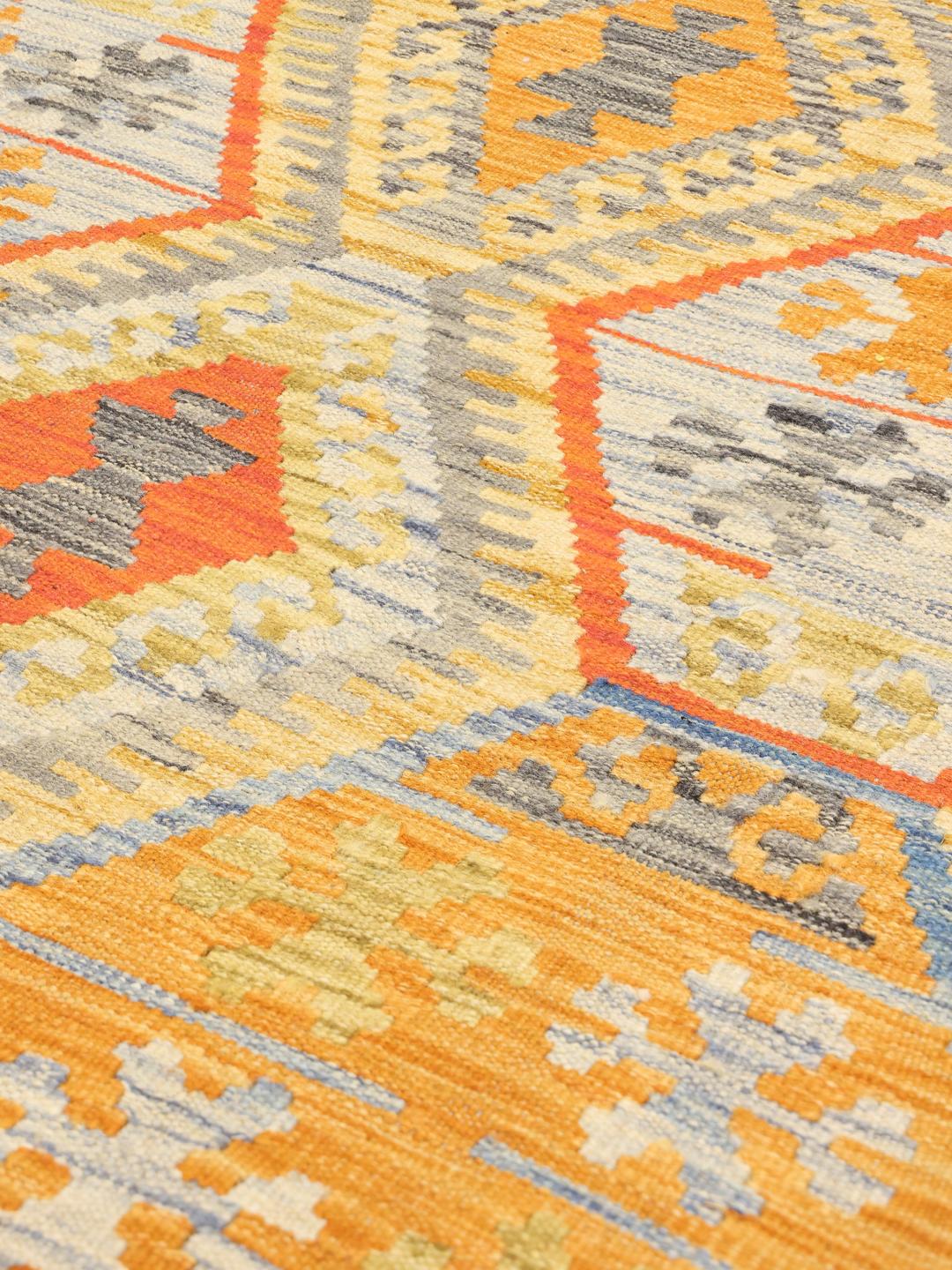
Design-wise, these rugs are characterised by sharp, geometric motifs—often diamonds, triangles, and stylised floral elements—that reflect the weaver's environment and cultural heritage. The use of vibrant, contrasting colours is a hallmark of the Afghan style, often incorporating deep oranges, blues, and earthy neutrals to create a visual rhythm that draws the eye across the entire field of the rug.
Collecting a Kelim is an investment in cultural heritage. Because they are hand-woven without the use of automated looms, each rug serves as a historical document of the weaver's skill and the specific regional aesthetics of Afghanistan. Owning such a piece means preserving a craft tradition that values patience, precision, and the artistic expression of the individual maker.