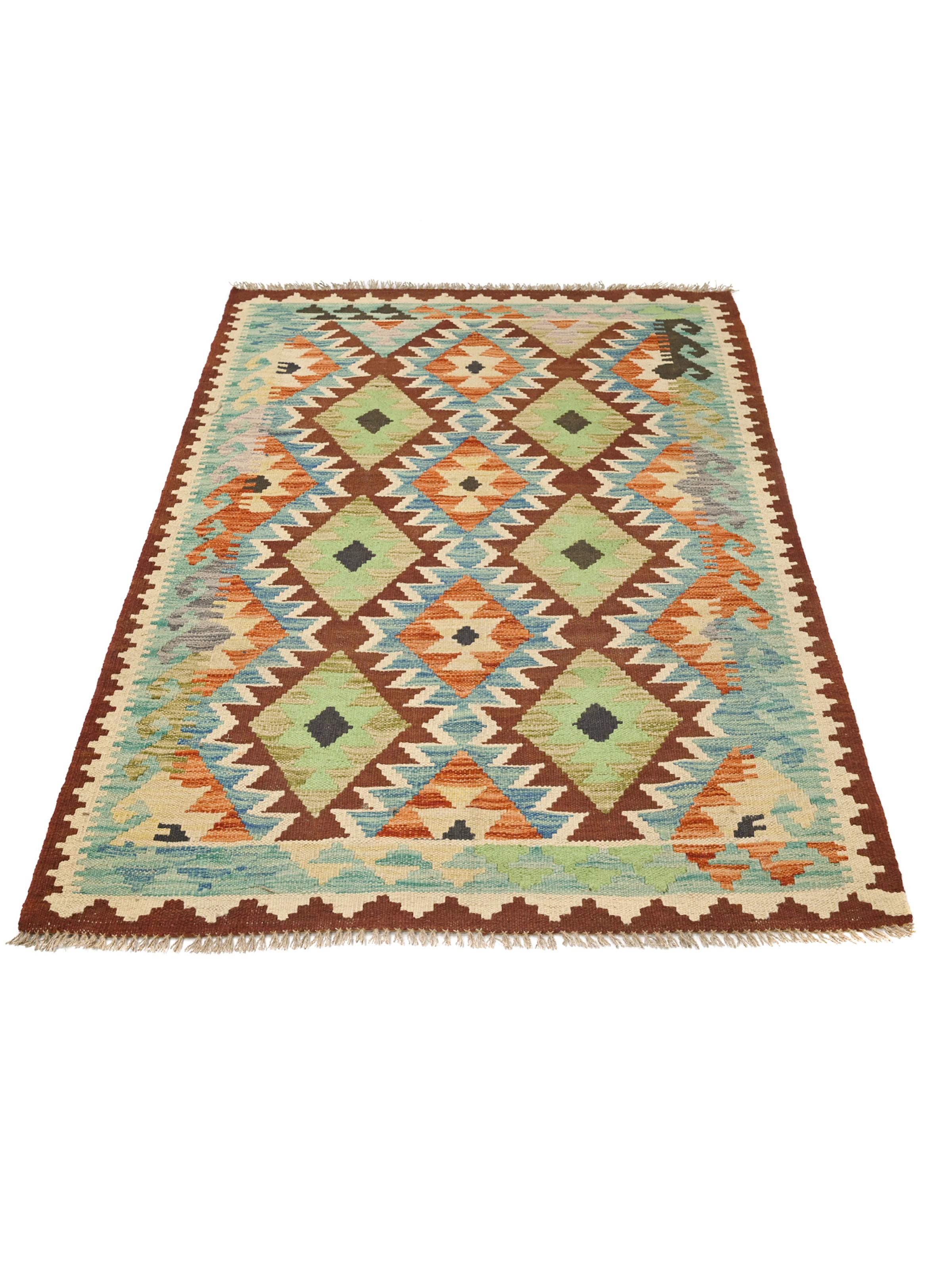
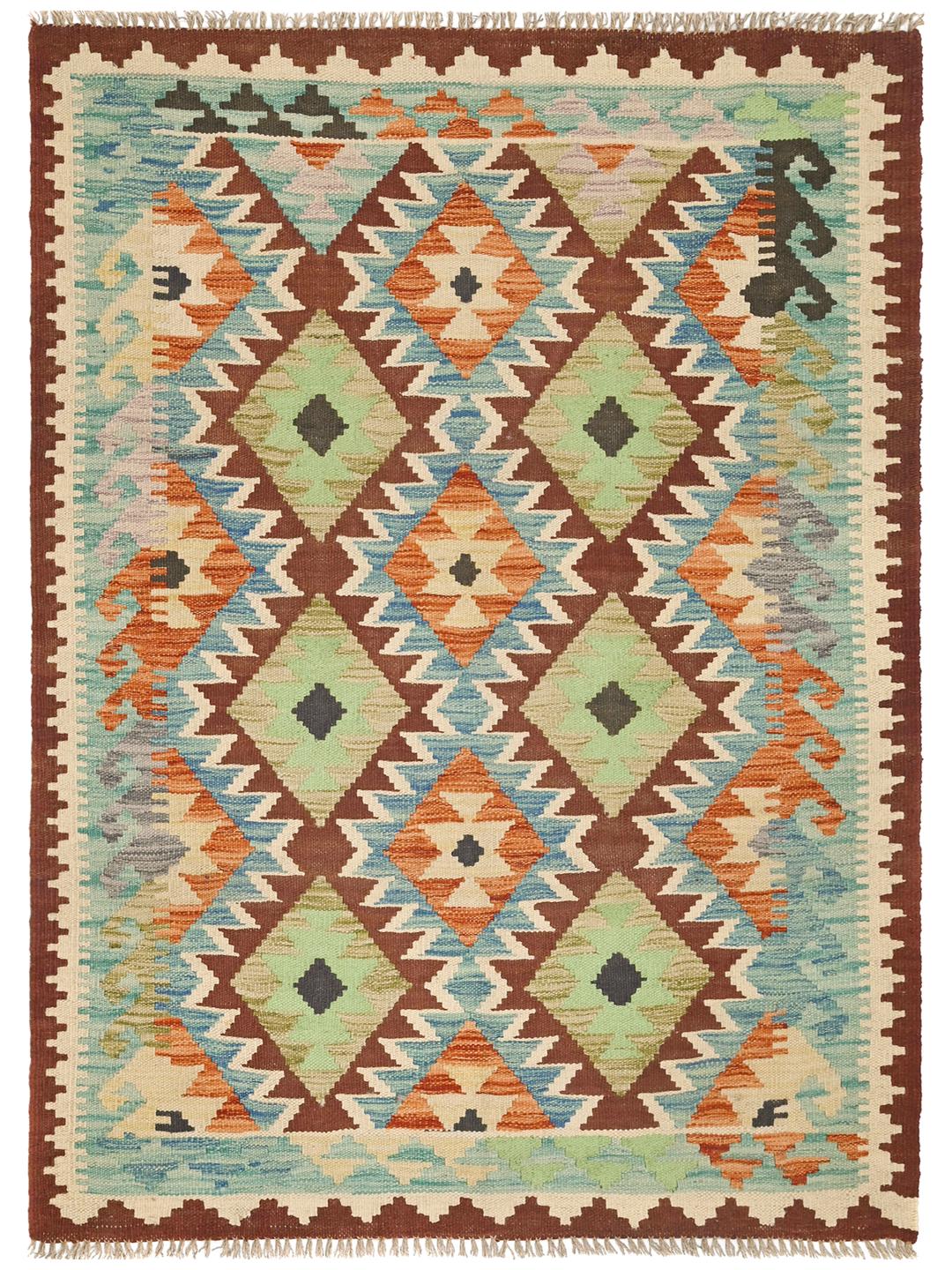
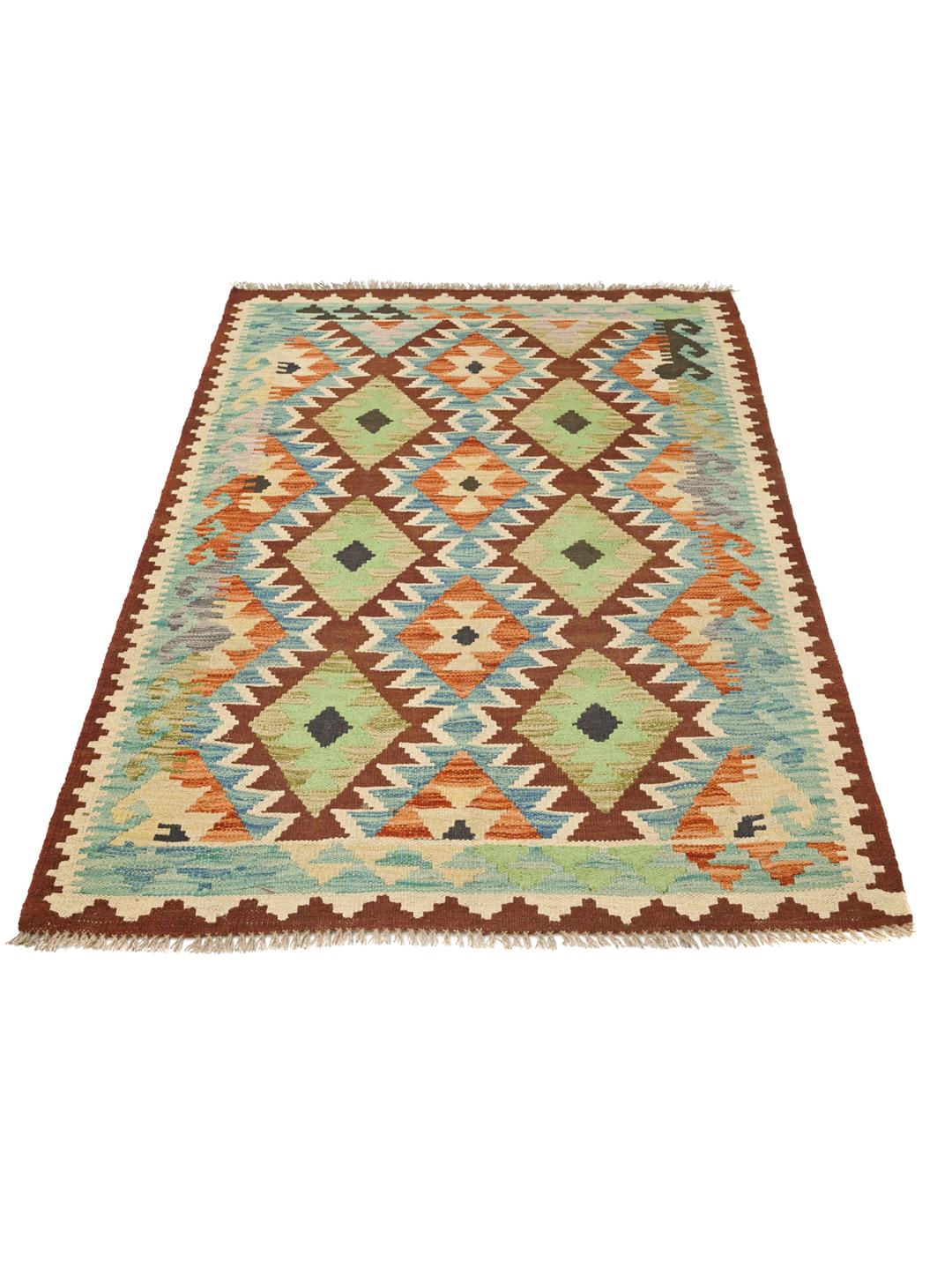
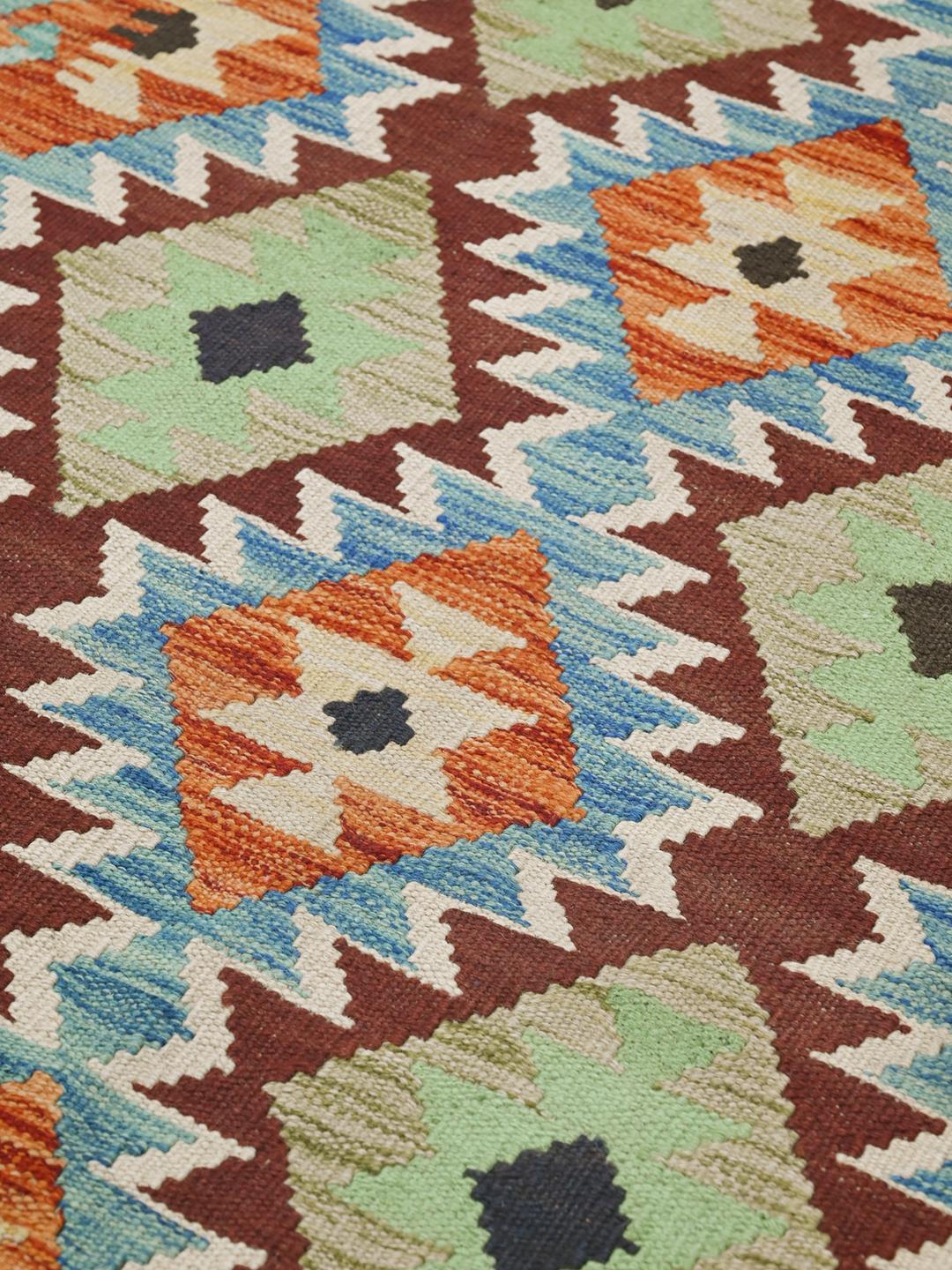
Afghan Kelims have a long, distinguished place in Central Asian craft heritage, originally woven by nomadic and village communities across Afghanistan. These flatwoven textiles were created not just for decorative purposes, but as functional floor coverings, dividing screens, and eating mats built to withstand frequent movement and daily use.
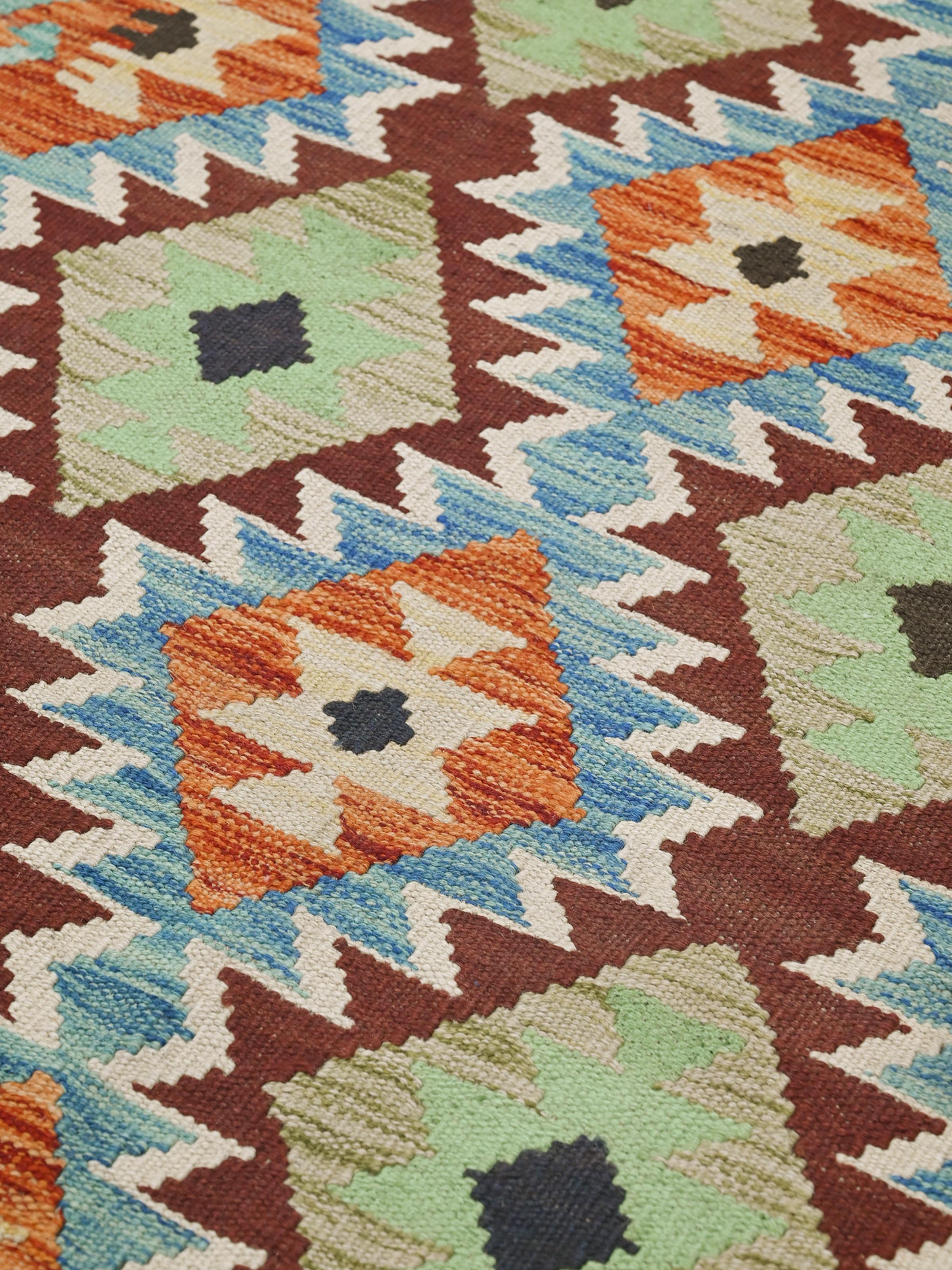
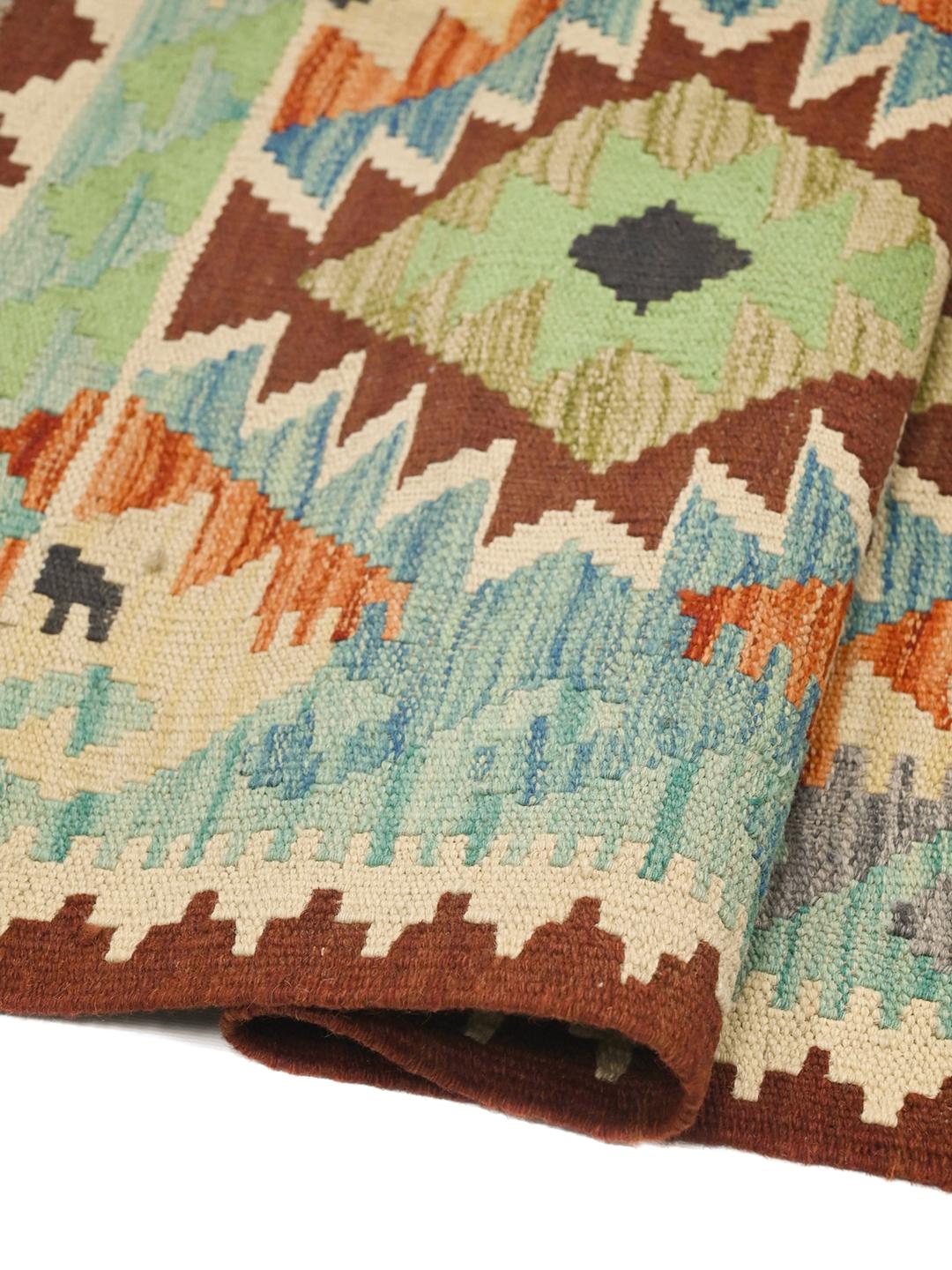
The term flatweave or Kelim refers to a specific construction method where the warp and weft threads are tightly woven together to form a pileless surface. This technique produces a lightweight, reversible rug with clean structural lines, allowing the woven pattern to be equally clear on both sides while providing exceptional structural stability.
Design language in Afghan Old Style Kelims is defined by bold geometric forms, particularly diamond lattice structures and stepped lozenge motifs. Traditional weavers often use natural dyes and regional symbols that convey stories, family traditions, or environmental motifs, framed by subtle outer borders.
Today, vintage and older Afghan Kelims are highly sought after by collectors and interior enthusiasts for their authentic feel and historical continuity. Owning a piece from this tradition brings a tangible link to age-old weaving heritage, combining genuine craft background with practical decorative appeal.