The Kelim tradition is deeply rooted in the nomadic and village cultures of the Middle East and Central Asia. These rugs were traditionally created as functional items for daily use, serving as floor coverings, wall hangings, and even as bags for transport. The Afghan Kelim, in particular, has evolved from these ancient roots into a celebrated art form known for its durability and distinct aesthetic.
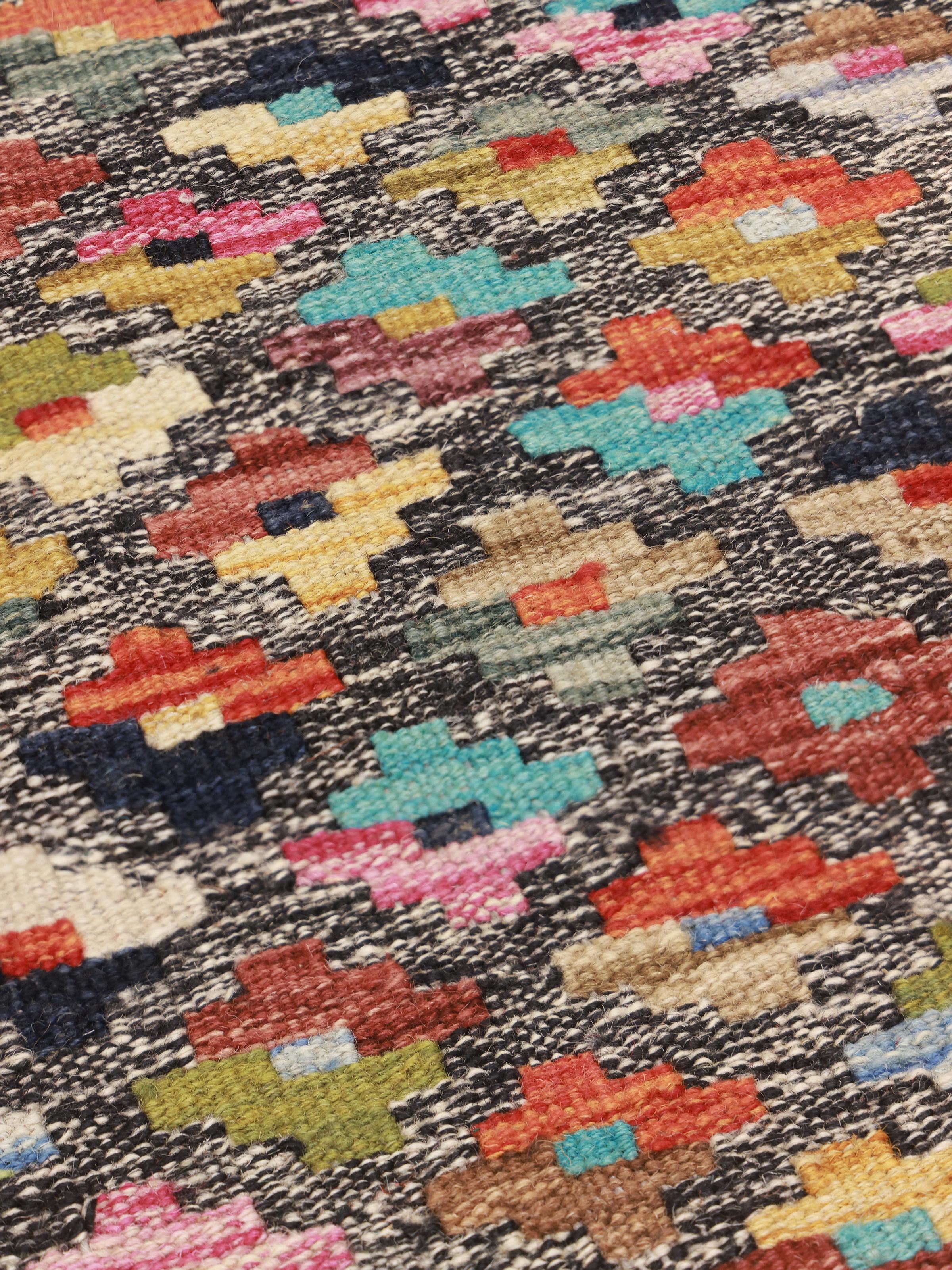
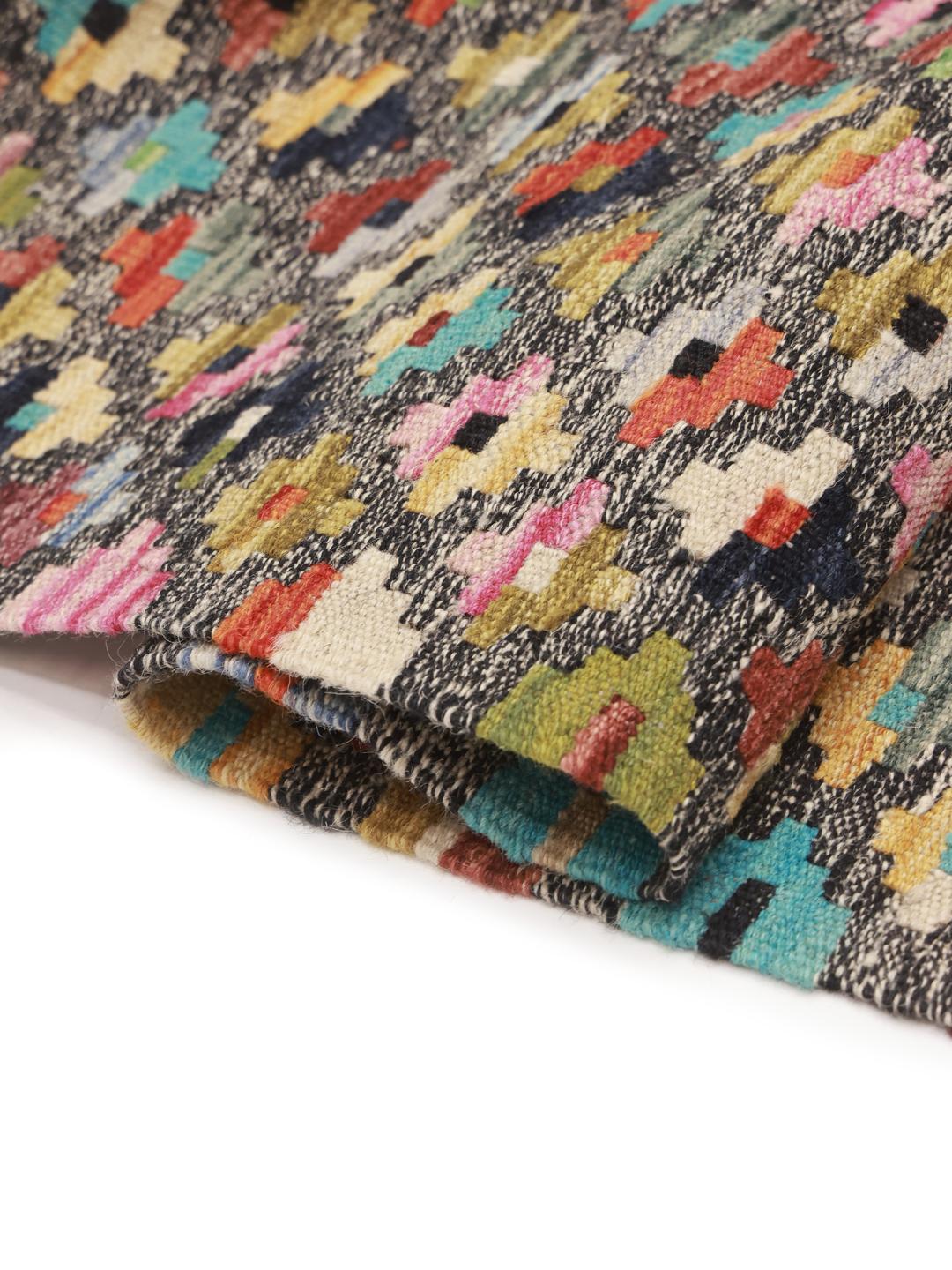
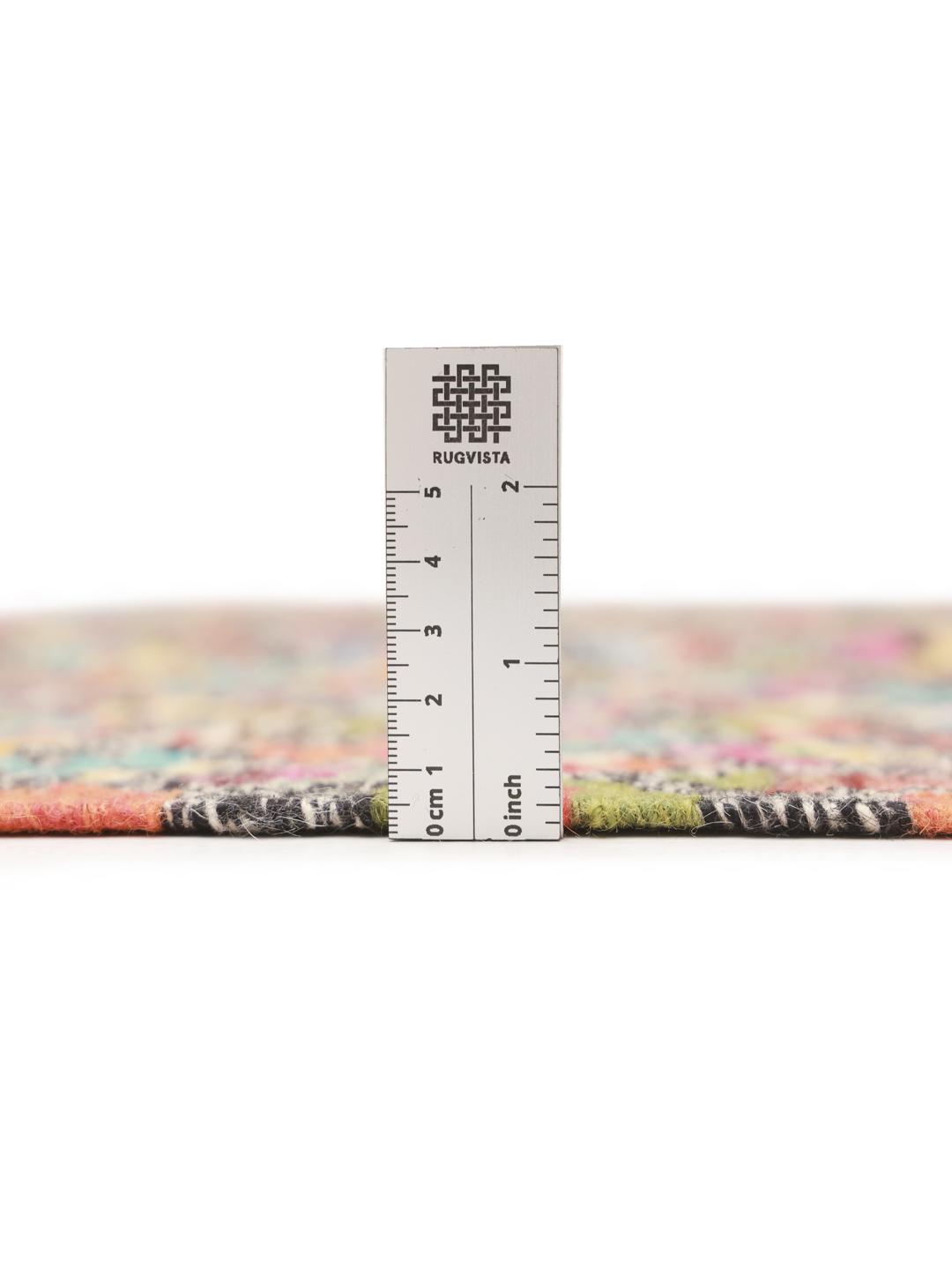
The term 'Kelim' refers to the flat-weaving technique used to produce these textiles. Unlike pile rugs, Kelims are made by interweaving the weft and warp threads, which creates a rug that is identical on both sides. This technique allows for sharp, clear geometric designs and a lightweight, portable nature that reflects the history of the weaving communities who created them.
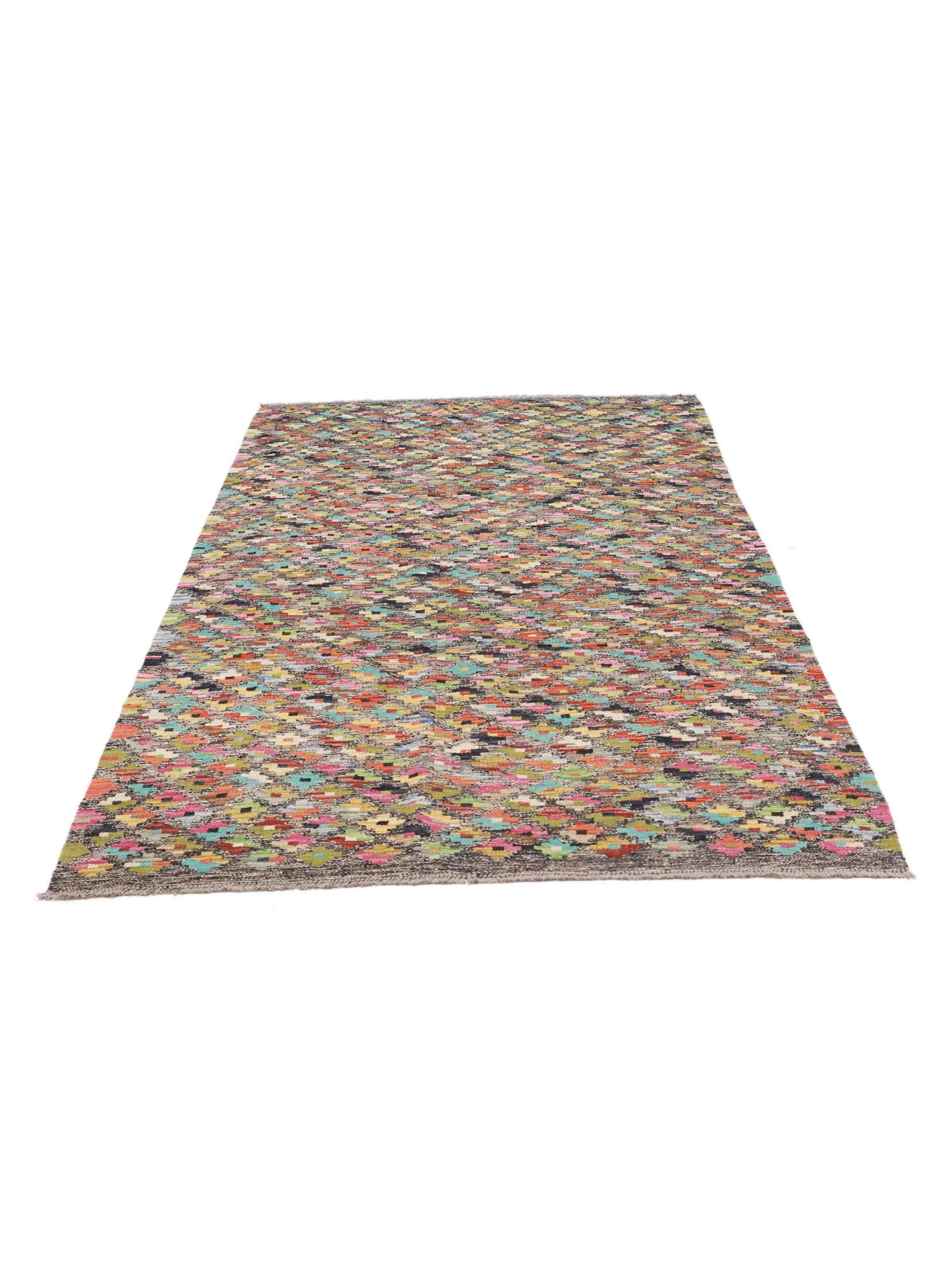
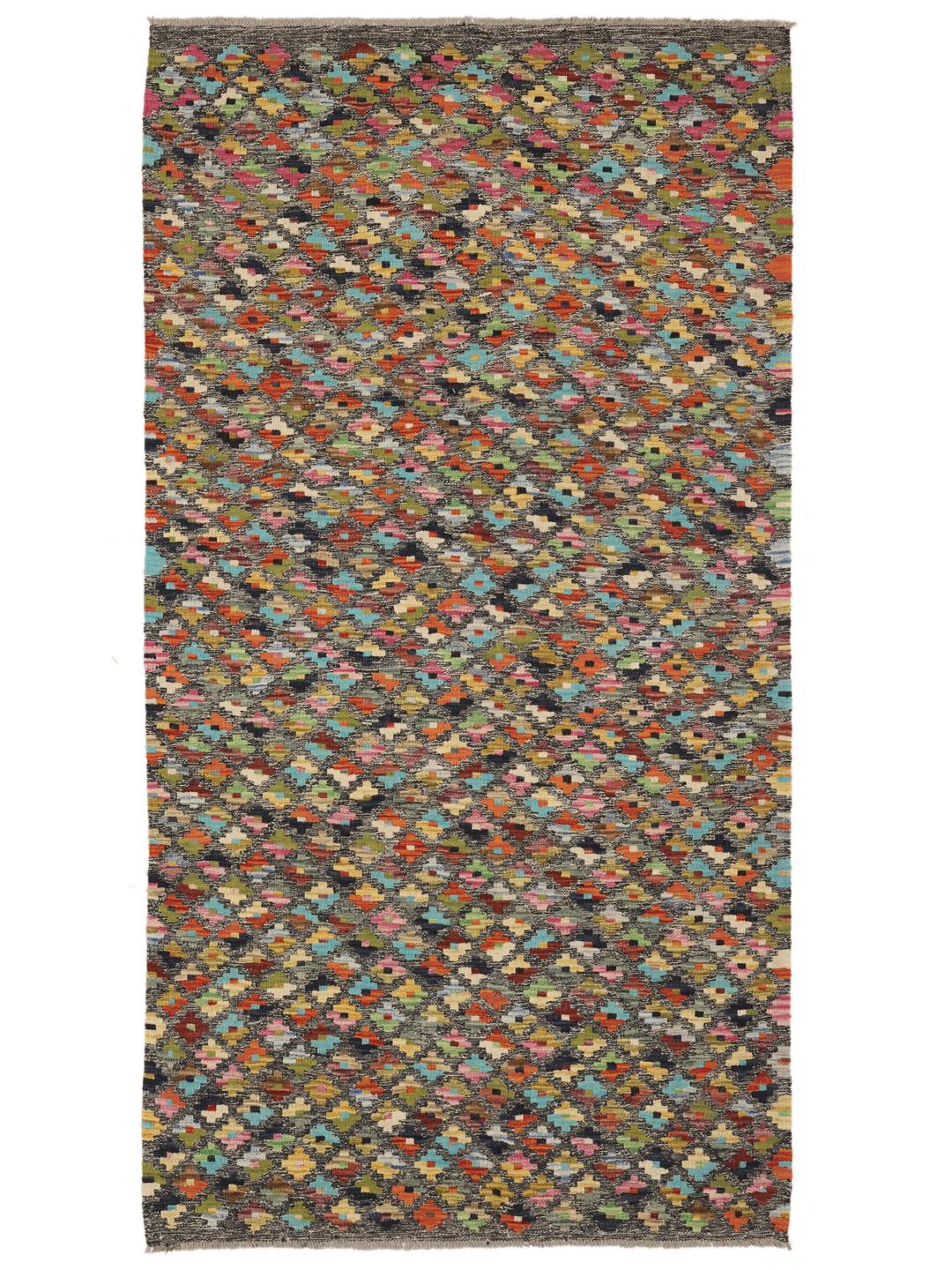
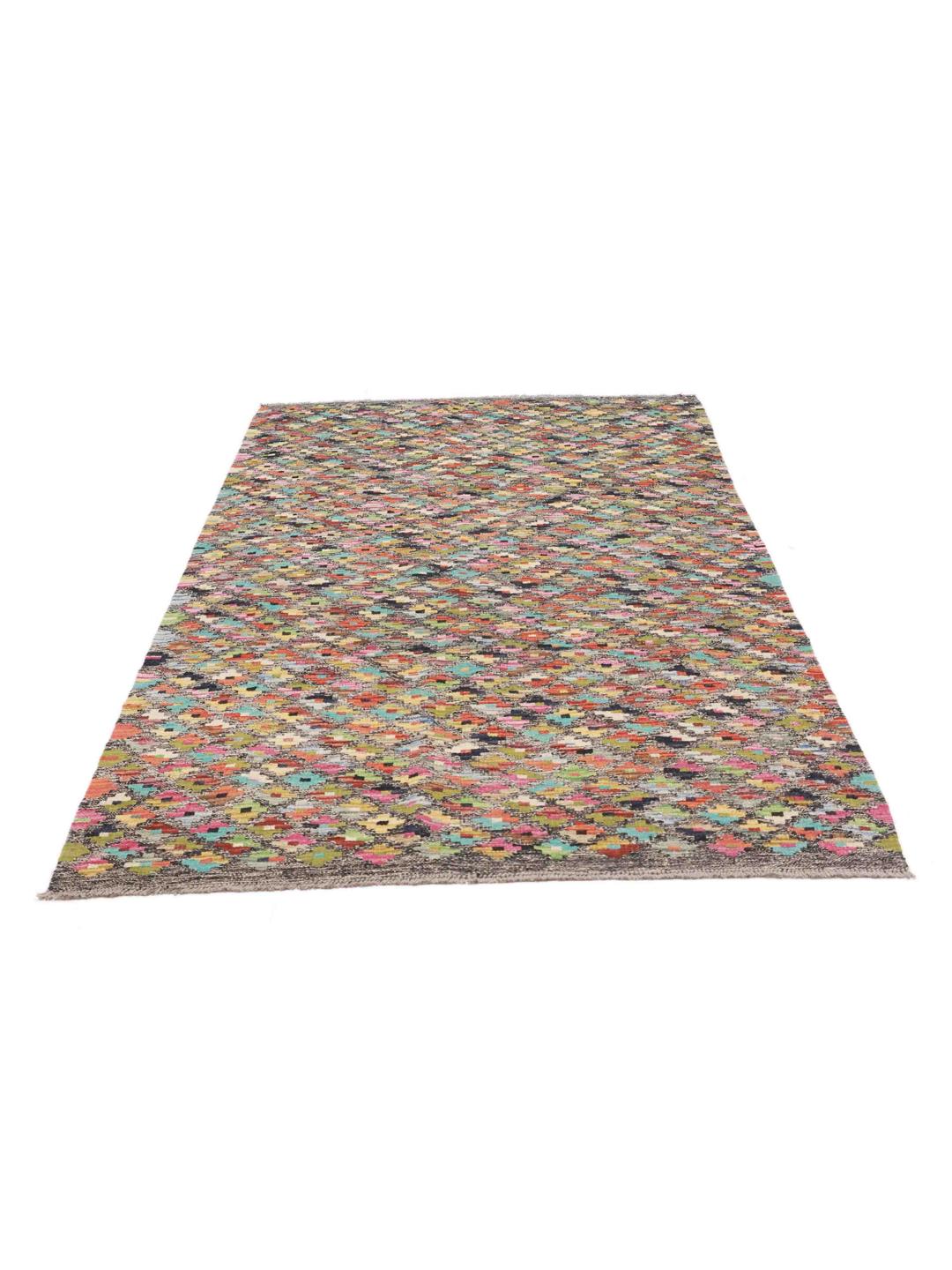
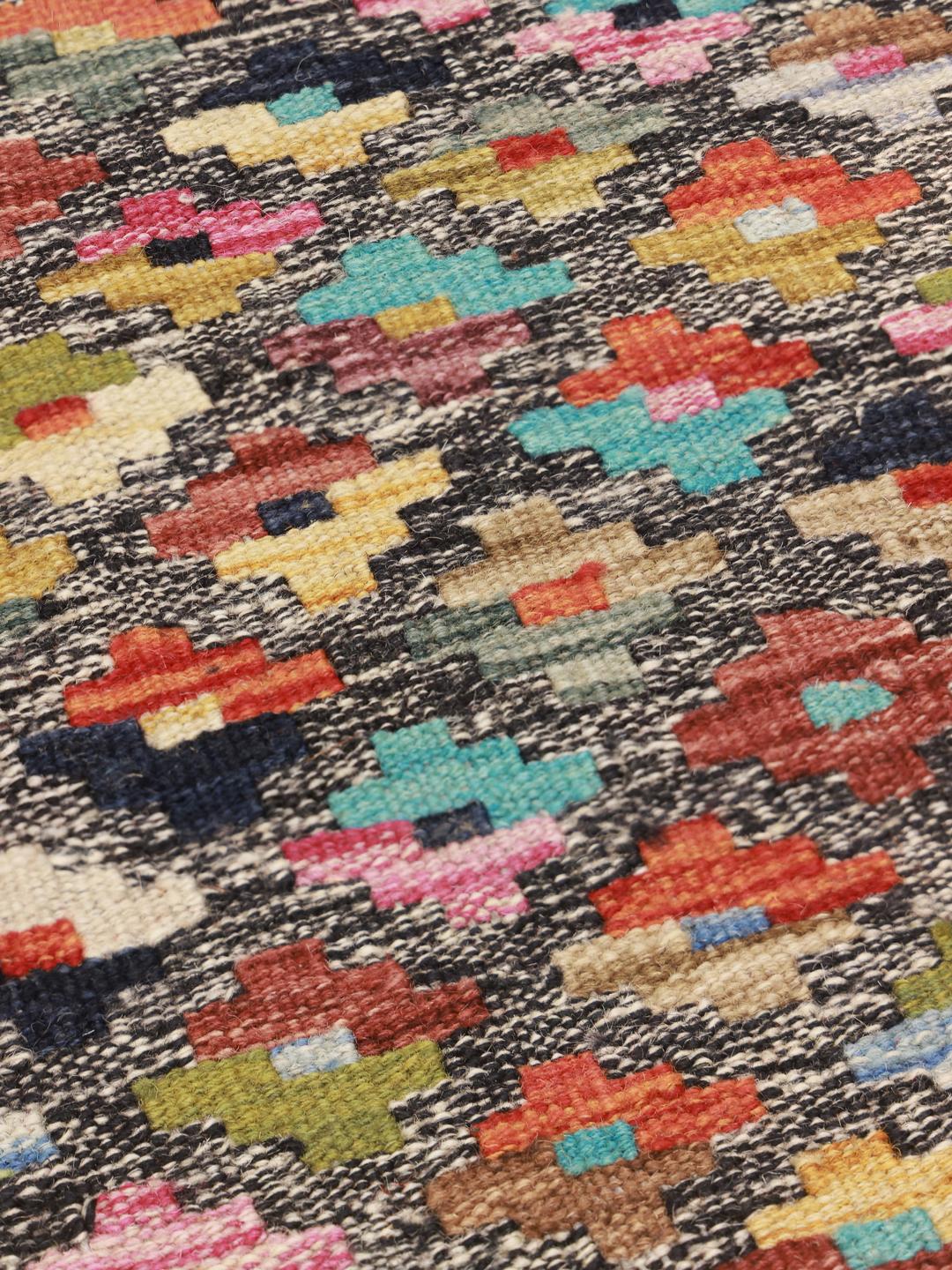
Signature design elements in Afghan Kelims often feature bold geometric motifs and a vibrant palette, though this particular piece uses a sophisticated array of colours against a darker field. The patterns are usually symbolic, drawing from tribal history and local folklore. This specific design language is what makes these rugs so sought after by collectors who appreciate the blend of folk art and utility.
Owning a Kelim is an invitation to connect with a long-standing heritage of craftsmanship. These pieces are valued not only for their aesthetic appeal but for the skill and cultural history they carry. By bringing a piece like this into your home, you are preserving a tradition of excellence and supporting the continuation of a timeless craft.