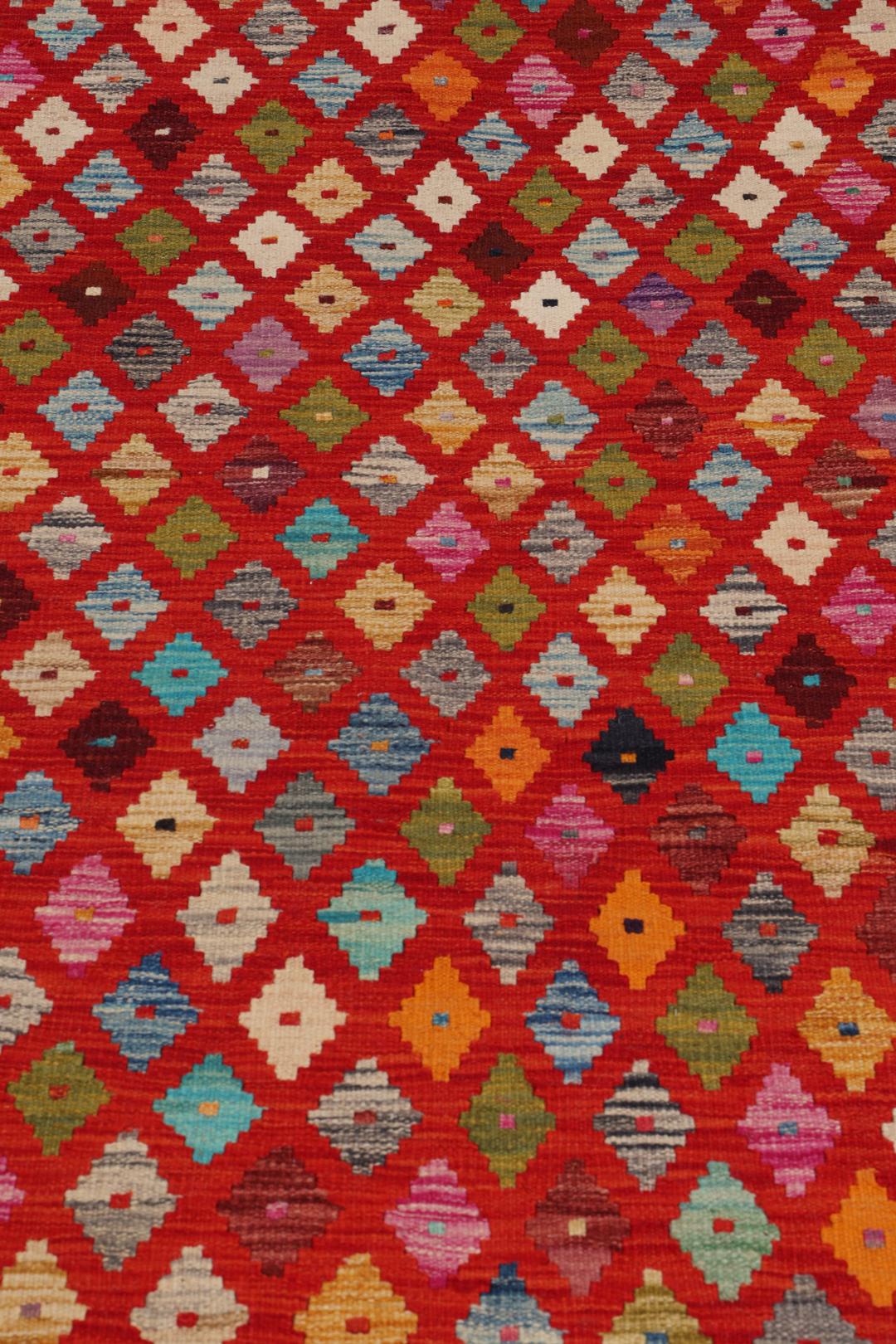
Kelim rugs from Afghanistan are rooted in a long and storied tradition of nomadic and semi-nomadic weaving. These textiles have historically served as functional items for desert life, acting as floor coverings, blankets, and storage bags for families traversing the rugged landscapes of Central Asia. The evolution of these rugs reflects the cultural exchange along ancient trade routes, where local aesthetics were refined over centuries.
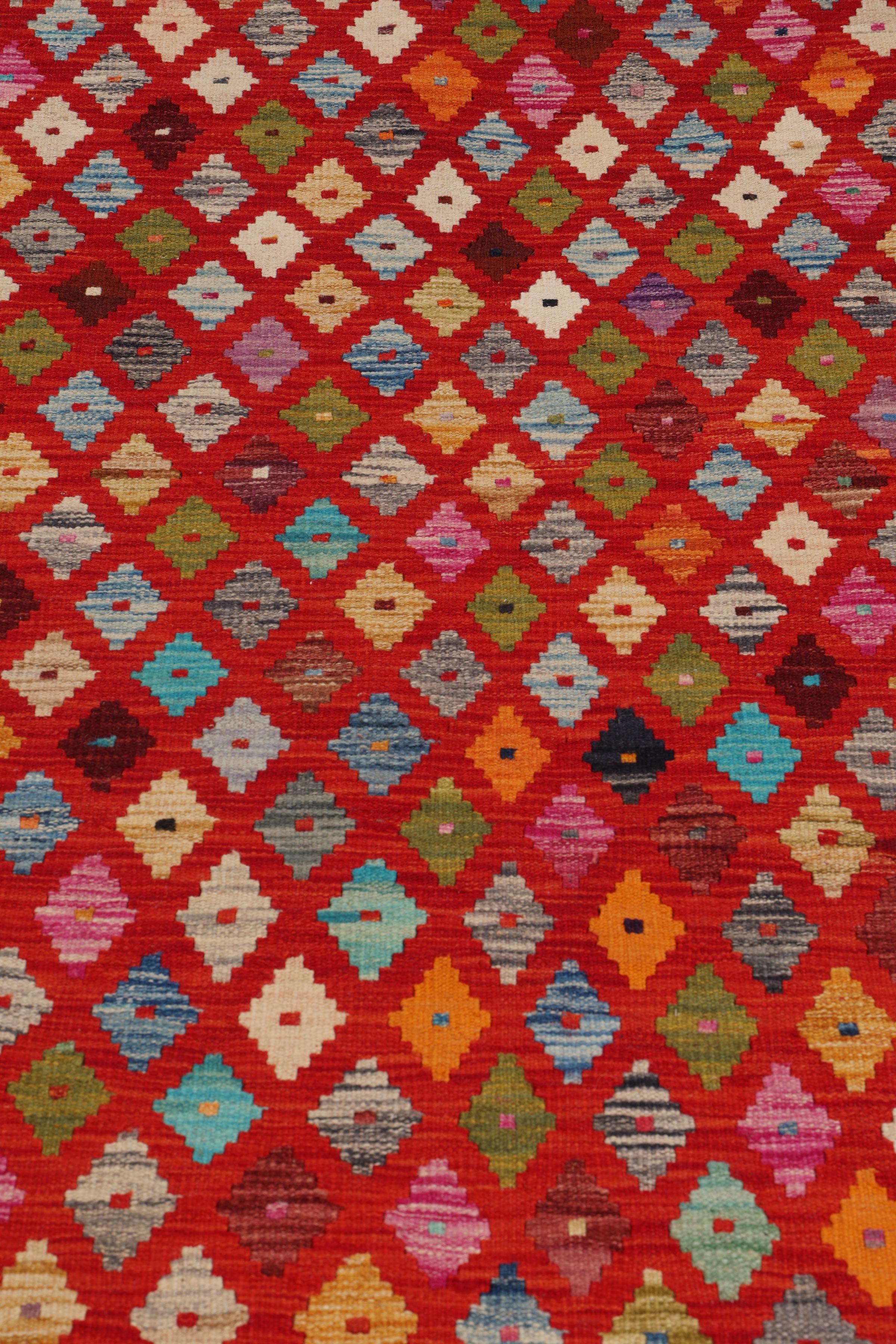
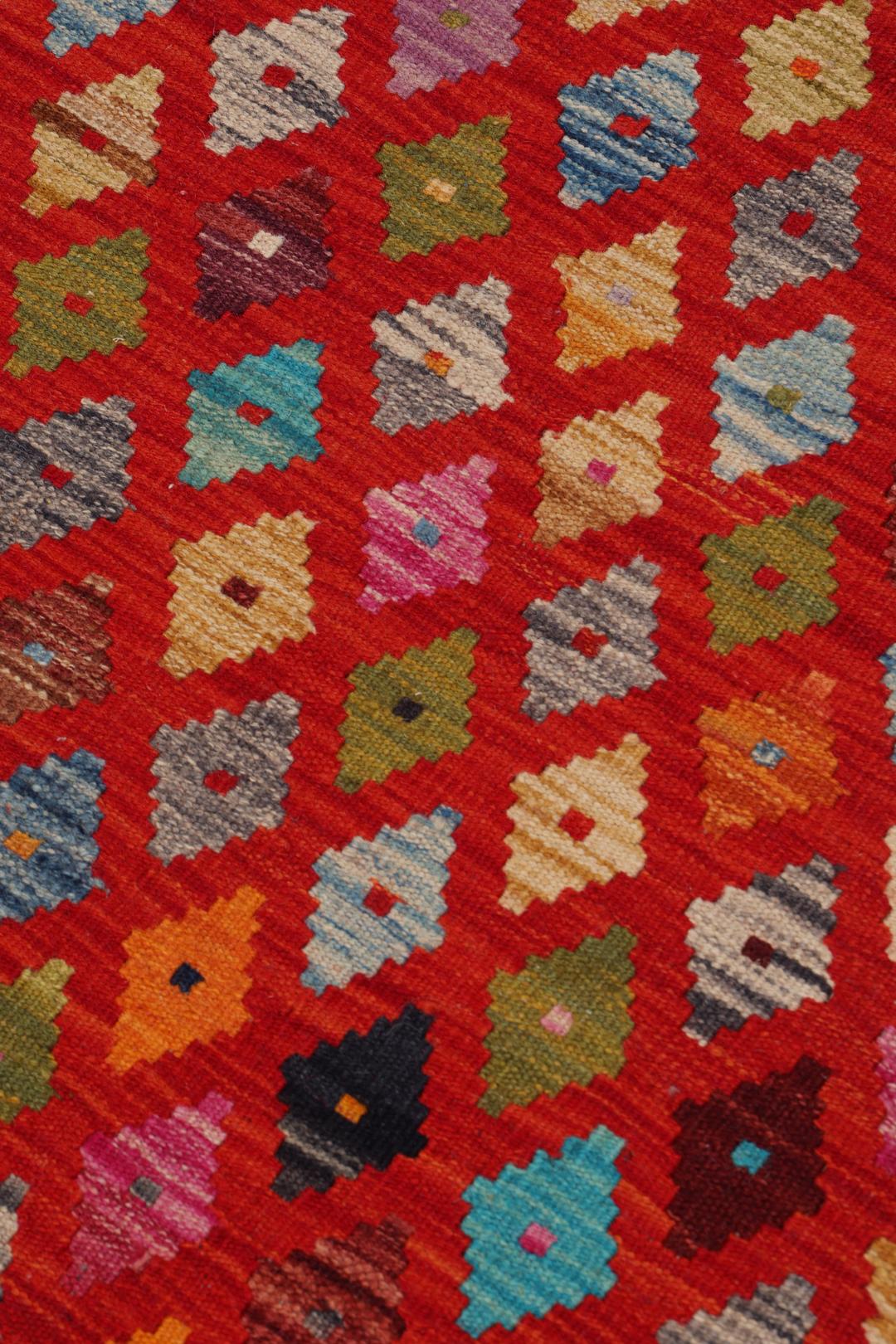
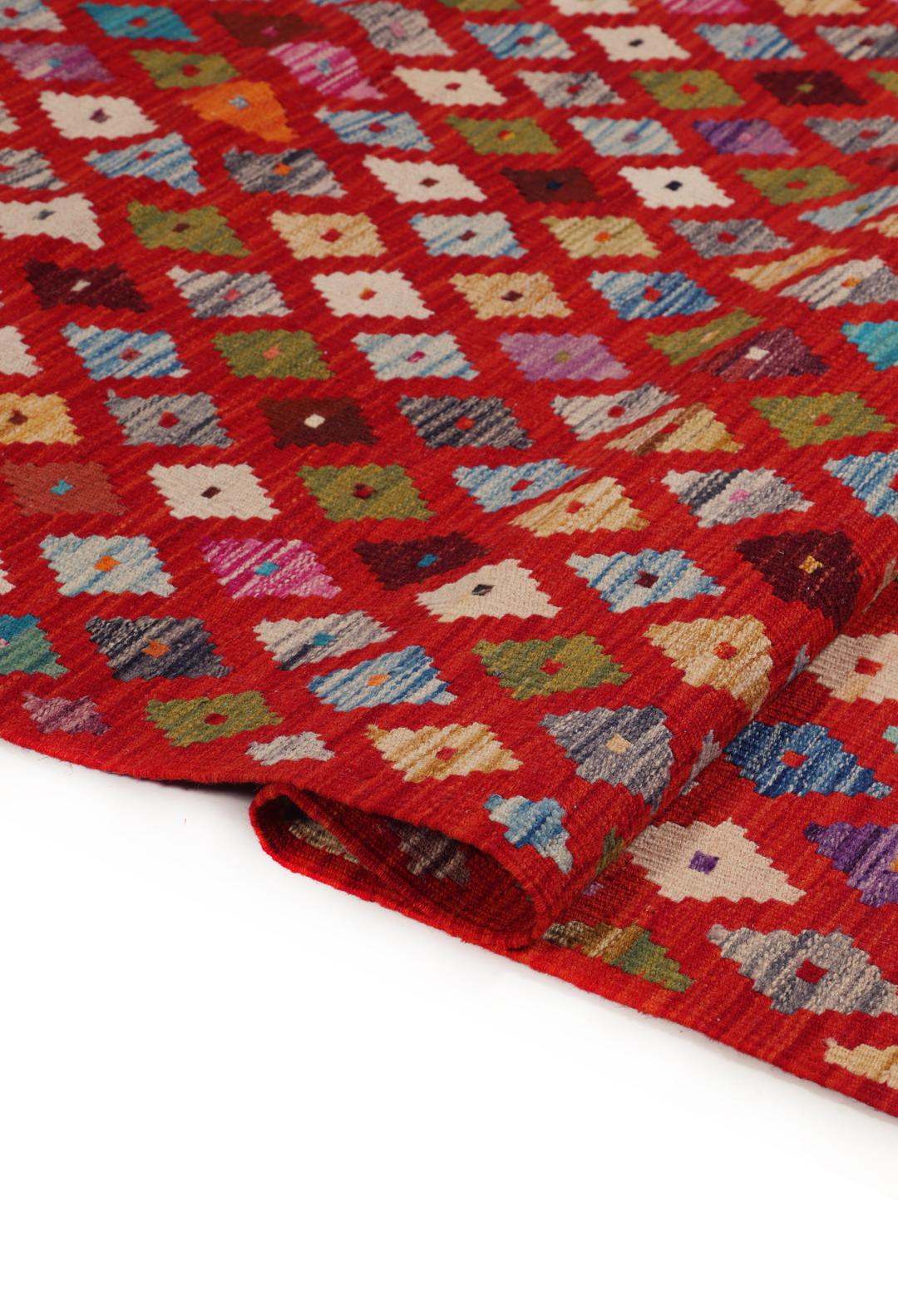
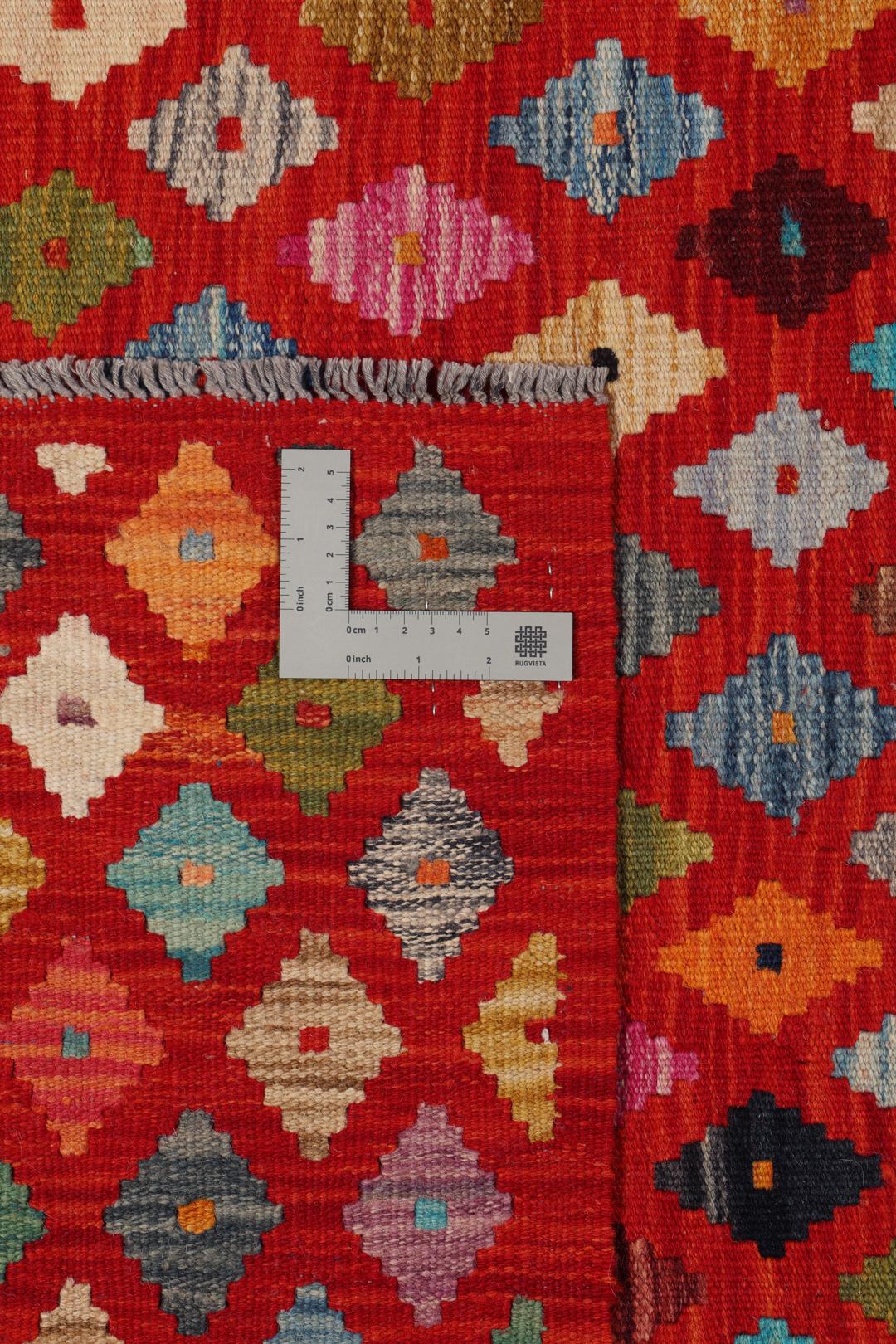
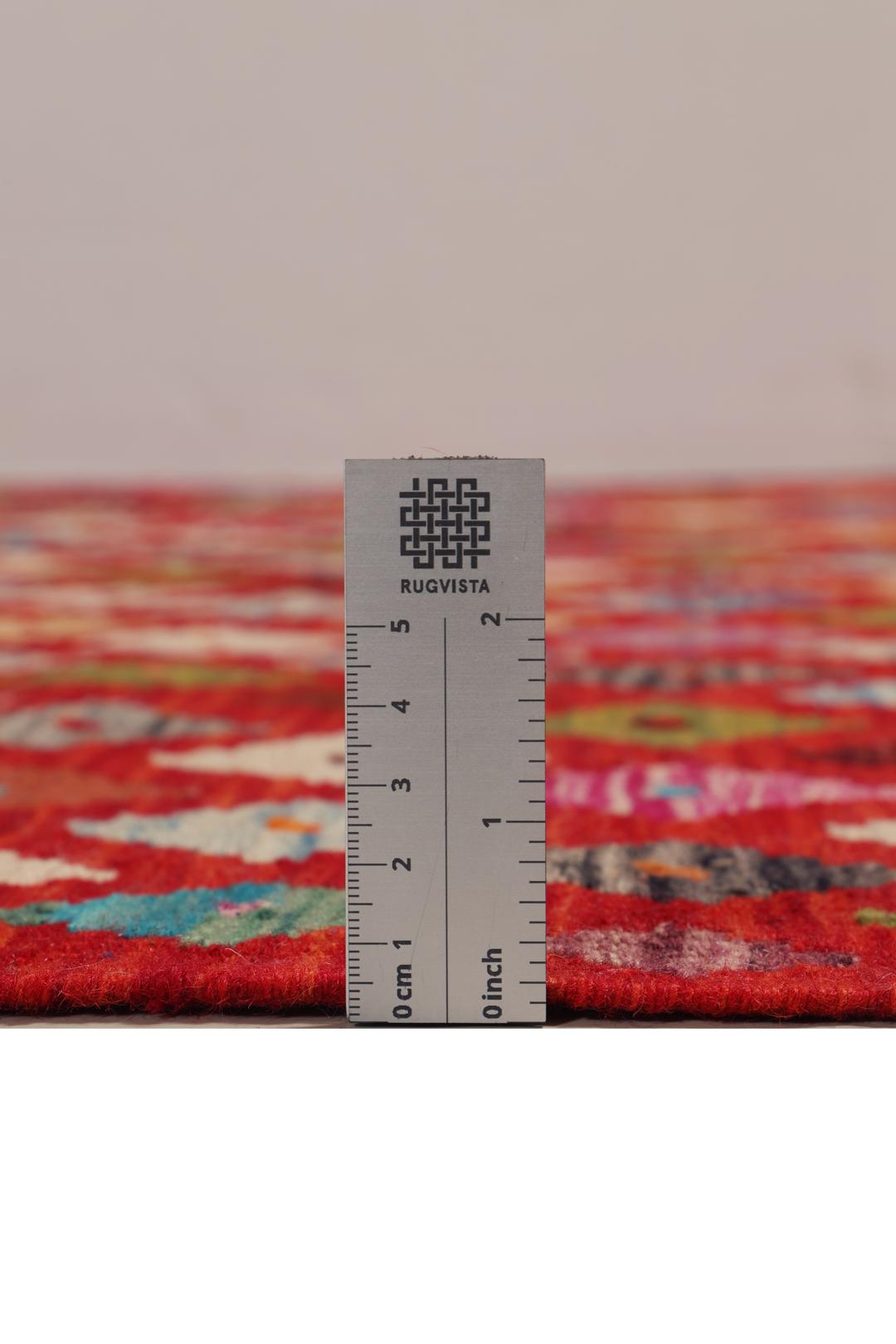
A Kelim is defined by its flat-weave technique, which lacks a pile. This is achieved by interlocking the coloured weft threads tightly with the warp, creating a smooth, durable surface on both sides of the rug. This method requires immense precision, as the weaver must manage the tension of every thread to ensure the pattern remains crisp and the rug retains its shape over time.
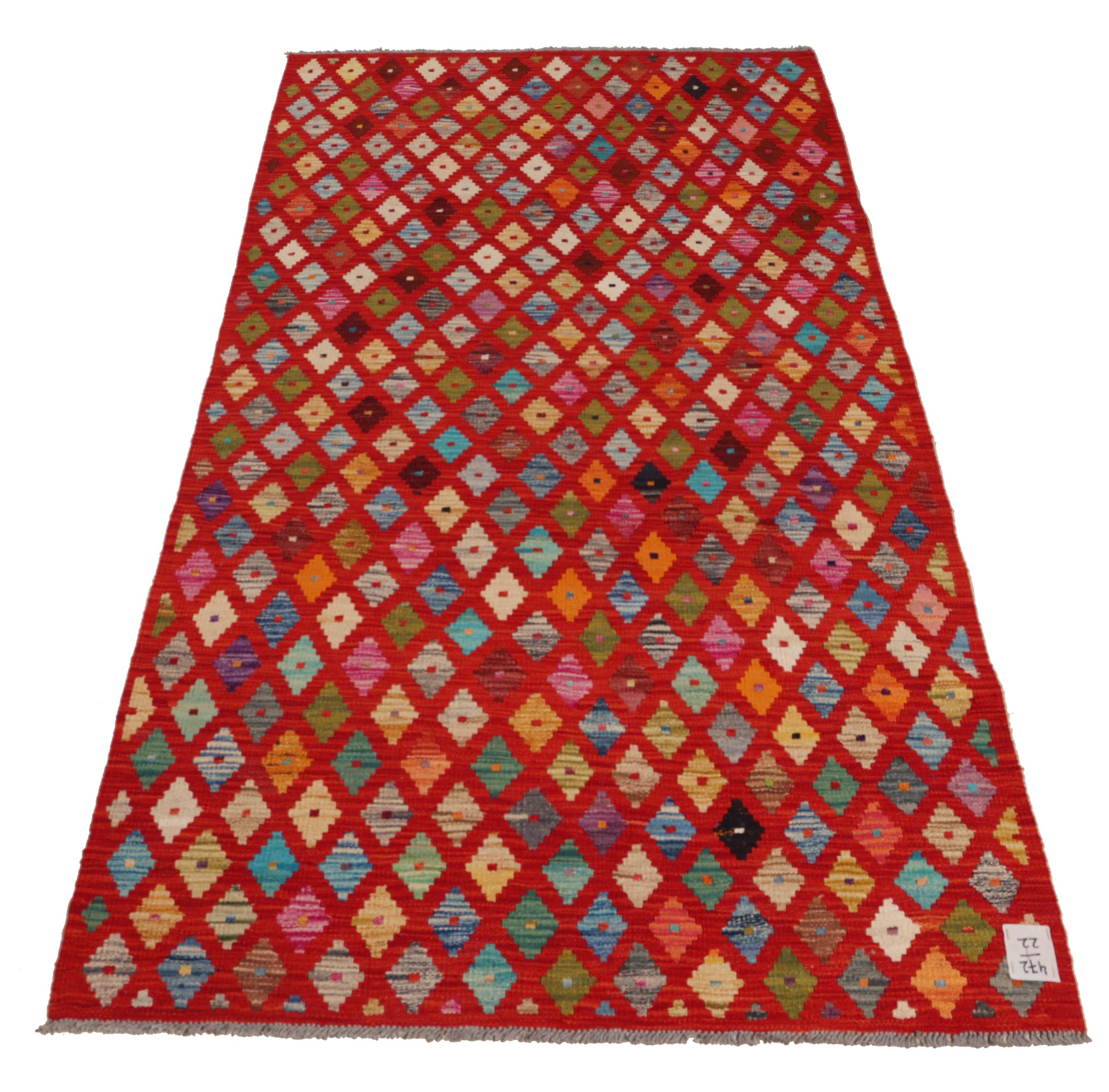
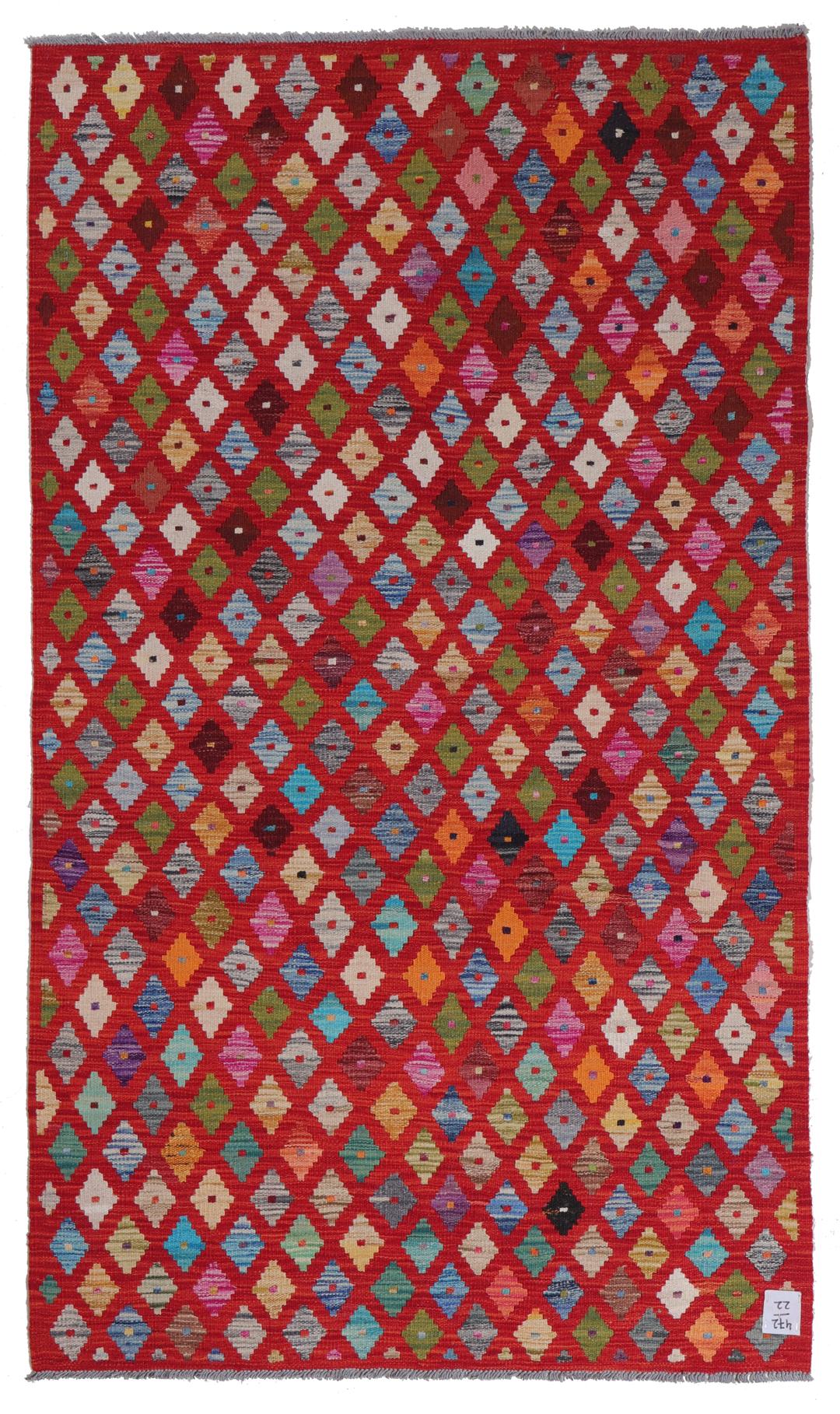
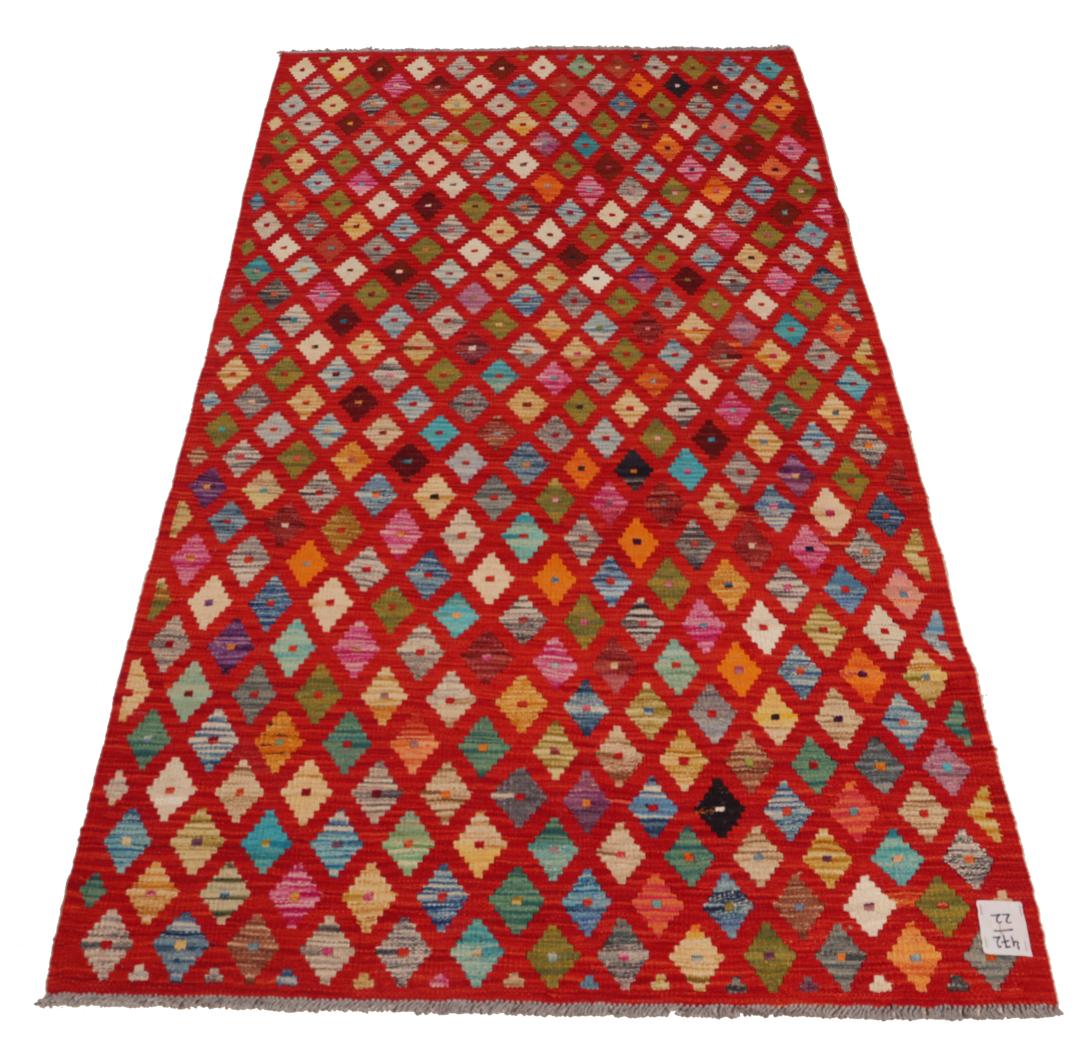
The signature design language of these Afghan pieces often features bold geometric motifs, with the diamond being a particularly favoured shape. These patterns are not merely decorative but are deeply symbolic, often representing protective charms or reflections of the weaver's environment. The use of vibrant, natural-inspired dyes against a dominant red field is a hallmark of this tradition, creating an immediate and recognisable visual impact.
Owning an Afghan Kelim is an investment in cultural heritage and human skill. Because each rug is produced without a set blueprint, the weaver's personal interpretation of traditional motifs makes every piece a unique artifact. Collectors value these rugs for their authenticity, the historical continuity they represent, and the undeniable warmth they bring to a contemporary home.