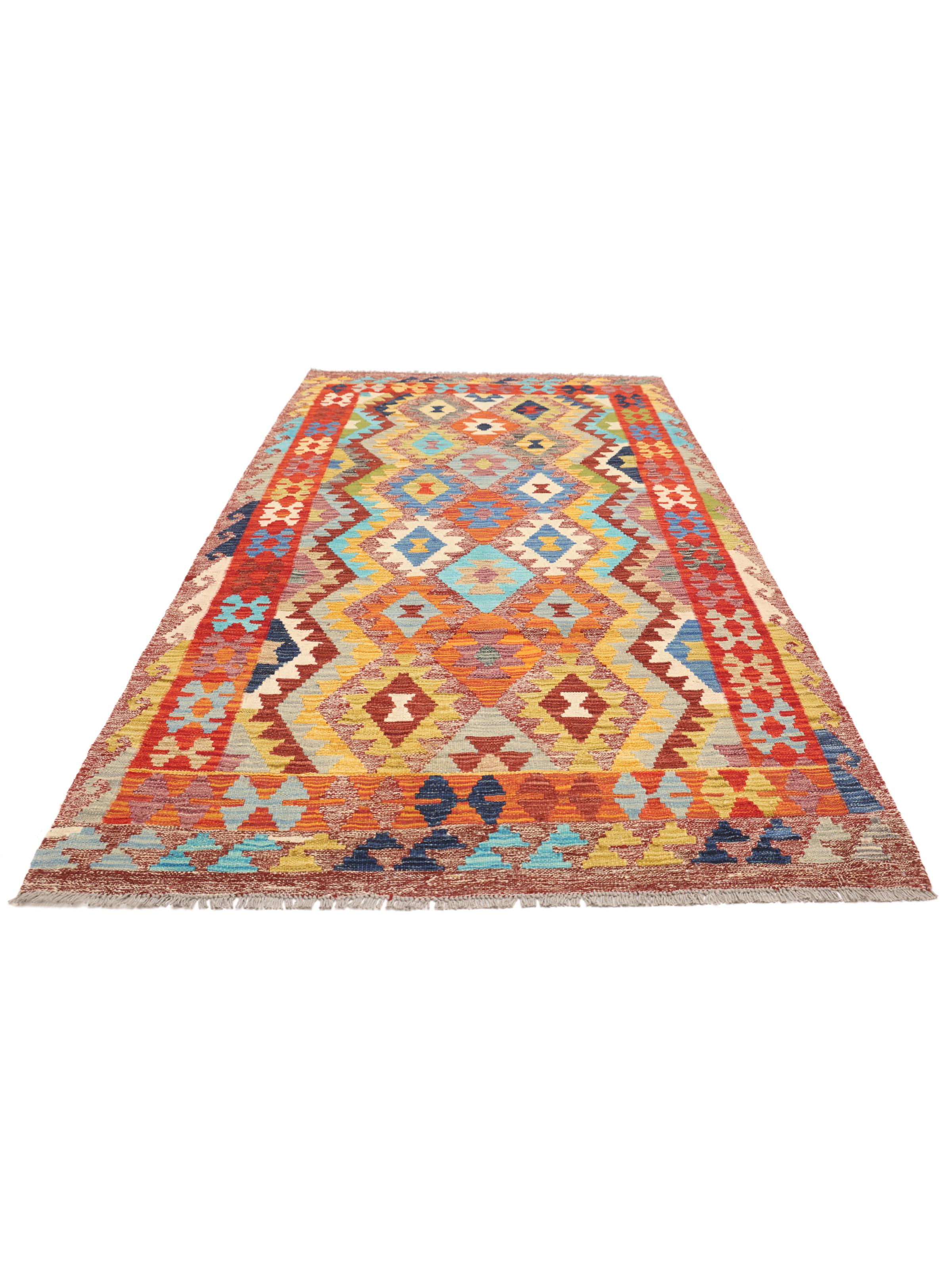
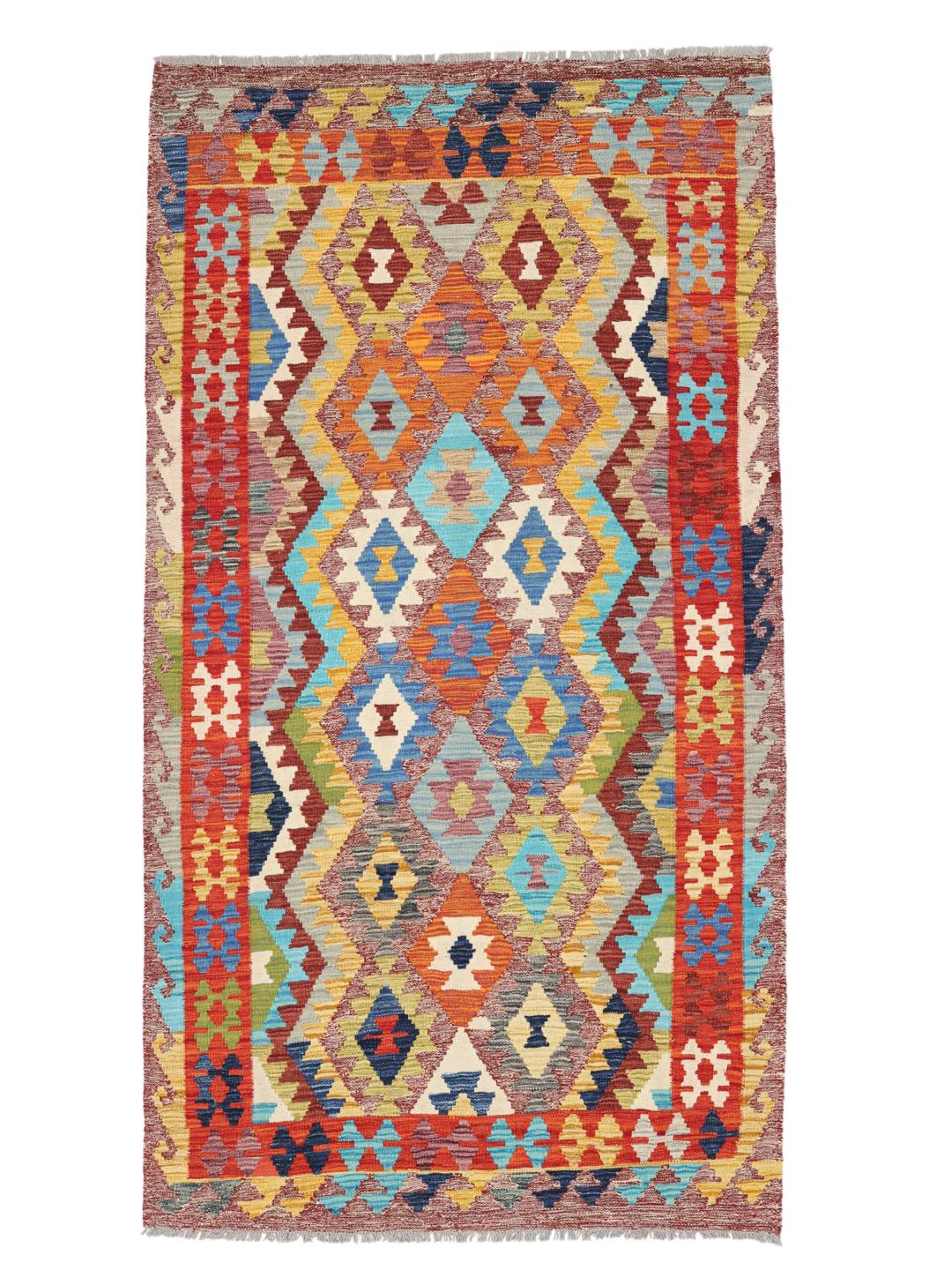
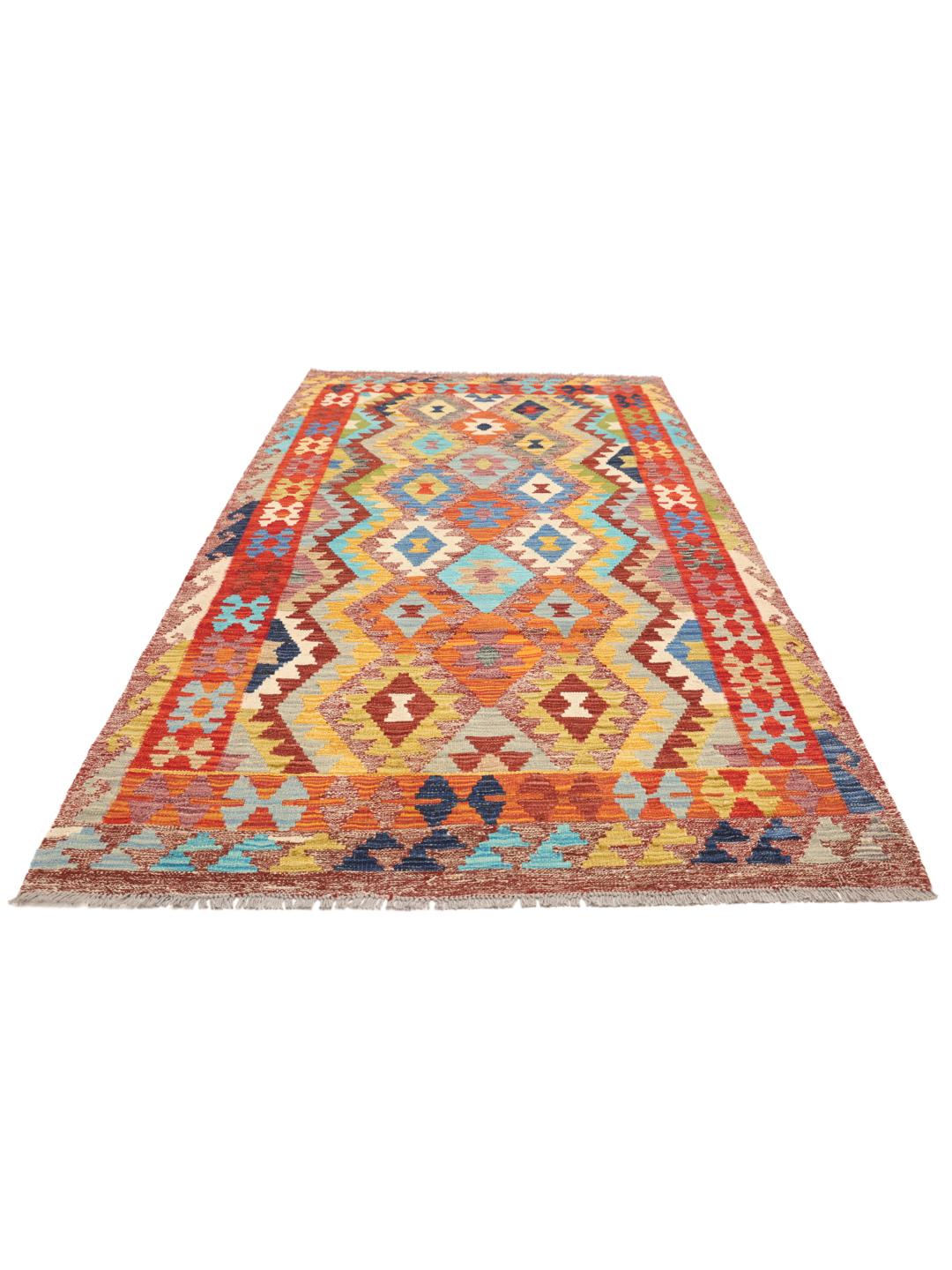
Kelim rugs originate from a long-standing tradition of flat-weaving practised across the Middle East and Central Asia. These textiles have historically served as essential household items, used as floor coverings, wall hangings, and even as storage bags for nomadic tribes, reflecting a culture that values both portability and beauty.
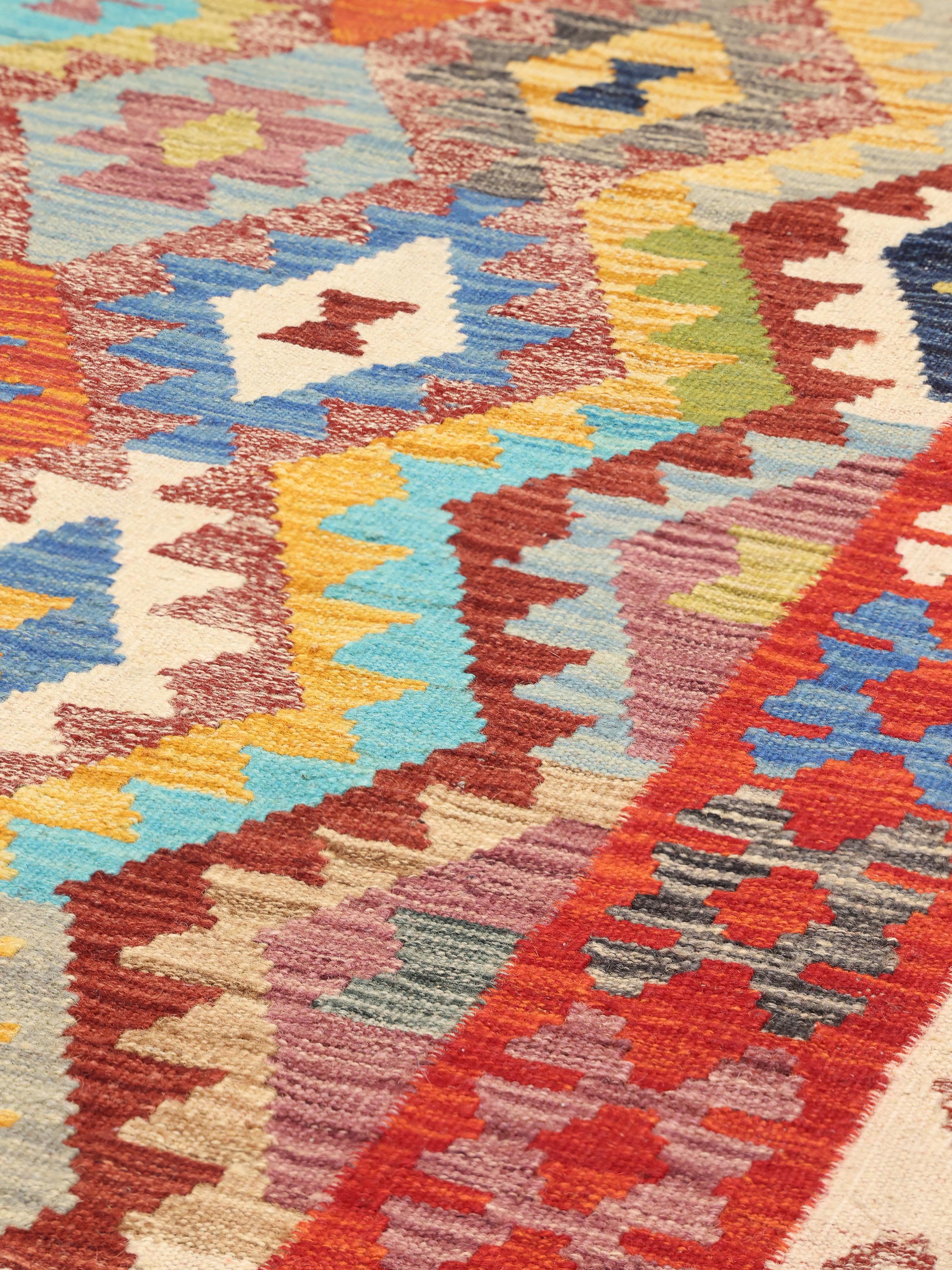
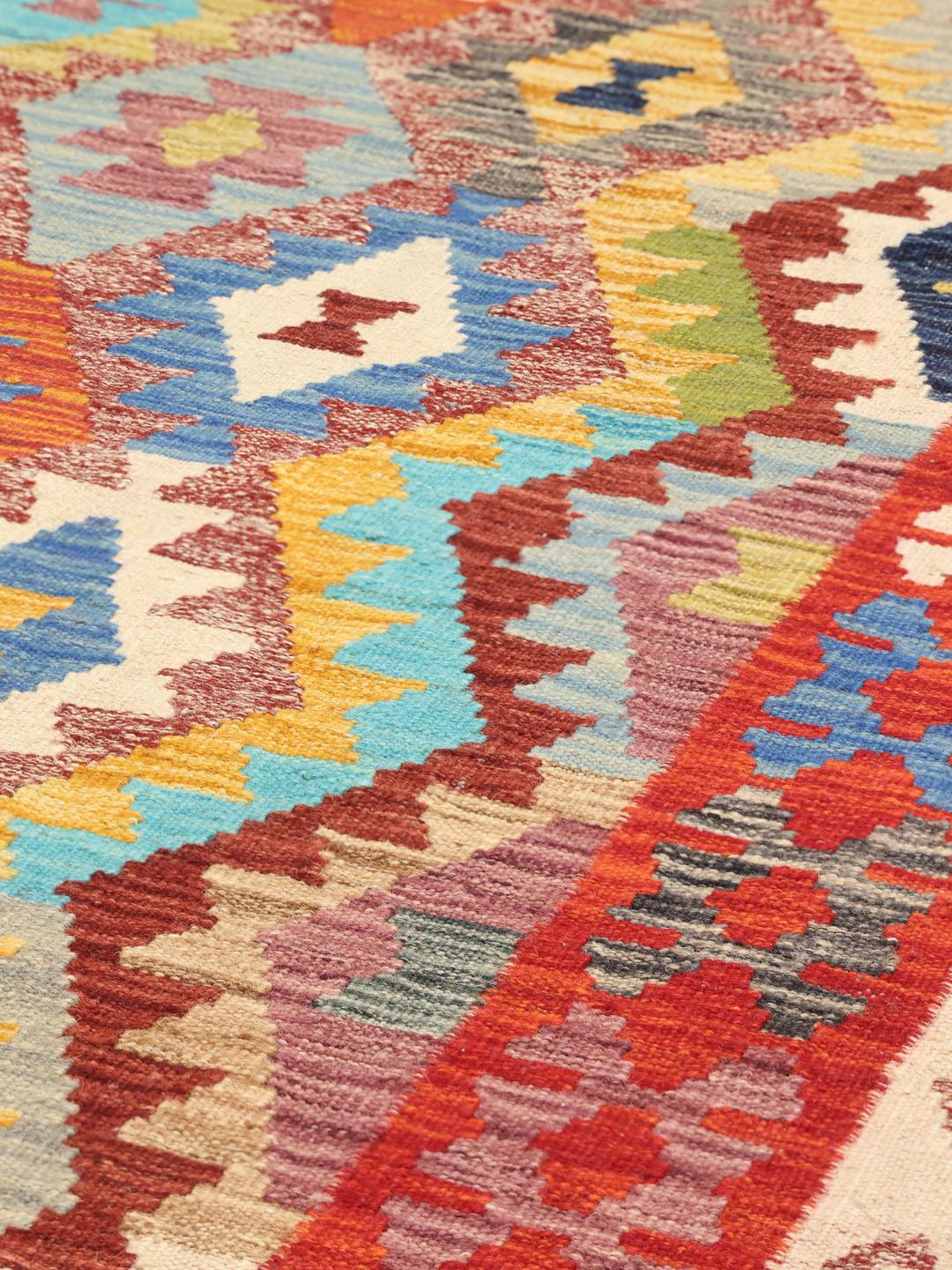
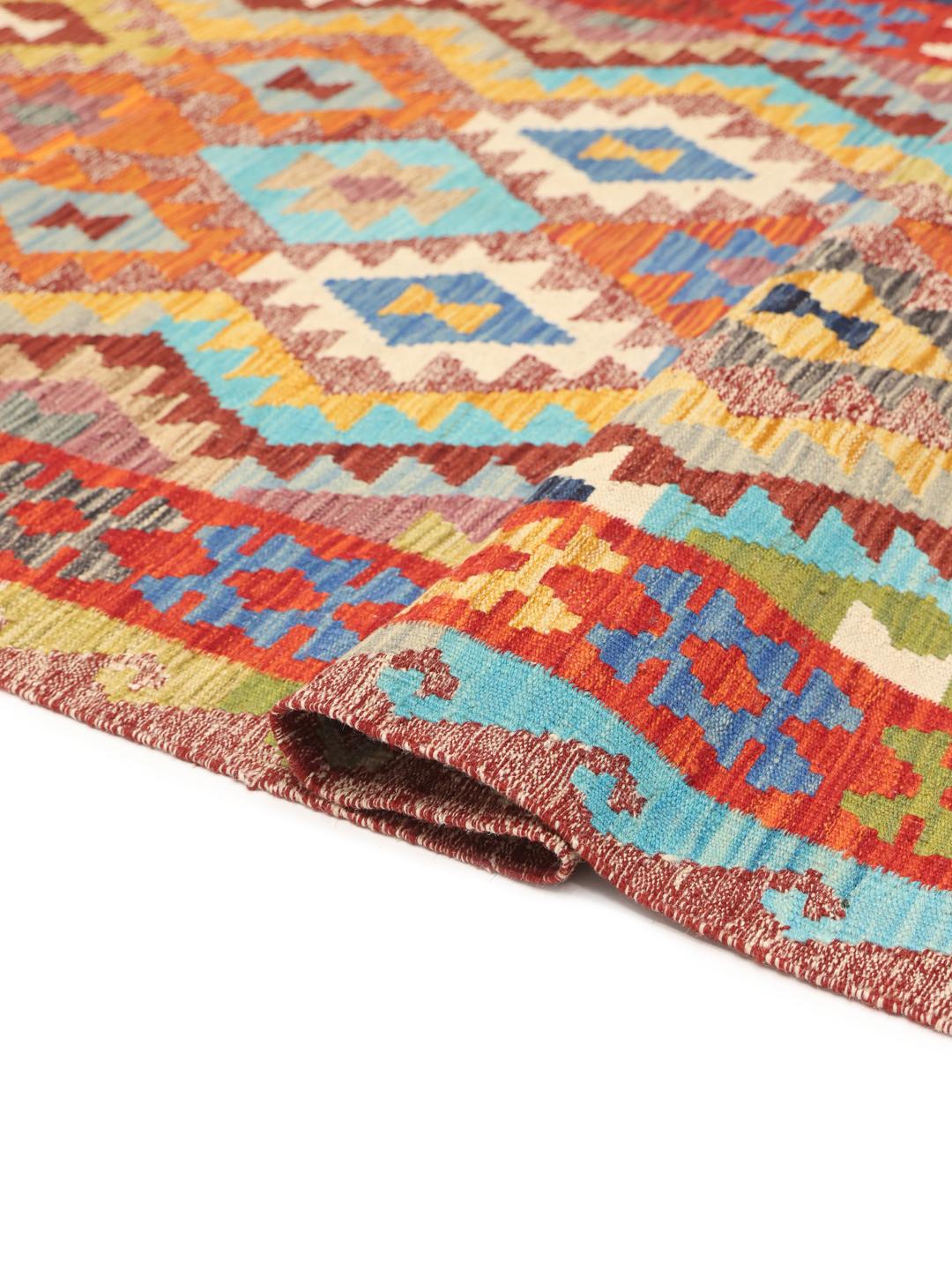
The term 'kelim' refers to the specific slit-weave technique used to create these rugs. By interlocking the weft threads tightly around the warp, weavers create a flat, pile-less surface that allows for crisp, sharp geometric designs. This construction method is highly valued for its durability and the clean, graphic appearance it produces, which has remained popular for centuries.
Signature design elements in Afghan kelims often include bold, repeating geometric shapes, diamonds, and stylised floral motifs. These patterns are deeply rooted in regional aesthetics, often utilising a vibrant palette of earth tones and bright, contrasting shades. The inclusion of decorative borders further frames the central field, creating a balanced and harmonious composition that is characteristic of the region's artistic output.
Collecting these rugs is an investment in cultural heritage and human skill. Each piece reflects the specific aesthetic choices and techniques passed down through generations of families. By choosing a hand-woven kelim, you are supporting a craft that prioritises manual precision and traditional motifs over modern convenience, securing a piece of history that remains relevant in contemporary homes.