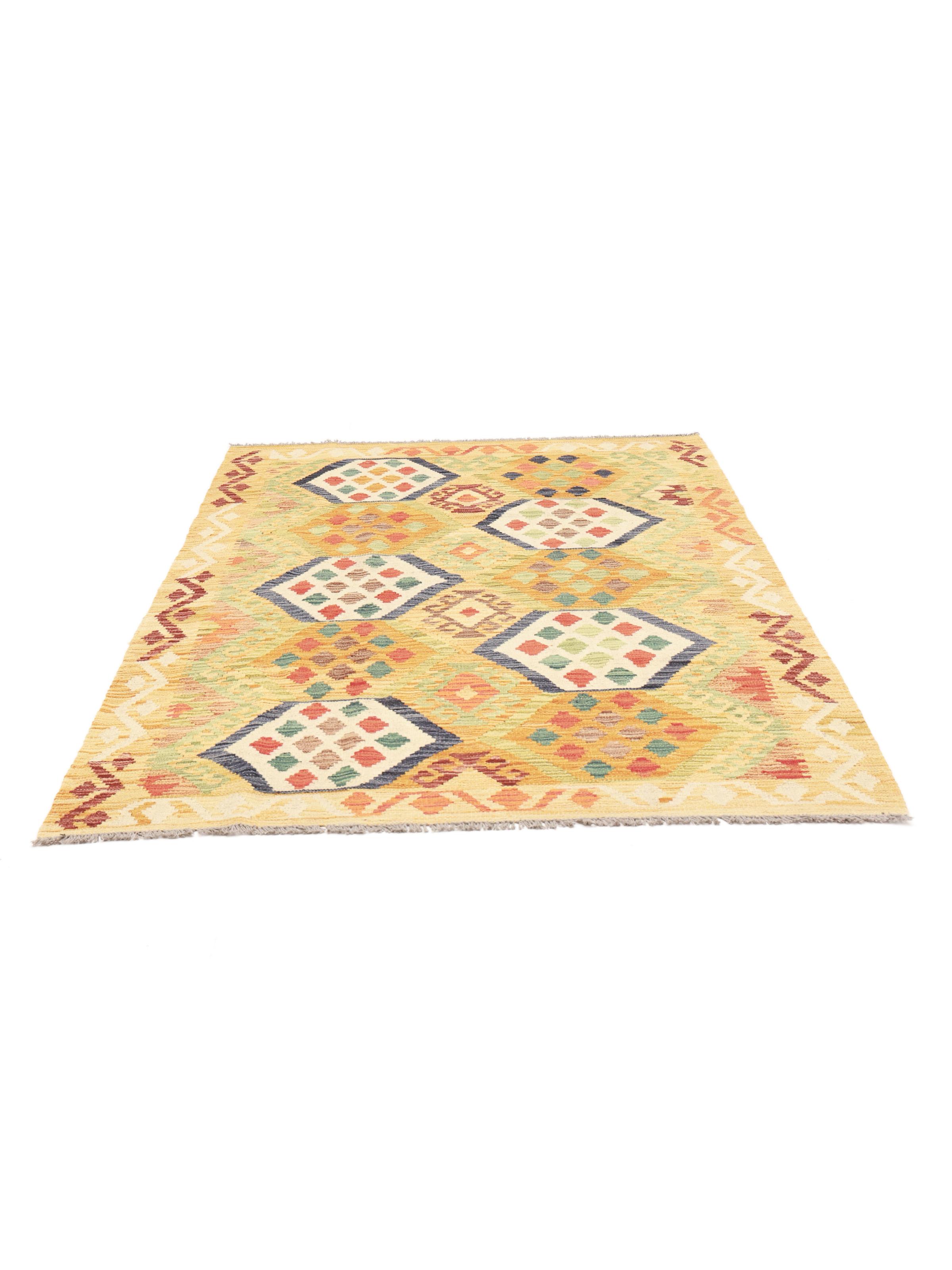
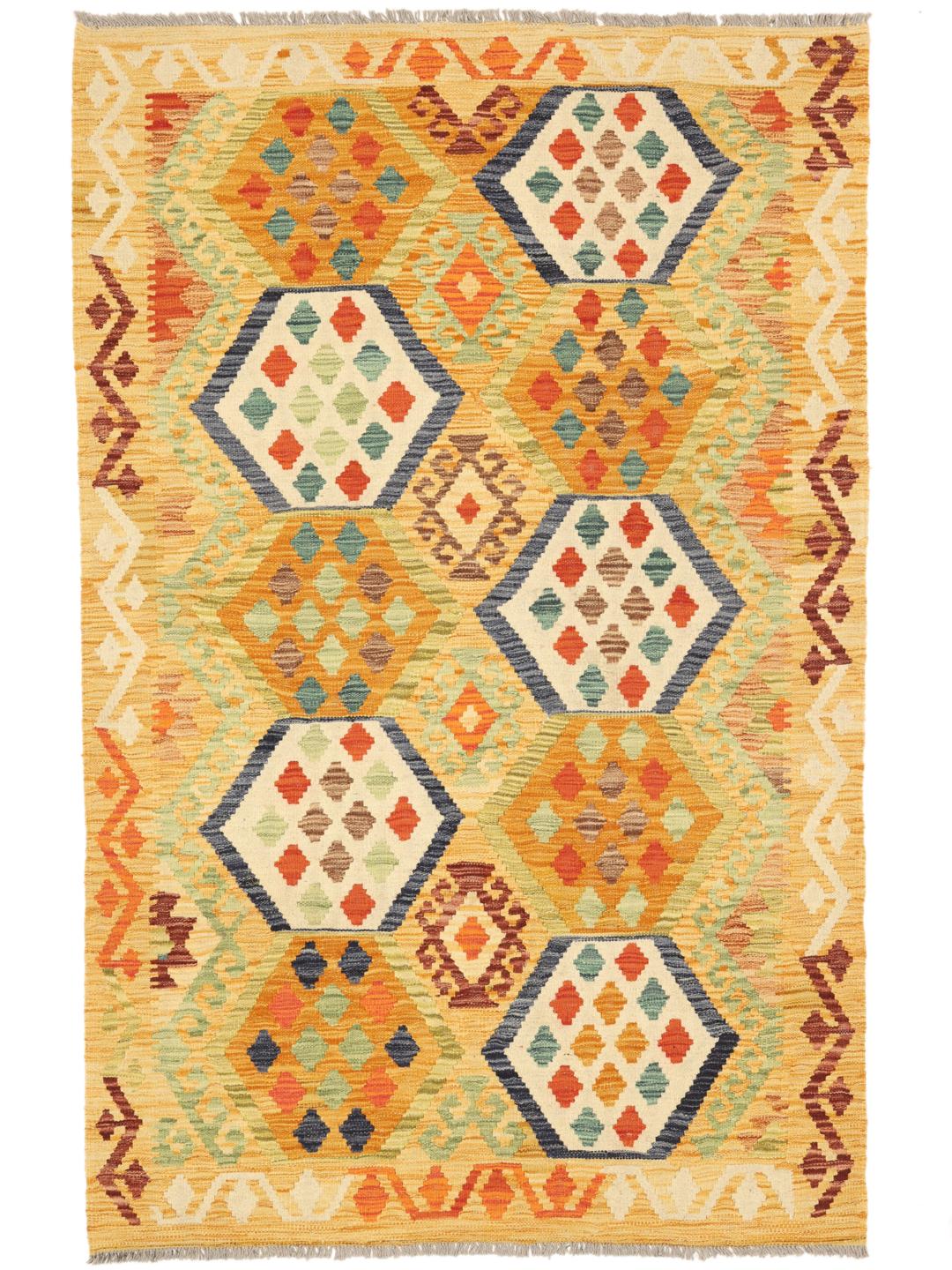
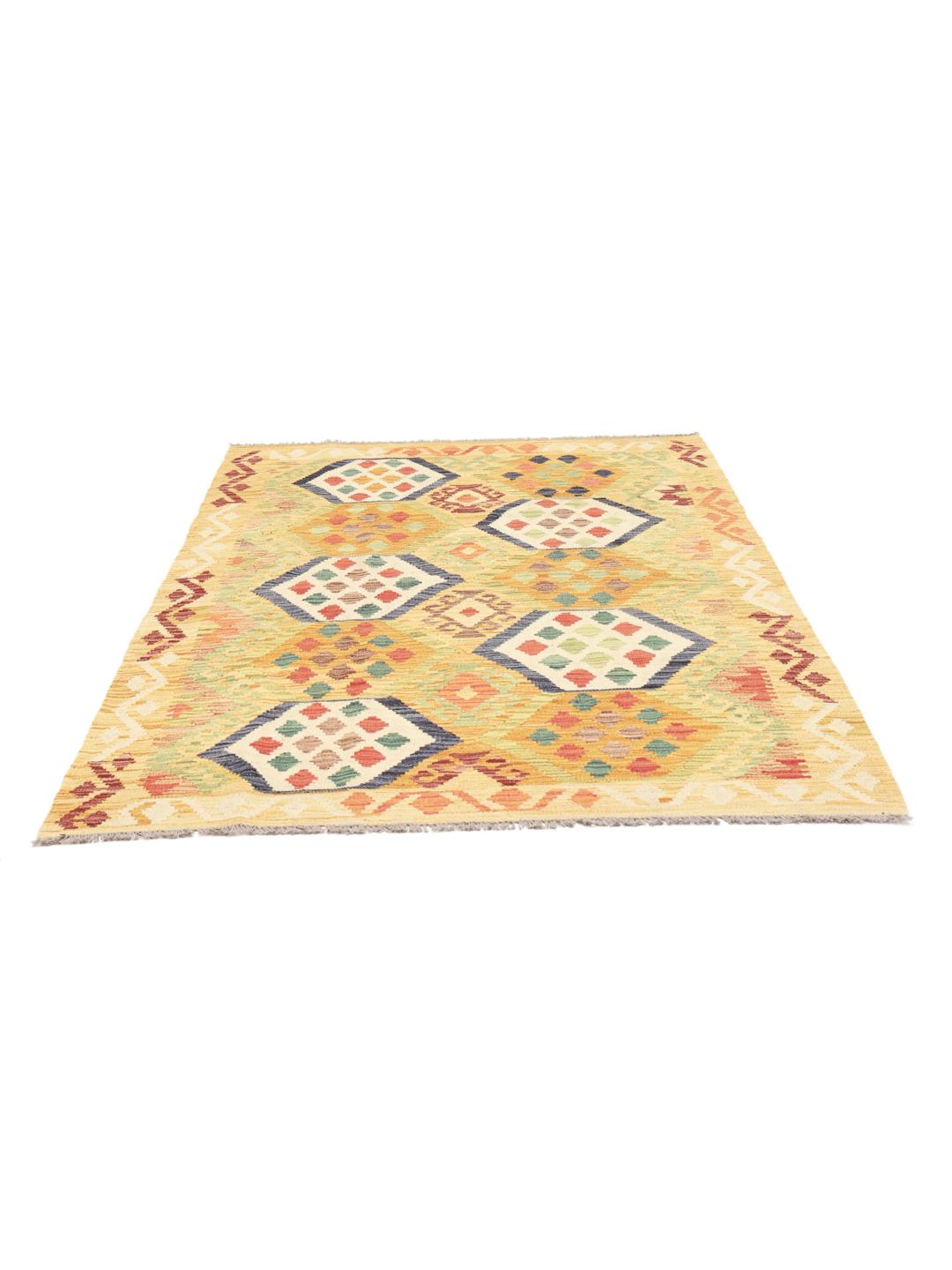
Kelim rugs have a long and storied tradition across the Middle East and Central Asia, serving as both functional floor coverings and essential cultural expressions. These flat-woven textiles are deeply rooted in the nomadic history of the region, where they were traditionally crafted to be portable, durable, and versatile enough for use as floor rugs, wall hangings, or saddlebags.
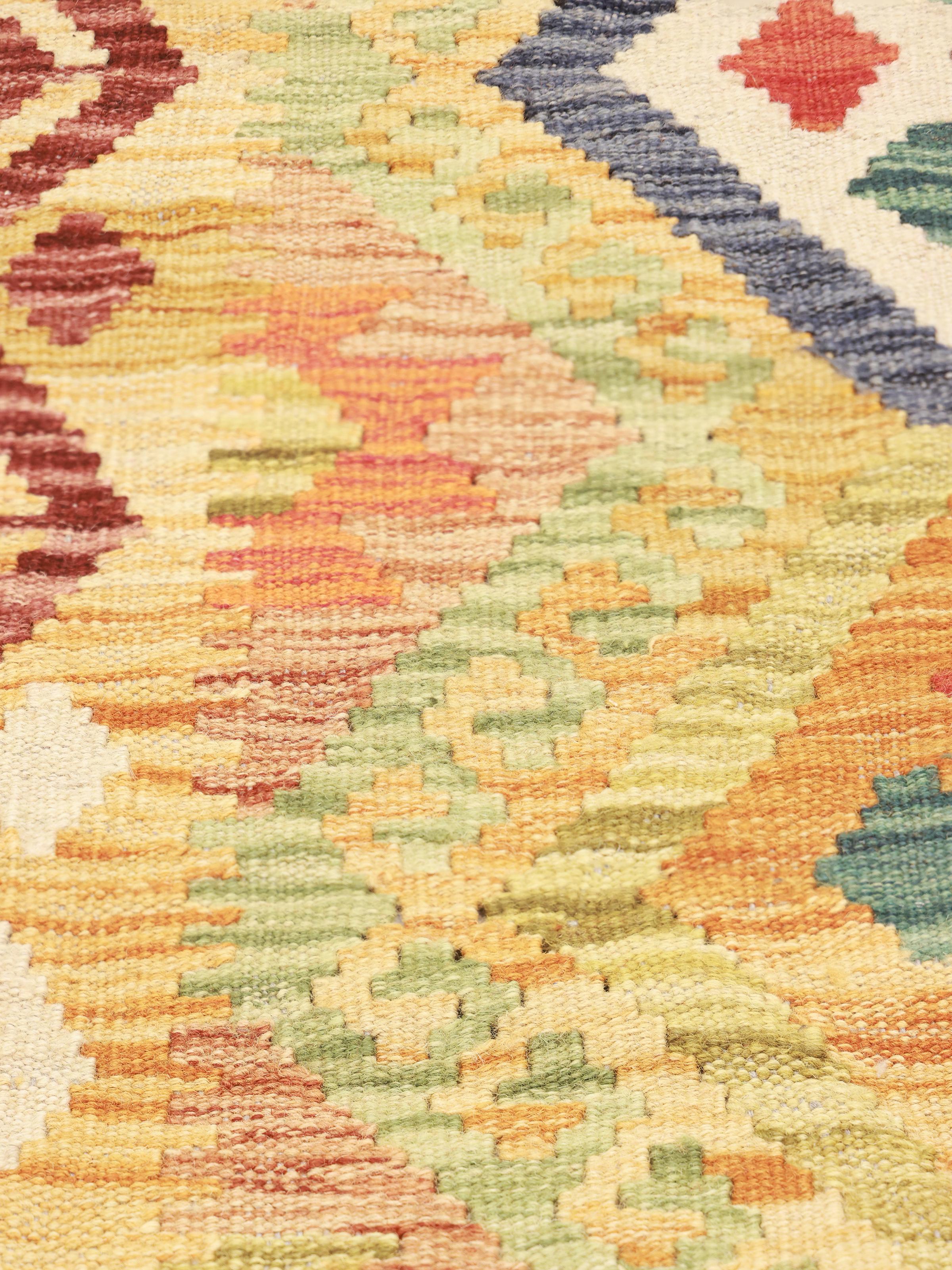
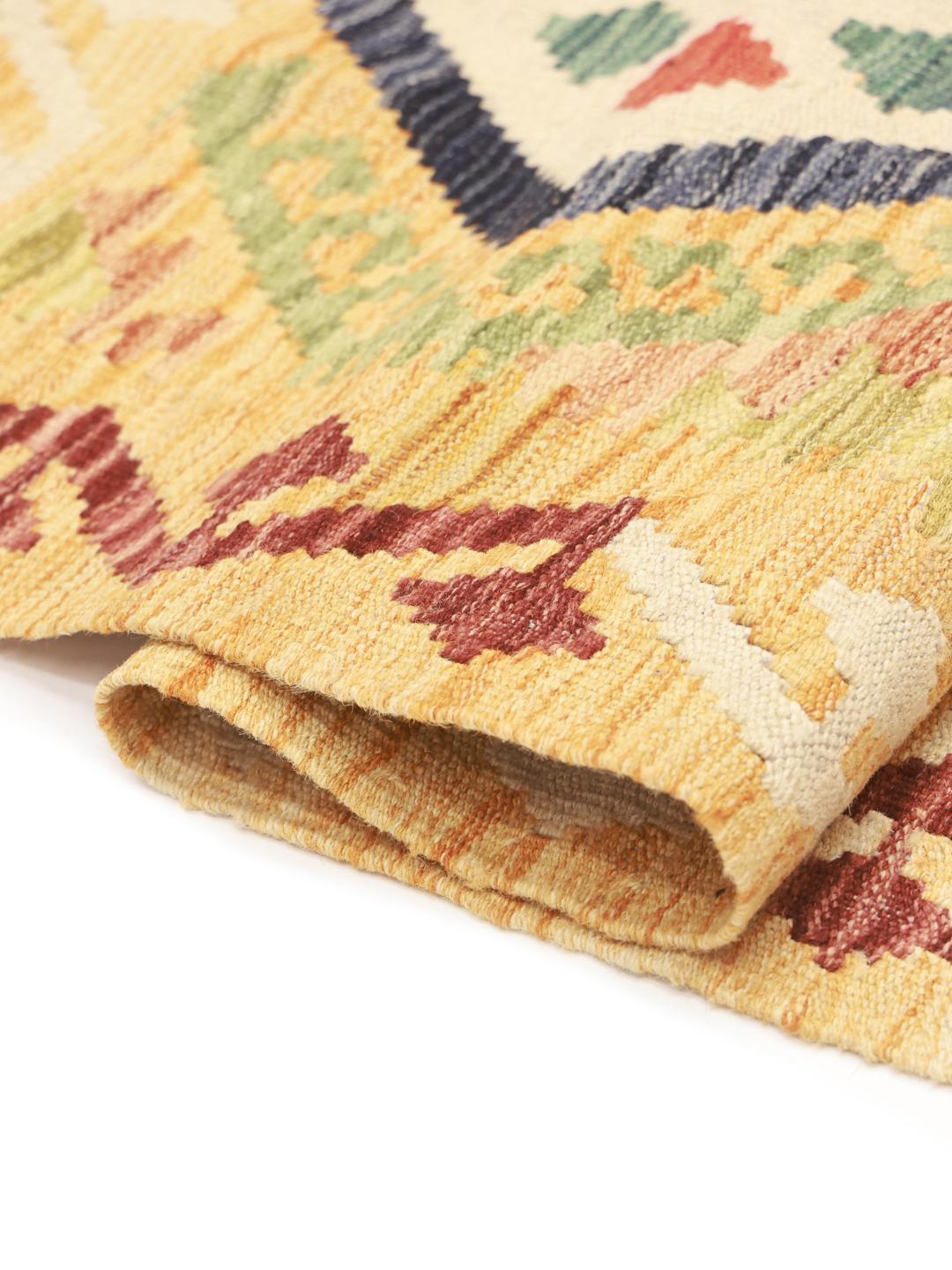
The term Kelim refers to the specific flat-weaving technique used, where the weft and warp threads are interlaced to create a smooth, pile-less surface. This construction method is highly valued for its strength and ability to showcase intricate geometric patterns with crisp, clean edges. Because the weaver does not use a knotted pile, the resulting textile is lightweight yet incredibly sturdy.
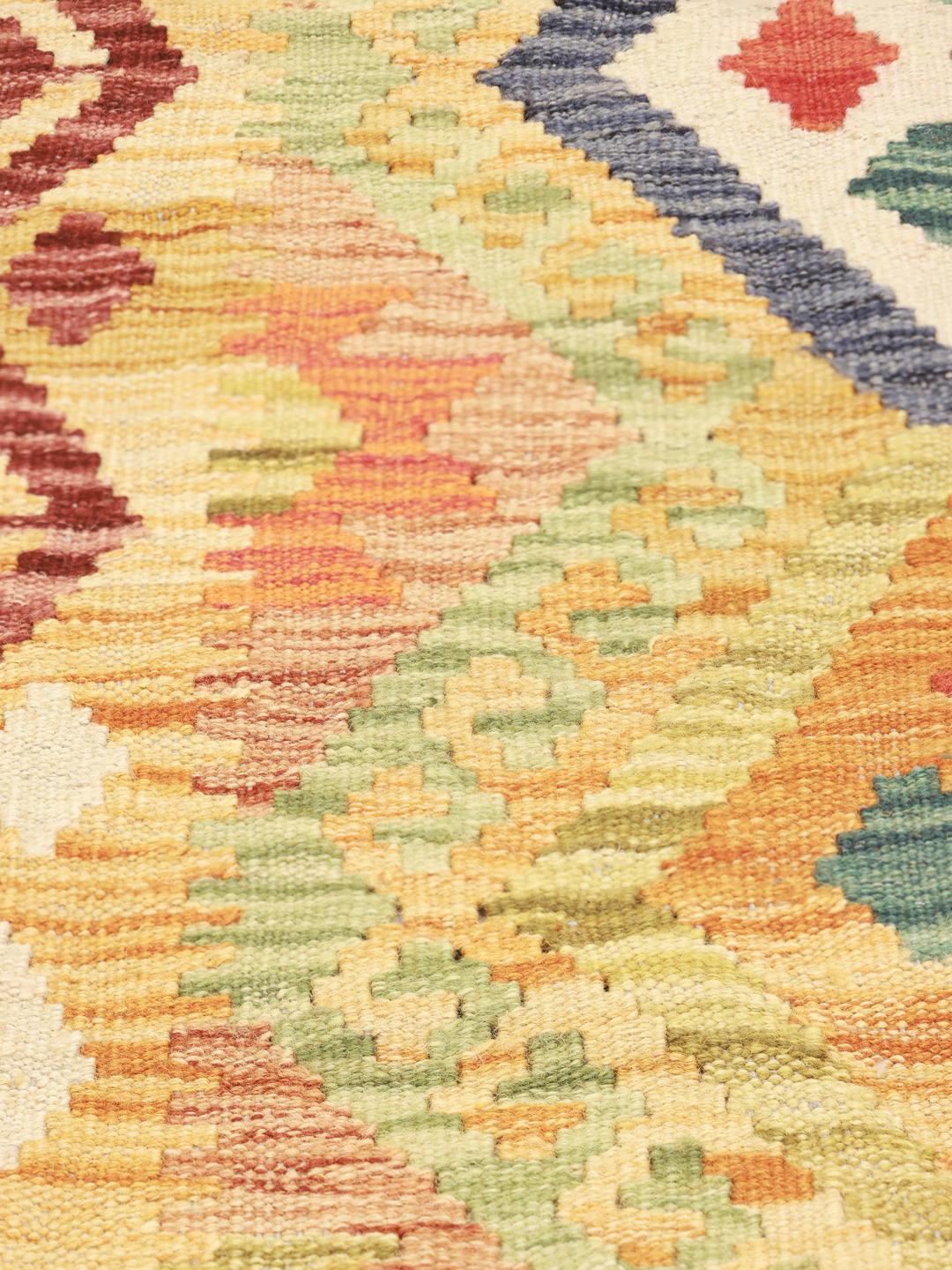
Signature design elements of Afghan Kelims often include bold, repeating geometric motifs such as diamonds, hexagons, and stylized tribal symbols. These patterns are frequently arranged in a rhythmic, symmetrical order, framed by decorative borders that reflect the local artistic heritage. The use of vibrant, natural dyes gives these rugs their characteristic warm, saturated appearance that ages beautifully over time.
Collecting a Kelim is a way of preserving a piece of cultural history that spans centuries of nomadic life. Owning one offers more than just a decorative accent; it represents a connection to the artisan's skill and the enduring traditions of the Afghan weaving community. These rugs are highly regarded for their authentic, soulful character, making them a cherished choice for those who value heritage and craftsmanship.