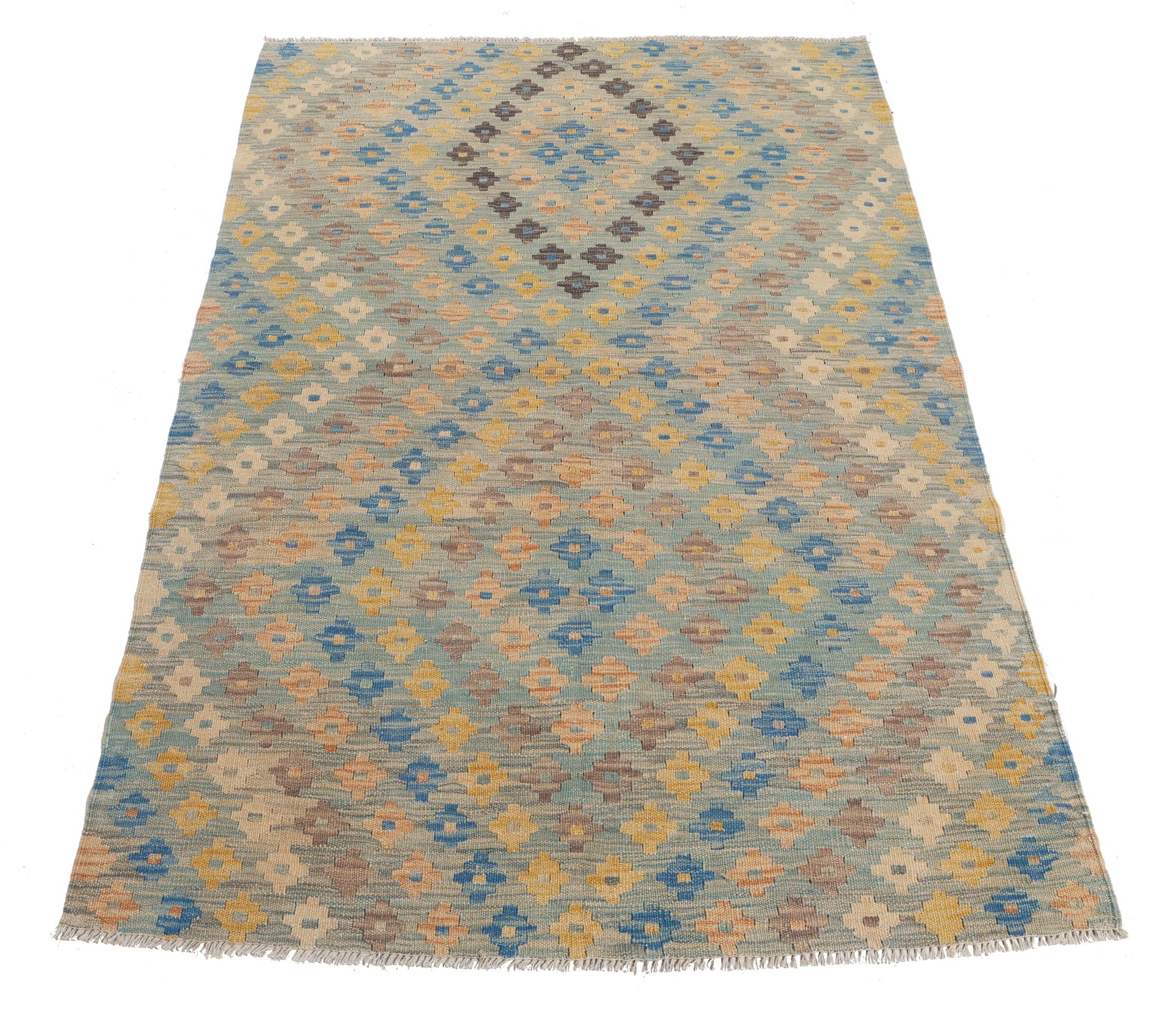
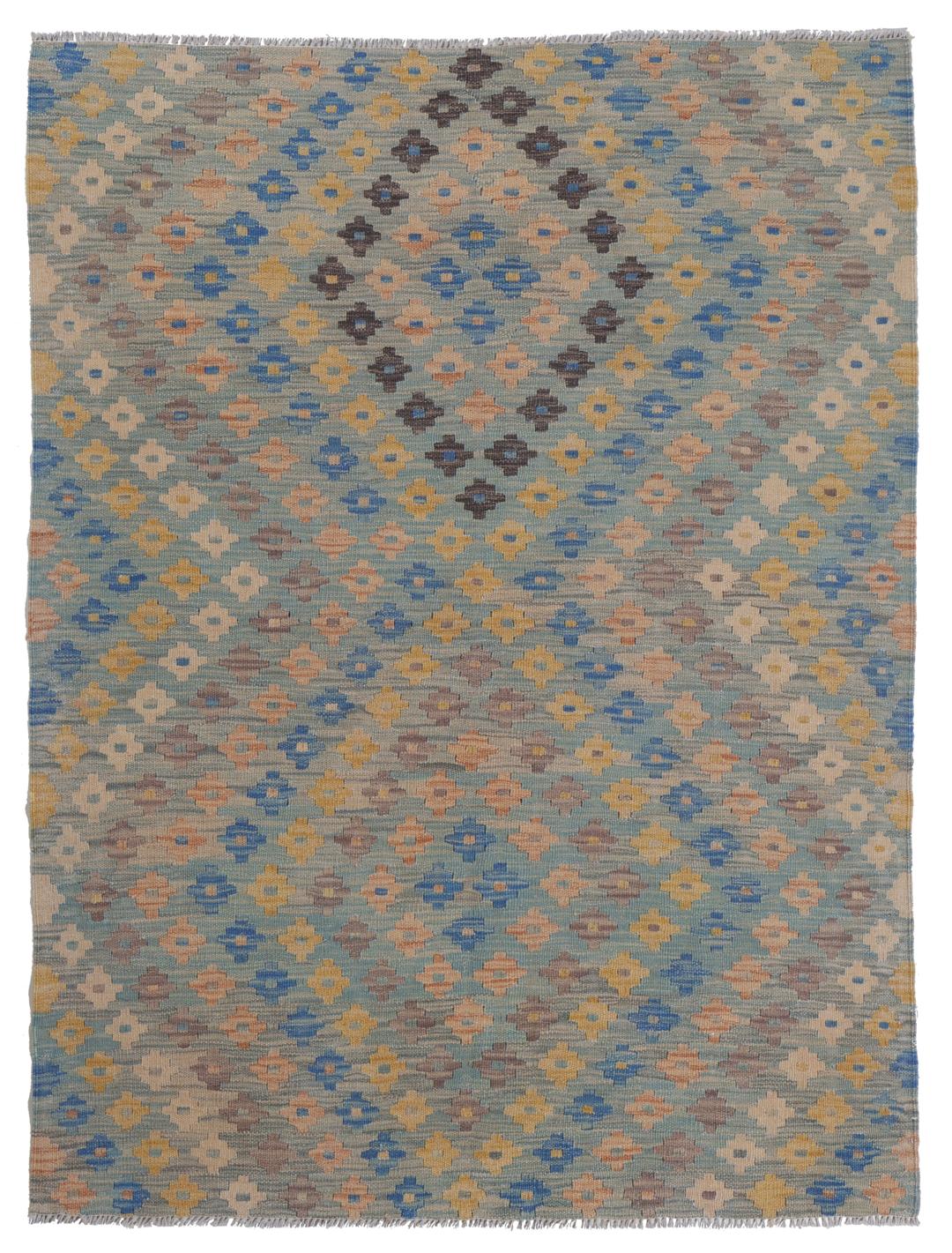
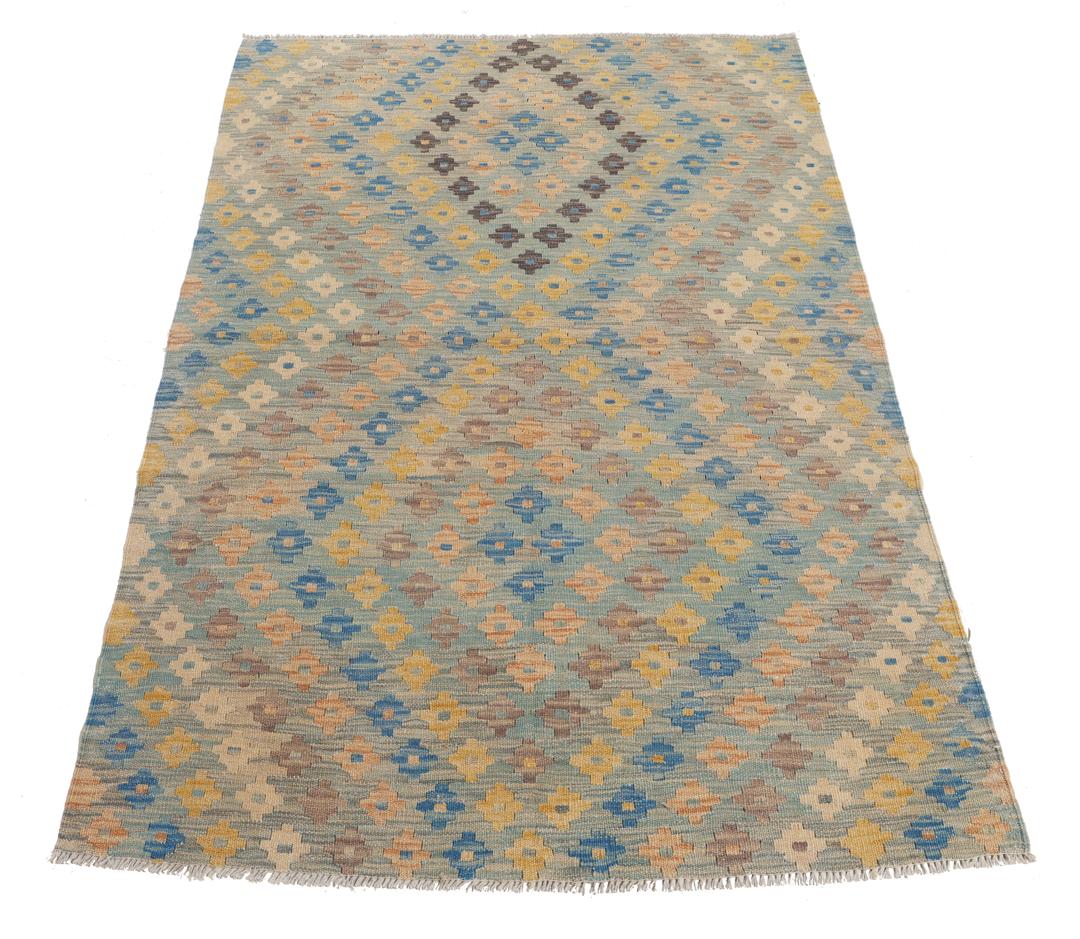
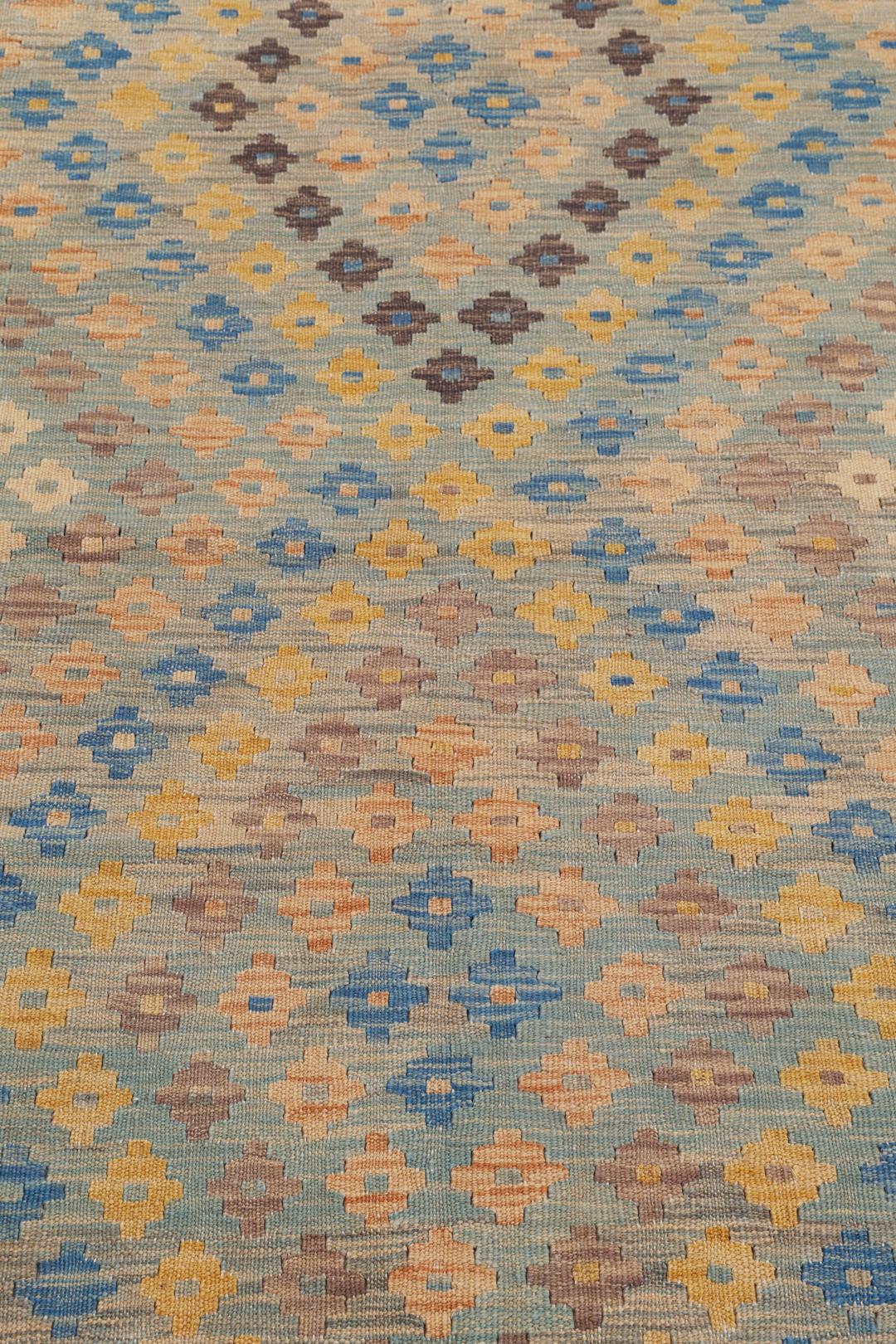
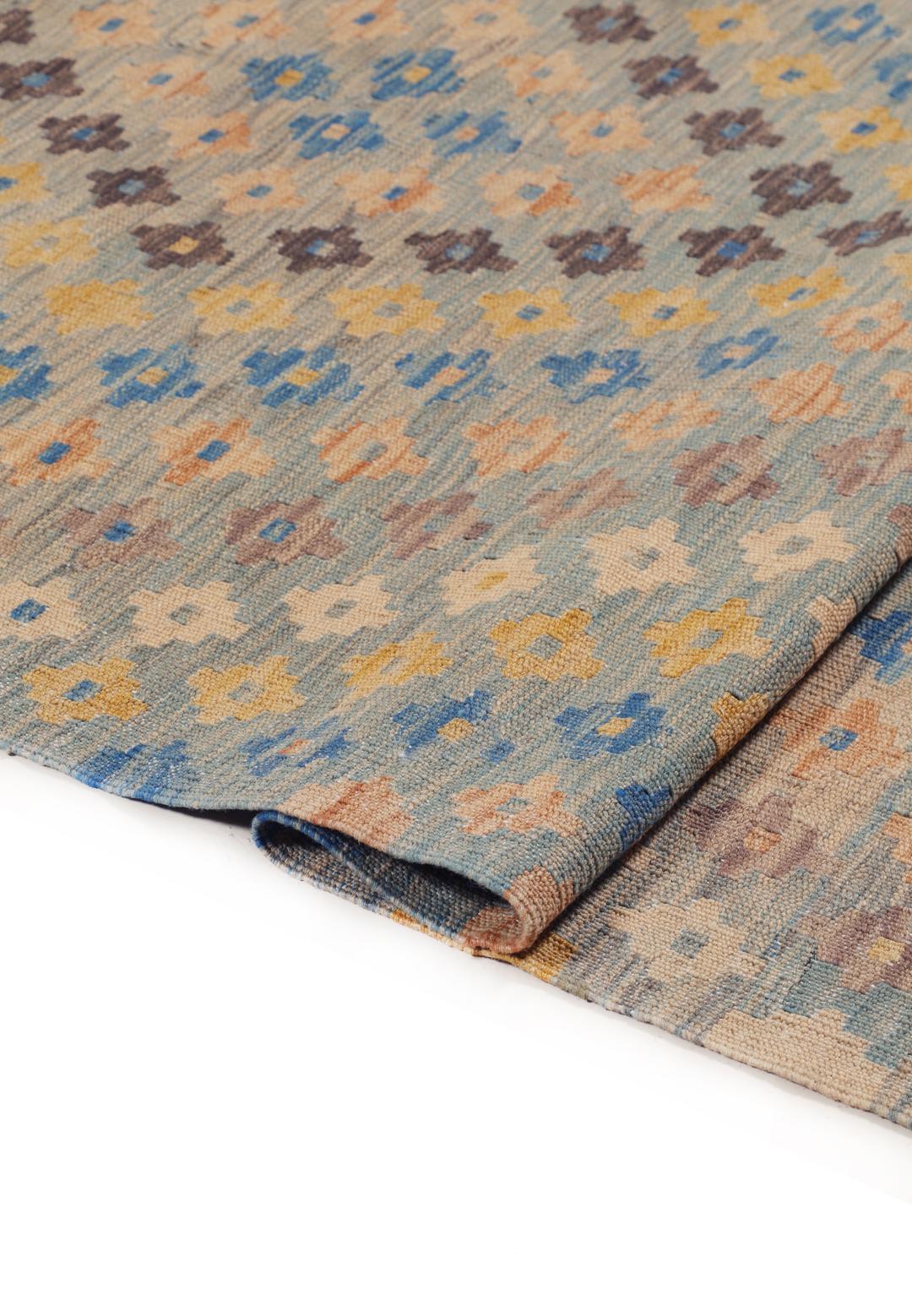
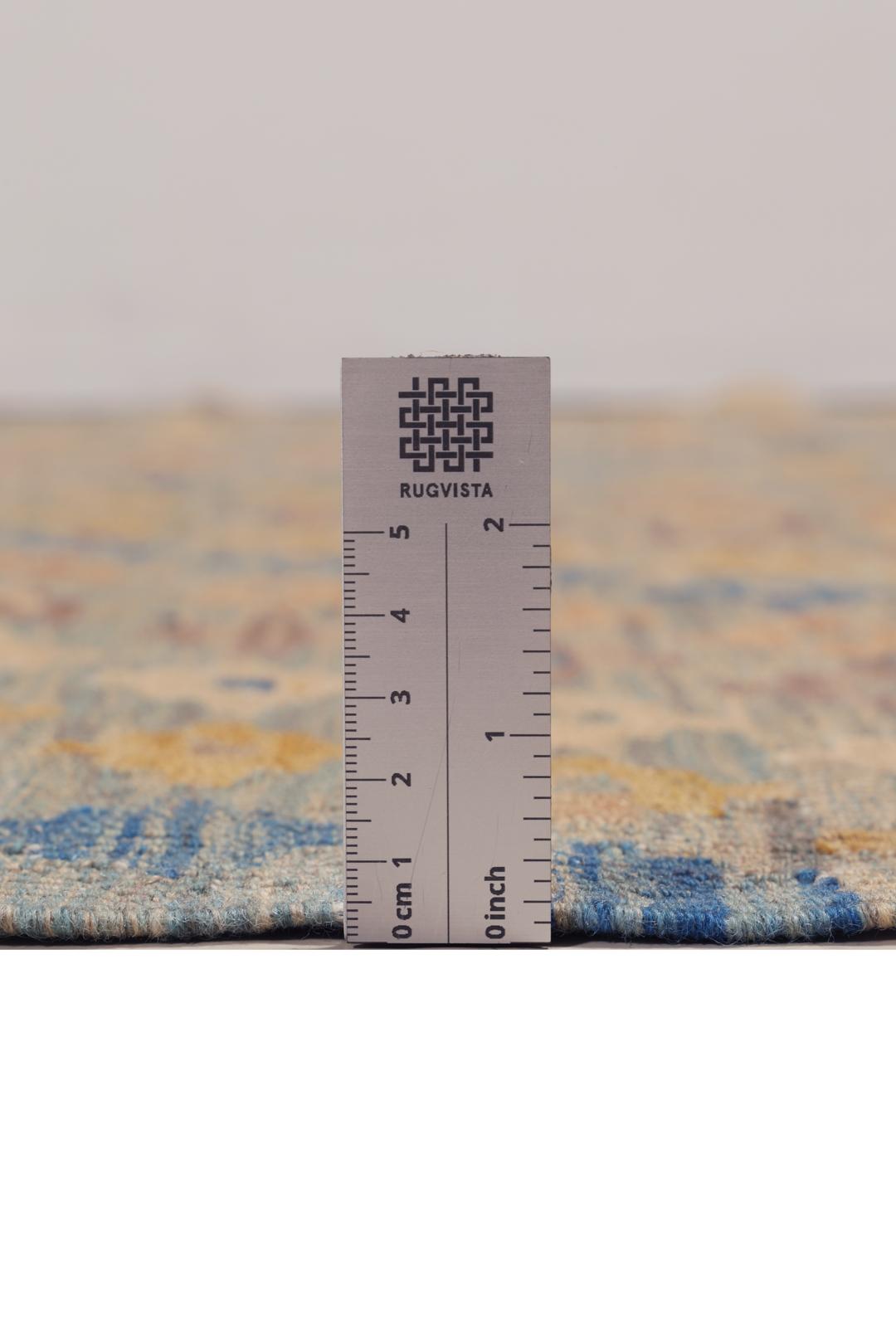
The Kelim rugs of Afghanistan are deeply rooted in the nomadic and village traditions of the region, where weaving has served as a vital cultural expression for generations. These rugs are not merely decorative but are essential components of home life, traditionally used as floor coverings, wall hangings, and storage bags. The migration of these techniques across the Middle East has resulted in a style that is both ancient and remarkably adaptable to modern living.
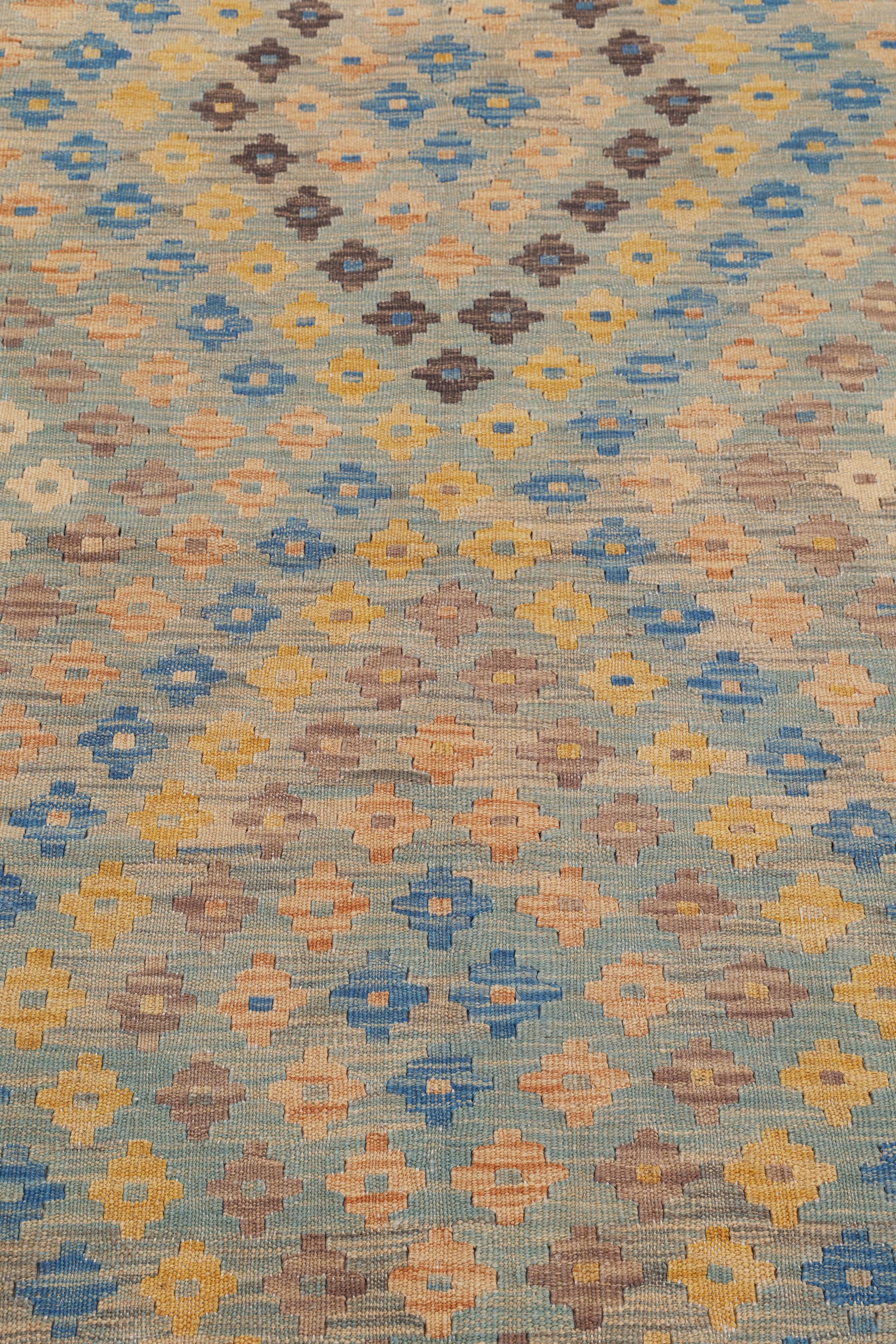
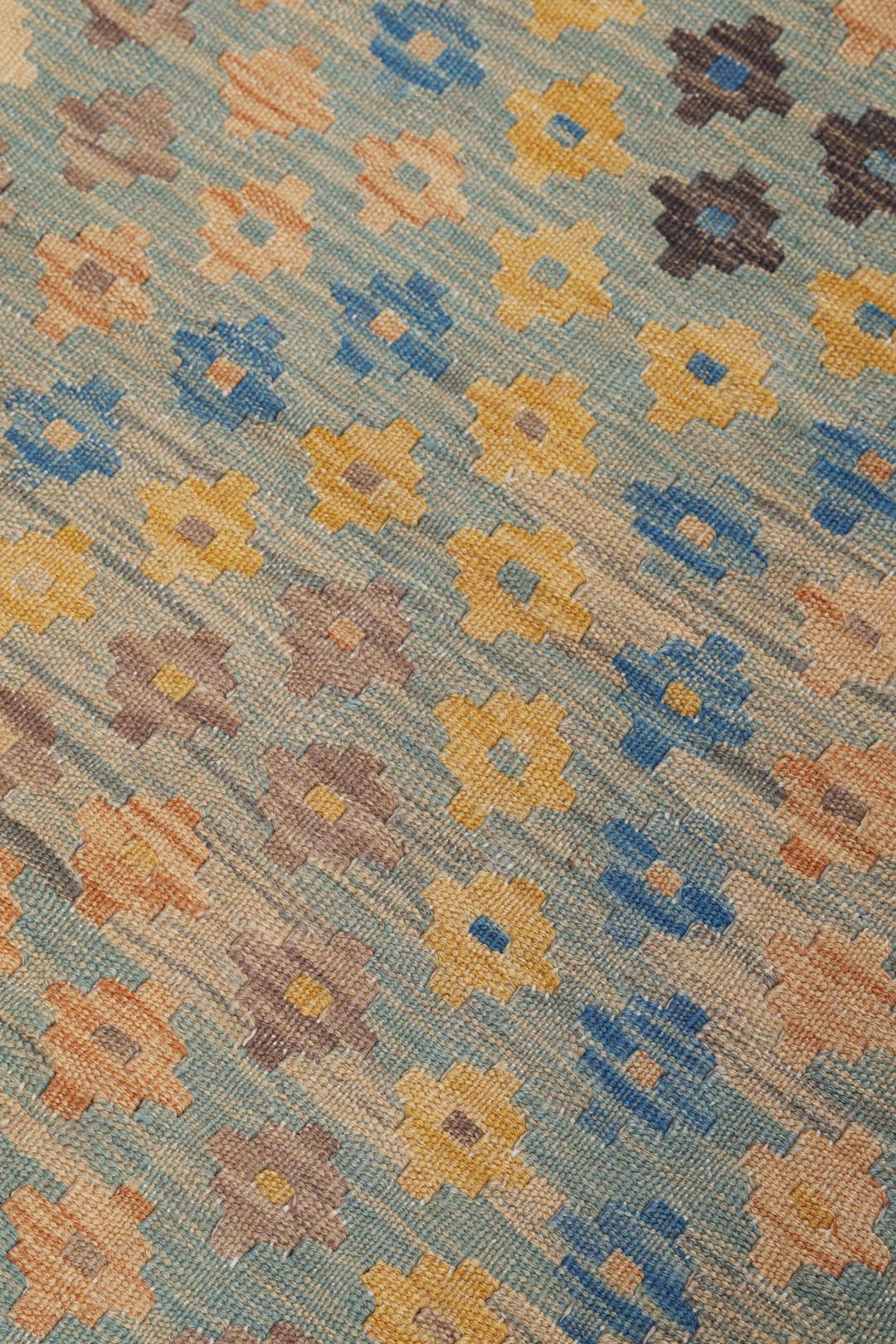
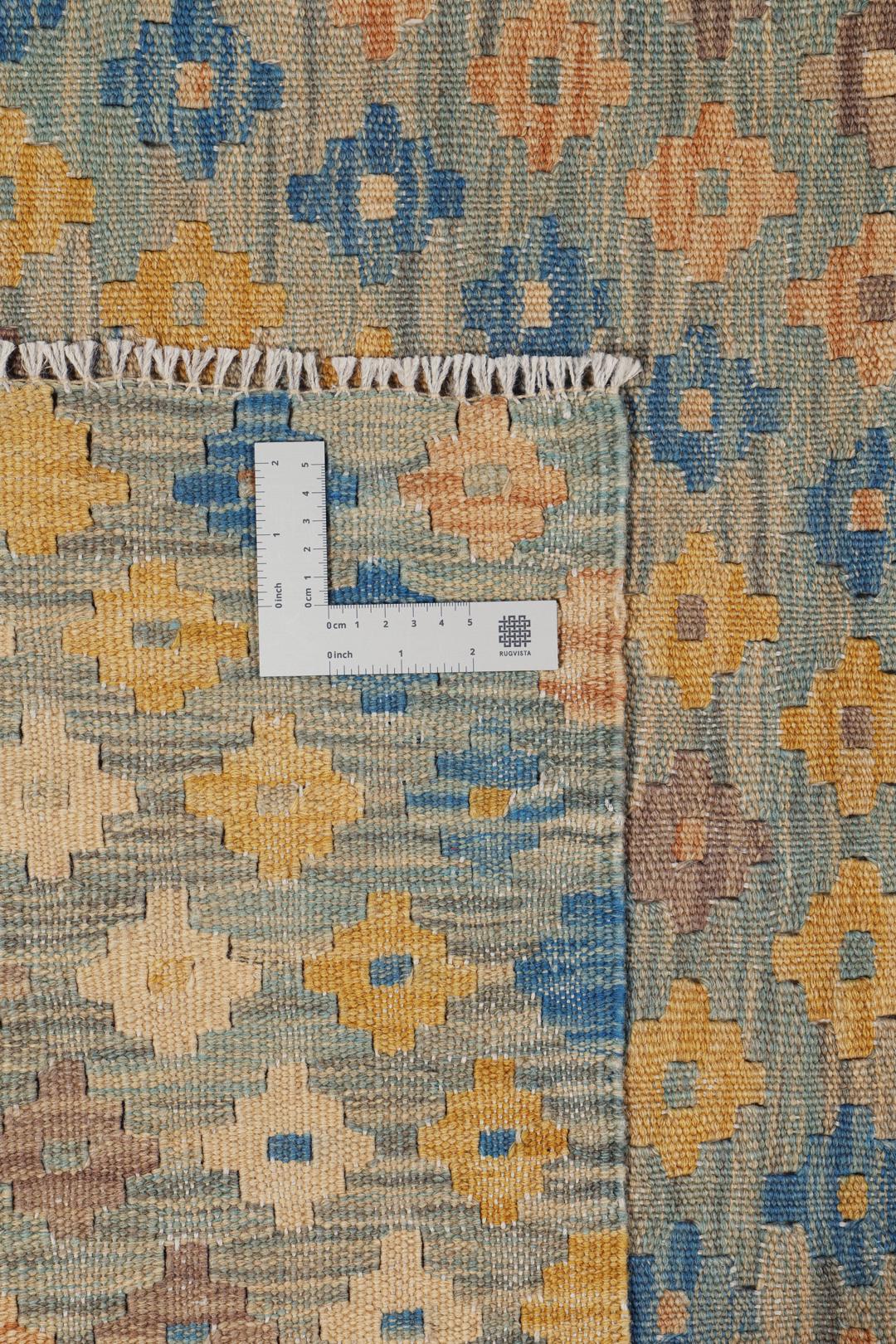
The term 'Kelim' refers to the specific flat-weaving technique used, which creates a durable, non-pile surface. This is achieved by tightly interweaving the coloured weft threads through the warp threads, a process that requires immense precision. Because there is no pile to obscure the design, the geometric motifs are rendered with striking clarity, making the structure of the rug as much a part of the visual experience as the pattern itself.
Signature elements of these rugs include bold, repeating geometric shapes often inspired by tribal symbolism and the natural environment. These motifs, which may include diamonds, triangles, or stylized floral shapes, are typically organised in rhythmic, symmetrical patterns. The use of natural, earthy tones is a hallmark of the tradition, with colours often derived from local plant and mineral dyes that age beautifully over time.
Owning an Afghan Kelim is a way of connecting with a lasting heritage of skill and storytelling. These pieces are highly valued by collectors for their authenticity and the human narrative woven into every thread. By bringing this rug into your home, you are preserving a craft tradition that prioritises patience, intentionality, and the beauty of handmade work over the speed of modern production.