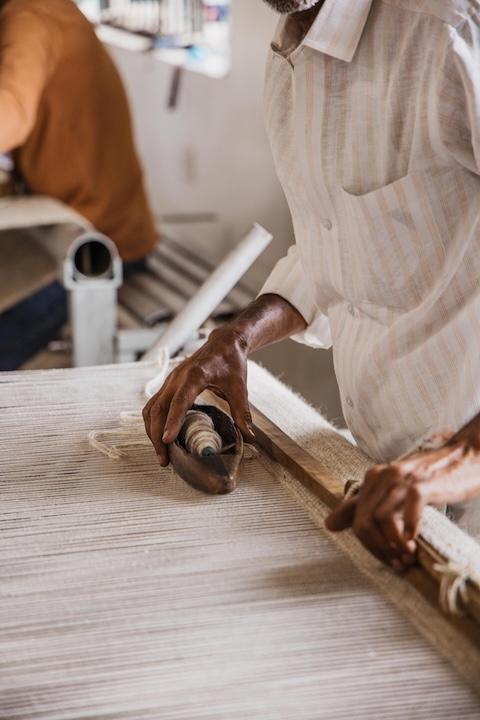
Kelim rugs have long been a cornerstone of nomadic and village life across the Middle East and Central Asia. Historically, these flat-woven textiles were crafted by tribes for practical use, serving as floor coverings, tent dividers, and even storage bags. Over generations, the art of weaving these rugs has been passed down through families, with each region developing its own unique visual vocabulary and technical approach.
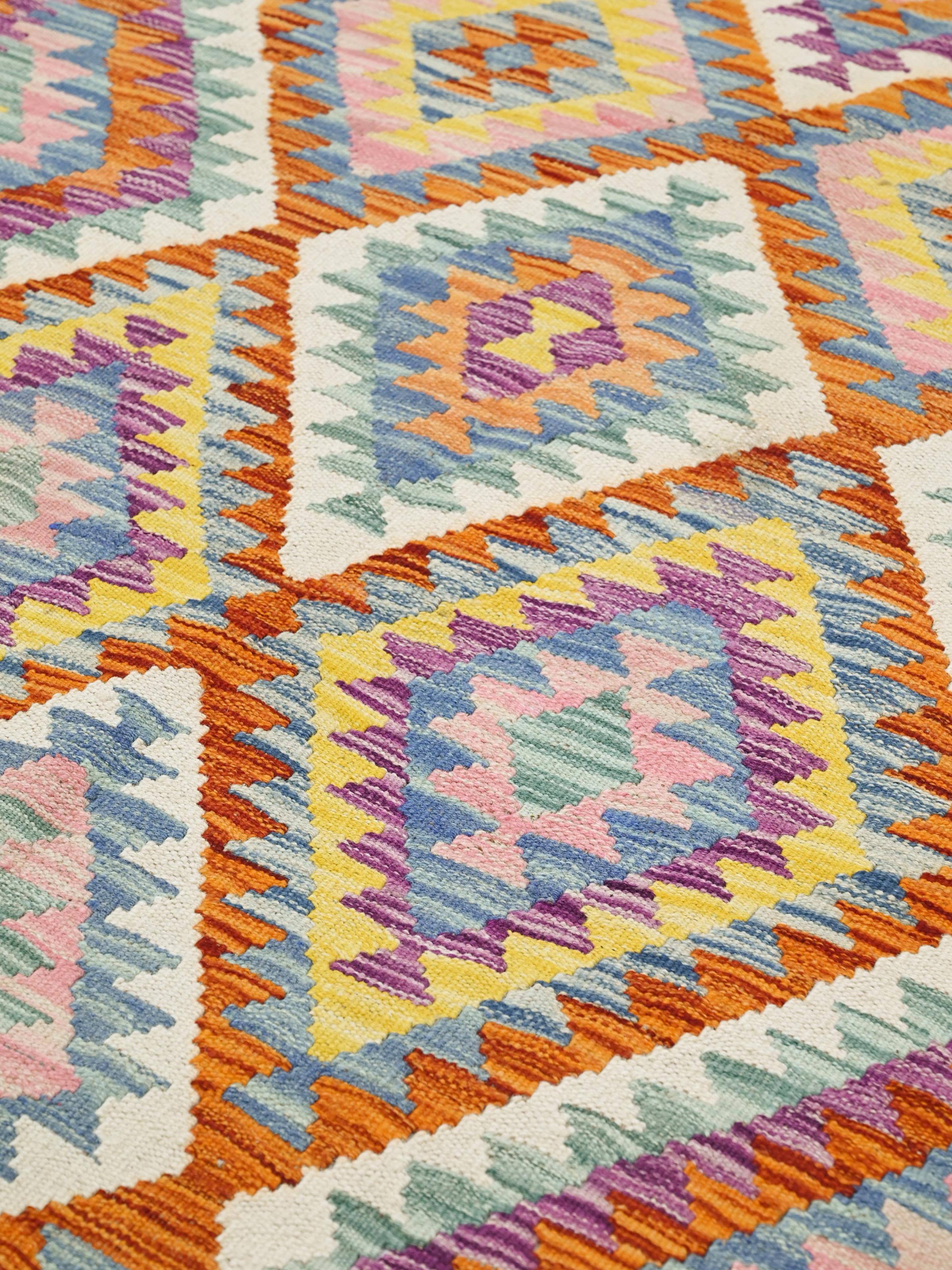
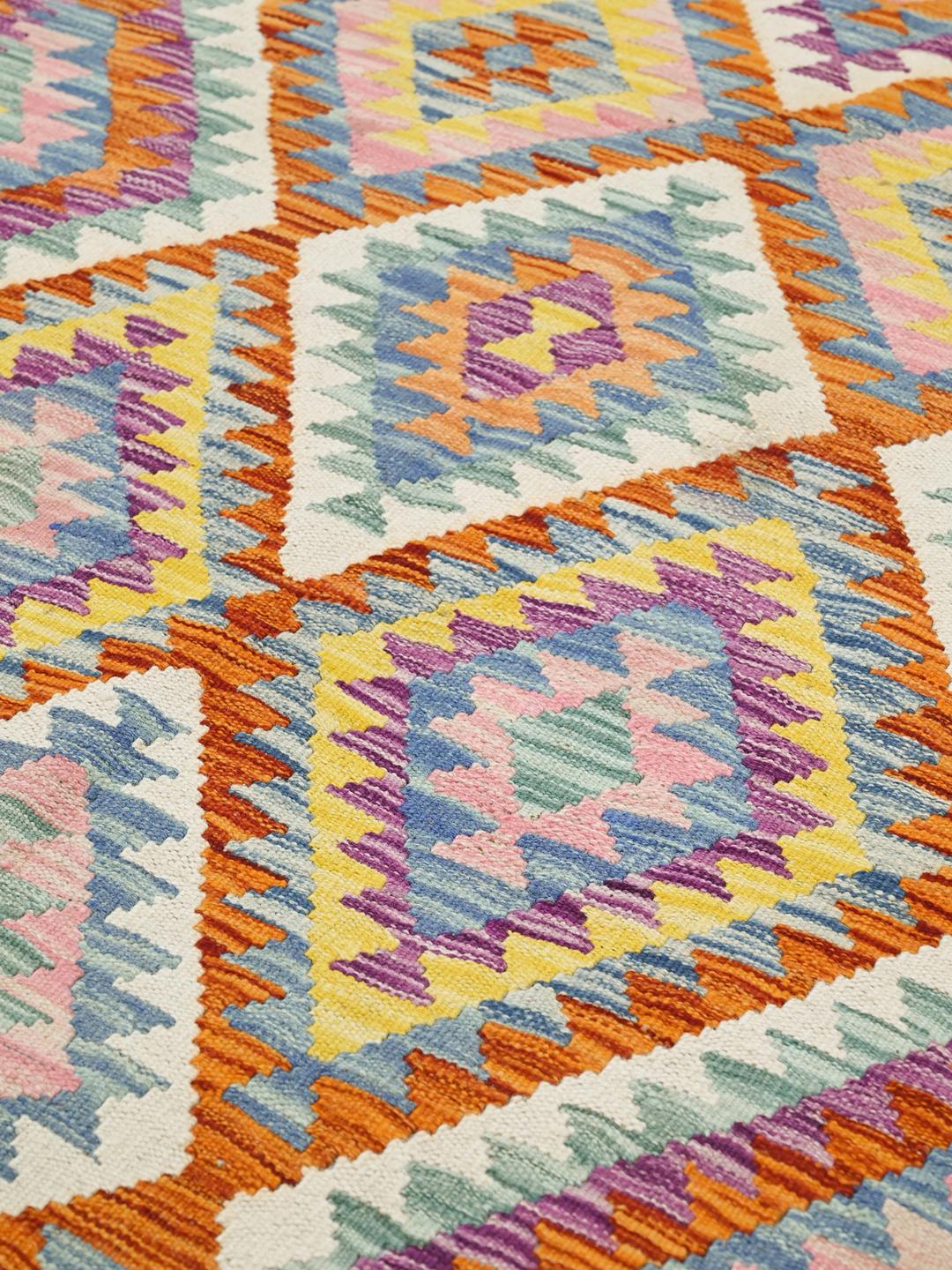
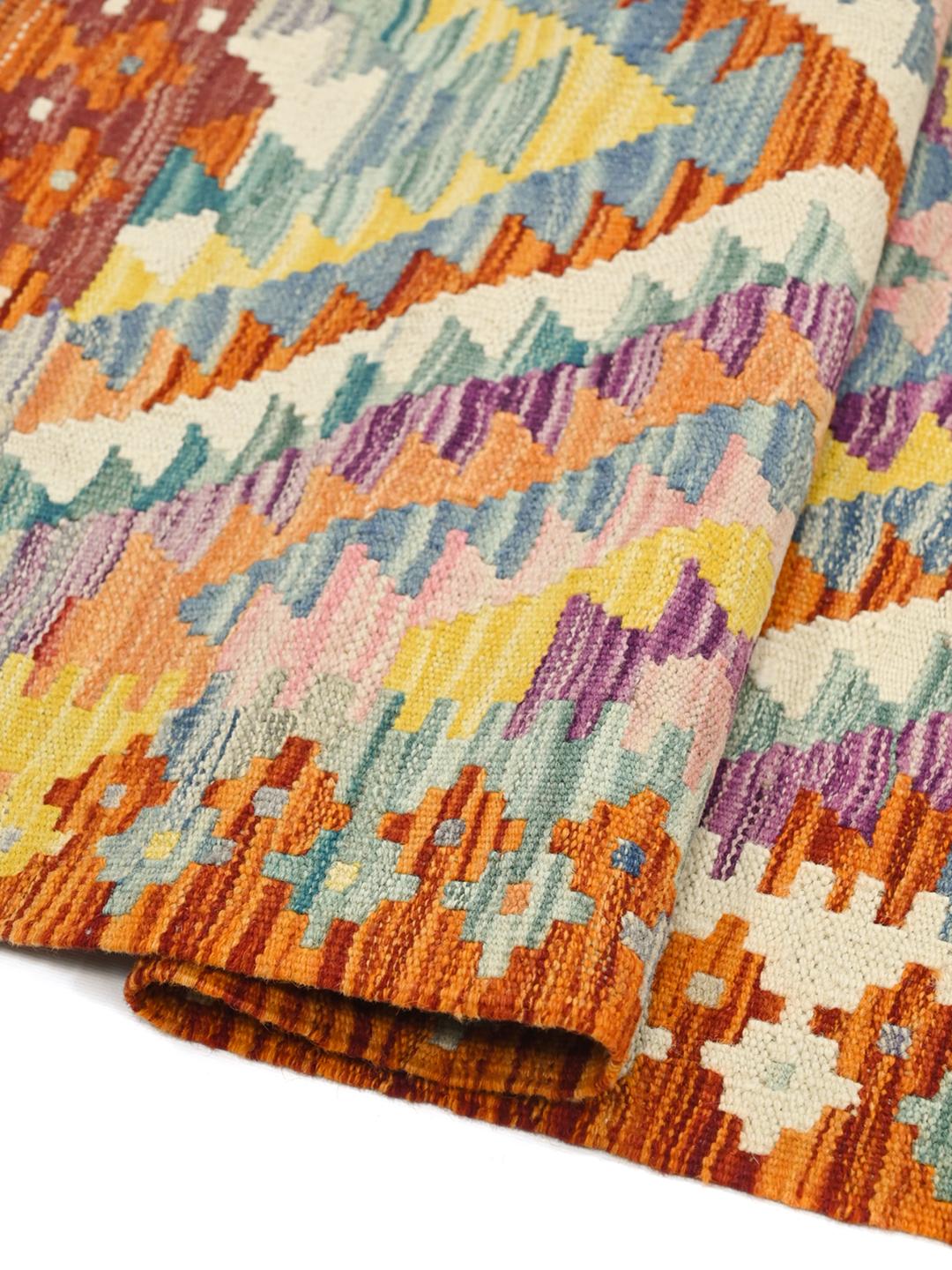
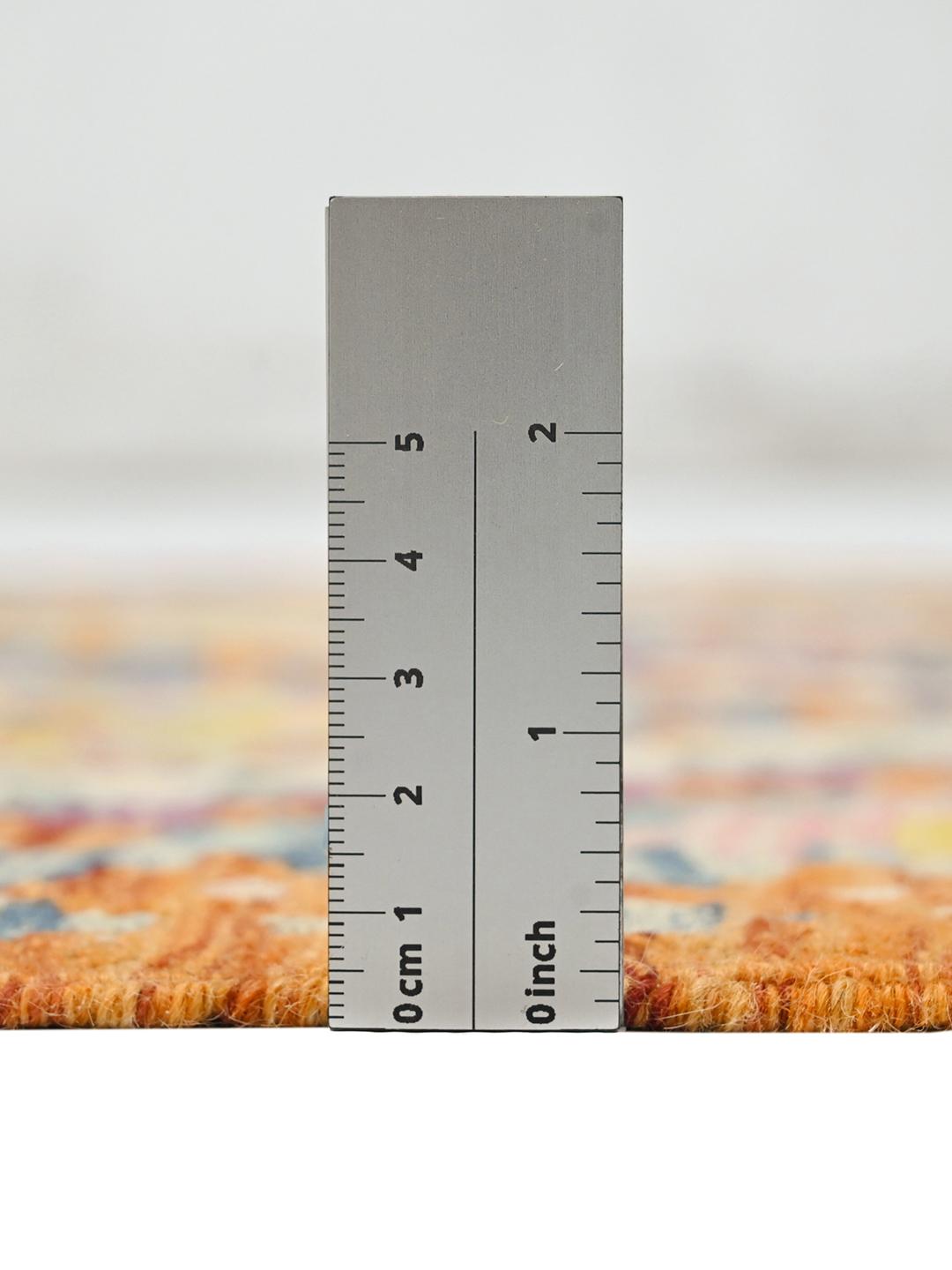
The term Kelim refers to the specific flat-weaving technique used to create these rugs. Unlike knotted rugs, where individual tufts of wool are tied to a foundation, Kelim rugs are created by interlacing the warp and weft threads. This technique produces a thin, lightweight, and reversible textile that is prized for its versatility and clean, sharp geometric lines.
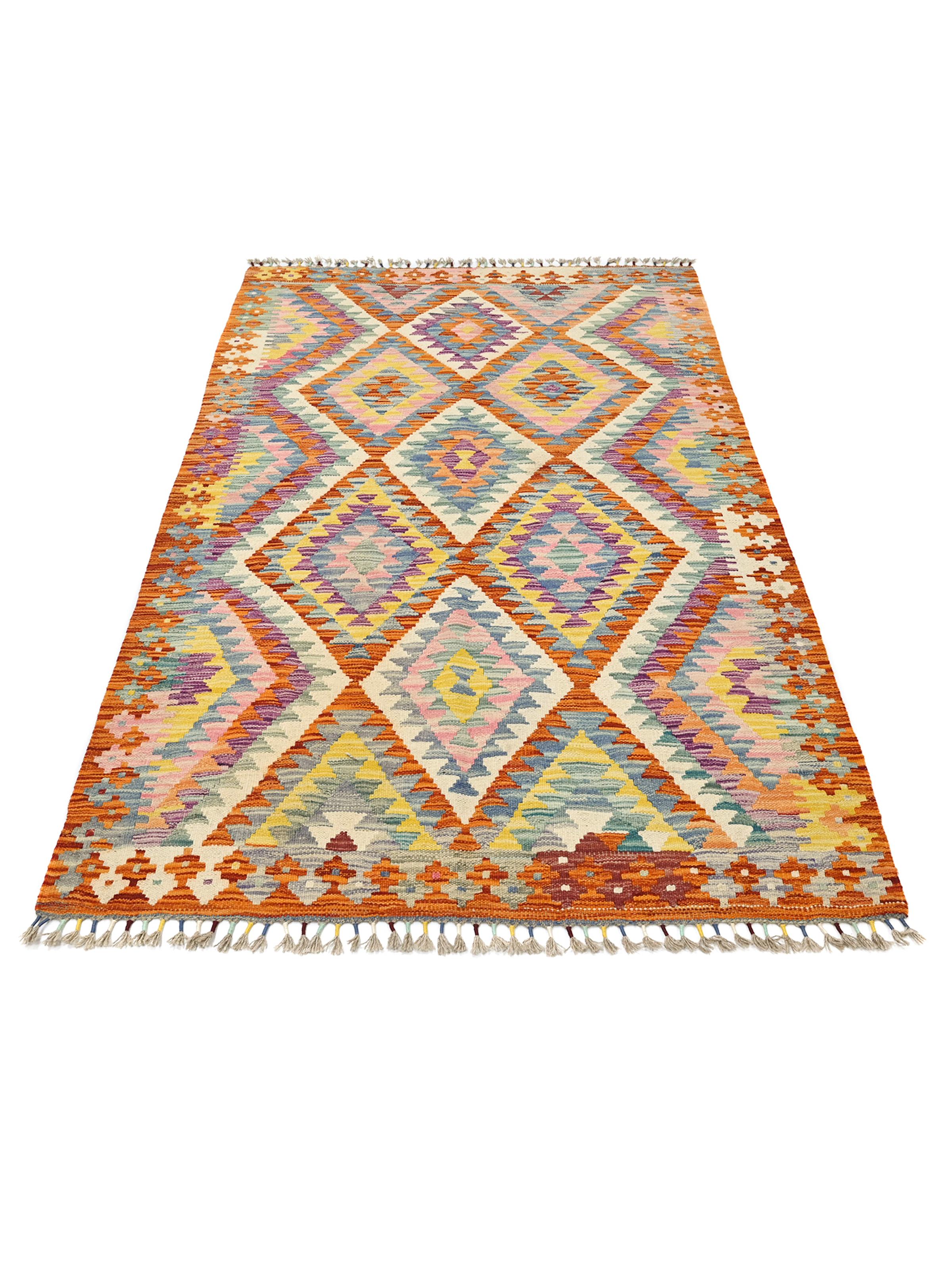
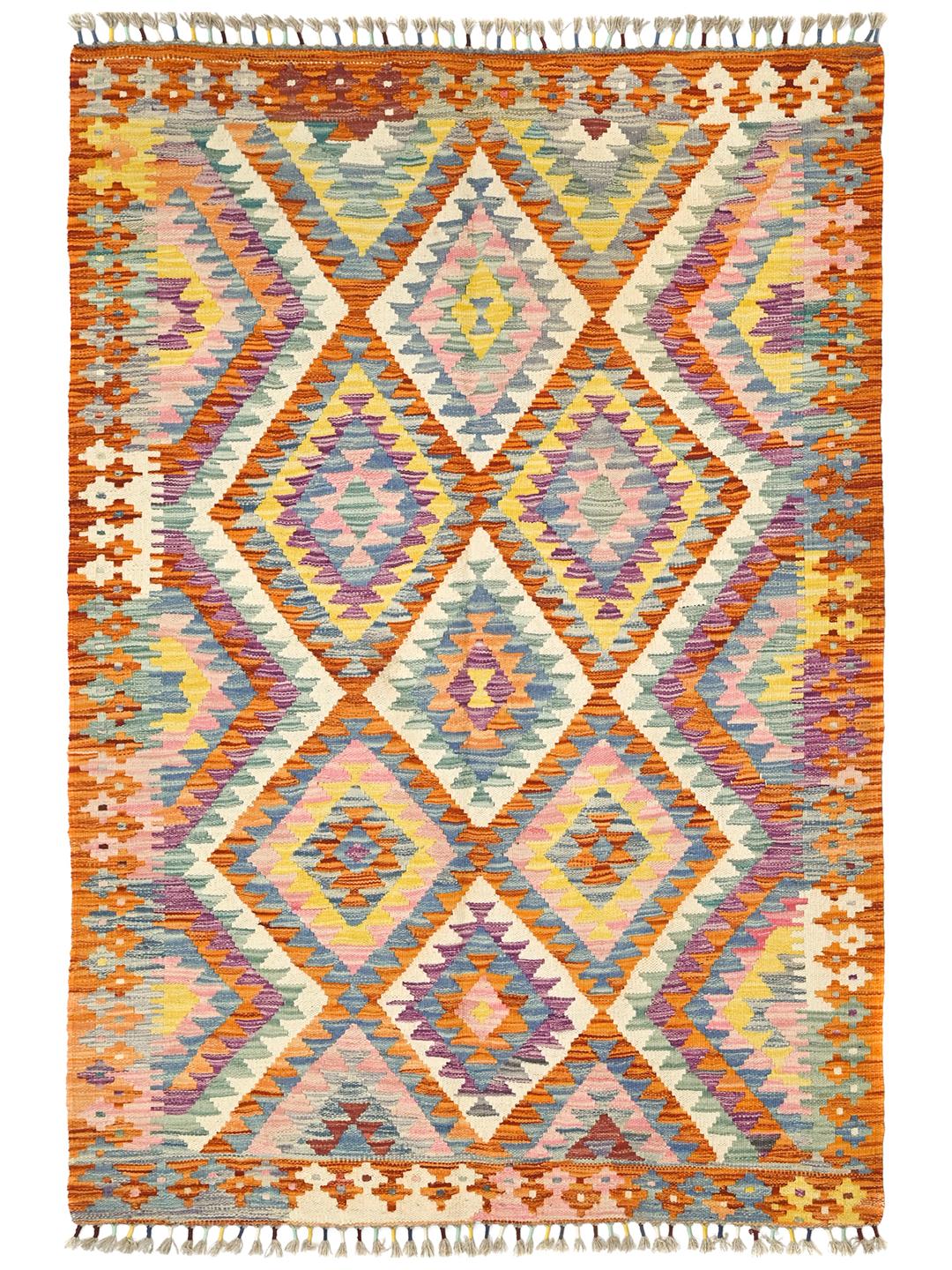
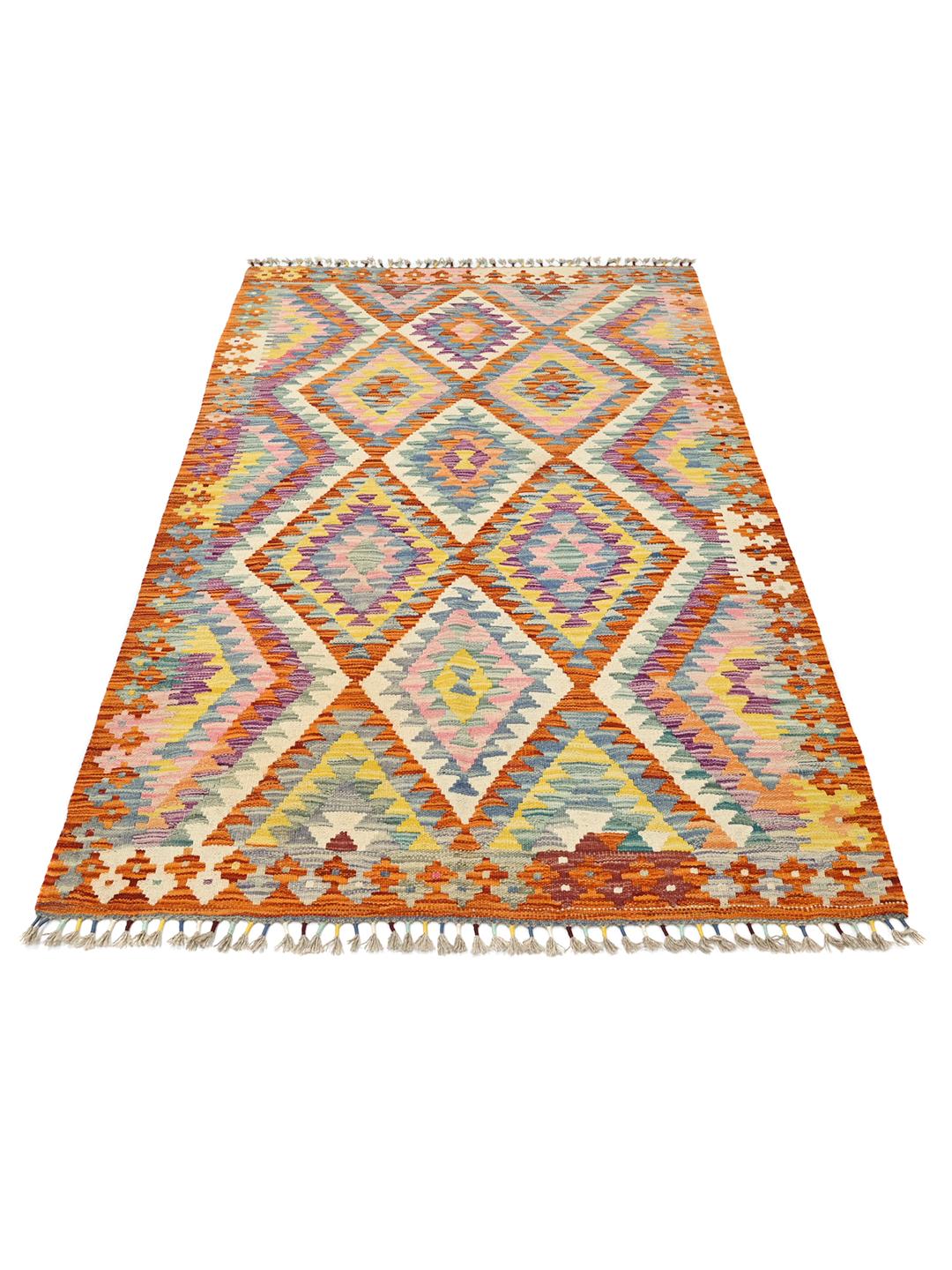
The design of this particular piece is defined by its bold, repeating diamond motifs, a hallmark of Afghan tribal aesthetics. These geometric shapes are not merely decorative but are deeply rooted in cultural symbolism, often representing protection or the natural world. The use of vibrant, contrasting colours is a nod to traditional palettes, where natural dyes were historically used to create hues that would soften beautifully over time.
Collecting a Kelim is an opportunity to own a piece of cultural history. These rugs are highly valued for their authenticity and the human effort embedded in every weave. By choosing a hand-woven Afghan Kelim, you are supporting a legacy of craft that has endured for centuries, ensuring that these traditional skills continue to thrive in the modern world.