Kelim rugs from Afghanistan are among the most celebrated examples of tribal weaving traditions, reflecting a rich history of nomadic and village craftsmanship. These flat-woven textiles have historically served as versatile floor coverings, blankets, and storage bags for families across the mountainous regions of Central Asia. The tradition of weaving in this area is a vital part of cultural identity, passed down through generations of skilled artisans.
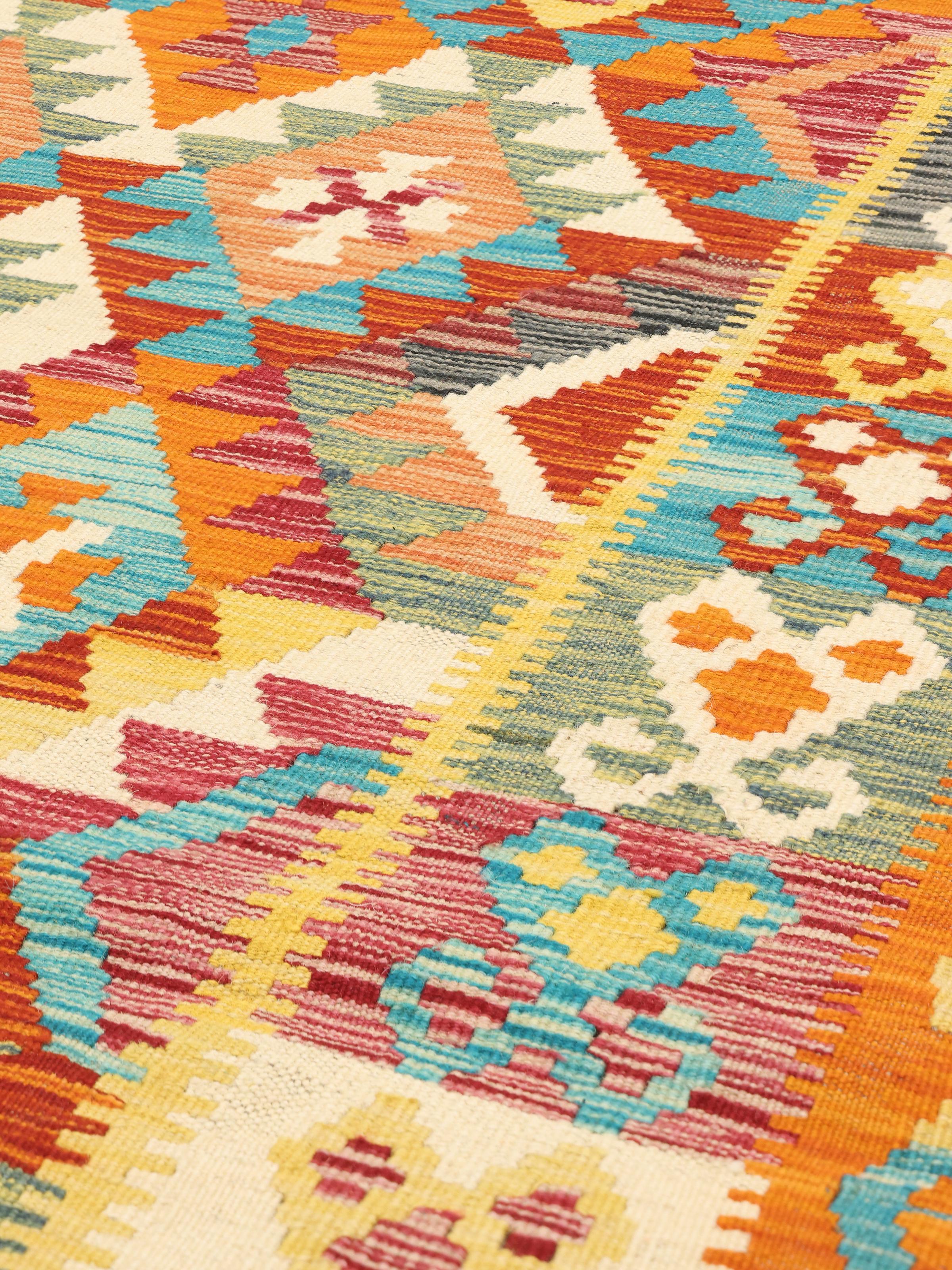
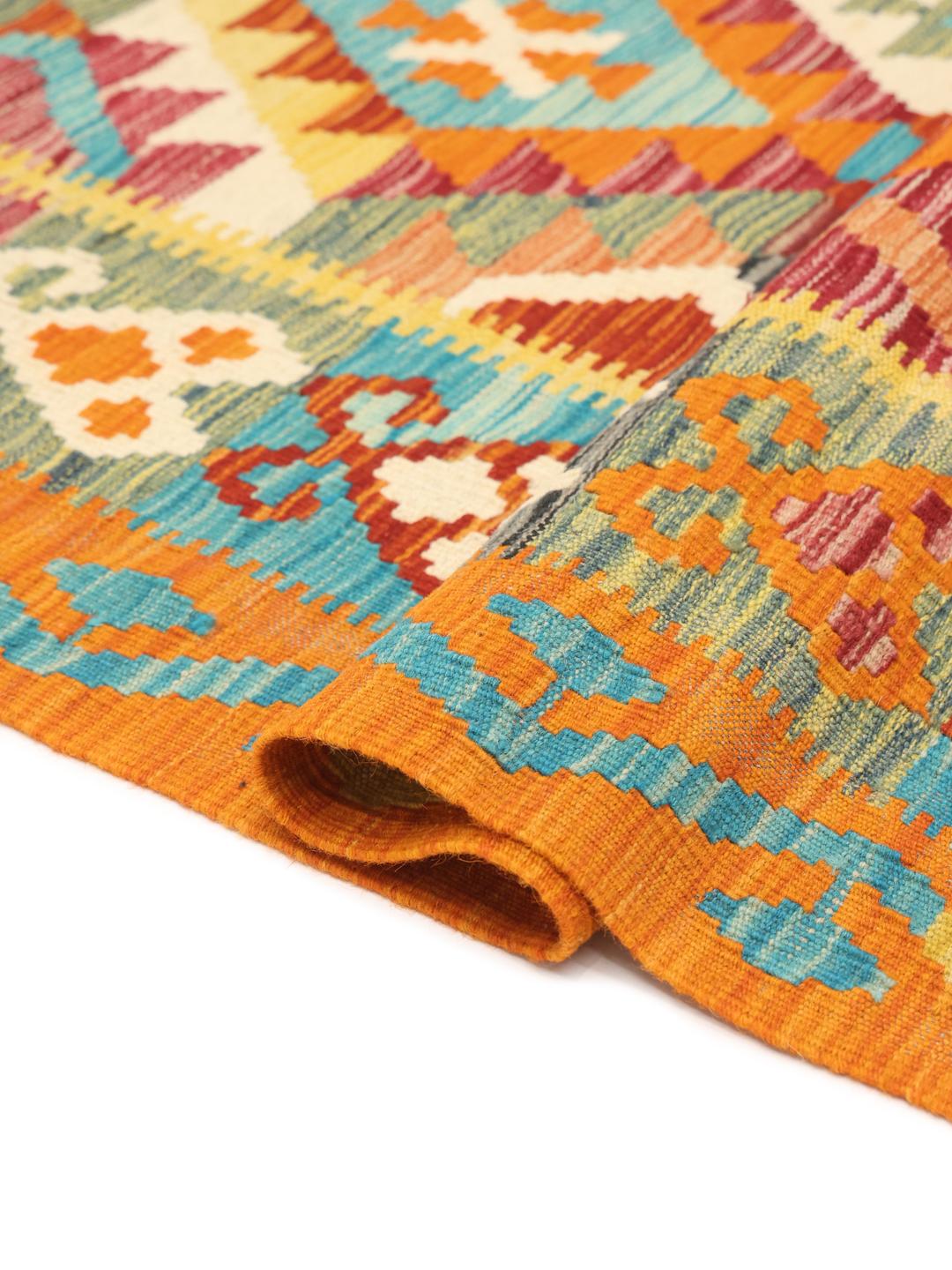
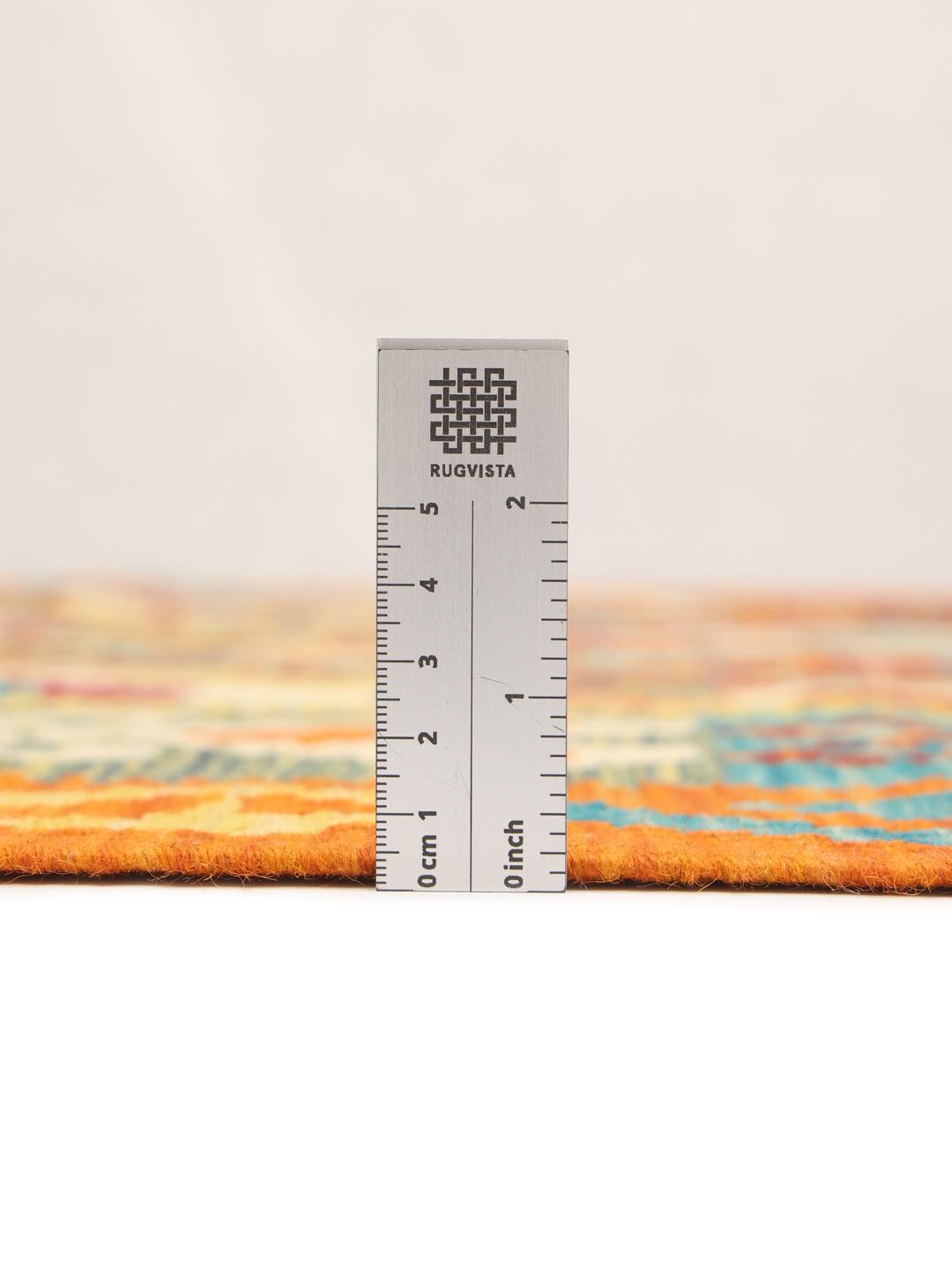
The term Kelim refers to the specific flat-weaving technique that eschews a pile, resulting in a smooth, reversible fabric that is both durable and portable. This construction method allows for the creation of crisp, sharp geometric lines and complex patterns that are iconic to the style. The absence of pile means that the structural integrity of the rug relies entirely on the tension and quality of the wool threads used in the warp and weft, making the weaver's mastery of these materials essential.
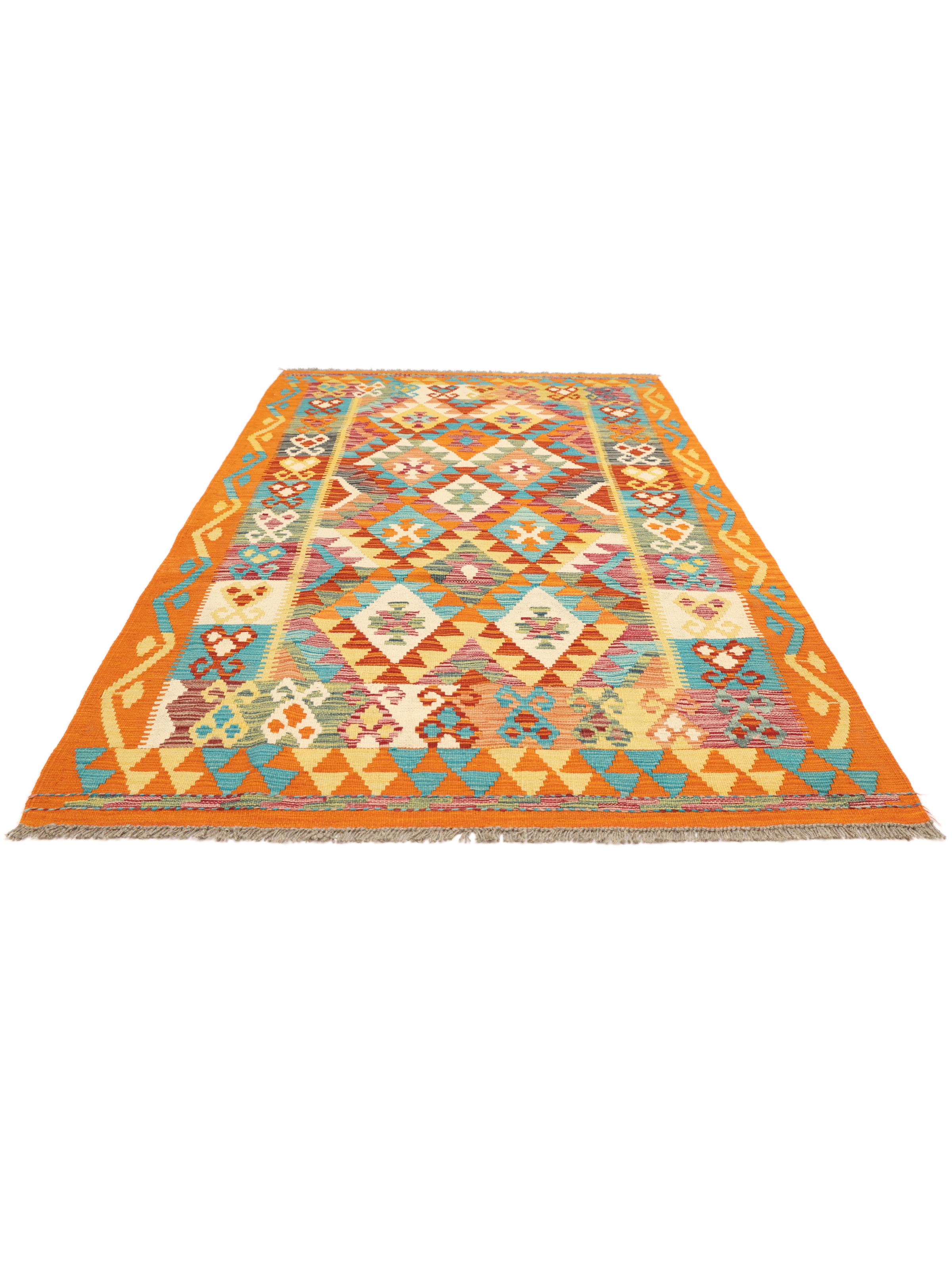
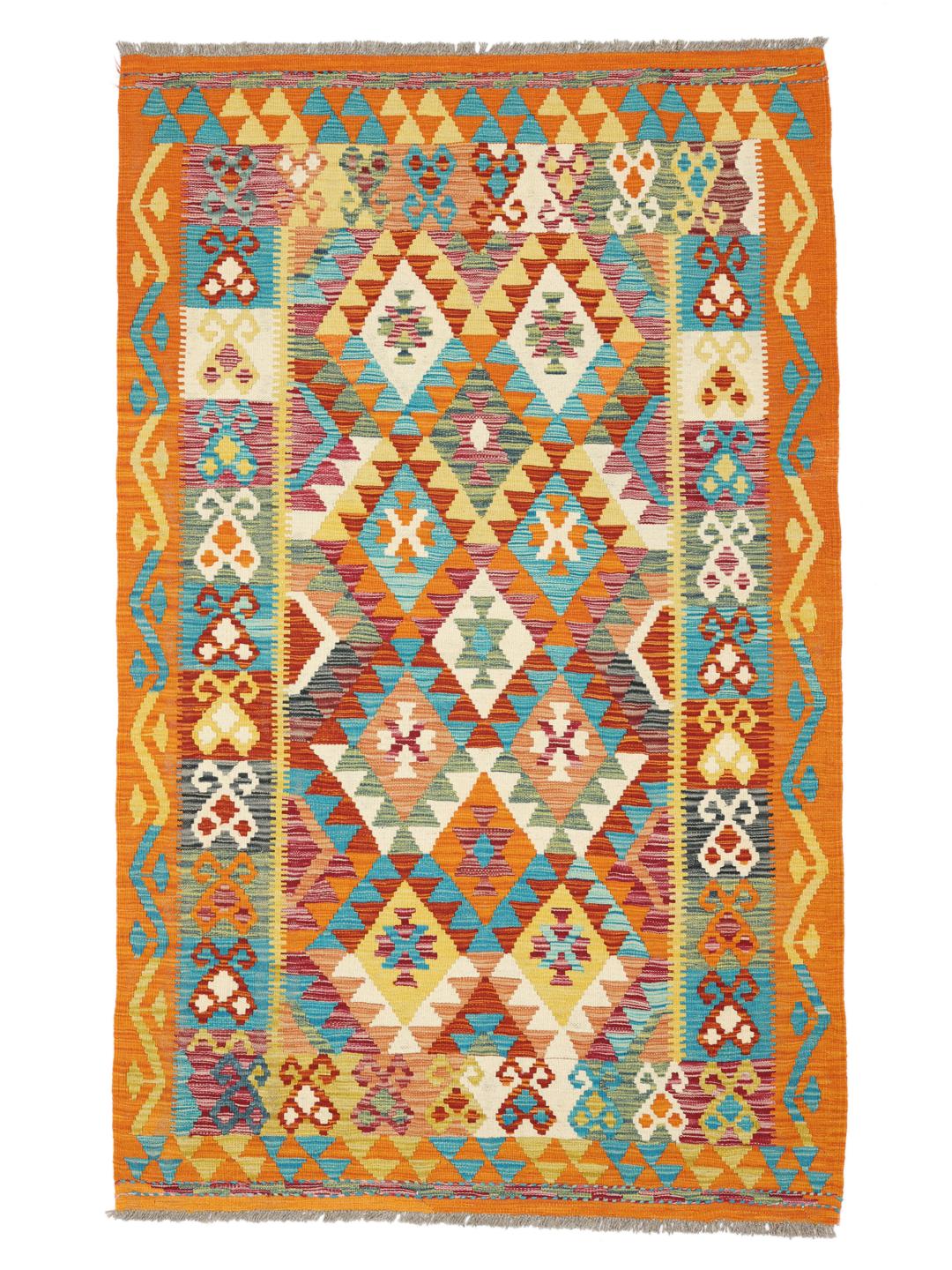
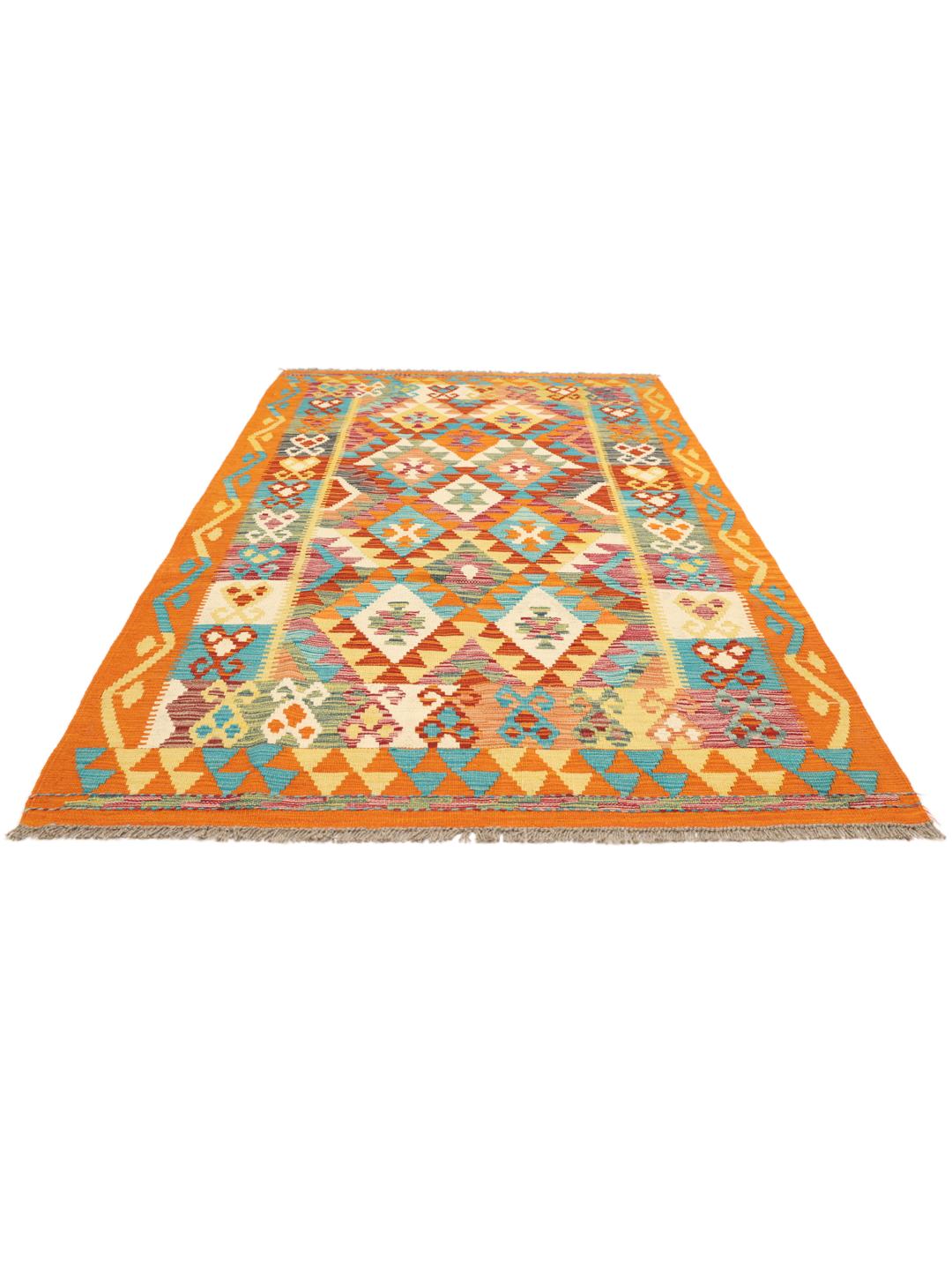
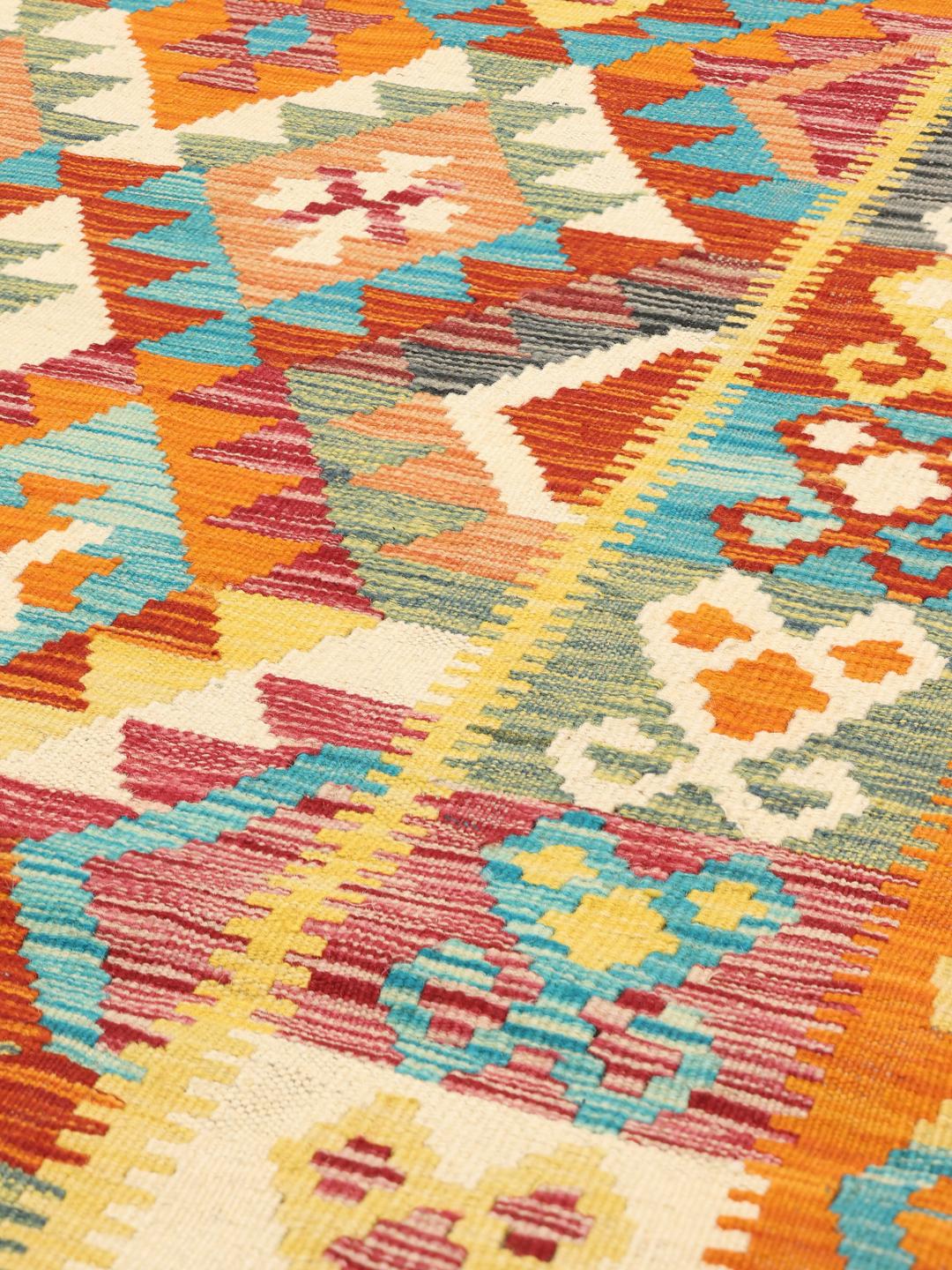
Signature design elements in Afghan Kelims often include bold, repeating geometric motifs such as diamonds, triangles, and stylized floral or tribal symbols. The borders are typically decorated with repeating patterns that frame the central field, creating a balanced and harmonious composition. This particular piece showcases a vibrant colour palette, which is a hallmark of the tradition, using natural dyes to achieve a spectrum of tones that remain rich and vivid over many years.
Owning an Afghan Kelim is more than just acquiring a floor covering; it is a way to connect with a storied craft tradition. These rugs are highly valued by collectors for their authenticity, the skill required to produce them, and their ability to bring a sense of warmth and history into a modern home. Each piece represents a unique snapshot of a weaver's life and the cultural narrative of the region, ensuring that it remains a cherished item for years to come.