Kelim rugs have a storied history rooted in the nomadic cultures of the Middle East and Central Asia. Originally created by tribal weavers for practical purposes like floor coverings, saddlebags, and tent hangings, these rugs have evolved into celebrated works of art that are valued for their portability and bold, graphic designs.
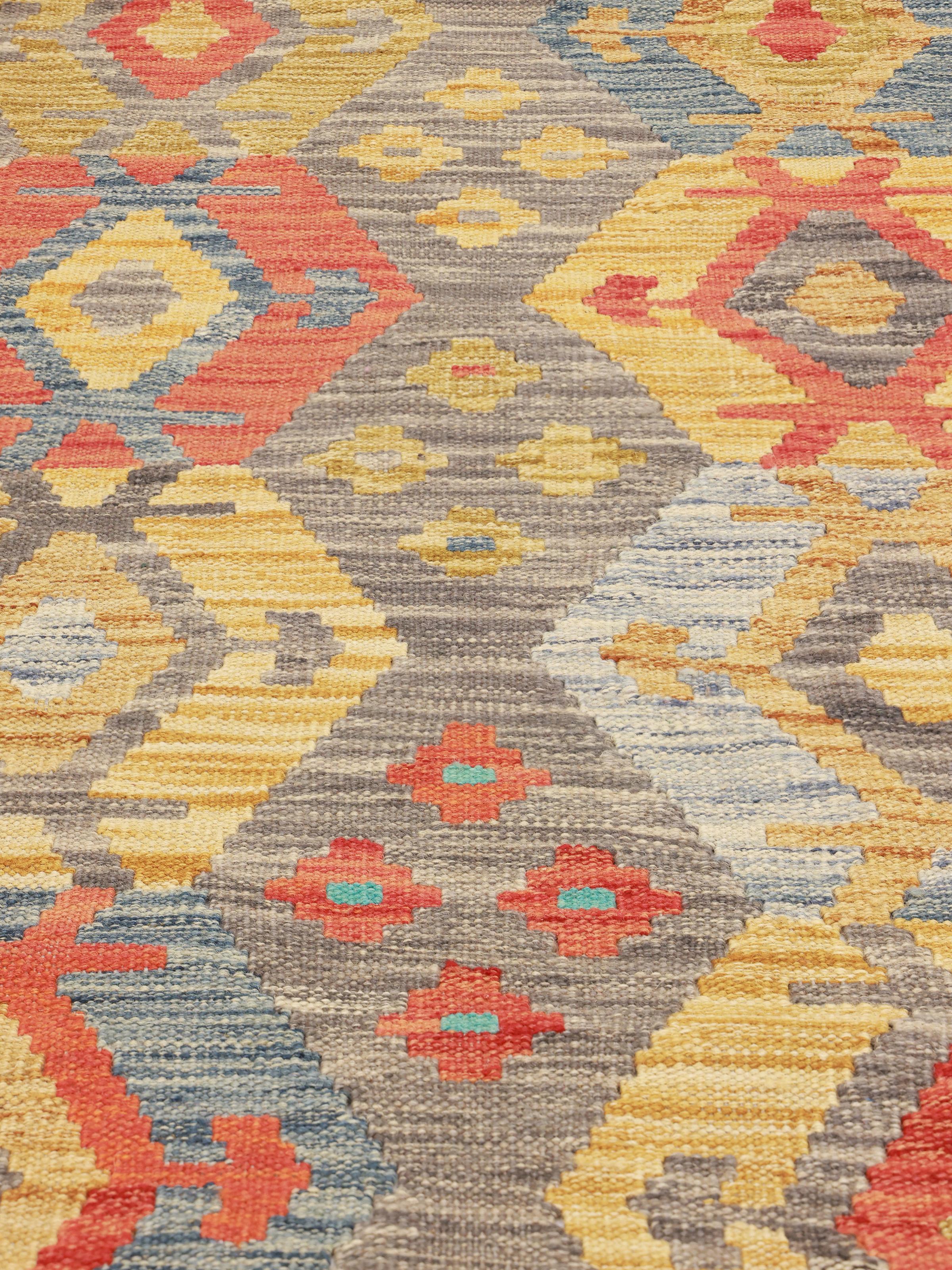
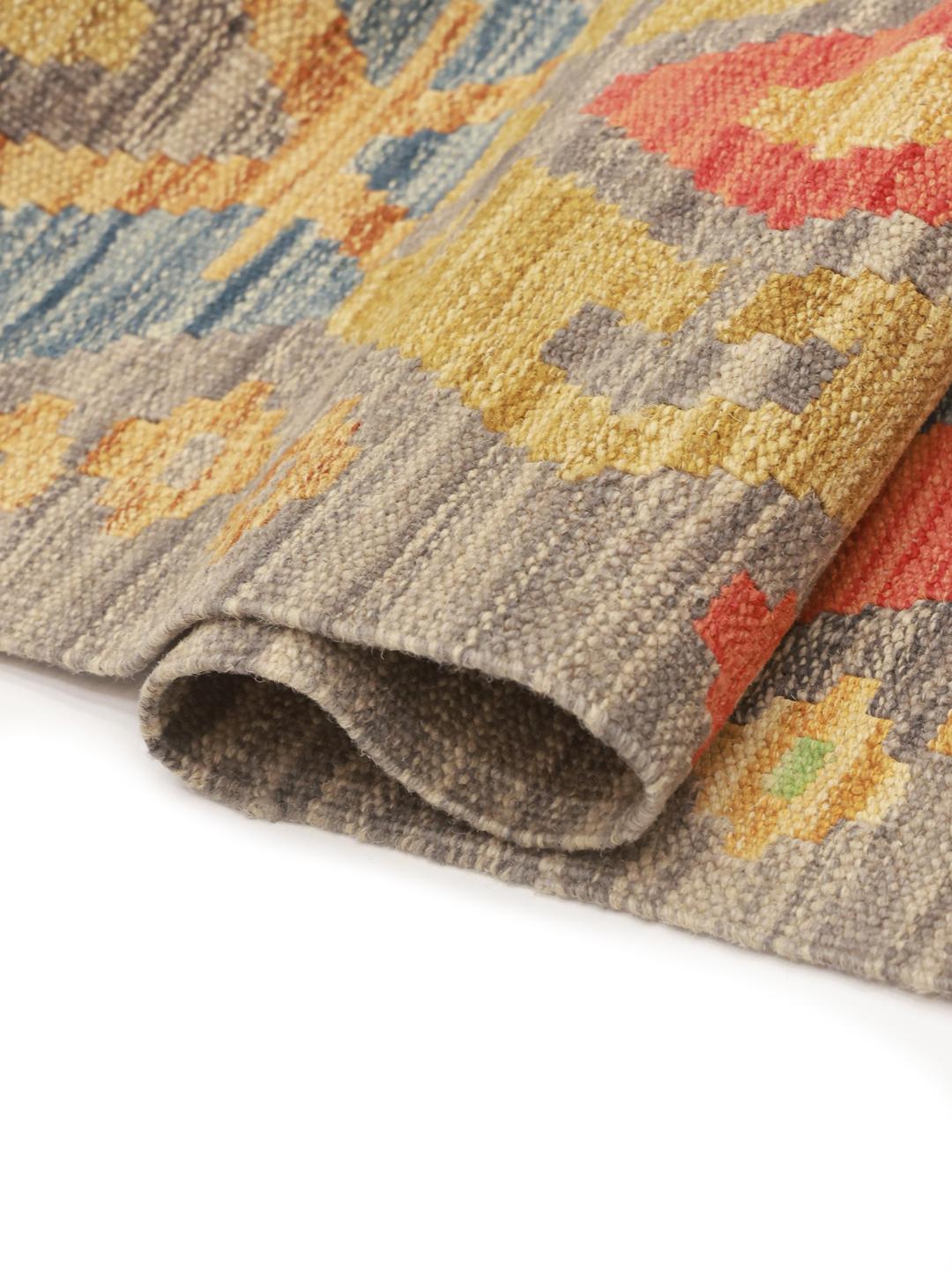
The term 'Kelim' refers to the flat-weaving technique used to create these pieces, which distinguishes them from pile rugs. By interlocking the weft threads tightly around the warp, weavers create a durable, reversible fabric that showcases clear, sharp lines and vibrant colour transitions without the need for a knotted pile.
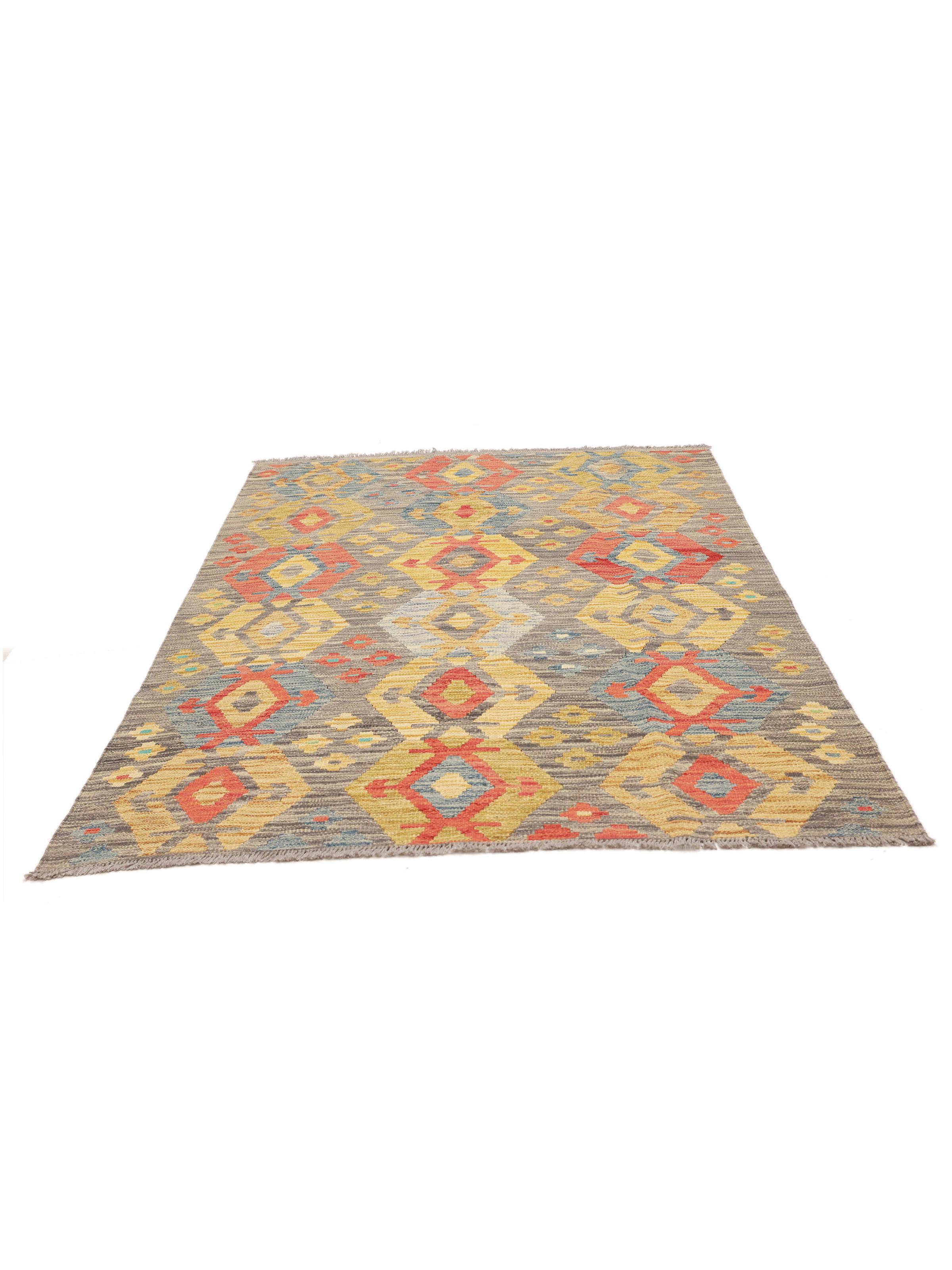
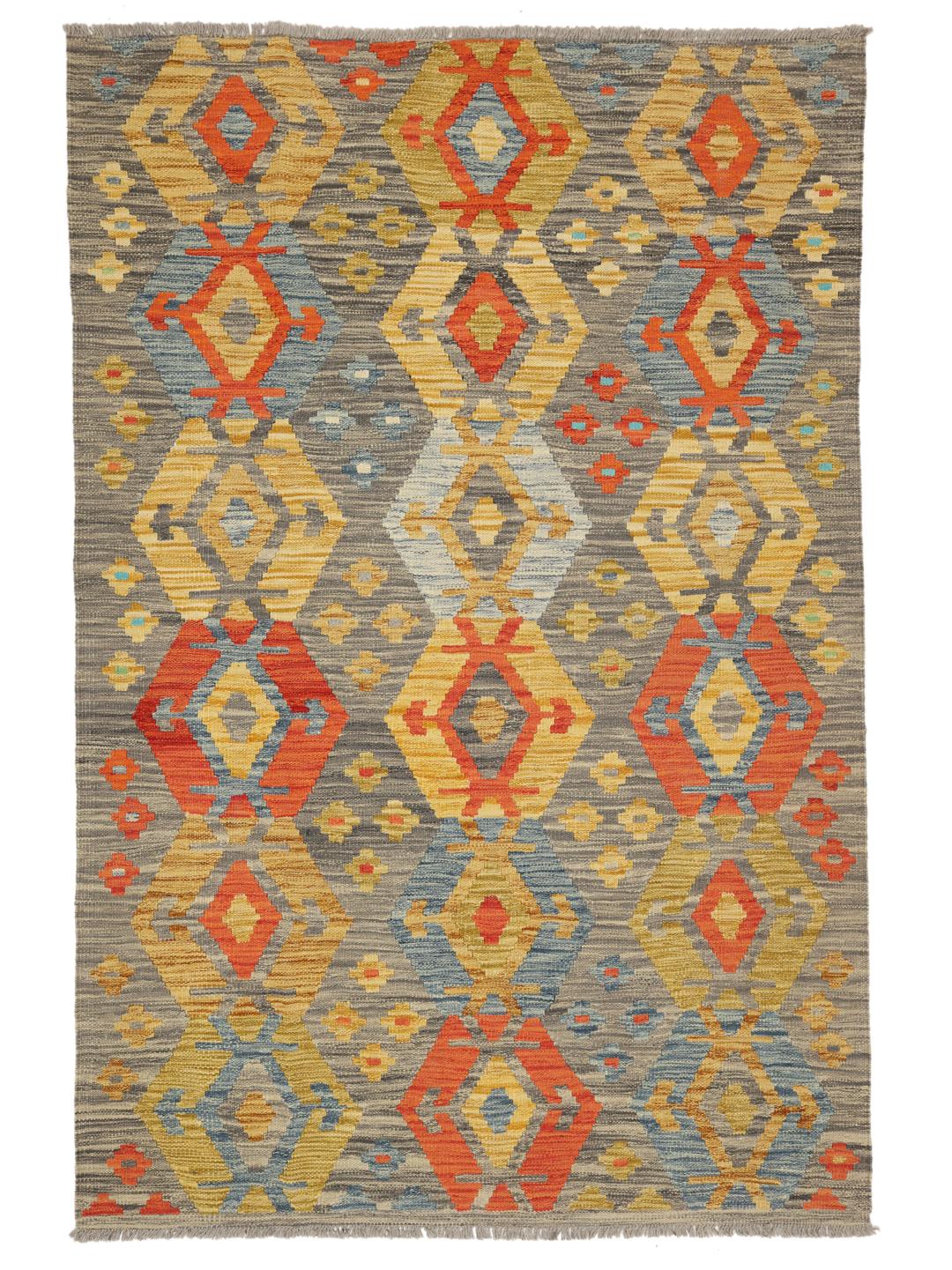
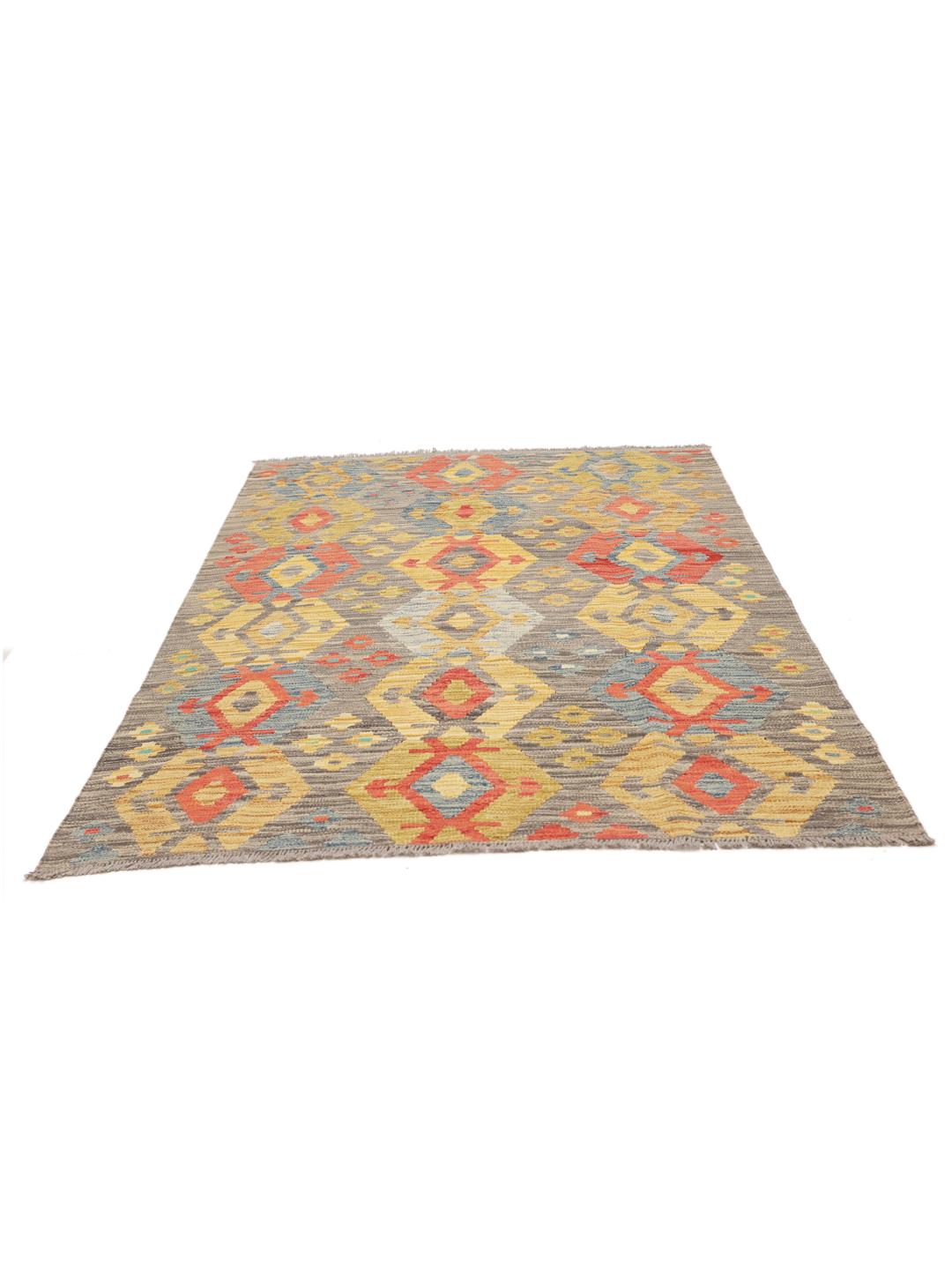
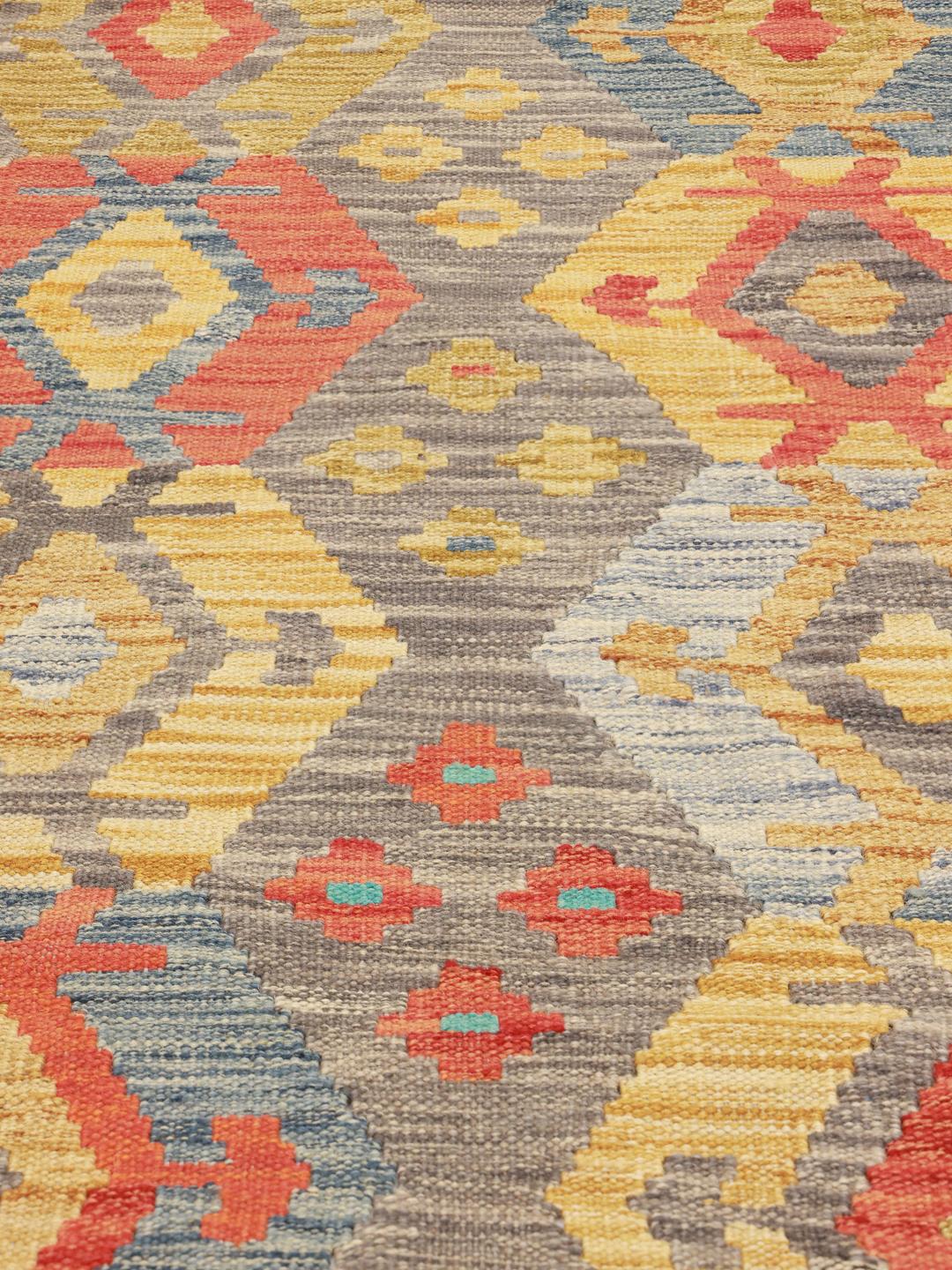
The visual language of Afghan Kelims is defined by geometric motifs, often featuring stylized diamonds, triangles, and serrated borders that hold cultural significance and historical meaning. This particular piece uses a dynamic arrangement of medallions, showcasing the traditional preference for symmetry balanced by the subtle, organic variations inherent in hand-woven craft.
Collectors value these rugs for their authenticity and the way they bridge the gap between ancient nomadic heritage and modern living. Owning a Kelim is an opportunity to connect with a long-standing textile tradition, where every rug serves as a testament to the skill, patience, and creative spirit of the artisan who brought it to life.