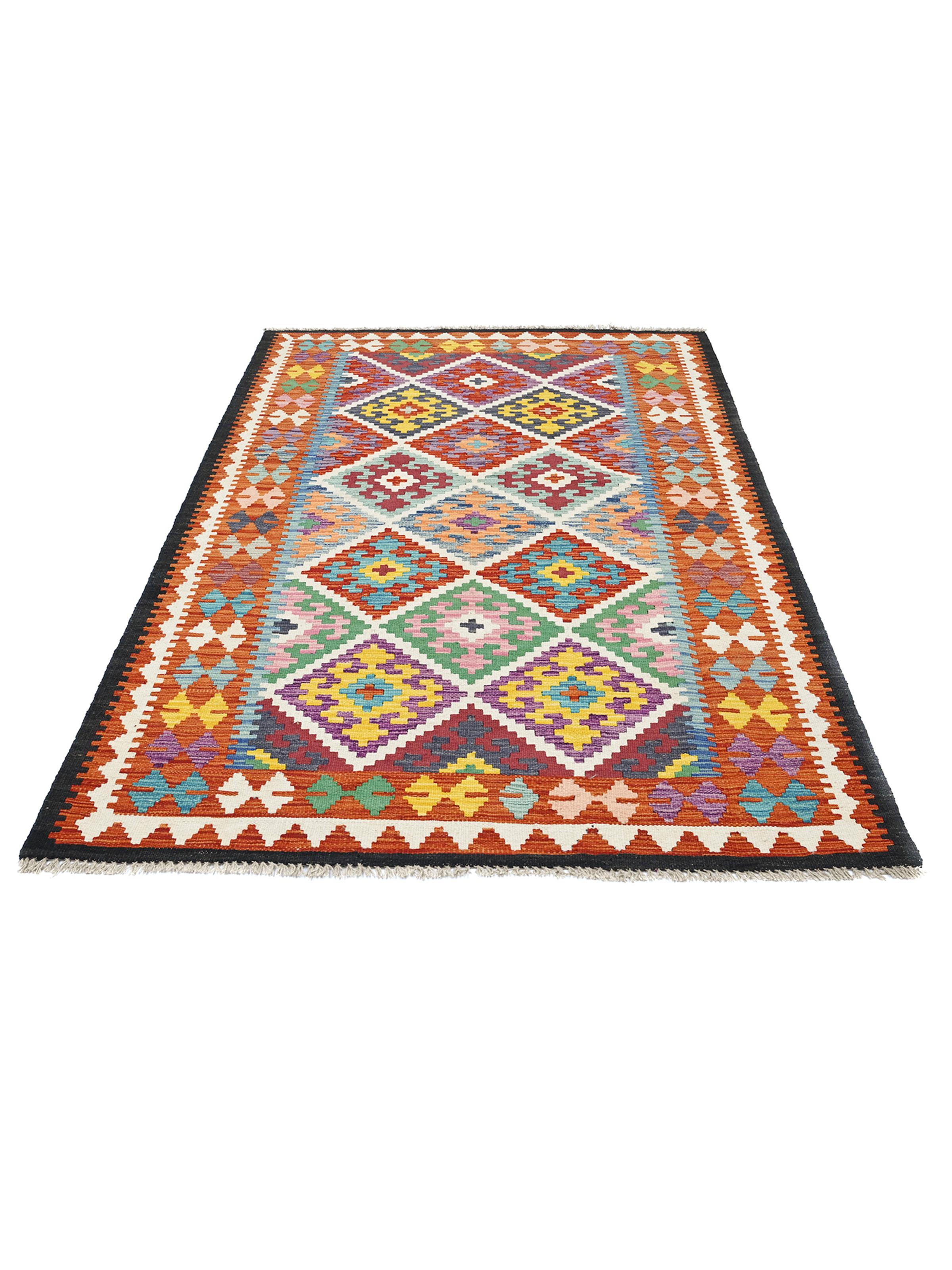
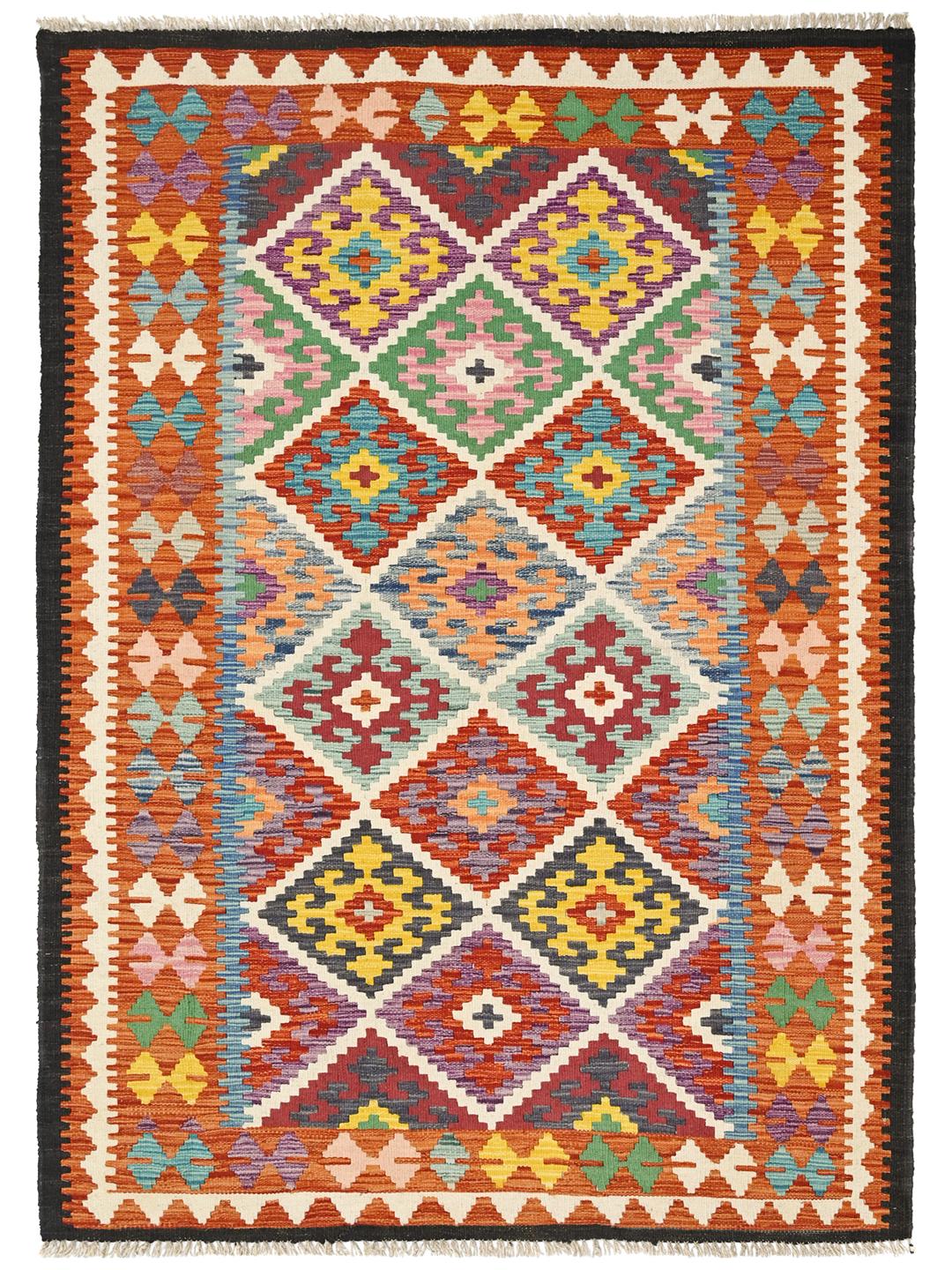
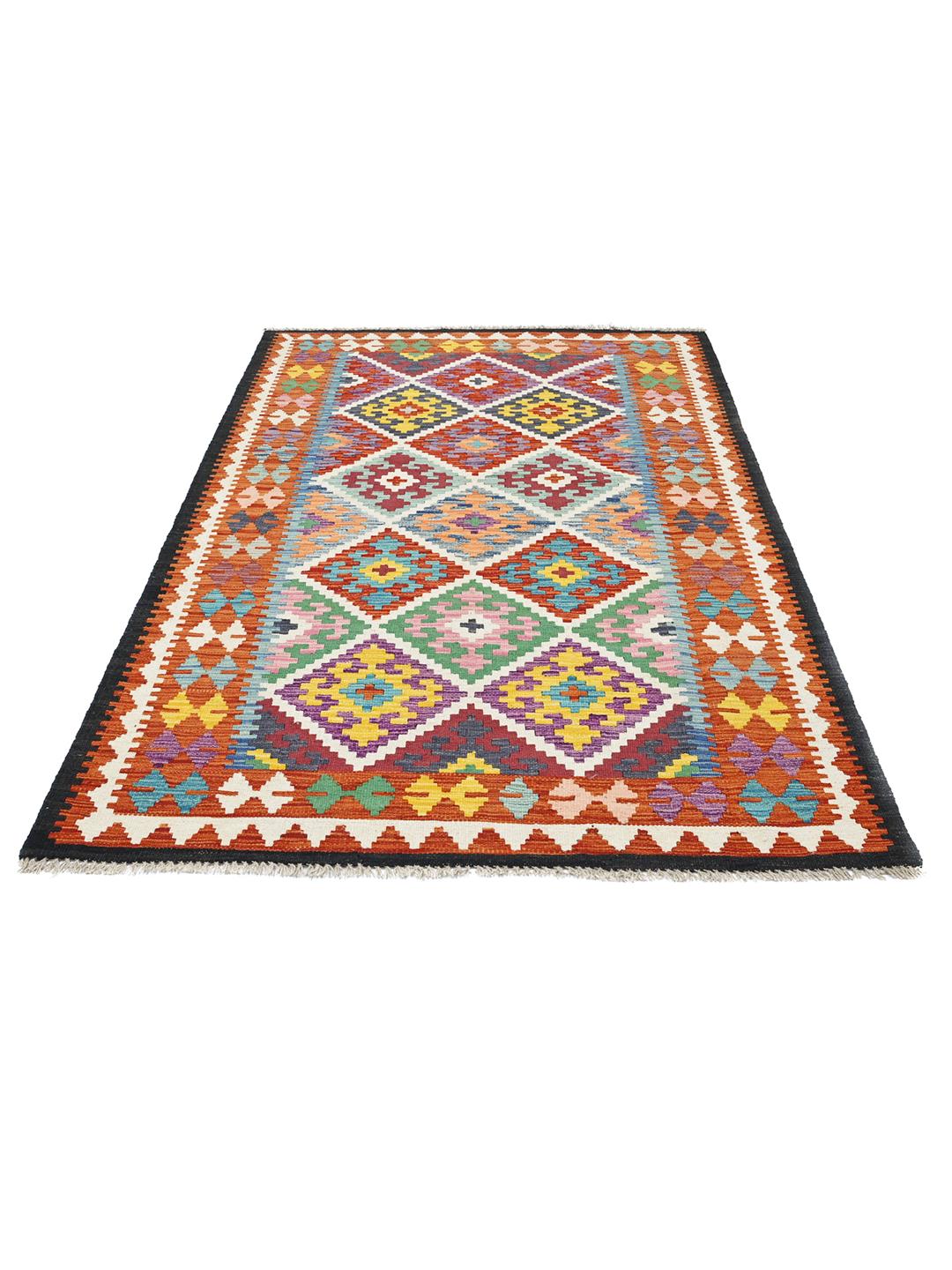
The Kelim tradition in Afghanistan is deeply rooted in the nomadic history of the region. These flat-woven rugs have been crafted for centuries by tribal groups who required portable, durable, and functional floor coverings for their tents and homes. Over time, these utilitarian objects evolved into the highly sought-after decorative pieces we admire today.
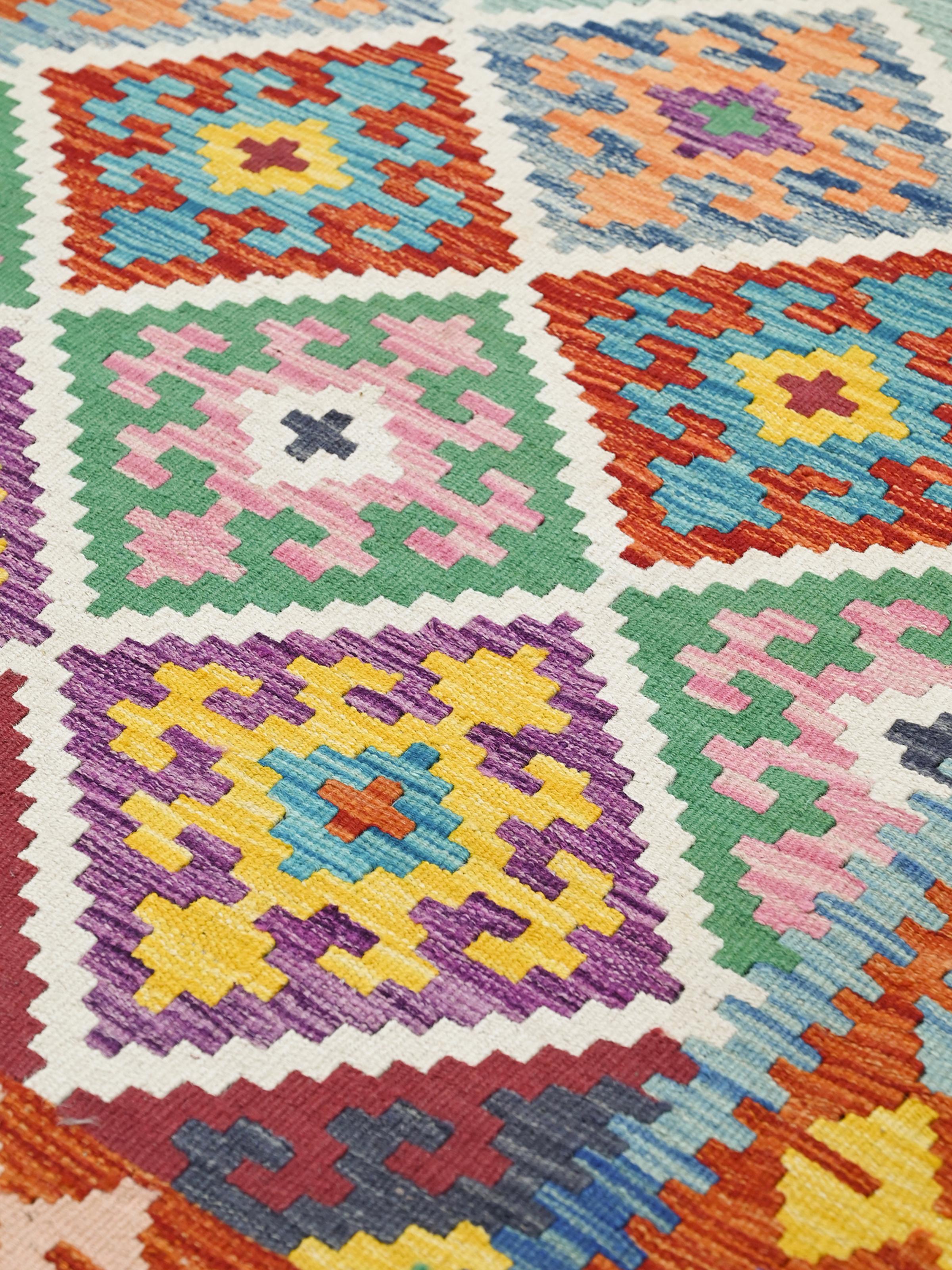
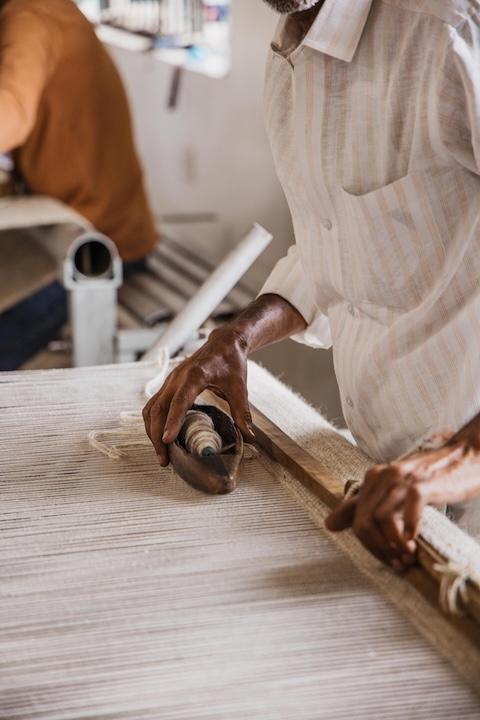
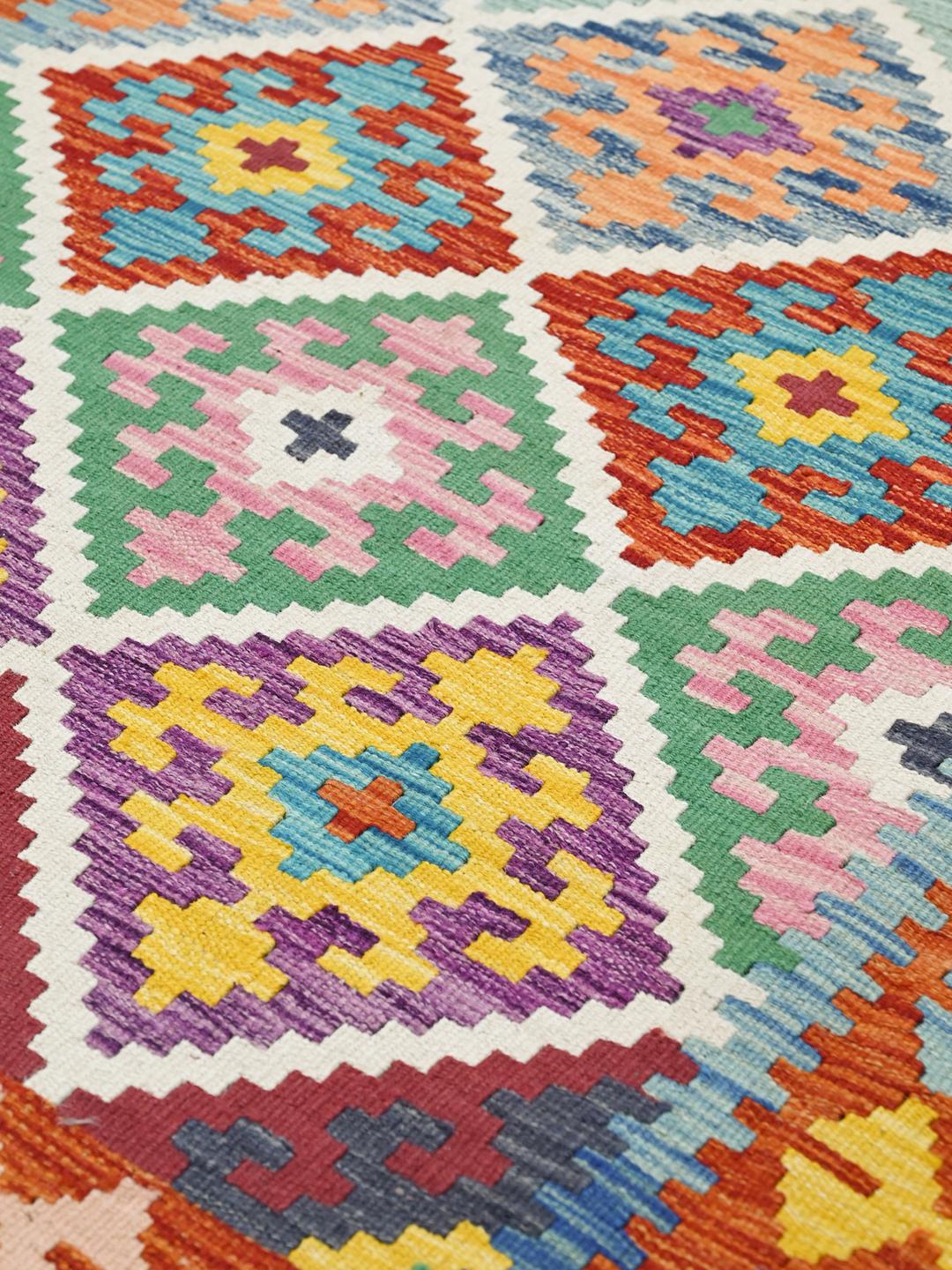
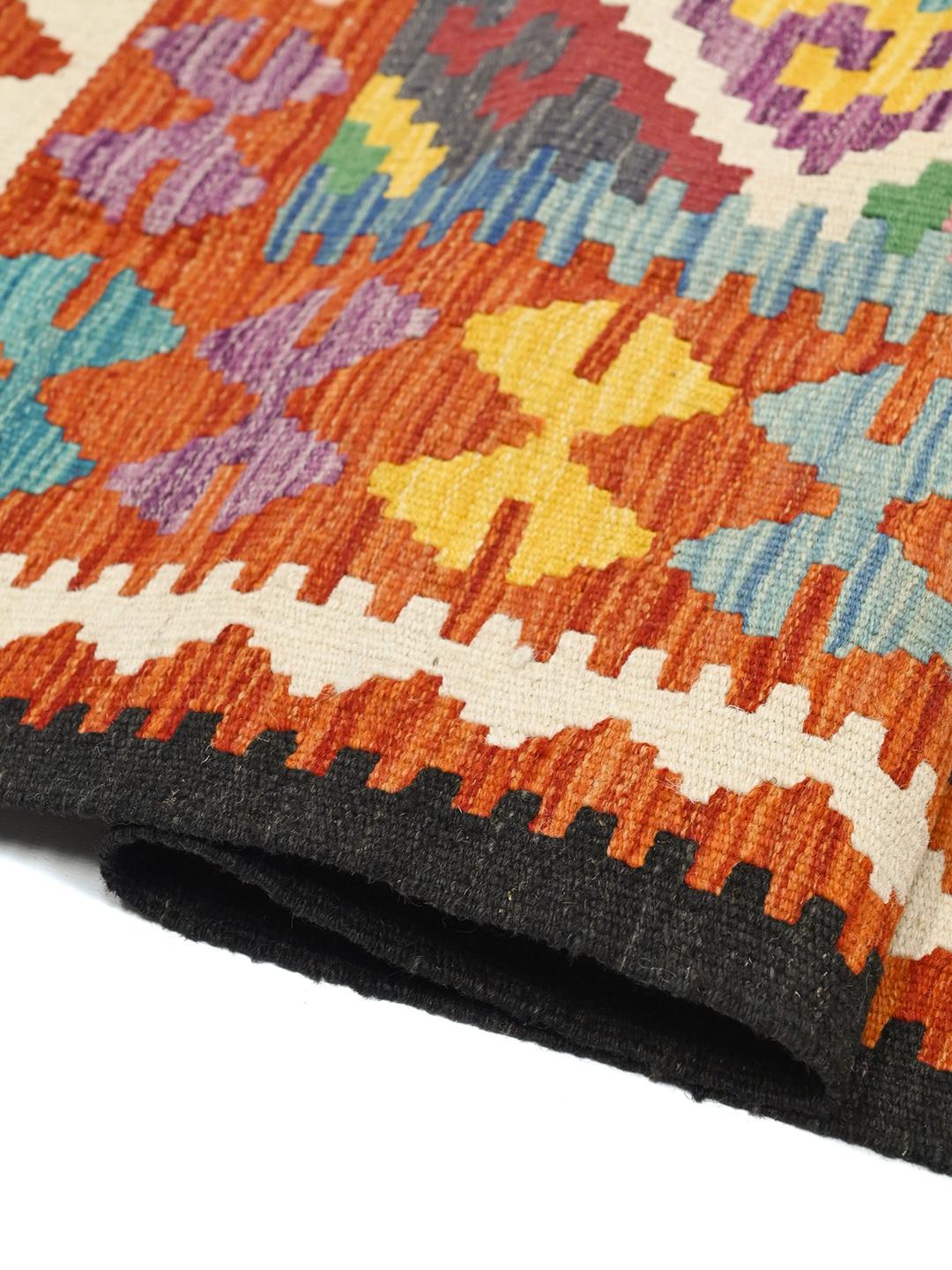
The term 'Kelim' refers to the specific flat-weaving technique used, where no pile is created. Instead, the warp and weft threads are woven tightly together to form the pattern. This technique is renowned for producing a rug that is reversible and highly durable, a testament to the practical ingenuity of the weavers who developed these methods to withstand the rigours of nomadic life.
Visually, these rugs are defined by their bold geometric language, often featuring diamonds, triangles, and symbolic motifs that have been passed down through families. The use of vibrant, contrasting colours is a hallmark of the old-style Afghan tradition, which seeks to balance complex, repeating patterns with a harmonious colour scheme that feels both energetic and balanced.
Owning an Afghan Kelim is an investment in cultural heritage. These pieces are not just floor coverings but expressions of an ancient craft that prioritises skill and tradition over speed. Collectors value them for their authenticity and the unique narrative each piece tells through its specific combination of motifs and hues.