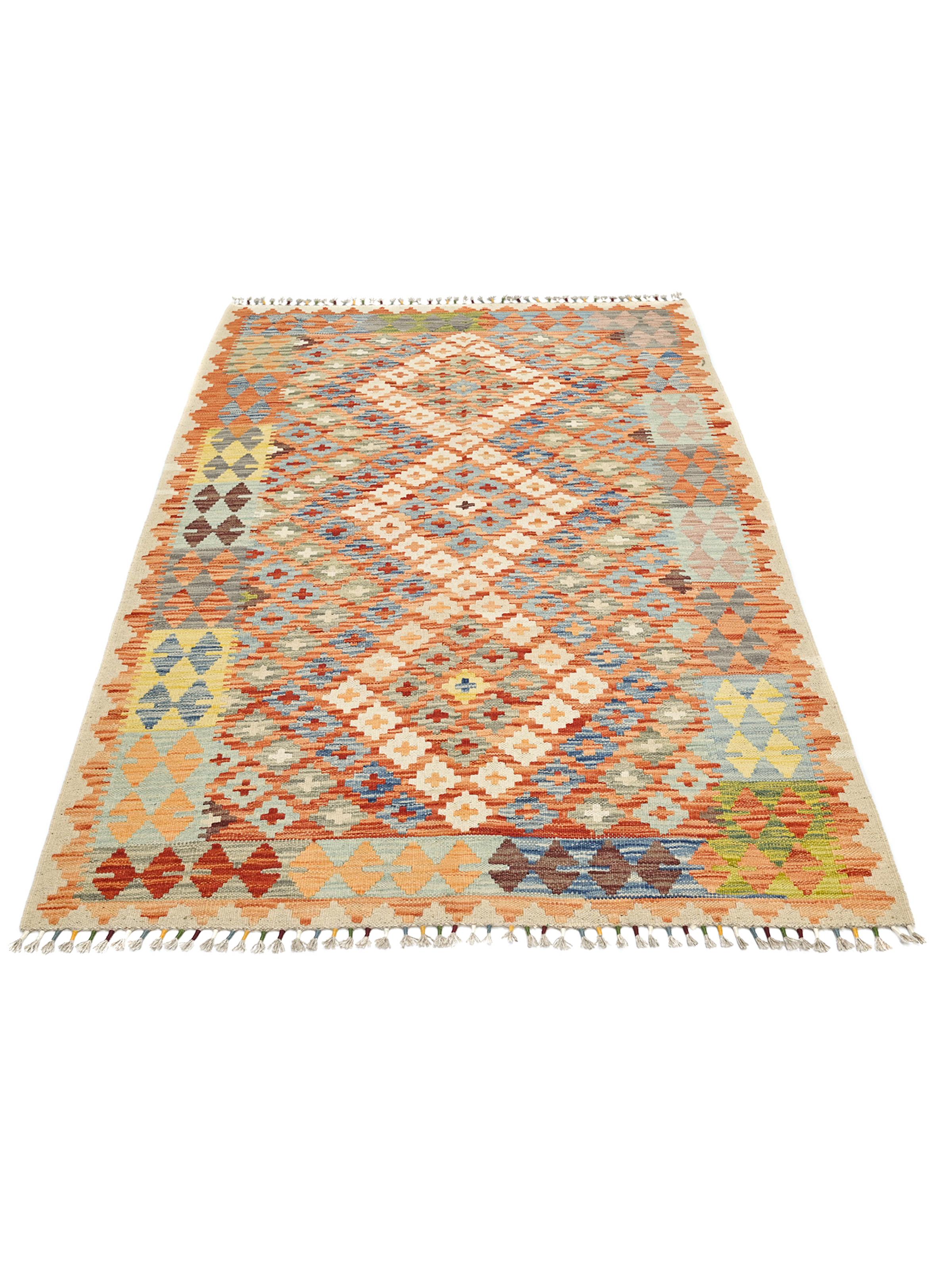
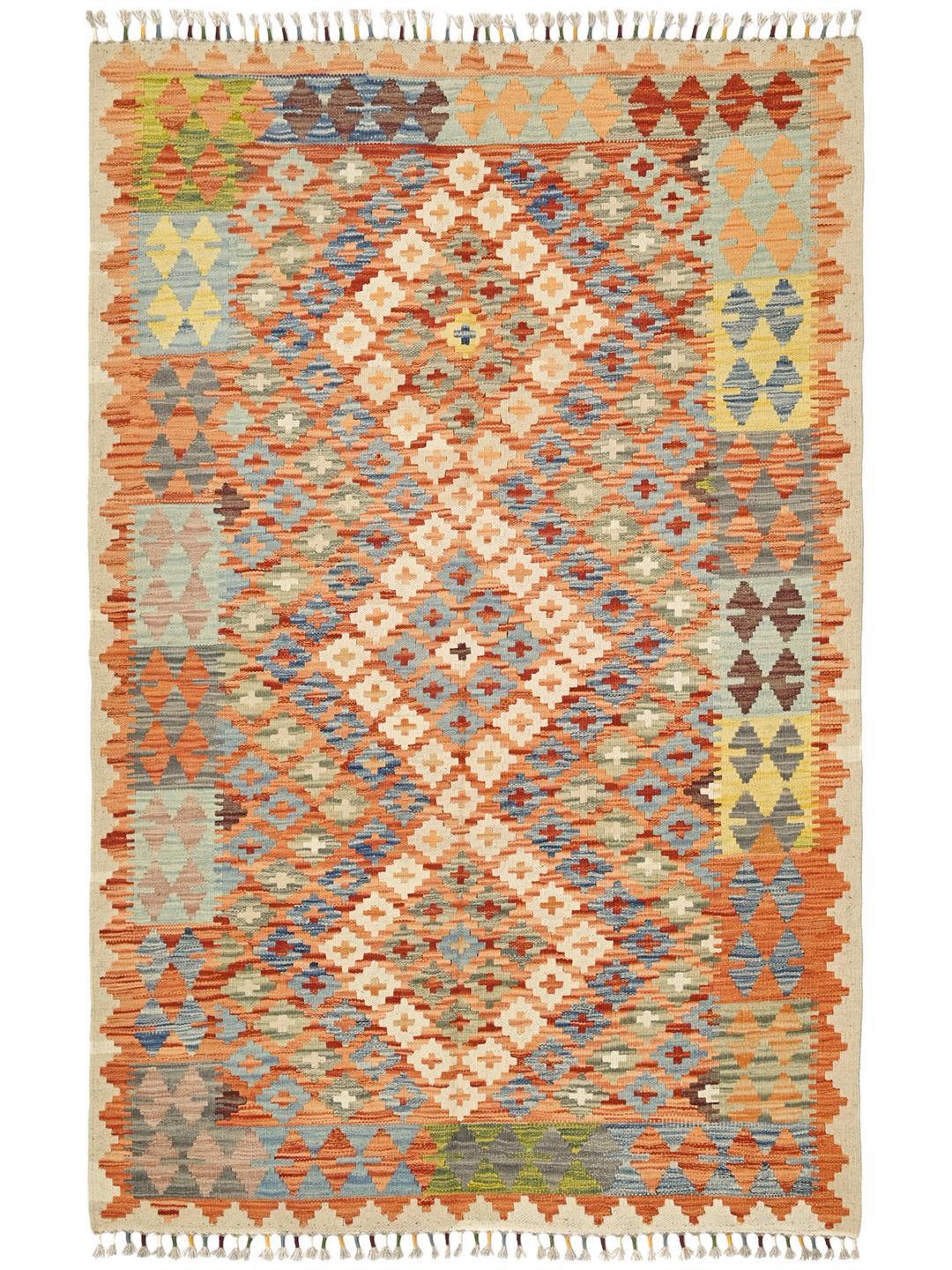
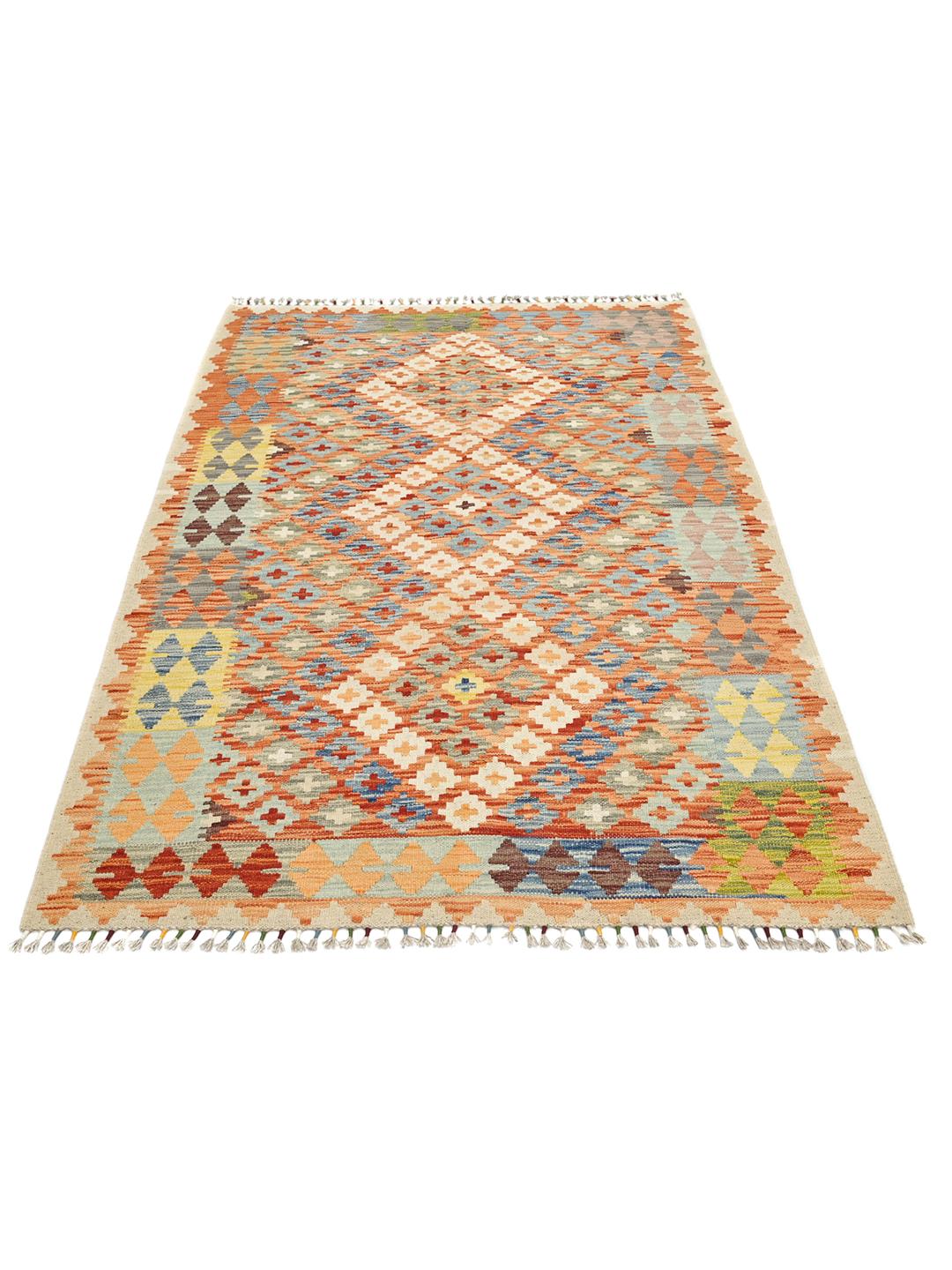
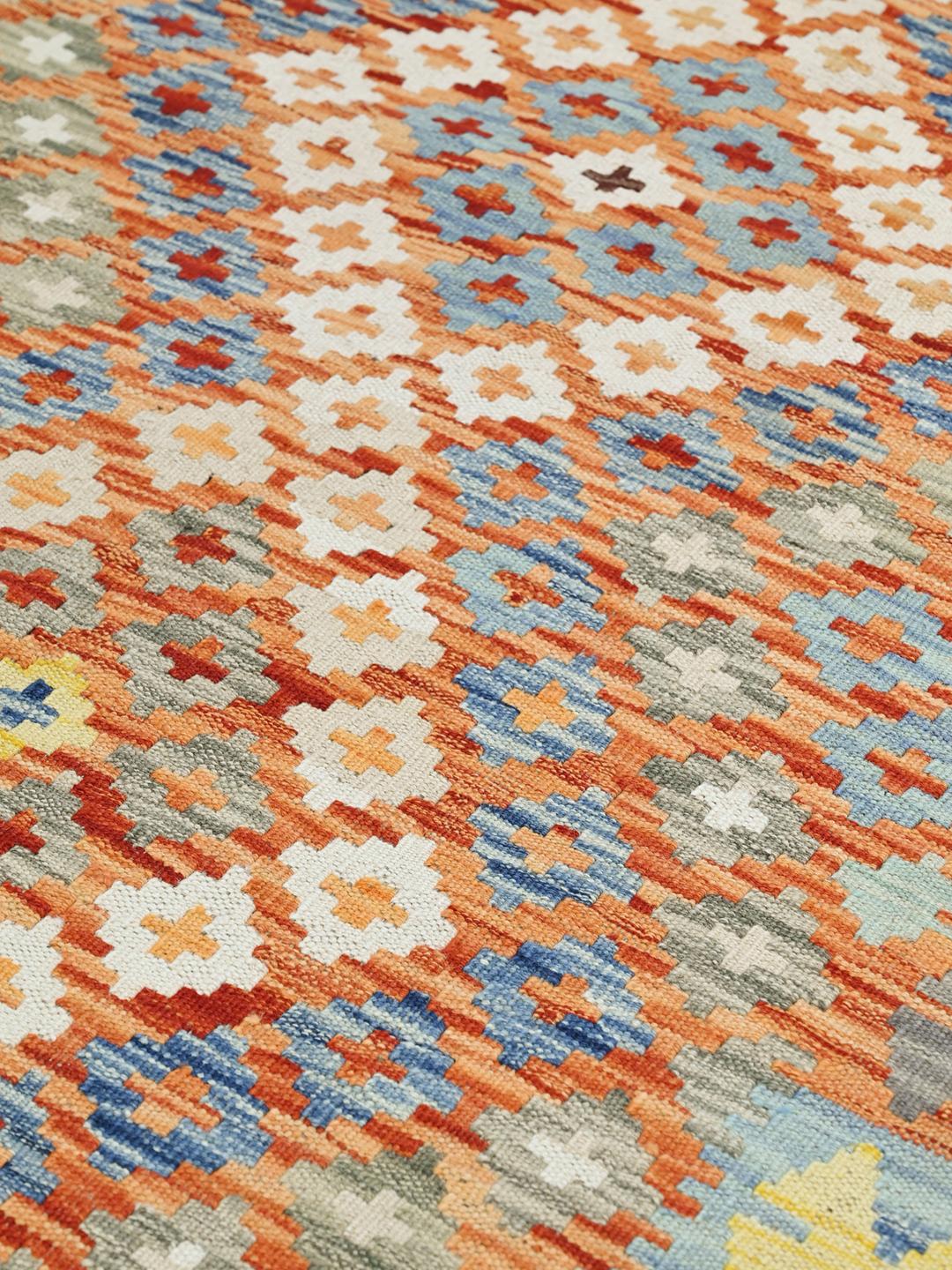
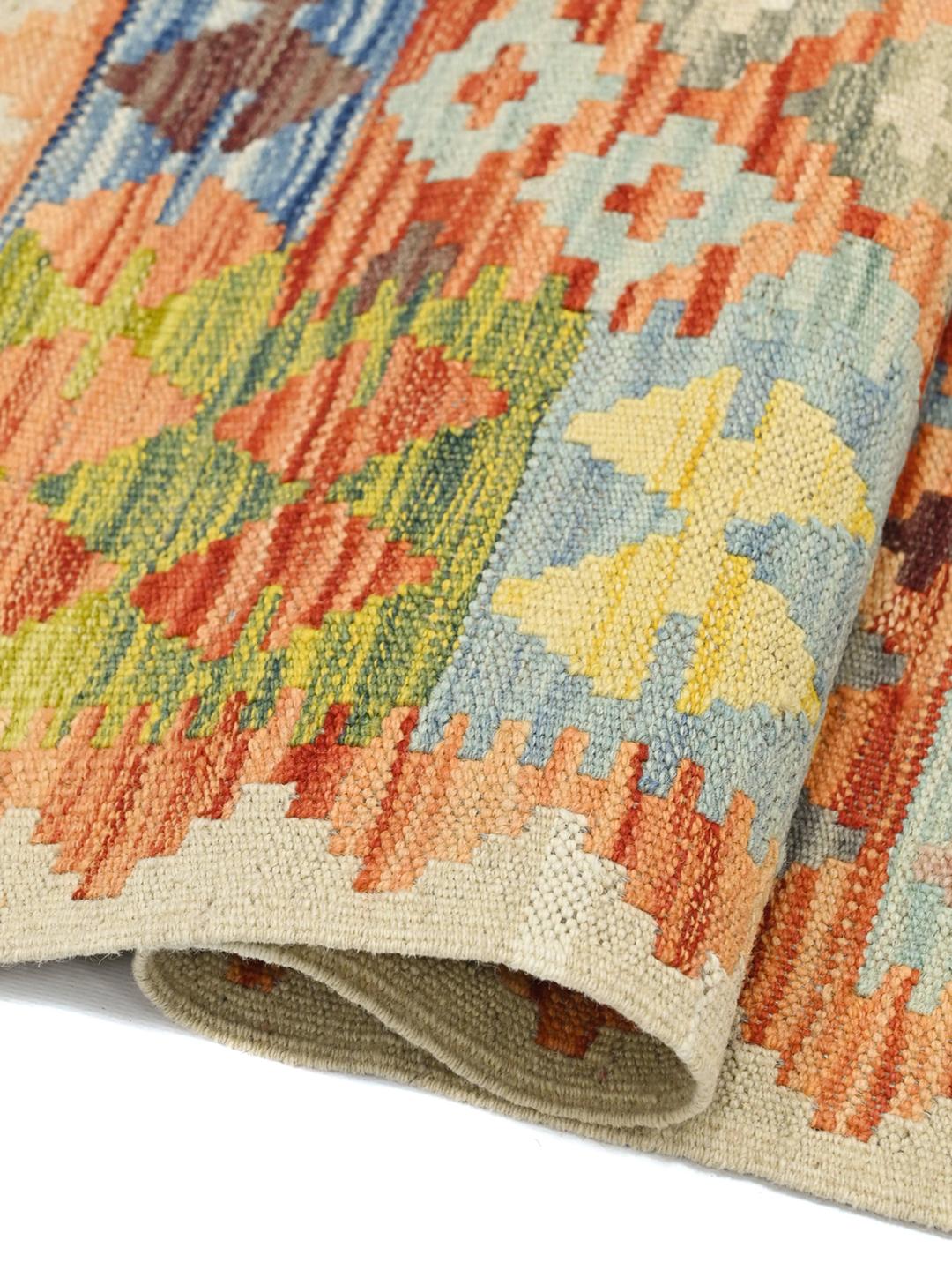
Kelim rugs from Afghanistan are rooted in a deep, centuries-old tradition of nomadic weaving. These flat-weave textiles were originally designed by tribal communities to serve as versatile, portable floor coverings, bags, and wall hangings, reflecting the practical needs and creative spirit of the families who produced them.
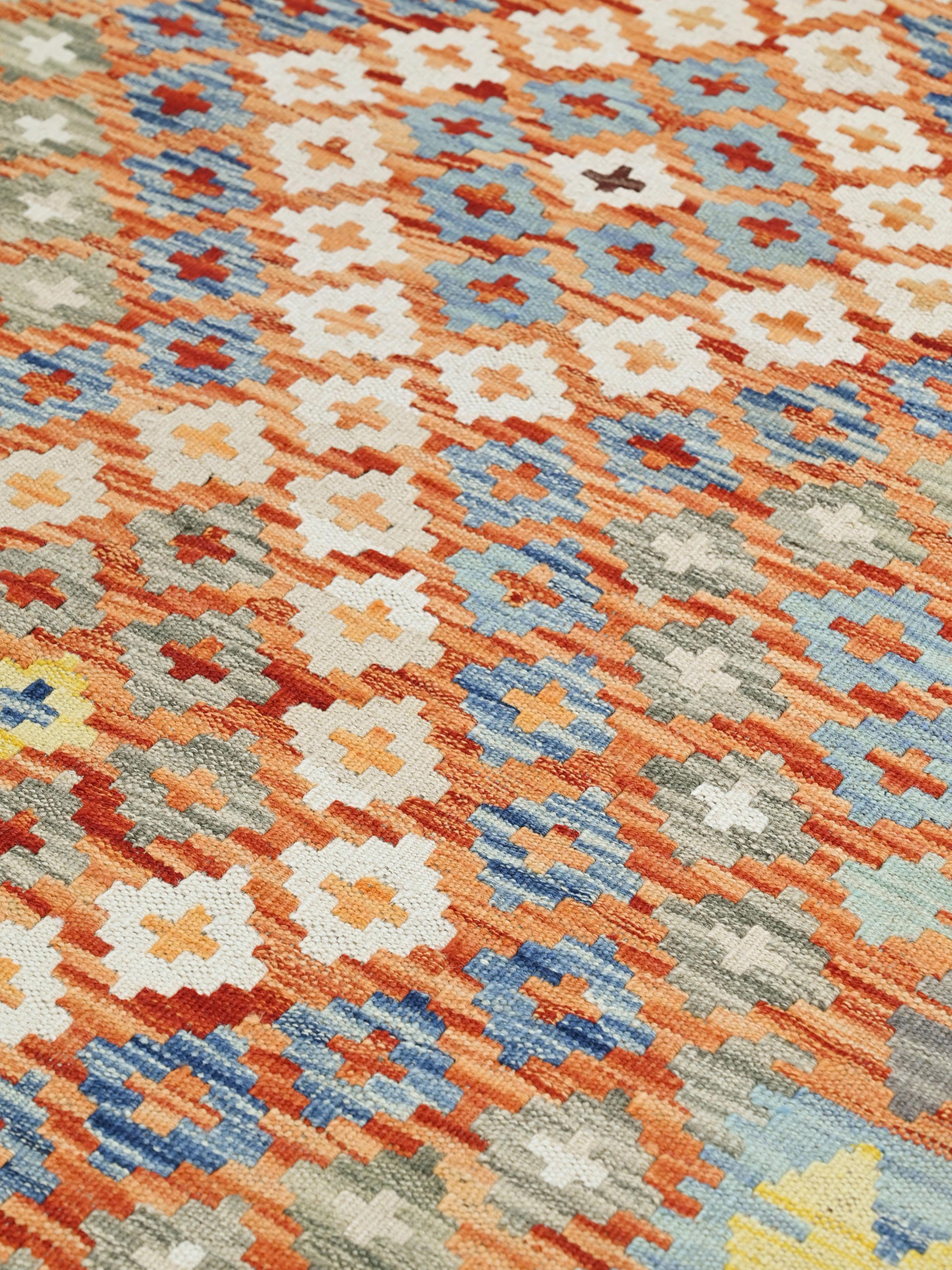
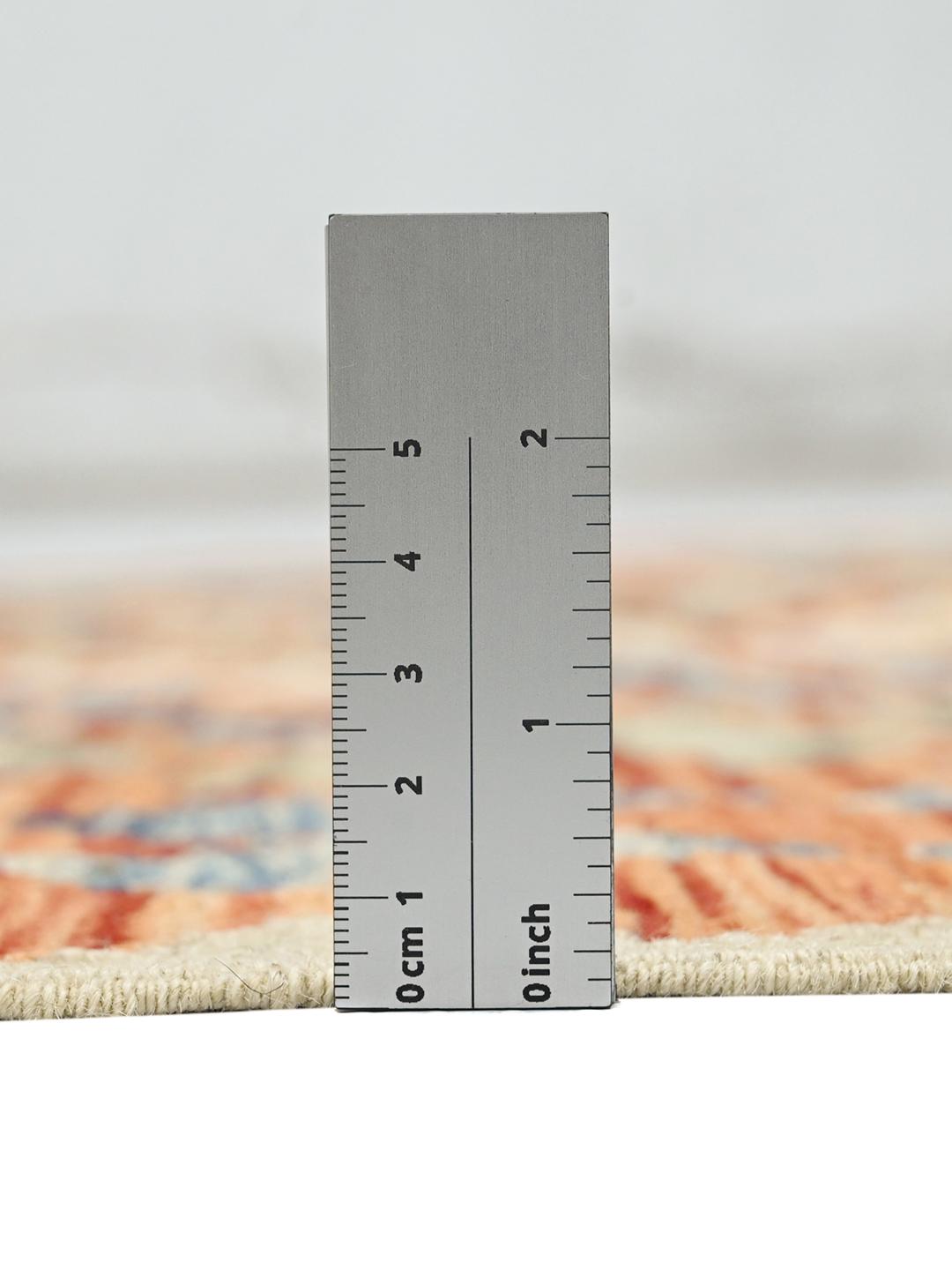
The term 'Kelim' refers to the unique weaving technique where the warp and weft are interlaced tightly to create a smooth, pileless surface. This method allows for the creation of sharp, clean-edged geometric patterns that define the aesthetic of the region. The lack of pile makes these rugs highly practical, as they are durable, reversible, and easy to maintain.
Signature design elements of Afghan Kelims often include bold, repeating geometric shapes, such as diamonds, triangles, and stylized floral motifs. These patterns are typically arranged in symmetrical compositions, framed by decorative borders that showcase the weaver's mastery of colour and proportion. The use of vibrant, earthy tones is a hallmark of the tradition, reflecting the natural landscapes of the region.
Collecting an Afghan Kelim is an investment in cultural heritage and human skill. These rugs are highly valued for their authenticity and the way they bridge the gap between ancient craft and contemporary home design. Owning one means preserving a piece of history that continues to tell the story of the artisans and the artistic traditions they carry forward.