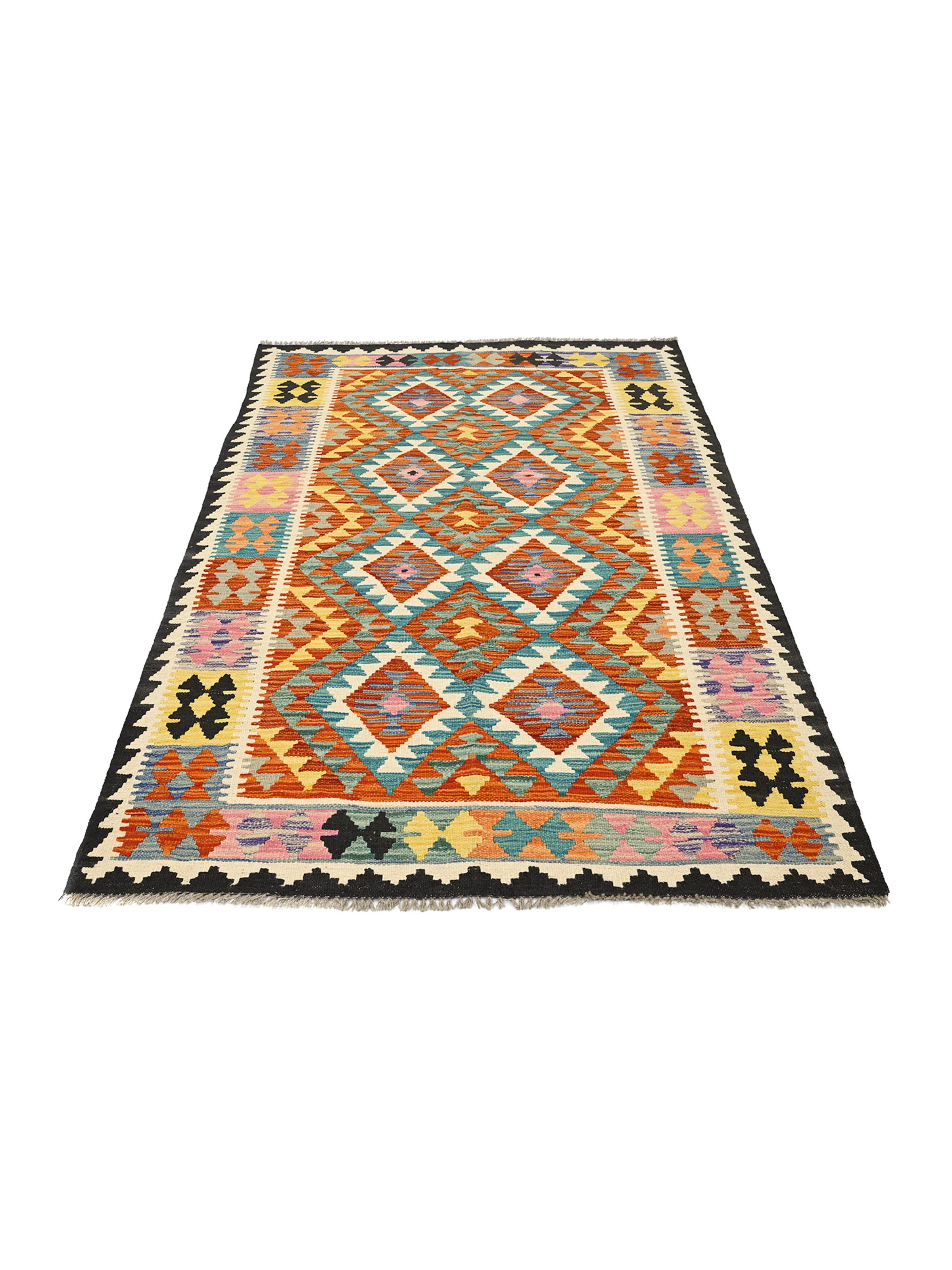
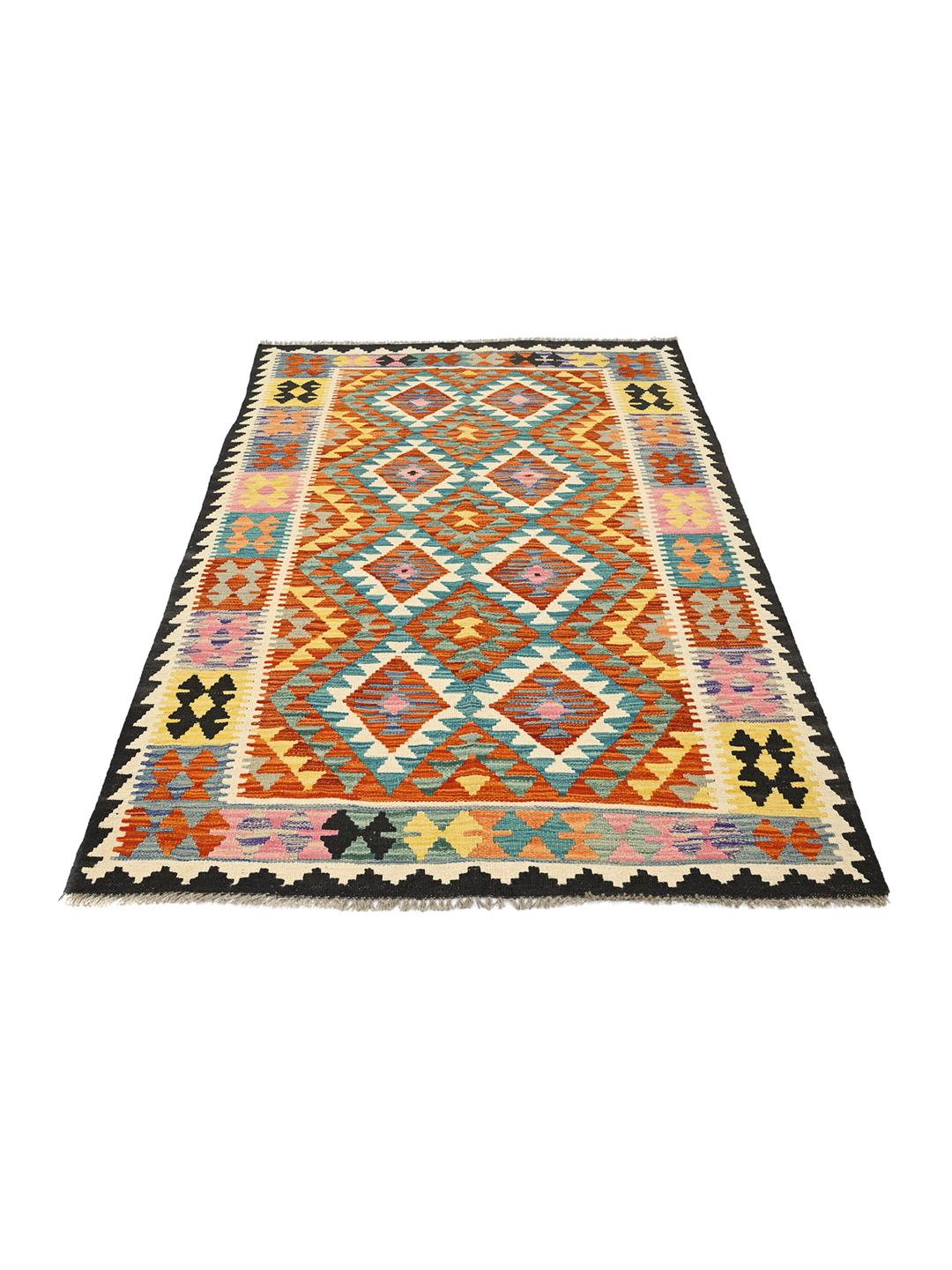
Kelim rugs have a storied history rooted in the nomadic traditions of Central and Western Asia. These flat-woven textiles were originally created by tribal communities for practical purposes, such as floor coverings, wall hangings, and storage bags. Their design language is deeply connected to the landscapes and cultural identities of the regions where they were produced.
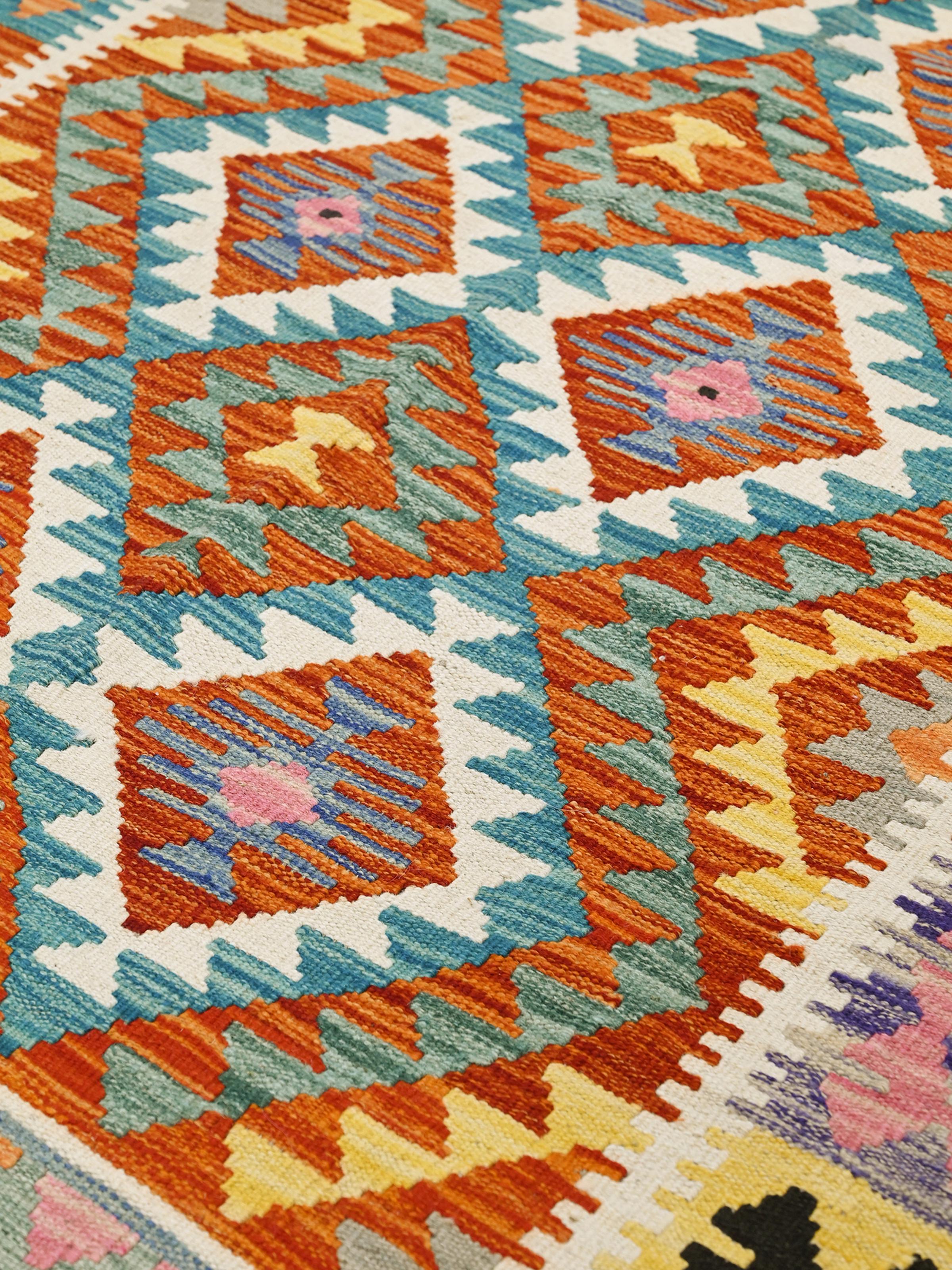
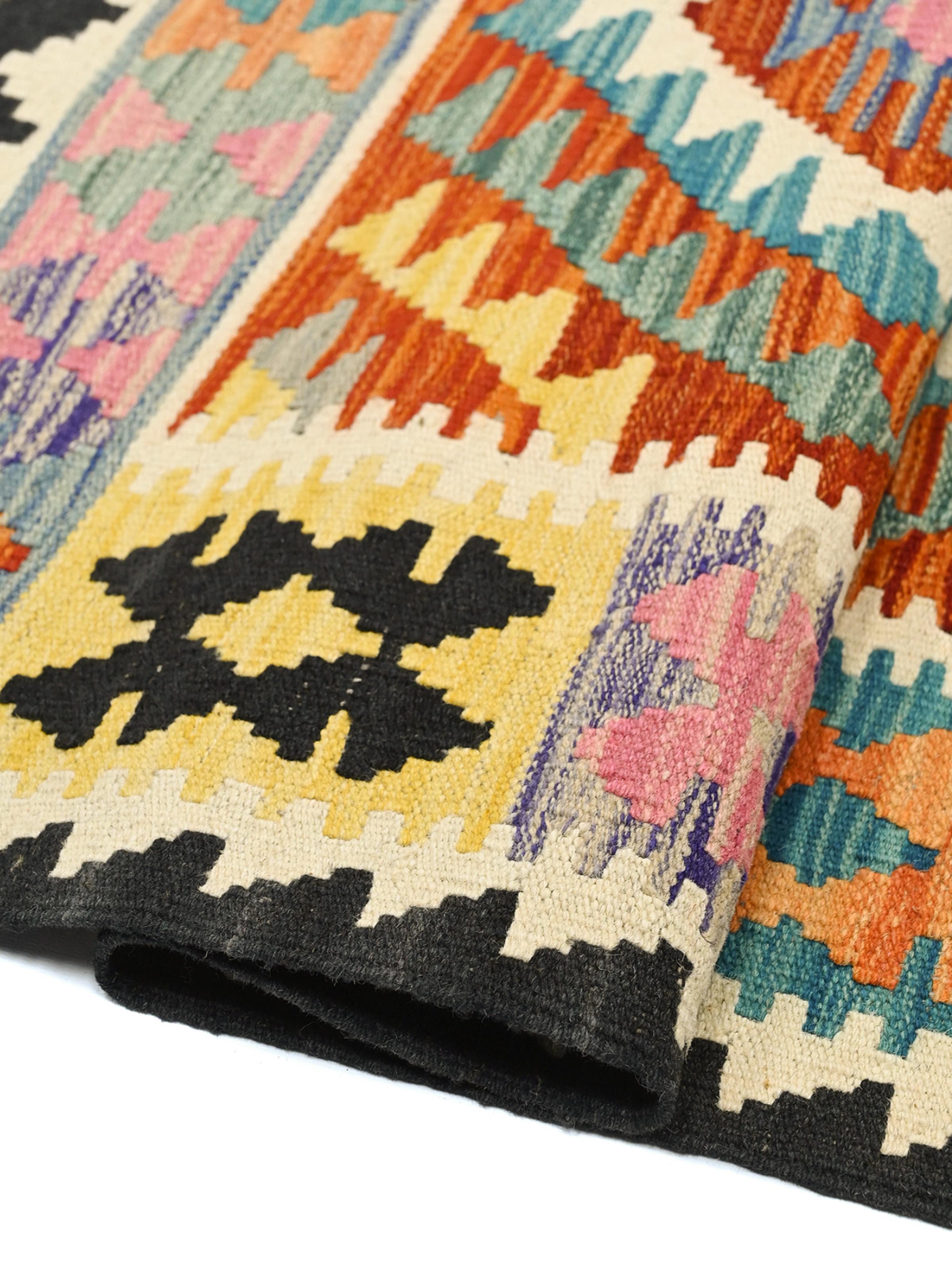
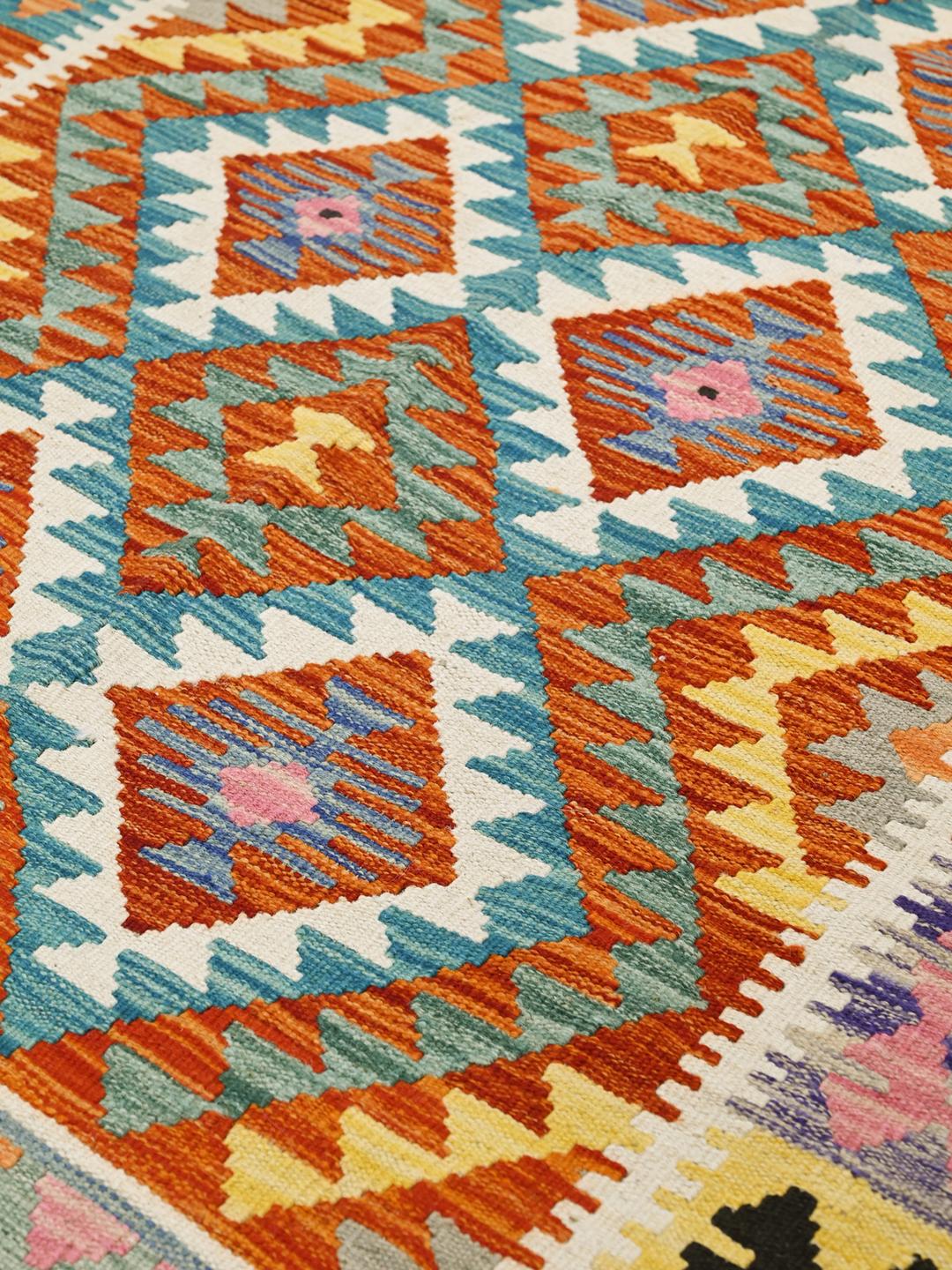
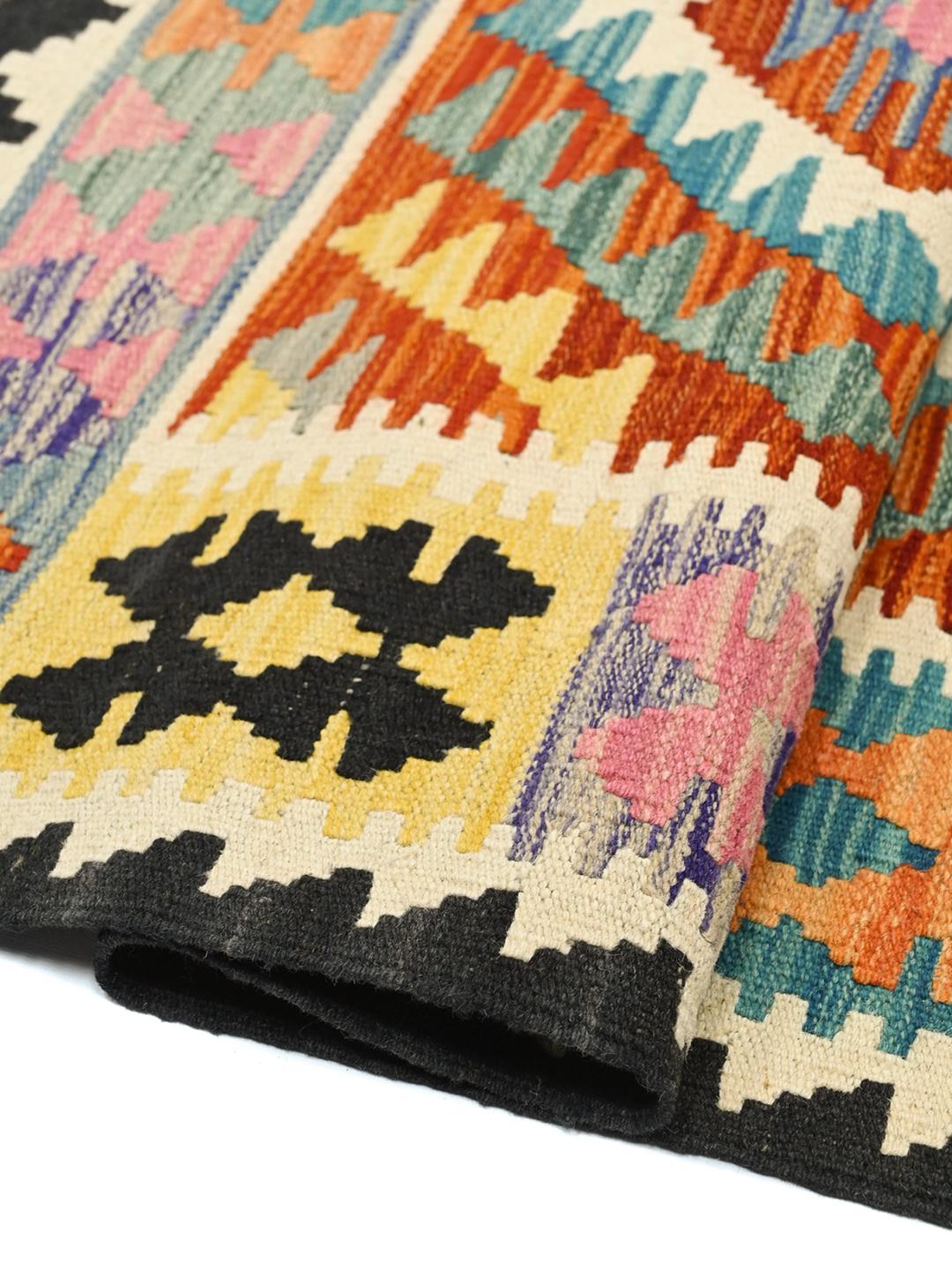
The term Kelim refers to the specific slit-weave technique used to create the pattern, where the weft threads are pulled tightly to conceal the warp. This method results in a durable, reversible rug with clean, sharp lines and a distinctively flat surface. This technique is a hallmark of quality that has been passed down through centuries, representing a bridge between ancient utility and contemporary design.
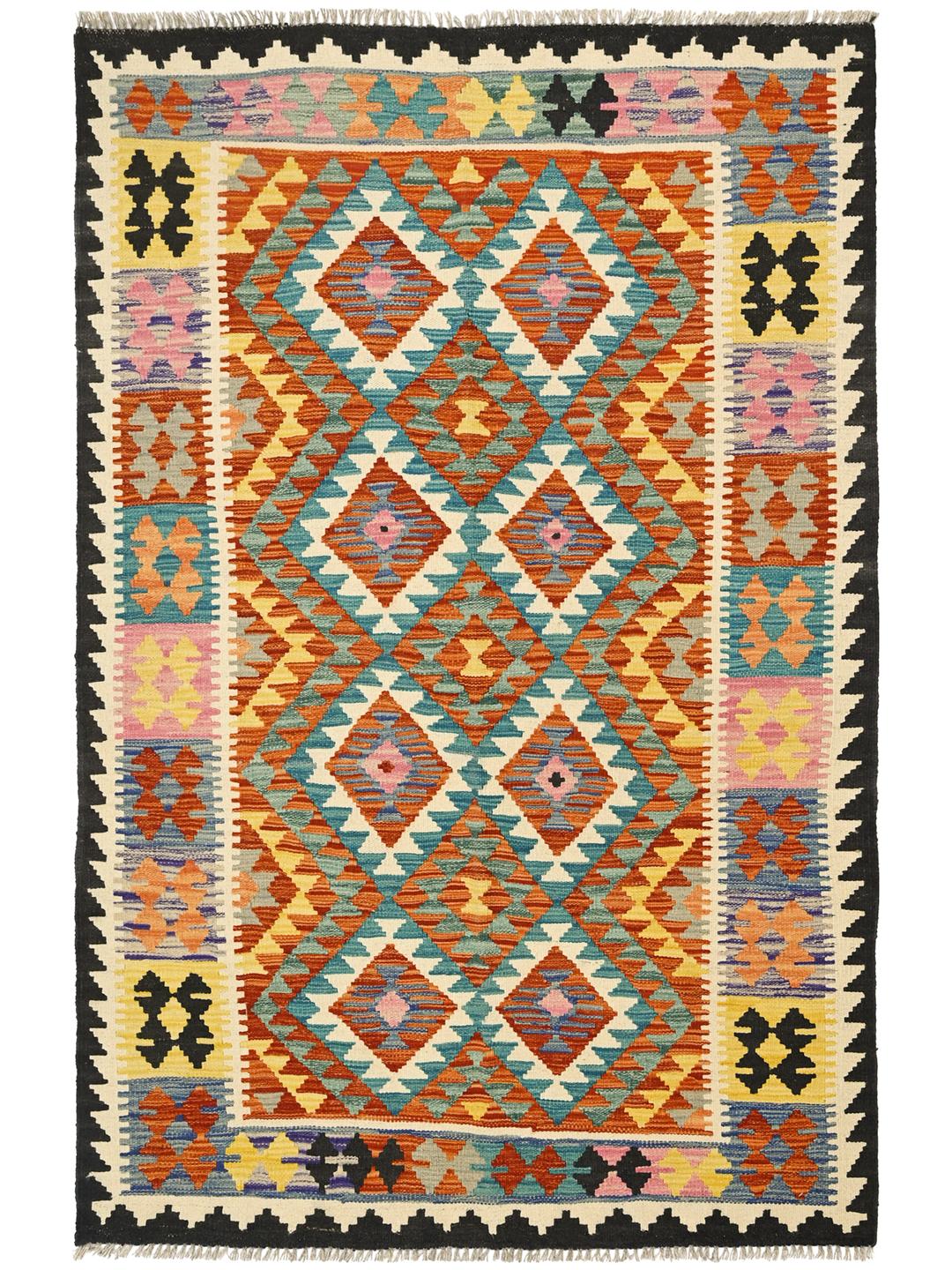
Visually, these rugs are defined by their geometric motifs, often featuring diamonds, triangles, and intricate borders. The use of bold, saturated colours is traditional, reflecting the natural dyes historically derived from local plants and minerals. This particular piece honours those traditions while offering a unique variation that makes it a standout decorative element.
Today, these rugs are highly sought after by collectors who value the authenticity and human element behind each piece. Owning a traditional Afghan Kelim is not just about decorating a floor; it is about honouring a craft that has survived the passage of time and remains a testament to the enduring skill and creativity of its weavers.