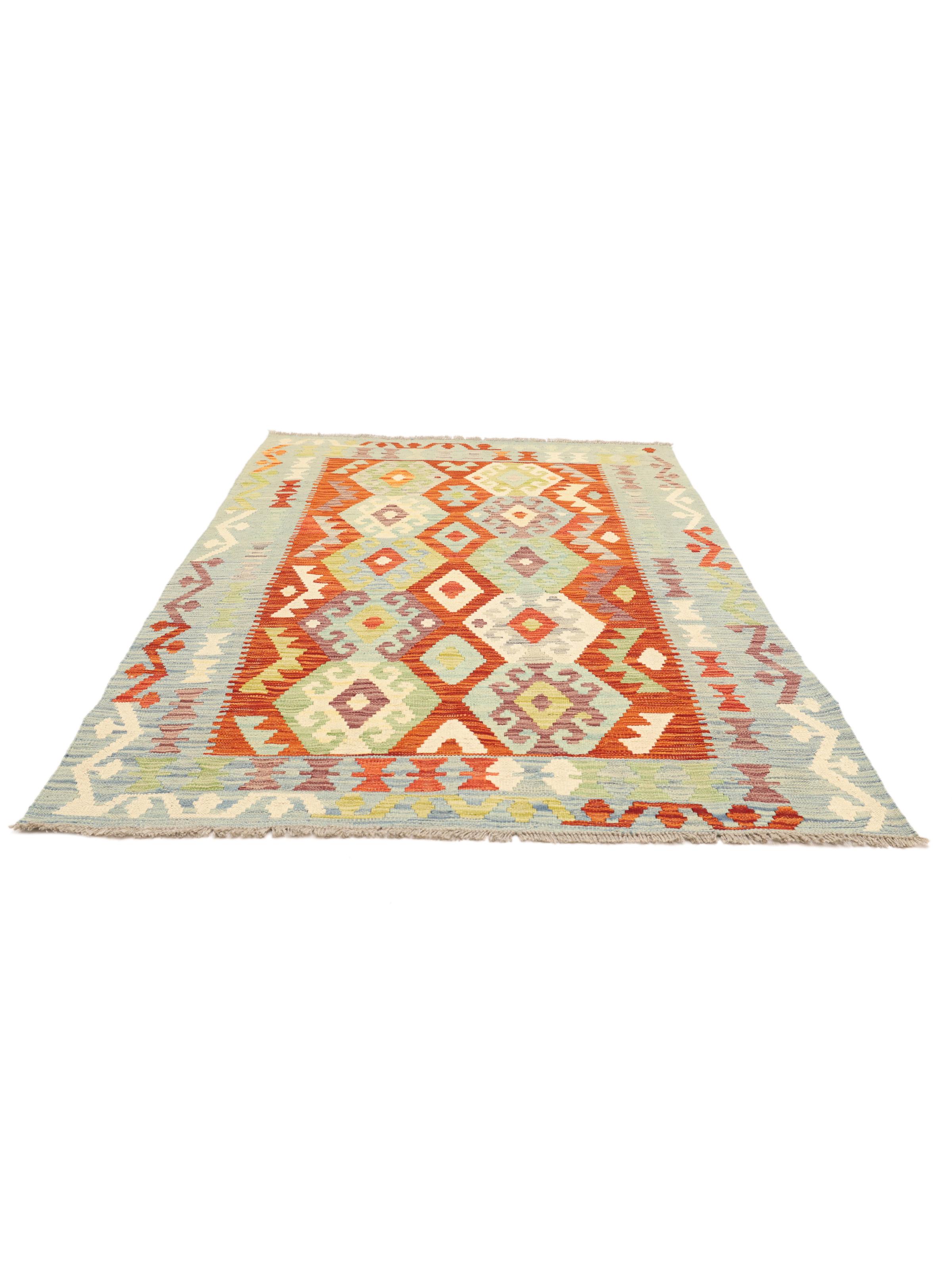
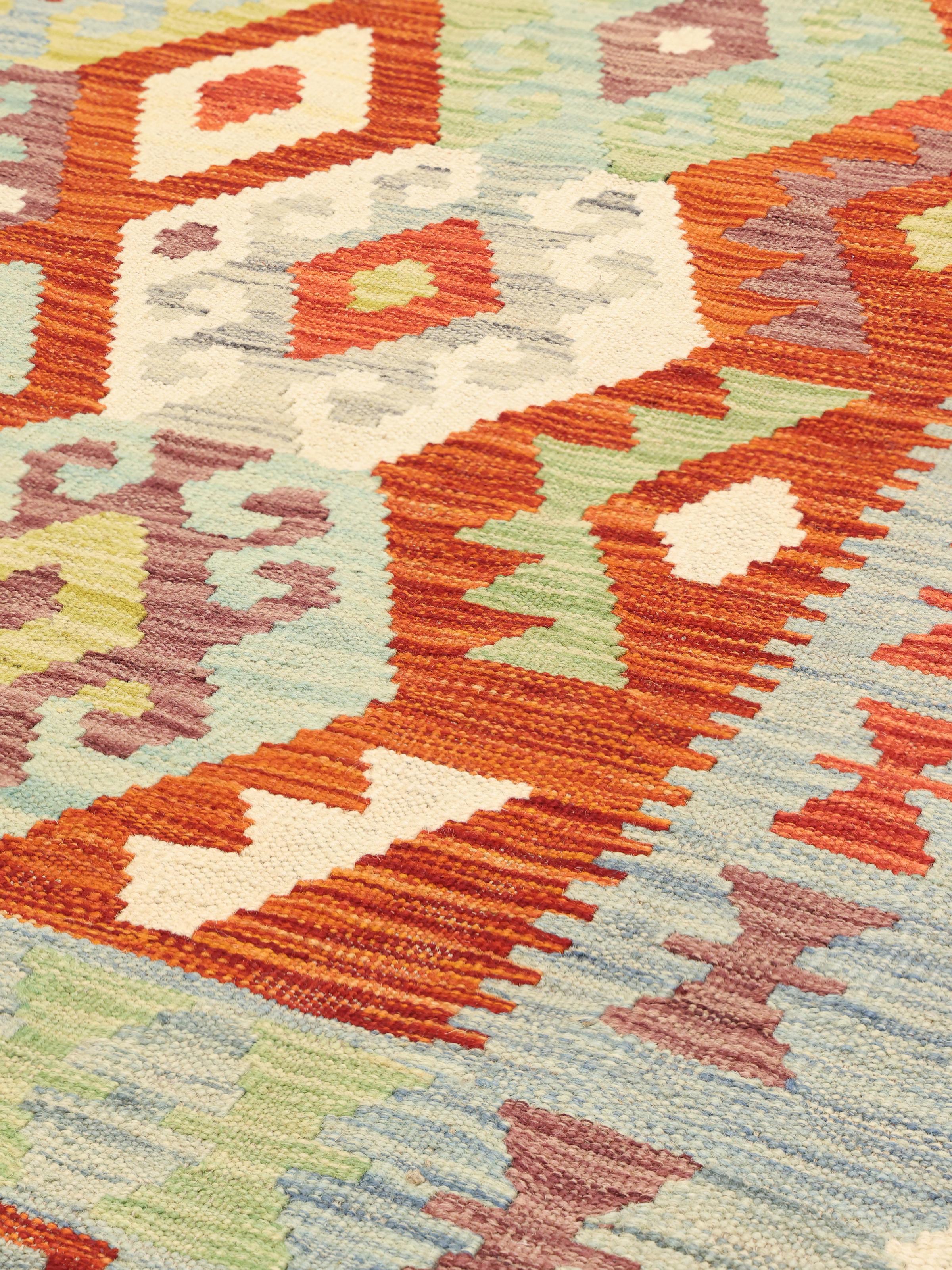
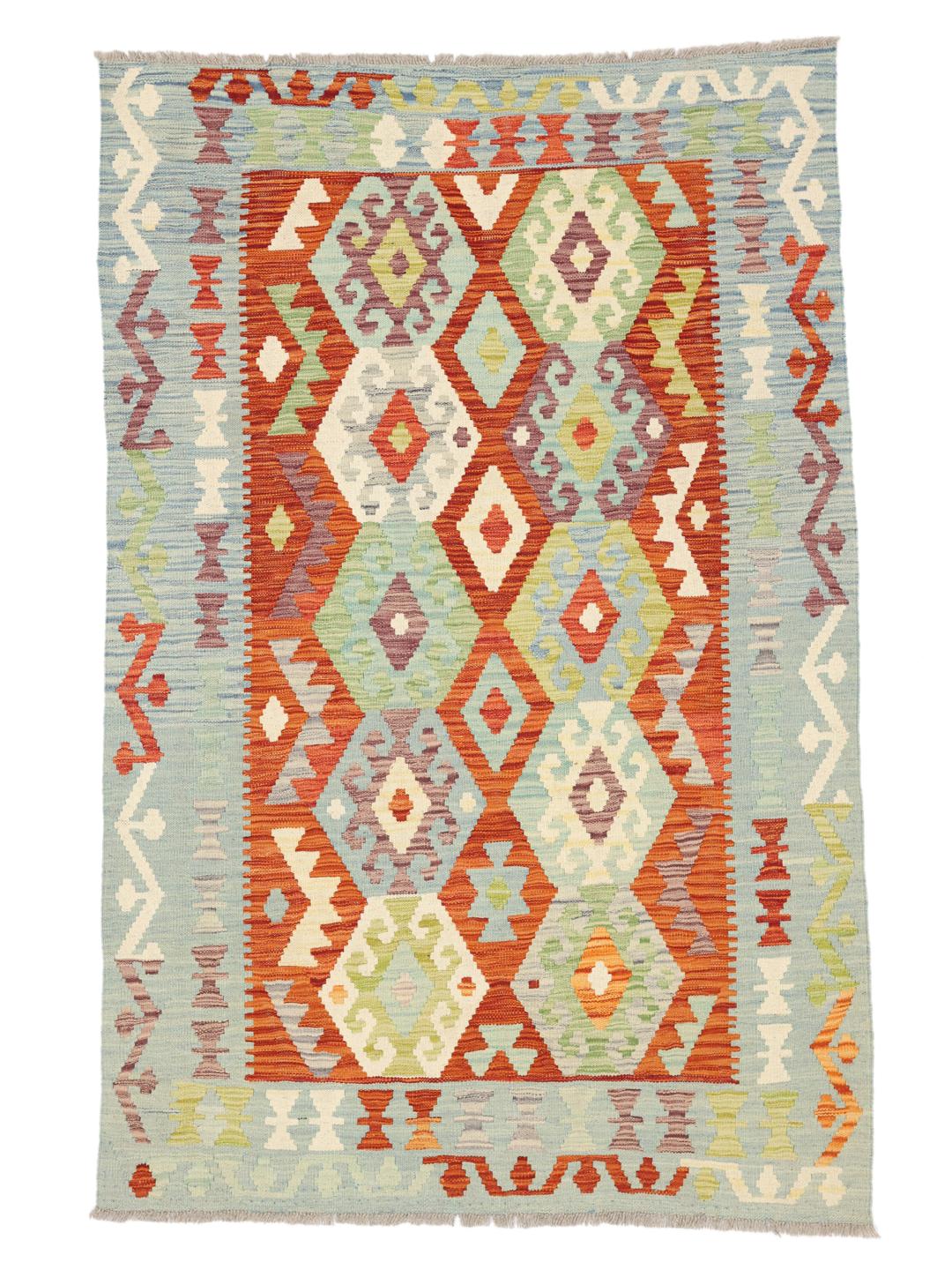
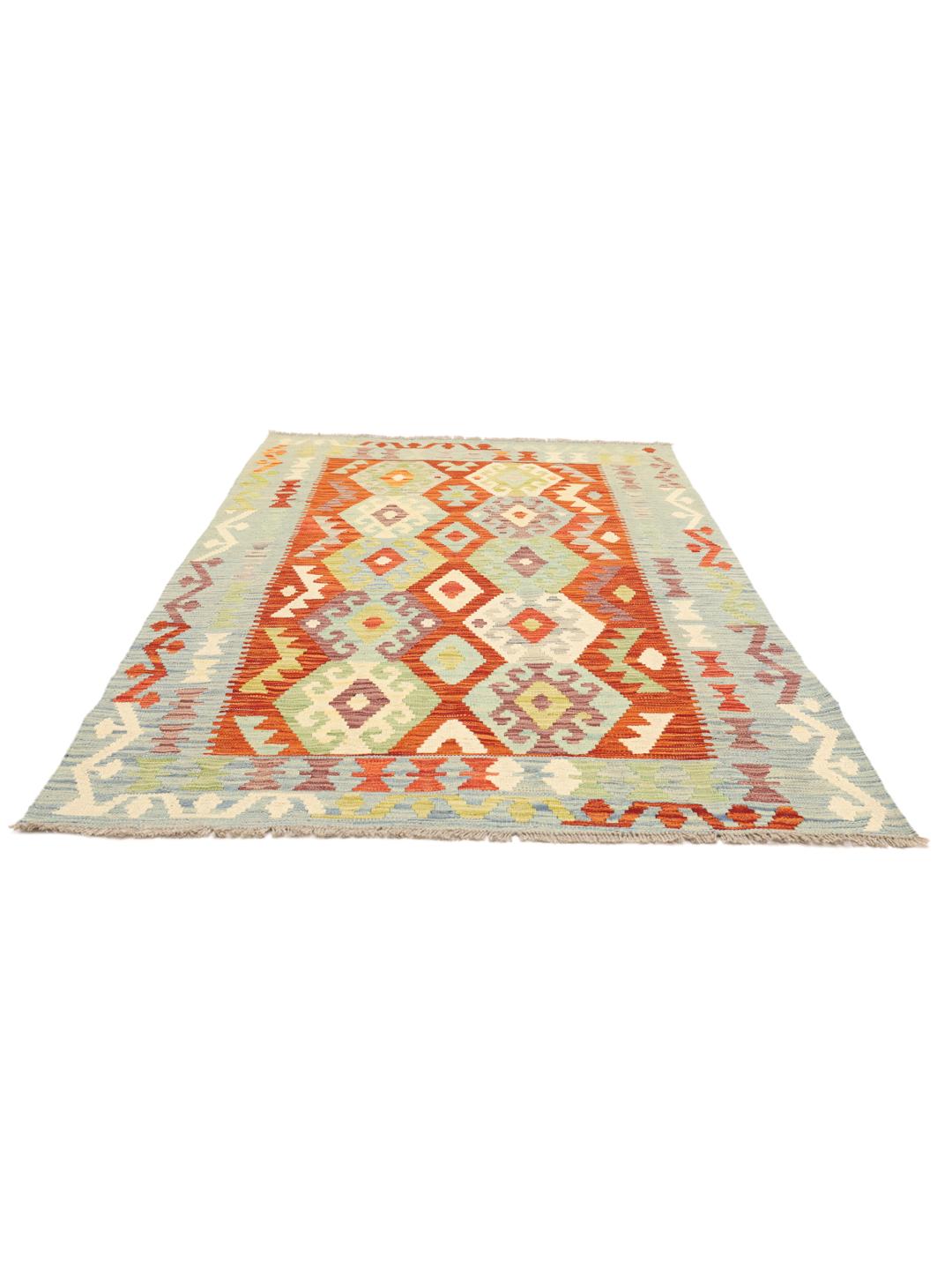
Kelim rugs have a storied history rooted in the nomadic traditions of the Middle East and Central Asia. Originally created by tribal communities as functional, portable textiles for tents, these rugs have evolved into celebrated interior pieces. The Afghan Kelim, in particular, is renowned for its durability and its adherence to ancient weaving methods that have been passed down through generations.
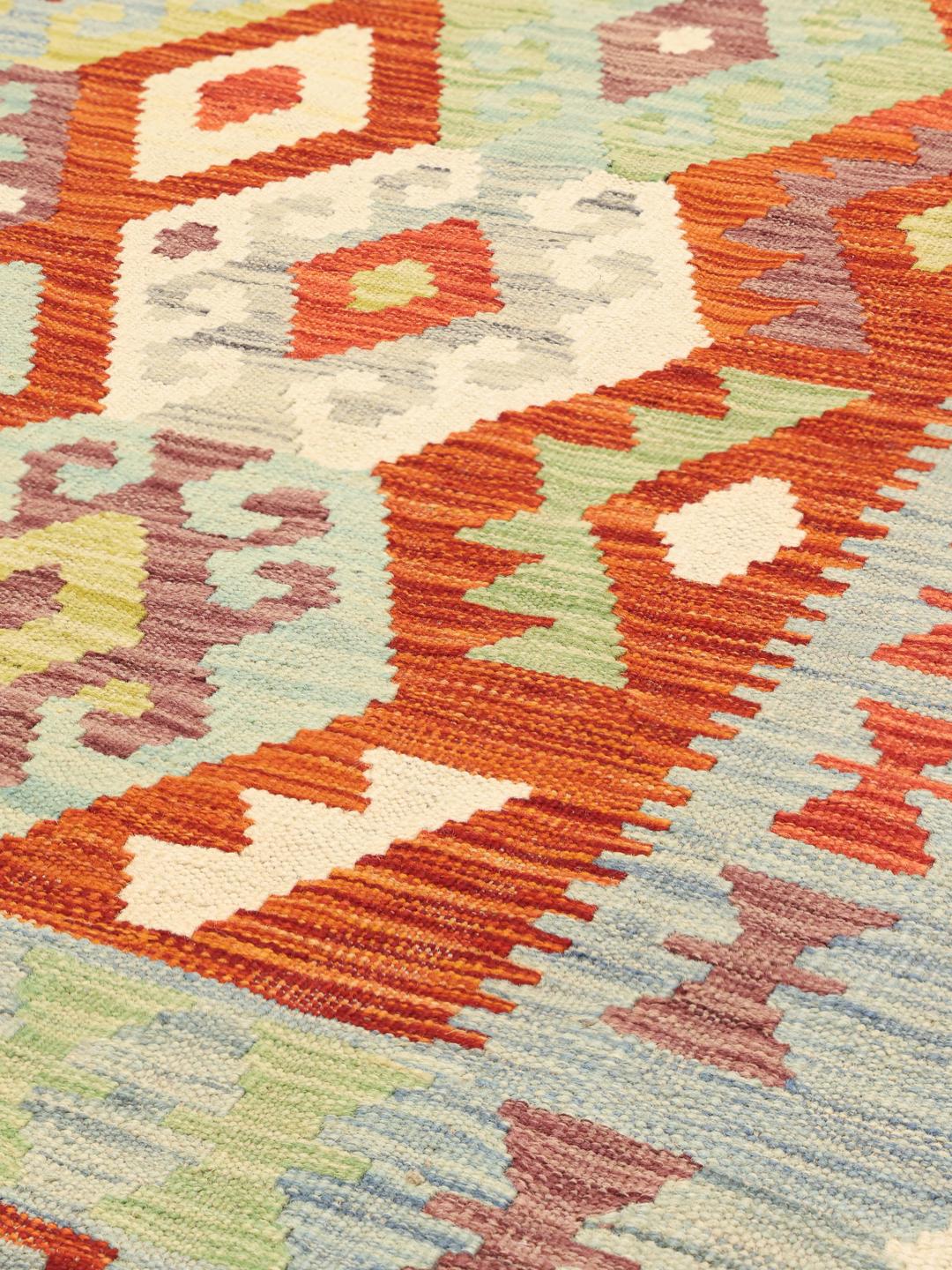
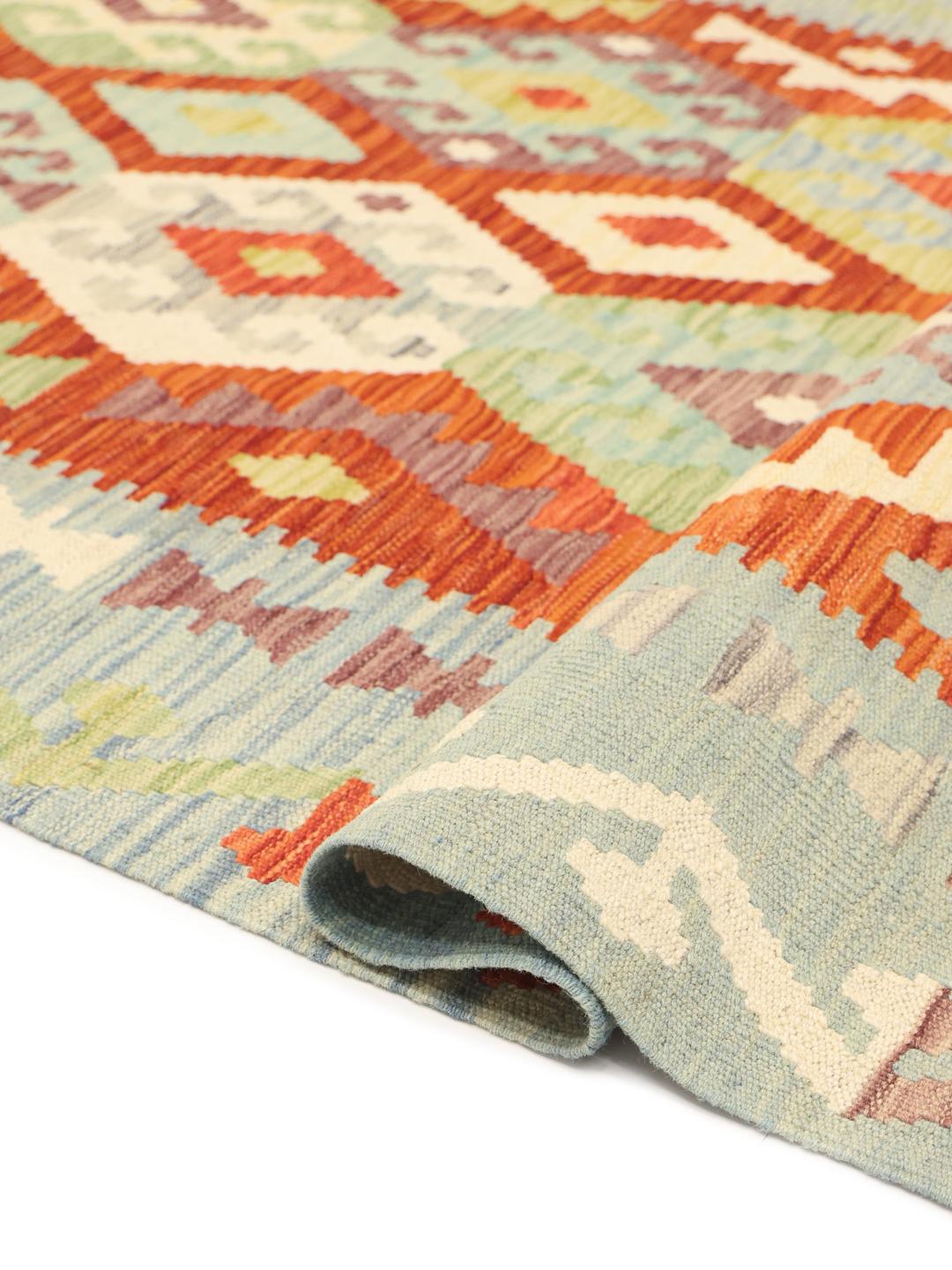
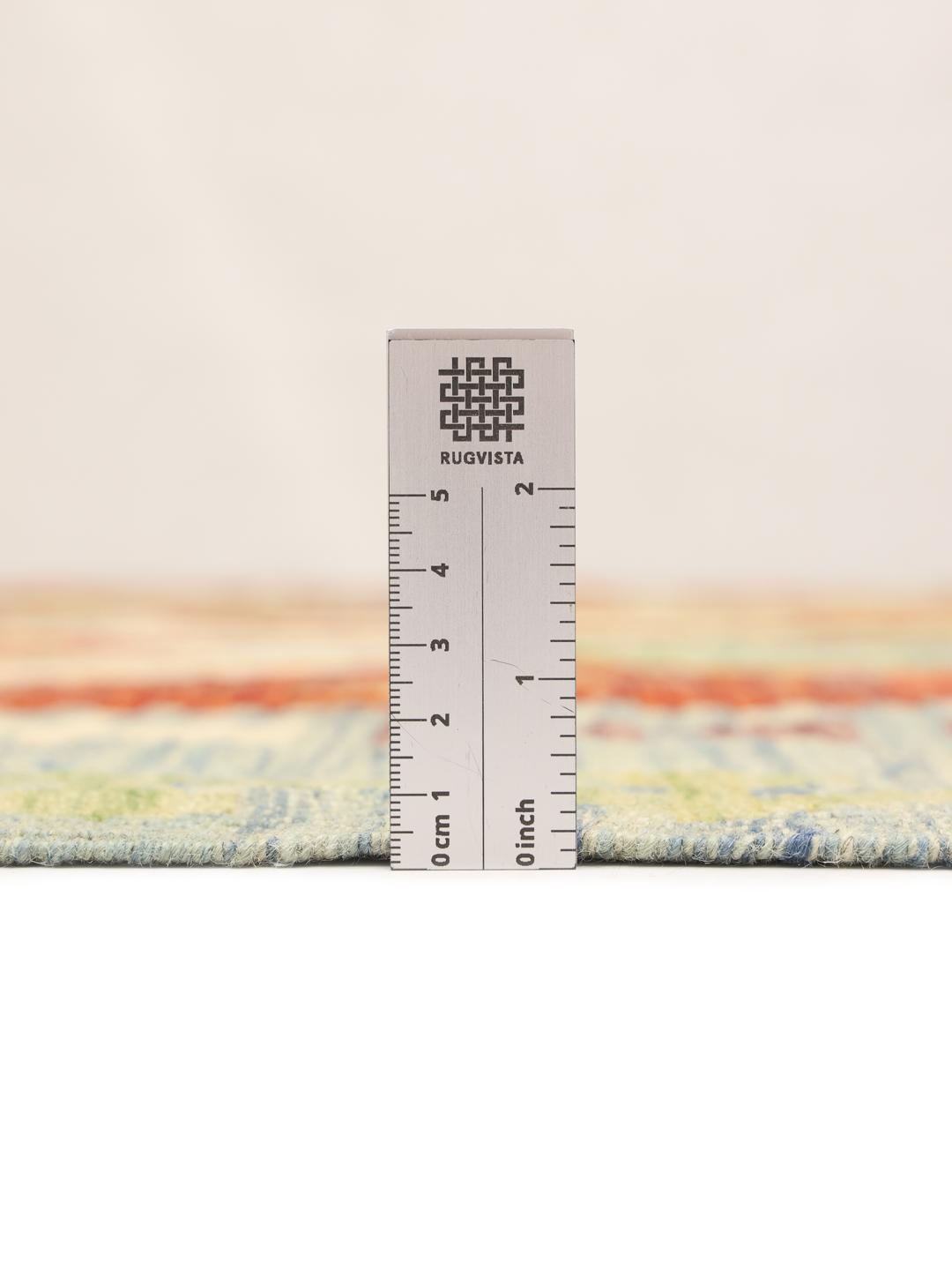
The term 'Kelim' refers to a flat-woven textile, meaning it lacks the pile found in traditional knotted rugs. This construction is achieved by interlocking the coloured weft threads tightly with the warp threads, creating a rug that is reversible and remarkably strong. This technique allows for the characteristic sharp, crisp geometric patterns that are synonymous with the style.
Designers of these rugs often draw upon a visual language of symbolic motifs, such as diamonds, triangles, and stylized floral elements, which were historically used to tell stories or offer protection to the weaver's family. The vibrant, deep hues are typically derived from natural dyes, giving the rug a richness that changes subtly in different lights, reflecting the landscape of its origin.
Today, these rugs are highly sought after by collectors and homeowners alike for their cultural weight and authentic craft. Owning an Afghan Kelim is an investment in a living tradition, connecting your modern home to a long-standing history of artistry and utility that remains as relevant today as it was centuries ago.