The Kelim tradition is deeply rooted in the nomadic history of the Middle East and Central Asia. Historically, these flat-woven rugs were essential to the lifestyle of travelling tribes, used as floor coverings, wall hangings, and storage bags. The knowledge required to weave these intricate patterns was passed down through generations, making each region and tribe easily identifiable by their specific motifs and colour palettes.
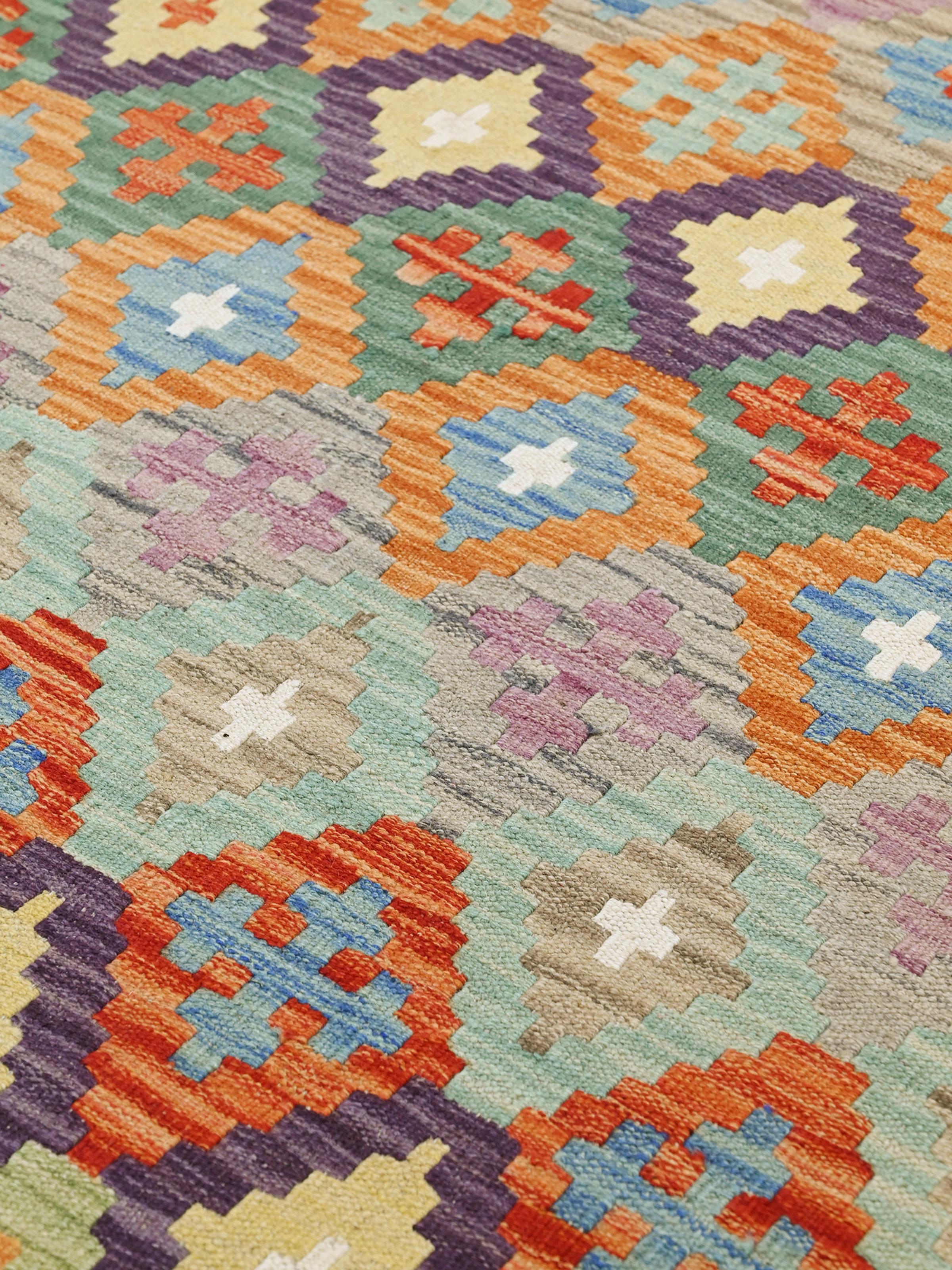
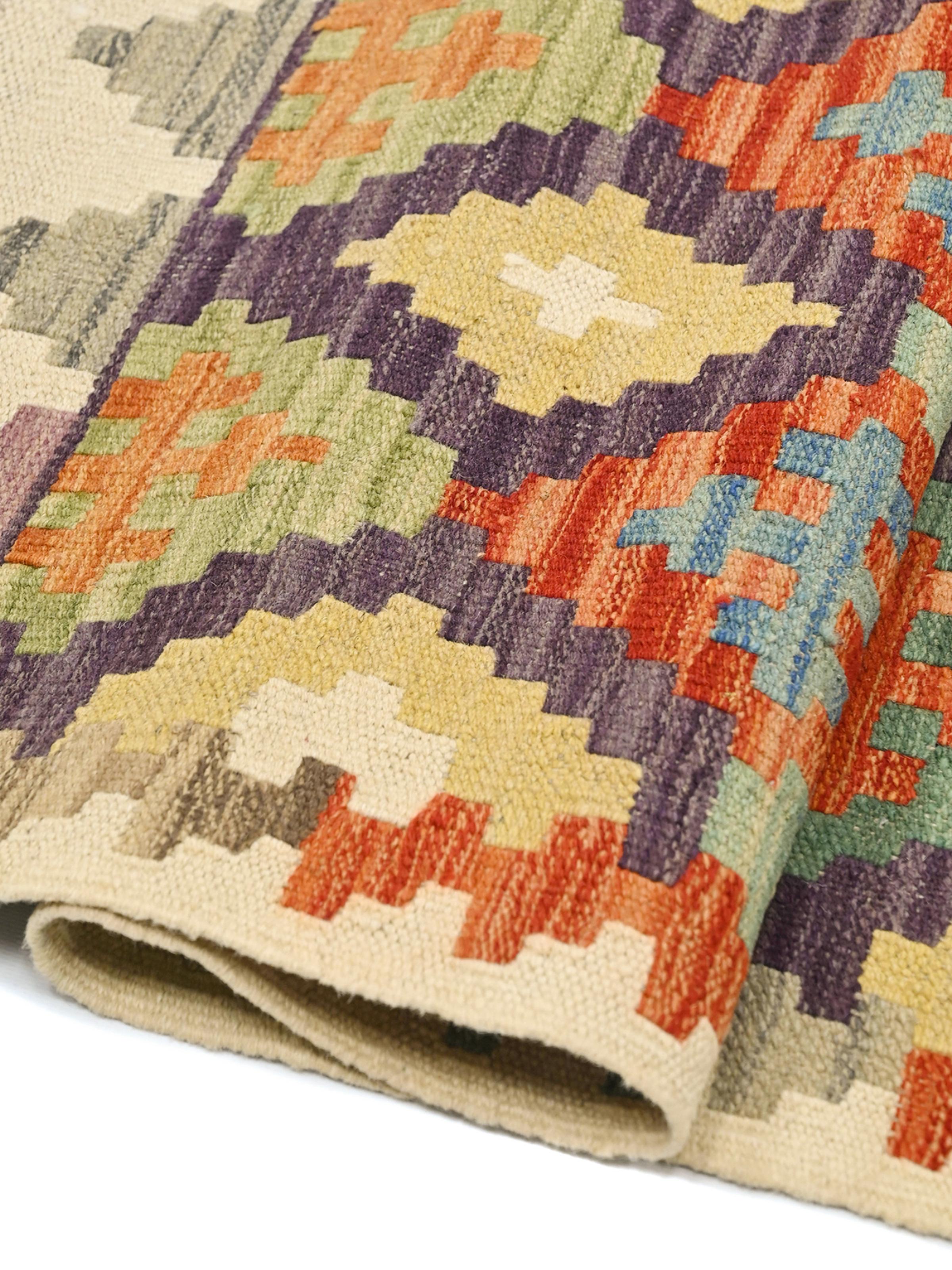
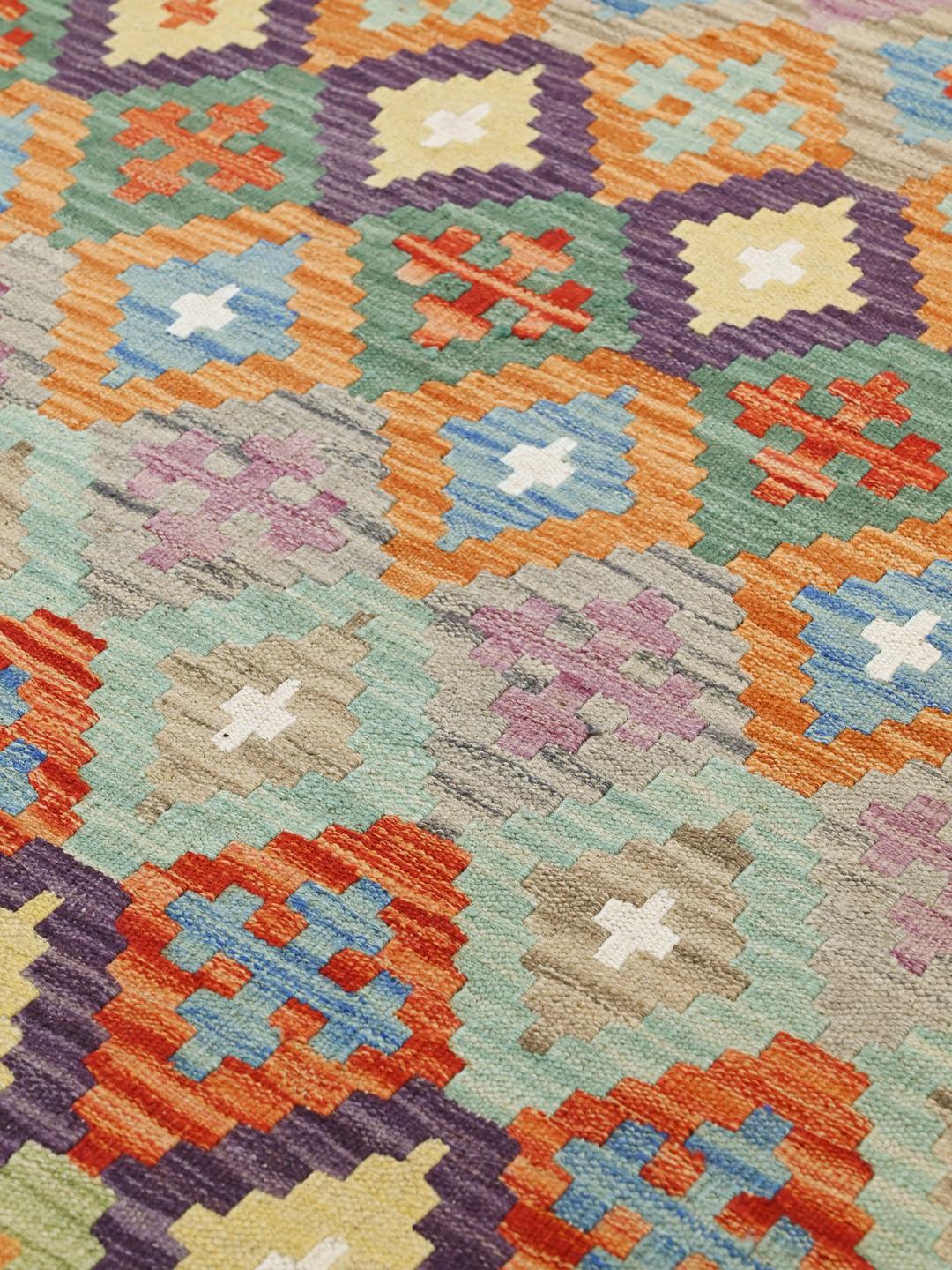
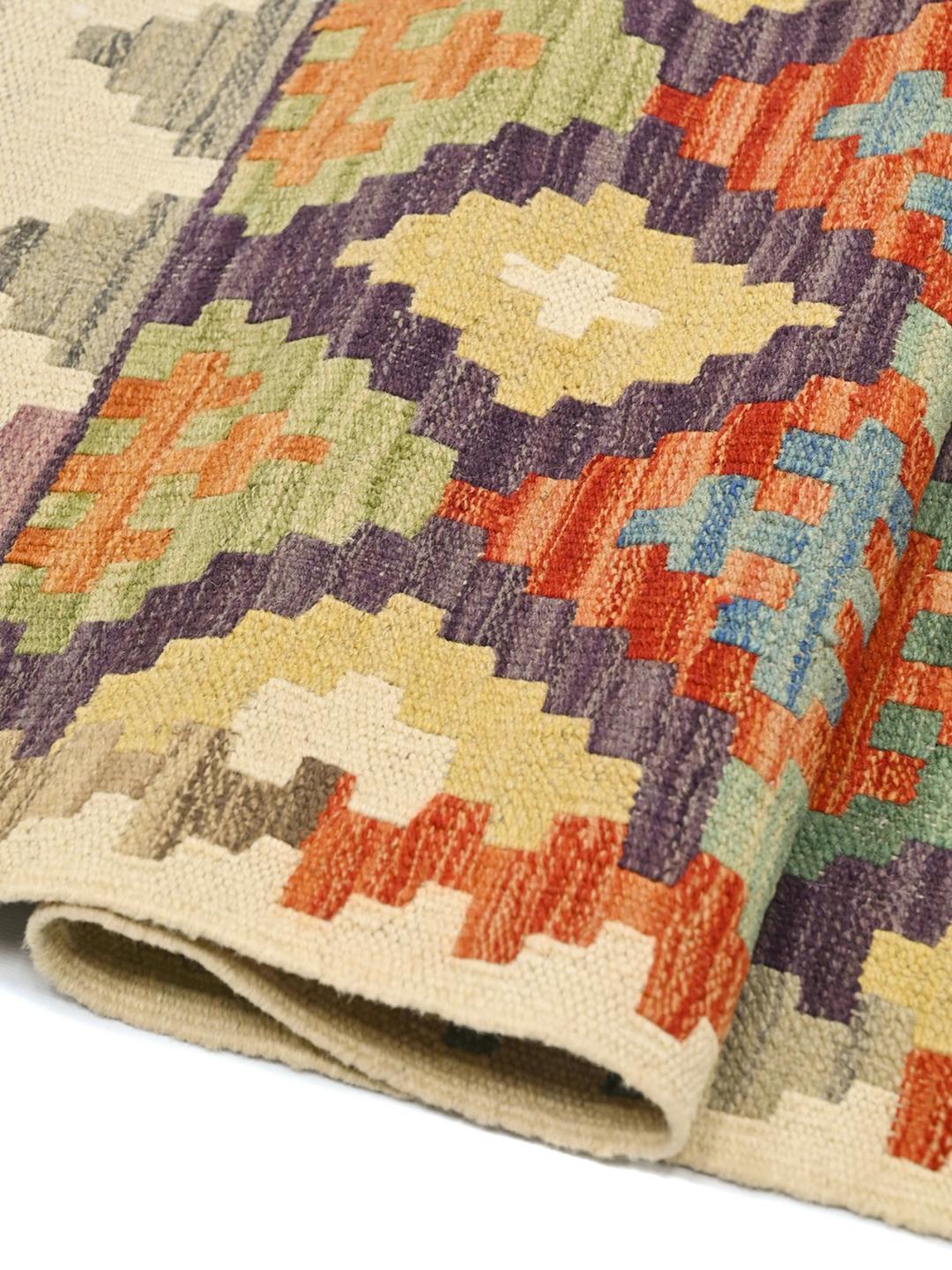
The term 'Kelim' refers to the specific flat-weaving technique used to create the rug, where the weft threads are pulled tightly over the warp to create a smooth, pileless surface. This method is distinct because it does not involve knotting; instead, the pattern is created by the interweaving of coloured threads. This technique results in a reversible rug, which speaks to the historical need for practical, durable, and easily transportable household items.
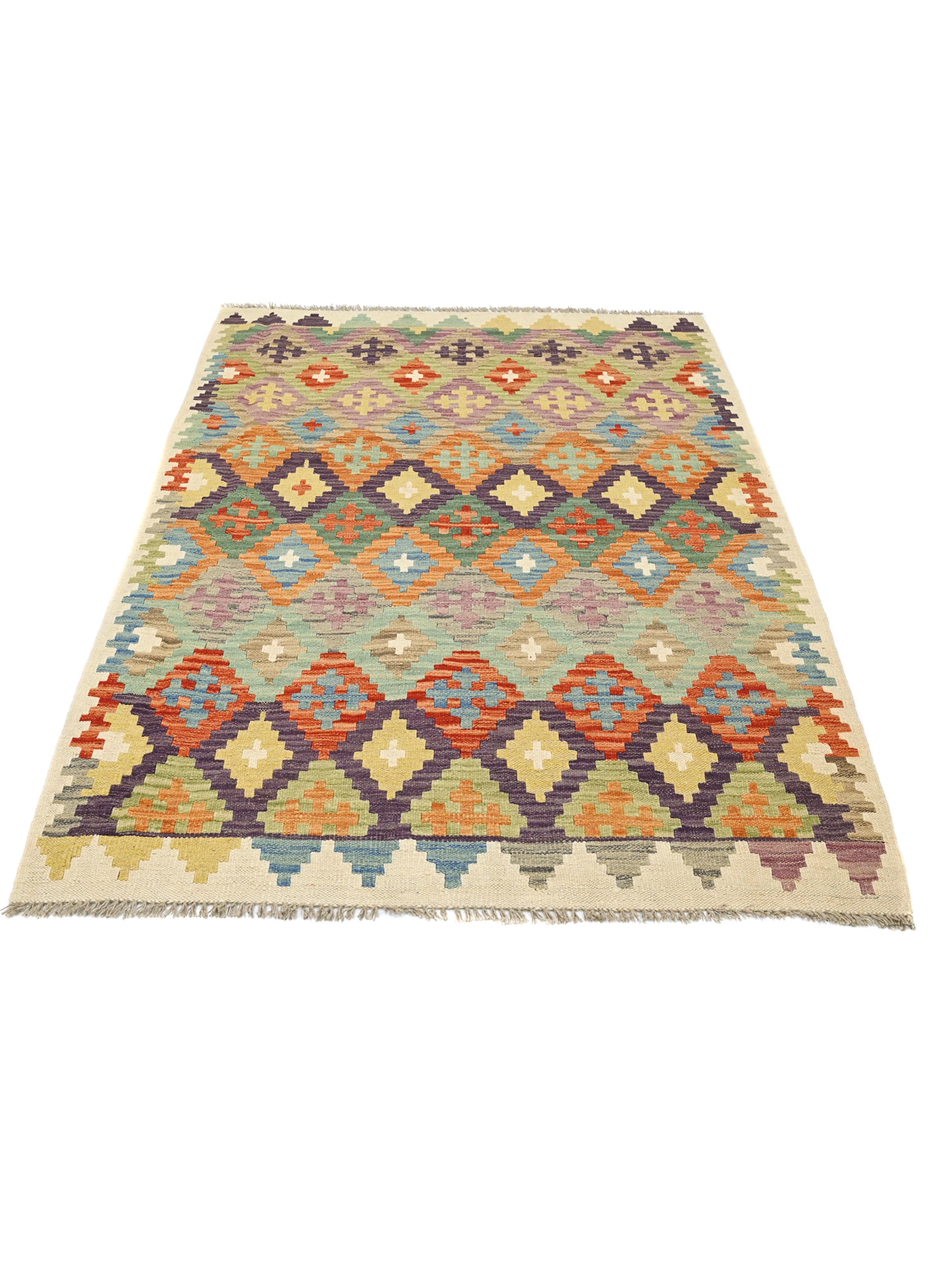
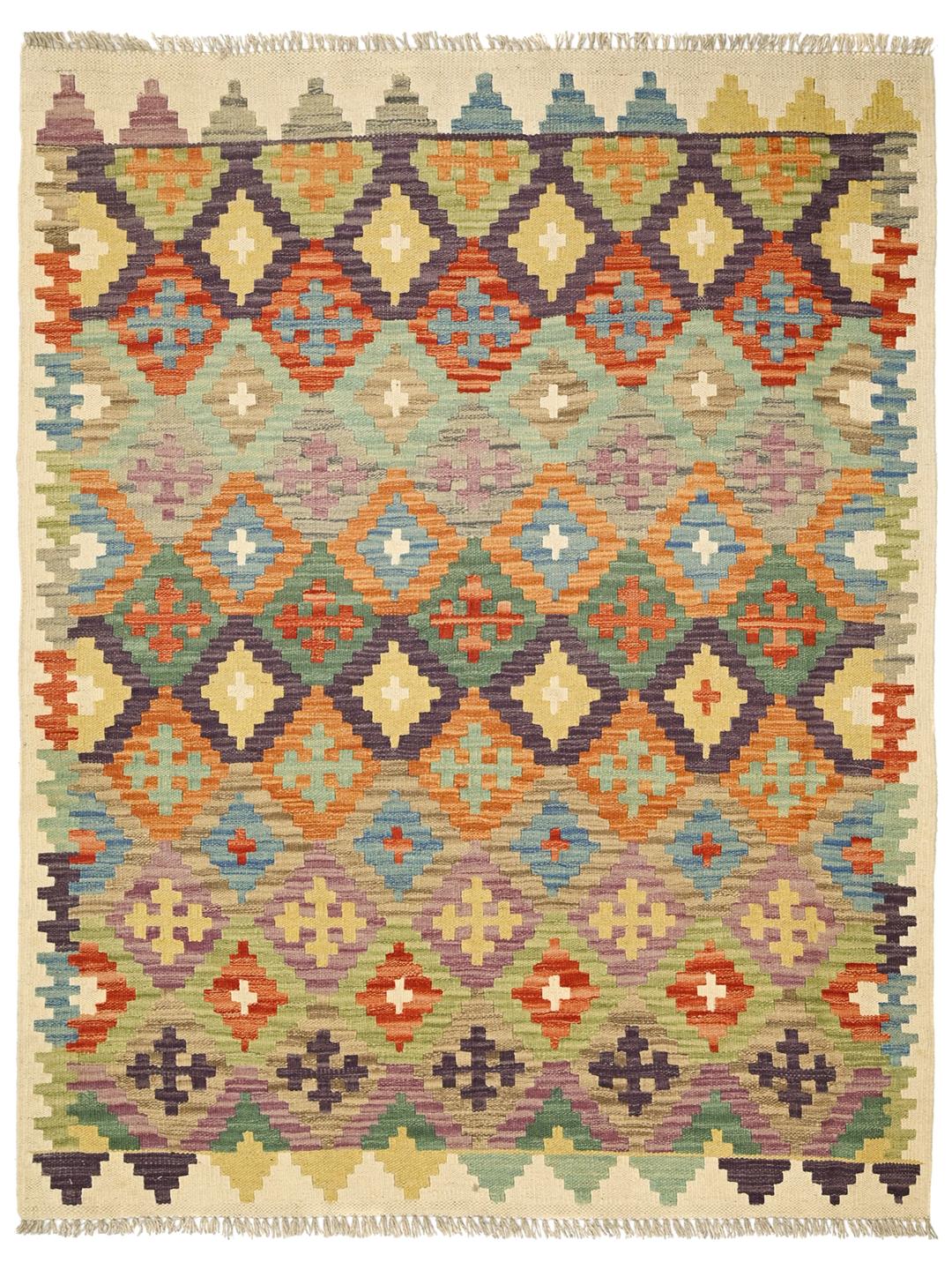
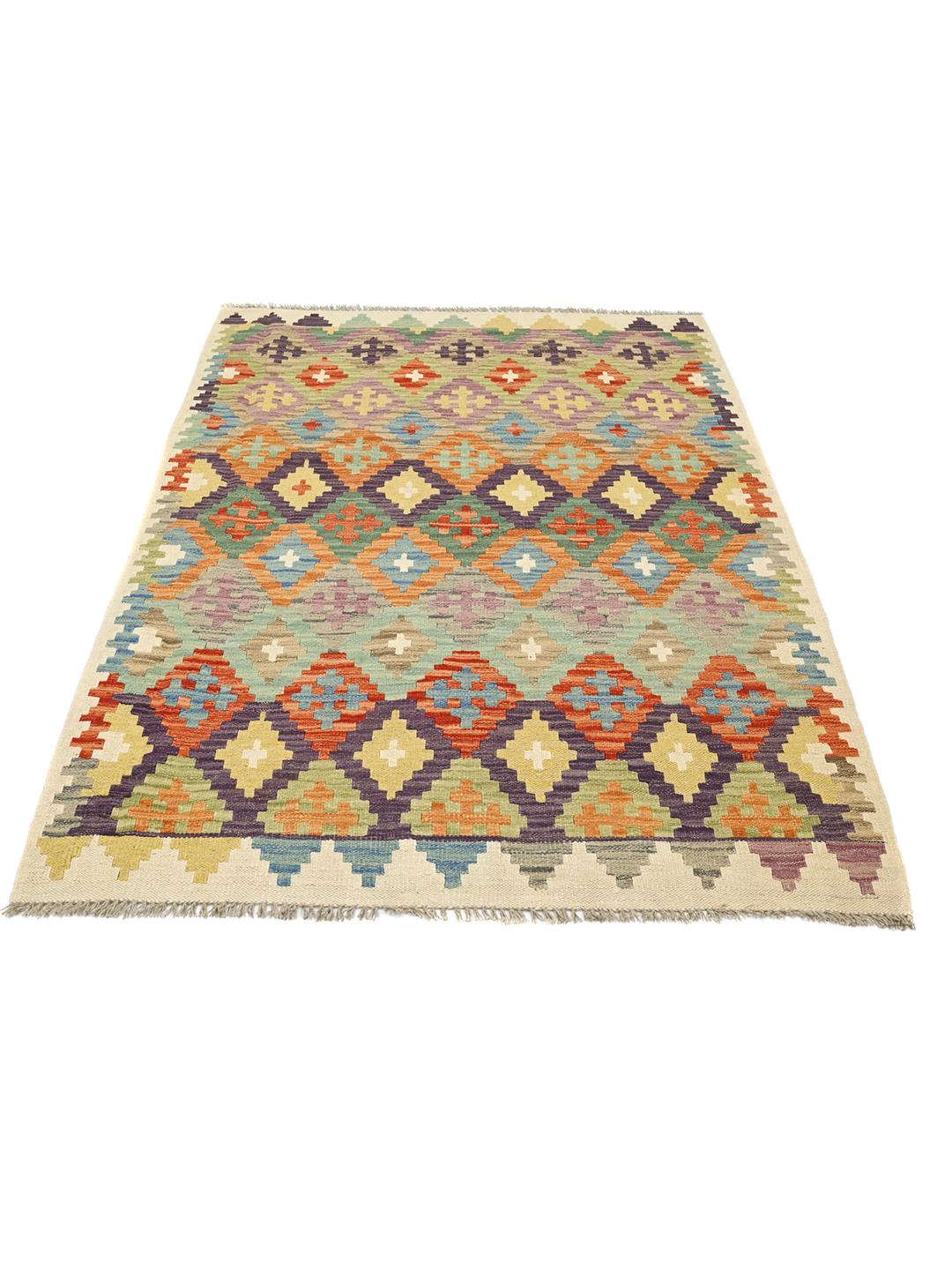
Visually, this Afghan Kelim features a complex arrangement of geometric diamonds and symbolic motifs. These designs are not merely decorative, they are a visual language that has evolved over centuries. The use of vibrant, contrasting colours is a hallmark of the Afghan style, often utilising natural dyes that age gracefully, developing a soft, muted patina that only adds to the rug's character over time.
Today, these rugs are highly valued by collectors and design enthusiasts alike for their historical significance and the immense skill required to produce them. Owning a piece of this tradition is a way to honour the enduring legacy of the weavers who developed these styles. It serves as a testament to the human need for beauty in everyday objects, connecting your modern home to a long and storied past.