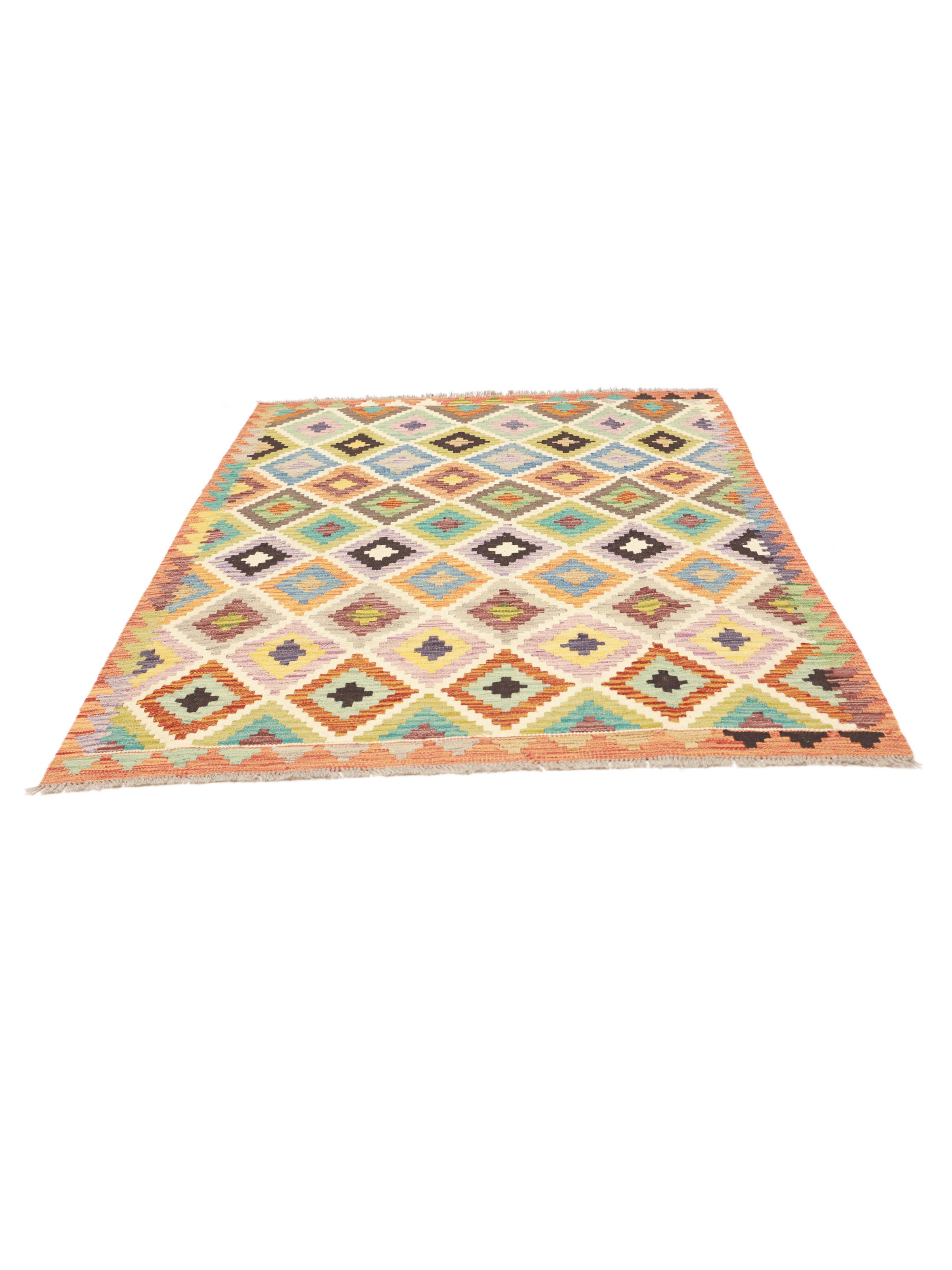
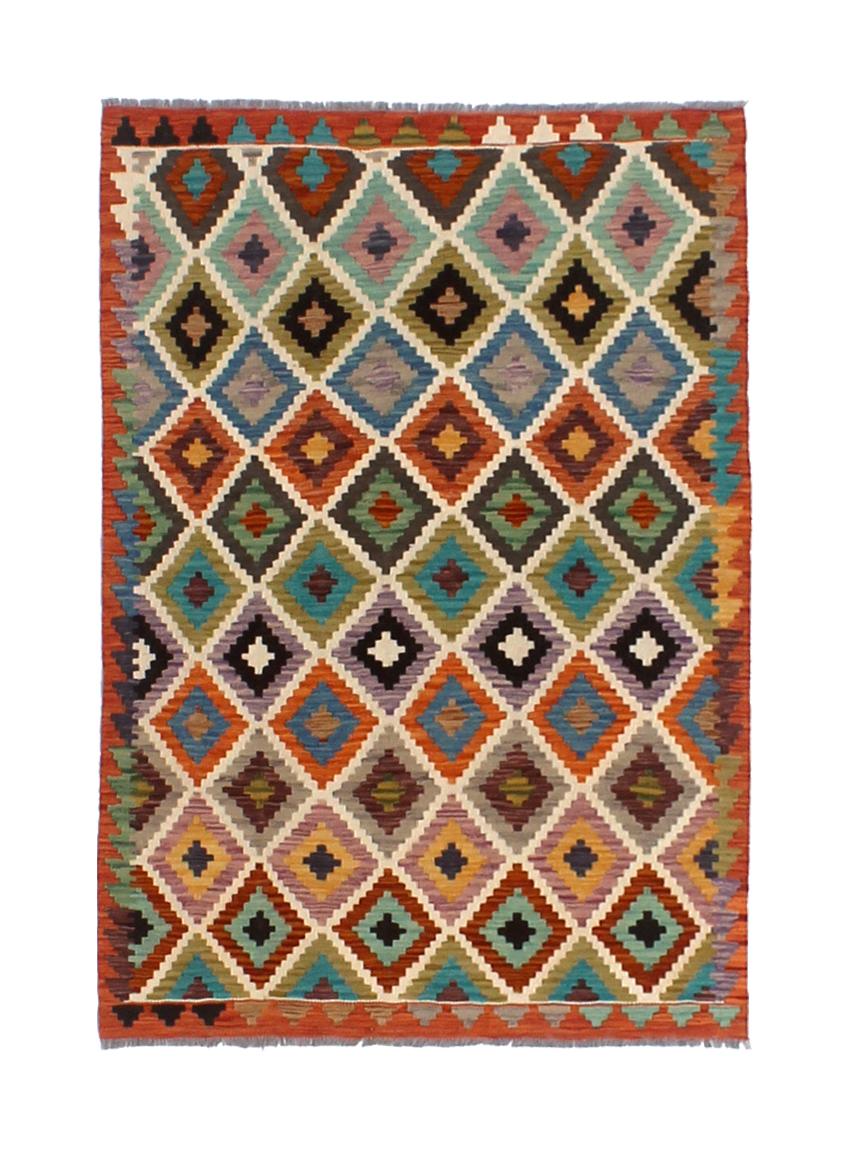
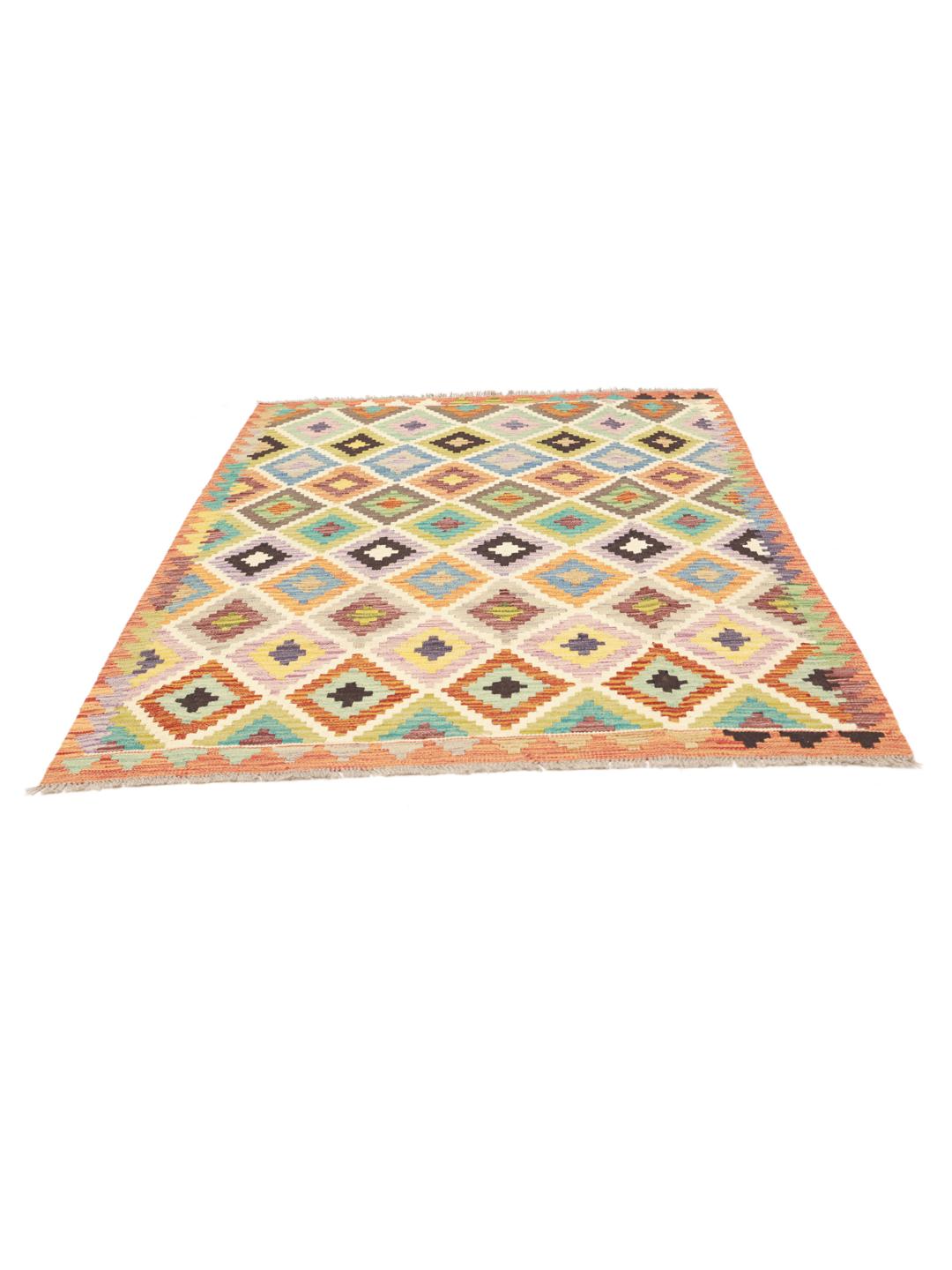
The tradition of Kelim weaving in Afghanistan is deeply rooted in the nomadic history of the region. These rugs were historically created by tribal groups for practical purposes, such as floor coverings, wall hangings, and transport bags, utilising the wool from their own flocks to create durable, portable textiles.
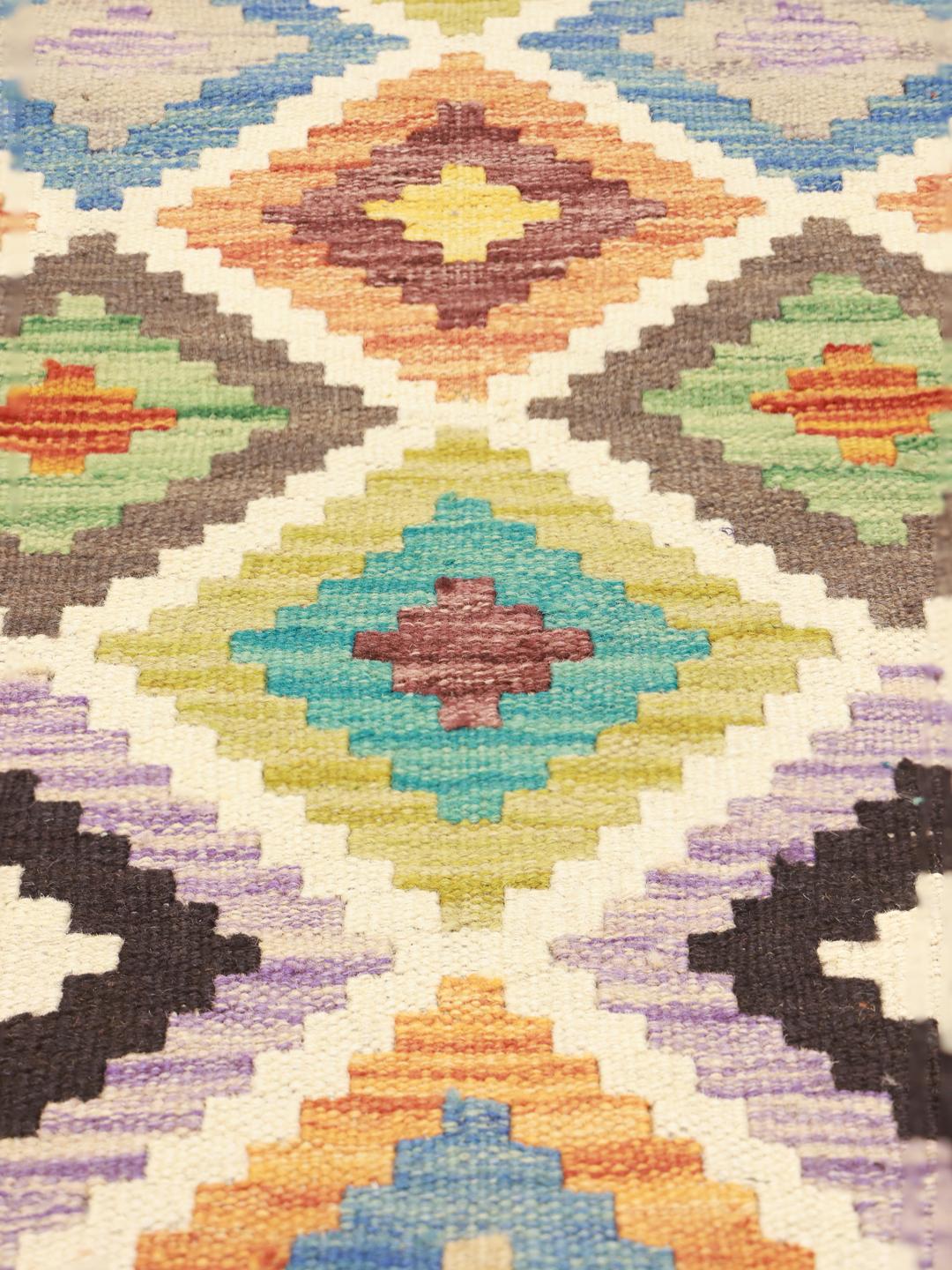
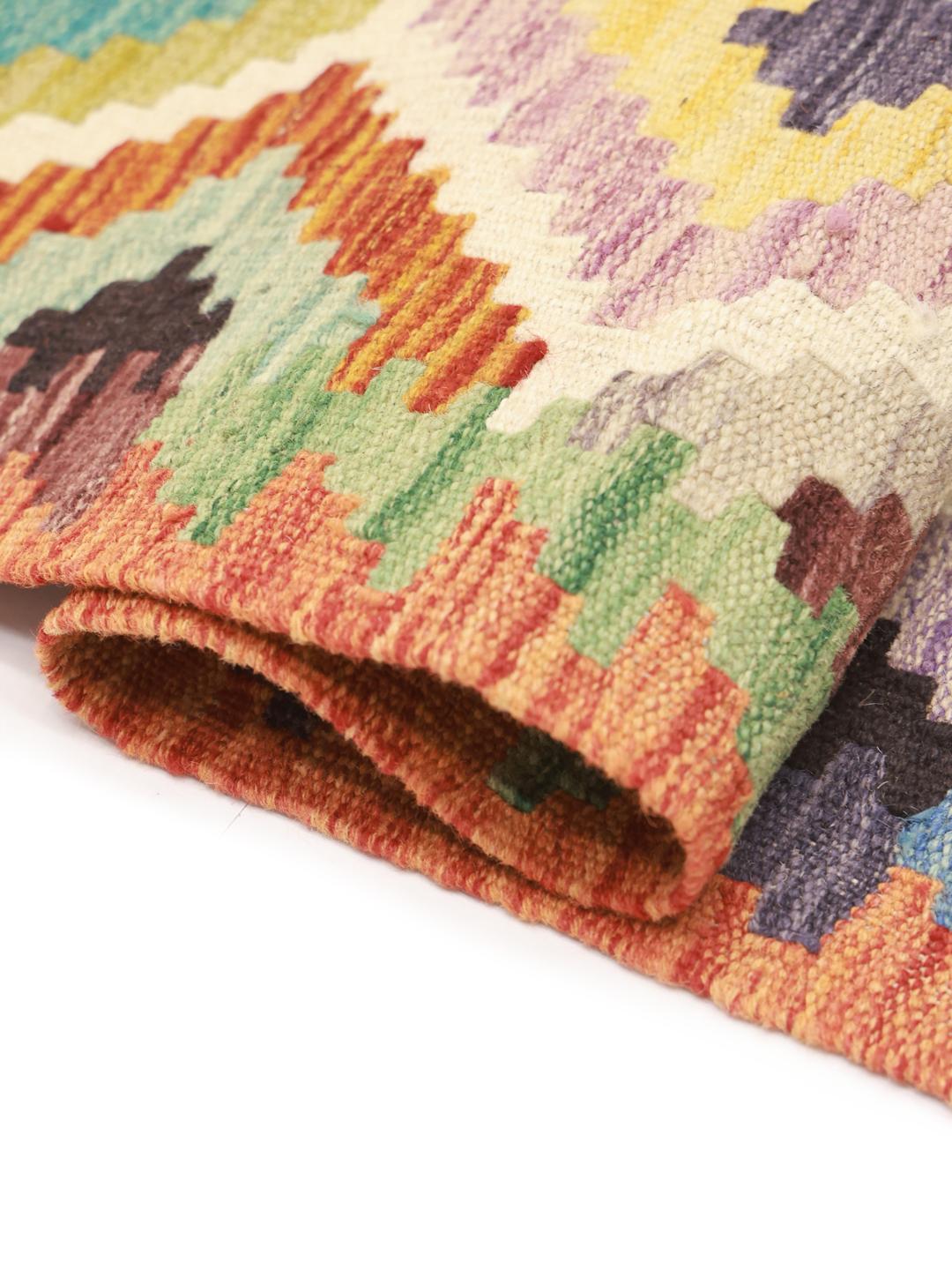
The term 'Kelim' refers to the specific flat-weave technique where the weft threads are woven tightly over the warp, resulting in a rug that has no pile. This construction method produces a reversible, lightweight, and incredibly strong textile. Because there are no knots to tie, the weaver relies on the precision of the weave to create the crisp lines and intricate patterns associated with this style.
Visually, these rugs are defined by bold geometric shapes, with diamonds, triangles, and stripes being the most common motifs. These patterns are not merely decorative but often carry symbolic meanings related to the weaver's family, tribe, or environment. The use of natural dyes historically provided the characteristic earthy palette, which has evolved into the diverse and vibrant range of colours seen in modern Afghan pieces.
Owning an Afghan Kelim is an investment in a storied craft that has bridged the gap between ancient nomadic utility and contemporary interior design. Collectors value these pieces for their authenticity, the immense skill required to maintain pattern symmetry without a pile, and the way they bring a sense of history and warmth into modern homes.