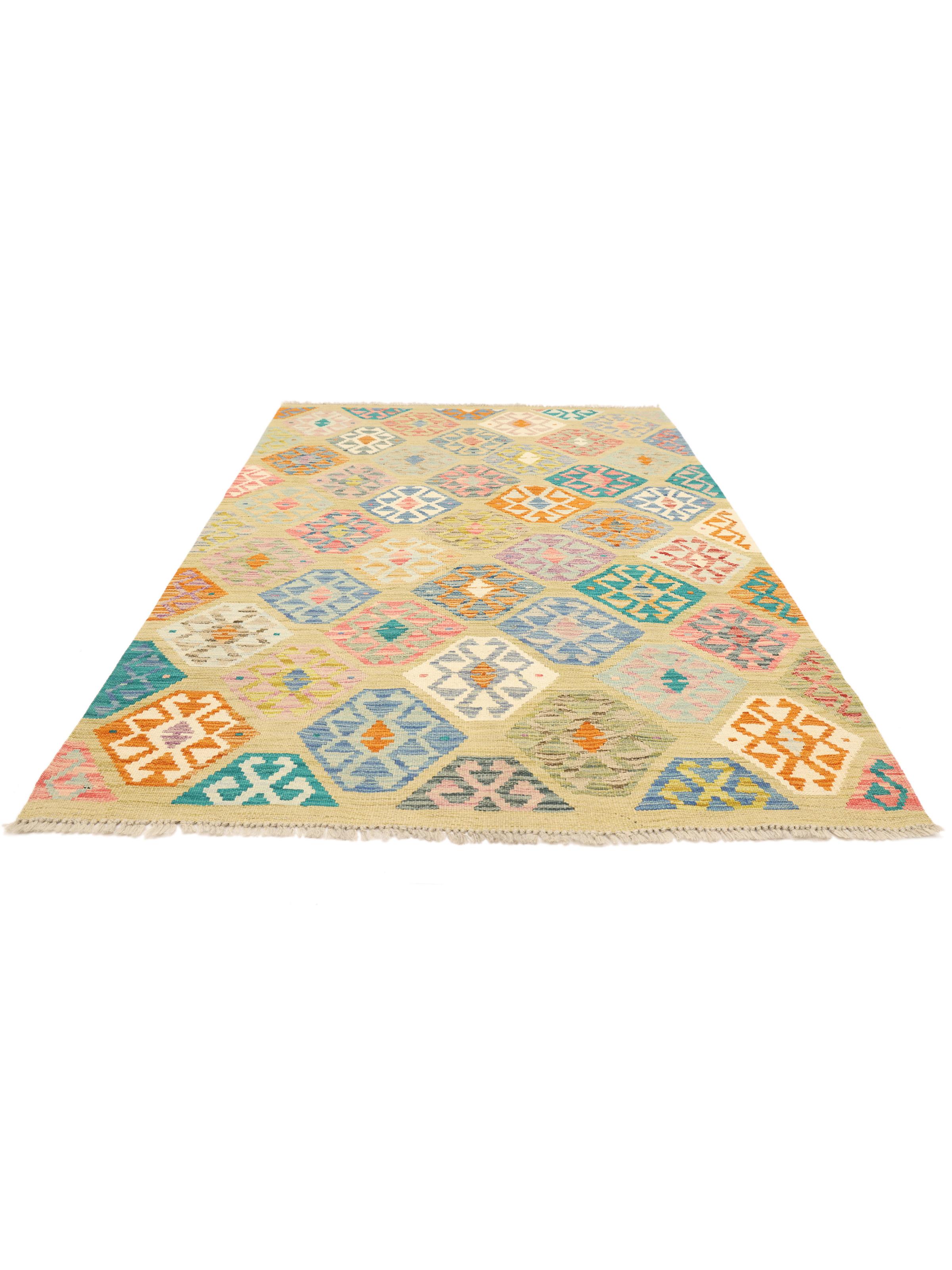
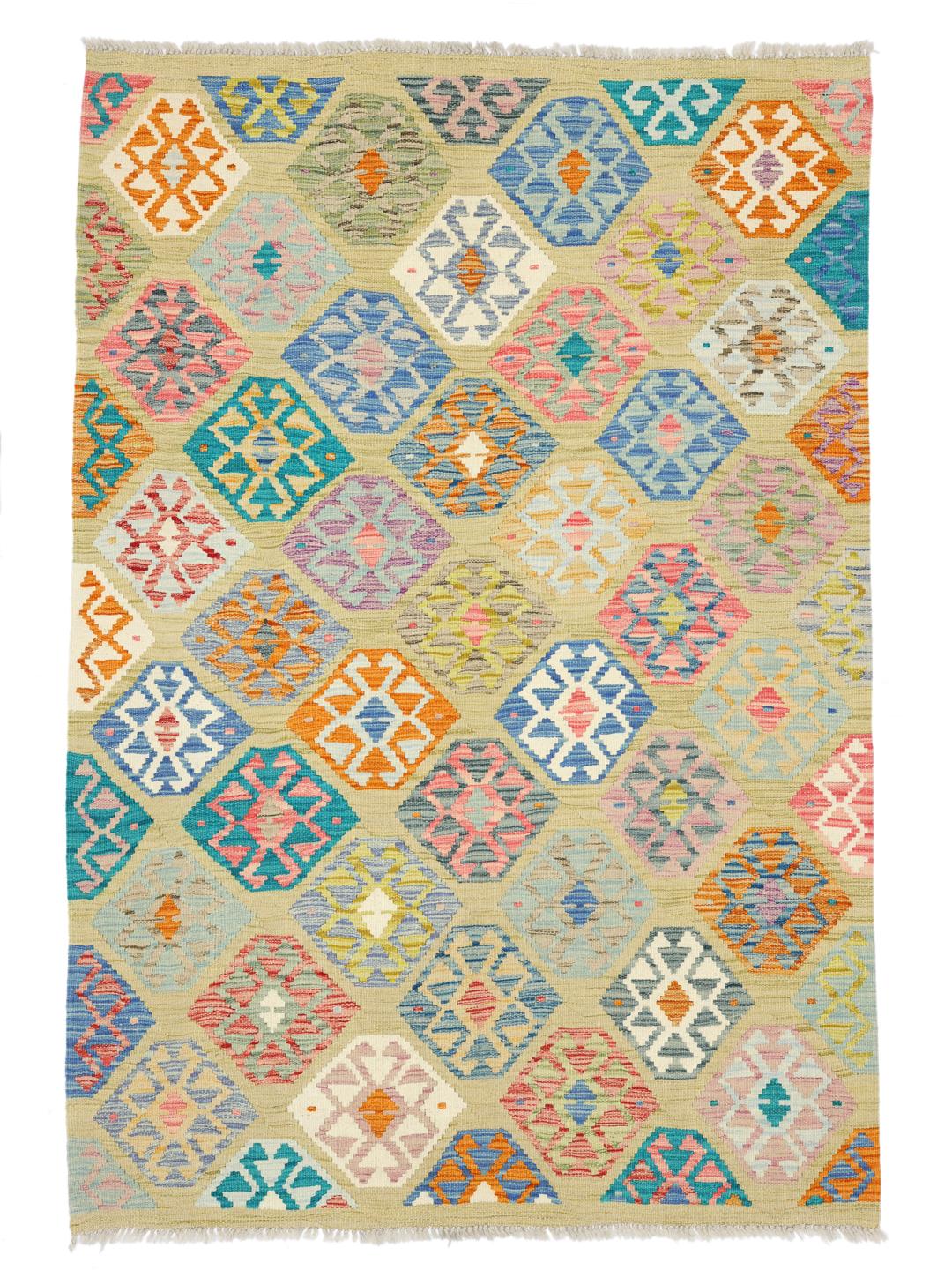
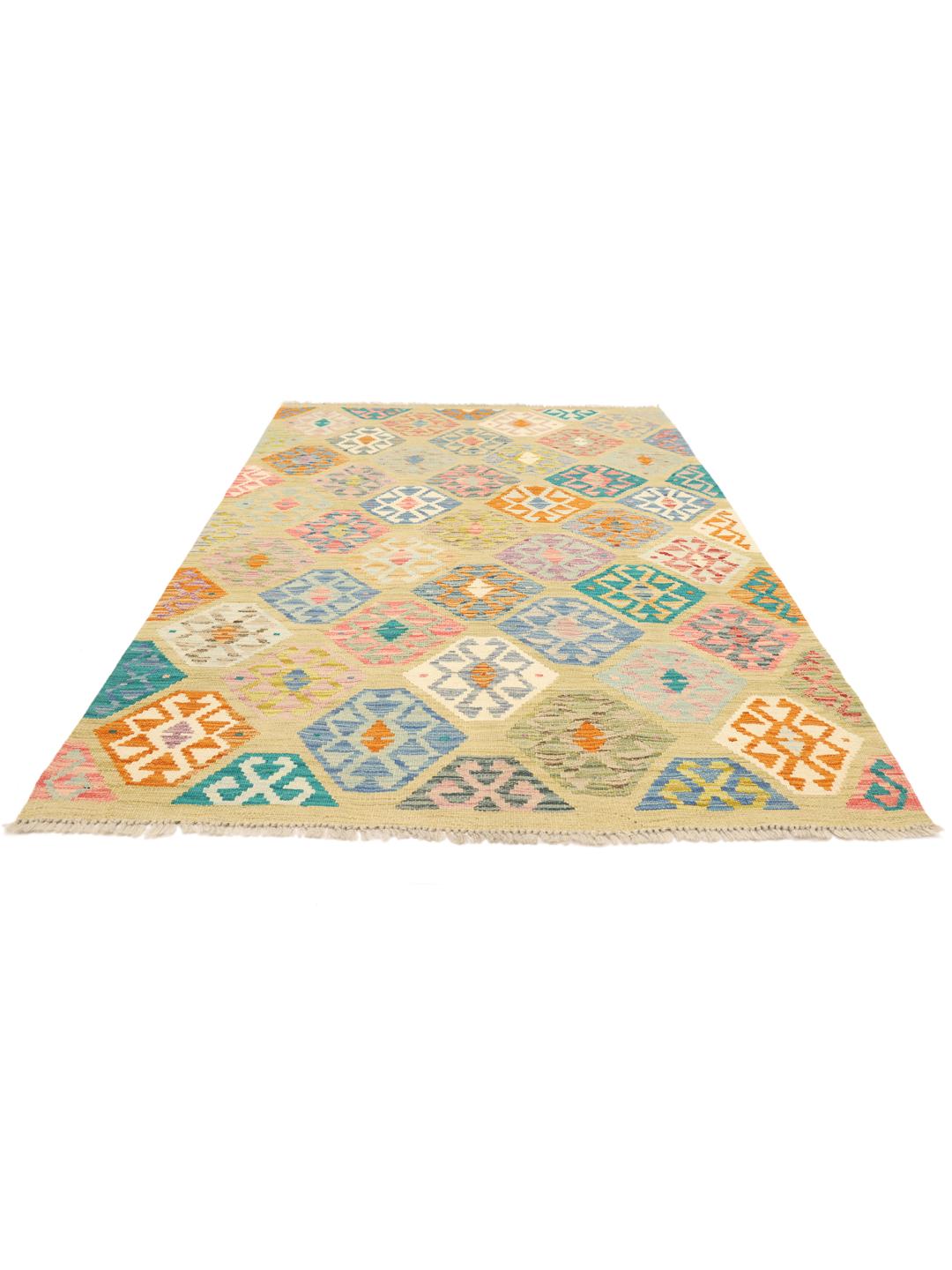
Kelim rugs have a storied history rooted in the nomadic cultures of the Middle East and Central Asia. Originally created by tribal weavers for practical use, these rugs served as floor coverings, tent dividers, and storage bags, reflecting the functional needs and artistic expressions of the communities that produced them.
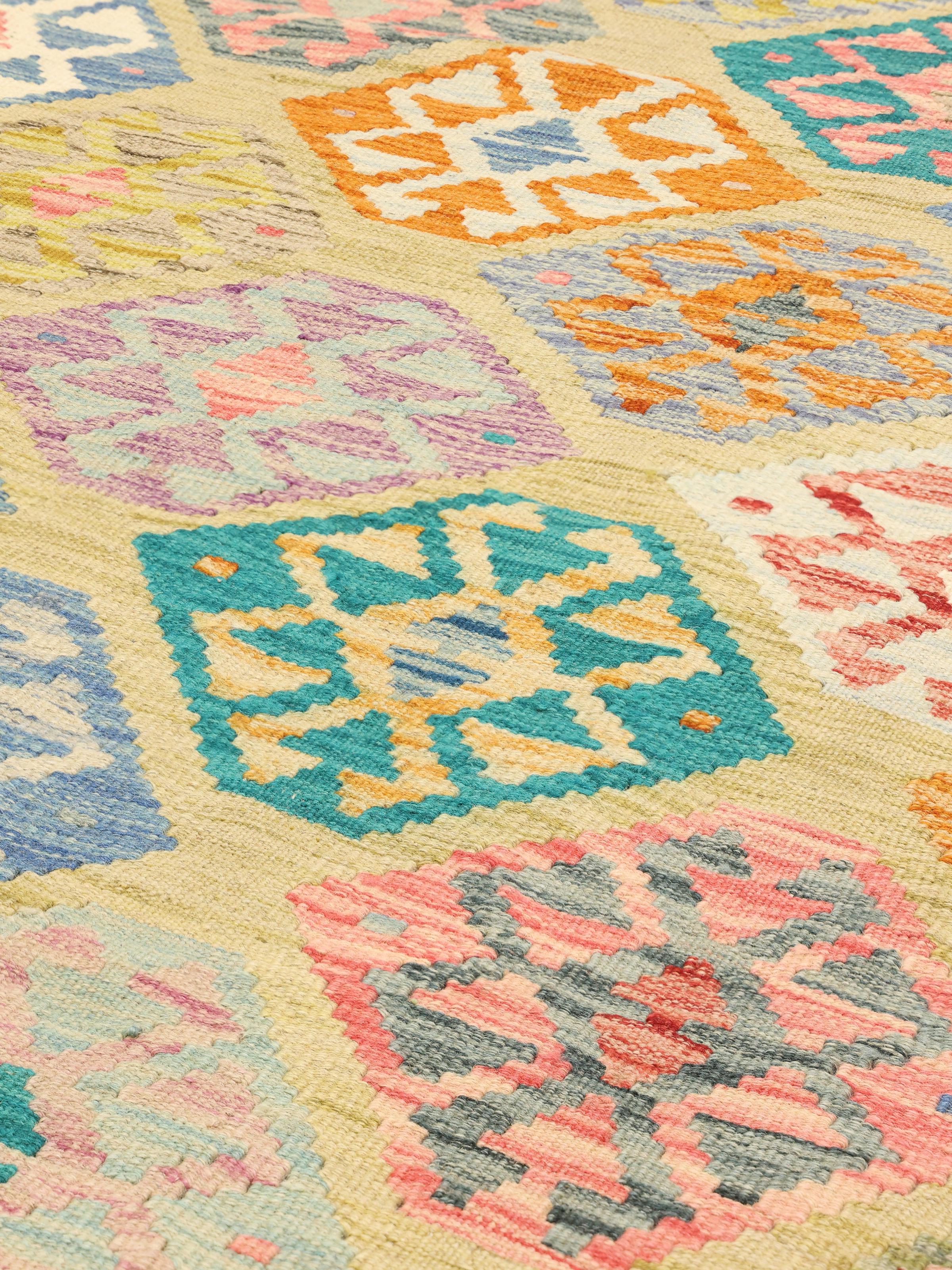
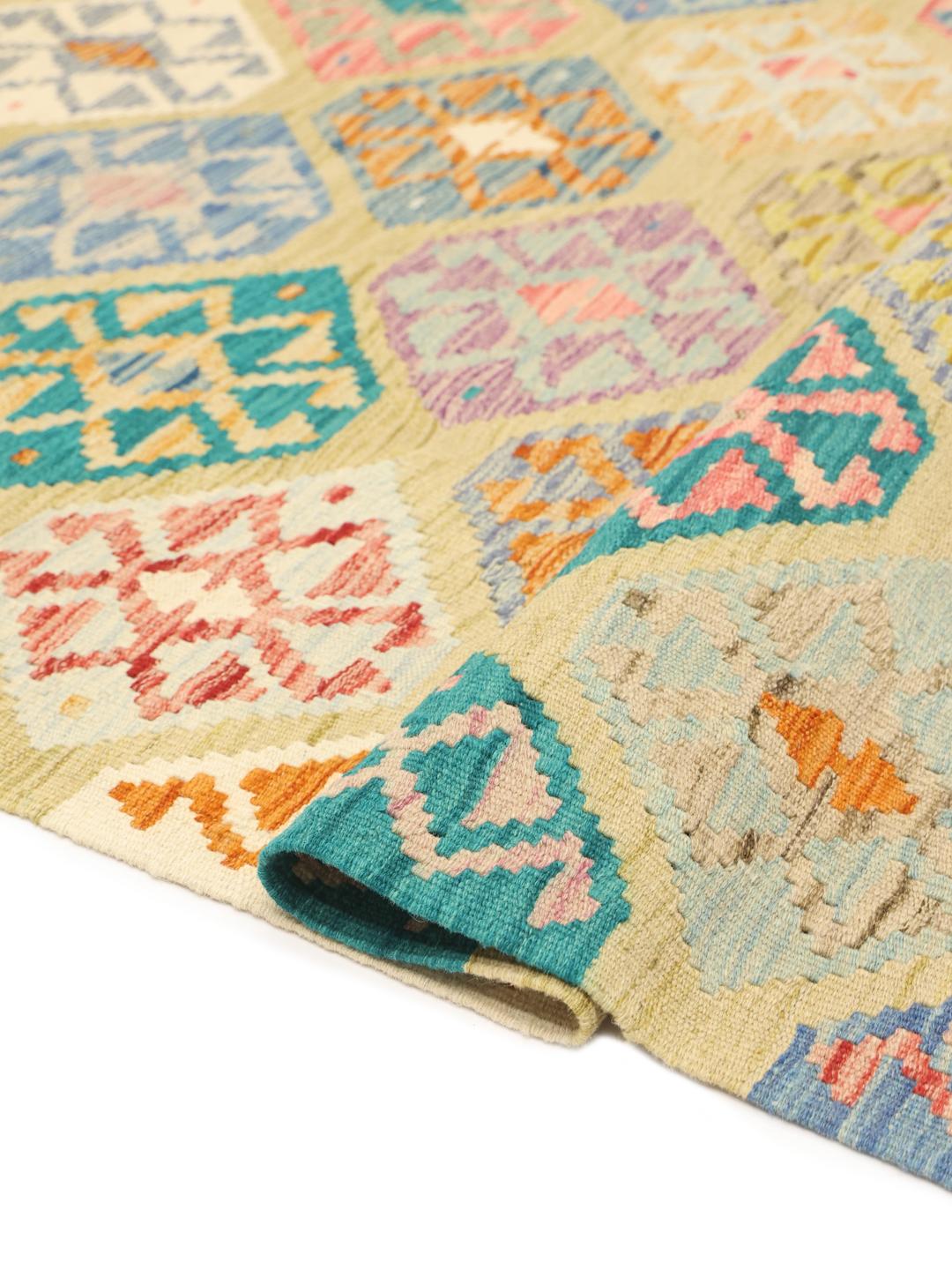
The term 'Kelim' refers specifically to the flat-woven technique, where the weft and warp threads are interlaced to form a smooth surface without a raised pile. This method is highly prized for its durability and the crispness it brings to geometric designs, allowing for bold, graphic patterns that have remained popular for centuries.
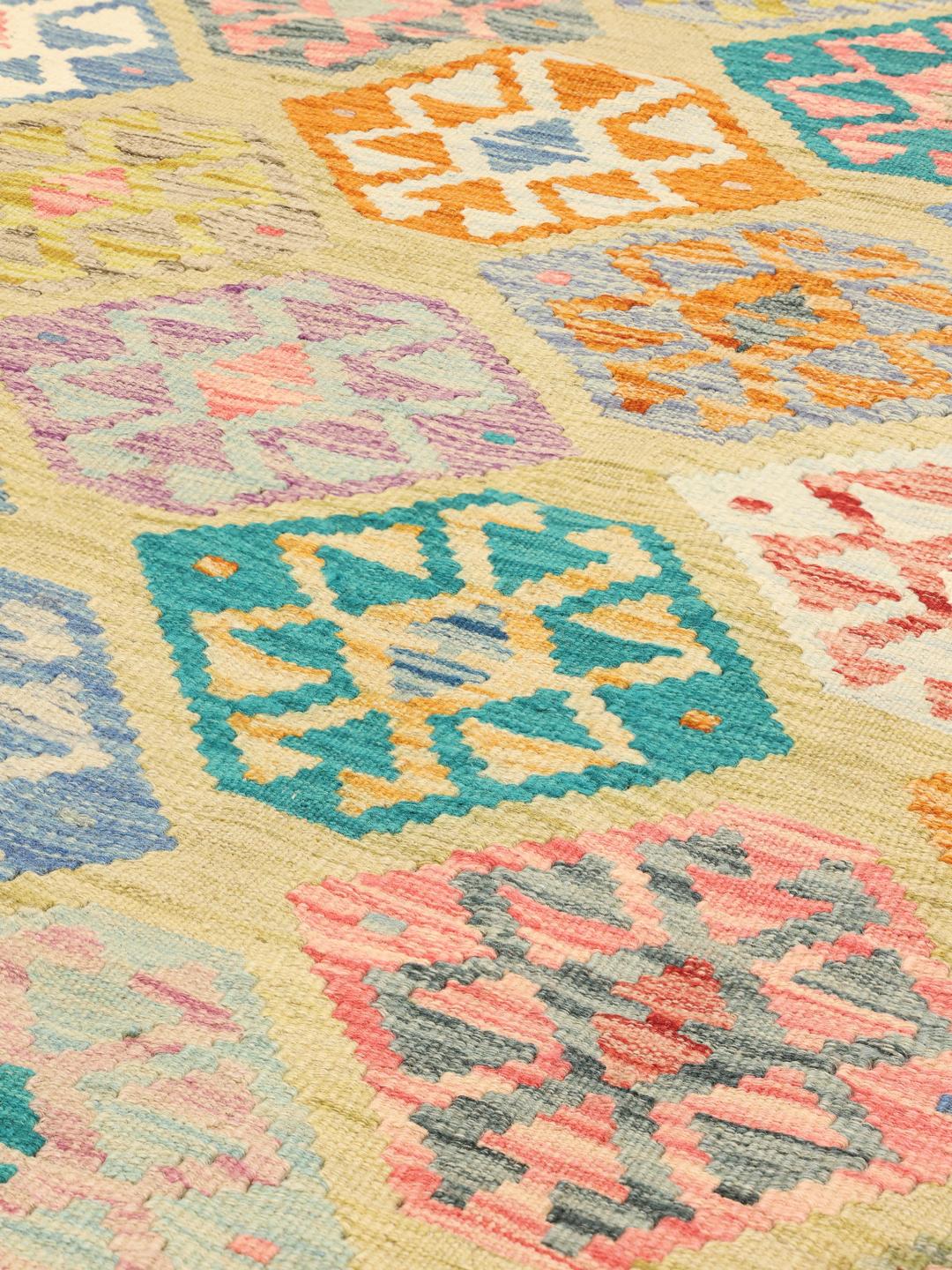
Signature elements of Afghan Kelims include a strong focus on symmetry and geometric motifs, often inspired by tribal symbols and local landscapes. These pieces frequently utilise a rich, earthy colour palette, though modern adaptations often incorporate vibrant hues, as seen in this unique example, which blends traditional techniques with a lively, contemporary aesthetic.
Collecting these rugs is an investment in cultural heritage. Each piece represents a connection to a long-standing tradition of craftsmanship that has been passed down through generations. By choosing a hand-woven Kelim, you are preserving these ancient techniques and bringing a piece of authentic global artistry into your home.