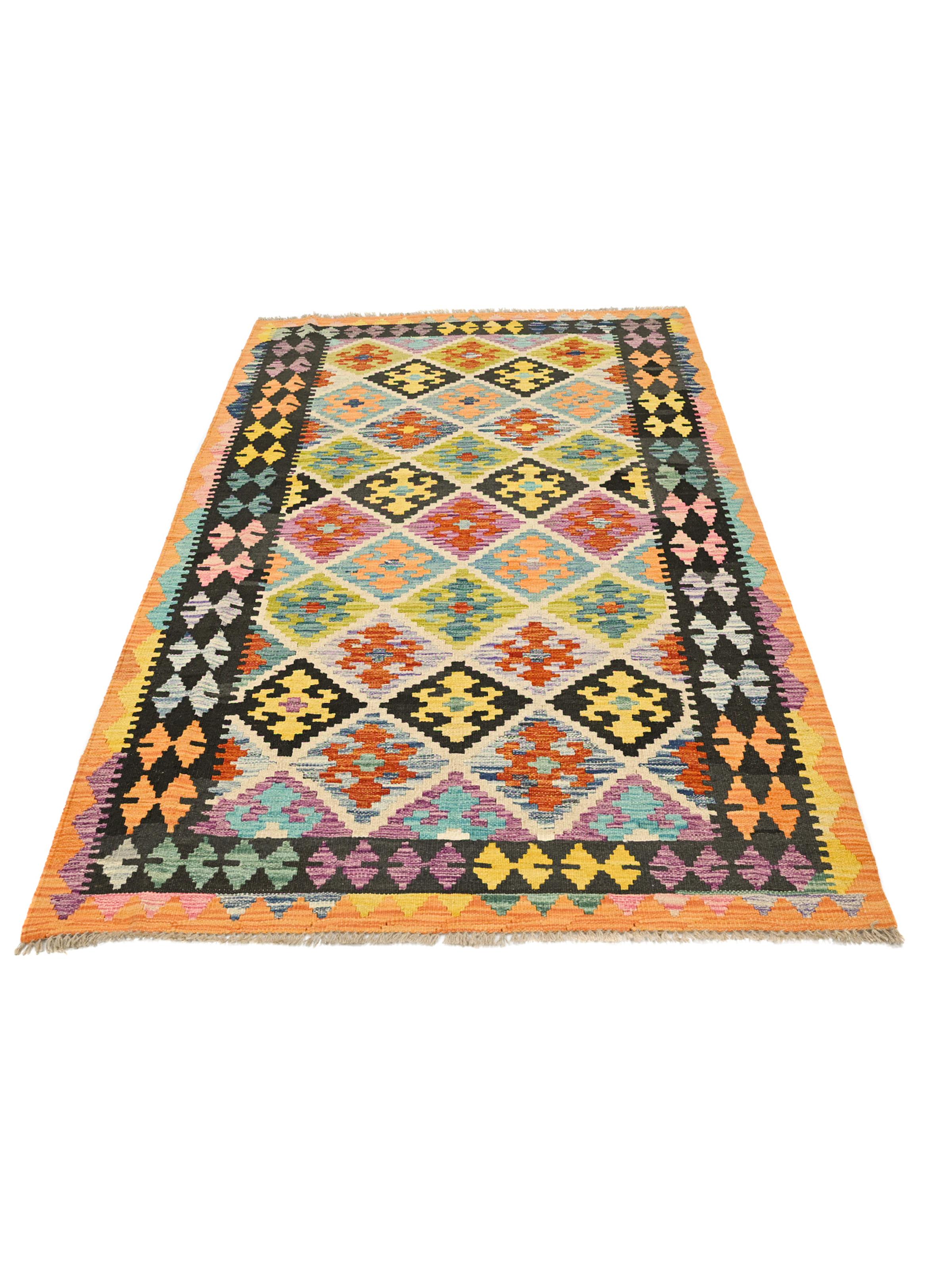
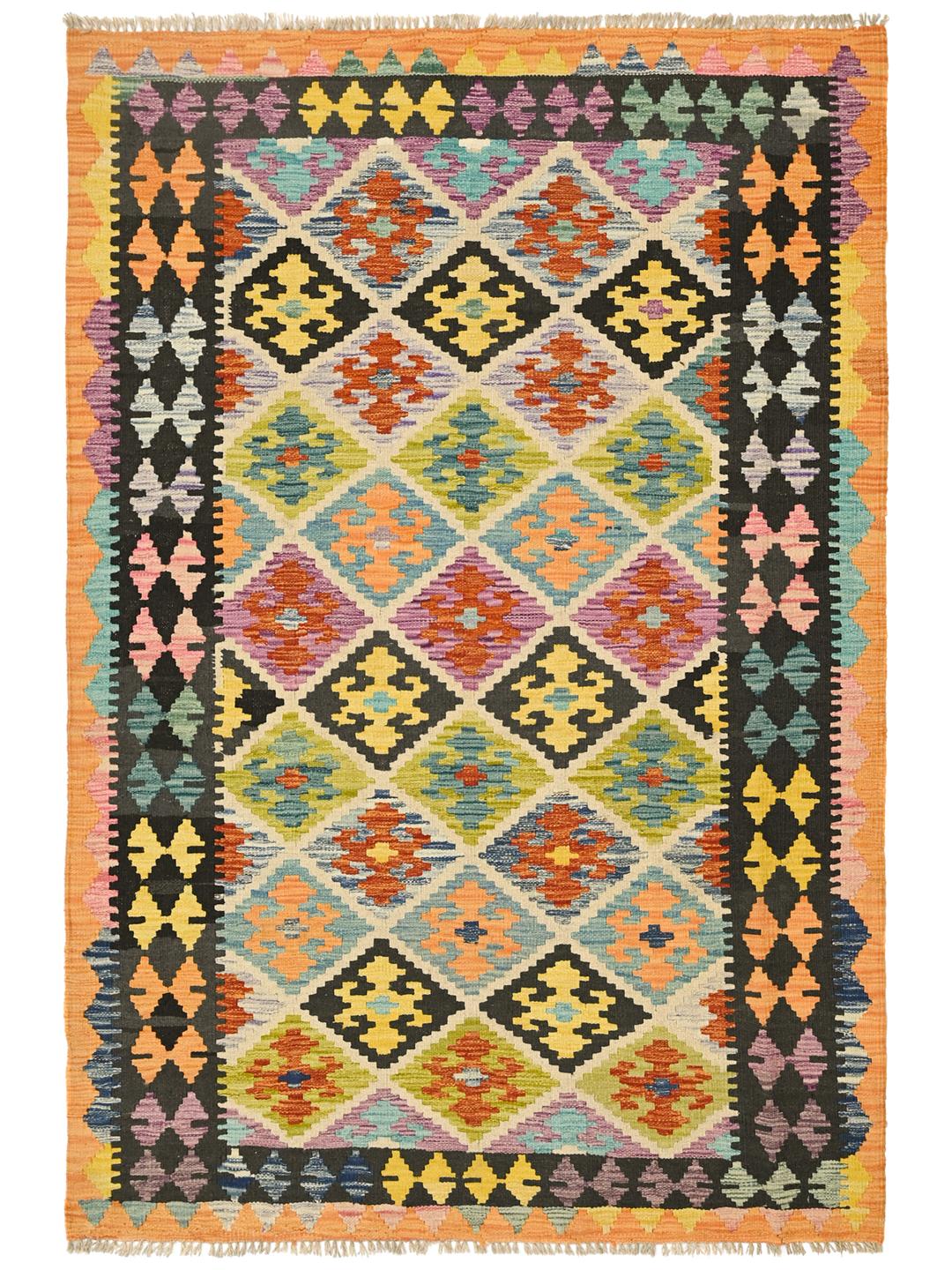
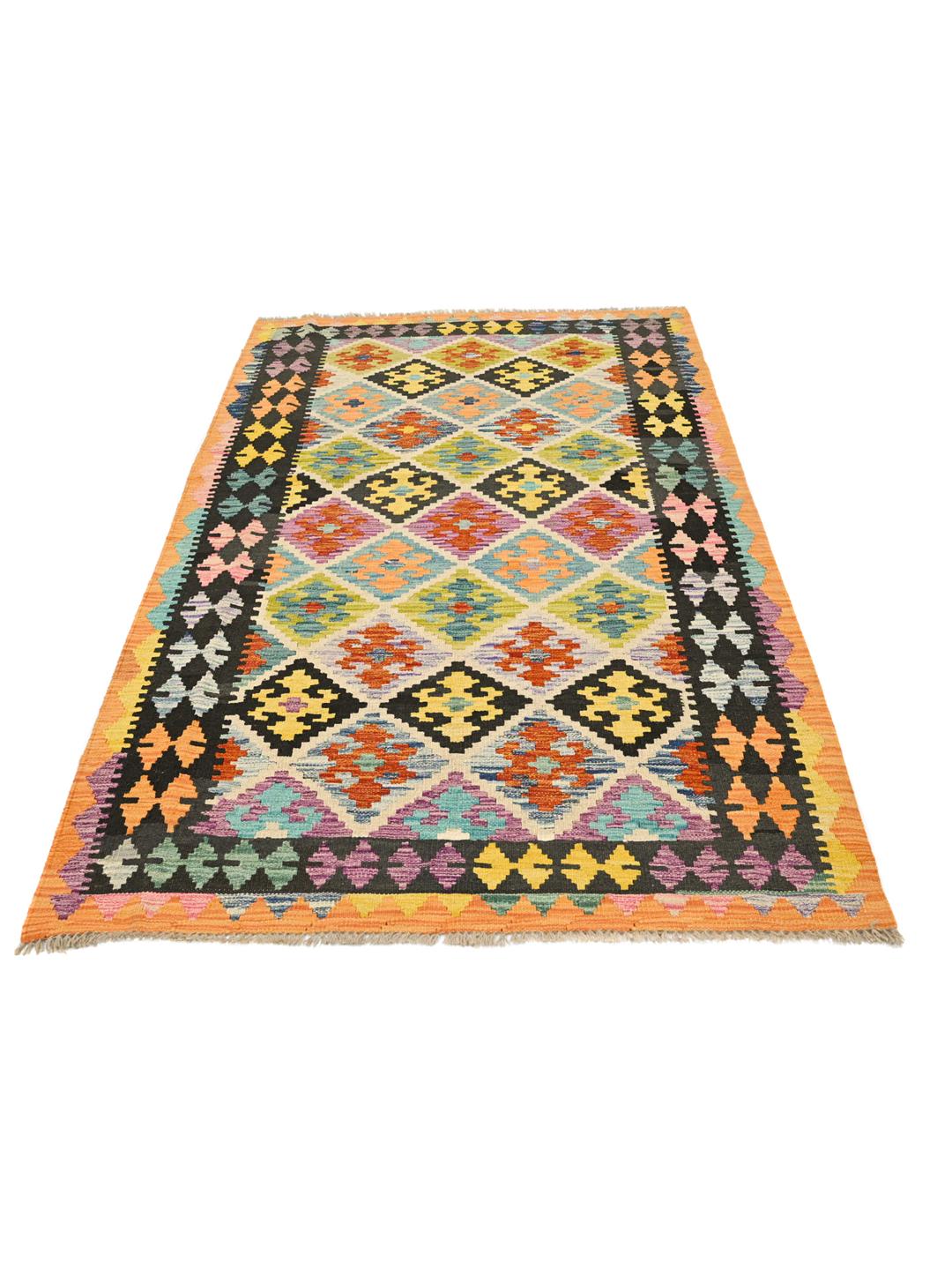
Kelim rugs originate from the nomadic traditions of the Middle East and Central Asia, where they served as essential, portable furnishings for tent life. These flat-woven textiles were historically used as floor coverings, blankets, and storage bags, reflecting a culture that valued both utility and artistic expression in their daily items.
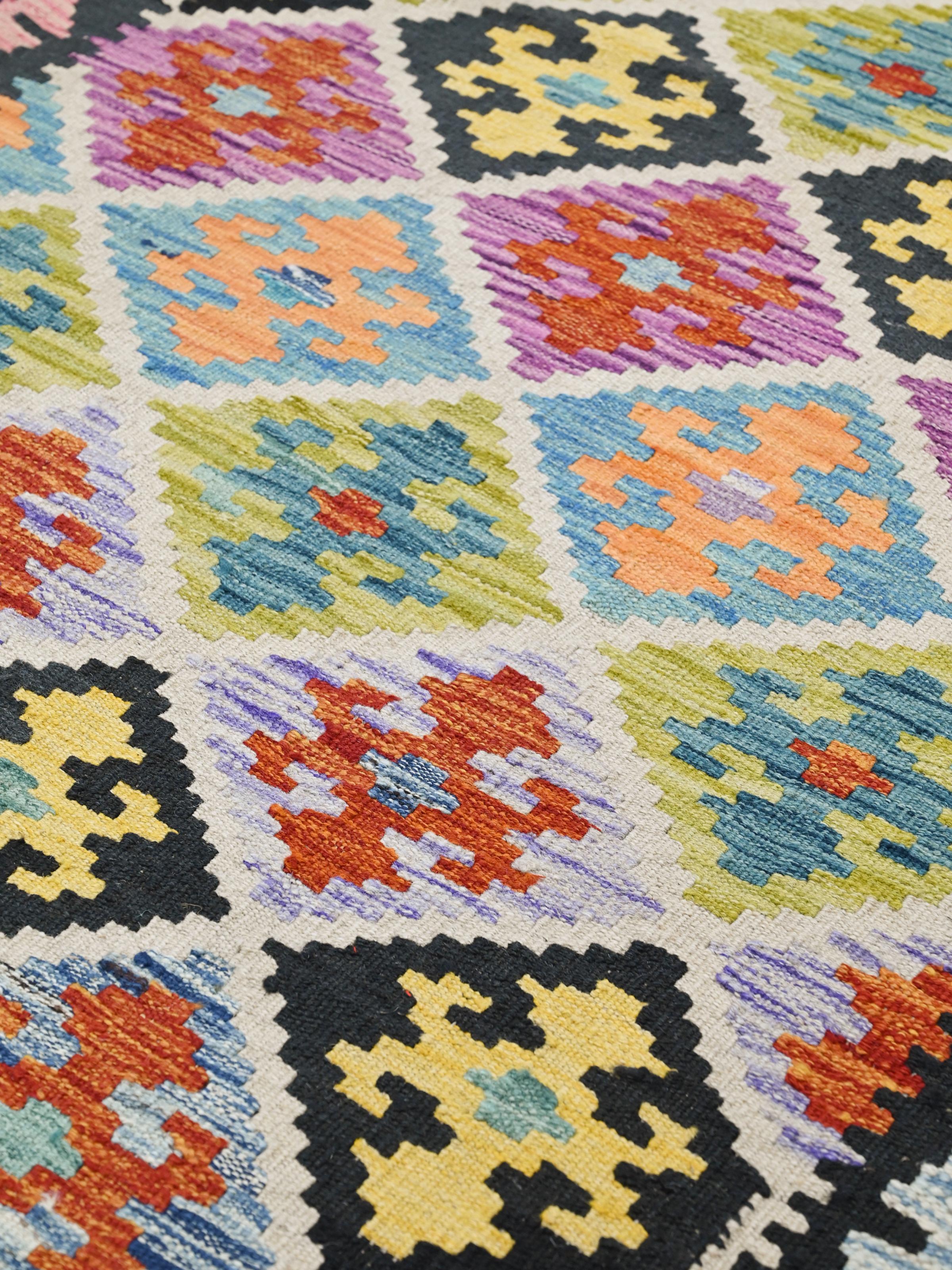
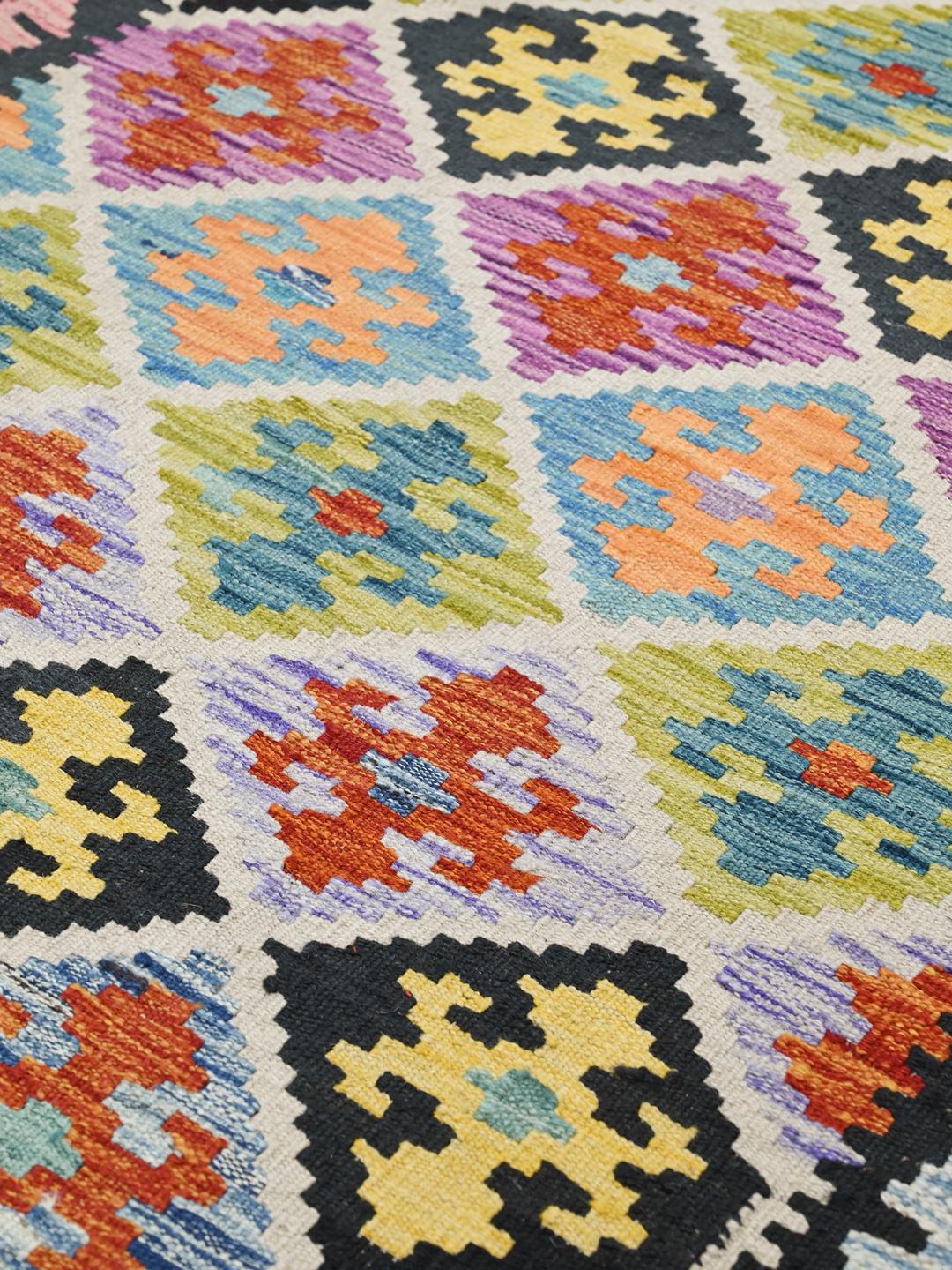
The term 'Kelim' refers to the specific slit-weave technique used to create these rugs. By using a discontinuous weft, weavers create clean, sharp edges between different coloured sections, which is what gives the geometric patterns their distinctive, crisp appearance. This method requires great precision, as the tension must be consistent across the entire length of the loom.
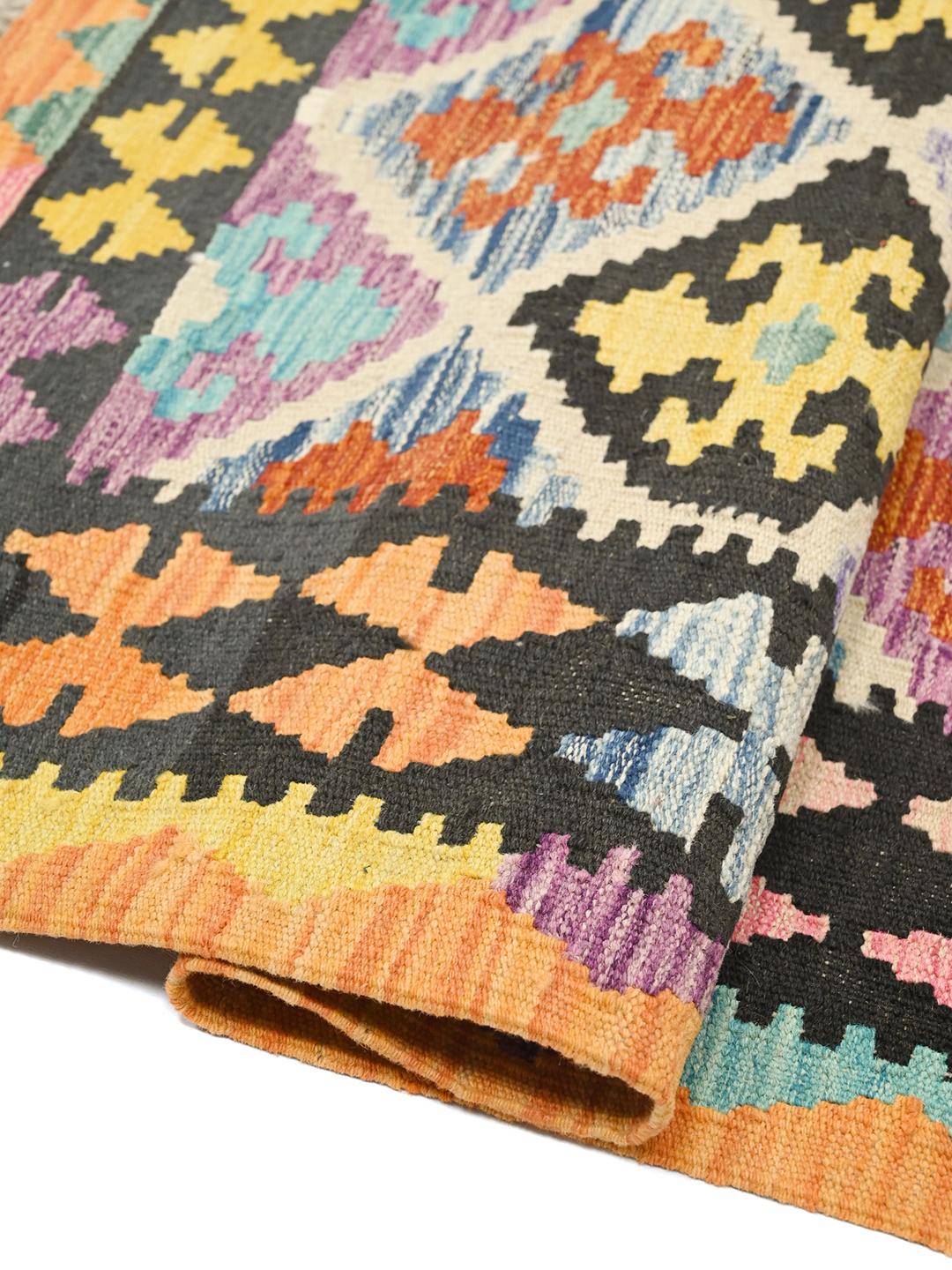
The design of this particular rug is rooted in the tribal aesthetic of Afghanistan, characterised by repeating diamond motifs and a strong, bold border. These patterns are often symbolic, representing local landmarks, tribal identity, or protective motifs meant to bring harmony to the home. The use of vibrant, contrasting colours is a hallmark of this tradition, designed to stand out against the backdrop of natural wool.
Today, these rugs are highly sought after by collectors and interior enthusiasts for their authenticity and connection to a vanishing way of life. Owning an Afghan Kelim is an investment in cultural heritage, representing a level of traditional skill and human artistry that remains a cornerstone of textile history.