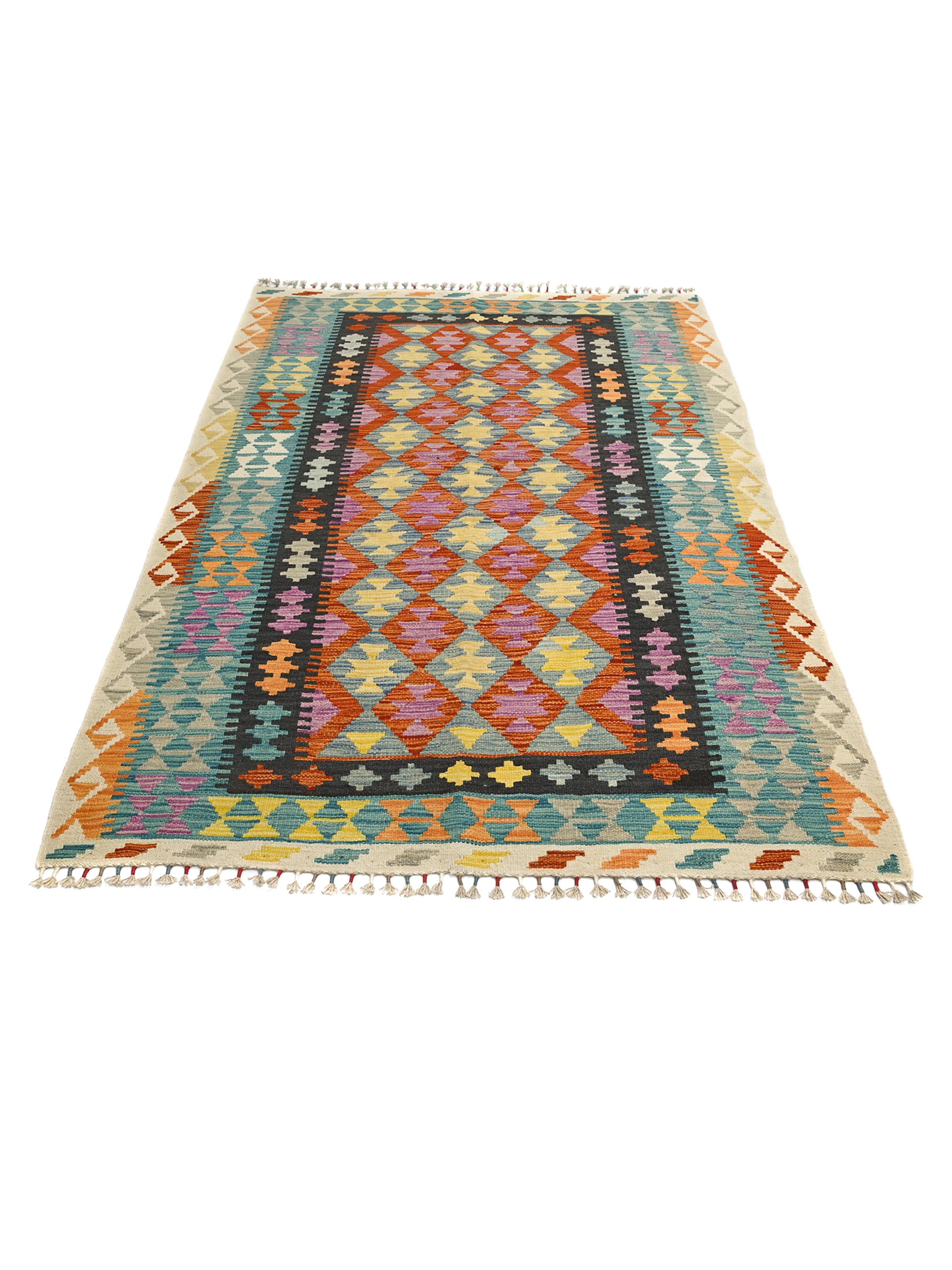
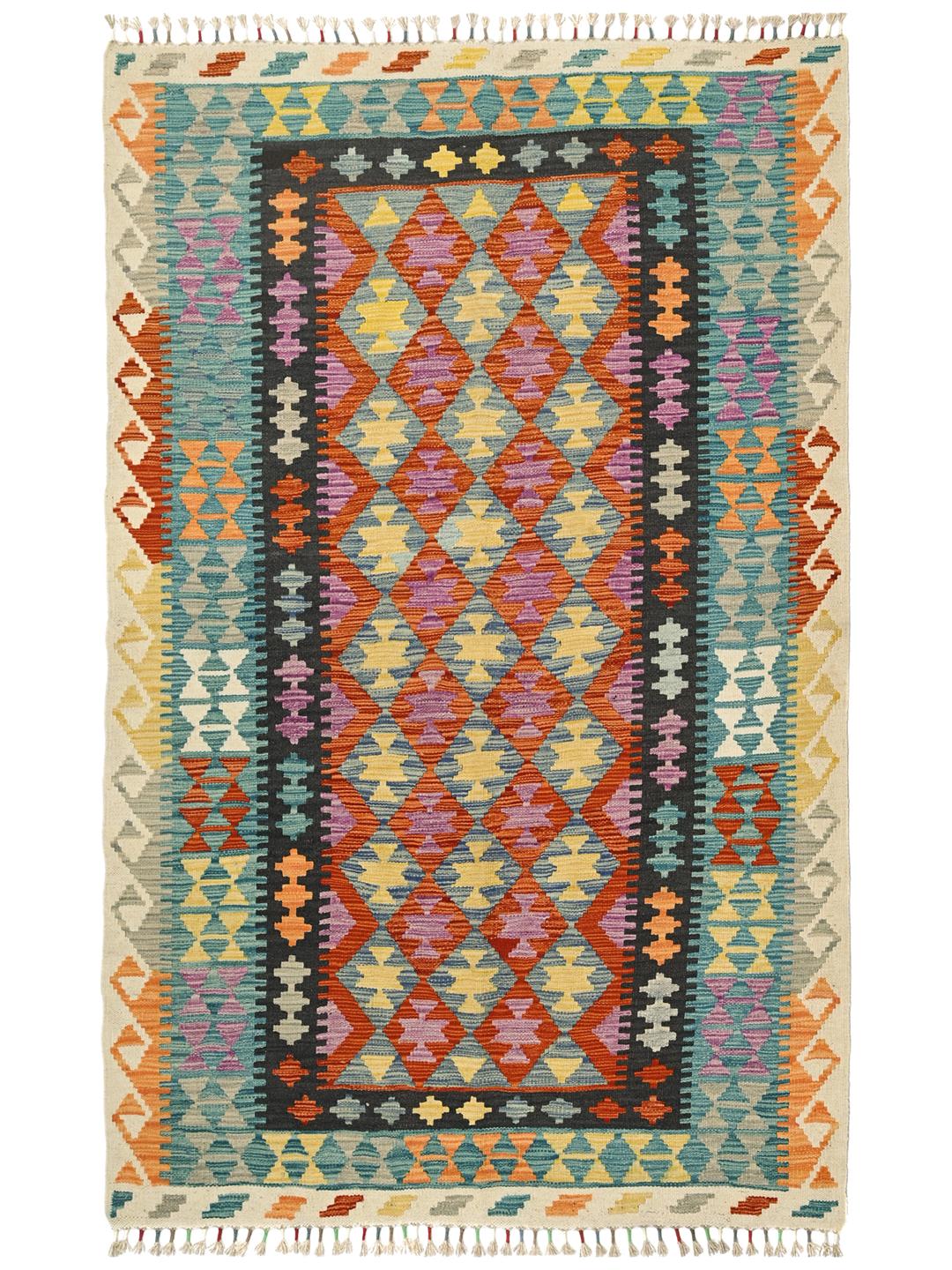
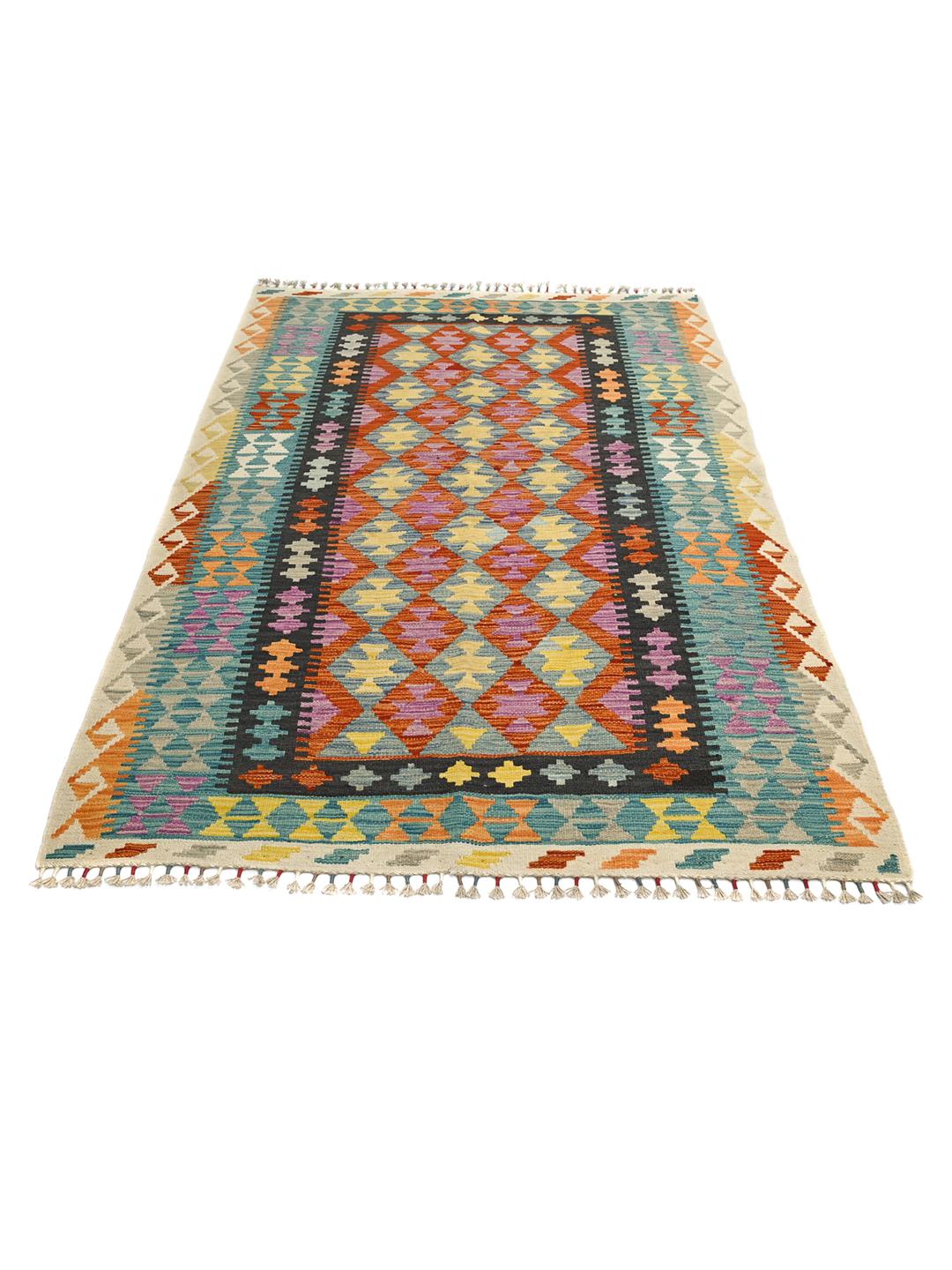
Kelim rugs have long been a cornerstone of nomadic life across the Middle East and Central Asia. Historically, these flat-woven textiles were crafted by tribal communities to serve as versatile floor coverings, wall hangings, and functional storage bags, valued for their durability and portability.
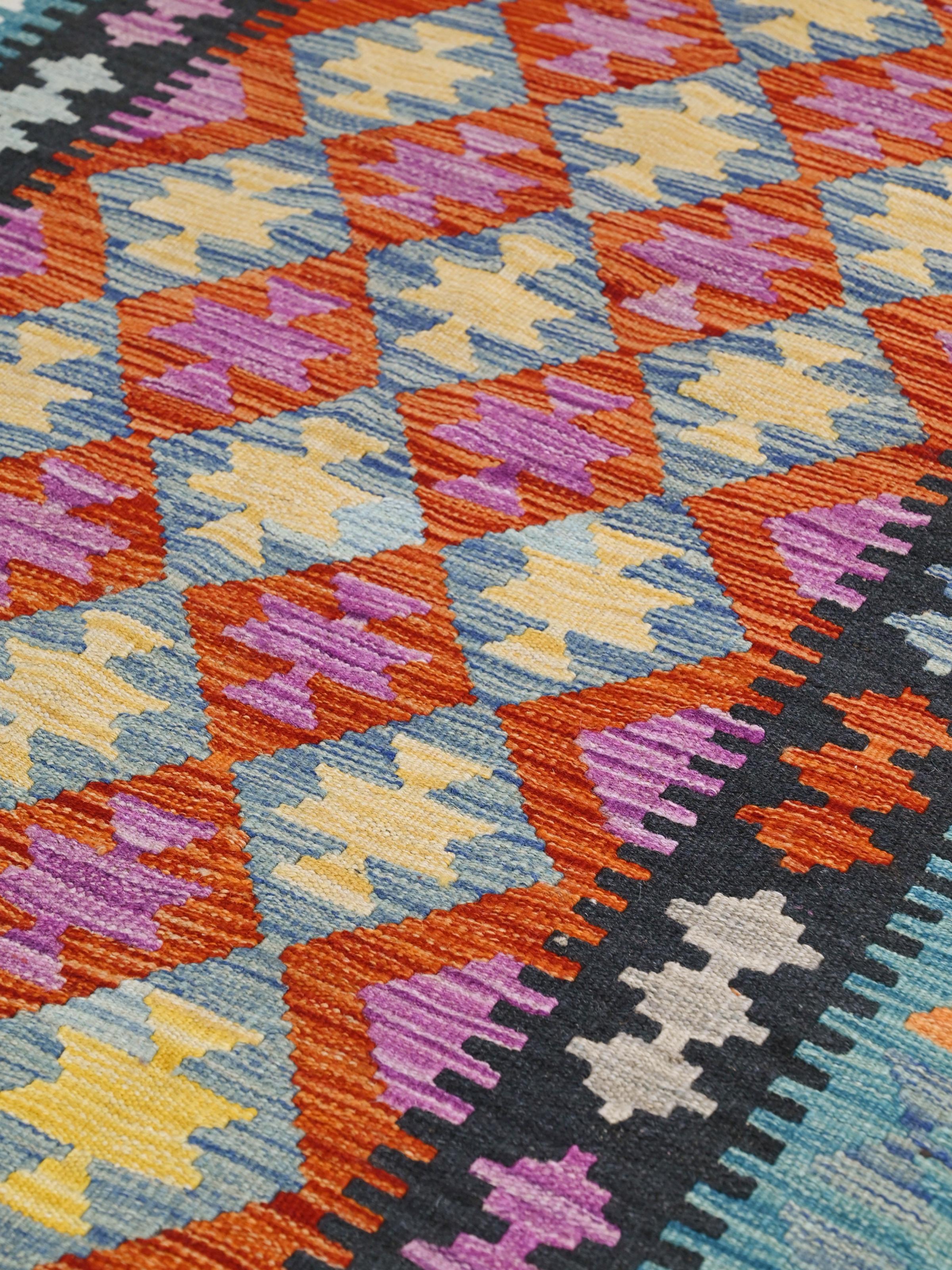
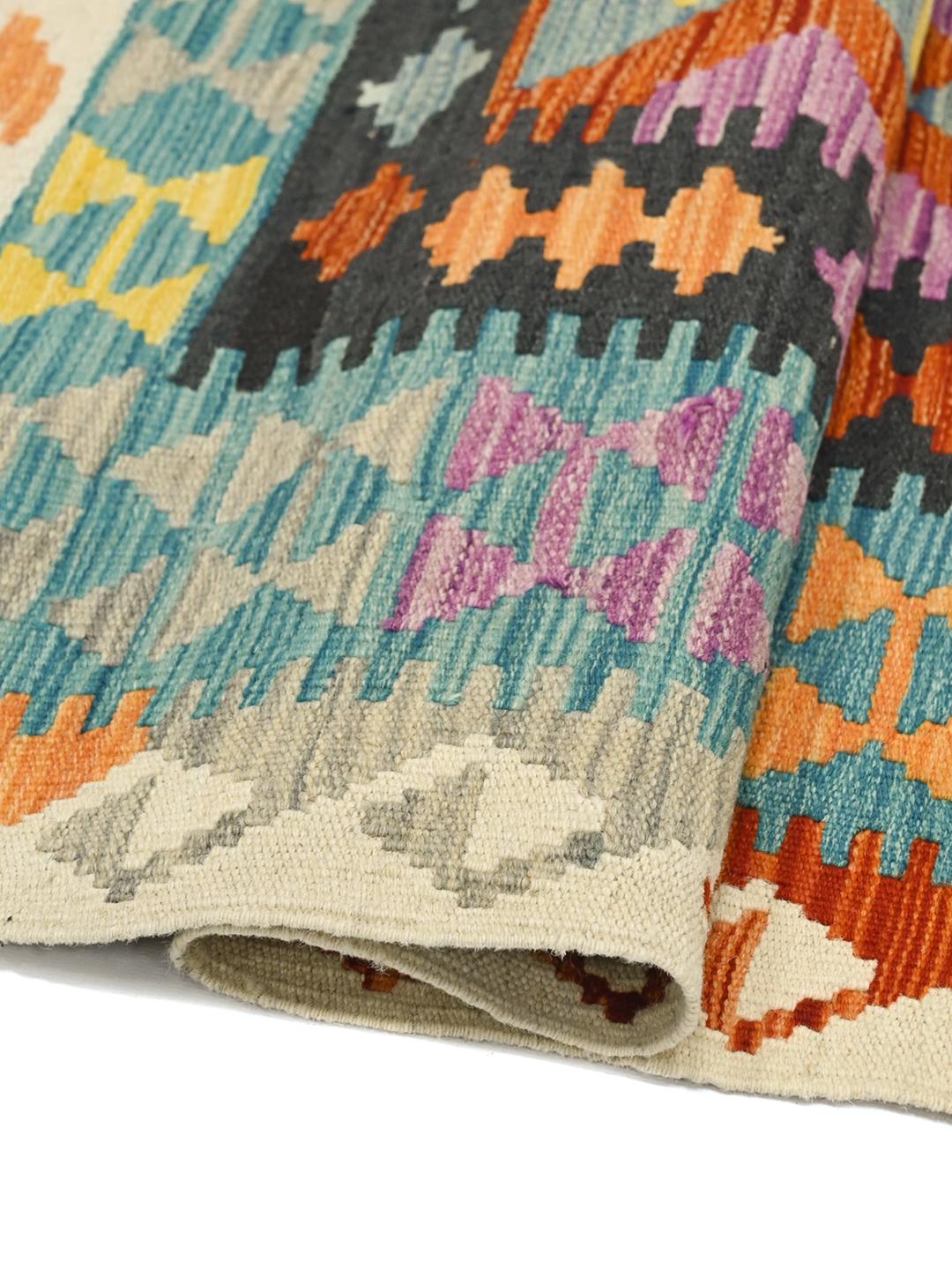
The term 'Kelim' refers specifically to the tapestry-weave technique where the horizontal threads are pulled tightly to conceal the vertical foundation threads. This creates a reversible rug with a clean, flat surface that is both lightweight and resilient, showcasing the skill of the weaver in every thread.
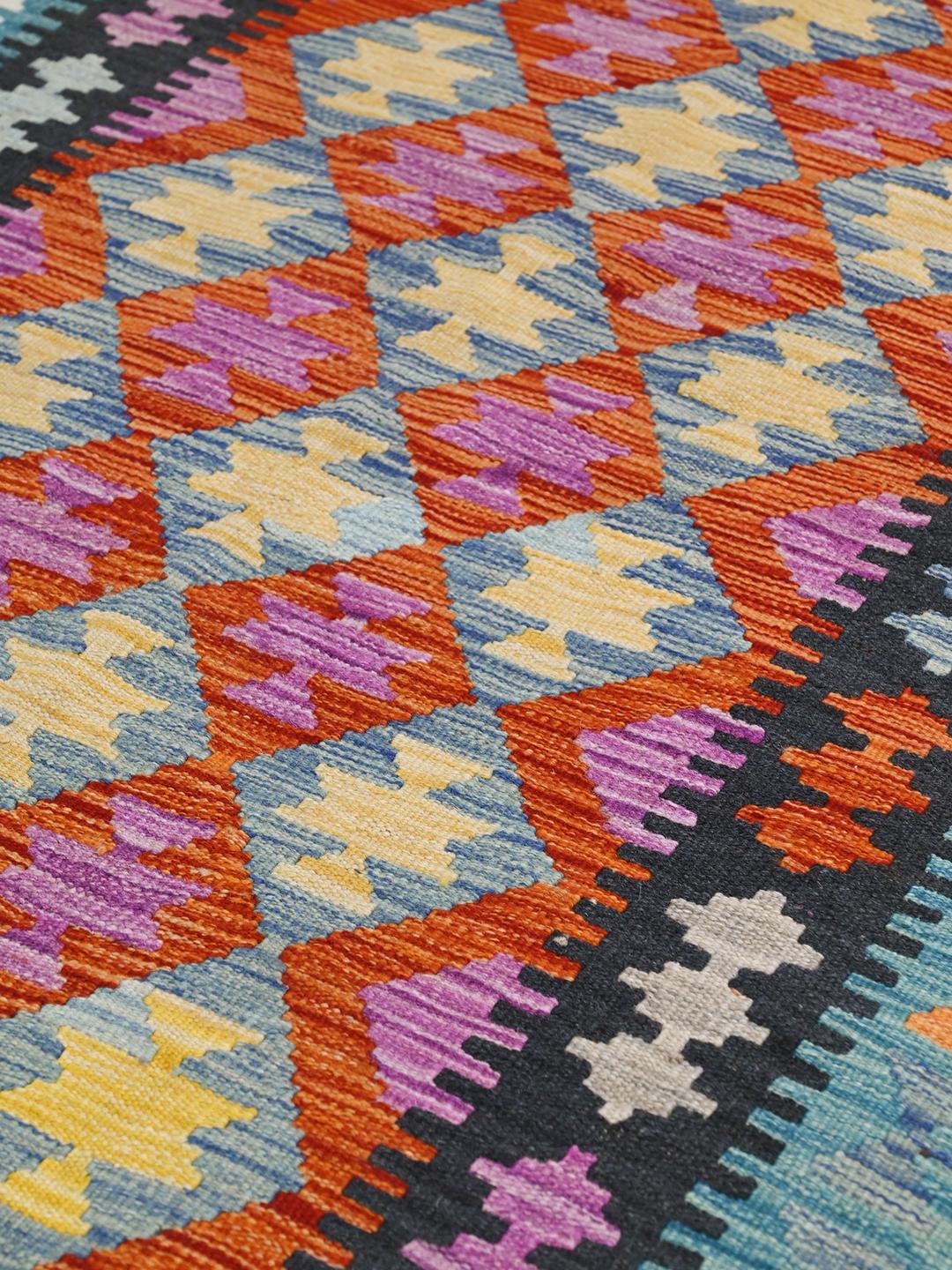
The visual language of Afghan Kelims is defined by bold geometric shapes, most notably diamonds and repeating motifs that often symbolise protection, fertility, or tribal identity. These pieces often feature a warm, earthy palette, though contemporary examples like this one often incorporate vibrant, expressive colours that bridge the gap between traditional craft and modern design.
Collecting a Kelim is an investment in cultural history. Because each rug is produced without a pre-drawn pattern, the weaver translates their heritage and personal creativity directly onto the loom. Owning such a piece is a way to preserve these ancient techniques while enjoying a unique item of lasting quality.