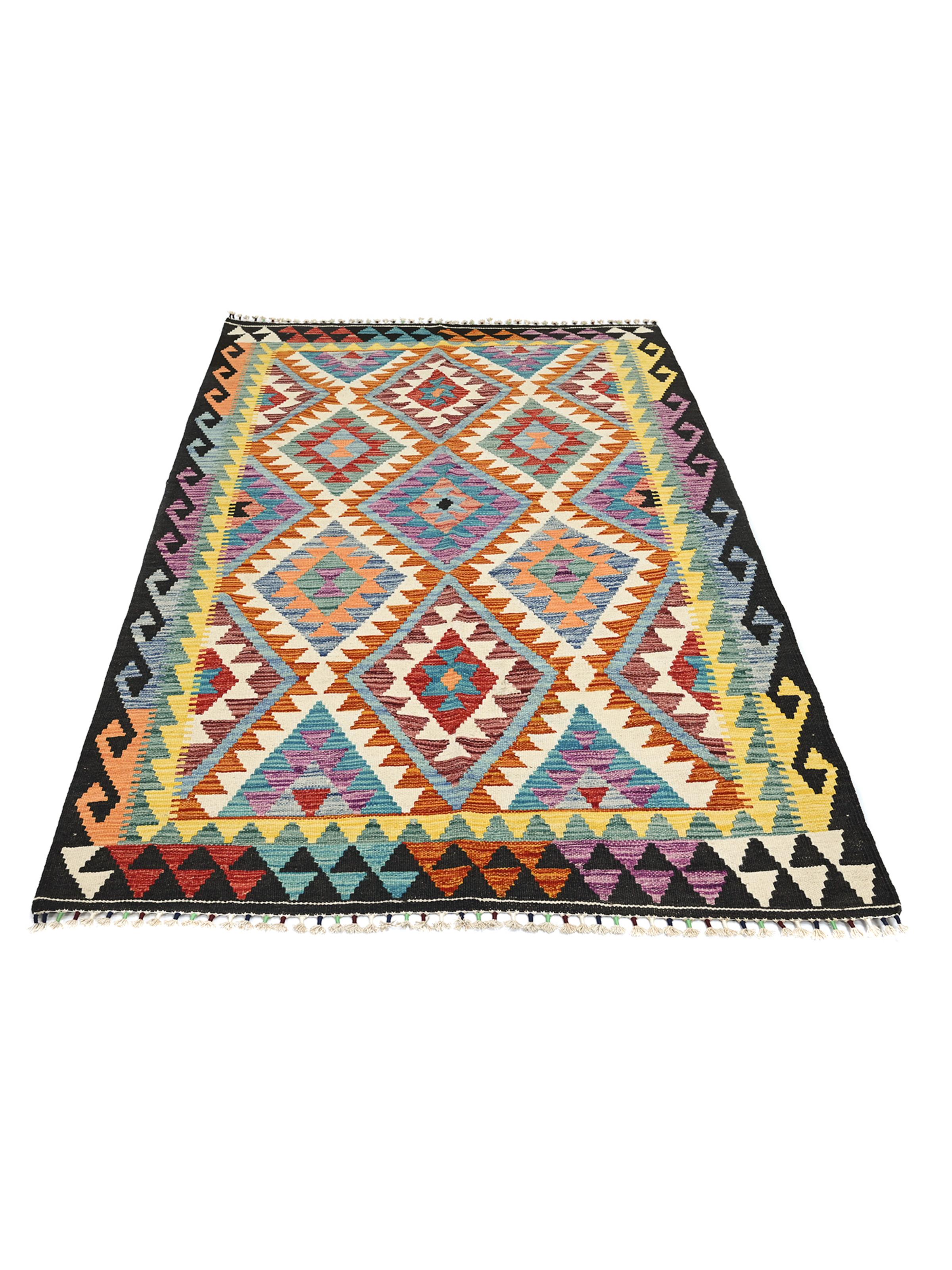
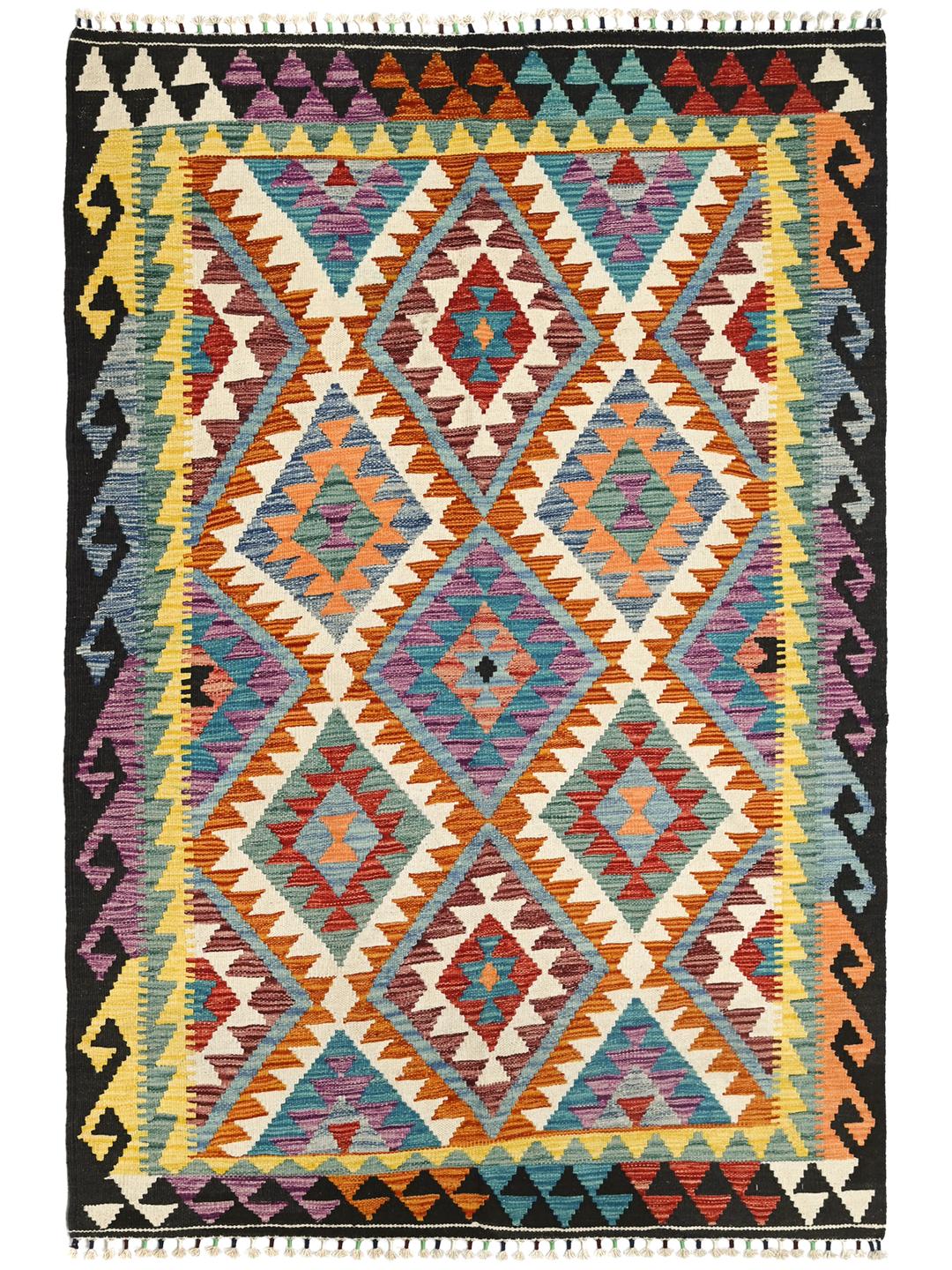
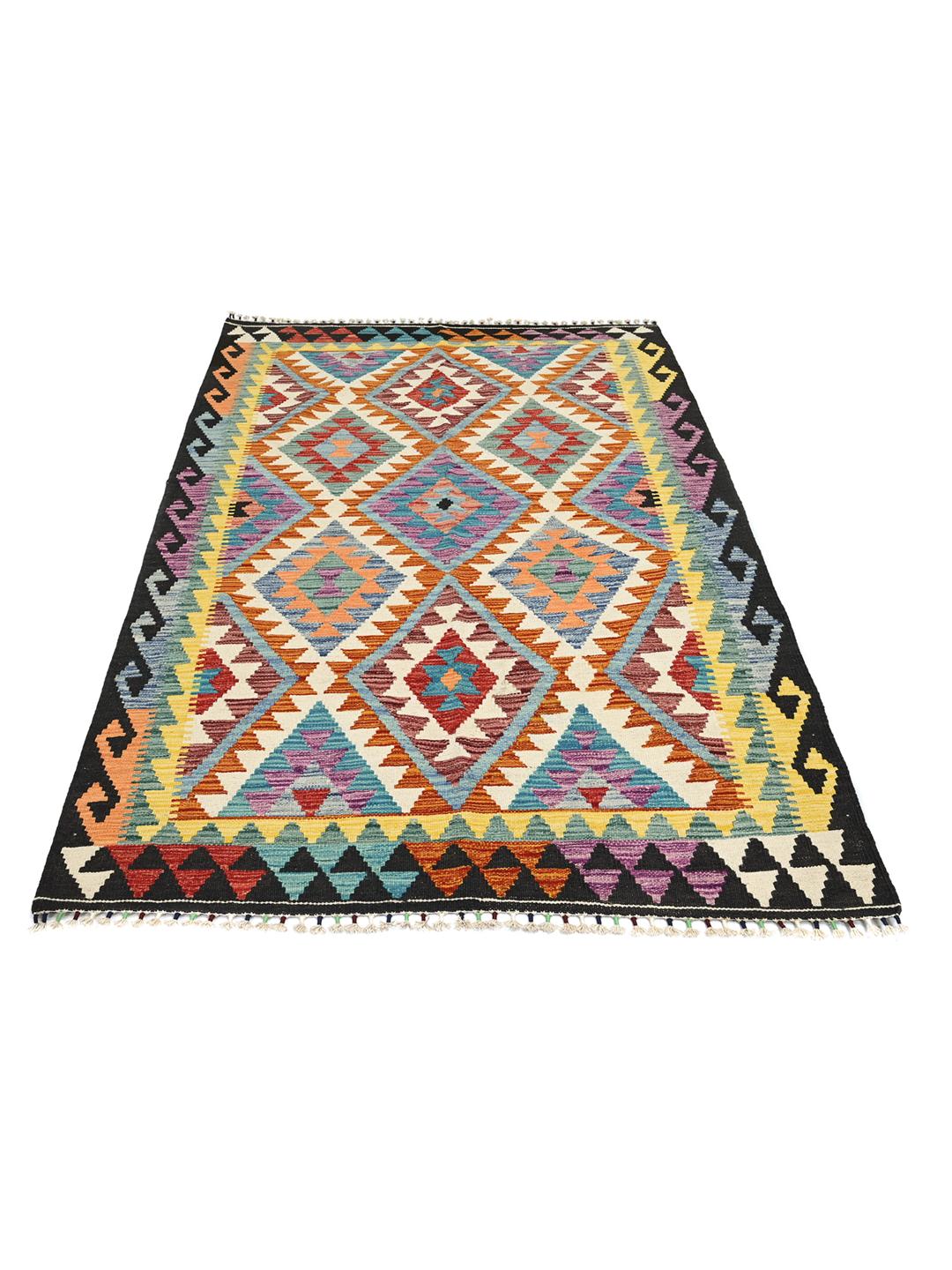
Kelim rugs have a storied history rooted in the nomadic cultures of the Middle East and Central Asia. Historically, these flat-weave textiles were essential for nomadic life, serving as floor coverings, tent partitions, and storage bags due to their lightweight and portable nature. Today, Afghan weavers continue to honour these ancient techniques, preserving a craft that has been passed down through generations.
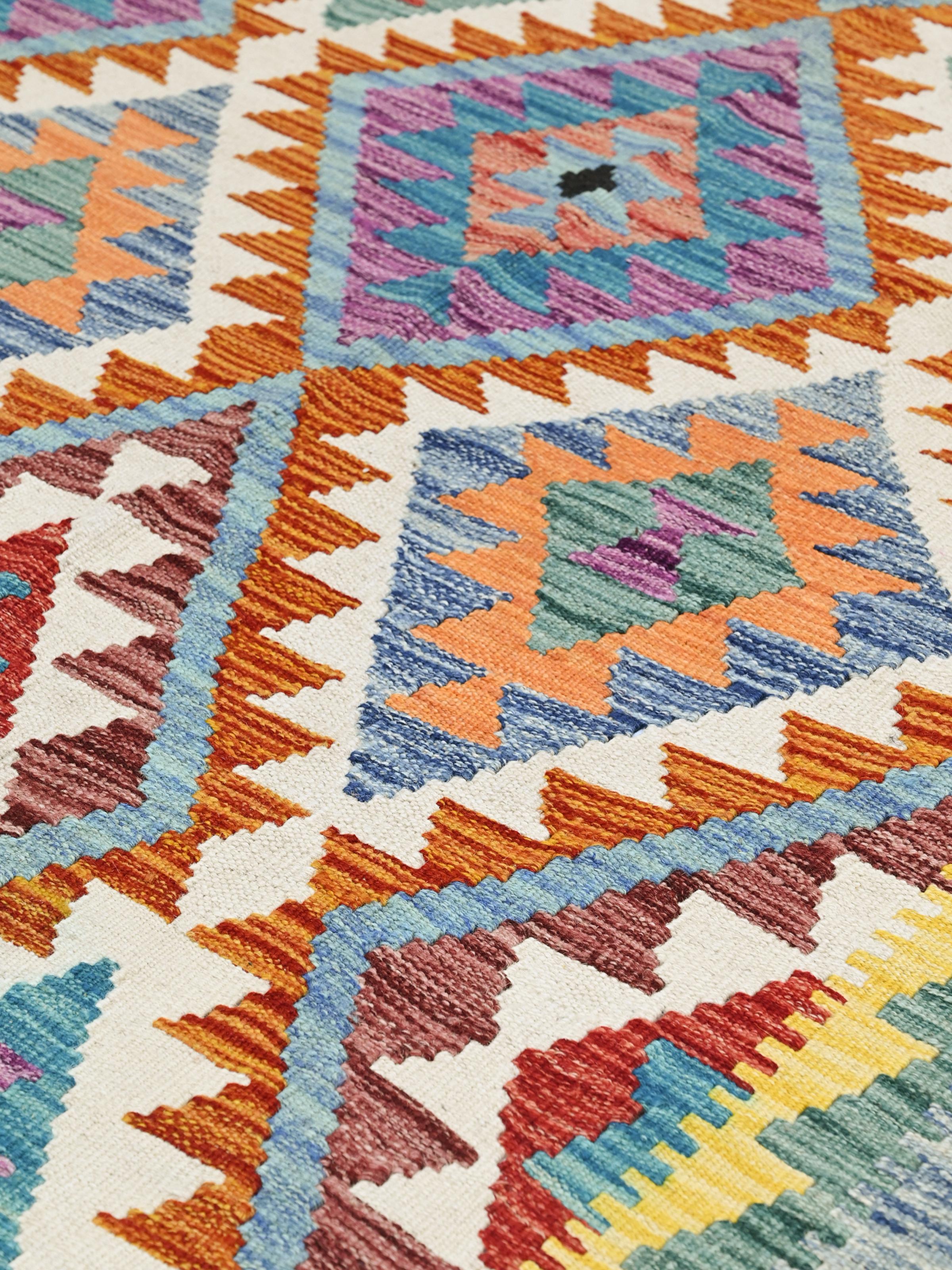
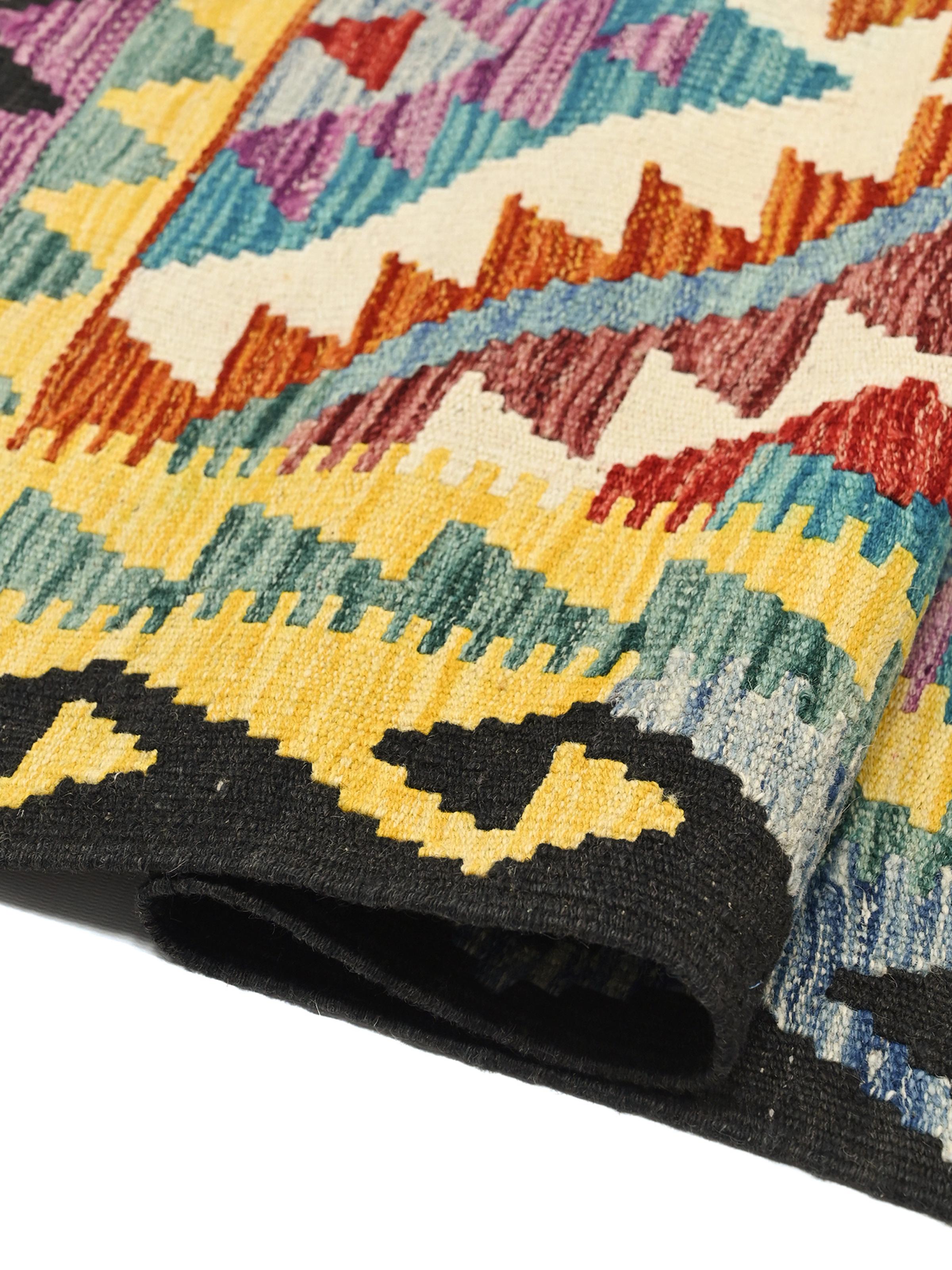
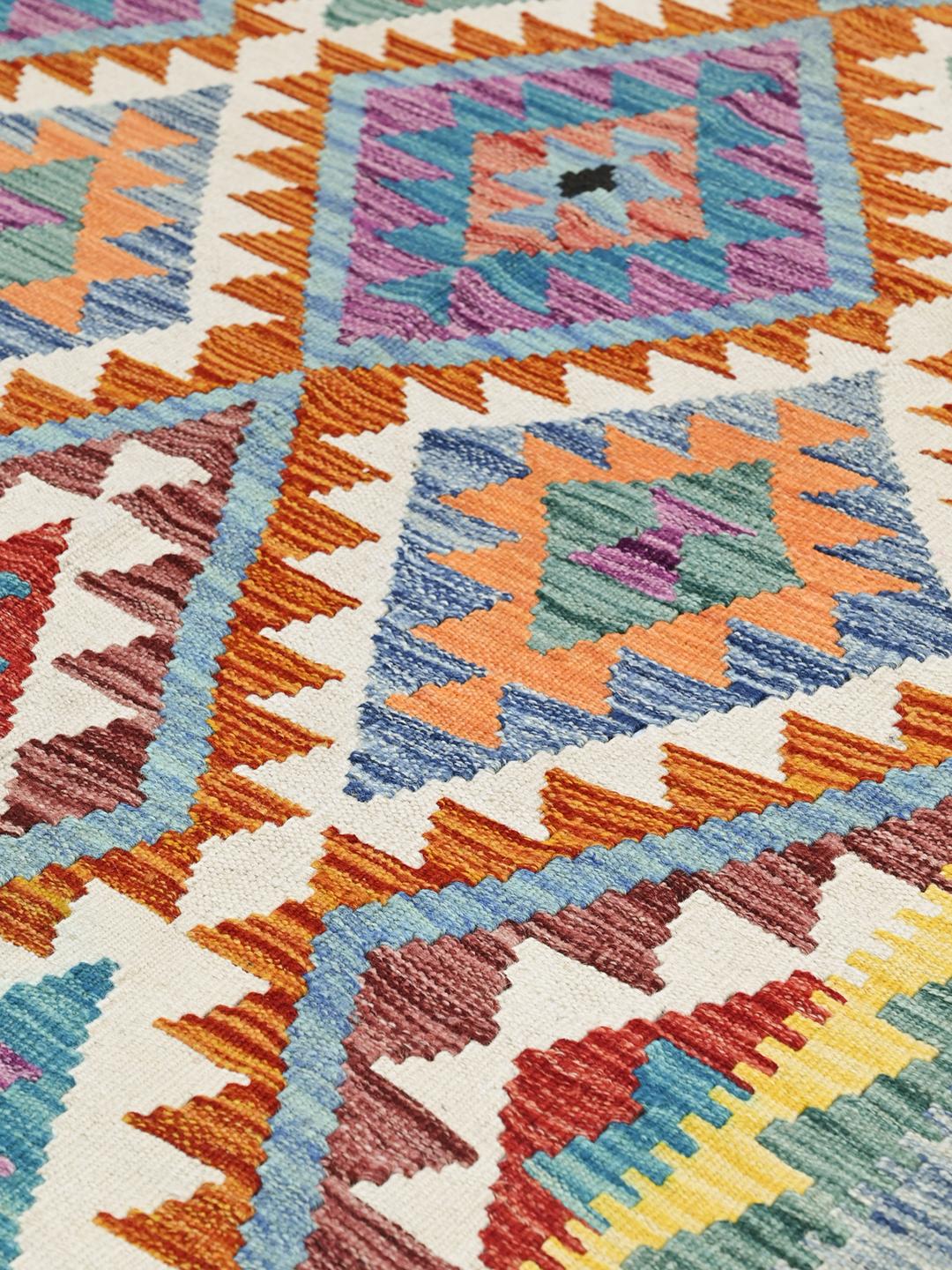
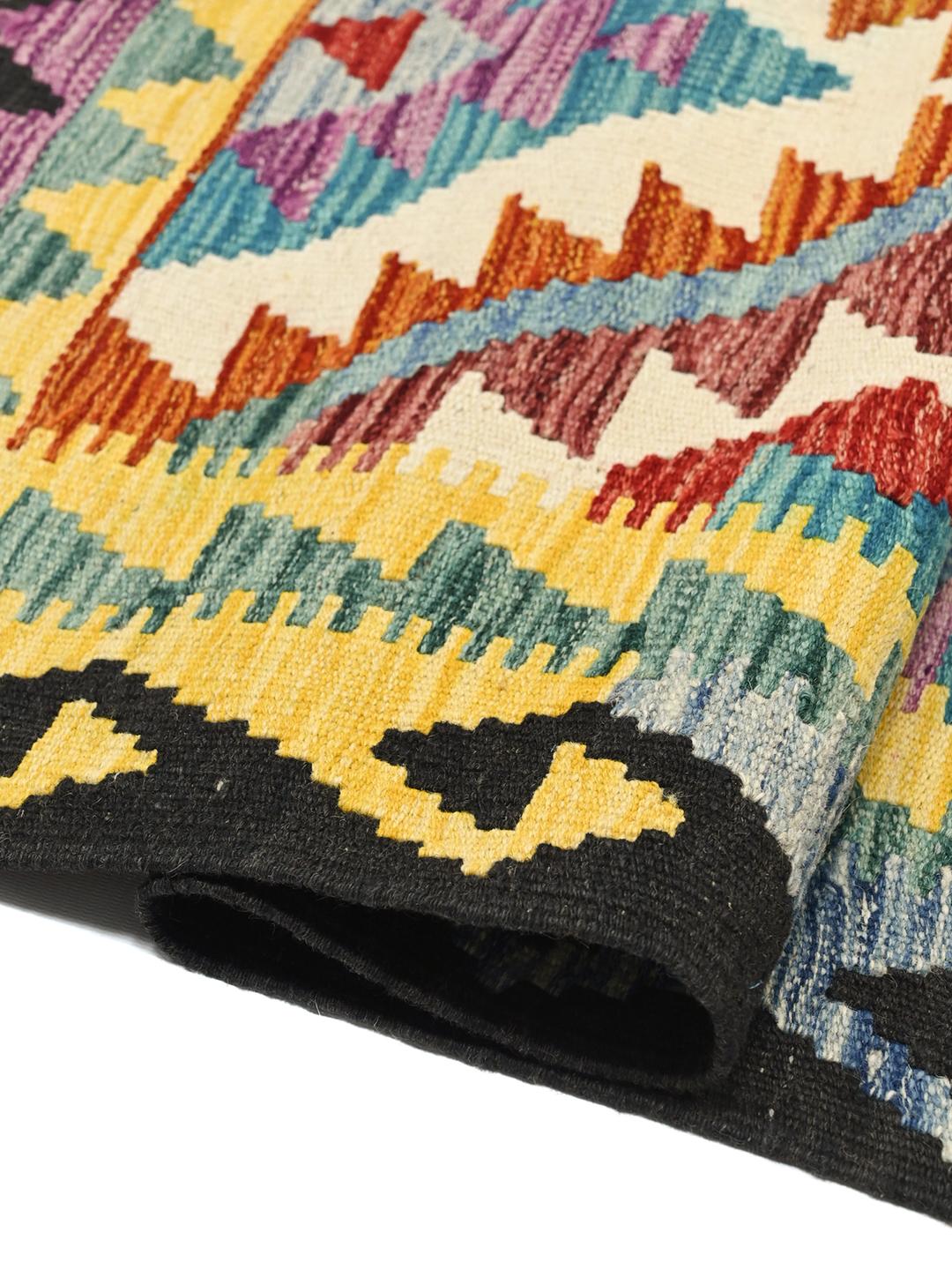
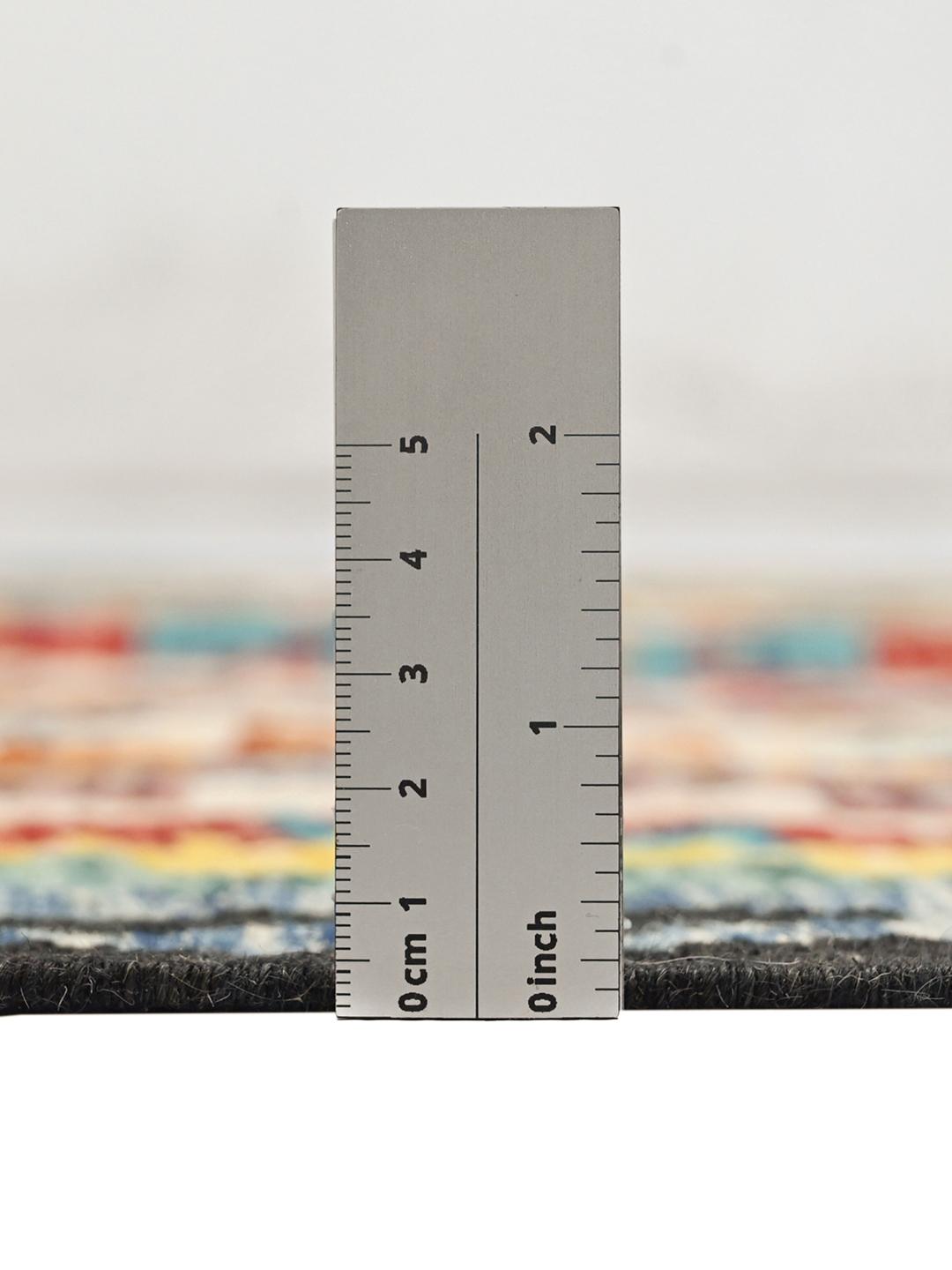
The term Kelim refers to a specific type of tapestry-woven, pileless rug. Because they lack a raised pile, the appearance of the rug is dictated entirely by the interplay of the warp and weft threads. This technique results in a crisp, clean aesthetic that allows for intricate geometric designs, as the patterns are woven directly into the foundation of the fabric rather than being knotted onto it.
Signature elements of the Afghan Kelim tradition include the use of bold, repeating geometric shapes, most notably diamonds and triangles. These motifs are not merely decorative but are deeply symbolic, often reflecting the tribal identity and the natural surroundings of the weavers. The use of vibrant, contrasting colours is a hallmark of this style, creating a sense of movement and energy that makes these rugs instantly recognisable.
Collecting a Kelim is an investment in cultural heritage. Because they are handmade, every minor variation in the weave or colour serves as a testament to the artisan's individual expression. These rugs are highly valued for their ability to bridge the gap between historical tradition and modern interior aesthetics, making them a favoured choice for those who appreciate authentic craft and timeless design.