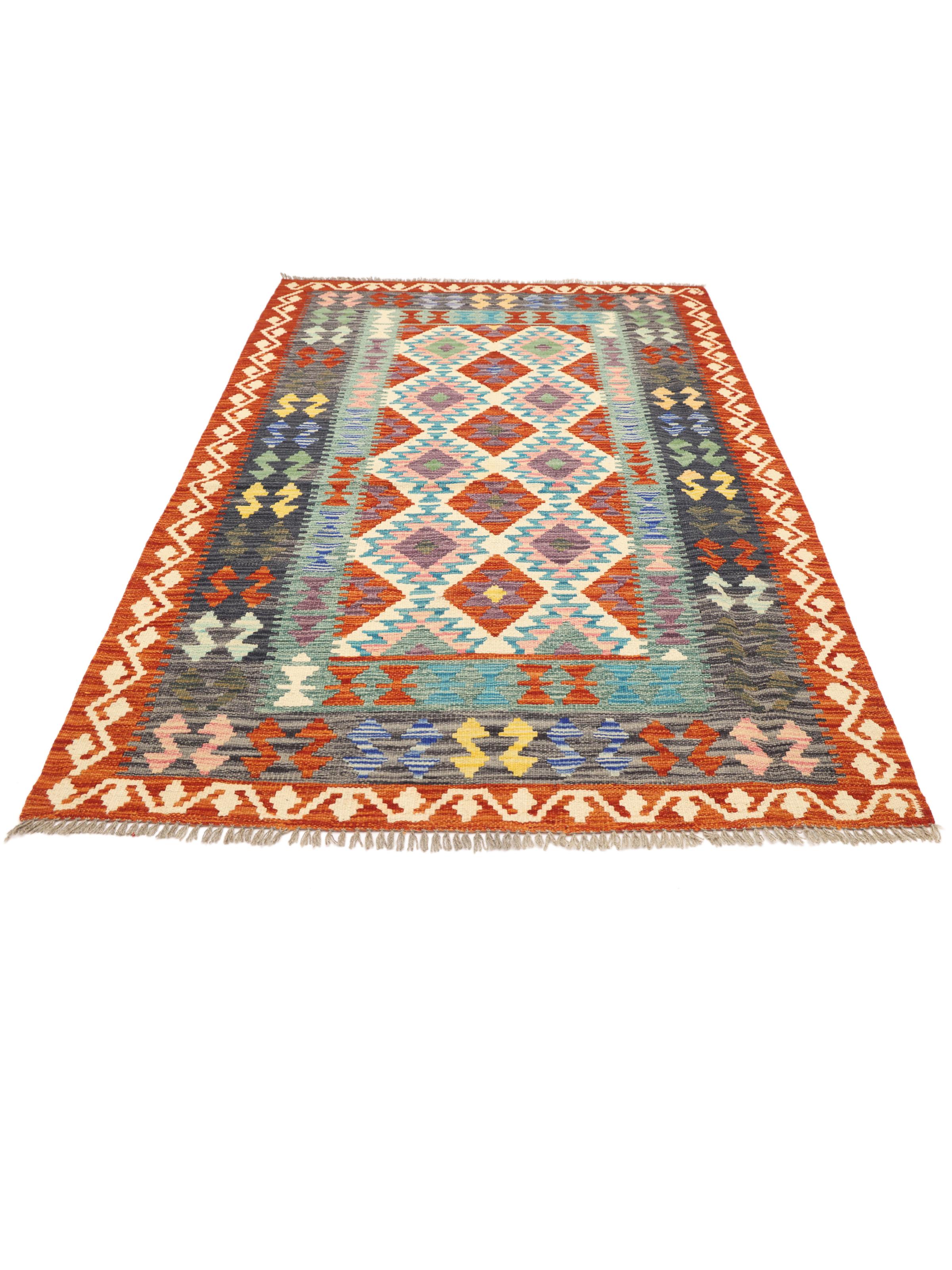
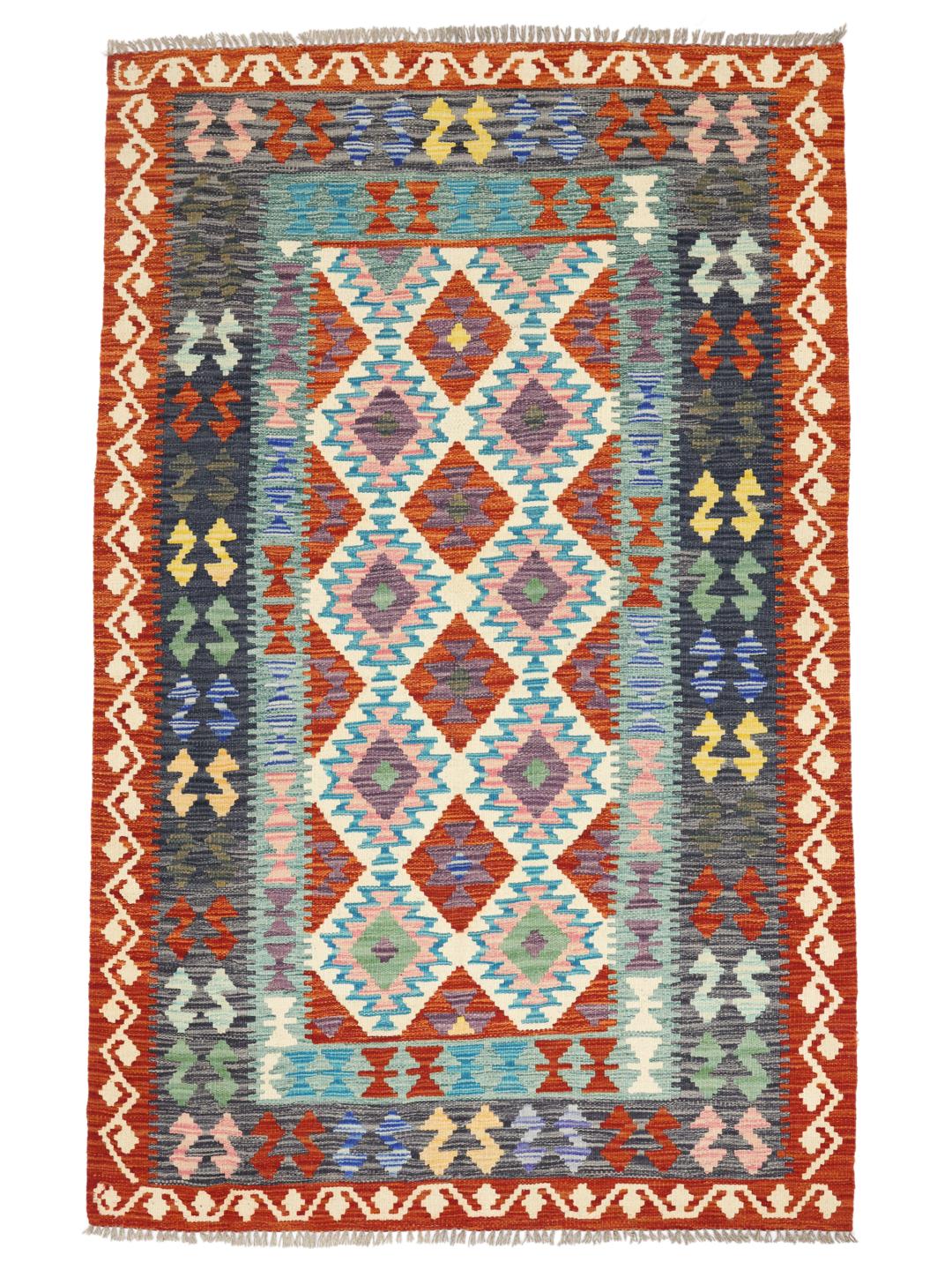
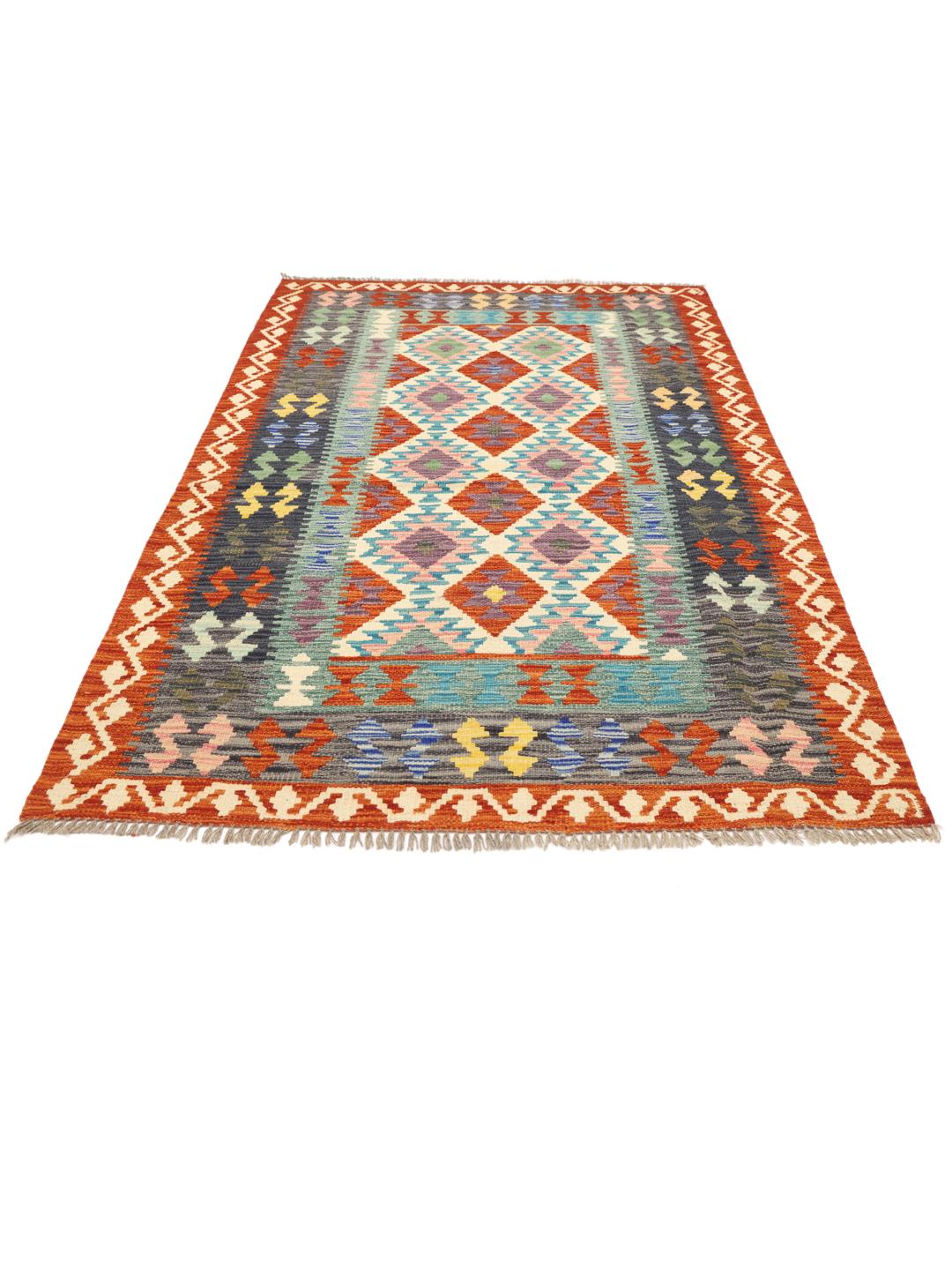
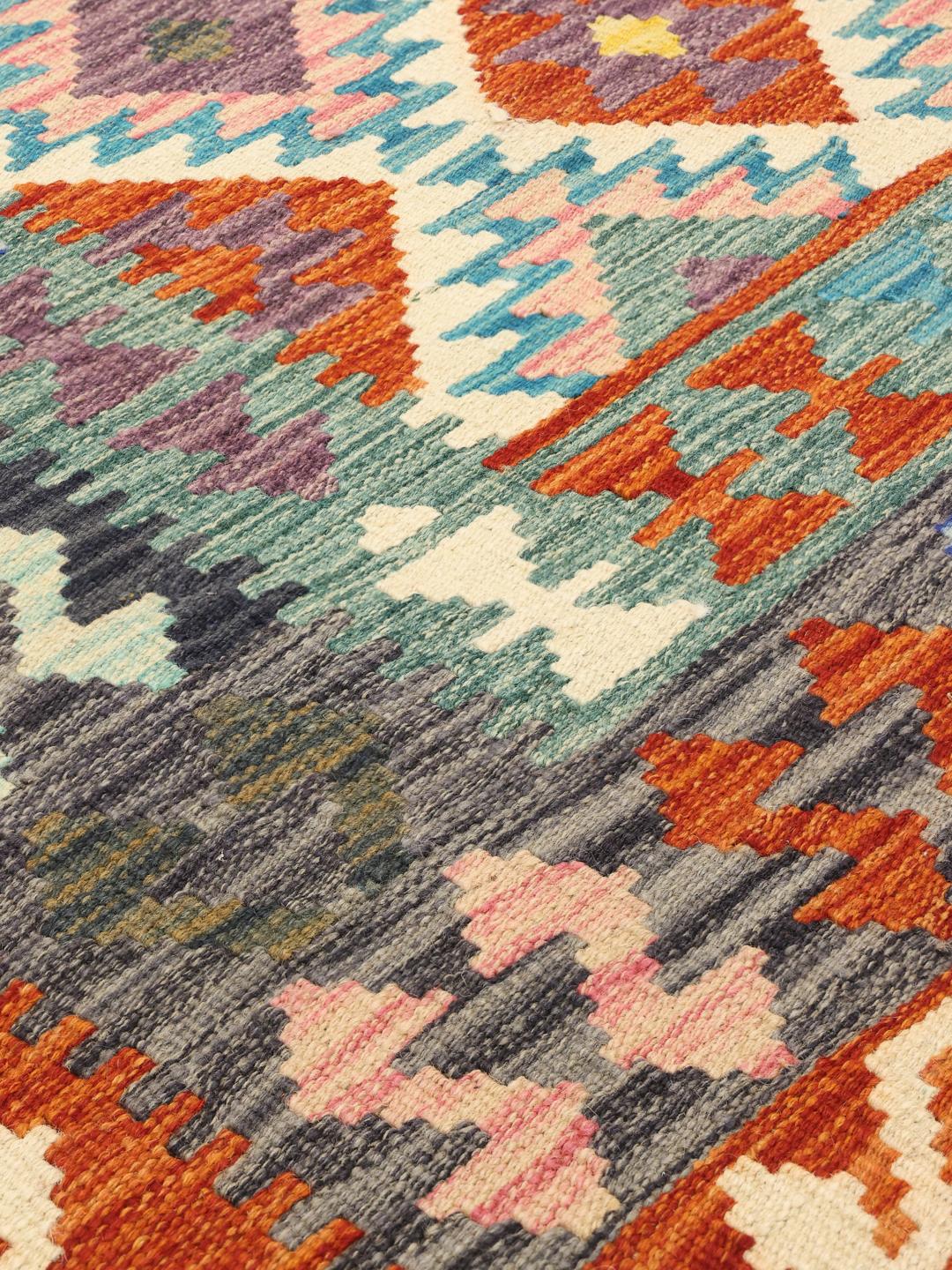
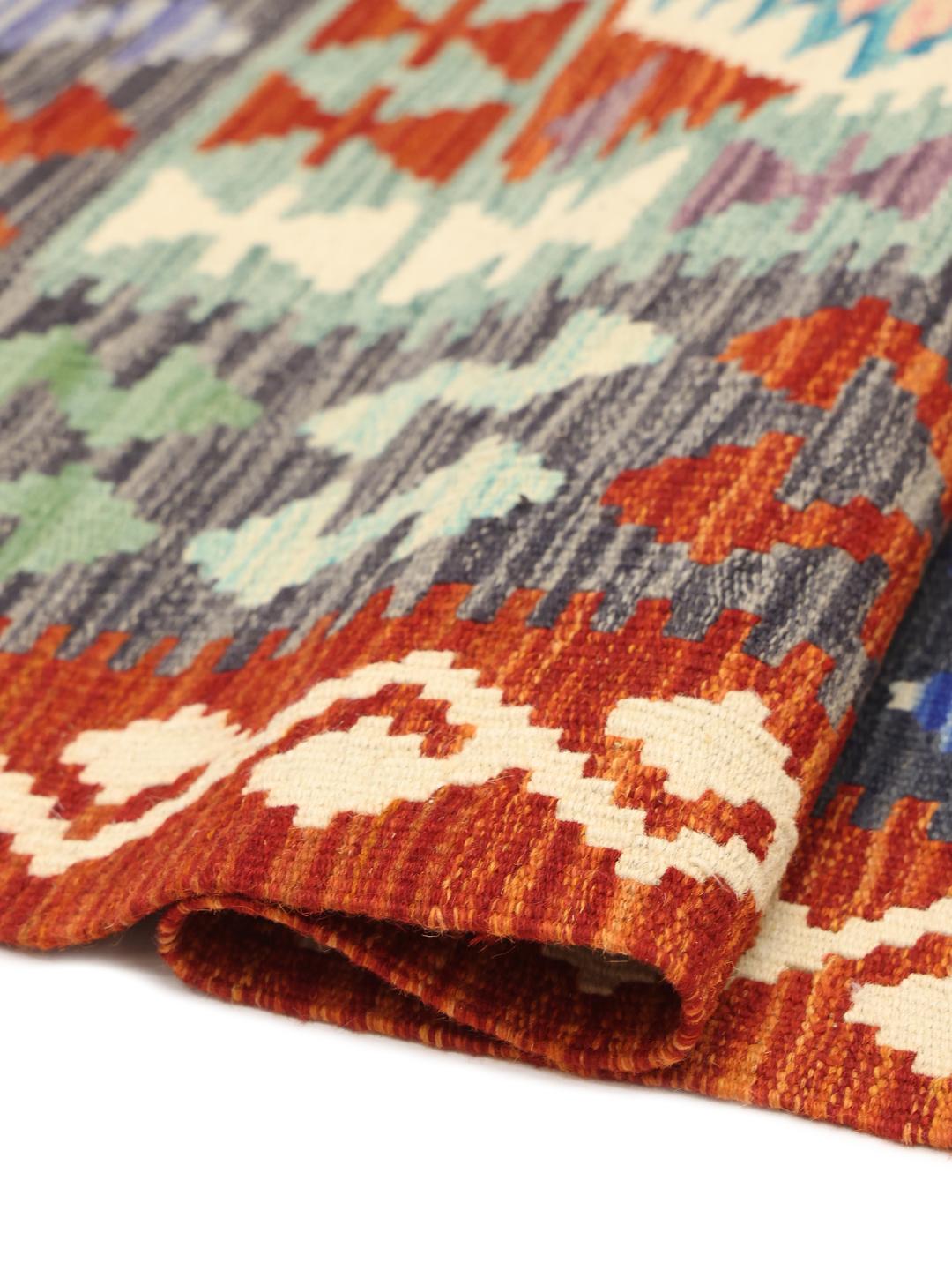
The Kelim, or Kilim, tradition is one of the most storied textile practices in the Middle East and Central Asia. These flat-woven rugs have been produced for centuries by nomadic and village communities, serving as essential, portable items that could function as floor coverings, wall hangings, or storage bags. Their history is inextricably linked to the nomadic lifestyle, where portable beauty was a necessity.
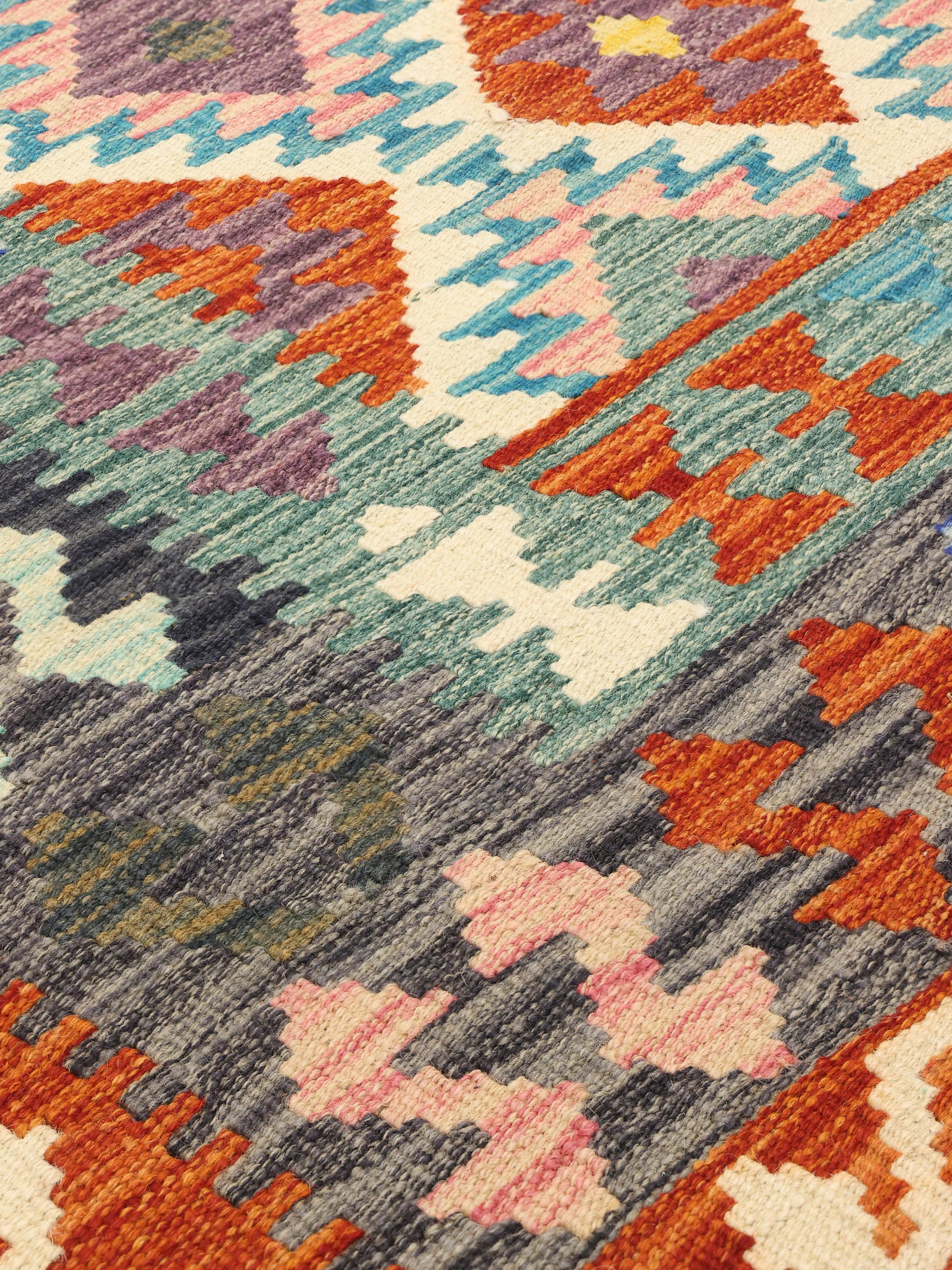
Technically, the Kelim is defined by its slit-weave construction, where the weft threads are woven tightly back and forth around the warp threads. This technique creates the characteristic clean, geometric lines and vibrant colour blocks that define the style. Because there is no pile to hide the structure, the quality of the weave is immediately apparent, showcasing the weaver's ability to maintain even tension and sharp design transitions.
Visually, these rugs are defined by their bold geometric motifs, often featuring diamonds, triangles, and intricate decorative borders. The Afghan style is particularly known for its deep, earthen tones and a masterful use of contrasting colours that create a rhythmic, balanced composition. This specific rug carries forward these classic design principles while offering a unique interpretation that captures the spirit of its region.
Kelim rugs are highly sought after by collectors and interior enthusiasts alike for their cultural weight and authentic craft. They represent a bridge between ancient nomadic heritage and contemporary home design. Owning a Kelim is not just about floor coverage; it is about preserving a legacy of skill and adding a piece of living history to your personal environment.