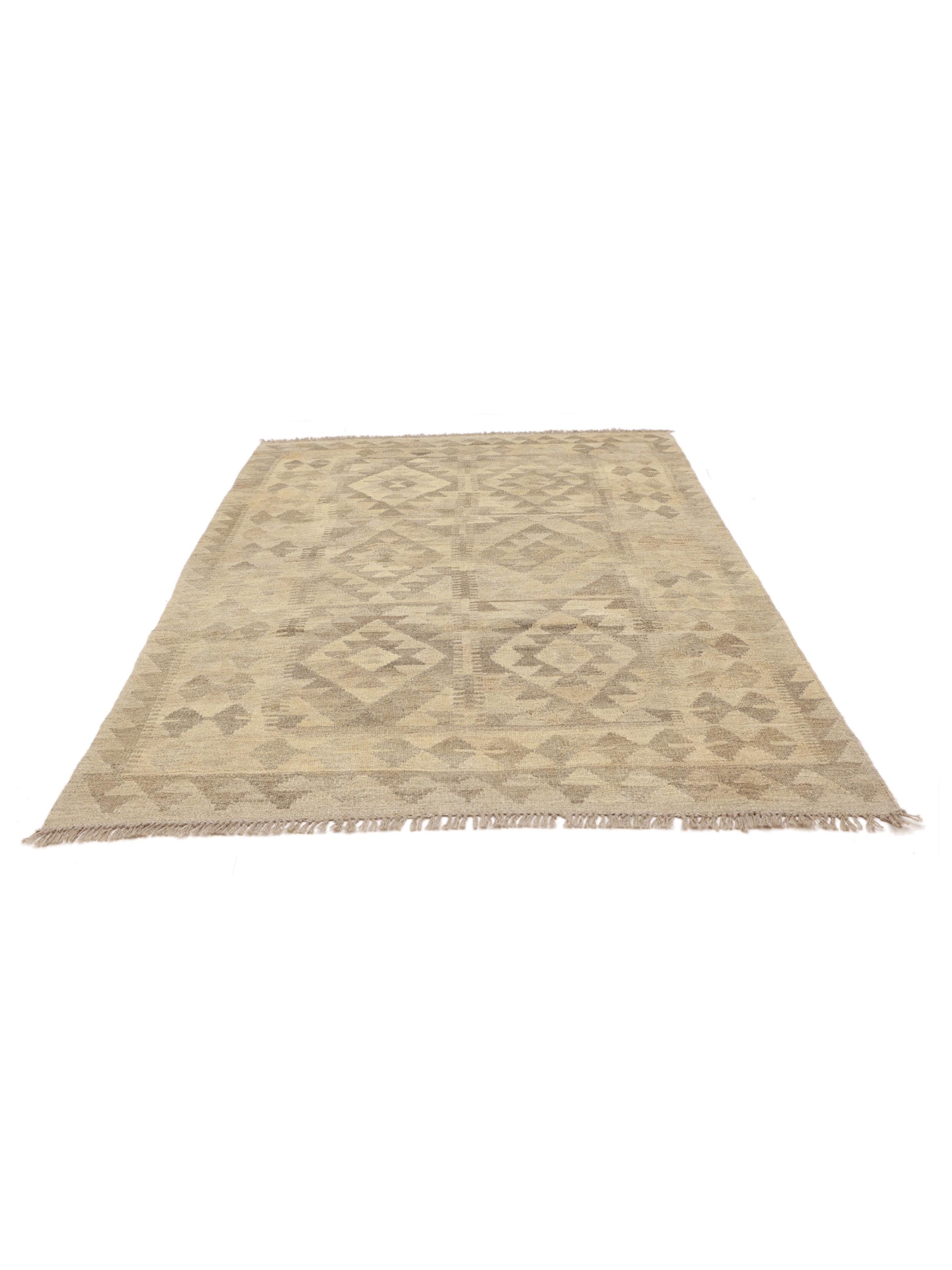
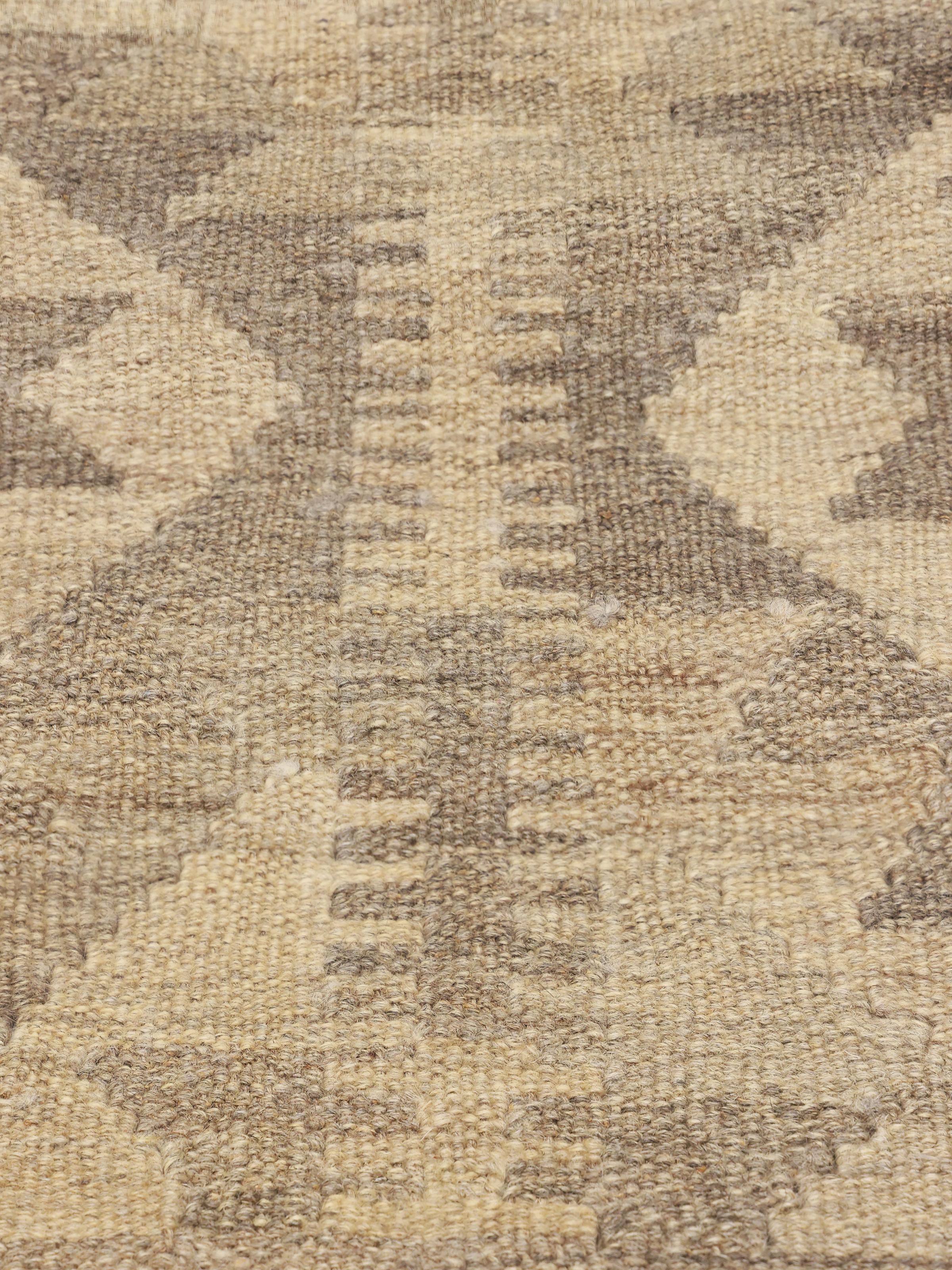
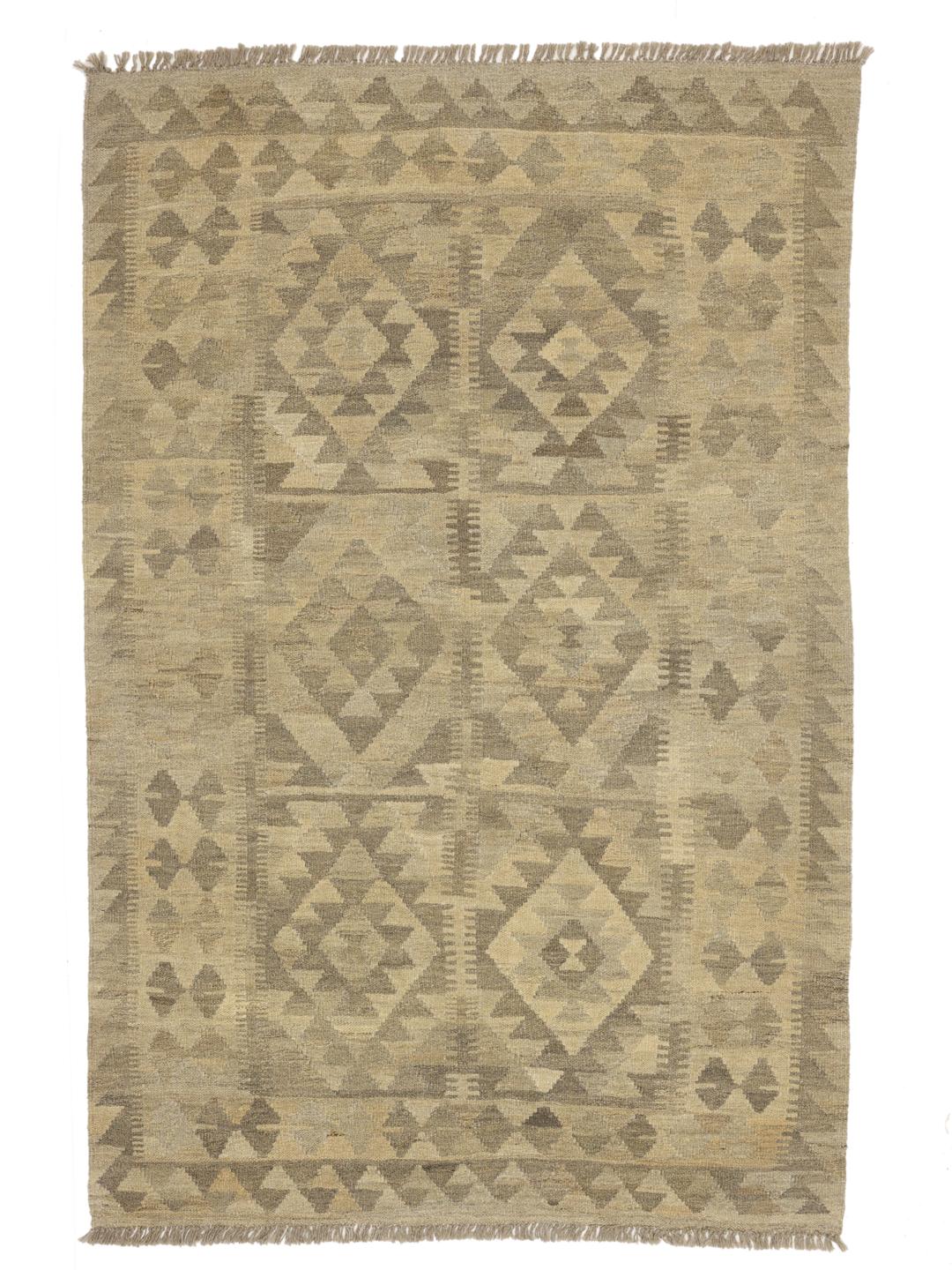
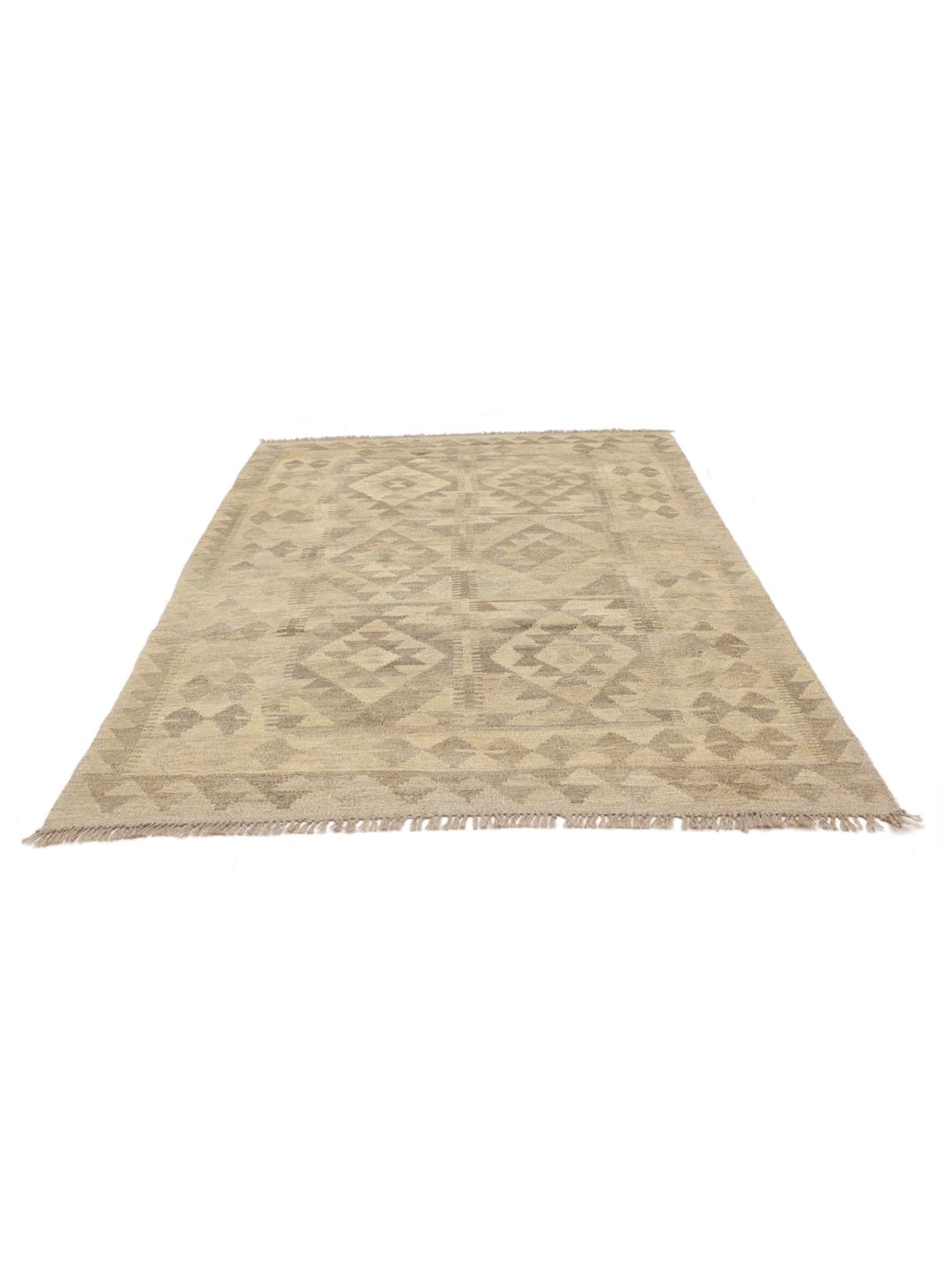
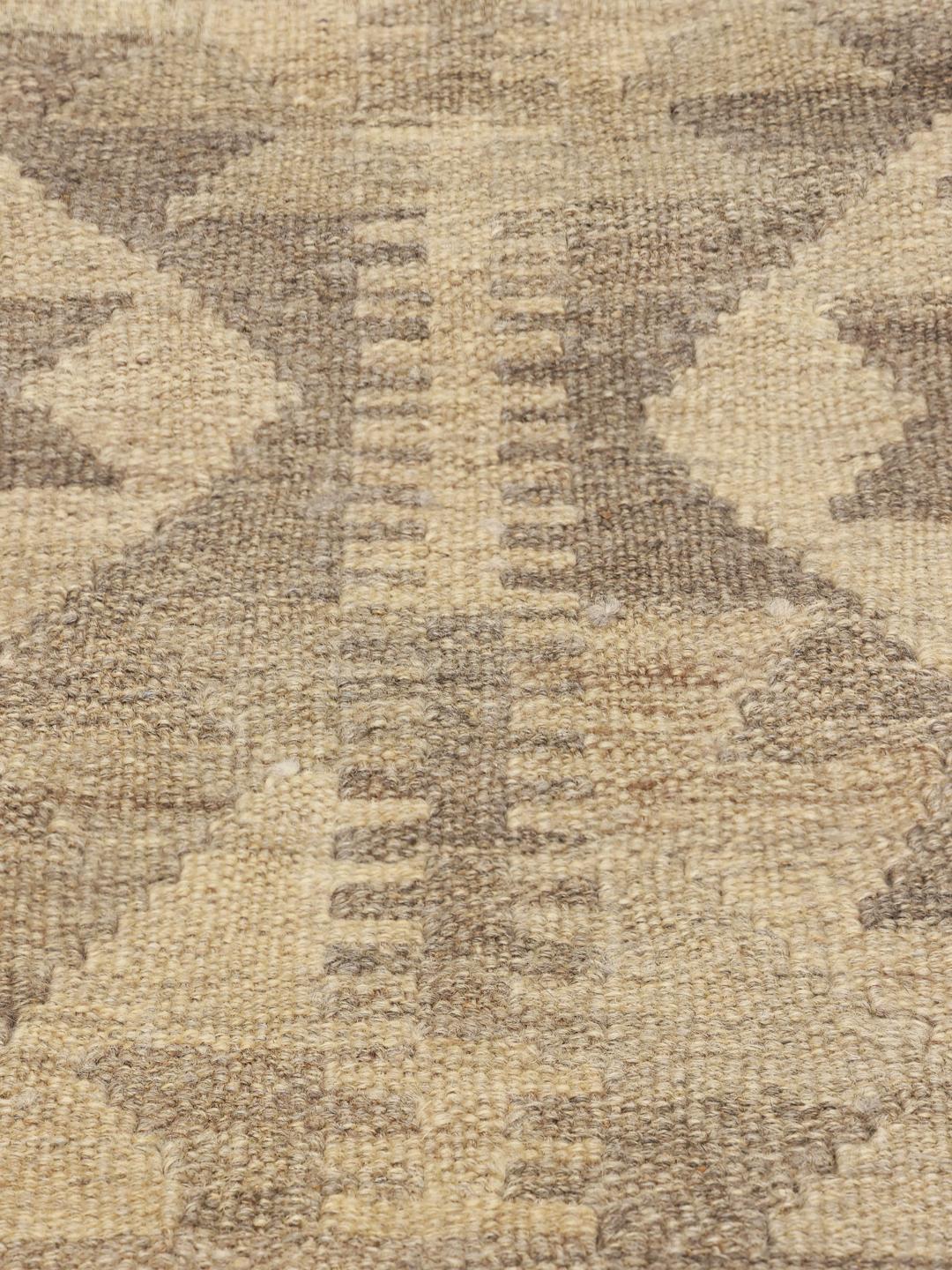
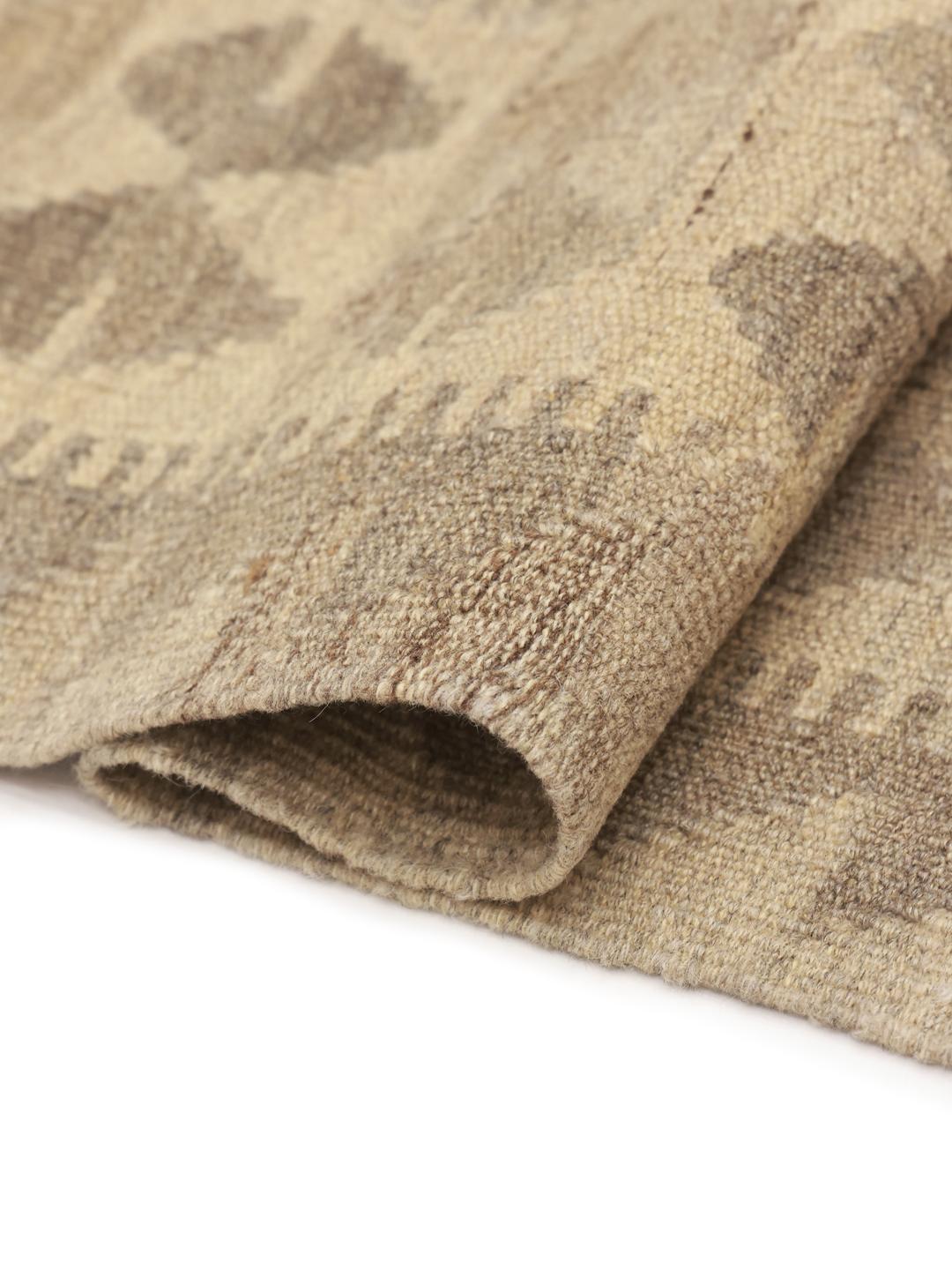
Kelim rugs hold a prominent place in the rich textile traditions of Afghanistan and the wider Persian region, where nomadic and village weavers have practised flatweaving for centuries. Unlike pile rugs, kelims are constructed by tightly interweaving warp and weft strands to produce a flat, lightweight textile that was historically used by nomadic tribes for floor coverings, transport bags, and wall hangings.
The designation old style refers to the deliberate revival of traditional dyeing methods and historic design repertoires. Weavers use natural wool yarns to recreate the authentic aesthetic of antique tribal flatweaves, honouring the historic palette and structural integrity of early nomadic textiles while adapting them for contemporary homes.
The visual language of this tradition relies heavily on geometric motifs, stacked diamonds, and decorative borders that carry symbolic meaning for the weaving communities. Each symbol relates to tribal identity, protection, or the natural world, arranged in balanced compositions that reflect the weaver's intimate connection to their craft and surroundings.
Collecting a Kelim Afghan Old Style rug means acquiring a tangible piece of living heritage. These flatweaves represent a continuous cultural thread, preserving ancient artisan techniques and offering modern collectors an authentic connection to the enduring craft traditions of Persian and Afghan weavers.