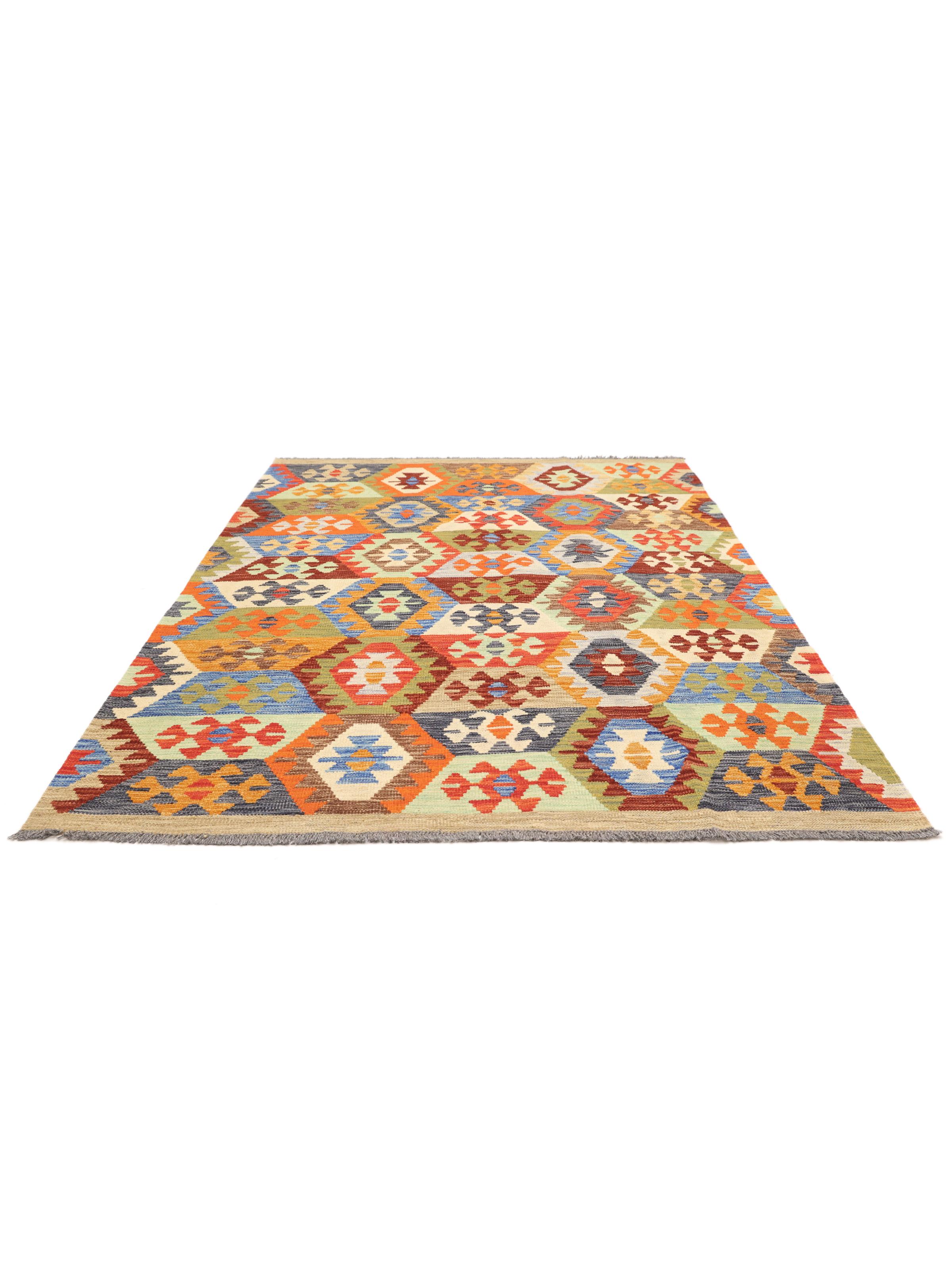
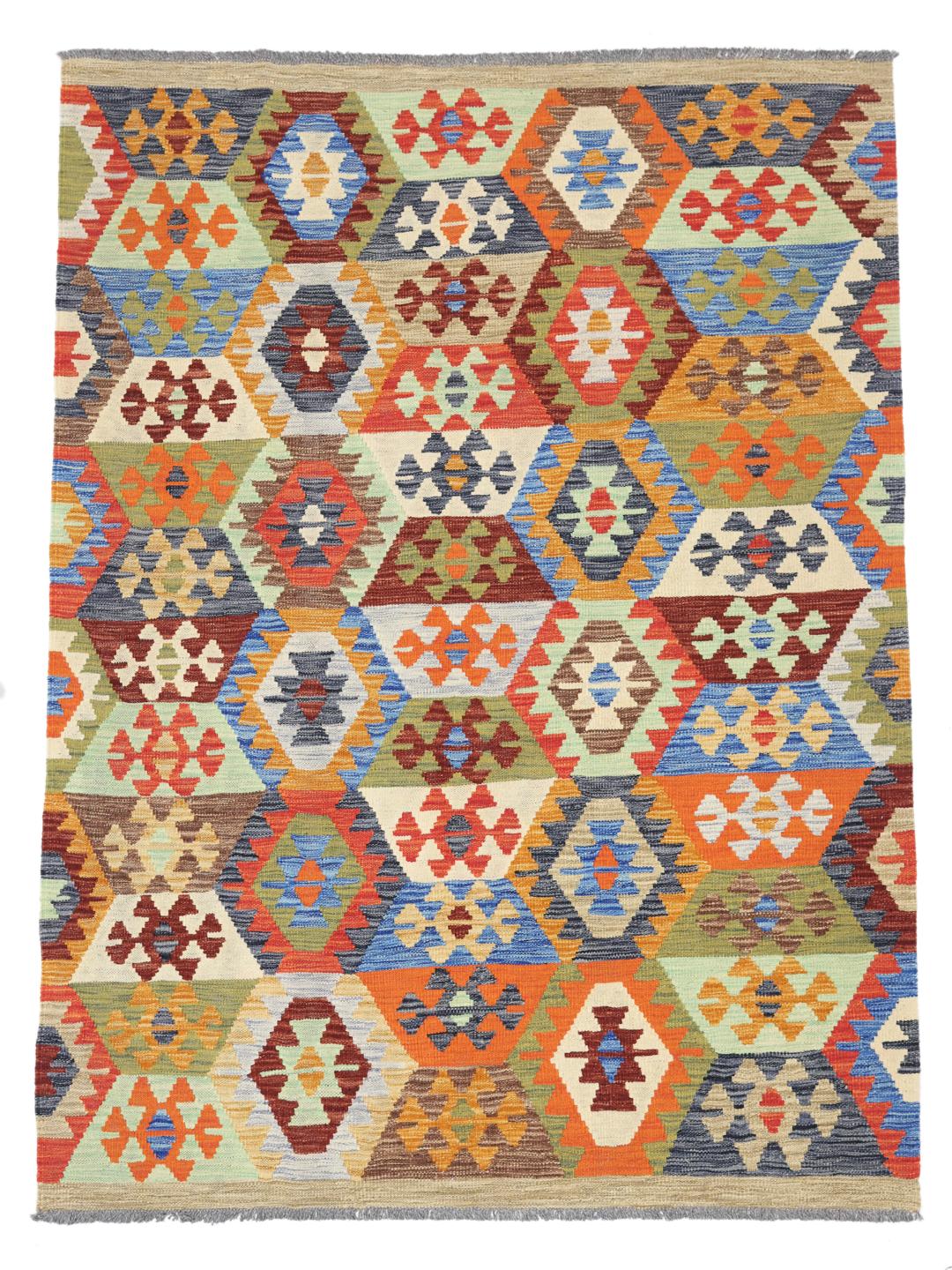
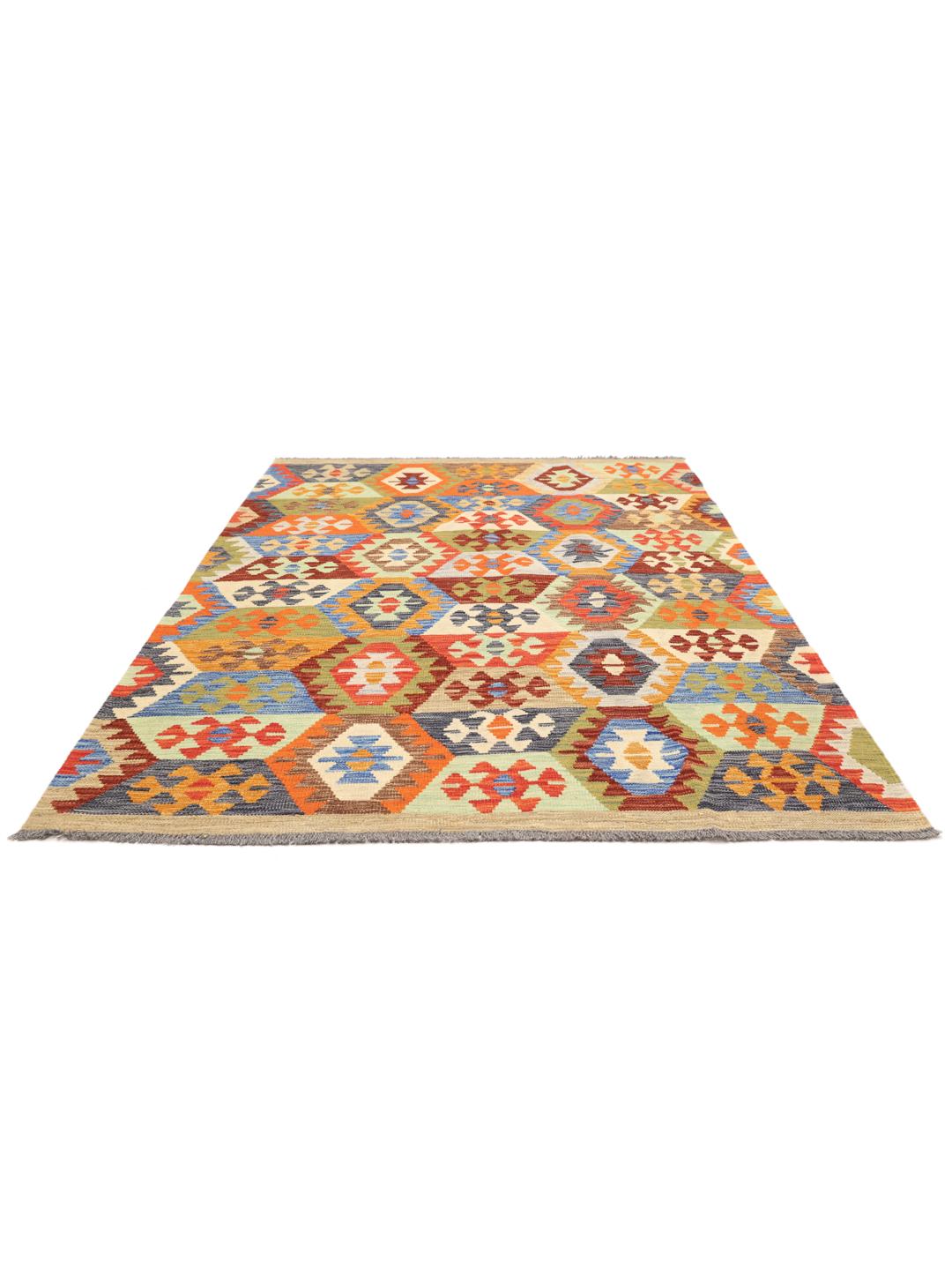
The tradition of weaving Kelims in Afghanistan is deeply rooted in the nomadic and semi-nomadic cultures of the Middle East. For centuries, these rugs have served essential roles in daily life, functioning as floor coverings, tent partitions, and storage bags for travelling families. The techniques have been passed down through generations, maintaining a link to the ancient artistry of the region while evolving to suit contemporary tastes.
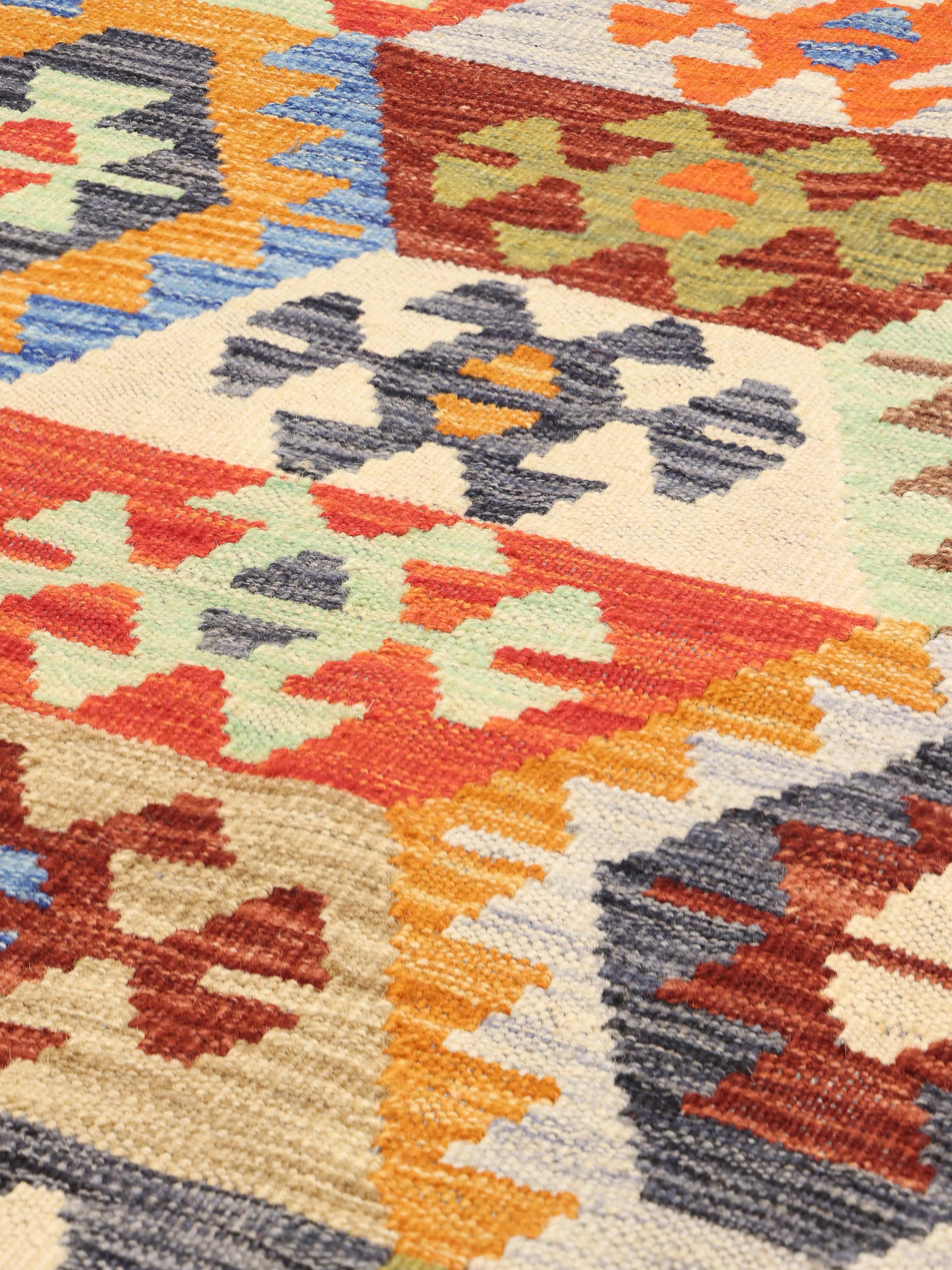
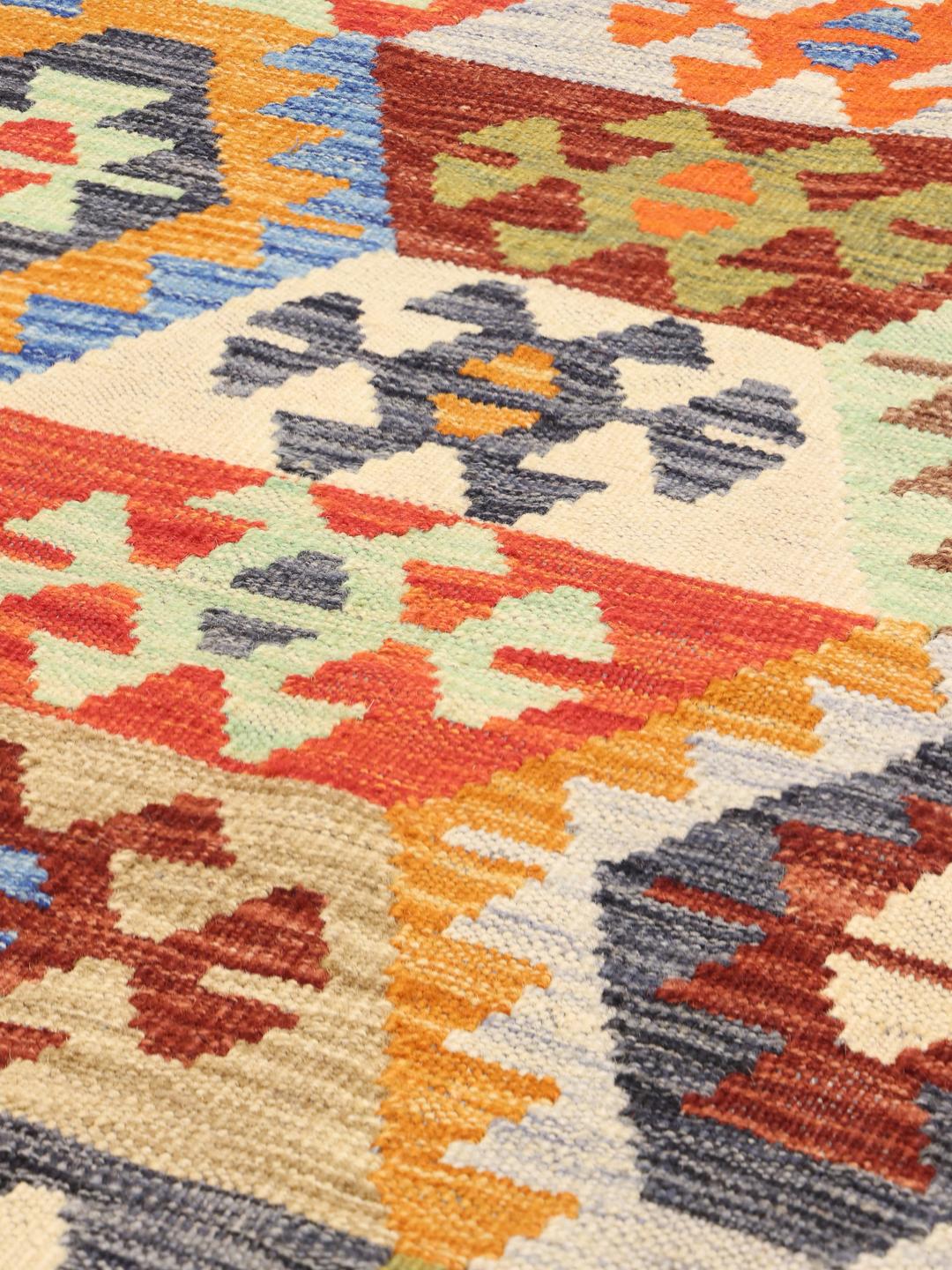
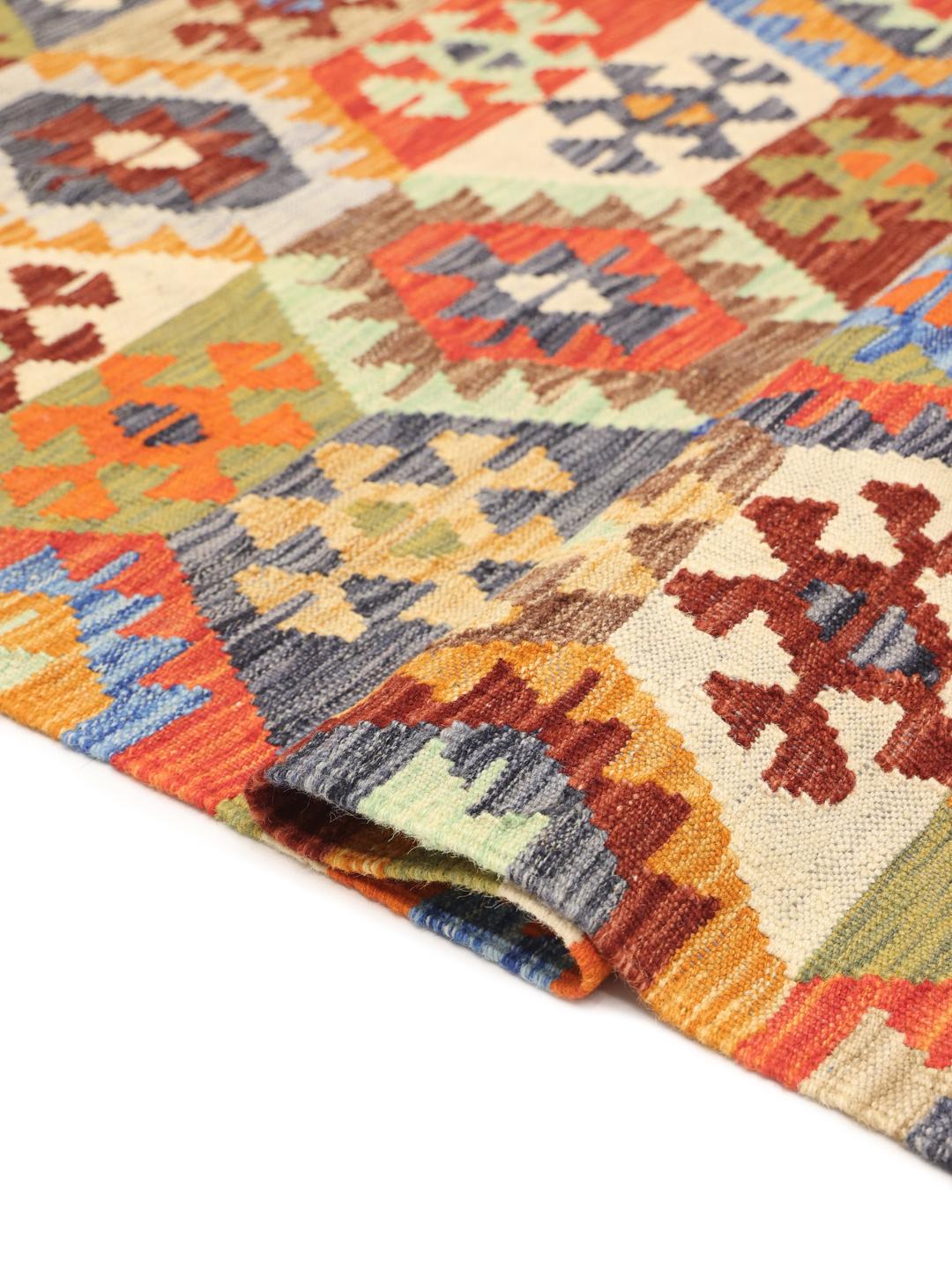
A Kelim is defined by its flat-weave construction, meaning it is created without a pile. This technique produces a lightweight, reversible textile that is both versatile and durable. The process requires a high degree of precision, as the weaver must build the pattern directly into the foundation by interweaving coloured wool threads. This results in a crisp, graphic aesthetic that highlights the skill of the weaver.
The visual language of these rugs is dominated by geometric motifs, often inspired by the landscape and cultural symbols of the Afghan highlands. Common elements include stepped diamonds, triangles, and stylised floral motifs, all arranged in cohesive, repetitive patterns. The use of vibrant, contrasting colours is a signature of this tradition, designed to bring warmth and energy into the home environment.
These rugs are highly valued by collectors for their authenticity and the labour-intensive nature of their creation. Owning a traditional Afghan Kelim is an investment in cultural heritage, representing a level of human skill and dedication that is becoming increasingly rare. Each rug tells a story of its origin, providing a tactile connection to the history of weaving in the Middle East.