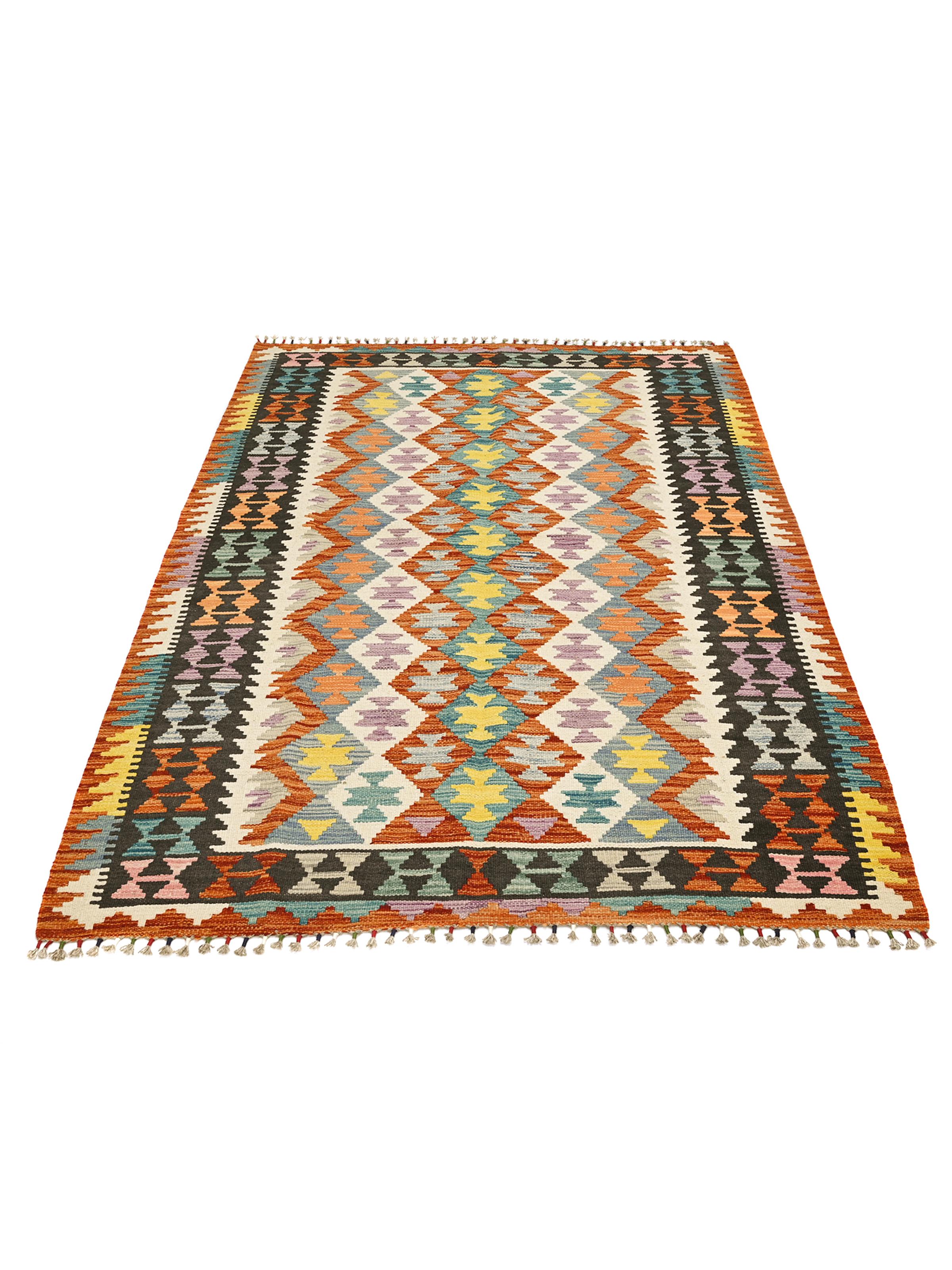
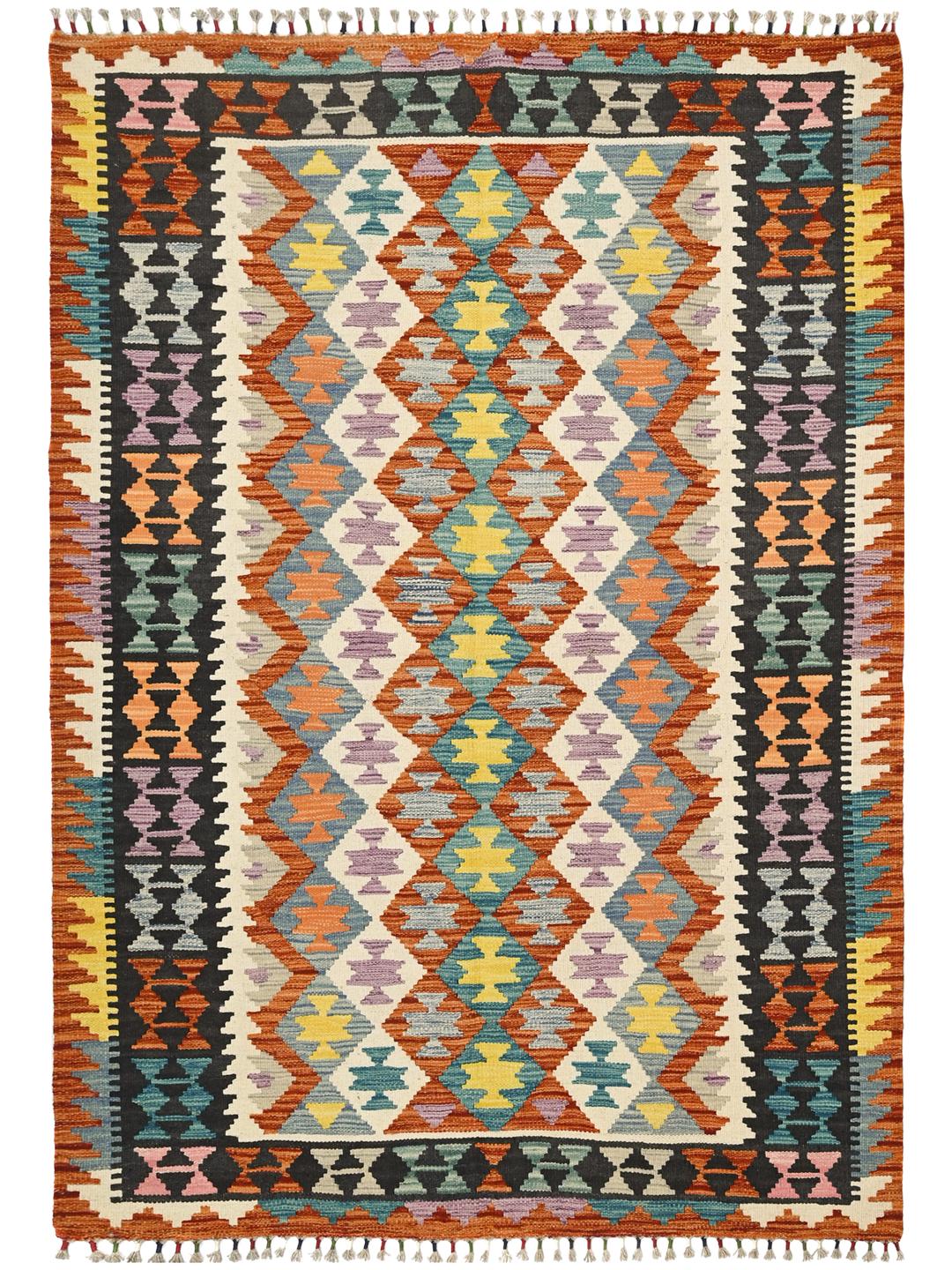
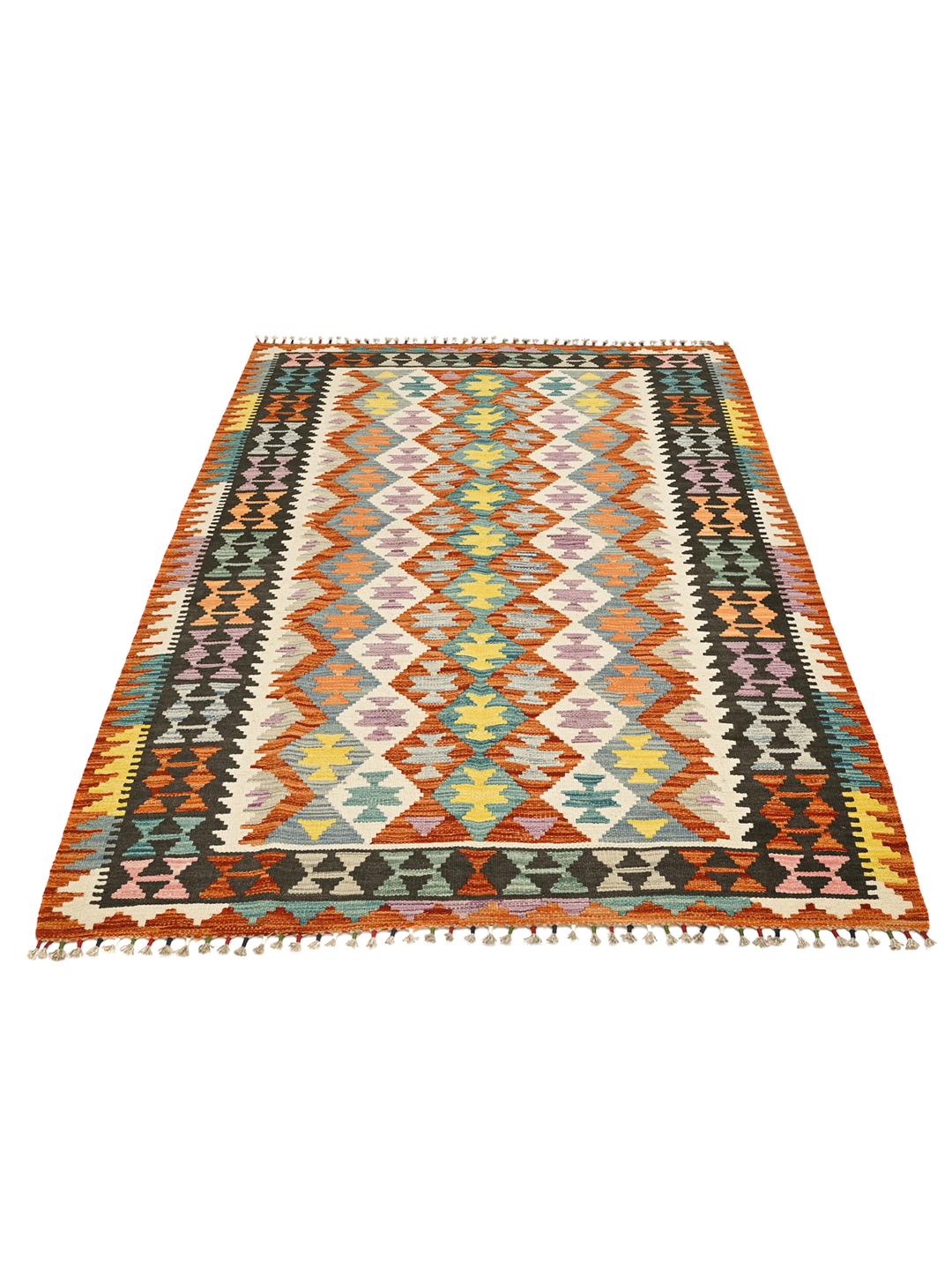
The Kelim tradition is deeply rooted in the nomadic cultures of the Middle East and Central Asia. Historically, these flat-woven rugs were essential to the mobile lifestyle of these communities, serving as floor coverings, wall hangings, and even storage bags. Today, the craft continues to thrive in Afghanistan, where weavers maintain these ancient techniques to produce rugs of exceptional character.
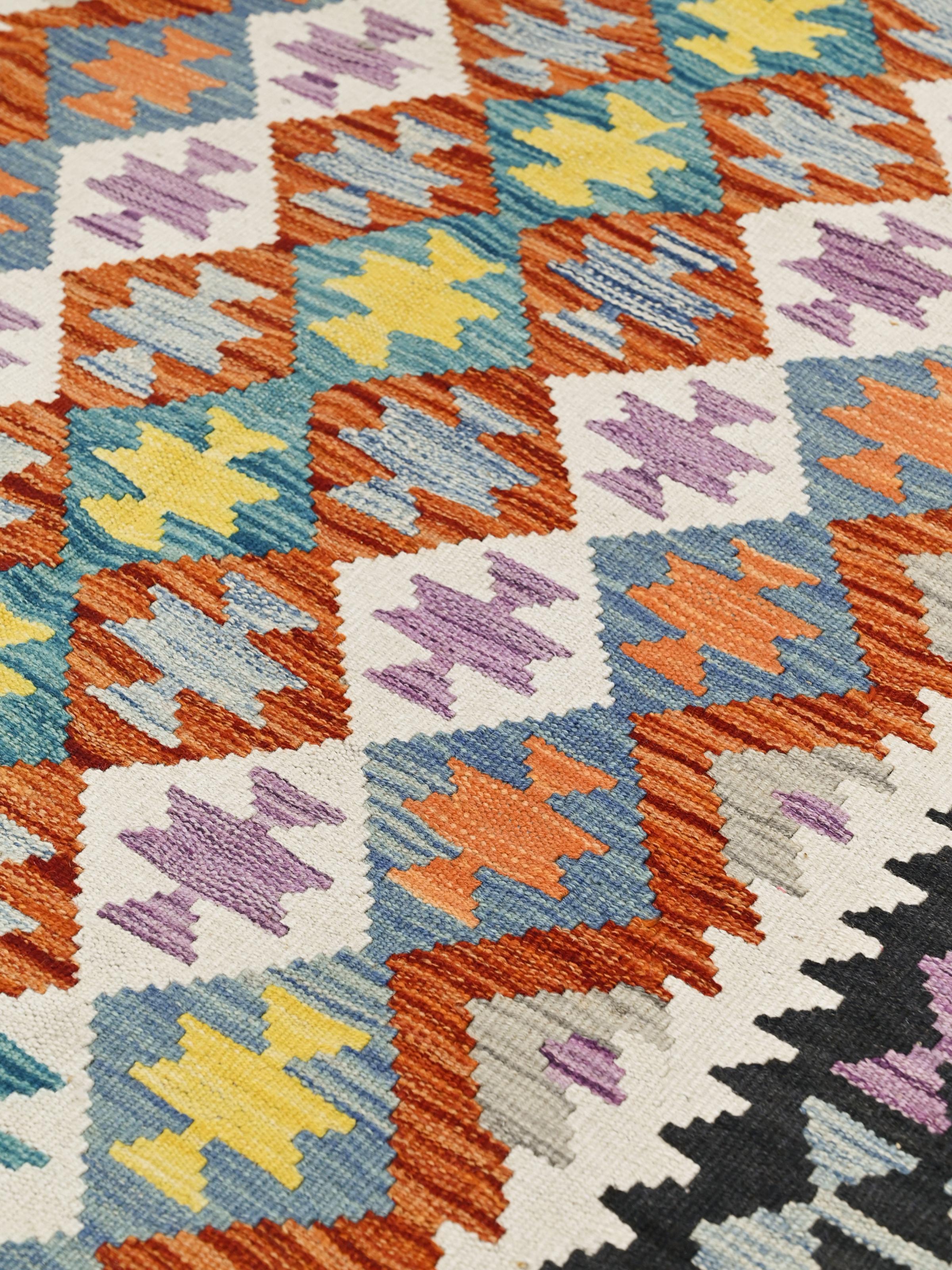
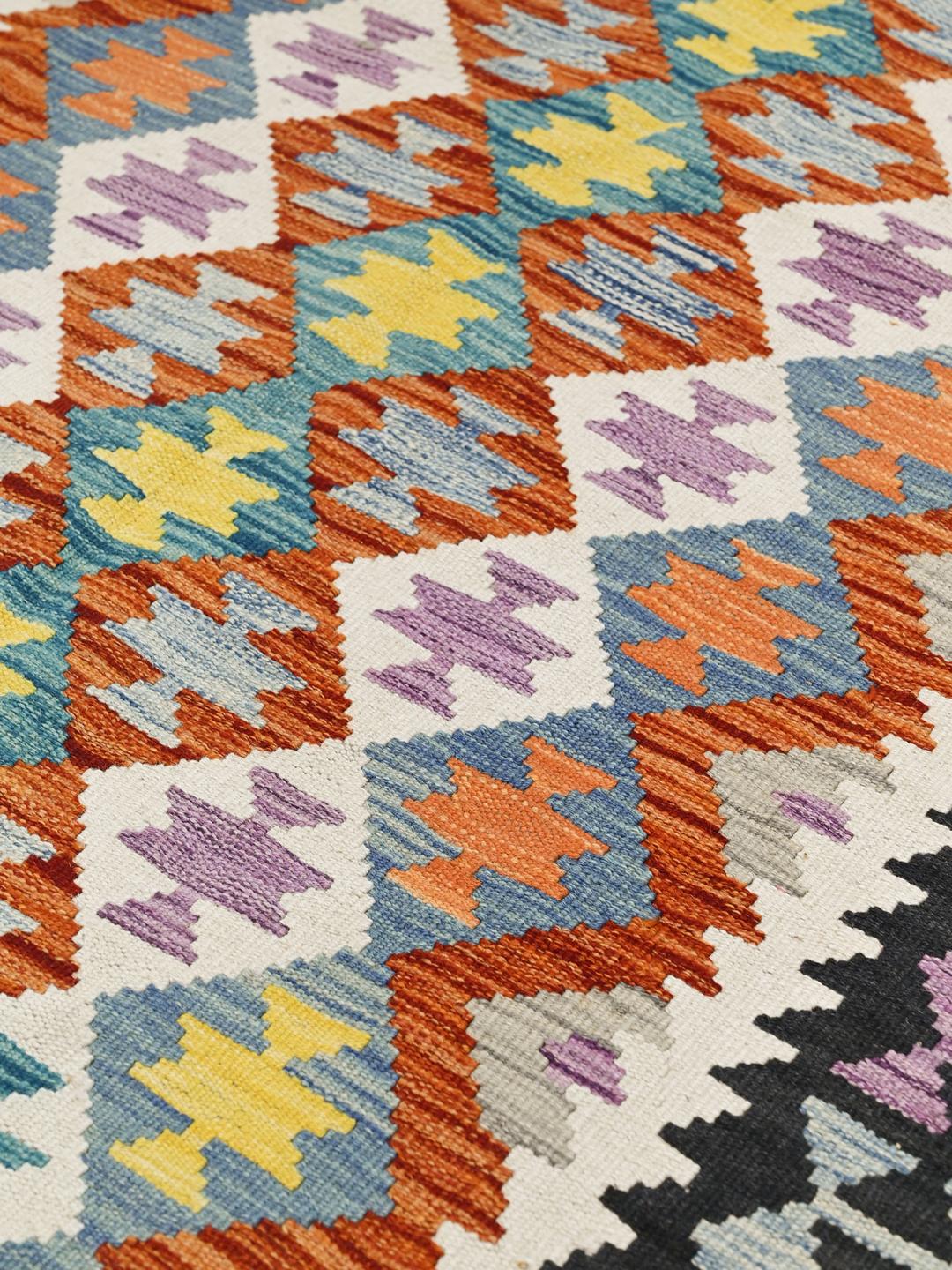
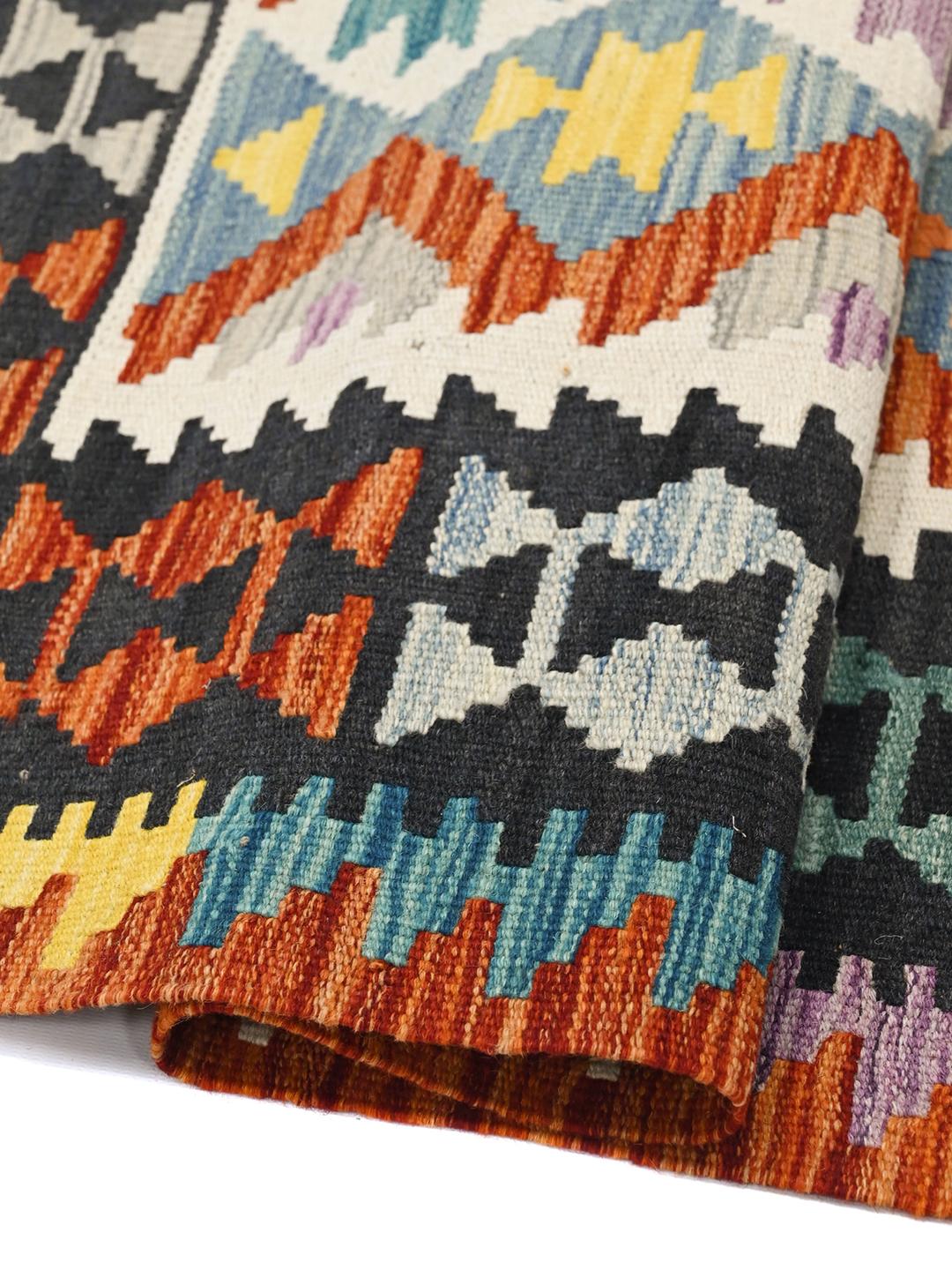
A defining feature of the Kelim style is its flat-weave construction, which distinguishes it from pile rugs. This method involves the weft threads being passed through the warp threads to create the pattern, resulting in a rug that is reversible and lightweight. This technical approach allows for the sharp, clean lines seen in the geometric designs that define the tradition.
The visual language of these rugs is dominated by bold, repeating motifs and vibrant palettes. Patterns often include diamonds, triangles, and stylized floral elements, each carrying symbolic meaning within the weaving community. This particular rug displays a mastery of this language, using a rich, varied palette that highlights the complexity and precision of the weaver's work.
Owning a Kelim from this tradition is about more than just decor; it is about preserving a legacy of craftsmanship. These rugs are highly valued by collectors for their authenticity and the human story woven into every thread. By bringing this piece into your home, you are supporting a tradition that has been passed down through generations, ensuring the survival of this exquisite art form.